BoyuuRange MT-34 MKII Integrated Tube Amplifier
BoyuuRange MT-34 MKII Integrated Tube Amplifier — image 1
BoyuuRange MT-34 MKII Integrated Tube Amplifier — image 2
BoyuuRange MT-34 MKII Integrated Tube Amplifier — image 3
BoyuuRange MT-34 MKII Integrated Tube Amplifier — image 4
BoyuuRange MT-34 MKII Integrated Tube Amplifier — image 5
BoyuuRange MT-34 MKII Integrated Tube Amplifier — image 6
73%
27%

Overview

The BoyuuRange MT-34 MKII Integrated Tube Amplifier is one of those rare Chinese-made pieces that lands in the entry-to-mid-range tube amp market and actually delivers on its promise. Reisong has been producing tube gear long enough to understand what budget-conscious audiophiles want: real transformer iron, proper tube topology, and a listenable sound without requiring a soldering iron. What sets the MT-34 MKII apart from similarly priced competitors is its switchable output topology — you can run it in ultra-linear or triode mode depending on your mood and speakers. A tube cage is included, which sounds minor but genuinely matters for anyone new to hot glass. This is a serious listening tool, not a shelf decoration.

Features & Benefits

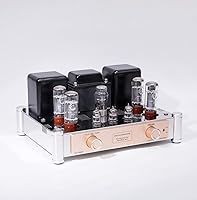
The EL34 is one of the most beloved output tubes in audio history — a pentode known for its full midrange and musical top-end, and this EL34 integrated amp uses four of them in a push-pull configuration that produces 25 watts per channel in ultra-linear mode and 15 watts in triode. Ultra-linear gives you headroom and dynamic punch; triode softens the presentation into something more intimate and organic. Three analog inputs handle CD, AUX, and TAPE sources cleanly. The 88dB signal-to-noise ratio means a quiet background in practical use, and the 100KΩ input impedance plays nicely with most sources. At nearly 42 pounds, the output transformers inside are clearly not cut-rate — transformer quality is where cheap tube amps usually compromise first.

Best For

This tube amp is built for listeners who sit down and actually pay attention to music. It shines with efficient speakers — ideally 90dB sensitivity or above — in a small or medium-sized room. If you are coming from solid-state and curious about what EL34 tube sound actually means, this is a low-risk way to find out, since the topology switching lets you hear two distinct sonic characters from the same unit. Vinyl and CD users will feel right at home; there are no digital inputs, no Bluetooth, no streaming. That analog simplicity is a feature, not a limitation, for the right listener. If your speakers are power-hungry or your room is large, look elsewhere.

User Feedback

Buyers consistently praise the warm, full midrange and the sense of space this amp throws around instruments — especially on well-recorded jazz and acoustic music. The build quality draws regular compliments given the price. On the other side, some units have arrived with unevenly matched tubes, which can show up as channel imbalance; most owners resolved this through tube rolling or contacting the seller directly. The lack of a remote is a real-world inconvenience, and three inputs will feel limiting for some. New owners also note the amp needs a proper break-in period — somewhere around 50 to 100 hours of play before the sound fully opens up. Go in with patience and realistic expectations, and most people are genuinely pleased.

Pros

  • The EL34 push-pull topology delivers a rich, musical midrange that outperforms most solid-state amps in its class.
  • Switchable ultra-linear and triode modes give you two genuinely different sonic characters from one unit.
  • At nearly 42 pounds, the transformer quality is clearly above average for the price tier.
  • The tube cage is included out of the box — a practical safety detail many competitors skip.
  • Background noise is impressively low for a tube design, keeping the listening experience clean and quiet.
  • Three analog inputs cover the most common source configurations without unnecessary complexity.
  • The MT-34 MKII holds its own against European and American tube amps costing significantly more.
  • Tube rolling is straightforward for owners who want to further shape the sound after purchase.
  • Build quality and chassis finish consistently draw positive remarks from first-time owners.
  • Once broken in, the soundstage and instrument separation reward attentive, focused listening sessions.

Cons

  • Some units have arrived with poorly matched output tubes, causing channel imbalance right out of the box.
  • No remote control is included, which is a real daily inconvenience for many listeners.
  • Three inputs will feel restrictive if you run more than two or three source components.
  • There are no digital inputs whatsoever — streaming and computer audio users are completely locked out.
  • The amp demands a 50 to 100 hour break-in period before the sound fully settles and opens up.
  • QC consistency is not guaranteed; a small but notable number of buyers have reported unit-level variation.
  • At nearly 42 pounds, placing and repositioning the amp is a two-person job.
  • No tone controls or balance adjustments mean room and speaker matching must be right from the start.
  • Replacement tubes and after-sales support can be harder to arrange compared to established Western brands.
  • Inefficient or low-impedance speakers will expose the wattage limits quickly in anything beyond a small room.

Ratings

The scores below for the BoyuuRange MT-34 MKII Integrated Tube Amplifier were generated by our AI review engine after analyzing verified purchaser feedback from global marketplaces, actively filtering out incentivized, bot-generated, and duplicate submissions. Both the genuine strengths and the recurring frustrations buyers have reported are transparently reflected in each category — nothing has been softened to favor the manufacturer.

Sound Quality
88%
The midrange reproduction is where this EL34 integrated amp consistently wins praise — vocals, acoustic instruments, and jazz recordings carry a warmth and texture that buyers switching from solid-state describe as a revelation. The push-pull topology provides enough headroom for dynamic passages without the compression some single-ended designs exhibit.
The high-frequency extension is polite rather than sparkling, which suits some listeners but leaves others wanting more air on cymbals and string overtones. A small number of buyers also noted that the bass, while full-sounding, lacks the tight definition that a well-designed solid-state amp can offer at this price.
Build Quality
83%
At nearly 42 pounds, the physical presence of this tube amp makes a strong first impression — the transformer iron alone signals that corners were not cut where it matters most for sound performance. The chassis finish and tube layout are tidy, and most buyers report the unit feeling genuinely substantial compared to lighter Chinese alternatives in the same bracket.
Some cosmetic inconsistencies have been noted across units — slightly uneven paint, minor chassis fitment gaps, or labels that are not perfectly aligned. Nothing that affects function, but buyers used to Japanese or European fit-and-finish at this tier may notice the difference on close inspection.
Value for Money
91%
For listeners who want a real push-pull EL34 amplifier with switchable output topology, the MT-34 MKII punches considerably above its price point — comparable topology from established Western or Japanese brands typically costs two to three times more. The inclusion of a tube cage and pre-installed tubes adds genuine out-of-box value that budget competitors often skip.
The value calculation shifts somewhat if you factor in potential tube replacement costs after a QC mismatch, or if you need to purchase an external phono stage to connect a turntable. Buyers who encounter an early problem and face international return logistics may feel the savings erode quickly.
Ease of Setup
79%
21%
For a tube amplifier, the MT-34 MKII is genuinely accessible to first-time owners — tubes arrive pre-installed, inputs are clearly labeled, and the mode switch is self-explanatory. Most buyers report being up and listening within 15 minutes of unboxing, which is not always the case with tube equipment in this category.
The manual supplied with the unit is sparse and, in some cases, poorly translated, leaving new tube amp owners without clear guidance on bias checking or safe tube handling. There is no indication of whether the output tubes need user-biasing, which is a real gap for buyers who have never owned a tube amp before.
Tube Matching & QC
58%
42%
When the factory tube set arrives well-matched, the amplifier performs with solid channel balance and consistent imaging from the first listening session. Several buyers have praised the sonic quality of the stock EL34 tubes specifically, noting they compare favorably to lower-tier branded equivalents sold separately.
This is the most frequently cited pain point across user feedback — a meaningful proportion of buyers receive units where output tubes are noticeably mismatched, resulting in channel imbalance that requires immediate tube rolling to correct. The inconsistency appears to be a factory quality control issue rather than a design flaw, but it creates a frustrating out-of-box experience for buyers who were not expecting it.
Topology Flexibility
87%
The ability to switch between ultra-linear and triode modes is one of the MT-34 MKII's most discussed features among audiophile buyers — it effectively gives you two distinct amplifiers in one chassis, letting you tailor the presentation to the recording or the mood without any additional purchase. Many owners describe spending weeks experimenting before settling on a preference.
The mode switch itself is a simple toggle with no visual indicator on some units, meaning it can be accidentally bumped without the listener realizing the mode has changed. There is also no ability to fine-tune the transition or blend characteristics — it is a binary choice, not a variable one.
Input Flexibility
53%
47%
The three analog inputs — CD, AUX, and TAPE — cover a traditional two-source analog setup cleanly, and the 100KΩ input impedance means practically any line-level source will interface without loading issues. For a pure analog listener with a turntable and a CD player, these inputs are perfectly sufficient.
Three inputs is a hard ceiling that frustrates buyers who run more than two sources, and the complete absence of any digital connectivity — no optical, no USB, no Bluetooth — makes this amp incompatible with modern streaming-first setups without adding an external DAC. Buyers discover this limitation at the research stage or, worse, after purchase.
Power Output
76%
24%
Twenty-five watts per channel in ultra-linear mode is genuinely adequate for efficient speakers in a small to medium room — many buyers with 93dB-plus speakers report listening at satisfying levels with the volume control barely past the halfway mark. The 15W triode output is more than usable in the right pairing.
The wattage ceiling becomes a real-world limitation with any speaker below 88dB sensitivity, or in rooms larger than roughly 250 square feet. Buyers who pair the amp with demanding floor-standers or try to fill a large open-plan space quickly discover the output headroom is gone before the music reaches a comfortable level.
Noise Floor
81%
19%
The 88dB signal-to-noise ratio performs better in practice than the specification might suggest to experienced buyers — at normal listening distances with efficient speakers, background hiss is low enough that most users report it as a non-issue during music playback. This is genuinely above average for a tube integrated in this price range.
At higher volume settings or with very high-sensitivity horn speakers, some residual tube hiss and a low-level hum become more apparent, particularly during quiet musical passages. A small number of owners have also reported a higher-than-expected hum that turned out to be linked to mismatched or failing tubes rather than a fundamental circuit issue.
Break-In Period
62%
38%
Once the tubes and transformers have settled after roughly 50 to 100 hours of use, buyers consistently describe a noticeable improvement in soundstage width and midrange smoothness compared to first-day listening. Owners who were initially underwhelmed have often revised their opinion upward after this period.
Requiring 50 to 100 hours before the amp reaches its genuine performance level is a significant ask for buyers accustomed to solid-state gear that sounds its best immediately. Some early negative reviews of this tube amp appear to come from listeners who judged it before the break-in process was complete, which skews first impressions unfairly but remains a real practical concern.
Heat Management
67%
33%
The heat output is predictable and manageable for buyers who plan around it — with adequate shelf clearance above and behind the unit, the amp runs without any thermal issues during extended listening sessions. The tube cage helps direct awareness of the heat hazard and adds a degree of passive protection.
The amplifier runs noticeably hot, and the chassis surface temperature during extended use can be uncomfortable to touch. Buyers who place the unit inside enclosed furniture or on low-clearance shelves have reported thermal shutdowns or accelerated tube wear, and the supplied documentation does not clearly specify minimum ventilation requirements.
Aesthetics
74%
26%
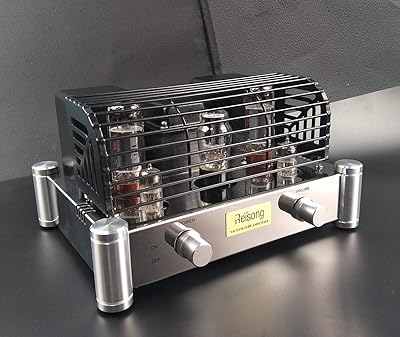
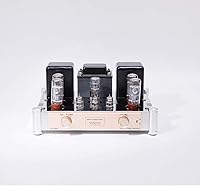
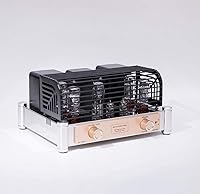
The classic tube amp visual — exposed output transformers, glowing EL34 bottles, and a clean front panel — appeals strongly to buyers who want their equipment to look the part of a serious audio setup. In dimly lit listening rooms, the amber glow from the tubes creates an ambiance that no solid-state amp can match.
The overall aesthetic is competent rather than distinctive — it sits in a crowded field of Chinese tube amps with nearly identical visual designs. Buyers expecting the refined industrial design of a Cayin or PrimaLuna may find the MT-34 MKII looks slightly generic, and the tube cage, while practical, visually softens the impact of the glowing bottles.
After-Sales Support
49%
51%
Some Amazon sellers offering this tube amp have demonstrated responsiveness to buyer complaints, particularly around tube-matching issues, and a few owners have received replacement tube sets without needing to return the full unit. When support works, buyers describe it as adequate for the product category.
After-sales support is the weakest link in the ownership experience — Reisong does not maintain a robust international service network, and support quality varies significantly depending on which third-party seller fulfilled the order. Buyers facing hardware faults beyond tube replacement have reported difficulty obtaining repair guidance or replacement parts in a timely manner.

Suitable for:

The BoyuuRange MT-34 MKII Integrated Tube Amplifier is an excellent match for analog-focused listeners who want a genuine tube experience without building a kit or spending flagship-tier money. If your source is a turntable or CD player and your speakers are reasonably efficient — 90dB sensitivity or better — this amp will reward you with a full, warm presentation that solid-state gear at a similar price rarely achieves. It suits buyers who are curious about the EL34 sound signature and want the flexibility to compare push-pull ultra-linear performance against the softer, more intimate character of triode mode from one integrated unit. Bedroom and living-room listeners in small to medium spaces will get the most out of its 25 watts. It also works well as a first serious tube amp for someone stepping up from entry-level gear who is not yet ready to commit to a costly Western-branded alternative.

Not suitable for:

The BoyuuRange MT-34 MKII Integrated Tube Amplifier is not the right tool for every listening setup, and being clear about that saves real frustration. If your speakers dip below 88dB sensitivity or present a difficult impedance load, the available power will feel thin and strained — this amp needs cooperative speakers to perform at its best. Listeners who rely on digital sources exclusively — streaming services, Bluetooth, or a DAC as the primary input — will find the three analog-only inputs immediately limiting. Large rooms or open-plan spaces will expose the wattage ceiling quickly, especially at higher volumes. Anyone who expects the convenience of a remote control, tone controls, or a headphone output will not find them here. Finally, buyers who need guaranteed unit-to-unit consistency and do not want to troubleshoot occasional tube-matching issues would be better served by a brand with a domestic service network.

Specifications

  • Manufacturer: This amplifier is designed and manufactured by Reisong, a Chinese audio company with an established focus on tube-based integrated amplifiers.
  • Model: The unit carries the official model designation MT-34 MKII, indicating it is the second-generation revision of the MT-34 platform.
  • Topology: The amplifier uses a push-pull integrated design, combining preamplification and power amplification in a single chassis with no external components required.
  • Output Tubes: Four EL34 pentode tubes serve as the output stage, a classic tube type widely regarded for its musical midrange and controlled high-frequency response.
  • Rectifier Tube: A single 5Z4P tube handles rectification, converting AC mains power to the DC voltages required by the amplifier circuit.
  • Input Tubes: Three 6N1J dual-triode tubes handle the input and driver stages, providing the voltage gain ahead of the output stage.
  • Ultra-Linear Power: In ultra-linear mode, the amplifier delivers 2 x 25W of continuous output power, suited for dynamic music and speakers needing more headroom.
  • Triode Power: Switching to triode mode reduces output to 2 x 15W per channel, producing a softer, more harmonically rich presentation preferred by many tube listeners.
  • Signal-to-Noise: The rated signal-to-noise ratio is 88dB, which translates to a quiet background during normal listening levels with efficient speakers.
  • Input Impedance: Input impedance is specified at 100KΩ, ensuring broad compatibility with standard analog source components including CD players and phono preamps.
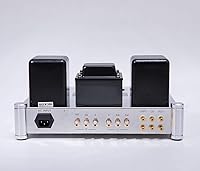
  • Analog Inputs: Three analog RCA inputs are provided, labeled CD, AUX, and TAPE, covering the most common source components in a traditional analog system.
  • Output Power Mode: A front-panel or chassis switch allows the user to toggle between ultra-linear and triode output modes without any internal modifications.
  • Dimensions: The unit measures 14.76 x 11.42 x 7.09 inches (L x W x H), requiring adequate shelf space and ventilation clearance on all sides.
  • Weight: The amplifier weighs 41.89 lbs, reflecting substantial output transformer iron which is a key contributor to low-frequency performance and channel separation.
  • Mains Voltage: The unit is designed for 110 to 120V AC mains supply, making it compatible with standard North American household electrical outlets.
  • Tube Cage: A removable protective tube cage is included in the box, shielding the exposed tubes from accidental contact during normal listening use.
  • Digital Inputs: No digital inputs of any kind are provided; the amplifier is a fully analog design with no DAC, USB, optical, or Bluetooth connectivity.
  • Remote Control: No remote control unit is included or supported; all source selection and volume adjustments must be made at the amplifier chassis directly.

Related Reviews
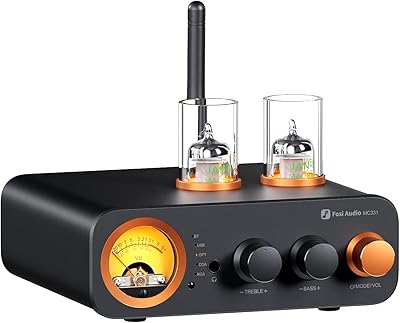
Fosi Audio MC331
Fosi Audio MC331
79%
83%
Sound Character
77%
Build Quality
91%
Feature Set
88%
Value for Money
89%
VU Meter & Aesthetics
More
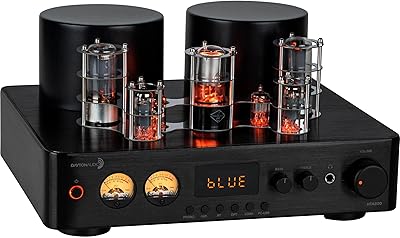
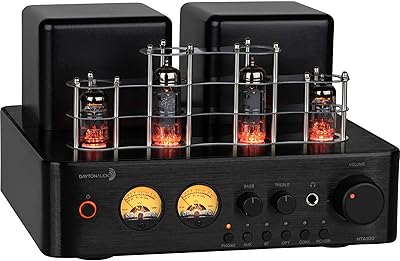
Dayton Audio HTA100
Dayton Audio HTA100
80%
88%
Sound Quality
84%
Build Quality
91%
Value for Money
79%
Phono Preamp Performance
93%
Aesthetic & Design
More
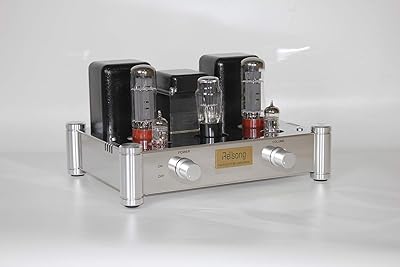
Dayton Audio HTA200 Hybrid Tube Integrated Amplifier
78%
83%
Sound Quality
86%
Value for Money
81%
Tube Preamp Character
88%
Connectivity & Inputs
63%
Noise Floor
More
BOYUURANGE Reisong A12 EL34 Hi-Fi Audio Tube Amplifier
85%
94%
Sound Quality
88%
Build Quality
92%
Value for Money
81%
Compatibility with Speakers
85%
Ease of Use
More
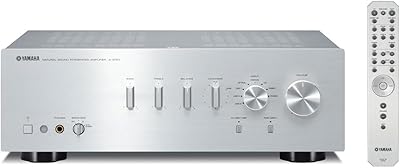
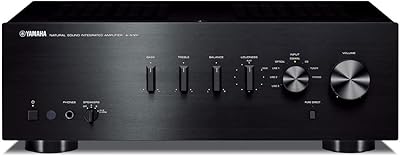
Yamaha A-S701SL Integrated Stereo Amplifier
88%
94%
Sound Quality
91%
Build Quality
88%
Ease of Use
89%
Power Output
85%
Energy Efficiency
More
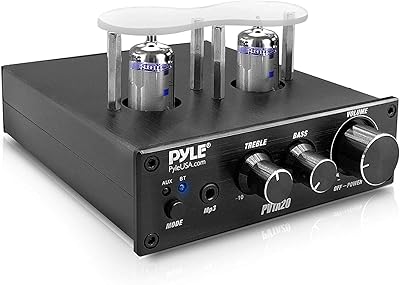
Pyle PVTA20 Bluetooth Tube Amplifier
81%
88%
Sound Quality
85%
Bluetooth Connectivity
90%
Build Quality
82%
Power Output
87%
Ease of Setup
More
Reisong A10
Reisong A10
71%
88%
Sound Quality
54%
Power Output
82%
Build Quality
83%
Value for Money
79%
Tube Complement & Rolling Potential
More
Yamaha A-S301 Integrated Stereo Amplifier
78%
91%
Sound Quality
88%
Build Quality
86%
Value for Money
71%
Phono Stage
84%
Connectivity
More
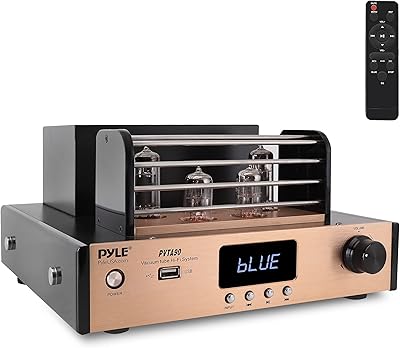
Pyle PVTA90 Vacuum Tube Stereo Amplifier
74%
78%
Sound Quality
61%
Build Quality
82%
Value for Money
79%
Bluetooth Performance
84%
Input Versatility
More
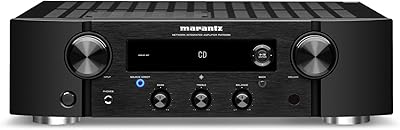
Marantz PM7000N
Marantz PM7000N
79%
93%
Sound Quality
88%
Build Quality
74%
Streaming & Connectivity
61%
HEOS App Experience
86%
Phono Stage Performance
More

FAQ

You will get the most out of this tube amp with speakers rated at 90dB sensitivity or higher. High-efficiency designs — horn-loaded speakers, many vintage models, or modern high-sensitivity bookshelf and floorstanding speakers — are ideal partners. Speakers that dip to 4 ohms or below under load, or that require significant current, will expose the wattage ceiling and can stress the output transformers over time.

Ultra-linear mode runs the EL34 tubes at full output (25W per channel) and delivers a more dynamic, extended sound with better bass control — good for up-tempo music and larger-scale recordings. Triode mode reduces power to 15W but the sound becomes rounder, more midrange-forward, and typically described as warmer or more intimate. Most listeners find triode preferable for vocals, jazz, and acoustic music, while ultra-linear suits orchestral or rock listening. The best approach is to try both and let your ears decide.

The BoyuuRange MT-34 MKII Integrated Tube Amplifier arrives with tubes pre-installed, so basic setup is straightforward — connect your speakers, plug in a source, and power it on. That said, you should allow at least 30 minutes of warm-up time before critical listening, and plan for a genuine break-in period of 50 to 100 hours before the sound fully settles. During early use, keep volumes moderate and check that both channels are outputting sound evenly.

EL34 output tubes typically last between 2,000 and 5,000 hours of use depending on operating conditions and the quality of the specific tubes. The 6N1J input tubes are generally longer-lived. Replacement EL34s are widely available from suppliers like Tube Depot, Eurotubes, and various online retailers — both budget-friendly and premium options exist. The 5Z4P rectifier tube is slightly less common but still available from most tube vendors.

It is not unusual with this amp, unfortunately. The most common cause is unevenly matched output tubes from the factory. The fix is usually straightforward: source a matched quad of EL34 tubes from a reputable supplier and swap them in. If the imbalance is minor, some owners have also resolved it by rotating tube positions. If the problem persists after tube replacement, contacting the seller or Reisong directly is the recommended next step.

Only if your turntable has a built-in phono preamp or if you use an external phono stage between the turntable and the amp. This EL34 integrated amp does not include an onboard phono preamplifier, so a raw moving-magnet or moving-coil cartridge signal cannot be connected directly — the gain and RIAA equalization must be handled externally before the signal reaches the amp's inputs.

The cage can be removed for aesthetics or to improve tube cooling, but doing so introduces real safety risks — the tubes run very hot and an accidental touch can cause a serious burn. If you have children, pets, or simply tend to reach around your equipment, keep the cage on. For critical listening in a controlled environment where you are aware of the hazard, running without the cage is a personal choice many audiophiles make.

Quite a lot, as is typical for any EL34 push-pull design. The tubes themselves reach high surface temperatures, and the chassis will become noticeably warm during extended listening. Leave at least 6 to 8 inches of clearance above and behind the unit, and never place anything on top of it while in use. Avoid enclosed shelves or furniture cabinets without ventilation.

The MT-34 MKII has output transformer taps to accommodate both impedance loads — check the rear panel for the correct binding posts for your specific speakers. Using the wrong tap will not damage the amp immediately but will affect sound quality and can shorten transformer life over time. Match the tap to your speaker's nominal impedance for best results.

It is a fair concern, and the honest answer is: it depends on your expectations and tolerance for occasional variance. Reisong is not a fly-by-night brand — they have been making tube equipment for years and the MT-34 MKII has a meaningful track record among budget audiophiles. The majority of owners report no major issues. The real trade-off compared to established Western brands is less predictable QC consistency and a thinner support infrastructure if something goes wrong. Buying from a seller with a clear return or warranty policy, and being comfortable with basic tube maintenance, significantly reduces the risk.