Overview

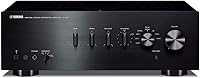
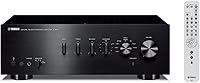
The Yamaha A-S301 Integrated Stereo Amplifier is Yamaha's answer to a straightforward question: what does a serious two-channel amp look like at a price that doesn't demand a second mortgage? It's been on the market since 2014 and keeps selling — that kind of staying power says something. Yamaha built this amp around their natural sound philosophy, the idea that an amplifier should stay out of the music's way rather than color it. In a crowded mid-range bracket where competitors fight aggressively on specs, the A-S301 competes on character and build quality, which tends to matter more in the long run than a flashy spec sheet.
Features & Benefits

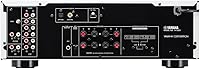
The connectivity on this Yamaha amp is genuinely practical rather than just impressive on paper. A built-in phono stage means turntable owners can plug in and play without buying a separate preamp — that alone justifies serious consideration for vinyl listeners. The digital inputs, both coaxial and optical, make it easy to run a TV or CD transport through the same box, keeping your setup tidy. Dual speaker terminals let you run two pairs independently or together, and there's a subwoofer line output for anyone blending a sub into a stereo rig. The included remote is a practical bonus, not an afterthought.

Best For

The A-S301 makes the most sense for vinyl enthusiasts who want a clean, capable one-box solution — no separate phono preamp required, no extra clutter. It's also a natural fit for people stepping up from an all-in-one receiver who want to hear what a dedicated two-channel amplifier actually sounds like. If you're connecting a TV via optical and a turntable via phono, this integrated amplifier handles both without compromise. That said, if you're chasing built-in streaming, hi-res USB audio, or a headphone DAC, this amp isn't that. It rewards simplicity-focused buyers who care most about honest, reliable sound.

User Feedback

Owners consistently describe this Yamaha amp as honest and fatigue-free — the kind of sound you can run for hours without feeling like the amp is doing something unnatural to the music. Build quality draws frequent praise; buyers are often surprised by how substantial it feels compared to similarly priced rivals. The phono stage works well with budget to mid-range cartridges, but serious vinyl collectors using premium cartridges may want a dedicated external stage. One recurring caveat: the unit runs noticeably warm during long sessions, so adequate ventilation matters. Long-term owners consistently report stable, reliable performance over years of daily use, which frankly counts for a lot.

Pros

  • Built-in phono stage lets turntable owners skip the external preamp entirely.
  • Optical and coaxial digital inputs make TV and CD transport connections straightforward.
  • Dual speaker outputs allow bi-wiring or running two separate speaker pairs with ease.
  • Sound character is neutral and fatigue-free — easy to listen to for hours without harshness.
  • A dedicated subwoofer output makes it simple to blend a sub into a stereo system.
  • Solid, weighty construction feels noticeably more substantial than rival amps at this price tier.
  • Remote control is included and works reliably — a small but practical everyday convenience.
  • Long-term owners consistently report stable, trouble-free performance over years of regular use.
  • Yamaha's reputation for quality control gives added confidence in reliability over the long haul.

Cons

  • No Bluetooth, Wi-Fi, or network streaming means smartphone and wireless source users need extra hardware.
  • The phono stage is competent for budget cartridges but underwhelms with high-end stylus setups.
  • No built-in headphone amplifier output limits solo late-night listening options.
  • The unit runs noticeably warm during extended sessions — adequate shelf ventilation is genuinely necessary.
  • No USB audio input rules out direct hi-res playback from a computer without an external DAC.
  • At nearly 20 pounds and over 17 inches wide, it demands dedicated shelf space most compact setups lack.
  • No tone controls or EQ adjustments — purist design that frustrates listeners who prefer some tuning flexibility.

Ratings

The scores below for the Yamaha A-S301 Integrated Stereo Amplifier were generated by our AI after analyzing verified purchaser reviews from global markets, with spam, incentivized, and bot-flagged submissions actively filtered out. Each category reflects the honest distribution of real buyer sentiment — not just the highlights, but the recurring frustrations too. Where this amp consistently impresses and where it falls short are both reflected transparently in the numbers.
Sound Quality
91%
Owners across a wide range of listening habits — from late-night jazz sessions to weekend vinyl listening — consistently describe the sound as clean, neutral, and natural. The A-S301 stays out of the music's way in a manner that more colored-sounding rivals at this price tier simply do not, and long listening sessions rarely produce fatigue.
A small number of critical listeners feel the amp lacks a certain low-end authority compared to higher-powered alternatives, and those accustomed to warmer-voiced British amplifiers may initially find the neutral character a little dry or uninvolving.
Build Quality
88%
The chassis feels noticeably more substantial than most competitors at this price point — nearly 20 pounds of reassuringly solid construction. Buyers frequently mention that unboxing the A-S301 for the first time recalibrates their expectations; the front panel, controls, and overall fit feel closer to premium gear than mid-range.
A few owners note that the speaker binding posts, while functional, feel slightly plasticky relative to the rest of the chassis, and the input selector knob lacks the ultra-precise detent feel of higher-end Yamaha models.
Value for Money
86%
Given the combination of a phono stage, dual speaker outputs, digital inputs, and a subwoofer output in one box at this price, the A-S301 consistently earns praise as a high-value, low-compromise purchase. Buyers who researched alternatives like the Cambridge Audio AXA35 or NAD D 3020 frequently note that the Yamaha offers more physical connectivity for a comparable or lower investment.
Buyers who later upgrade their cartridge or speakers to genuinely high-end components sometimes feel the amp becomes the weakest link sooner than expected, suggesting its value proposition is strongest for mid-tier system pairings rather than as a long-term anchor for an ambitious setup.
Phono Stage
71%
29%
For vinyl listeners running standard moving-magnet cartridges in the budget-to-mid range, the built-in phono stage is more than adequate and removes the need for an external preamp entirely. Casual and intermediate vinyl users consistently report that records sound warm, detailed, and well-defined through the integrated stage.
Serious vinyl enthusiasts using premium cartridges frequently find the onboard phono stage underwhelming — it lacks the resolution and dynamic range a dedicated external preamp provides. It is genuinely not designed for high-output moving-coil setups, and pushing it beyond its intended range yields noticeably compressed, flatter results.
Connectivity
84%
The range of inputs is a genuine strength: phono, multiple analog RCA inputs, coaxial digital, optical TOSLINK, and a line-level subwoofer output cover most real-world setups without requiring additional hardware. Users who want to run a turntable and a TV through the same amp find the A-S301 handles both without compromise.
The absence of any wireless connectivity — no Bluetooth, no Wi-Fi, no USB audio — is a genuine gap for modern users whose primary sources are phones, tablets, or streaming services. Adding a streamer is a straightforward workaround, but it is an extra cost and extra box that some buyers did not anticipate needing.
Ease of Setup
89%
Most buyers report being up and running within minutes out of the box — the rear panel is clearly labeled, the controls are intuitive, and the included manual covers every input clearly. First-time integrated amplifier owners specifically appreciate how uncomplicated the initial configuration feels compared to a full AV receiver.
Users who want to integrate the amp into a more complex setup involving a DAC, streamer, and subwoofer simultaneously can run into input juggling, as the total number of analog inputs is limited and there is no input labeling display on the front panel to confirm source selection at a glance.
Remote Control
74%
26%
The included remote handles the core functions — volume, input selection, speaker switching — reliably and without unnecessary complexity. Buyers appreciate that it is included at all, since some competitors at this price omit a remote entirely, and the range and responsiveness are consistently reported as adequate for normal room distances.
The remote itself feels noticeably lightweight and budget in hand, which clashes with the otherwise substantial feel of the amp. Several owners note that the button layout requires a quick learning period, and a few found the volume control less precise than they would prefer for fine adjustments during quiet late-night listening.
Thermal Performance
63%
37%
Under normal listening conditions at moderate volumes, the A-S301 maintains a manageable operating temperature and has not generated widespread reports of overheating or thermal shutdowns. The warmth is in line with what you would expect from a Class AB amplifier of this output class.
Extended sessions at higher volumes push the chassis to a noticeably warm state that requires real ventilation clearance — enclosed AV cabinets and tight shelving are genuinely problematic. A minority of buyers who placed the unit in poorly ventilated spaces reported unexpected warm shutoffs, which, while a safety feature, disrupted listening experiences.
Longevity & Reliability
93%
Long-term owners — some reporting five or more years of near-daily use — consistently highlight the A-S301 as one of the more dependable pieces of audio gear they have owned. Yamaha's track record with this model across its decade-plus market life reinforces confidence in its durability under normal operating conditions.
A small number of buyers have reported channel imbalance or intermittent crackling after several years of use, which is not uncommon for any integrated amp in this class, but worth noting. These cases appear infrequent relative to the review volume and often respond to internal contact cleaning.
Aesthetic Design
78%
22%
The black brushed-aluminum front panel has a clean, timeless look that fits well in both modern and traditional living spaces. Buyers frequently mention that it looks more premium in person than product photos suggest, and the understated styling ages well alongside changing decor.
Yamaha's design language here is deliberately conservative — there are no VU meters, no colored lighting, and no modern touches that some buyers were hoping for. Those who want their amplifier to be a visual statement piece as much as an audio one may find the A-S301 a little too restrained.
Headphone Performance
31%
69%
There is no headphone amplifier stage built into this unit, so this score reflects capability rather than quality — it simply does not apply, which some buyers discover only after purchase.
The complete absence of a headphone output is a genuine dealbreaker for apartment dwellers and late-night listeners who rely on headphones regularly. Buyers who anticipated a headphone jack and discovered its absence post-purchase are among the most consistently disappointed voices in the review pool.
Stereo Imaging
83%
Listeners who run quality bookshelf or floorstanding speakers report a well-defined stereo image with good channel separation — instruments sit clearly in the soundstage, and the amp does not compress spatial cues the way cheaper receivers often do. This is one area where the natural sound philosophy pays off in tangible listening terms.
Imaging quality is ultimately limited by the source and speakers in the chain, and a handful of critical listeners feel that at higher volumes the stereo field can slightly narrow. These observations tend to come from users pairing the amp with demanding, low-sensitivity speakers that push it toward its output limits.
Subwoofer Integration
79%
21%
The dedicated line-level subwoofer output is a practical, clean solution for blending a powered sub into a stereo system, and users who have set this up report a smooth integration process with most popular sub brands. It removes the need for Y-splitters or speaker-level adapters in most cases.
The amp provides no crossover or level control for the subwoofer signal on its end — that management is entirely delegated to the subwoofer itself. Buyers using older or simpler powered subs with limited onboard controls can find dialing in the correct blend more trial-and-error than they expected.

Suitable for:

The Yamaha A-S301 Integrated Stereo Amplifier is a strong match for anyone who wants a capable, no-nonsense two-channel setup without piecing together a stack of separate components. Vinyl listeners in particular get real value here — the built-in phono stage handles moving-magnet cartridges competently, removing the need for an additional outboard preamp and keeping the whole system lean. It also works well for hybrid setups where a TV feeds in via optical while a turntable occupies the phono input, making it genuinely versatile for everyday living room use. Buyers graduating from a mid-range AV receiver who want to experience focused, cleaner stereo playback will notice a meaningful difference. If you value long-term reliability, a straightforward interface, and a brand with decades of hi-fi credibility, this integrated amplifier rewards that thinking.
Not suitable for:

The Yamaha A-S301 Integrated Stereo Amplifier is not the right tool for buyers whose listening habits have gone fully digital and streaming-first. There is no built-in network connectivity, no Bluetooth, no Wi-Fi, and no USB audio input — if your source is a phone, laptop, or streaming device, you will need a separate DAC to bridge the gap. Audiophiles running premium moving-coil cartridges should also look elsewhere; the onboard phono stage is solid for the money but not a substitute for a dedicated high-end phono preamp. Those who need a headphone amplifier with a quality dedicated output will find this amp lacking in that department as well. If your room requires high output power to drive large, inefficient speakers at serious volumes, the A-S301 may fall short compared to more powerful amplifiers at a higher price point.

Specifications

  • Product Type: The A-S301 is a two-channel integrated stereo amplifier combining a preamplifier and power amplifier in a single chassis.
  • Dimensions: The unit measures 17.13″ wide by 15.25″ deep by 6″ tall, requiring a dedicated shelf with adequate clearance on all sides.
  • Weight: At 19.8 pounds, the A-S301 has a solid, substantial feel consistent with quality internal transformer and component construction.
  • Analog Inputs: Multiple analog inputs are provided, including a moving-magnet phono input for direct turntable connection without an external preamp.
  • Digital Inputs: One coaxial S/PDIF input and one optical TOSLINK input allow connection of digital sources such as TVs, CD transports, and external DACs.
  • Speaker Outputs: Two sets of speaker terminals (A and B) support independent or simultaneous operation, enabling bi-wiring or two-room speaker configurations.
  • Subwoofer Output: A dedicated line-level subwoofer output allows integration of a powered subwoofer into a stereo system without additional adapters.
  • Remote Control: A remote control is included in the box and requires two AAA batteries, which are also supplied with the unit.
  • Finish: The A-S301BL variant features a black brushed-aluminum front panel with a classic, understated Japanese hi-fi aesthetic.
  • Manufacturer: Designed and manufactured by Yamaha Electronics, a brand with over five decades of dedicated consumer audio engineering experience.
  • Market Launch: The A-S301 was first made available in September 2014 and has remained in active production without discontinuation since then.
  • Average Rating: Based on over 1,198 customer ratings on Amazon, the unit holds a 4.5 out of 5 star average — strong for a product in this category.
  • Sales Rank: The A-S301 ranks #52 in Audio Component Amplifiers on Amazon, reflecting consistent, sustained demand over many years.
  • Phono Stage: The integrated phono stage is designed for moving-magnet cartridges and performs reliably with budget to mid-range stylus setups.
  • Thermal Output: The unit generates moderate heat during extended listening sessions and should be installed with open ventilation on all sides.
  • Power Supply: The A-S301 uses an internal toroidal-style transformer contributing to its weight and low noise floor during quiet passages.
  • Battery Requirement: Two AAA batteries are required for the remote control and are included in the original packaging at time of purchase.

Related Reviews
Yamaha A-S701SL Integrated Stereo Amplifier
88%
94%
Sound Quality
91%
Build Quality
88%
Ease of Use
89%
Power Output
85%
Energy Efficiency
More
Yamaha A-S801BL Natural Sound Integrated Stereo Amplifier
86%
93%
Sound Quality
91%
Power Output
89%
DAC Performance
92%
Build Quality
78%
Ease of Use
More
Marantz PM7000N
Marantz PM7000N
79%
93%
Sound Quality
88%
Build Quality
74%
Streaming & Connectivity
61%
HEOS App Experience
86%
Phono Stage Performance
More
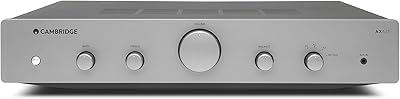
Cambridge Audio AXA25
70%
91%
Sound Quality
88%
Build Quality
84%
Value for Money
86%
Ease of Setup
79%
Input Flexibility
More
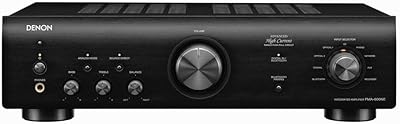
Denon PMA-600NE
Denon PMA-600NE
82%
91%
Sound Quality
88%
Build Quality
83%
Value for Money
89%
Analog Mode
79%
Phono Preamp Quality
More
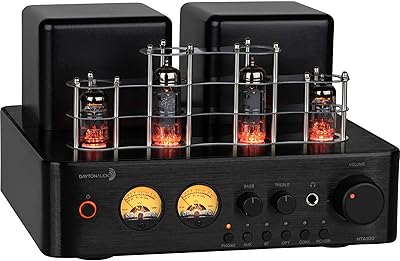
Dayton Audio HTA100
Dayton Audio HTA100
80%
88%
Sound Quality
84%
Build Quality
91%
Value for Money
79%
Phono Preamp Performance
93%
Aesthetic & Design
More
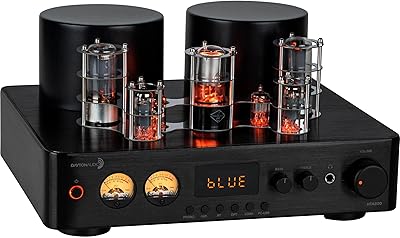
Dayton Audio HTA200 Integrated Stereo Hybrid Tube Amplifier
85%
91%
Sound Quality
88%
Build Quality
81%
Ease of Use
93%
Aesthetic Appeal
86%
Connectivity Options
More
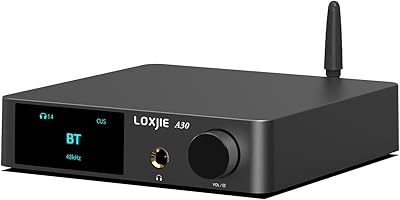
LOXJIE A30
LOXJIE A30
79%
86%
Sound Quality
82%
Build Quality
91%
Value for Money
89%
Input Versatility
63%
Bluetooth Performance
More
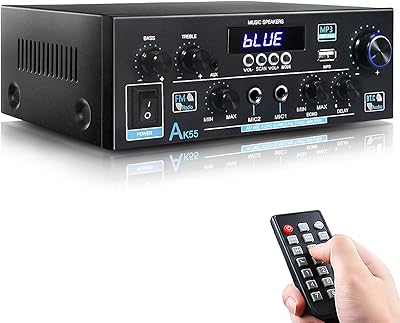
AK55 Stereo Amplifier
79%
88%
Value for Money
74%
Sound Quality
86%
Karaoke & Mic Performance
83%
Bluetooth Connectivity
91%
Input Variety
More
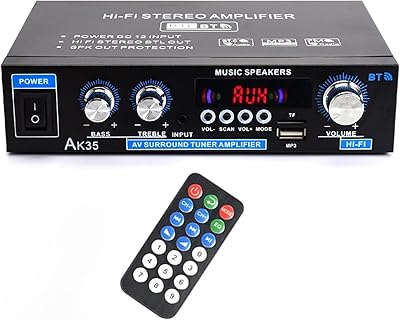
AK35 Stereo Mini Amplifier
71%
83%
Value for Money
67%
Sound Quality
71%
Bluetooth Performance
54%
Build Quality
89%
Setup & Ease of Use
More

FAQ

Yes, and that is one of the more practical reasons to consider it. The A-S301 has a built-in moving-magnet phono stage, so any standard turntable with an MM cartridge plugs straight into the dedicated phono input. You do not need an external preamp unless you are running a moving-coil cartridge, which requires a different kind of input.

It does. There is an optical TOSLINK input on the back, so you can run the digital audio output from most modern TVs directly into the amp. This makes it an easy way to upgrade your TV sound through a proper set of stereo speakers without a full home theater receiver.

Warm enough that ventilation genuinely matters. Several owners have noted the chassis gets noticeably warm during longer sessions — not alarmingly hot, but enough that you should avoid enclosing it in a sealed cabinet. Leave a few inches of clearance above and on the sides, and it runs without any issues.

For budget to mid-range cartridges, it performs well and will satisfy most casual to intermediate vinyl listeners. If you are running a premium cartridge worth several hundred dollars or more, you may eventually want a dedicated outboard phono stage to get the most out of it. For the majority of users with standard MM cartridges, the built-in stage is more than adequate.

Yes, the A-S301 has two sets of speaker terminals labeled A and B, and you can switch between them or run both simultaneously using the front panel selector. It is a convenient feature for anyone wanting sound in two spaces without buying additional hardware, though keep in mind that running both pairs simultaneously draws more from the amplifier.

No, it does not. This is a traditional analog and digital wired amplifier only — there is no wireless connectivity of any kind built in. If you want to stream from a phone or tablet, you would need a separate Bluetooth or network streamer connected to one of the analog inputs.

The line-level subwoofer output lets you add a powered subwoofer to your stereo setup. You run a standard RCA cable from that output to the subwoofer's line input, and the sub handles its own crossover internally. It is a clean, practical way to extend the low end of a stereo system without any complicated wiring.

All three sit in a similar price neighborhood, but they take different approaches. The Cambridge AXA35 is similarly clean-sounding but lacks digital inputs. The NAD D 3020 adds Bluetooth and a headphone output but in a smaller, lighter chassis. The A-S301 stands out for its build quality, dual speaker outputs, and the combination of both phono and digital inputs in one box — it offers more physical connectivity than either rival.

No, the A-S301 does not have a headphone output. If headphone listening is important to your setup, you would need a separate headphone amplifier or a different integrated amp that includes one. This is a notable omission for some buyers, especially those in apartments who rely on headphones regularly.

The A-S301 has been available since September 2014, which is a long run for consumer electronics. The fact that it still ranks competitively and maintains strong customer ratings more than a decade later says a lot. Yamaha has not reinvented it because it largely did not need reinventing — the core use case of a reliable, well-built two-channel amp with versatile inputs remains just as valid today as it was at launch.

Where to Buy