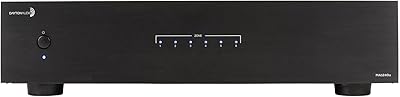
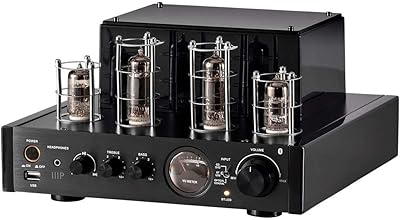
Overview

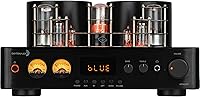
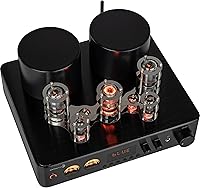
The Dayton Audio HTA200 Hybrid Tube Integrated Amplifier sits in an interesting spot in the market — it's not a budget throwaway, but it's also not chasing the rarefied air of high-end separates. What it offers is a genuine Class A/B amplifier with a tube preamp stage built into one tidy chassis, wrapped in brushed black aluminum with analog VU meters up front that actually do something useful. If you're stepping up from a mid-fi AV receiver and want a dedicated stereo setup with some tonal character, this hybrid tube amp makes a compelling case for itself without asking you to remortgage anything.
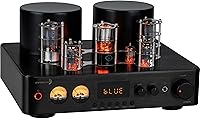
Features & Benefits

The HTA200 runs a pair of 12AX7-style tubes in its preamp circuit, which adds a layer of harmonic richness that some listeners prefer over a purely solid-state signal path — though it's a tonal preference, not a measurable superiority. The output stage delivers 100W RMS per channel, enough to drive most bookshelf speakers with authority and floor-standers in smaller rooms without strain. Connectivity is genuinely broad: RCA, optical, Bluetooth, USB DAC, and a built-in phono preamp that saves you the cost and hassle of a separate unit. The motorized volume knob responds to the included remote, a small but real convenience when you're across the room.

Best For

This integrated amplifier is the natural choice for anyone building a dedicated two-channel system around a turntable — the built-in phono stage means you plug your record player in directly, no extra box required. It also appeals to listeners who've grown tired of AV receivers with their layers of surround processing they'll never use. Bluetooth is there for casual phone streaming, but treat it as a convenience input rather than a primary one; the optical and USB DAC connections will serve you better for serious listening. A small-to-medium room is the HTA200's sweet spot, paired with efficient bookshelf or moderate floor-standers.

User Feedback

With a 4.4-star average across over 400 ratings, most buyers are clearly satisfied — praise tends to cluster around the warm sound character, the chassis quality, and the visual appeal. A few recurring criticisms are worth knowing: some users report a low-level background hum, common with tube-based preamp circuits and typically improving after a break-in period. The product title's mention of 200 watts also trips up a few buyers — that figure is the combined total; you're getting 100W per channel. Hardcore audiophile skeptics tend to dismiss hybrid designs at this price, but the actual buyer consensus tells a different story, with many reporting it outperforms expectations when paired with the right speakers.

Pros

  • Built-in phono preamp handles turntable connection directly, eliminating the cost and clutter of a separate unit.
  • Five distinct inputs — RCA, optical, Bluetooth, USB DAC, and phono — cover virtually every common source type.
  • 100W RMS per channel provides genuine headroom for bookshelf speakers and moderate floor-standers in typical rooms.
  • Tube preamp stage delivers harmonic warmth that many listeners find more engaging for acoustic and vocal music.
  • Analog VU meters serve as real-time output indicators, not just decorative nods to vintage styling.
  • Motorized volume knob with full IR remote control makes daily operation genuinely convenient from across the room.
  • Brushed black aluminum chassis looks and feels noticeably more substantial than competing units at this price tier.
  • Compact footprint relative to its output power makes it a practical fit for shelf or desktop audio setups.
  • Hybrid topology carries far lower maintenance demands than a full tube amplifier — no biasing adjustments required.
  • Consistently strong real-world buyer ratings across hundreds of verified purchases back up its performance claims.

Cons

  • The 200-watt figure in the product title is misleading — actual output is 100W per channel, a combined total.
  • Some users report a low-level tube hum that becomes noticeable in quiet environments or with sensitive speakers.
  • Bluetooth input is functional for casual use but falls well short of hi-fi quality for serious listening sessions.
  • Tubes will eventually need replacing, adding a recurring maintenance cost that purely solid-state buyers never encounter.
  • No tone controls or EQ options on board, which can frustrate listeners who prefer to shape their sound signature.
  • The built-in phono stage is adequate for entry-level cartridges but may underwhelm users with higher-output or moving-coil setups.
  • Break-in period is a real factor — sound character can shift noticeably over the first several hours of use.
  • Pairing the HTA200 with premium, revealing speakers at higher price points will expose the ceiling of its preamp circuit.

Ratings

Scores for the Dayton Audio HTA200 Hybrid Tube Integrated Amplifier were generated by AI after systematically analyzing hundreds of verified buyer reviews from global markets, with spam, incentivized, and bot-flagged submissions actively filtered out before any category was scored. The resulting ratings reflect a genuinely balanced picture — what real owners consistently praise, where the recurring frustrations cluster, and how the experience differs across listening environments and use cases. Both standout strengths and honest pain points are transparently represented so buyers can make informed decisions rather than rely on curated impressions.
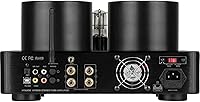
Sound Quality
83%
Most buyers describe the overall sound as warm and musical rather than clinical — qualities that come through especially well with jazz, acoustic recordings, and classic rock in a home listening room. The Class A/B output stage keeps the low end controlled and the mids clear, making extended listening genuinely enjoyable rather than fatiguing.
Audiophiles accustomed to high-end separates will notice the ceiling of this design fairly quickly, particularly in upper midrange resolution and soundstage depth. The sound signature is pleasing but not analytical, which suits casual listeners well but may disappoint those who prize precise imaging and transparency above all else.
Value for Money
86%
When you account for the built-in phono preamp, five input types, remote control, and tube preamp stage all in one chassis, this integrated amplifier represents a genuinely strong proposition for its price tier. Buyers upgrading from mid-fi AV receivers consistently report feeling like they got substantially more performance per dollar than anticipated.
Those who price-compare against dedicated solid-state integrated amplifiers at the same cost may find those alternatives offer lower noise floors and more refined output stages. The value calculation also shifts when you factor in periodic tube replacement over the amplifier's lifetime — an ongoing cost that solid-state alternatives simply do not carry.
Tube Preamp Character
81%
19%
For listeners curious about the tube sound but not ready to commit to a full tube amplifier's upkeep, the preamp stage delivers a noticeable warmth on acoustic music, strings, and vocal-heavy recordings. Many buyers describe it as taking a harder digital edge off optical and USB sources in a way that makes longer listening sessions more comfortable.
The effect is subtle enough that buyers listening through less resolving bookshelf speakers may not notice a meaningful difference compared to solid-state alternatives at the same price. This is a tonal preference rather than an objective upgrade, and expectations of a dramatic sonic transformation are likely to leave some listeners underwhelmed.
Connectivity & Inputs
88%
Five inputs covering RCA, optical, Bluetooth, USB DAC, and phono is an unusually complete lineup for an integrated amplifier at this price tier — most rivals force a compromise between analog and digital or charge extra for phono. For a listener with a turntable, a TV optical output, and a phone to connect, everything slots in cleanly without needing add-ons.
There is no dedicated subwoofer output, which makes building a 2.1 setup awkward and requires a workaround through the subwoofer's high-level speaker inputs. Input switching logic and labeling could also be more intuitive; a small but consistent group of buyers report confusion navigating sources when using the remote rather than the front panel controls.
Noise Floor
63%
37%
In most furnished listening environments — a bedroom, home office, or dedicated listening room at typical speaker distances — the tube-related idle noise is inaudible once music begins playing at any reasonable volume. Many buyers also report that any initial hum settles noticeably after a proper break-in period of several hours.
Buyers using highly sensitive speakers or listening in quiet, acoustically treated rooms will encounter a low-level tube hum at idle that no solid-state amplifier would produce. A consistent subset of user reports describe hum levels that did not meaningfully improve with break-in, pointing to some unit-to-unit variation in tube quality at the factory level.
Build Quality
78%
22%
The brushed black aluminum chassis gives this amplifier a visual presence on the shelf that noticeably exceeds its price point — it reads as more expensive than it is. The front VU meters are properly illuminated and feel like a deliberate design element rather than an afterthought, and the motorized volume knob moves with satisfying mechanical smoothness.
A recurring observation from buyers is that while the exterior chassis impresses, some internal components and rear-panel input connections feel less refined on closer inspection. The unit is also substantially lighter than most amplifiers of similar power output, which some buyers reasonably interpret as a reflection of internal construction compromises.
Power & Headroom
79%
21%
At 100W RMS per channel, the HTA200 drives efficient bookshelf speakers and moderately sensitive floor-standers with clear authority in small to medium rooms. Most buyers report never needing to push the volume knob past halfway in a typical bedroom or home office, which suggests healthy headroom for everyday listening at real-world levels.
In larger rooms or with speakers below roughly 85dB sensitivity, the amplifier can start showing strain at higher volumes, with some users noting a slight compression in dynamic feel when pushed hard. The 200-watt figure in the product title creates reasonable expectations that the per-channel spec does not independently meet, frustrating buyers who did not read the fine print.
Phono Stage Performance
72%
28%
The built-in phono preamp is more than adequate for entry-level to mid-tier moving-magnet turntables, covering the most common setup scenario without the added cost or complexity of a separate external unit. Vinyl listeners upgrading from an AV receiver-based system typically notice an immediate improvement in clarity and channel separation through the dedicated phono input.
Users with higher-output or more resolving turntable setups may find the phono stage underwhelms compared to even a modestly priced standalone phono preamp. Moving-coil cartridge owners are entirely excluded — the gain level is calibrated for moving-magnet only, which is a real limitation for anyone with more advanced analog front-end equipment.
Bluetooth Performance
58%
42%
Bluetooth pairing is quick and reliable in typical home environments, and the feature handles casual background listening from a smartphone without notable dropouts at normal distances. For morning listening or low-effort background music sessions, it removes the friction of finding and connecting a cable in a genuinely convenient way.
Audio quality through the Bluetooth input falls noticeably short of the wired optical and USB DAC connections — compression artifacts become apparent on dynamic recordings or anything with fine detail in the upper frequencies. Range can also be inconsistent in wireless-dense environments, and some buyers report intermittent latency or brief dropouts near the edges of usable range.
Remote & Controls
74%
26%
The motorized volume knob responding smoothly to a remote command from across the room is one of those small usability touches that improves daily listening more than it initially seems like it should. Input switching via remote also works reliably, covering core adjustments without requiring a trip to the front panel during a listening session.
The remote itself feels basic relative to the amplifier's overall aesthetic, and the button layout is not immediately intuitive without consulting the manual. It also does not offer full control over every amplifier function, meaning buyers who want complete remote operation of their system will still find themselves getting up more often than expected.
Ease of Setup
87%
Setup is approachable even for buyers who have never owned a dedicated integrated amplifier — connect speakers, plug in sources, and the unit is operational within minutes. The front panel layout is clear enough that most buyers report completing basic setup and source switching without ever opening the manual.
First-time tube amp buyers occasionally find the initial warm-up behavior and any early hum alarming, mistaking normal tube characteristics for a product defect. The included documentation could also be more thorough in explaining the tube break-in period and what gradual sound changes are normal and expected over the first several hours of use.
Aesthetics & Design
91%
The brushed black aluminum chassis and glowing front tube display create a visual statement that looks considerably above this amplifier's price bracket — buyers frequently report that visitors assume it costs two or three times more. The analog VU meters add functional character and a warm ambient glow that product photographs consistently fail to do justice.
The relatively tall profile at 9.61 inches creates fitment challenges in standard AV furniture and entertainment units designed around typical low-profile component dimensions. A smaller but notable group of buyers also mention that the VU meter illumination, while atmospheric during normal use, can be distracting in a completely darkened room during late-night listening.
Versatility
84%
Few integrated amplifiers at this price cover vinyl, optical digital, USB computer audio, Bluetooth, and standard RCA analog in a single chassis — this hybrid tube amp can serve as the complete hub of a mixed-source listening system without requiring outboard add-ons. Buyers whose source types shift day to day find this range of inputs particularly practical.
The all-in-one design means none of the individual input stages — phono, DAC, Bluetooth — fully matches what a dedicated standalone unit can deliver at the same price point. Buyers who prioritize peak performance from one specific source type may be better served by a simpler integrated amp paired with a purpose-built outboard component.
Long-term Reliability
71%
29%
The Class A/B solid-state output stage is inherently durable and unlikely to degrade the way purely tube-based output stages can over time with heavy use. Most buyers who have owned the unit for over a year report no functional issues beyond the expected and easily managed wear in the preamp tube circuit.
The tube preamp stage introduces a wear variable that purely solid-state amplifiers do not carry, meaning eventual tube replacement is a certainty rather than a possibility. The unit has only been on the market since 2023, so meaningful long-term reliability data remains limited — buyers should weigh that uncertainty against alternatives with a longer field track record.

Suitable for:

The Dayton Audio HTA200 Hybrid Tube Integrated Amplifier is built for the listener who wants to consolidate a capable stereo setup without juggling multiple separate components. If you own a turntable and have been running it through a receiver just to get by, the built-in phono preamp alone makes this a meaningful and practical upgrade. It works particularly well in small to medium-sized rooms paired with efficient bookshelf speakers — think a dedicated home office, bedroom, or a focused listening corner rather than a large open living space. Anyone transitioning away from home theater receivers toward a purer two-channel experience will find the input variety here refreshingly complete, covering vinyl, optical digital, USB audio, and casual Bluetooth streaming in one unit. The tube preamp stage adds a degree of tonal warmth that tends to suit acoustic music, jazz, and classic rock especially well, though how much of a difference you actually hear will depend on your speakers and your own ears.
Not suitable for:

Serious audiophiles who build systems from high-performance separates should look elsewhere — the Dayton Audio HTA200 Hybrid Tube Integrated Amplifier operates at a price and design tier that will leave that audience wanting more from both the preamp circuit and the output stage. If your listening room is large, or your speakers are inefficient and demand significant current to come alive, 100W per channel may fall short of delivering the headroom and dynamic authority you need. Buyers who rely on Bluetooth as their primary listening source will likely be disappointed; the wireless input here is functional and convenient but is not a strong enough link in the chain for critical listening. Those with no interest in vinyl records will also find the all-in-one package slightly redundant if they already own a capable standalone DAC or preamp. And if tube maintenance — even the modest kind involved in a hybrid design — is something you have no interest in dealing with over time, a fully solid-state integrated amp at a similar price point may be a better long-term fit.
Specifications

  • Power Output: Delivers 100W RMS per channel through the solid-state output stage, with a combined total output of 200W.
  • Amp Topology: Class A/B amplifier design balances low distortion with efficient power delivery across a wide dynamic range.
  • Preamp Stage: 12AX7-style vacuum tubes are used exclusively in the preamp circuit, introducing tonal character ahead of the solid-state output stage.
  • Total Inputs: Five inputs are provided: RCA analog, optical digital (Toslink), Bluetooth wireless, USB DAC, and a dedicated phono input.
  • Phono Preamp: A built-in moving-magnet phono preamp allows direct turntable connection without requiring a separate external preamp unit.
  • Remote Control: Includes a full IR remote that operates the motorized volume knob and handles input switching from a distance.
  • Front Display: Analog VU meters on the front panel provide real-time visual monitoring of output signal levels during active playback.
  • Chassis Material: Enclosure is constructed from brushed black aluminum, providing structural rigidity alongside a modernized vintage aesthetic.
  • Dimensions: Unit measures 15.91″ wide × 15.51″ deep × 9.61″ tall.
  • Item Weight: Manufacturer-listed item weight is 3.6 pounds.
  • Model Number: Official model designation is HTA200, produced by Dayton Audio.
  • Manufacturer: Designed and marketed by Dayton Audio, a brand known for accessible, performance-oriented audio components.
  • Availability: First made available to consumers in April 2023.

Related Reviews
Dayton Audio HTA100
Dayton Audio HTA100
80%
88%
Sound Quality
84%
Build Quality
91%
Value for Money
79%
Phono Preamp Performance
93%
Aesthetic & Design
More
Fosi Audio MC331
Fosi Audio MC331
79%
83%
Sound Character
77%
Build Quality
91%
Feature Set
88%
Value for Money
89%
VU Meter & Aesthetics
More
INFI Audio IF-AD05 Hybrid Tube Amplifier
80%
83%
Sound Quality
88%
Build Quality
86%
Value for Money
91%
Connectivity & Inputs
63%
Bluetooth Performance
More
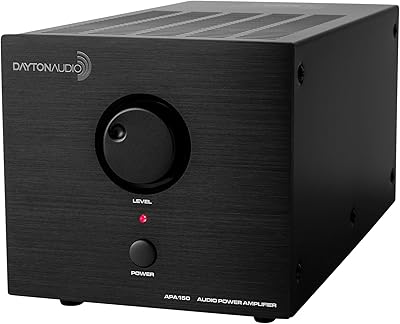
Dayton Audio APA150
Dayton Audio APA150
81%
88%
Sound Quality
83%
Build Quality
91%
Value for Money
89%
Noise Floor & Fan Operation
61%
Crossover Precision
More
Cambridge Audio AXA25
70%
91%
Sound Quality
88%
Build Quality
84%
Value for Money
86%
Ease of Setup
79%
Input Flexibility
More
Fosi Audio P3 Tube Preamplifier
82%
83%
Sound Quality
76%
Bluetooth Performance
81%
Headphone Amplification
79%
Build Quality
71%
Noise Floor
More
Monoprice Stereo Hybrid Tube Amplifier 2019 Edition
67%
78%
Sound Character & Warmth
91%
Input Versatility
61%
Bluetooth Performance
44%
Volume Control & Channel Balance
59%
Build Quality & Materials
More
Dayton Audio MA1240A
83%
93%
Channel Count & Zone Flexibility
87%
Power Output & Headroom
91%
Signal Flexibility & Input Options
89%
Independent Gain Control
84%
Build Quality & Chassis Durability
More
Fosi Audio MC351
Fosi Audio MC351
81%
83%
Sound Quality
91%
Build Quality
88%
VU Meter
86%
Connectivity & Inputs
71%
Bluetooth Performance
More
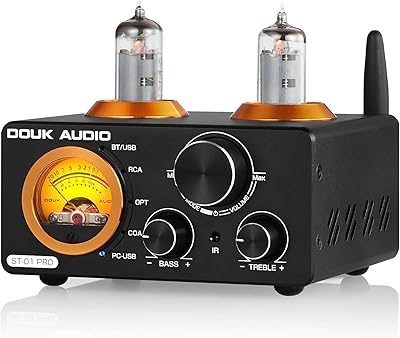
Douk Audio ST-01 PRO
74%
84%
Sound Character & Warmth
88%
Value for Money
91%
Input Versatility
67%
Build Quality
93%
Visual Design & VU Meters
More

FAQ

It is the combined total. Each channel delivers 100W RMS, so the 200-watt number in the product title refers to both channels added together. This trips up a fair number of buyers, so it is worth clarifying upfront. That said, 100W per channel is genuinely capable power for most home listening setups and speaker types.

You can connect it directly — the HTA200 has a built-in phono preamp for exactly this purpose. Just make sure your turntable uses a moving-magnet cartridge, as moving-coil cartridges require a different gain level that this unit is not designed to handle. For the vast majority of consumer turntables, you will be fine plugging straight in.

It works well enough for casual streaming — pairing is simple, and range is adequate in a standard room. The honest answer, though, is that Bluetooth here is a convenience feature, not a hi-fi input. If sound quality is your priority, the optical or USB DAC connections will serve you noticeably better. Think of Bluetooth as the option you reach for when you want to put something on quickly from your phone without fussing with cables.

12AX7-style preamp tubes like these typically last several thousand hours under normal use before you notice any meaningful degradation. Because this is a hybrid design with tubes only in the low-voltage preamp circuit, replacement is straightforward — no special tools, no biasing adjustments, just a simple swap. Replacement tubes are inexpensive and widely available from multiple suppliers.

The HTA200 is best matched with bookshelf or moderate floor-standing speakers in the 87dB sensitivity range or higher. In a small to medium-sized room — a bedroom, a home office, or a dedicated listening space — it will perform confidently. In a large open-plan room with low-sensitivity speakers, you may find yourself running the amp harder than is ideal, so it is worth thinking honestly about your space before purchasing.

Some users do report a low-level hum, which is a fairly normal characteristic of tube-based preamp circuits. In most rooms it becomes inaudible once music is playing. Highly sensitive speakers in a very quiet environment may make it more apparent. It is also worth giving the amp a break-in period — many buyers find any initial noise settles down considerably after the first several hours of use.

The remote handles both the motorized volume knob and input switching, which covers most of what you actually want to control without getting up. It is not a comprehensive system remote and does not handle every function on the unit, but for everyday listening use the core controls are all there.

The Dayton Audio HTA200 Hybrid Tube Integrated Amplifier is actually a sensible starting point for anyone curious about tube-influenced sound without wanting to dive headfirst into a full tube amplifier. The tubes live only in the preamp stage, so there is no biasing, no output tube matching, and none of the higher-maintenance realities of a traditional tube design. It gives you a low-friction way to find out whether the tube tonal character is genuinely something you enjoy before committing further.

Whether you notice it depends on your speakers, your ears, and the music you listen to. The tube stage adds a degree of harmonic warmth — it tends to make the sound feel slightly rounder and more forgiving, particularly with acoustic instruments and vocals. It is a subtle tonal influence, not a dramatic transformation, and some listeners on certain systems will barely notice it. It is a preference characteristic, not an objective performance advantage over solid-state designs.

There is no dedicated subwoofer output on this integrated amplifier. If you want to add a subwoofer, the most practical workaround is connecting it using the subwoofer's high-level speaker inputs in parallel with your main speakers — check your subwoofer's manual to confirm it supports this method. It is not the most elegant solution, so buyers with a strong interest in a 2.1 configuration may want to factor that limitation into their decision.

Where to Buy