Overview

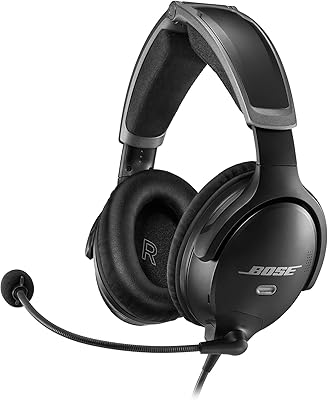
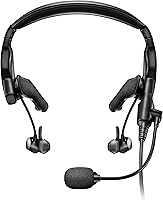
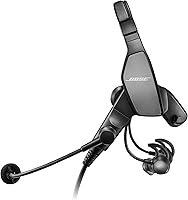
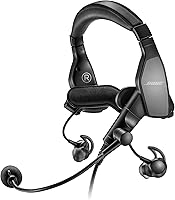
The Bose ProFlight Series 2 Aviation Headset takes a fundamentally different approach to cockpit audio — ditching the bulky over-ear design that pilots have tolerated for decades in favor of a 4.5-ounce in-ear configuration that barely registers on your head. That weight difference is not trivial after a six-hour flight leg. This second-generation model refines the original with a slimmer, more flexible cable, improved tap-control for momentary audio passthrough, and a more adjustable mic boom. Bluetooth connectivity does double duty here, linking to your EFB or phone during cruise while the 5-pin XLR handles panel audio. One important caveat: this headset is built for pressurized turbine environments, not high-noise piston trainers or rotorcraft.
Features & Benefits

The ProFlight Series 2 centers its design around three-mode digital ANC, letting pilots dial in noise reduction to suit the cockpit rather than applying a one-size-fits-all filter. In a pressurized turbine cabin, even the mid-level setting noticeably drops engine drone and HVAC hiss. Bluetooth extends to 10 meters, so connecting to an iPad running ForeFlight or a compatible audio panel is genuinely cable-free. Battery life runs up to 45 hours on a pair of AAs — a real advantage on multi-leg trips where USB ports are not always accessible. The tap-to-talk passthrough is worth noting too: a quick tap lets you hear ambient sound momentarily without yanking out an earbud mid-conversation.

Best For

This in-ear aviation headset makes the most sense for turbine and pressurized aircraft pilots — think airline, corporate, or charter flying where all-day comfort matters more than brute noise attenuation. If you have ever landed with a headache or sore ears after a long duty day in a traditional over-ear headset, that alone makes this worth serious consideration. The compact carry case with carabiner clips neatly onto a flight bag, which matters when moving between hotel rooms and crew transport. It also suits pilots who like streaming audio or monitoring weather feeds via Bluetooth during cruise. That said, student pilots in piston trainers or anyone flying rotorcraft should look elsewhere — the ANC simply is not built for those noise levels.

User Feedback

Rated 4.5 stars across more than 100 reviews, this Bose pilot headset earns its marks primarily on long-haul comfort — turbine pilots logging extended flights consistently report arriving at the end of a duty day far less fatigued than they did wearing over-ear alternatives. Microphone clarity draws steady praise for ATC communications as well. The most common sticking point is fit: some pilots find the tip-sizing process frustrating, and a poor seal meaningfully degrades both noise isolation and audio quality. A handful of users have flagged the tap-control activating unexpectedly during rough patches. The price draws scrutiny, but pilots who dial in the correct fit tend to stay — repeat buyers and upgrades from earlier Bose models appear regularly across the reviews.

Pros

  • At 4.5 oz, the ProFlight Series 2 is dramatically lighter than any full-size aviation headset on the market.
  • Three selectable ANC modes let pilots tune noise reduction to their specific aircraft rather than relying on a fixed setting.
  • End-of-day fatigue is noticeably reduced — turbine pilots consistently report feeling less drained after long duty days.
  • Bluetooth connectivity to EFBs and compatible audio panels cuts down cockpit cable clutter during cruise.
  • 45-hour battery life on standard AA batteries removes the stress of charging logistics on multi-day trips.
  • Microphone clarity earns consistent praise for crisp, readable ATC communications.
  • The compact carry case with carabiner clips neatly onto a flight bag without eating into main compartment space.
  • Tap-to-talk passthrough lets you catch a quick ambient cue without pulling an earbud out mid-flight.
  • The adjustable boom mic positions accurately across a wider range of face shapes than the original model.

Cons

  • Getting a reliable seal with the in-ear tips requires experimentation — a poor fit tanks both isolation and audio quality.
  • The tap-control can activate unintentionally during turbulence, which is an annoyance on bumpy legs.
  • Not suitable for high-noise environments; piston and rotorcraft pilots will find the ANC performance underwhelming.
  • Only three tip sizes are included — pilots with unusually small or large ear canals may need third-party alternatives.
  • The in-ear configuration can feel fatiguing to new users who are unaccustomed to wearing in-ear monitors for hours at a time.
  • No USB charging option; while AA batteries are practical, some pilots prefer the convenience of a rechargeable built-in cell.
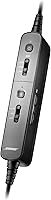
  • The control module and cable routing, while improved in Series 2, can still feel fiddly to manage in a busy cockpit.
  • Resale and repair options are more limited than legacy over-ear designs with a longer track record in the used market.

Ratings

The scores below reflect an AI-driven analysis of verified buyer reviews for the Bose ProFlight Series 2 Aviation Headset, gathered from pilots and aviation professionals worldwide — with spam, bot-generated, and incentivized submissions actively filtered out. Each category is scored on real usage patterns across turbine cockpits, long-haul duty days, and multi-leg corporate routes. Both the standout strengths and the honest pain points are reflected transparently in every scorecard.

Wearing Comfort
93%
Pilots flying back-to-back legs consistently describe arriving at the end of a duty day without the jaw soreness or ear pressure that plagued them with traditional over-ear designs. The 4.5 oz on-head weight is so low that many users report forgetting they are wearing a headset during cruise.
A subset of users with irregular ear canal shapes find sustained in-ear wear introduces a different kind of fatigue — not pressure-based, but a subtle canal irritation after several hours. This tends to diminish once the right tip size is found, but it is a real adjustment period for first-time in-ear headset users.
Noise Cancellation
78%
22%
In pressurized turbine cabins, the three-mode ANC meaningfully reduces engine drone and HVAC hiss, letting pilots lower radio volume and reduce overall listening fatigue during long cruise phases. The ability to select between modes gives experienced pilots useful control over how aggressively the headset filters ambient sound.
Real-world ANC performance varies noticeably by aircraft type — what works well in a quiet business jet may feel underwhelming in a louder turboprop cabin. Pilots transitioning from high-attenuation over-ear headsets sometimes find the noise floor higher than expected, particularly in the mid-frequency range.
Fit & Tip Sizing
62%
38%
When the correct StayHear+ tip size is found, the seal is stable and consistent across hours of wear, and the acoustic isolation becomes genuinely effective. Pilots who nail the fit on the first try tend to be the most enthusiastic long-term users of this Bose pilot headset.
This is the single most cited friction point across all reviews — finding the right tip size takes trial and error, and a poor seal directly degrades both noise isolation and audio clarity in ways that are hard to troubleshoot without knowing what a good seal feels like. Pilots with atypical ear canal geometry may find none of the three included sizes creates an adequate acoustic seal.
Audio Clarity
88%
ATC communication quality draws consistent praise, with pilots noting that radio calls come through cleanly and with minimal distortion even at lower volume settings thanks to the noise floor reduction. The dynamic drivers reproduce voice-band frequencies naturally, which reduces listening effort during dense radio traffic.
Music and entertainment audio over Bluetooth sounds competent but not exceptional — the dynamic drivers prioritize communication clarity over wide-range audio fidelity, so pilots expecting audiophile-quality streaming during cruise may find the sound somewhat flat or narrow.
Microphone Quality
86%
The adjustable boom mic consistently earns positive comments for producing clear, intelligible transmissions that read well on ATC frequencies. Controllers and crew members rarely ask for repeats, which is the most practical endorsement a cockpit mic can receive.
In particularly gusty or high-airflow cockpit environments, a small number of users report some wind noise pickup at the mic. The boom's range of motion, while improved in Series 2, can still feel slightly limited for pilots with larger face proportions who prefer the mic positioned closer to the corner of the mouth.
Battery Performance
91%
Forty-five hours on a pair of AA batteries covers the realistic duty cycle of multi-day trips with substantial margin, and the convenience of AA sourcing — available at any hotel gift shop or airport kiosk worldwide — makes this a practical choice for pilots operating far from their home base.
There is no low-battery warning indicator visible at a glance, which means a few pilots have experienced unexpected mid-flight shutdowns after misjudging remaining battery life. Rechargeable AAs work fine but tend to deliver slightly fewer hours per charge depending on brand and cell capacity.
Bluetooth Connectivity
84%
Pairing to an EFB tablet or smartphone is quick and stable, and the ability to run Bluetooth audio simultaneously with the panel XLR connection is genuinely useful for monitoring weather audio or streaming during long cruise segments without cable management headaches.
A handful of users report occasional Bluetooth dropouts when the control module is positioned in certain orientations relative to the paired device, particularly with older EFB hardware. The 10-meter range is adequate for cockpit use but leaves little margin if the paired device is stowed in a bag behind the seat.
Build Quality
81%
19%
The combination of metal, leather, and plastic feels considered rather than cheap — the headset handles daily packing and unpacking without showing obvious wear, and the slimmer Series 2 cable resists the kinking and stiffness that plagued some early adopters of the original model.
The control module and cable junction points are the most frequently cited durability concerns over extended ownership. A small number of long-term users report connection intermittency developing at the cable strain relief areas after a year or more of regular use.
Tap-Control Usability
67%
33%
When it works as intended, the tap-to-talk passthrough is a genuinely useful cockpit feature — catching a crew remark or ambient sound cue without removing an earbud saves time and reduces the awkward mid-conversation fumble familiar to in-ear headset wearers.
Accidental activation during turbulent segments is a recurring complaint, with pilots noting the control module is sensitive enough to trigger from vibration or incidental contact with the harness or clothing. Some users have adapted by repositioning the module, but the sensitivity remains a design-level limitation.
Packability & Portability
92%
The included carry case with carabiner clip is one of the most practical accessories in the box — it fits into a flight bag side pocket without displacing anything else, a real contrast to the dedicated compartment required by full-size over-ear headsets. Pilots who move between multiple aircraft or commute to their base particularly appreciate the compact footprint.
The case, while well-sized, offers only moderate impact protection — it keeps the headset organized and clean but is not rigid enough to provide full confidence if the flight bag takes hard knocks during ground transport or cargo handling.
Ease of Setup
83%
First-time setup is straightforward for pilots already familiar with 5-pin XLR panels — the quick-start guide covers Bluetooth pairing and ANC mode selection clearly, and most users report being fully operational within a few minutes of opening the box.
The tip-fitting process is not formally guided in the documentation in a way that helps pilots recognize what a correct acoustic seal actually feels like, which means some users operate with a suboptimal fit for weeks before realizing the difference. Better onboarding material here would reduce the most common source of early dissatisfaction.
Value Justification
74%
26%
Pilots who fly turbine aircraft regularly and have struggled with comfort fatigue tend to view this in-ear aviation headset as worth every dollar once they experience the difference across a full duty week. Repeat buyers and upgrades from the original ProFlight are disproportionately represented in positive reviews, suggesting genuine long-term satisfaction.
For pilots who fly infrequently, operate only piston aircraft, or cannot reliably achieve a good in-ear seal, the investment is harder to justify — the comfort advantages that drive satisfaction for high-cycle turbine pilots simply do not materialize for occasional or noise-intensive use cases.
ANC Mode Flexibility
77%
23%
Having three discrete ANC modes rather than a single fixed setting gives pilots meaningful control over how the headset behaves across different turbine aircraft types, from quieter pressurized jets to somewhat busier turboprop interiors. Experienced users tend to settle on a preferred mode quickly and rarely revisit the others.
The three modes are not labelled in a way that maps intuitively to specific aircraft noise environments, which means pilots have to experiment before finding their optimal setting. There is no in-ear audio feedback when switching modes, requiring a glance at the control module indicator to confirm the change has registered.
Long-Haul Fatigue Reduction
94%
Across dozens of reviews from commercial and corporate pilots flying eight-plus hour duty days, the reduction in cumulative fatigue compared to over-ear alternatives is the most consistently and enthusiastically reported benefit. Pilots describe the difference as arriving at the end of a long rotation feeling noticeably more alert and less physically worn.
The fatigue reduction benefit is almost entirely dependent on achieving a stable in-ear fit — pilots who cannot get a secure seal end up compensating by adjusting or reinserting the earbuds repeatedly during flight, which introduces a different type of distraction and can itself become tiring over a long duty day.

Suitable for:

The Bose ProFlight Series 2 Aviation Headset is purpose-built for turbine and pressurized aircraft pilots — particularly those flying long commercial, charter, or corporate routes where wearing a heavy over-ear headset across multiple legs adds up to real physical fatigue. If you regularly finish a duty day with jaw soreness, ear pressure, or a tension headache, the ultralight in-ear design directly addresses those issues in a way no traditional headset can. Pilots who rely on an EFB during cruise will appreciate the Bluetooth connectivity, which lets you monitor audio or stream content wirelessly without managing extra cables in the cockpit. The 45-hour AA battery life is a genuine practical advantage for multi-day trips where you may not have consistent access to charging. Anyone who values a compact, easily packable kit — slipping into a flight bag side pocket rather than occupying its own dedicated compartment — will find this setup far more convenient than bulkier alternatives.
Not suitable for:

The Bose ProFlight Series 2 Aviation Headset is not the right tool for every pilot, and it is worth being honest about that. Its digital ANC is calibrated for mid-to-low noise environments found in pressurized turbine cabins; in louder piston trainers, aerobatic aircraft, or rotorcraft, the noise attenuation simply will not reach the levels those environments demand. Student pilots or low-hour aviators who are still building cockpit awareness may also find an in-ear design less forgiving than a full over-ear cup, where situational audio cues are somewhat more natural. The in-ear fit itself is a real hurdle — pilots with ear canals that do not seal well with any of the three included StayHear+ tip sizes may struggle to get consistent audio quality or adequate isolation, regardless of how good the underlying hardware is. Budget-conscious buyers or pilots who fly only occasionally may find it difficult to justify the investment relative to capable over-ear alternatives that cost significantly less.
Specifications

  • On-Head Weight: The headset weighs 4.5 oz (128g) when worn, making it one of the lightest aviation headsets available.
  • Configuration: Dual in-ear design using dynamic drivers with silicone StayHear+ ear tips in small, medium, and large sizes.
  • Noise Cancellation: Digital active noise cancellation with three selectable modes tuned for varying cockpit noise levels in pressurized turbine aircraft.
  • Cable Connector: Standard 5-pin XLR connector compatible with the majority of turbine aircraft audio panels.
  • Bluetooth Range: Bluetooth connectivity operates at up to 10 meters, supporting wireless pairing with EFBs, smartphones, and compatible audio panels.
  • Battery Life: Powered by two AA batteries providing up to 45 hours of continuous use; batteries are included in the box.
  • Impedance: Audio driver impedance is rated at 150 Ohm, optimized for aircraft intercom and audio panel output levels.
  • Driver Type: Dynamic audio drivers deliver cockpit communication and personal audio with consistent clarity across the frequency range.
  • Microphone: Adjustable boom microphone with positioning flexibility to accommodate different face geometries and preferred mic placement angles.
  • Talk-Through: Tap-control passthrough mode allows momentary ambient audio monitoring with a single tap, without removing the earbuds.
  • Ear Tips: Three sets of silicone StayHear+ ear tips (S, M, L) are included to help pilots achieve a secure acoustic seal.
  • Noise Environment: Optimized for mid-to-low ambient noise environments, specifically pressurized turbine-powered aircraft cabins.
  • Materials: Headset components are constructed from a combination of leather, metal, and plastic for a balance of durability and low weight.
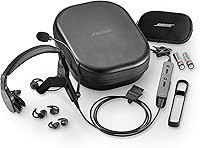
  • Carrying Case: A rigid carrying case with an attached carabiner clip is included, sized to fit compactly inside a standard flight bag.
  • Product Dimensions: Packaged dimensions measure 10 x 7.5 x 3.25 inches, reflecting the compact footprint of the included carry case.
  • Generation: This is the Series 2 (second generation) model, featuring a slimmer cable, updated tap-control, and improved mic adjustability over the original.
  • In-Box Contents: Package includes the headset, carrying case with carabiner, two AA batteries, control module lanyard, three tip sizes, and owner documentation.
  • Water Resistance: The headset carries no official water resistance rating and should be kept away from moisture and wet conditions.

Related Reviews

Bose A30 Aviation Headset (Dual Plug)
85%
94%
Long-Term Comfort
91%
Active Noise Reduction
89%
Audio Clarity & Intelligibility
84%
Build Quality & Durability
87%
Bluetooth Connectivity
More
Orion Cobalt Series CBA2500.2 2-Channel Car Amplifier
88%
94%
Power Output
89%
Sound Quality
90%
Heat Management
85%
Ease of Installation
87%
Bass Boost Effectiveness
More
Pioneer TS-A709 2.75″ 2-Way Car Speakers
81%
88%
Sound Clarity
61%
Bass Response
91%
Installation Ease
86%
Value for Money
83%
Power Handling
More
Focal 165AS 6.5-inch Component Speaker System
80%
93%
Sound Clarity
61%
Bass Performance
89%
Soundstage & Imaging
91%
Build Quality
54%
Installation Experience
More
Kore Aviation P1 Aviation Pilot Headset
76%
93%
Value for Money
71%
Noise Reduction
88%
Microphone Clarity
67%
Comfort & Fit
84%
AUX Connectivity
More
GEQUDIO GC-2 DECT Headset
85%
93%
Connectivity Options
85%
Sound Quality
88%
Noise Isolation
91%
Ease of Setup
70%
Comfort for Long Use
More
UFQ A7 ANR Aviation Headset
79%
91%
Wearing Comfort
74%
ANR Performance
83%
Microphone Quality
77%
Build Quality
89%
Battery Life
More
Lightspeed Aviation Sierra ANR Aviation Headset
77%
84%
ANR Performance
76%
Comfort & Fit
71%
Bluetooth Reliability
83%
Build Quality
81%
Microphone Quality
More
HTC Vive Pro 2 Headset
82%
94%
Visual Quality
91%
Comfort for Long Sessions
89%
Field of View (FOV)
60%
Ease of Setup
65%
Software Compatibility
More
Kore Aviation KA-1 Aviation Headset
79%
86%
Comfort & Fit
74%
Noise Reduction
83%
Microphone Quality
81%
Audio Clarity
71%
Build Quality
More

FAQ

The ProFlight Series 2 uses a standard 5-pin XLR connector, which covers the vast majority of turbine aircraft audio panels. If your aircraft uses a different connector format, you may need an adapter. It is always worth checking your specific panel type before purchase.

Start with the medium tips since they fit most people, then assess the seal by cupping your hands over your ears — a good fit creates a noticeable sense of isolation. If audio sounds thin or external noise bleeds in easily, try the large size. Small tips are best for narrower ear canals where medium tips feel loose. Getting this right genuinely makes or breaks the noise cancellation performance, so take the time to test all three.

Yes, the Bluetooth connection works independently of the XLR panel audio, so you can pair the headset to your phone or EFB tablet and stream audio during cruise while remaining connected to the intercom. The two audio sources can coexist, which is one of the more practical features for long-haul flying.

In pressurized turbine cabins — think jet airliners, turboprops, or business jets — the ANC does a solid job reducing the constant low-frequency hum of engines and HVAC noise. The three selectable modes give you some flexibility to match the headset to your aircraft. That said, it is not designed to compete with the passive attenuation of a full over-ear headset in louder environments, so expectations should be calibrated accordingly.

Not ideally. The Bose ProFlight Series 2 Aviation Headset is engineered for the relatively lower noise levels inside pressurized turbine aircraft. Piston trainers and helicopters produce significantly higher cockpit noise, and neither the ANC performance nor the passive isolation of an in-ear design will be sufficient to protect your hearing or deliver clear communications in those environments.
Battery life is rated at up to 45 hours on a standard pair of AA batteries, which covers multiple flight days comfortably. Rechargeable AA batteries work fine, though you may see a modest reduction in total runtime depending on the battery brand and charge capacity.

A quick tap on the control module briefly opens a passthrough so you can hear ambient cockpit sounds without pulling the earbuds out — handy for catching a conversation or checking a sound without interrupting your setup. Some pilots find it occasionally activates during turbulent flight, so it is worth being aware of that tendency on rough legs.

That is really the central selling point of the in-ear design. At 4.5 oz, there is virtually no clamping pressure or jaw fatigue, which is the main complaint pilots have with over-ear headsets on long duty days. Most turbine pilots report a meaningful reduction in end-of-day fatigue. The caveat is that in-ear comfort depends heavily on tip fit — if you cannot achieve a good seal, extended wear can become uncomfortable in a different way.

The Series 2 addresses several practical criticisms of the original. The cable is thinner and more flexible, which reduces snag points in a busy cockpit. The mic boom is more adjustable, and the tap-control has been updated for more intentional activation. The core ANC technology and overall design philosophy remain largely the same.

Yes, a warranty card is included in the box, and Bose provides customer support for aviation products through their dedicated channels. The specific warranty terms and duration are detailed in the included documentation, so it is worth registering the product after purchase to ensure coverage is active.

Where to Buy