Overview

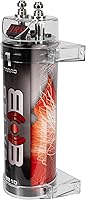
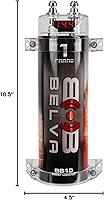
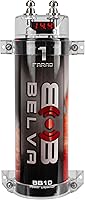
The Belva BB1D 1 Farad Car Audio Capacitor has been a reliable name in power stabilization since 2013, and its staying power in the category is no accident. Designed for systems pushing up to 1000 watts, this power cap sits comfortably in the middle of the market — accessible enough for a first serious build, capable enough to handle real demand. The red digital voltage display is what sets it apart visually, giving you an at-a-glance read on your electrical levels rather than guessing. That said, be clear-eyed about what 1 Farad delivers: it is well-matched for moderate setups, not competition-grade rigs chasing massive SPL numbers.
Features & Benefits

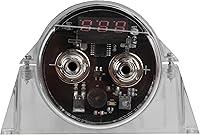
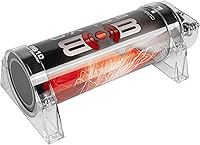
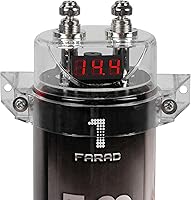
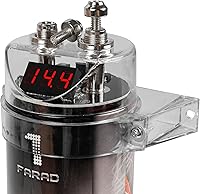
What makes this car audio capacitor worth attention starts with its real-time voltage readout, a red digital display covering 10–16V DC that lets you watch your system's electrical health without pulling out a multimeter. When voltage drops or spikes outside safe parameters, an audible alert fires before your equipment takes a hit — a genuinely useful early-warning system. The automatic shutoff adds another layer by cutting power during over-voltage events. Installation is straightforward: the included clear mounting brackets handle surface mounting cleanly, and the 4.5″ x 3.5″ rectangular body fits without drama in most trunk setups. For systems in the 500–1000 watt range, the 1 Farad capacitance provides a solid power buffer during hard bass transients.

Best For

This power cap makes the most sense for someone running a single amp in the 500–1000 watt neighborhood — think a decent subwoofer setup that is putting real strain on a factory or entry-level alternator. If you have noticed headlights dimming during heavy bass notes or your amp clipping under load, a 1 Farad cap is often the first logical fix to try. It is also a natural fit for first-time capacitor buyers who want something that installs cleanly and offers visible confirmation it is working. What it is not suited for: high-output builds stacking multiple amps, where you would want a larger capacitance or a dedicated second battery setup instead.

User Feedback

Owners of the Belva BB1D consistently highlight two things: easy installation and a display that is actually readable in daylight. Most find the wiring process intuitive, and the bracket system does its job without fuss. On the durability front, a fair number of long-term owners report the unit holding up well beyond the one-year mark, which is encouraging for an electrical component. Where opinions diverge is around the audible alert — some appreciate the early warning, while others find it triggers too readily under normal driving conditions. The automatic shutoff draws similarly mixed reactions, with a handful of buyers feeling it trips too aggressively. Anyone running beyond 1000 watts will find 1 Farad insufficient — that limitation surfaces often in critical reviews.

Pros

  • Installs cleanly with included clear mounting brackets — no improvising required.
  • The red digital voltage display gives real-time electrical feedback at a glance.
  • Audible alerts provide an early warning before voltage problems damage equipment.
  • Automatic shutoff actively protects gear during over-voltage events.
  • Compact rectangular body fits most trunk and under-dash spaces without tight maneuvering.
  • Long-term owners report consistent performance well past the one-year mark.
  • Suited for systems up to 1000 watts, covering the majority of single-amp street builds.
  • Has held a top-20 ranking in its category for over a decade — a sign of sustained buyer confidence.
  • This power cap works well as a first capacitor for enthusiasts still learning their system's electrical needs.

Cons

  • 1 Farad is insufficient for multi-amp setups or builds pushing significantly past 1000 watts.
  • The audible alert sensitivity frustrates some users, triggering under normal driving conditions.
  • Automatic shutoff can cut power too aggressively, interrupting listening sessions unexpectedly.
  • Does not address root-cause electrical issues like a weak alternator or undersized wiring.
  • The red display glow may be distracting or aesthetically mismatched in minimalist interior builds.
  • At 3 pounds, it is heavier than some competing caps of similar capacitance.
  • No built-in charge resistor is included, which can catch first-time installers off guard during initial setup.
  • Limited capacitance headroom means buyers who upgrade their system later will likely need to replace it sooner.

Ratings

The scores below reflect an AI-driven analysis of verified global buyer reviews for the Belva BB1D 1 Farad Car Audio Capacitor, with spam, bot activity, and incentivized feedback actively filtered out to ensure accuracy. This power cap has accumulated a meaningful review history since 2013, giving us a reliable signal on both where it genuinely delivers and where real buyers run into frustration. Strengths and pain points are weighted equally — nothing is glossed over.

Ease of Installation
88%
Buyers consistently describe the installation process as intuitive, even for first-timers with no prior capacitor experience. The included clear mounting brackets eliminate the need to source hardware separately, and the rectangular form factor drops into most trunk builds without requiring any creative problem-solving.
A recurring catch is the pre-charging step — first-time users who skip charging the cap through a resistor before connecting to the battery risk a damaging arc. The instructions do not always make this step prominent enough, leaving some buyers to discover it the hard way.
Voltage Display Clarity
91%
The red digital display earns high marks for real-world visibility, with buyers noting it is easy to read in daylight from a reasonable distance inside the vehicle. For anyone who likes keeping an eye on system health during a drive, having a live voltage number beats guessing entirely.
A small subset of buyers find the red glow intrusive, particularly in dark interiors where they would prefer less ambient light from the trunk area. There is no brightness adjustment, so what you see is what you get regardless of preference.
Power Stabilization Effectiveness
74%
26%
For single-amp setups in the 500–900 watt range, users frequently report a noticeable reduction in headlight dimming and amplifier clipping during heavy bass hits. In practical terms, this power cap smooths out the short, sharp current demands that stress a factory alternator during loud listening sessions.
Buyers pushing systems closer to or beyond 1000 watts find the stabilization benefit marginal at best. The 1 Farad limitation becomes obvious in harder-hitting builds, and several reviewers are direct about the cap not making a meaningful difference once the total load climbs higher.
Audible Alert Usefulness
58%
42%
When the alert works as intended — flagging genuine voltage irregularities during an electrical problem — buyers appreciate having an early warning system that does not require them to watch the display constantly. A few users credit it with catching a developing charging issue before it caused real damage.
The alert sensitivity is the single most divisive aspect of this power cap. A significant portion of owners report the beep triggering during normal engine starts, at idle, or during situations that do not reflect any actual problem — creating a nuisance that is impossible to tune or disable without rewiring.
Automatic Shutoff Protection
62%
38%
When an over-voltage event is genuine, the automatic shutoff does its job by cutting power before downstream equipment takes a hit. Buyers who have experienced alternator surges describe the protection as a legitimate safety net that justifies its presence.
The shutoff trips too aggressively for a meaningful number of users, particularly those running higher-output alternators that push charging voltage toward the upper end of a normal range. Having audio cut out unexpectedly mid-listening is a frustration that surfaces repeatedly in long-term reviews.
Build Quality
77%
23%
The physical construction feels solid for this product category, and long-term owners — some using the unit for two or three years — generally report no structural failures or connection degradation over time. The casing handles typical trunk temperatures without any noted warping or discoloration.
The unit is noticeably heavier than some competing caps at 3 pounds, which occasionally creates mounting stress on the bracket system in vehicles with significant road vibration. A small number of buyers also note the display housing feels slightly less premium up close than it looks in product photos.
Long-Term Durability
79%
21%
The majority of buyers who have owned this power cap beyond the one-year mark report it still functioning as expected, which is encouraging for an electrical component exposed to heat cycles and vibration. The capacitor itself shows no sign of capacity degradation under normal operating conditions in most reported cases.
A minority of owners report display failures — where the red readout dims or goes blank — after extended use, even when the cap itself continues to function. Since the display is integral to the unit's monitoring value, losing it effectively removes one of the main reasons to choose this cap over a simpler alternative.
Mounting & Fitment
83%
The rectangular shape and modest footprint make placement planning predictable — buyers know exactly what space they need before they order. Surface mounting with the provided brackets works cleanly in most standard trunk and hatch configurations without requiring drilling into structural panels.
The 3-pound weight means the brackets carry a real load, and in vehicles with rougher suspension or significant vibration, a few owners report the mount feeling less secure over time without additional reinforcement. Under-dash mounting in tighter vehicles can also be a tighter squeeze than expected.
Compatibility
86%
Working with any standard 12V DC automotive electrical system, this power cap covers the overwhelming majority of passenger vehicles without any compatibility concerns. Buyers across a wide range of vehicle types — from daily sedans to pickups and SUVs — report no issues integrating it into their existing wiring.
Vehicles with non-standard charging systems or unconventional electrical architectures — certain European imports or heavily modified builds — can push voltages that interact poorly with the shutoff threshold, creating issues that standard 12V vehicles never encounter.
Value for Features
81%
19%
For what buyers get — a voltage display, audible alerts, automatic shutoff, and reliable 1 Farad capacitance — the feature set is more comprehensive than many competing units in the same class. Buyers specifically call out the monitoring features as meaningful extras that justify choosing this cap over a bare-bones alternative.
If the alert system or automatic shutoff turn out to be a nuisance for your specific setup, you are effectively paying for features that become liabilities rather than assets. Buyers who end up ignoring or working around both systems feel they are not extracting full value from what they paid for.
Display Accuracy
76%
24%
For general voltage trend monitoring — confirming the system is sitting where it should during normal operation — the readout aligns with what a standalone multimeter reports, according to buyers who cross-checked both. For everyday use, the level of accuracy is entirely sufficient.
A handful of technically inclined buyers who tested the display against calibrated meters report readings that drift slightly at the low end of the voltage range, which is less reassuring for users relying on it as a diagnostic tool rather than just a status indicator.
Noise & Interference
72%
28%
Most buyers report no audio interference introduced by this power cap after installation, which is a baseline expectation that this unit meets reliably. Properly grounded, it operates transparently within the audio signal chain.
A small number of users report a faint alternator whine appearing or worsening after installation, often traced back to a ground loop rather than the cap itself — but troubleshooting it adds friction to what should be a clean install experience. Poor grounding amplifies this risk noticeably.
Indicator Reliability
66%
34%
When the electrical system is running cleanly and within normal parameters, the combination of the visual display and audible alert gives buyers a reasonably accurate picture of what is happening with their power delivery in real time.
The consistency of the alert system undermines confidence in it over time — once a buyer has experienced several false triggers, they begin dismissing alerts reflexively, which defeats the protective purpose of the feature entirely. Reliability of the warning system is the cap's weakest functional point.

Suitable for:

The Belva BB1D 1 Farad Car Audio Capacitor is a practical fit for drivers who have built or are building a single-amplifier system in the 500–1000 watt range and are starting to notice the telltale signs of electrical strain — dimming headlights, amp clipping on heavy bass notes, or slight audio distortion during peaks. It is particularly well-suited for first-time capacitor buyers who want something that installs without a steep learning curve; the included mounting brackets and rectangular form factor make placement in a trunk or cargo area straightforward. Drivers running a stock or modestly upgraded alternator will find this power cap a sensible buffer rather than a band-aid, buying the electrical system a little breathing room without requiring a full overhaul. The red digital voltage display adds genuine day-to-day utility for anyone who likes keeping an eye on their system health, making it a solid choice for hands-on enthusiasts who would rather monitor than guess.
Not suitable for:

The Belva BB1D 1 Farad Car Audio Capacitor is simply not the right tool for high-output builds. If you are running multiple amplifiers, chasing serious SPL competition numbers, or pushing well beyond 1000 watts, 1 Farad of capacitance will not provide meaningful relief and you would be better served by a higher-capacity cap or a dedicated second battery setup. Drivers whose electrical issues stem from a failing alternator or deeply undersized wiring should also look elsewhere first — no capacitor fixes a root-cause power delivery problem, and this one is no exception. Those who are sensitive to false alerts may find the audible warning system and the automatic shutoff feature frustrating, as both have drawn criticism for triggering under conditions that do not always warrant intervention. If you need a dead-silent, no-indicator solution for a clean build, the red digital display may also feel out of place aesthetically.
Specifications

  • Brand: Manufactured by Belva, a car audio accessories brand with products on the market since at least 2013.
  • Model: The model designation is BB1D, part of the bb1d-bb2d product family.
  • Capacitance: This unit provides 1 Farad of capacitance, suitable for stabilizing systems up to 1000 watts.
  • Max Voltage: The maximum operating voltage is 16V DC, appropriate for standard 12V automotive electrical systems.
  • Display Range: The digital voltage display monitors electrical levels across a range of 10–16V DC in real time.
  • Display Type: A red digital readout provides a clear, visible indication of current system voltage at a glance.
  • Alert System: Audible warning indicators activate when voltage falls outside acceptable parameters to signal potential irregularities.
  • Shutoff Protection: An automatic shutoff mechanism engages to cut power when an over-voltage condition is detected.
  • Mounting Type: Designed for surface mounting using the included clear plastic mounting brackets.
  • Dimensions: The unit measures 4.5″ wide by 3.5″ tall in a rectangular form factor.
  • Item Weight: The assembled unit weighs 3 pounds, which should be factored in when selecting a mounting location.
  • Shape: The rectangular body allows for predictable fitment in trunk builds and under-dash installations.
  • UPC: The UPC for this product is 818060010781, useful for verifying authenticity when purchasing.
  • Wattage Rating: Rated compatible with car audio systems up to 1000 watts of total amplifier output.
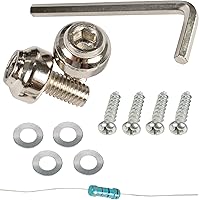
  • In Box: The package includes the capacitor unit and clear mounting brackets; no additional hardware kit is specified.
  • Availability: This product has been commercially available since April 2013 and is not listed as discontinued by the manufacturer.
  • BSR Ranking: Currently ranked #17 in the Car Amplifier Capacitors category on Amazon, reflecting sustained buyer interest over time.

Related Reviews
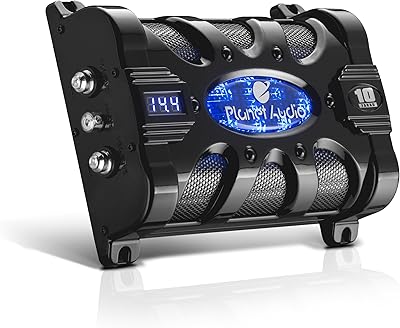
Planet Audio PC10F 10 Farad Car Capacitor
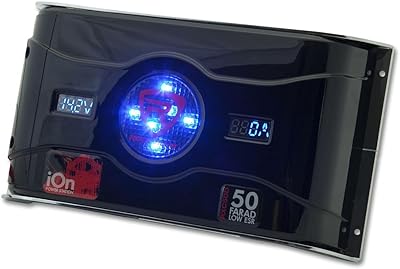
80%
88%
Value for Money
91%
Ease of Installation
87%
LED Voltage Display
79%
Bass Performance Impact
63%
Build Quality
More
Rockville RXC50D v2 50 Farad 24V Car Audio Capacitor
84%
87%
Performance
90%
Ease of Installation
76%
Voltage Display Accuracy
85%
Bass Improvement
82%
Build Quality
More
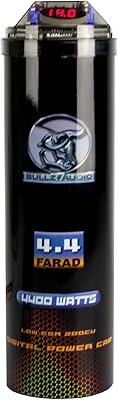
Bullz Audio BCAP4.4 4.4F Car Power Capacitor
71%
83%
Voltage Stabilization
78%
Value for Money
81%
Ease of Installation
74%
Digital Display Quality
61%
Build Quality
More
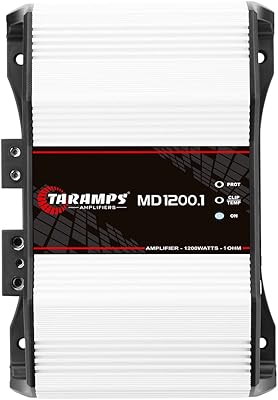
Taramp's MD 1200.1 1-Channel 1200W RMS Car Audio Amplifier
86%
93%
Power Output
89%
Sound Quality
91%
Installation Ease
85%
Build Quality
65%
Thermal Performance
More
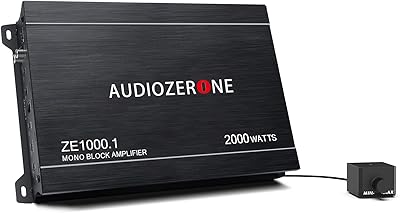
Audiozerone ZE1000.1 Monoblock Car Amplifier
75%
91%
Value for Money
88%
Bass Output
74%
Thermal Management
83%
1-Ohm Stability
63%
Build Quality
More
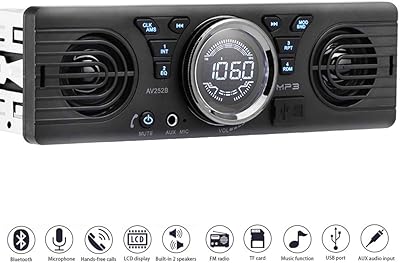
PolarLander Universal 1 Din Car Radio Audio Player
81%
84%
Sound Quality
91%
Ease of Installation
87%
Bluetooth Connectivity
78%
FM Radio Reception
80%
Built-in Speakers
More
Pyle Pro PDBT19 1-Inch Car Audio Tweeters
85%
87%
Sound Quality
82%
Ease of Installation
90%
Build Quality
89%
Durability
85%
Power Handling
More
Sound Storm Laboratories EVO3000.1 Car Audio Amplifier
87%
94%
Power Output
68%
Bass Control
82%
Ease of Installation
89%
Heat Dissipation
87%
Build Quality
More
JBL GX328 3.5-Inch Coaxial Car Speakers
74%
88%
Midrange Clarity
51%
Bass Performance
82%
High-Frequency Detail
91%
Installation Ease
73%
Compatibility
More
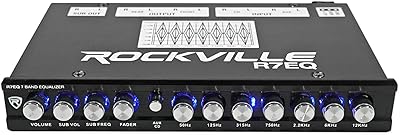
Rockville R7EQ 1/2 Din 7 Band Car Audio Equalizer
85%
89%
Bass Control
85%
Sound Clarity
72%
Ease of Setup
91%
LED Visibility
81%
Durability
More

FAQ

It can help, but it depends on the severity of your electrical sag. A 1 Farad cap acts as a local power reserve that discharges quickly during sudden current demands — like a hard bass transient — so your alternator and battery do not have to respond instantly. For moderate systems, many users see a noticeable improvement. If your alternator is genuinely undersized or failing, the cap will reduce the symptom but will not fix the underlying problem.

The general rule of thumb is 1 Farad per 1000 watts of amplifier output, so this power cap is right at the edge for a 1000-watt system and comfortable for anything below that. If you are running a single subwoofer amp in the 500–800 watt range, 1 Farad is a sensible match. Push much beyond 1000 watts total and you would be better served by a larger cap or a secondary battery.

Most DIYers handle this install without much trouble. The included clear mounting brackets make surface mounting straightforward, and the wiring connections follow standard automotive capacitor practices — positive, negative, and a remote turn-on lead. One thing to be aware of: you need to pre-charge the capacitor through a resistor before connecting it directly to your battery, otherwise you risk a damaging inrush of current. A simple test light or dedicated cap charger works fine for this step.

The alert is a beeping tone that activates when the voltage detected by the display falls outside normal parameters — typically when it dips too low or spikes too high. Some owners find it fires more often than expected, particularly during engine start when voltage briefly drops. It is not adjustable, so if you find it triggering frequently under normal conditions, there is no built-in way to tune the sensitivity.

It can, and this is one of the more polarizing aspects of the Belva BB1D 1 Farad Car Audio Capacitor. The shutoff is designed to protect against over-voltage events, but a handful of users report it activating in situations that do not seem to warrant it. If your vehicle's charging system runs consistently above 14.8V or so — which some higher-output alternators do — you may see the shutoff engage more often than you would like.

Technically possible, but generally not recommended. Capacitors like this one are better suited to placement close to the amplifier they are supporting, which is usually in the trunk or cargo area. Under-hood environments also expose the unit to more heat and vibration, which can affect longevity. Mounting it near the amp gives you the shortest power cable run and the most effective response time during voltage drops.

The display should only be active when the unit is powered — typically wired to turn on with your amplifier via the remote lead. If wired directly to a constant 12V source without a switched connection, it could draw a small amount of current continuously. It is worth making sure you wire the remote input correctly to avoid any parasitic drain on your battery.

Based on long-term user reports, this power cap tends to hold up well with many owners reporting reliable operation beyond the one-year mark and into several years of use. Like most capacitors, longevity is influenced by how stable your vehicle's electrical system is — consistent over-voltage events or heat stress can shorten any cap's lifespan. Keeping it away from direct heat sources and ensuring your system is properly fused will help.

Belva does not prominently advertise an extended warranty on this product in the available listing information, which is fairly typical for car audio accessories in this segment. Your best bet is to check directly with the seller at the time of purchase, and to keep your receipt in case any issues arise early in the product's life.

This power cap is compatible with any standard 12V DC automotive electrical system, which covers the vast majority of passenger vehicles on the road. The operating voltage ceiling of 16V DC gives it enough headroom for healthy charging systems. As long as your total amplifier load does not exceed 1000 watts and your system runs on a conventional 12V platform, this power cap should integrate without issue.