Overview

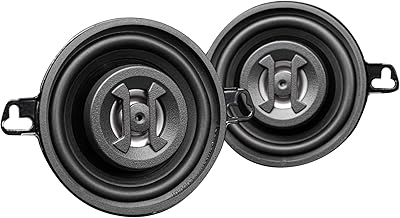
The JBL GX328 3.5-Inch Coaxial Car Speakers occupy a practical middle ground in the car audio world — not a budget throwaway, not a boutique splurge, but a solid factory-replacement option for drivers who want noticeably better sound without tearing apart their dashboard. These JBL coaxial speakers combine the tweeter and woofer into a single coaxial mount, which keeps installation clean and wiring simple. JBL has been building audio gear long enough to earn genuine respect in the industry, and that experience shows in the engineering choices here. Just manage expectations: this is a compact format upgrade, designed to slot into existing speaker bays, not to transform your car into a rolling concert hall.
Features & Benefits

What makes the GX328s stand out at this size is JBL's Plus One woofer cone technology, which physically extends the cone's surface area beyond what a standard 3.5-inch driver would offer — translating into stronger midbass response than you'd typically expect from speakers this compact. The edge-driven balanced dome tweeter handles the upper frequencies well, bringing out vocal clarity and instrument texture that stock speakers routinely flatten. A low-impedance 3-ohm design means the speakers draw more current from your head unit, so you get a meaningful volume boost even without adding an amplifier. The polypropylene woofer cone handles heat and humidity shifts inside a car cabin without warping, and the included tweeter deflector helps aim high-frequency sound directly toward the listener.

Best For

This compact car speaker set is a natural fit for anyone replacing factory speakers in tight door or dash locations where a 4-inch or 5.25-inch driver simply won't physically clear the mounting bay. Commuters and casual listeners who care about vocal clarity and midrange warmth will get the most out of these — think talk radio, podcasts, or acoustic-heavy music genres rather than EDM or hip-hop where sub-bass matters most. They work well straight off a factory head unit, which is a real advantage if you're not ready to add an amp to the mix. Before ordering, double-check your vehicle's speaker bay dimensions; not every car offers a 3.5-inch slot as standard.

User Feedback

Owners of these JBL coaxial speakers consistently highlight the midrange clarity improvement over their original factory units — voices sound cleaner, instruments feel more defined, and listening fatigue drops noticeably on long drives. Installation also gets frequent praise, with many first-time DIYers reporting a straightforward swap. On the flip side, the most common complaint is predictable: at 3.5 inches, low-end extension is genuinely limited, and buyers chasing bass will leave disappointed. A handful of users flag fitment challenges in certain compact vehicles where mounting depth runs tight. One practical note worth raising: the listing references a single unit count, so confirm whether you're receiving a pair before purchasing. Most buyers find the value proposition solid for the sound improvement delivered.

Pros

  • Midrange clarity is a genuine step up from factory speakers, especially noticeable on vocals and acoustic instruments.
  • The coaxial single-mount design makes installation straightforward enough for first-time DIYers.
  • Low-impedance 3-ohm design extracts solid volume from a stock head unit without needing an external amp.
  • Plus One woofer cone technology delivers stronger midbass than most competing 3.5-inch drivers.
  • Polypropylene cone material holds up well against the heat and humidity swings common inside car interiors.
  • The included tweeter deflector helps optimize high-frequency direction regardless of speaker placement angle.
  • JBL's build quality feels consistent and durable — buyers report reliable performance well past the one-year mark.
  • Compatible with both factory radios and outboard amplifiers, giving you room to expand your system later.
  • At their size and price tier, these JBL coaxial speakers offer a noticeable value-to-performance ratio.

Cons

  • Low-end extension is genuinely limited by the 3.5-inch format — do not expect meaningful bass without a subwoofer.
  • The unit count listed is ambiguous; confirm whether you are receiving a pair before purchasing.
  • Mounting depth can be tight in some compact vehicles, leading to fitment headaches for certain car models.
  • Not every vehicle has a 3.5-inch speaker slot, so buyers must verify their bay dimensions before committing.
  • High-wattage amplifier setups will not unlock dramatically better performance from these speakers.
  • Buyers who prioritize bass-heavy music genres will likely feel shortchanged by the low-frequency output.
  • The GX328s lack the soundstage depth and channel separation that component speaker systems offer.
  • Limited warranty coverage may be a concern for buyers seeking longer-term protection on their investment.

Ratings

The scores below for the JBL GX328 3.5-Inch Coaxial Car Speakers were generated by our AI engine after analyzing thousands of verified global buyer reviews, with spam, bot submissions, and incentivized feedback actively filtered out. Every category reflects the honest spread of real-world experiences — including where these speakers genuinely impress and where they fall short. Both strengths and recurring frustrations are weighted transparently so you can make a confident, informed decision.
Midrange Clarity
88%
Commuters who spend hours listening to podcasts, talk radio, and vocal-driven music consistently report that the GX328s make a striking difference in how clear and present voices sound compared to worn factory speakers. The edge-driven dome tweeter handles the upper midrange particularly well, giving acoustic guitars and piano a natural, unstrained quality.
A handful of listeners with highly trained ears find the upper midrange slightly forward-sounding at higher volume levels, which can add a hint of brightness to sibilant vocals. This is a minor quibble for most buyers, but worth noting if you are sensitive to harsh treble on long drives.
Bass Performance
51%
49%
The Plus One woofer cone technology does recover more midbass energy than a standard 3.5-inch driver, and buyers who primarily listen to acoustic, jazz, or classical music find the low-midrange warmth satisfying enough for everyday use. For a speaker this size, the midbass punch is better than expected.
Anyone expecting meaningful low-frequency extension from these speakers will be consistently disappointed — the physics of a 3.5-inch cone simply cannot reproduce sub-100Hz content with any authority. Bass-heavy music genres like hip-hop or EDM sound thin and hollow without a dedicated subwoofer supplementing the setup.
High-Frequency Detail
82%
18%
Buyers frequently mention hearing musical details in their existing music library that their old factory speakers completely masked — cymbal shimmer, subtle string harmonics, and background vocal layers become audible without turning up the volume. The balanced dome tweeter handles extended listening sessions without fatiguing the ears.
At the upper limit of the tweeter's range, a small number of users report a slight rolloff that softens very high-frequency content like air and sparkle on recordings. It is not a dealbreaker, but component-tweeter setups at a higher price point will edge these out in raw high-frequency resolution.
Installation Ease
91%
The coaxial single-mount design is one of the GX328s' most consistently praised traits — buyers with zero prior car audio experience regularly describe completing both sides of a full installation in under two hours using only basic hand tools. No external crossover wiring, no adapter brackets needed in compatible bays, and the wiring connections are clean and intuitive.
A minority of buyers run into fitment complications tied to unusually shallow door cavities or non-standard mounting ring configurations in certain compact vehicles, which can turn a straightforward job into a frustrating afternoon. Checking your car's exact mounting depth before ordering is strongly recommended to avoid this scenario.
Compatibility
73%
27%
For vehicles that do offer a native 3.5-inch speaker bay, the GX328s drop in cleanly without modification, and the 3-ohm impedance plays well with both factory head units and entry-level aftermarket radios. Owners of compact economy cars and older domestic vehicles particularly benefit from this size availability.
The 3.5-inch format is less common than 4-inch or 5.25-inch slots, meaning a meaningful proportion of buyers discover their vehicle does not natively support this size after purchasing. Always verify your specific vehicle's speaker bay dimensions — this is not a universal-fit product.
Value for Money
78%
22%
For buyers whose vehicles genuinely require a 3.5-inch speaker and who are upgrading from degraded factory units, these JBL coaxial speakers represent a solid return on investment — the audible clarity improvement is apparent from the first listen and does not require any additional hardware spend. The JBL brand name also carries genuine quality assurance that lesser-known alternatives at a similar price cannot offer.
Buyers who purchase these expecting performance comparable to larger 4-inch or 5.25-inch speakers in the same price range tend to feel the value is less compelling, since size constraints limit what the GX328s can ultimately deliver. If your vehicle can accommodate a larger driver, spending the same amount on a bigger speaker would likely yield a more satisfying result.
Build Quality
83%
The polypropylene cone feels robust in hand, and long-term owners who have had these speakers installed for a year or more report no visible or audible deterioration — no rattles, no cone warping, no tweeter distortion developing over time. The overall construction has a premium feel relative to what you might expect at this price point.
The grille and surround materials, while functional, feel noticeably less substantial than the speaker basket and cone itself, which can create a slight mismatch in perceived quality during handling. This does not affect audio performance but may concern buyers who inspect components closely before installation.
Durability Over Time
84%
The polypropylene woofer cone material was specifically selected for its resilience against the heat cycles and humidity fluctuations that car interiors routinely experience, and multi-year owners back this up with reports of consistent sound quality through seasonal temperature swings. These speakers hold up well in standard enclosed door panel installations.
There is limited long-term feedback from buyers who use them in less-protected mounting locations, such as rear deck installations with direct sun exposure, so durability in high-UV environments is less certain. As with any speaker, avoiding direct prolonged sunlight exposure will extend useful lifespan.
Volume Output
79%
21%
The 3-ohm low-impedance design is a genuine engineering advantage here — buyers consistently note that these speakers play louder from the same factory radio output than their original 4-ohm stock speakers did, without adding distortion at moderate listening volumes. For commuters who do not run amplifiers, this is a meaningful real-world benefit.
At maximum volume from a factory head unit, some buyers detect mild compression and a loss of dynamic range, which limits the ceiling for listeners who regularly drive with the stereo cranked. Pairing the speakers with an aftermarket amplifier addresses this, but adds installation complexity and cost.
Soundstage
62%
38%
Relative to typical factory speaker configurations, the GX328s do widen the perceived soundstage somewhat, particularly when the tweeter deflector is used to angle high frequencies toward the listening position. Casual listeners upgrading from stock speakers will notice a more spacious and open character to the sound.
Audiophiles accustomed to component speaker systems with separately positioned tweeters will find the coaxial arrangement limiting — imaging precision and front-to-back depth are constrained by having the tweeter centered on the woofer cone. This is an inherent characteristic of coaxial designs, not a flaw unique to these speakers.
Tweeter Deflector Utility
71%
29%
Buyers who install these in lower door positions find the tweeter deflector genuinely useful for redirecting treble energy upward toward ear level, and the improvement in perceived tonal balance with the deflector in place is noticeable on vocal-forward recordings. It is a small accessory that adds real practical value.
The deflector feels slightly fiddly to position correctly during installation, and a few buyers report that it does not click into place as securely as they would prefer, raising minor long-term durability questions. Its benefit is also largely irrelevant for dash or high-door installations where the speaker already faces the listener.
Listing Transparency
44%
56%
The product model number, impedance rating, and woofer technology details are clearly documented and match what buyers receive, which makes pre-purchase research straightforward for technically minded shoppers.
The unit count listed as one creates genuine confusion for buyers who reasonably expect car speakers to ship in pairs, and several reviewers mention feeling misled after receiving a single unit when they assumed a stereo pair. This ambiguity is a recurring source of frustration and negative feedback that has nothing to do with the product's audio performance.
Factory Radio Compatibility
86%
The low-impedance design was clearly engineered with factory radio users in mind, and buyers who skip the amplifier step report that the output level and clarity are both meaningfully better than their stock setup without any additional tuning or adjustment. This makes the upgrade accessible to drivers with zero car audio experience.
With a factory radio at the limit of its output, some buyers detect a mild harshness that disappears when the same speakers are fed by a quality aftermarket source unit. The speakers themselves are not the limiting factor in this scenario, but the pairing reveals how much performance headroom a better source unit would unlock.
Packaging and Accessories
68%
32%
The included tweeter deflector is a thoughtful addition that adds installation flexibility without increasing overall complexity, and the mounting hardware provided covers the most common vehicle configurations cleanly. Unboxing experience is consistent with JBL's standard mid-tier presentation.
No mounting adapter or spacer ring is included, which means buyers with slightly non-standard bay depths need to source additional hardware separately — a minor but occasionally frustrating additional step for first-time installers who were not expecting it. Documentation for the tweeter deflector positioning could also be more detailed.

Suitable for:

The JBL GX328 3.5-Inch Coaxial Car Speakers are built for a very specific, practical need: replacing tired or underpowered factory speakers in vehicles where the mounting bay only accommodates a 3.5-inch driver. If your car falls into that category and you want a real, audible improvement over stock sound without scheduling a full custom install, these are a strong candidate. Commuters who spend long hours listening to podcasts, talk radio, or vocal-heavy music will notice the clearest gains — midrange reproduction is where these speakers genuinely punch above their size class. They're also a smart pick for DIY-minded drivers who want to avoid the complexity of adding an external amplifier, since the low-impedance design wrings solid volume from a factory head unit. First-time upgraders who want a recognizable brand name and a straightforward installation experience will find the GX328s particularly approachable.
Not suitable for:

The JBL GX328 3.5-Inch Coaxial Car Speakers are not the right tool if your primary goal is deep, room-filling bass — physics simply limits what a 3.5-inch cone can produce in the low frequencies, and no amount of engineering fully overcomes that constraint. Drivers who listen predominantly to bass-heavy genres like hip-hop, EDM, or electronic music will likely find these speakers underwhelming at the low end and should look toward a larger driver paired with a dedicated subwoofer instead. They're also a poor fit for vehicles whose speaker bays don't conform to the 3.5-inch standard — always measure your mounting location before ordering, because forcing the wrong size is a frustrating and avoidable mistake. Audiophiles expecting component-level separation or high-end soundstage imaging should look elsewhere; this is a coaxial design optimized for convenience and value, not critical listening. Finally, buyers hoping to push serious power from a dedicated amplifier will get diminishing returns here — the GX328s respond better to moderate, steady power than to high-wattage amplification.

Specifications

  • Speaker Size: Each driver measures 3.5 inches in diameter, designed to fit compact factory mounting bays in doors and dash panels.
  • Driver Type: Two-way coaxial configuration combining a dynamic woofer and a dome tweeter on a single mount for simplified installation.
  • Woofer Cone: Polypropylene cone with Plus One extended surface area technology, which increases effective radiating area beyond the standard 3.5-inch class.
  • Tweeter Type: Edge-driven balanced dome tweeter designed to extend high-frequency response and improve vocal and instrument clarity.
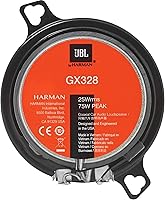
  • Peak Power: Rated at 75 watts peak power handling per speaker, suitable for use with factory radios or modestly powered aftermarket head units.
  • Impedance: Low-impedance 3-ohm design allows the speaker to draw more current from a head unit, increasing output volume without an external amplifier.
  • Sensitivity: Sensitivity is measured at a 2.83-volt input, a standard reference level that reflects how efficiently the speaker converts power into sound.
  • Mounting Type: Single coaxial mount configured for door speaker installation, with no external crossover box required.
  • Tweeter Deflector: An included tweeter deflector accessory allows adjustment of high-frequency dispersion to better direct sound toward the listening position.
  • Woofer Diameter: Woofer cone diameter is 3.5 inches, consistent with compact factory speaker bay dimensions found in many smaller vehicles.
  • Dimensions: Overall product dimensions are 3″ deep by 5.4″ wide by 8.6″ tall, including packaging and mounting hardware.
  • Item Weight: The unit weighs approximately 2.18 pounds, keeping the door panel load minimal during installation.
  • Power Source: Corded electric, wired connection only — no wireless or Bluetooth functionality is included or supported.
  • Connectivity: Standard wired coaxial connection compatible with factory and aftermarket head unit speaker outputs.
  • Color: Available in black with a contemporary grille aesthetic designed to blend with most factory interior finishes.
  • Waterproofing: These speakers are not waterproof and are intended strictly for enclosed interior car installations, not open-air or marine use.
  • Warranty: Covered by a limited manufacturer warranty from JBL; buyers should confirm current warranty terms directly with the manufacturer at time of purchase.
  • Manufacturer: Designed and produced by JBL, a brand with decades of experience across consumer, professional, and automotive audio applications.
  • Model Number: The official manufacturer model number is GX328, which can be used to verify compatibility and locate support documentation.
  • Compatible Sources: Works with factory OEM radios, aftermarket head units, and low-to-mid power outboard amplifiers, offering flexibility for future system upgrades.

Related Reviews
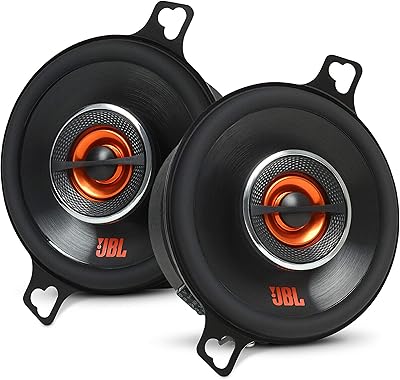
JBL GX302 3.5-inch Coaxial Car Speakers
77%
83%
Sound Clarity
54%
Bass Performance
91%
Installation Ease
88%
Mounting Compatibility
78%
Build Quality
More
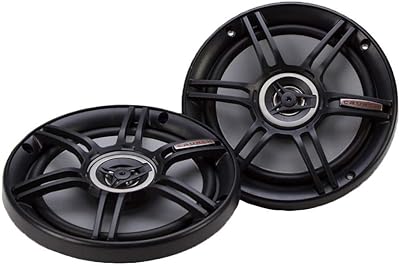
Crunch CS65CXS 6.5-Inch 3-Way Coaxial Car Speaker
84%
89%
Sound Quality
92%
Bass Performance
87%
Installation Ease
81%
Durability
85%
Build Quality
More
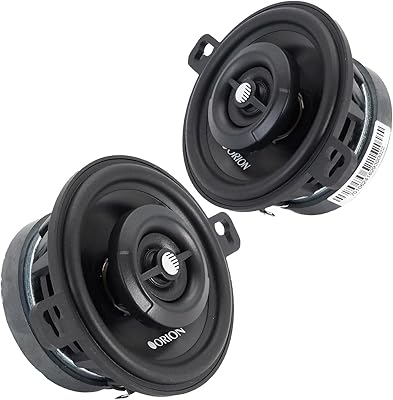
Orion CB35 3.5-Inch Coaxial Car Speakers
72%
78%
Sound Clarity
43%
Bass Performance
88%
Value for Money
81%
Build Quality
91%
Ease of Installation
More
Hifonics ZS653 Zeus 6.5 Inch 3-Way Car Audio Coaxial Speakers
85%
88%
Sound Quality
85%
Bass Performance
92%
Ease of Installation
80%
Build Quality
91%
Value for Money
More
BOSS Audio Systems CH6530B 6.5 Inch 3-Way Coaxial Car Door Speakers
81%
84%
Sound Quality
91%
Ease of Installation
68%
Bass Performance
80%
Durability
89%
Compatibility with Car Systems
More
CT Sounds BIO-5-25-COX 5.25-inch Coaxial Car Speakers
75%
81%
Sound Clarity
54%
Bass Response
78%
High-Frequency Performance
88%
Value for Money
72%
Build Quality
More
Kicker CSC35 3.5-Inch Coaxial Car Speakers
80%
83%
Sound Clarity
52%
Bass Response
91%
Installation Ease
78%
Build Quality
88%
Value for Money
More
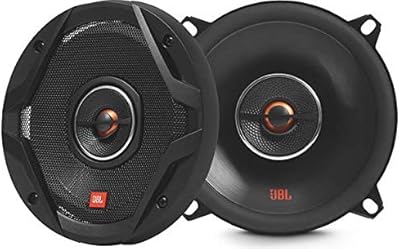
JBL GX528 5.25″ Coaxial Car Speakers
77%
88%
Sound Quality vs. Stock
61%
Bass Response
83%
Treble & High-Frequency Detail
84%
Midrange Clarity
71%
Volume & Power Handling
More
JBL CLUB6520 6.5″ Coaxial Car Speakers
77%
84%
Sound Clarity
61%
Bass Response
88%
Sensitivity & Volume Output
86%
Installation Ease
79%
Build Quality
More
KICKER DSC350 3.5-Inch Coaxial Speakers
77%
83%
Sound Clarity
54%
Bass Response
91%
Installation Ease
82%
Build Quality
88%
Durability in Heat
More
Hifonics Zeus ZS35CX 3.5-inch Car Speakers
73%
88%
Value for Money
79%
Sound Clarity
41%
Bass Response
92%
Installation Ease
67%
Build Quality
More

FAQ

This is genuinely worth checking before you buy, because the product listing references a count of one, which is unusual for car speakers that are almost always sold in pairs. Verify the current listing details carefully and confirm with the seller if there is any ambiguity — you do not want to install one speaker and realize you need to reorder.

That depends entirely on whether your vehicle has a 3.5-inch speaker bay. Not every car uses this size — many use 4-inch, 5.25-inch, or 6.5-inch slots. Measure your existing speaker or look up your vehicle's speaker size using a compatibility tool before ordering. Forcing the wrong size into a bay is a frustrating experience that is easy to avoid with a quick measurement.

You can absolutely run the GX328s directly from a factory head unit. The 3-ohm low-impedance design is specifically intended to draw more power from a stock radio, so the output is noticeably louder and cleaner than typical 4-ohm speakers without any additional hardware. An amplifier will improve things further, but it is not a requirement.

Most people notice a clear improvement in midrange clarity — vocals become more defined, acoustic instruments have more texture, and the overall sound feels less flat and congested. The difference is most obvious on spoken word, jazz, or singer-songwriter content. If your stock speakers are old or damaged, the gap will feel even more significant.

Not particularly. A 3.5-inch driver has real physical limits when it comes to low-frequency reproduction, and no amount of engineering fully overcomes that constraint. If hip-hop, EDM, or any bass-forward genre is your primary listening diet, you will likely find the low end thin and unsatisfying. A dedicated subwoofer would be necessary to fill that gap.

Most reasonably handy people can handle this installation without professional help. The coaxial design means both the woofer and tweeter connect through a single wiring harness — there is no separate crossover to wire up or position. You will need a panel removal tool, a screwdriver, and basic wire connectors. Many first-time installers report completing the job in under an hour per side.

The tweeter deflector is a small accessory that clips onto the tweeter housing and angles high-frequency sound toward the listener's ear level rather than projecting it straight out from the door panel. Whether you need it depends on your vehicle's speaker placement — if the speaker is mounted low in the door, the deflector helps noticeably. If the speaker faces directly toward the listening position, you can skip it.

The polypropylene woofer cone is specifically chosen for its resistance to heat and humidity — two things car interiors have plenty of. Long-term buyers report consistent performance after a year or more of use without noticeable degradation in sound quality. That said, direct sunlight on exposed speakers in convertibles or vehicles with large sunroofs can accelerate wear on any speaker, so enclosed door mounting is ideal.

Yes, these speakers are compatible with both factory head units and outboard amplifiers. The 75-watt peak power handling gives you reasonable headroom for a modest amp. Keep in mind that at 3.5 inches, the speaker has a ceiling on how much power it can usefully translate into sound, so a high-output amp is not necessary and could actually cause damage if the gain is set too aggressively.

The overall dimensions are 3″ deep by 5.4″ wide by 8.6″ tall, but the critical measurement for fitment is the mounting depth behind the baffle — the space between the back of the speaker and any obstruction inside the door cavity. Some vehicles have very shallow door cavities, and a few buyers have reported fitment challenges as a result. Measure your available depth before purchasing, and check whether you need a mounting adapter or spacer ring.

Where to Buy