
Overview

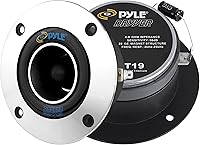
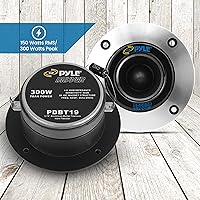
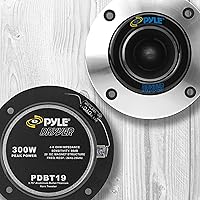
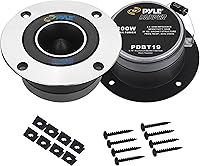
The Pyle Pro PDBT19 1-Inch Car Tweeters have been on the market since 2009, and that kind of lasting market presence in the budget audio space actually means something. This tweeter pair isn't trying to compete with high-end component systems — it's aimed at drivers who want a noticeable upgrade over factory speakers without spending a lot. The 1-inch titanium dome sits inside an aluminum bullet horn housing, giving it a look that punches above its price. Sold as a pair, these car tweeters slot into an existing setup alongside a woofer or full-range speaker, filling in the high-frequency detail that stock audio almost always lacks.

Features & Benefits

What stands out about this tweeter pair is how much Pyle packed into a modest package. The Kapton voice coil handles heat better than standard paper coils, which matters when you're pushing volume on a long summer drive. Ferro fluid cooling works alongside it to keep temperatures in check during extended listening sessions. The included Mylar capacitor acts as a basic crossover, blocking low frequencies from reaching the driver — a genuinely useful inclusion that saves you from sourcing a separate component. Sensitivity is high enough that they respond well to modest amplifier output, and the frequency range stretches from around 2kHz up to 25kHz, covering the treble detail most factory setups completely miss.

Best For

These car tweeters make the most sense for someone just getting into aftermarket car audio — someone tired of the thin, lifeless sound from stock speakers but not ready to invest in a full component system. DIY installers will appreciate that the built-in capacitor crossover removes one step from the process; wire them up and they handle the filtering themselves. The 4–8 ohm impedance range covers most aftermarket head units and amplifiers without any special matching. Pairing them with a decent set of mid-bass drivers or coaxials is the sweet spot for this tweeter pair — modest hardware, meaningful improvement.

User Feedback

Buyers consistently point to two strengths: easy installation and a clear improvement in treble clarity over stock speakers. For the price, most feel they got solid value. The criticism worth taking seriously involves spec consistency — the product listing contains conflicting figures in a few places, which buyers doing careful research before purchasing found confusing. There are also scattered reports of durability concerns after heavy use, especially in vehicles regularly parked in hot conditions. A few reviewers note the power ratings feel optimistic rather than conservative. Net-net, the sentiment skews positive for a budget-tier option, but it rewards buyers who go in with calibrated expectations.

Pros

  • Sold as a pair, offering genuine value for a complete stereo tweeter upgrade in one purchase.
  • Built-in Mylar capacitor crossover simplifies wiring — no separate crossover component needed.
  • High sensitivity means these car tweeters respond well even without a dedicated amplifier.
  • The Kapton voice coil handles heat better than basic paper alternatives, adding practical durability.
  • Ferro fluid cooling helps sustain consistent output during longer listening sessions.
  • Wide impedance compatibility makes pairing with most aftermarket head units straightforward.
  • Aluminum bullet horn housing feels solid and looks the part for the price point.
  • At-a-glance installation process is beginner-friendly, with minimal technical knowledge required.
  • Frequency range reaches high enough to bring out treble detail noticeably absent in stock setups.
  • Long market presence suggests the design has been refined and is not an untested newcomer.

Cons

  • Product listing contains conflicting specification figures, making pre-purchase compatibility checks harder than they should be.
  • Real-world power handling is significantly lower than the headline peak figure implies — manage expectations accordingly.
  • Longevity reports from buyers in hot climates or high-volume use cases are not consistently encouraging.
  • No built-in amplification means output quality is directly limited by whatever head unit or amp is driving them.
  • The capacitor crossover is basic — it offers passive filtering but no tuning flexibility for more demanding setups.
  • Fit compatibility varies by vehicle; some buyers report sizing or mounting challenges depending on door or dash configuration.
  • Sound quality improvement, while real, is modest — do not expect a dramatic transformation from stock audio.
  • Customer support and warranty experience for Pyle products can be inconsistent based on broader brand feedback.

Ratings

Our AI-generated scores for the Pyle Pro PDBT19 1-Inch Car Tweeters were produced by analyzing verified buyer reviews from multiple global markets, with spam, bot-generated, and incentivized feedback actively filtered out before scoring. The results reflect a honest cross-section of real ownership experiences — from first-time installers upgrading weekend project cars to daily drivers simply tired of thin factory audio. Both the genuine strengths and the recurring frustrations are captured transparently in each category below.

Value for Money
83%
For buyers working with a tight car audio budget, these car tweeters consistently earn appreciation for delivering a real, audible improvement at a price that does not require much financial commitment. Picking up a stereo pair with a crossover already included makes the overall package feel like a genuinely fair deal.
A handful of buyers felt the value proposition weakened after early failures, noting that replacing the pair within a year made the original savings feel less meaningful. When durability is factored in alongside purchase price, the long-term cost calculation becomes less clear-cut.
Sound Clarity
74%
26%
Most buyers noticed an immediate and satisfying improvement in treble detail compared to whatever stock speaker they replaced — vocals sound crisper, high-hats cut through more cleanly on busy tracks, and the overall sense of audio definition improves noticeably on daily commutes.
At higher volume levels, some listeners reported a hint of harshness in the upper frequencies, particularly on compressed streaming audio. This tweeter pair is capable within its range, but it does not have the refinement of a mid-tier component system and that gap is audible if you are listening critically.
Ease of Installation
88%
The included Mylar capacitor crossover removes a significant barrier for beginners — you wire it inline and the tweeter handles the rest without needing an external crossover unit. Multiple reviewers with no prior car audio experience described completing the install in under an hour.
A small number of buyers ran into fitment challenges depending on their specific vehicle's mounting location, particularly in older cars where available depth behind the panel was tighter than the 2-inch requirement. The included hardware does not cover every mounting scenario.
Build Quality
67%
33%
The aluminum bullet horn feels solid in hand and does not flex or rattle when tapped, which gives a reasonable first impression of durability for the price tier. The magnet assembly is noticeably weighty, suggesting a more substantial internal construction than some competing budget options.
The plastic components around the base and terminal area feel noticeably less robust than the metal horn, and a portion of long-term reviewers reported physical degradation — cracking or loosening — after extended exposure to heat inside parked vehicles. Build quality is acceptable at the entry level but not stress-tested.
Power Handling
61%
39%
For moderate listening volumes on a standard aftermarket head unit, this tweeter pair handles everyday audio loads without audible strain or distortion. The ferro fluid cooling and Kapton voice coil do offer more thermal headroom than a basic paper-coil alternative at the same price.
The headline peak power figure is optimistic by most practical measures, and buyers who pushed these car tweeters hard with an amplifier found the real ceiling arrived sooner than the spec sheet suggested. Running them at sustained high power is not advisable if long-term reliability matters to you.
Frequency Response
78%
22%
The frequency range is wide enough to cover everything from the upper presence region through the air frequencies, and the difference is tangible when switching from a typical factory speaker. Acoustic instruments and female vocals in particular benefit from the extended high-frequency reach.
The low end of the frequency range — where tweeters hand off to a mid-range or woofer — can sound slightly uneven without careful crossover tuning. The included capacitor covers the basics but does not allow for fine-grained crossover point adjustment, which matters more as your system gets better.
Compatibility
81%
19%
The broad impedance window makes these car tweeters a practical fit for the vast majority of standard aftermarket head units and low-wattage amplifiers without any special matching or impedance bridging. Most buyers found them working correctly with their existing setup on the first try.
The product listing contains conflicting impedance figures, which caused genuine confusion among more technically minded buyers trying to verify compatibility before purchasing. While the 4–8 ohm range is the correct practical value, the presence of contradictory specs in the listing undermines confidence during the research phase.
Thermal Durability
63%
37%
The combination of a Kapton voice coil and ferro fluid cooling gives this tweeter pair a meaningful thermal advantage over budget speakers that skip these features entirely. For drivers in mild to moderate climates, heat-related performance issues are unlikely to surface during normal use.
Buyers in hot-weather markets or those whose cars sit in direct sun regularly reported a higher incidence of early failures and degraded performance over time. Heat is the most consistent long-term threat to these car tweeters, and the budget-level housing compounds that vulnerability.
Packaging & Accessories
72%
28%
Receiving two tweeters and a functional crossover capacitor in a single package is a meaningful convenience, removing at least one extra purchasing step compared to competitors that ship only the bare drivers. The pair arrives adequately protected and ready to work with.
Beyond the crossover, the accessory kit is minimal — mounting hardware is basic and does not account for the range of surfaces and panels buyers actually work with. A few buyers had to source additional brackets or adapters to complete their specific installation cleanly.
Sensitivity & Efficiency
82%
18%
A sensitivity rating in the high-90s dB range means these car tweeters produce strong output even from a low-powered source, which is practical for buyers running them directly from a factory or budget aftermarket head unit. They get loud without demanding much from the source.
High sensitivity can occasionally work against you — at lower listening volumes, any background noise or interference in your system wiring becomes more audible. This is a common trade-off with efficient speakers and is not unique to this tweeter pair, but it is worth knowing.
Aesthetic & Fitment
69%
31%
The aluminum bullet horn has an aggressive, purposeful look that suits a visible dashboard or A-pillar mount well. For budget tweeters, the physical appearance is more polished than many alternatives in the same price tier, and buyers frequently comment positively on how they look once installed.
The 3.75-inch horn diameter is relatively large for a 1-inch driver, which can create fitment issues in tighter mounting locations or smaller vehicles. Some buyers found the visual footprint larger than expected, making flush mounting in factory locations impractical without modification.
Longevity
58%
42%
Buyers who used these car tweeters in moderate conditions — comfortable climates, moderate volumes, non-amplified setups — generally reported satisfactory performance over a reasonable ownership period. The Kapton coil does provide more durability groundwork than pure budget alternatives.
A recurring theme in critical reviews is premature failure, with some units showing degraded output or physical damage within the first year of regular use. Longevity is the weakest link for this tweeter pair and the area where the budget-tier construction shows most clearly over time.
Crossover Performance
71%
29%
Having a passive crossover included means beginners can protect the tweeter from low-frequency damage immediately without any additional investment or technical knowledge. It works as a basic safeguard and is genuinely better than running a tweeter without any filtering.
The single capacitor design is a blunt instrument compared to a proper multi-component crossover network — it filters low frequencies but offers no adjustability for crossover frequency or attenuation slope. Buyers who want precise system tuning will quickly outgrow it.

Suitable for:

The Pyle Pro PDBT19 1-Inch Car Tweeters are a practical choice for drivers who are taking their first real step into aftermarket car audio and want a noticeable improvement over factory sound without committing serious money. If your current setup sounds flat and lifeless — lacking that crisp high-end detail on vocals, cymbals, or strings — adding a quality tweeter pair is one of the most effective single upgrades you can make, and this is a reasonable entry point for that. DIY enthusiasts who enjoy weekend installs will find the built-in capacitor crossover removes a layer of complexity, letting them wire directly without sourcing additional components. These car tweeters also work well for anyone building out a modest full system alongside a set of aftermarket coaxial or component woofers, where the goal is balanced sound across a reasonable budget rather than chasing audiophile benchmarks.

Not suitable for:

Buyers who prioritize long-term durability and consistent performance in demanding conditions — think vehicles regularly exposed to extreme heat or high-volume daily use — may find that the Pyle Pro PDBT19 1-Inch Car Tweeters fall short of expectations over time. If you already own a mid-range or premium component speaker system, this tweeter pair is unlikely to match the refinement and tonal accuracy you are already used to; the performance ceiling here is firmly budget-tier. Serious audio enthusiasts who do careful spec research before buying may also find the product listing frustrating — some figures listed appear inconsistent, which can make it harder to confirm compatibility with confidence. Anyone looking for a tweeter to push with a high-powered amplifier at sustained high volume should also look elsewhere, as the real-world power handling is more modest than the peak figures suggest.

Specifications

  • Driver Size: Each tweeter uses a 1-inch dome driver, a standard size well-suited for high-frequency reproduction in car audio applications.
  • Peak Power: The pair is rated to handle up to 300W peak power, though real-world continuous use should stay well within the RMS figure for safe operation.
  • RMS Power: Continuous RMS power handling is rated at 150W, which represents the practical sustained limit for everyday listening.
  • Frequency Range: These car tweeters cover a frequency range from 2kHz to 25kHz, handling the treble and upper-mid detail that most factory speakers fail to reproduce.
  • Impedance: Impedance is rated across a 4–8 ohm range, making this tweeter pair broadly compatible with standard aftermarket head units and amplifiers.
  • Sensitivity: Sensitivity is rated at 98 dB SPL, meaning these tweeters can produce strong output levels even from a modest power source.
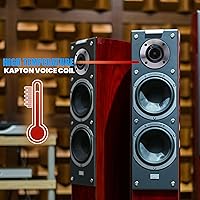
  • Voice Coil: A Kapton voice coil is used in each driver, chosen for its ability to withstand higher operating temperatures compared to standard paper coils.
  • Cooling System: Ferro fluid surrounds the voice coil to help dissipate heat during extended use, supporting more consistent performance at higher volumes.
  • Magnet Structure: Each tweeter is built around a 20 oz magnet, contributing to a stable magnetic field and solid overall driver construction.
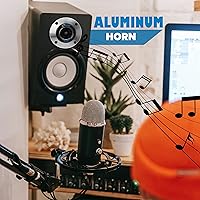
  • Horn Material: The bullet horn is machined from aluminum, providing a rigid and resonance-resistant enclosure for the tweeter dome.
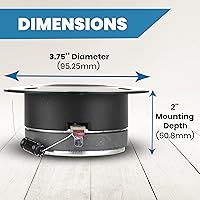
  • Horn Diameter: The aluminum bullet horn measures 3.75 inches in diameter, determining the outer footprint needed for flush or surface mounting.
  • Mounting Depth: Installation requires a mounting depth of 2 inches, which should be verified against available space in your chosen mounting location before purchase.
  • Crossover Type: A Mylar capacitor crossover is included with the pair, providing passive high-pass filtering to protect the tweeter from low-frequency signals.
  • Amplification: These tweeters are passive and require an external head unit or amplifier to drive them; no built-in amplification is included.
  • Quantity: The package includes two tweeters sold as a complete stereo pair, covering both left and right channels in one purchase.
  • Driver Weight: Each unit weighs approximately 1.5 lbs, reflecting the solid magnet structure packed into a relatively compact housing.
  • Product Dimensions: Overall dimensions of each unit measure approximately 3.74 inches in depth and width, with a height of around 1.57 inches at the base.
  • Warranty: Pyle covers this tweeter pair under a limited warranty, though buyers should confirm current terms directly with the manufacturer or retailer at time of purchase.

Related Reviews

Cinema Secrets Ultimate Corrector 5-In-1 Palette
74%
83%
Color Correction Effectiveness
79%
Pigmentation & Payoff
81%
Blendability
54%
Shade Range Inclusivity
72%
Wear Longevity
More
Pyle PLW15RD 15-Inch Car Subwoofer
85%
93%
Bass Performance
88%
Sound Clarity
90%
Build Quality
82%
Ease of Installation
87%
Durability
More
Pyle PPA10 10-Inch Car Midbass Woofer
76%
88%
Value for Money
76%
Sound Quality
61%
Build Quality
79%
Power Handling
82%
Ease of Installation
More
Pyle PPA15 15-Inch Car Midbass Woofer
84%
91%
Bass Quality
87%
Power Handling
89%
Durability
72%
Ease of Installation
85%
Build Quality
More
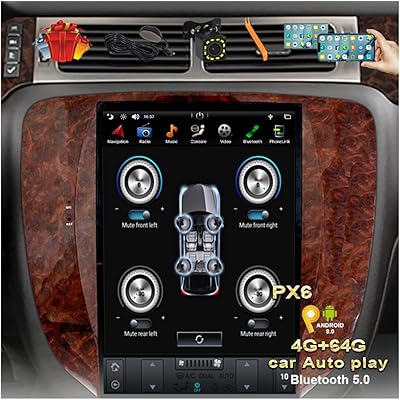
DS18 PRO-TWX5 1.5″ Super Bullet Tweeter
86%
88%
Performance
90%
Sound Clarity
85%
Build Quality
91%
Ease of Installation
87%
Power Handling
More
XTRONS CM121HD 12.1-inch Car Overhead Monitor
72%
78%
Picture Quality
84%
HDMI Connectivity
71%
Build Quality
58%
Ease of Installation
82%
Screen Size & Viewing Angle
More
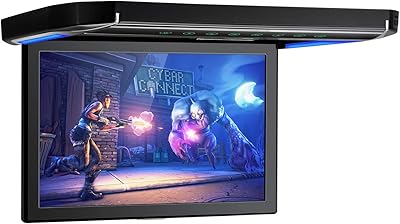
CUSP CV-G631 12.1-inch Android Car Stereo
73%
81%
Screen Quality
83%
Navigation Performance
84%
Ease of Installation
62%
Software & App Experience
58%
Compatibility & Fitment
More
Pyle PLRV1725 17.3-inch Car Overhead Monitor
72%
88%
Screen Size Impact
71%
Picture Quality
86%
Connectivity & Inputs
62%
IR Headphone Performance
79%
Ease of Setup
More
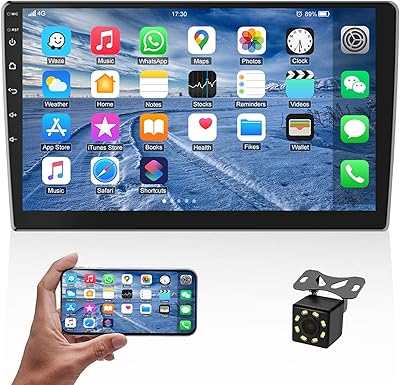
incifum Ford F150 10-Inch Touchscreen Car Stereo
69%
83%
Display Quality
79%
Wireless CarPlay & Android Auto
67%
Installation Experience
61%
Compatibility Accuracy
72%
Performance & Responsiveness
More
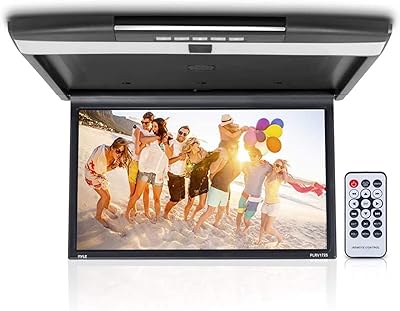
OiLiehu 10.1-inch Android Double Din Car Stereo
71%
88%
Value for Money
79%
Screen Quality
74%
GPS Navigation
83%
Bluetooth Performance
86%
Backup Camera
More

FAQ

You get a pair of tweeters and a Mylar capacitor crossover included in the box, which covers the basics for a straightforward install. You will still need to source your own speaker wire and any mounting hardware specific to your vehicle, but you will not need to buy a separate crossover component.

You can run them directly from a factory or aftermarket head unit — the sensitivity rating is high enough that they do not demand a lot of power to get moving. That said, pairing them with a modest external amplifier will give you noticeably cleaner and more dynamic results, especially at higher volumes.

The install is genuinely beginner-friendly. The included capacitor handles the crossover filtering, so you connect the tweeter in line with your speaker wiring without needing to wire up a complex passive network. The main thing to plan ahead is finding a clean mounting location with at least 2 inches of depth clearance behind it.

In most cases, yes. As long as your current speakers are handling the mid-bass and lower frequencies, these car tweeters slot in alongside them to fill in the high-frequency range. The 4–8 ohm impedance range means compatibility is broad across most common aftermarket setups.

The 4–8 ohm range is the correct and practical figure to rely on for this tweeter pair; the 1 ohm reference in the listing appears to be a data entry error. Virtually all standard car audio tweeters in this category operate in the 4–8 ohm range, and that is what you should use when matching this product to your head unit or amplifier.

The Kapton voice coil and ferro fluid cooling do give these tweeters more thermal resilience than budget speakers with paper coils, but they are not engineered for extreme heat exposure. If your car regularly sits in intense sun and gets very hot inside, keep that in mind — sustained high temperatures over time can shorten the lifespan of any speaker in this price range.

A Mylar capacitor crossover is included with the pair, so you do not need to purchase a separate unit for a basic install. It provides passive high-pass filtering to keep low frequencies away from the tweeter. If you want more precise crossover tuning, you could opt for an aftermarket adjustable crossover, but it is absolutely not required to get these working.

Yes, they work well as part of a three-way system alongside a subwoofer and mid-range driver. The tweeter handles the top-end frequencies while your subwoofer manages the low end, and a mid-range speaker or woofer fills in the middle. Just make sure your crossover points are set appropriately so each driver is only handling its intended frequency range.

Most buyers report a clear and immediate improvement in treble clarity — things like vocals, acoustic strings, and high-hat details come through much more crisply than from typical factory speakers. It is a meaningful upgrade, but keep expectations realistic; these are a budget-tier tweeter and the improvement is incremental rather than transformational.

For the price and use case, this tweeter pair remains a competitive option in the entry-level car audio segment. It has been around long enough to have a real track record, and the core hardware — Kapton voice coil, ferro fluid cooling, included crossover — holds up reasonably well against newer alternatives at a similar price. If you need premium performance, budget up; but for a practical first upgrade, these car tweeters still make a solid case for themselves.