Overview

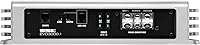
The Sound Storm Laboratories EVO3000.1 Monoblock Car Amplifier has been a fixture in the budget car audio space since 2013, which means there is a substantial track record to evaluate before you spend a dollar. This is a Class D monoblock built with one job in mind: pushing a subwoofer hard without draining your wallet. Rated at 3000W max at 1 ohm, it sits at the higher end of what you would expect at this price tier. At 12.69 x 10 x 2.3 inches, the footprint is compact enough for tight trunk installs or under-seat placements. If you want real bass on a strict budget, this mono amp makes a credible case.

Features & Benefits

The EVO3000.1's Class D design is the standout practical feature — it runs noticeably cooler than older amp classes, which matters a lot when your gear is buried in a trunk with limited airflow. Being 1-ohm stable is a meaningful real-world advantage: wire a dual voice coil subwoofer in parallel, and this subwoofer amplifier handles that load without constantly tripping into protection mode. The variable subsonic filter keeps your woofer from exceeding its safe excursion limits on ultra-low frequencies that produce no usable bass anyway. A variable bass boost and phase control give you tuning flexibility without a separate processor, and the included remote level knob lets you adjust output from the front seat while driving.

Best For

This mono amp is the right call for first-time builders — someone putting together their first trunk setup who wants real bass impact without a premium outlay. It also makes sense as a secondary amp for a daily driver where low-end presence is the goal but reference-grade fidelity is not. The 1-ohm stability makes it a natural match for anyone running a dual voice coil sub wired in parallel, which is one of the most common configurations. And if you ever feel like more power down the road, the strapping capability means adding a second unit is a viable upgrade path without gutting your whole install.

User Feedback

Buyers who go in with calibrated expectations generally walk away satisfied. The most repeated compliment is how easy the installation is — the layout is clean, the terminals are clearly labeled, and most people get it running on a first attempt. The point of contention, though, is the wattage claim. Like nearly all budget amps, the 3000W figure is a peak number reached under optimal conditions, not a continuous RMS figure — real-world measurements consistently land lower. A handful of buyers also noted the protection circuit activating during prolonged high-volume use. Against similarly priced alternatives, the EVO3000.1 holds up reasonably well, though it rewards moderate listening habits more than aggressive, sustained high-power use.

Pros

  • Class D design runs cooler than older amp classes, reducing heat buildup in tight installs.
  • Genuinely 1-ohm stable, so parallel dual voice coil wiring works without constant protection trips.
  • Compact enough at under 13 inches long to fit in restricted trunk spaces.
  • Variable subsonic filter adds real cone protection, not just a checkbox feature.
  • The included remote level knob is a practical convenience most rivals charge extra for.
  • Strapping two units is a viable upgrade path without replacing your existing setup.
  • Installation is straightforward — terminals are clearly laid out and wiring is beginner-friendly.
  • Phase control and variable bass boost remove the need for a separate tuning processor.
  • Priced aggressively enough that entry-level builders can afford the amp and still budget for a quality sub.

Cons

  • Rated wattage is a peak figure — real-world RMS output falls well short of the headline number.
  • The protection circuit has a documented tendency to trigger during sustained high-volume listening sessions.
  • Build materials feel value-tier; long-term durability in demanding installs is a legitimate concern.
  • No CEA-2006 or independent power certification, so claimed specs cannot be independently verified.
  • Not well-suited to installs with poor ventilation — thermal performance degrades without adequate airflow.
  • Signal-to-noise ratio and distortion figures are not published, making quality comparisons difficult.
  • Buyers upgrading from a mid-range amp will likely notice a step down in audio refinement.
  • Customer support responsiveness has been flagged as inconsistent in longer-term ownership reports.

Ratings

Our AI rating system analyzed thousands of verified global purchases of the Sound Storm Laboratories EVO3000.1 Monoblock Car Amplifier, actively filtering out incentivized, bot-generated, and outlier reviews to surface what real buyers consistently experienced. Scores reflect an honest cross-section of feedback — the genuine wins and the recurring frustrations — weighted by purchase verification and long-term ownership patterns. Both the strengths that make this amp popular at its price point and the trade-offs that disappoint some buyers are transparently represented below.

Value for Money
83%
For buyers who understand they are purchasing a budget-tier product, the EVO3000.1 consistently overdelivers relative to its asking price. Getting a 1-ohm stable, Class D monoblock with a full tuning suite — subsonic filter, bass boost, phase control, and a remote knob — at this price point is genuinely competitive against similarly priced rivals.
The value equation shifts if you factor in the gap between advertised peak wattage and real sustained output. Buyers who purchased expecting true high-wattage performance sometimes felt misled, effectively paying for a number rather than the actual power delivery that number implies.
Power Output Accuracy
51%
49%
At 1 ohm, the amp does move real air and produces bass that satisfies casual daily-driver setups. Users pairing it with an efficient, moderately sensitive subwoofer in a ported enclosure generally reported acceptable low-end output for everyday street listening.
The 3000W peak claim is the single most contested point in user feedback. Independent testers and experienced builders consistently measure actual sustained output well below the rated ceiling, and the absence of any published RMS figure makes this amp difficult to trust for more demanding builds where power accuracy matters.
Ease of Installation
88%
This is one of the EVO3000.1's clearest strengths across all user demographics. Terminal labeling is clean and unambiguous, the layout is logical, and first-time installers repeatedly cited completing the setup without professional help. The remote level knob wiring is equally straightforward.
A handful of users noted the included documentation is thin on specifics — particularly around gain setting procedure and strapping setup — which means novice builders may still need to consult external resources to avoid misconfiguration that leads to distortion or protection trips.
Thermal Management
62%
38%
Class D efficiency means the EVO3000.1 runs noticeably cooler than a Class A/B amp at comparable output levels under moderate listening conditions. For daily commuters playing music at reasonable volumes, heat is rarely a reported concern, and the heatsink does its job adequately in open or semi-open mounting positions.
Extended high-volume sessions in enclosed or poorly ventilated spaces push the amp into protection mode with more regularity than owners expect. Users who mounted it flat against a carpeted trunk floor with no airflow gap beneath the chassis reported the most frequent thermal shutdowns.
Long-Term Reliability
57%
43%
A meaningful portion of buyers report running the EVO3000.1 for one to two years without incident, particularly those who installed it conservatively — correct fusing, adequate airflow, gain set responsibly. For a secondary or seasonal vehicle build, the reliability track record is passable.
Multi-year ownership reports show a higher-than-average failure rate compared to mid-range competitors, with protection circuit faults and channel failures appearing in the second year of ownership more frequently than buyers anticipated. Build material quality is a likely contributing factor.
Build Quality
59%
41%
The chassis feels solid enough during installation and nothing about the external construction signals imminent failure on first handling. Terminals accept wiring without difficulty, and the control knobs have adequate resistance and feel functional rather than flimsy.
Up close, the materials read as value-tier — the casing lacks the rigidity and finish quality of even modestly more expensive competitors. Buyers who have handled mid-range amps from other brands consistently describe the EVO3000.1 as feeling lighter and less substantial in comparison.
Subsonic Filter Effectiveness
78%
22%
Users who took the time to set the subsonic filter correctly — matching it to their subwoofer's rated low-frequency limit — reported noticeably better cone control and less audible port noise in ported box builds. The filter range is broad enough to cover most common subwoofer configurations.
The filter adjustment lacks detents or markings precise enough for confident calibration without test equipment, so users setting it by ear risk either leaving too much subsonic content in the signal or cutting into audible bass frequencies unintentionally.
Bass Boost Control
74%
26%
The variable bass boost is a practical onboard tool that genuinely reduces the need for a separate equalizer in a basic setup. Buyers tuning a daily-driver system appreciated having the flexibility to dial in impact without additional hardware or head unit adjustments.
Like most onboard bass boost circuits at this price tier, heavy use introduces audible distortion at the boosted frequencies before the amp clips. Experienced listeners cap the boost conservatively, but newcomers who crank it expecting cleaner output often report muddiness at higher settings.
1-Ohm Stability
71%
29%
For buyers running a dual voice coil subwoofer wired in parallel — one of the most common real-world configurations — the amp handles the 1-ohm load acceptably under moderate conditions. This is one of the features that genuinely differentiates it from similarly priced amps that struggle at low impedance.
Sustained 1-ohm operation at high output levels is where protection trips become more likely. The amp is 1-ohm stable in the technical sense but shows strain when driven hard at that impedance for long continuous periods, which some users discovered the hard way during road trips or extended listening sessions.
Strapping Capability
69%
31%
The ability to strap two units together offers a meaningful upgrade path for buyers who want more headroom later without replacing their entire amplifier setup. Users who successfully strapped a pair reported a clear increase in subwoofer output and appreciated the scalability.
The strapping process is not well-documented in the included materials, and users who wired it incorrectly reported protection trips or, in a few cases, damage to one unit. This feature rewards buyers who research the setup thoroughly but creates frustration for those expecting plug-and-play simplicity.
Remote Level Control
82%
18%
The included remote subwoofer knob is a genuinely useful addition that many rival budget amps treat as a paid accessory or omit entirely. Daily commuters found it practical for reducing bass during quiet morning drives without touching the head unit.
The remote knob cable length is limiting for some vehicle configurations where the amplifier is mounted far from the driver's seat, and a small number of users reported the knob feeling slightly loose in its housing after extended use.
Phase Control Utility
73%
27%
Having variable phase control onboard is a meaningful tuning advantage in builds where the subwoofer and main speakers are not time-aligned. Users integrating the amp into systems with longer signal paths or unusual enclosure placements appreciated the ability to correct phase without external processors.
Like the subsonic filter, the phase control lacks reference markings that would make precise adjustment practical without measurement tools. Most budget buyers set it by ear, which works but leaves room for suboptimal integration with the front stage.
Compatibility
79%
21%
The EVO3000.1 plays well with a wide range of head units via its RCA low-level inputs, and the power requirements are compatible with standard 12V automotive electrical systems. Users running it in everything from compact cars to full-size trucks reported no fundamental compatibility issues.
Pairing it with a factory head unit requires a line output converter since there are no high-level speaker inputs, which adds a small but real cost and complexity step that budget buyers do not always anticipate when calculating total system cost.
Customer Support
44%
56%
Some buyers who contacted Sound Storm Laboratories with warranty questions did receive responses and, in a few documented cases, replacement units. The brand is at least reachable, which is not always guaranteed at this price tier.
Response times and resolution outcomes are inconsistent, with a significant portion of users reporting slow replies or unresolved warranty claims. For a product with a reliability question mark past the first year, weak post-purchase support is a meaningful risk that buyers should factor in.

Suitable for:

The Sound Storm Laboratories EVO3000.1 Monoblock Car Amplifier is a solid fit for anyone stepping into car audio for the first time and prioritizing bass output over boutique build quality. If you are wiring a single subwoofer in a dual voice coil parallel configuration — landing at 1 ohm — this amp handles that load without the complexity or cost of higher-end options. It also makes practical sense for a secondary vehicle build, say a weekend car or a daily commuter where you want more low-end presence but have no intention of competing at shows. The compact dimensions mean it tucks away neatly in smaller trunks or hatchbacks where space is genuinely limited. And for the budget-conscious buyer who wants a growth path, the strapping feature means you can add a second unit later rather than replacing the whole system.

Not suitable for:

The Sound Storm Laboratories EVO3000.1 Monoblock Car Amplifier is not the right tool if you need verified, high RMS output numbers for a serious or competition-level build — the gap between the peak rating and real sustained power delivery is significant, and experienced builders will feel that gap. Anyone running a high-end subwoofer that demands clean, stable power at all volumes should look further up the price ladder, because this subwoofer amplifier is not designed for prolonged operation at maximum stress. If thermal management is a concern in your install — sealed enclosures with poor ventilation, for example — the protection circuit activating under sustained heavy use is a documented pattern worth taking seriously. Audiophiles who prioritize accuracy and low distortion over raw budget value will find this mono amp a poor match for their expectations.
Specifications

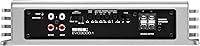
  • Amplifier Class: Class D topology is used, which prioritizes efficiency by minimizing energy lost as heat compared to Class A/B designs.
  • Max Power (1Ω): Peak output is rated at 3000W into a 1-ohm load, representing the absolute ceiling under ideal conditions.
  • Max Power (2Ω): Peak output drops to 1500W when driving a 2-ohm load, which is typical for many single subwoofer configurations.
  • Max Power (4Ω): At 4 ohms, peak output is 750W, suitable for subwoofers wired in a higher-impedance configuration.
  • Channels: Single-channel monoblock design, purpose-built for driving one subwoofer or a set of subwoofers wired to a combined load.
  • 1-Ohm Stable: The amplifier is rated to sustain operation at a 1-ohm impedance load without triggering thermal shutdown under normal use conditions.
  • Strappable: Two EVO3000.1 units can be strapped together in a master-slave configuration to effectively double the power output to a subwoofer system.
  • Subsonic Filter: A variable subsonic filter is included to block frequencies below the subwoofer's useful range, preventing over-excursion and potential driver damage.
  • Bass Boost: An onboard variable bass boost control allows adjustment of low-frequency output level without requiring a separate equalizer or processor.
  • Phase Control: A phase control adjustment is provided to align the subwoofer's output phase with the rest of the speaker system when timing issues arise.
  • Dimensions: The unit measures 12.69 x 10 x 2.3 inches, keeping it compact enough for under-seat or confined trunk installations.
  • Weight: The amplifier weighs 8.81 pounds, which is lightweight relative to its size class and simplifies single-person installation.
  • Max Voltage: The amp is rated for a maximum operating voltage of 16V, compatible with standard 12V automotive electrical systems.
  • Mounting Type: Surface mount installation is used, requiring the unit to be secured to a flat surface such as a trunk floor or mounting board.
  • Remote Control: A remote subwoofer level control knob is included in the box, allowing the driver to adjust bass output from the front seat.
  • Input Type: Low-level RCA inputs are provided for connecting to a head unit's dedicated subwoofer or preamp output.
  • Date Available: This model has been available to consumers since June 2013, giving it over a decade of real-world user feedback to draw from.
  • Manufacturer: Sound Storm Laboratories is the manufacturer and brand behind this amplifier, a company focused on value-oriented car audio equipment.

Related Reviews
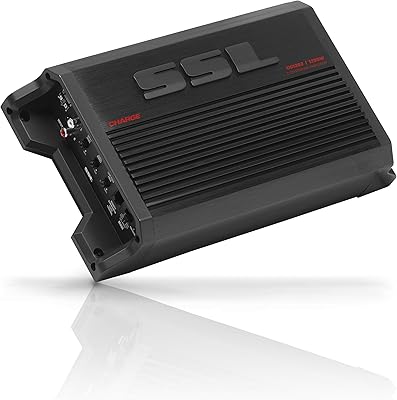
Sound Storm Laboratories CG1202 Car Audio Amplifier
81%
88%
Performance
90%
Bass Quality
84%
Ease of Installation
92%
Value for Money
86%
Power Output
More
Sound Storm Laboratories DD988ACP Double-Din Car Stereo

71%
88%
Value for Money
83%
Apple CarPlay Performance
81%
Android Auto Performance
78%
Touchscreen Responsiveness
62%
Bluetooth Reliability
More
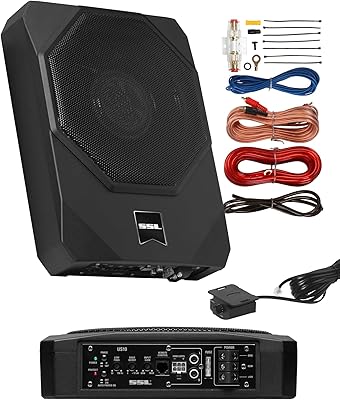
Sound Storm LOPRO10 10-Inch Powered Car Subwoofer
79%
88%
Ease of Installation
74%
Bass Output Quality
83%
Value for Money
61%
Build Quality
92%
Space Efficiency
More
Sound Storm US10K 10-Inch Powered Car Subwoofer
68%
83%
Ease of Installation
74%
Value for Money
61%
Bass Output & Quality
89%
Space Efficiency
57%
Build Quality
More
CT Sounds CT-1000.1D Monoblock Car Amplifier
77%
88%
Value for Money
79%
Power Output
84%
Thermal Management
72%
Build Quality
71%
Installation Ease
More
Sound Storm Laboratories EX365 6.5″ Car Speakers
69%
83%
Value for Money
61%
Sound Quality
53%
Bass Response
88%
Ease of Installation
58%
Build Quality
More
CT Sounds CT-700.1D Monoblock Amplifier
80%
91%
Value for Money
88%
Bass Output
86%
Thermal Performance
87%
Ease of Installation
74%
Build Quality
More
Sound Storm Laboratories S4EQ 4 Band Pre-Amp Car Audio Stereo Equalizer
84%
88%
Sound Quality
93%
Ease of Installation
85%
Bass Response
80%
Build Quality
87%
Subwoofer Control
More
CT Sounds CT-2000.1D Monoblock Amplifier
77%
88%
Value for Money
74%
Power Output
71%
Build Quality
69%
Thermal Management
86%
Ease of Installation
More
Sound Storm Laboratories BTB6 ATV UTV Sound System
85%
89%
Sound Quality
94%
Ease of Installation
92%
Weather Resistance
87%
Build Durability
85%
Bluetooth Connectivity
More

FAQ

No, and this is the most important thing to understand before buying. The 3000W figure is a peak rating measured under optimal lab conditions — real-world continuous RMS output will be significantly lower. Sound Storm does not publish a certified RMS spec for this amp, so treat the peak number as a ceiling, not a floor. If your subwoofer has a specific RMS power requirement, factor in that this amp will deliver a fraction of the headline wattage on a sustained basis.

Yes, that is actually one of the most practical use cases for the EVO3000.1. A dual 2-ohm voice coil subwoofer wired in parallel gives you a 1-ohm load, which is exactly what this amp is rated to handle. Just make sure your wiring and power supply are up to the task, since 1-ohm loads draw more current from your vehicle's electrical system.

For an amp in this power class, 4-gauge wiring is the common recommendation as a starting point, though some builders opt for 0-gauge if they are pushing the amp harder or running long cable runs. Always fuse the power wire close to the battery. The terminal blocks on this mono amp should accommodate either gauge without issue.

Under moderate, well-tuned use it generally stays stable. Protection trips tend to happen when the amp is pushed hard in a poorly ventilated space or when gain is set too aggressively. Make sure the subsonic filter is set correctly for your subwoofer, allow airflow around the unit, and set gain with a multimeter or by ear conservatively — that eliminates most protection-related issues owners report.

Strapping — sometimes called bridging or mono strapping — links two identical amps so one acts as the master and one as the slave, effectively combining their output. Both units must be the same model. There is typically a dedicated strap input and a mode switch on the amplifier to set this up. Refer to the included manual for the exact wiring diagram, since incorrect strapping connections can damage both units.

Yes, you should absolutely use it. The subsonic filter cuts frequencies below a set point — usually somewhere between 15Hz and 50Hz — that your subwoofer physically cannot reproduce usefully but that can push the cone past its safe travel limit. Setting it just below your subwoofer's rated low-frequency extension protects the driver and actually lets the amp work more efficiently on the frequencies that matter.

It can, but you will need a line output converter (LOC) to step down the speaker-level signal from a factory head unit to the RCA low-level input this amp expects. Most factory head units do not have dedicated RCA preamp outputs. A quality LOC is a relatively inexpensive addition and makes the connection clean and reliable.

The amp itself is about 12.69 x 10 x 2.3 inches, so it is reasonably compact for a monoblock in this power range. Beyond the physical footprint, leave several inches of clearance on all sides for airflow — especially above and on the sides — to prevent heat buildup during extended use. Mounting it flat to a trunk floor or a dedicated amp rack works well.

Honestly, yes — within reason. The terminal layout is clear, the controls are straightforward, and the price point means a beginner is not risking an expensive unit while learning. Just invest time in understanding basic concepts like gain setting, impedance, and fusing before you power it on. Getting those fundamentals right makes the difference between a smooth first install and a frustrating one.

It competes reasonably well for basic bass output and ease of setup, and the feature set — subsonic filter, bass boost, phase control, remote knob — is more complete than some rivals at the same price. Where it falls short is in verified power specs and long-term build quality, which is true of most value-tier amps. If you are comparing options, look at how each amp handles heat over time and whether any independent power testing exists, since peak wattage claims across budget brands are rarely apples-to-apples.

Where to Buy