Overview

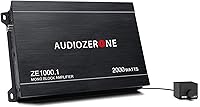
The Audiozerone ZE1000.1 Monoblock Car Amplifier enters a crowded budget segment with something most rivals at this price point overlook: genuine 1-ohm stability paired with a Class D design that keeps heat manageable during real-world installs. AUDIOZERONE sits between no-name imports and established mid-tier brands, targeting builders who want honest output without overthinking the budget. This monoblock amp isn't chasing boutique credibility — it's built for the installer who wants dependable bass from a compact, no-fuss unit. Set your expectations to match the price tier, and it largely holds its own.

Features & Benefits

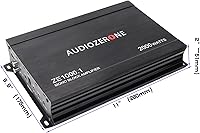
The ZE1000.1 puts out 1000W RMS at 1 ohm — that figure matters far more than the 2000W peak printed on the spec sheet, which represents a momentary ceiling, not usable continuous power. Class D topology keeps the 11-inch by 6.9-inch chassis cool enough for enclosed trunk installs where airflow is limited. The built-in low-pass and subsonic crossover covers 15Hz to 250Hz, letting most builders skip a separate processor. Three internal 35A ATC fuses combined with thermal and short-circuit protection give daily drivers a reasonable safety net against electrical mishaps during normal use.

Best For

This Class D subwoofer amplifier suits first-time installers pairing it with a single 10-inch or 12-inch woofer in a sealed or ported box. The 1-ohm headroom is genuinely useful for anyone running a dual-voice-coil subwoofer wired down for max output — that flexibility isn't always available at this price. At roughly two inches tall, this monoblock amp slides into tight trunk corners where bulkier Class A/B units simply won't fit. If you prioritize dependable daily performance and protection features over chasing competition-grade numbers, this one fits the build without stretching the budget.

User Feedback

Across a large pool of verified buyers, the ZE1000.1 earns consistent praise for its bass output per dollar and the relative ease of getting it wired without professional help. Thermal performance holds up reasonably during typical daily listening, though some users report the unit running noticeably warm during extended high-volume sessions in poorly ventilated installs — worth planning around. On the critical side, wiring instructions are sparse, and several reviewers flagged the terminal block quality as underwhelming for heavier gauge wire. Against similarly priced competitors, most buyers felt the rated RMS output was credible, which is not always a given in this segment.

Pros

  • Delivers a credible 1000W RMS at 1 ohm — one of the more honest power ratings in this price bracket.
  • Class D design keeps the chassis noticeably cooler than older Class A/B amps during everyday use.
  • The 2-inch height makes trunk installs far less of a headache in tight or shallow mounting areas.
  • Built-in low-pass and subsonic crossover removes the need to budget for a separate signal processor.
  • 1-ohm stability gives real wiring flexibility, especially useful with dual-voice-coil subwoofer setups.
  • Thermal, overload, and short-circuit protection adds a practical safety layer for daily drivers.
  • Strong 4.5-star rating across hundreds of verified buyers reflects consistent real-world satisfaction.
  • Three internal 35A ATC fuses are easy to service without a trip to a shop.
  • The ZE1000.1 holds its own against similarly priced competitors on bass output per dollar spent.

Cons

  • Wiring terminal quality feels budget-grade and can make securing heavier gauge wire frustrating.
  • Included instructions are sparse — first-time installers may need to lean on online forums or video guides.
  • Extended high-volume sessions in poorly ventilated trunks can push the unit into noticeable heat territory.
  • The 2000W peak claim on packaging can mislead buyers who do not yet understand RMS vs. max ratings.
  • Brand support and warranty service are not well established compared to more recognized names in the segment.
  • No variable bass boost control, which limits fine-tuning for installers who want more low-frequency shaping.
  • Build materials feel cost-conscious up close — the chassis and connectors do not inspire confidence long-term.
  • Real-world output at 4 ohms drops to 400W RMS, which may underperform expectations for less efficient subwoofers.

Ratings

The scores below reflect an AI-driven analysis of verified global buyer reviews for the Audiozerone ZE1000.1 Monoblock Car Amplifier, with spam, bot submissions, and incentivized feedback actively filtered out before scoring. Each category is weighted against real install experiences and long-term ownership patterns reported by everyday users, not just initial impressions. Both the standout strengths and the recurring frustrations are transparently reflected so you can make a genuinely informed call.

Value for Money
91%
Across hundreds of reviews, buyers consistently flag the output-to-dollar ratio as the single biggest reason they chose this amp over similarly priced competitors. Getting legitimate 1000W RMS at 1 ohm without crossing into a higher budget bracket is something users repeatedly called out as a genuine win for entry-level builds.
A handful of buyers who later upgraded to mid-tier brands felt the initial savings were partially offset by having to replace undersized wiring terminals or deal with minor reliability issues down the line. The value proposition holds strongest for buyers who keep their gain structure conservative.
Bass Output
88%
Daily drivers pairing the ZE1000.1 with a 12-inch subwoofer in a ported box reported bass that genuinely surprised them at this price point, with low-end extension that felt full and controlled rather than muddy. Users running dual-voice-coil subs wired to 1 ohm got the most out of it, describing the output as punchy and room-filling on hip-hop and EDM tracks.
At 4 ohms the output drops to 400W RMS, which left a few users with less efficient subwoofers feeling underwhelmed compared to expectations set by the peak power marketing. Buyers who did not wire their sub for a lower impedance load sometimes reported the bass feeling softer than they anticipated.
Thermal Management
74%
26%
Class D efficiency means this amp runs noticeably cooler than older A/B units in everyday commuting conditions, and most users report no thermal shutdowns during normal 30-to-90-minute listening sessions. The heatsink design handles moderate output loads in reasonably ventilated trunk installs without complaint.
Extended listening at high volume in poorly ventilated enclosures — think a sealed trunk on a hot summer day — produces heat buildup that triggers the thermal protection circuit more than a few users expected. Several reviewers recommended mounting it with airflow clearance on at least two sides to avoid interruptions during long highway drives.
1-Ohm Stability
83%
The ability to sustain a 1-ohm load continuously is a meaningful feature at this price, and most users running dual-voice-coil subwoofers wired down reported stable operation under typical daily listening conditions without triggering protection modes. DIY installers specifically praised the wiring flexibility this opens up.
A minority of users pushing the amp hard at 1 ohm for sustained high-volume sessions reported occasional thermal shutdowns, a reminder that 1-ohm stability is a design feature rather than a license to run at full tilt indefinitely. Responsible gain setup and adequate ventilation are still prerequisites for reliable 1-ohm operation.
Build Quality
63%
37%
The chassis feels solid enough for the price tier, and the overall form factor is tidy — nothing rattles or feels assembled carelessly. Most users handling the unit for the first time noted it looked more substantial than they expected given its cost.
The wiring terminals are the most consistent complaint in user reviews — they feel undersized for heavier gauge wire and can be fiddly to torque down securely. The overall fit and finish communicates budget origins clearly, and buyers who have handled amps from Rockford Fosgate or JL Audio will immediately notice the difference in material quality.
Ease of Installation
77%
23%
The slim 2-inch profile makes physical mounting considerably easier than bulkier units, and the labeled controls and input/output sections are intuitive enough that experienced hobbyists can get it wired up quickly. The compact footprint gives more placement options inside tight trunks and under-seat locations.
The included instruction manual is thin on detail, and first-time installers frequently reported needing to consult YouTube tutorials or forums to correctly set gain, crossover, and subsonic filter values. A more thorough setup guide would reduce the frustration level for buyers new to car audio.
Crossover Performance
79%
21%
Having a built-in low-pass and subsonic filter covering 15Hz to 250Hz removes the cost and complexity of a separate processor for most single-subwoofer setups, and users report the crossover responds accurately to adjustment without introducing audible artifacts at normal listening levels.
The crossover controls lack the precision resolution of outboard units, and audiophiles who want surgical tuning over their low-pass rolloff point will find the onboard knob a bit coarse. There is no variable bass boost control, which competing amps in the same bracket sometimes include.
Protection Circuits
84%
Thermal, overload, and short-circuit protections all function as described, and several users reported the amp surviving wiring errors during install without permanent damage — a reassuring outcome for DIY builders learning as they go. The internal ATC fuses are user-serviceable and straightforward to replace.
The thermal protection trips at a threshold some users felt was slightly conservative during aggressive listening, leading to occasional nuisance shutdowns even when the amp was not in genuine danger. A small number of reviewers wished there was a protection status indicator light to diagnose which fault triggered a shutdown.
Signal-to-Noise Ratio
72%
28%
At moderate gain settings, the ZE1000.1 delivers a reasonably quiet noise floor for a budget Class D unit, and most users listening to bass-heavy music at everyday volumes do not report audible hiss or ground-loop interference when the system is properly installed.
Users with sensitive headunits or long RCA runs sometimes noted a low-level noise floor that required careful ground management to eliminate. At higher gain settings the noise floor becomes more apparent, reinforcing the importance of setting gain by ear or with a multimeter rather than turning it up arbitrarily.
Compact Footprint
89%
At just 2 inches tall, this monoblock amp opens up mounting locations that full-size amps cannot access — underneath seat platforms, inside custom speaker boxes, and in shallow trunk corners. Hatchback and compact sedan owners particularly appreciated being able to reclaim usable cargo space.
The compact size means the heatsink surface area is smaller than on larger amps, which is a physical trade-off that contributes to the thermal sensitivity noted by users running sustained high-output sessions. There is no free lunch between size and thermal capacity at this price tier.
Power Accuracy
68%
32%
Compared to some budget competitors where rated RMS figures are clearly inflated, the ZE1000.1 earns relatively credible marks from users who tested output with a clamp meter or compared bass levels against known reference amps. Most buyers felt the 1-ohm RMS rating was in the right ballpark.
The 2000W peak figure on the packaging creates expectation mismatch for buyers who do not understand the difference between peak and RMS ratings, and some disappointed reviews stem directly from that misunderstanding rather than actual underperformance. The gap between peak and RMS claims is wide enough to mislead casual shoppers.
Wiring Terminal Quality
54%
46%
The terminals are positioned logically on the chassis and accept a range of wire gauges, making basic connections straightforward for most installs using standard 4-gauge wiring kits.
This is the most consistently criticized component in owner reviews — the terminal blocks feel flimsy under heavier 2-gauge wire, and several users reported difficulty maintaining a secure connection without the wire backing out slightly over time. For a unit drawing up to 105A of fuse capacity, the terminal hardware feels like it belongs on a lower-powered amp.
Documentation & Support
51%
49%
The labeled controls on the amp itself are clear enough that experienced installers can configure the unit without cracking the manual, and the straightforward monoblock layout leaves less room for confusion than multi-channel amps.
AUDIOZERONE's customer support infrastructure is not well established, and buyers who ran into issues post-purchase found it difficult to get timely or helpful responses. The included manual is widely described as insufficient for less experienced users, and the brand lacks the community knowledge base that surrounds more established car audio names.

Suitable for:

The Audiozerone ZE1000.1 Monoblock Car Amplifier is a strong fit for budget-conscious builders who want honest, usable RMS power without paying mid-tier prices. It works particularly well for anyone running a single 10-inch or 12-inch subwoofer in a sealed or ported box, where 1000W RMS at 1 ohm gives plenty of headroom for daily listening. DIY installers who wire dual-voice-coil subs down to 1 ohm will appreciate the flexibility without needing to budget for a pricier, competition-oriented amp. The slim 2-inch profile makes it one of the more practical choices for compact trunk builds where mounting space is genuinely tight. If you are stepping up from a factory head unit for the first time and want bass that actually moves air, this monoblock amp punches well within its weight class.

Not suitable for:

The Audiozerone ZE1000.1 Monoblock Car Amplifier is not the right call for anyone chasing competition-level output or building a multi-subwoofer system that demands sustained high-current loads over long sessions. The 2000W peak figure on the box is a marketing ceiling, not a continuous reality — buyers expecting true competition-grade power will be disappointed when the real-world numbers settle closer to the RMS ratings. Audiophiles who prioritize fine-grained tuning control or want the build quality associated with brands like Skar, Rockford Fosgate, or JL Audio will find the terminal hardware and included documentation underwhelming. Those running aggressive, heat-generating installs in poorly ventilated enclosures should also think twice, since sustained high-volume listening in confined spaces can push the thermal limits of any amp in this class. If your build requires bridging two channels or powering multiple speakers beyond a single subwoofer, this is simply the wrong topology for the job.

Specifications

  • Configuration: This amplifier is a single-channel monoblock unit, purpose-built for powering one subwoofer or a subwoofer bank.
  • Topology: Class D switching amplifier design delivers high efficiency by minimizing wasted energy as heat during operation.
  • RMS at 1Ω: Continuous RMS output is rated at 1000W when driving a 1-ohm load, representing real usable power.
  • RMS at 2Ω: At a 2-ohm load, the amplifier delivers 650W RMS of continuous output power.
  • RMS at 4Ω: Running a 4-ohm subwoofer, the unit produces 400W RMS of sustained output.
  • Peak Power: The rated maximum peak output is 2000W, which represents a momentary ceiling rather than a continuous operating figure.
  • Impedance Range: The amplifier is stable across 1 to 4 ohms, allowing compatibility with a wide range of single- and dual-voice-coil subwoofers.
  • Frequency Response: Usable frequency response spans 15Hz to 250Hz, covering the full subwoofer and deep-bass range.
  • Crossover Type: A built-in low-pass and subsonic crossover filter is included, eliminating the need for a separate outboard processor in most builds.
  • Crossover Range: The onboard crossover is adjustable across the 15Hz to 250Hz range, allowing fine tuning to match enclosure and subwoofer characteristics.
  • Dimensions: The chassis measures 11″ long by 6.9″ wide by 2″ tall, making it one of the more compact options in its power class.
  • Weight: The unit weighs 6.35 lbs, light enough for straightforward solo installation in most trunk environments.
  • Operating Voltage: Nominal operating voltage is 14.4V DC, with a maximum supply voltage ceiling of 16V to accommodate healthy charging systems.
  • Fuse Rating: Three internal 35A ATC fuses are installed from the factory, providing overcurrent protection without requiring an external fuse block for the amp itself.
  • Protections: Built-in thermal, overload, and short-circuit protection circuits guard against common electrical fault conditions during daily use.
  • Manufacturer: Designed and sold by AUDIOZERONE, a brand positioned in the entry-to-mid-range segment of the car audio amplifier market.

Related Reviews
Taramp's MD 1200.1 1-Channel 1200W RMS Car Audio Amplifier
86%
93%
Power Output
89%
Sound Quality
91%
Installation Ease
85%
Build Quality
65%
Thermal Performance
More
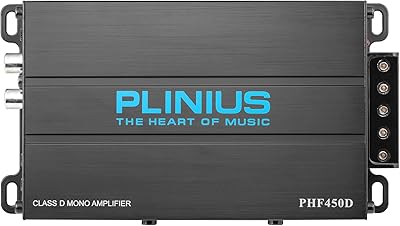
LKC PHF450D Car Audio Monoblock Amplifier
88%
91%
Power Output (2 Ohms)
87%
Power Output (4 Ohms)
93%
Heat Dissipation
88%
Build Quality
85%
Ease of Integration
More
Rockville RVA600.1 Mono Car Amplifier
74%
83%
Value for Money
74%
Sound Quality
88%
Ease of Installation
52%
Power Accuracy
67%
Build Quality
More
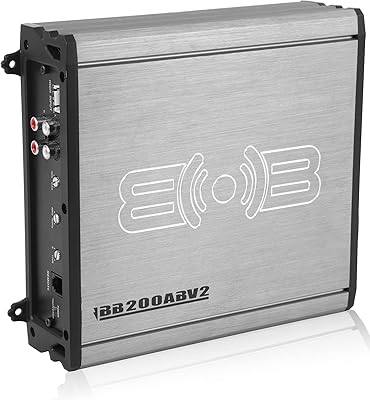
Belva BB200ABv2 500W Monoblock Car Amplifier
85%
88%
Bass Performance
91%
Installation Ease
85%
Sound Clarity
89%
2-Ohm Stability
82%
Build Quality
More
Planet Audio AC2500.1M Monoblock Car Amplifier
85%
92%
Performance
95%
Bass Output
85%
Ease of Installation
65%
Thermal Performance
88%
Build Quality
More
Planet Audio TR1500.1M Monoblock Car Amplifier
70%
88%
Value for Money
79%
Bass Output & Performance
83%
Ease of Installation
63%
Build Quality
57%
Thermal Management
More
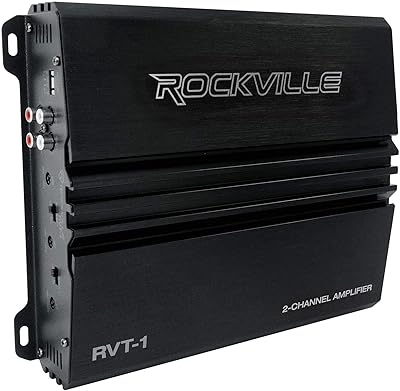
Rockville RVT-1 2-Channel Car Amplifier
68%
83%
Value for Money
67%
Power Output
58%
Build Quality
61%
Thermal Management
72%
Audio Clarity
More
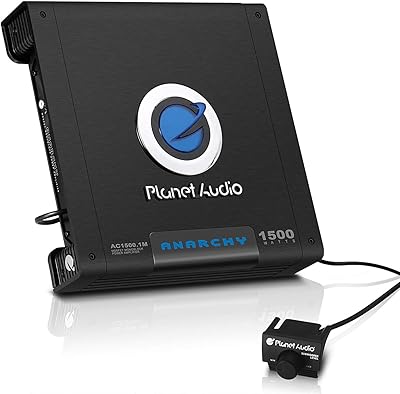
Planet Audio AC1500.1M Monoblock Car Amplifier
75%
91%
Value for Money
78%
Bass Output Quality
86%
Ease of Installation
61%
Thermal Management
67%
Build Quality
More
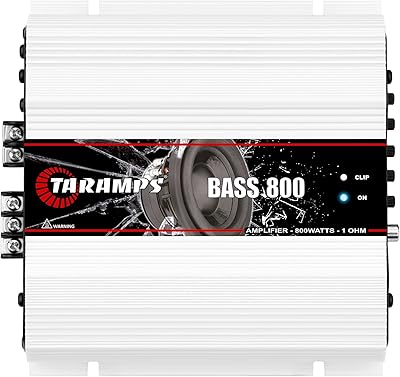
Taramps Bass 3k 1-Ohm Monoblock Amplifier
87%
96%
Bass Output
89%
Power Efficiency
91%
Build Quality
78%
Ease of Setup
94%
Durability
More
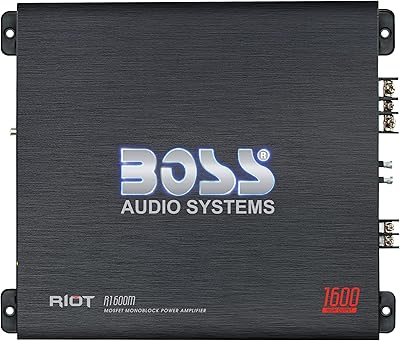
BOSS Audio R1600M Monoblock Car Amplifier
72%
83%
Value for Money
88%
Ease of Installation
79%
Bass Output
61%
Build Quality
86%
Signal Flexibility
More

FAQ

Yes, those are two very different numbers. The 1000W RMS figure is the continuous, real-world power output the amp sustains at 1 ohm during normal operation. The 2000W peak is a momentary burst ceiling that the amp can theoretically hit for a fraction of a second under ideal conditions — it is not something you will hear in practice. RMS is the number that actually matters when matching an amp to a subwoofer.

The ZE1000.1 is rated as 1-ohm stable, which means it is designed to handle that load continuously without shutting down under normal use. That said, if you are cranking it hard for extended periods in a trunk with poor airflow, the thermal protection may eventually kick in. Keeping the install well-ventilated and not running the gain at maximum for hours at a time goes a long way toward reliable operation.

For most straightforward single-subwoofer builds, the onboard low-pass and subsonic crossover handles everything you need. It covers 15Hz to 250Hz and lets you dial in the rolloff frequency to suit your enclosure type. If you are building a more complex system with multiple speakers and precise tuning needs, an outboard DSP might still be worth considering, but the average daily driver will not need one.

Given the three internal 35A ATC fuses — totaling 105A of fuse capacity — a 4-gauge power and ground wire is typically the minimum recommended for this amp. If your run from the battery is longer than 12 feet or so, stepping up to 2-gauge is a smarter call to avoid voltage drop affecting performance. Always add an inline fuse on the power wire within 18 inches of the battery.

It depends on your factory head unit. If it has preamp RCA outputs, you can connect directly. If it is a standard factory radio without RCA outputs, you will need a line output converter to step down the speaker-level signal to something the amp can accept. Many budget installs use a simple LOC for exactly this reason, and it works well in practice.

At 11″ long, 6.9″ wide, and only 2″ tall, it fits in spots where taller amps simply will not go. Most compact sedan and hatchback trunks accommodate it without issue, whether you mount it to the subwoofer box, the trunk floor, or a sidewall. Measure your available space and confirm you have a few inches of clearance around the heatsink fins for airflow.

Yes, the built-in thermal protection circuit will cut the output if the internal temperature exceeds a safe threshold. The amp typically recovers and comes back online once it cools down. If you notice this happening regularly, it is a sign the install needs better ventilation rather than a sign the unit is failing.

Any single 10-inch or 12-inch subwoofer rated for 500W to 1000W RMS is a natural match, assuming you are wiring it to 1 or 2 ohms. Brands like Rockford Fosgate, Skar, Pioneer, and Kicker all have models in that power range that work well. Just make sure the subwoofer's impedance wiring matches what the amp expects, and that the enclosure type suits the driver's specifications.

Honestly, the included documentation is on the thinner side, which is a common complaint among buyers. The basic wiring connections are covered, but if you are installing an amplifier for the first time, supplementing with a YouTube walkthrough or a car audio forum guide is a smart move. Most of the inputs and controls are labeled clearly on the unit itself, which helps.

Within its price bracket, the main advantages are the 1-ohm stability and the slim form factor — two features that not all direct competitors offer. Where it falls slightly short is build quality details like the terminal blocks and the lack of a bass boost knob, which some rivals include. Overall, buyers who have compared it against similar-priced units generally report satisfaction with the output-to-dollar ratio, even if the fit and finish is not class-leading.