Overview

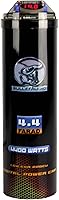
The Bullz Audio BCAP4.4 4.4F Car Power Capacitor is one of those additions that makes the most sense once you understand what a capacitor actually does in a car audio system. Think of it like a small pressure tank sitting between your amplifier and the rest of your electrical system — when a heavy bass note demands a sudden burst of current, this stiffening cap releases stored energy almost instantly, before your alternator can even react. At 4.4 Farads, it holds a reasonably sized charge reserve for systems pushing into the 2,000-watt range. That said, it is not a cure-all — if your charging system is genuinely undersized, a capacitor delays the problem rather than solving it.
Features & Benefits

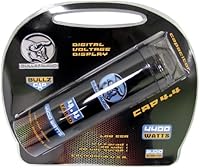
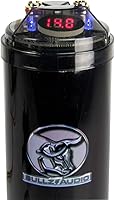
The BCAP4.4 packs a few genuinely useful features into a straightforward round housing. The most practical is the digital voltage display mounted up front — it gives you a live readout of your system voltage, which is handy for spotting charging problems before they cause real damage. The 4.4 Farad rating means a larger energy reservoir compared to entry-level 1F caps, so the buffer between your amp and the rest of your car's electrical system is meaningfully bigger. Its cylindrical shape and compact footprint make trunk or cargo area installs fairly manageable. The 4400W figure on the box is a peak marketing number, though — real-world continuous draw from your amplifier is what actually matters when sizing a cap.

Best For

This 4.4-farad capacitor is a solid pick for car audio enthusiasts pushing a single large amplifier off a factory or lightly upgraded charging system. If you have noticed your headlights dipping during heavy bass drops, or your amplifier protection circuitry tripping under load, adding this stiffening cap is a logical first step before committing to a full electrical upgrade. Space-tight builds benefit from its manageable footprint, and the onboard voltage display adds genuine monitoring utility. It is most effective in systems drawing roughly 2,000 to 4,000 watts, where the capacitance meaningfully bridges the gap between transient demand and what the alternator can supply in real time.

User Feedback

Buyers generally respond well to the BCAP4.4 for everyday installs — the most consistent praise centers on how straightforward it is to wire up and the immediate reduction in headlight flicker after installation. The digital display earns frequent mentions as a bonus that adds real usability. On the flip side, long-term durability gets mixed reviews, and some users have noted the package does not always include a bleed resistor, which you genuinely need to safely discharge the cap before connecting it. A handful of experienced installers also point out the obvious: if your alternator is already struggling to keep up, this unit buys time but does not fix the root cause.

Pros

  • The 4.4 Farad capacitance provides a noticeably larger energy reserve than entry-level 1F caps.
  • The built-in digital voltage display gives real-time insight into system health without any extra hardware.
  • Headlight dimming during bass-heavy playback is visibly reduced after a proper install.
  • The cylindrical shape and manageable weight make trunk and cargo area mounting straightforward.
  • Compatible with any standard 12V automotive electrical system — no special wiring schemes required.
  • Buyers consistently report a quick, uncomplicated installation process for those with basic car audio experience.
  • Represents solid value for its price tier compared to larger-brand alternatives with similar capacitance.
  • The BCAP4.4 has been in production since 2012, suggesting a stable, non-discontinued product line.

Cons

  • Long-term durability reports from buyers are inconsistent, with some units failing earlier than expected.
  • A bleed resistor is essential for safe installation, but it is not reliably included in every package.
  • The 4400W rating is a peak marketing figure and does not reflect real continuous power handling.
  • This stiffening cap will not compensate for a genuinely underpowered alternator or undersized ground wiring.
  • Brand labeling inconsistency — some listings show Xscorpion instead of Bullz Audio — can create confusion when seeking support.
  • 4.4 Farads is insufficient for multi-amplifier competition builds that demand much higher capacitance.
  • No included installation guide sophisticated enough for first-time installers unfamiliar with discharge procedures.
  • The physical footprint, while manageable, may be tight in smaller vehicles with limited trunk real estate.

Ratings

The scores below reflect an AI-driven analysis of verified buyer reviews for the Bullz Audio BCAP4.4 4.4F Car Power Capacitor, collected from global sources with spam, bot-generated, and incentivized feedback actively filtered out. Every category score is calibrated to surface both what this unit genuinely does well and where real buyers have run into frustration. Nothing has been softened or inflated — the numbers reflect the full picture.

Voltage Stabilization
83%
Buyers consistently report a visible reduction in headlight dimming after adding the BCAP4.4 to their setup, particularly during heavy bass transients at moderate to high volume. For single-amplifier systems in the 2,000 to 4,000-watt range, the improvement is often noticeable within the first few drives.
Users with severely underpowered alternators found that the stiffening effect was short-lived or insufficient — the cap helped at the margins but could not mask a fundamentally weak charging system. Those expecting complete elimination of voltage sag in high-demand setups were sometimes let down.
Value for Money
78%
22%
At its price point, most buyers feel the BCAP4.4 punches reasonably well — the 4.4 Farad capacitance and onboard digital display represent solid hardware for the cost tier. Compared to competing units offering less capacitance or no display at a similar price, buyers generally feel they are getting a fair deal.
A subset of users who experienced early failures felt the value proposition collapsed quickly when factoring in replacement cost. Long-term durability concerns mean a minority of buyers would not repurchase despite the competitive initial price.
Ease of Installation
81%
19%
Buyers with basic car audio experience consistently describe installation as straightforward and logical, with the wiring process feeling familiar to anyone who has previously installed an amplifier. The cylindrical form factor fits cleanly into most trunk layouts without requiring custom fabrication.
First-time installers who were unaware of the bleed resistor requirement ran into a potentially dangerous situation that was not clearly communicated in the included documentation. The inconsistent inclusion of a discharge resistor in the packaging was one of the most commonly cited frustrations across all feedback.
Digital Display Quality
74%
26%
The real-time voltage readout earned genuine praise from buyers who used it as a passive diagnostic tool — spotting charging irregularities they would have otherwise missed. For builders who want a functional window into their system health without buying a separate monitor, the display adds tangible day-to-day value.
Some buyers noted the display accuracy drifted slightly over time or flickered intermittently, raising questions about the longevity of the readout components. A few users also found the digits difficult to read clearly in direct sunlight depending on mounting angle.
Build Quality
61%
39%
Out of the box, the unit presents well — the housing feels solid for its weight class and the terminal connections accept standard gauge wiring without issues. Initial impressions from buyers are generally positive, with the construction appearing appropriate for a mid-range capacitor.
Long-term durability is the most persistent criticism in the feedback pool, with a meaningful share of buyers reporting failures ranging from display issues to complete loss of function within one to two years. The inconsistency is notable enough that it meaningfully drags down confidence in the product for buyers who prioritize reliability.
Capacitance Rating
77%
23%
At 4.4 Farads, this stiffening cap offers a noticeably larger energy reserve than the 1F and 2F entry-level options that flood the budget market. For a single-amplifier build in the mid-power range, that extra capacitance translates to a more cushioned response during dynamic audio passages.
Buyers running multiple amplifiers or competition-level setups quickly realized 4.4 Farads was not enough to make a significant difference at their power levels. The marketed 4400W ceiling created expectations that did not align with real-world performance for high-draw installations.
Packaging & Accessories
52%
48%
The unit arrives adequately protected in transit, and most buyers received the capacitor in good physical condition. Some packages included mounting hardware that simplified the installation process.
The inconsistent inclusion of a bleed resistor — an item that is not optional for safe installation — stands out as a significant packaging failure that drew repeated complaints. The instruction documentation was also described as thin, leaving less experienced installers to rely on community resources rather than the included materials.
Compatibility
88%
Operating on a standard 12V DC system means this cap slots into virtually any conventional passenger vehicle without special adapters or wiring modifications. Buyers across a wide range of vehicle types — sedans, trucks, SUVs — reported no compatibility issues whatsoever.
There is very little to criticize here from a compatibility standpoint, though buyers in vehicles with non-standard electrical architectures, such as certain European platforms with complex battery management systems, occasionally reported erratic voltage readings on the display.
Mounting & Fitment
76%
24%
The round cylindrical shape is a familiar form factor in car audio, and most buyers found standard capacitor mounts worked without modification. Trunk and cargo area installs in mid-size to full-size vehicles were described as clean and uncomplicated.
In smaller vehicles with tight trunk configurations, the 13-inch length proved awkward to position without creative bracket work. A handful of compact car owners noted that fitting the BCAP4.4 alongside existing subwoofer enclosures required more planning than anticipated.
Brand Clarity
55%
45%
Buyers who had previously owned Bullz Audio or Xscorpion products generally recognized the branding overlap and did not find it disorienting. The product itself performed consistently regardless of which name appeared on the packaging.
The dual branding between Bullz Audio and Xscorpion created genuine confusion for new buyers trying to research warranty support or contact customer service, with some unsure which brand entity to approach. This ambiguity eroded trust for a portion of buyers who prioritized reliable after-sale support.
Noise Reduction
69%
31%
Several buyers noted a secondary benefit of reduced amplifier clipping and cleaner bass reproduction after adding this stiffening cap, attributing it to the more stable voltage rail during peaks. For systems that were previously clipping under load, the improvement in audio clarity was a welcome side effect.
Buyers who added the cap hoping to eliminate all electrical noise from their audio signal were disappointed — the BCAP4.4 addresses voltage sag specifically, and alternator whine or ground loop noise requires separate solutions. Expectations around audio noise reduction need to be set carefully before purchase.
Long-Term Reliability
57%
43%
A solid portion of buyers report the unit running reliably for two or more years without issue, particularly when it was properly fused, mounted away from heat sources, and installed with clean wiring connections. For well-maintained systems, the lifespan appears reasonable for the price tier.
The reliability ceiling is clearly the product's weakest dimension — enough buyers have reported premature failures that it represents a consistent pattern rather than isolated incidents. Units that failed often did so without warning, which is especially disruptive mid-install in a finished audio build.

Suitable for:

The Bullz Audio BCAP4.4 4.4F Car Power Capacitor is a practical choice for car audio enthusiasts who are running a single large amplifier and want to reduce the strain that sudden power demands place on their vehicle's electrical system. If you have experienced headlights dimming in time with bass hits, or noticed your amplifier occasionally clipping under heavy load, this stiffening cap directly addresses those symptoms by releasing stored energy during transient peaks faster than an alternator ever could. It works best in systems drawing somewhere in the 2,000 to 4,000-watt range, where the 4.4 Farad capacitance provides a meaningful buffer without being overkill. Builders who need to keep installation compact will appreciate the cylindrical form factor, and those who want a passive window into their system health will find the digital voltage readout genuinely useful day-to-day. It is also a smart intermediate step for anyone who wants measurable improvement before committing to a costlier alternator upgrade or auxiliary battery setup.
Not suitable for:

The Bullz Audio BCAP4.4 4.4F Car Power Capacitor is not the right solution for anyone whose electrical system is fundamentally undersized — if your alternator cannot keep up with your amplifier's continuous draw, adding a capacitor will soften the symptoms briefly but will not prevent long-term problems. Serious competition-level builds running multiple high-powered amplifiers will also find 4.4 Farads underwhelming, as those setups genuinely require a second battery or a high-output alternator to function reliably. Buyers expecting a drop-in fix with zero installation knowledge should also approach carefully — the cap needs to be properly discharged with a bleed resistor before wiring, and skipping that step carries real safety risk. If you are hoping the marketed 4400W figure translates directly to your real-world system, it is worth knowing that number reflects peak handling under ideal conditions and not a continuous operational ceiling. Finally, anyone prioritizing long-term reliability above all else may want to research durability feedback carefully before committing.
Specifications

  • Capacitance: This unit provides 4.4 Farads of capacitance, giving amplifiers a substantial energy reservoir to draw from during sudden transient peaks.
  • Operating Voltage: Designed to operate on standard 12V automotive electrical systems found in virtually all passenger vehicles.
  • Maximum Voltage: The maximum rated voltage is 12V, keeping it within the normal range of a healthy car charging system.
  • Power Handling: Marketed for systems up to 4400W, though this reflects a peak figure rather than a continuous power ceiling under real-world conditions.
  • Display Type: Features a digital voltage readout that shows live system voltage, useful for diagnosing charging irregularities during playback.
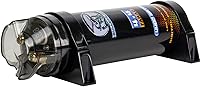
  • Shape: The housing is cylindrical and round, which simplifies bracket mounting in trunks, cargo areas, or tight under-seat spaces.
  • Dimensions: Physical footprint measures approximately 13″ x 12″ x 4″, making it a mid-sized unit suitable for most trunk installs.
  • Weight: The unit weighs approximately 2.9 lbs, light enough to mount securely without requiring heavy-duty reinforcement.
  • Model Number: The manufacturer-assigned model number is BCAP4.4, which corresponds directly to the 4.4 Farad capacitance rating.
  • Brand: Sold under the Bullz Audio brand, though some listings and packaging reference Xscorpion, which appears to be a related or parent brand.
  • Compatibility: Compatible with any standard 12V DC automotive electrical system, including cars, trucks, and SUVs running conventional lead-acid or AGM batteries.
  • Availability: First listed in November 2012 and confirmed as not discontinued by the manufacturer, indicating ongoing production and parts availability.
  • Discharge Safety: Like all high-capacitance units, this cap requires proper discharge via a bleed resistor before any wiring connections are made during installation.
  • Primary Function: Acts as a stiffening capacitor, buffering instantaneous current demand from amplifiers to reduce voltage sag on the vehicle's main electrical rail.
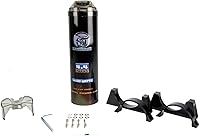
  • Mounting Style: The cylindrical form factor is compatible with standard ring-style capacitor mounts and included hardware for vertical or horizontal orientation.

Related Reviews
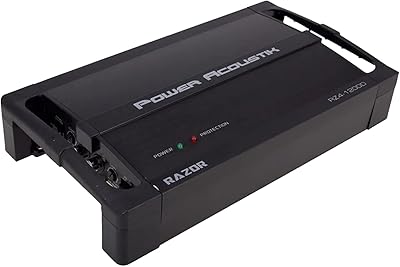
Power Acoustik RZ4-1200D 4-Channel Car Audio Amplifier
82%
88%
Sound Quality
91%
Power Output
84%
Build Quality
75%
Installation Ease
90%
Efficiency (Class D Technology)
More
Belva BB1D 1 Farad Car Audio Capacitor
76%
88%
Ease of Installation
91%
Voltage Display Clarity
74%
Power Stabilization Effectiveness
58%
Audible Alert Usefulness
62%
Automatic Shutoff Protection
More
Recoil DI800.4 4-Channel Car Audio Amplifier
83%
88%
Sound Quality
92%
Power Output
65%
Thermal Management
84%
Build Quality
91%
Ease of Installation
More
Recoil DI550.4 4-Channel Car Audio Amplifier
74%
91%
Value for Money
78%
Power Output
86%
Ease of Installation
74%
Sound Quality
67%
Build Quality
More
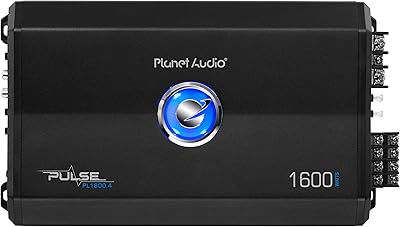
Planet Audio PL1600.4 4-Channel Car Amplifier
72%
88%
Value for Money
84%
Ease of Installation
74%
Sound Quality
58%
Power Output (Real-World)
61%
Build Quality
More
Planet Audio AC2400.4 4-Channel Car Amplifier
84%
95%
Power Output
89%
Sound Clarity
87%
Bass Performance
82%
Ease of Installation
65%
Thermals/Heat Management
More
Recoil REA600.4 4-Channel Car Audio Amplifier
84%
89%
Audio Performance
91%
Ease of Installation
85%
Sound Quality at High Volumes
62%
Heat Management
90%
Power Output
More
PRV Audio EX4.6PRO 4-Way Car Audio Crossover
87%
90%
Sound Quality
87%
Ease of Installation
92%
Bass Boost Effectiveness
85%
Build Quality
89%
Frequency Control Precision
More
Soundfy SA 400.4 4-Channel Car Amplifier
71%
78%
Value for Money
72%
Sound Quality
63%
Power Output
58%
Build Quality
81%
Thermal Management
More
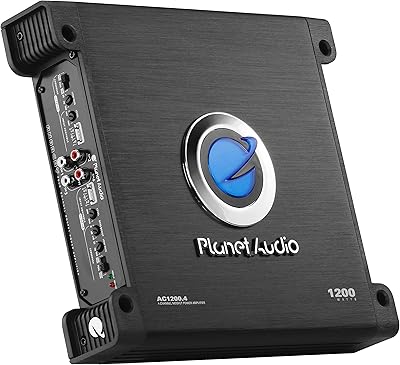
Planet Audio AC1200.4 4-Channel Car Amplifier
73%
88%
Value for Money
67%
Power Output
83%
Installation Ease
74%
Sound Quality
61%
Build Quality
More

FAQ

In most cases, yes — that is exactly the problem a stiffening cap is designed to address. When your amplifier demands a sudden burst of current, the BCAP4.4 releases its stored charge almost instantly, bridging the gap before your alternator can respond. That said, if your headlights are dimming severely and your alternator is already struggling to keep pace with your system's continuous draw, the cap will reduce the effect but will not eliminate it entirely.

Yes, a bleed resistor is essential before you connect the capacitor to your wiring. A fully charged or partially charged cap can deliver a dangerous surge if the terminals are connected without discharging it first. Some packages include one and some do not, so pick up a simple 1k-ohm resistor from any electronics supplier just to be safe — it is a cheap and critical step.

A commonly used rule of thumb in the car audio community is roughly 1 Farad per 1,000 watts of amplifier power. By that measure, this 4.4-farad capacitor is well-suited for systems in the 2,000 to 4,000-watt range. If you are running more than that across multiple amplifiers, you would likely benefit from a higher-capacitance unit or an auxiliary battery setup instead.

No, and it is worth being clear about that distinction. A capacitor charges and discharges extremely quickly, making it ideal for handling brief transient peaks in current demand. A second battery, by contrast, provides sustained energy storage over much longer periods. They solve different problems, and for a very large system, you often want both.

The display shows your real-time system voltage, which is more useful than it might sound. A healthy charging system at idle typically reads around 13.5 to 14.5 volts. If you notice the number consistently dropping lower than that during playback, it is a reliable early warning that your alternator or wiring may need attention.

If your vehicle runs a standard 12V electrical system — which covers virtually every conventional gas-powered car, truck, and SUV on the road — then yes, this stiffening cap will be fully compatible. It does not require any special wiring configuration beyond what a typical amplifier installation already uses.

Most buyers with basic car audio experience report a straightforward installation. The cap wires in between your battery and amplifier on the main power line, which is a familiar connection point if you have already installed an amp. The main thing to take seriously is the discharge step before wiring — beyond that, the process is fairly approachable.

That debate has been going on in car audio circles for years, and the honest answer is nuanced. A capacitor will not fix a bad alternator or undersized wiring — if those are your real problems, you will be disappointed. But for handling brief, instantaneous current spikes from a well-matched system, the BCAP4.4 genuinely does its job and buyers regularly notice the difference, particularly with headlight stability.

Durability feedback from buyers is mixed. Many users report years of trouble-free operation, while a smaller number have encountered failures within the first year or two. Keeping the unit properly fused, mounted securely away from heat sources, and ensuring clean wiring connections tends to extend the lifespan of any capacitor significantly.

Both names appear depending on where you look — some listings and packaging show Bullz Audio while others reference Xscorpion, which appears to be a related brand operating under the same umbrella. The product itself is the same unit regardless of which name appears on the box, so this is more of a labeling quirk than a product difference.