Overview

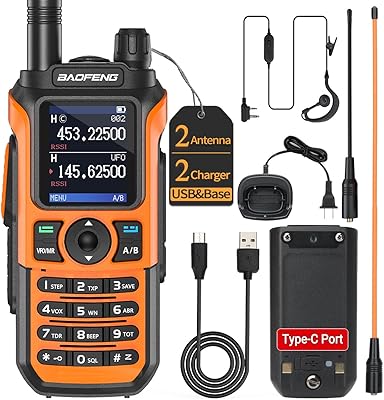
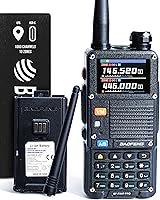
The BAOFENG BF-F8HP PRO 7th Gen Tri-Band Radio represents a genuine step forward for licensed ham operators who've hit the ceiling of their UV-5R or similar entry-level handheld. This isn't the same radio with a fresh coat of paint — the 7th generation brings meaningful hardware and firmware refinements that justify the upgrade for active operators. At this price point, buyers get a feature set that used to cost considerably more. That said, an FCC amateur license is required to transmit legally, so newcomers need to factor that in before purchasing. This is a radio built for hobbyists, preppers, and outdoor communicators who already know what they're doing.
Features & Benefits

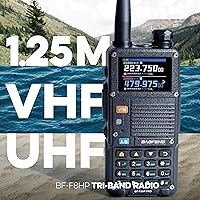
The standout capability here is tri-band TX support — VHF, UHF, and the often-overlooked 1.25M band, which tends to be far less congested than the typical 2M/70cm crowd. Peak output hits 10W on VHF and UHF, which in open terrain genuinely extends your reach; in urban canyons, dropping to 1W saves your battery without sacrificing much. The 2500 mAh cell handles a full day of moderate use, and USB-C charging is a long-overdue upgrade from the proprietary connectors on older models. Built-in GPS handles location sharing rather than navigation, NOAA reception works well for weather monitoring, and the aviation band lets you listen in on airband traffic — receive only, nothing more.

Best For

The BF-F8HP PRO hits a sweet spot for licensed Technician and General class operators who want serious capability without spending serious money. It suits emergency preparedness enthusiasts well, consolidating NOAA weather alerts and GPS location sharing into one device instead of carrying separate gear. Overlanders and backcountry hikers will appreciate the IP54 weather resistance and the dual-antenna setup included in the box — one optimized for VHF/UHF, another covering 1.25M. Aviation hobbyists who enjoy passive airband monitoring will find value here too, as long as expectations around receive-only stay realistic. And if you already run older Baofeng or BTECH gear, the accessory ecosystem carries over without issue.

User Feedback

With over 1,100 ratings averaging 4.4 stars, this BTECH radio earns consistent praise for its build quality and output power — owners frequently note it feels more solid than expected at this price. GPS accuracy draws mixed reactions; it works for basic location sharing but isn't refined enough to replace a dedicated navigation device. The NOAA feature, though, earns nearly universal appreciation from buyers in storm-prone regions. On the downside, the menu system is genuinely complex, and most experienced owners strongly recommend CHIRP programming software over the manual from day one. Firmware updates have been described as slightly fiddly by some, while USB-C charging reliability is largely positive across long-term owner reports.

Pros

  • Tri-band TX on VHF, UHF, and the less-crowded 1.25M band opens up repeater options most dual-band radios simply cannot access.
  • 10W peak output delivers a noticeable range improvement in open terrain compared to standard 5W handhelds.
  • Built-in NOAA weather monitoring is genuinely reliable and earns consistent praise from buyers in storm-prone regions.
  • USB-C charging means one less proprietary cable to carry — a practical upgrade long-time Baofeng users have been waiting for.
  • The 2500 mAh battery comfortably handles a full day of moderate field use without needing a mid-day top-up.
  • IP54 weather resistance holds up well on rainy hikes and dusty trails without requiring a separate protective case.
  • Dual independent zone monitoring lets you watch two channel groups simultaneously — a real operational advantage for active nets.
  • Firmware updatability via PC cable means the BF-F8HP PRO can gain new features over time without buying replacement hardware.
  • US-based BTECH support and a one-year warranty provide a meaningful safety net compared to gray-market Baofeng imports.
  • Aviation band receive coverage is a legitimate bonus for hobbyists who want airband monitoring without a dedicated scanner.

Cons

  • The PC03 programming cable is sold separately, adding an unannounced cost that catches first-time buyers off guard.
  • Manual channel programming through the front panel is genuinely painful — CHIRP software is not optional for most users, it is a necessity.
  • GPS acquisition can be sluggish under heavy tree canopy, limiting its usefulness in exactly the environments where you might need it most.
  • The stock antenna feels cheap and underperforms at range — most serious operators replace it immediately with an aftermarket option.
  • Firmware updates require a specific cable, precise software versions, and a multi-step process that trips up a meaningful share of users.
  • The belt clip wobbles noticeably under active movement and does not inspire confidence during fast-paced outdoor activities.
  • At 10W continuous transmit, battery drain is significantly faster than the all-day estimate suggests under heavy voice traffic.
  • Some operators on the receiving end have reported transmitted audio sounding compressed or slightly boxy on weaker signals.
  • The 1.25M band tops out at 5W, which undercuts range expectations for buyers specifically targeting that band for longer links.
  • Long-term owners have flagged USB-C port looseness after extended daily use, suggesting the connector may not be built for heavy cycling.

Ratings

The BAOFENG BF-F8HP PRO 7th Gen Tri-Band Radio has been scored below using AI analysis of verified global buyer reviews, with spam, bot activity, and incentivized feedback actively filtered out before scoring. These ratings reflect the honest consensus of real operators — from backcountry hikers to emergency preppers — who've put this handheld through its paces in the field. Both the standout strengths and the friction points buyers repeatedly flag are represented transparently across every category.
Transmission Power & Range
88%
At 10W peak on VHF and UHF, most users report noticeably better reach compared to the older BF-F8HP, especially on hilltops or open terrain where line-of-sight works in your favor. The three power levels give practical flexibility — dropping to 1W for local repeater work extends battery life without any real sacrifice in clarity.
In dense urban environments or heavily forested areas, the power advantage shrinks considerably, and some buyers felt the real-world range improvement over cheaper 5W handhelds wasn't as dramatic as the spec sheet implies. The 1.25M band is capped at 5W, which disappointed operators specifically targeting that band for longer-range work.
Tri-Band Frequency Coverage
91%
Access to VHF, UHF, and the 1.25M (220 MHz) band in one handheld is a genuine advantage for licensed operators who want to explore less-crowded repeater networks. Owners consistently note that the 1.25M band alone justifies upgrading from dual-band radios, particularly in regions where those repeaters are active.
The 1.25M band is still relatively sparse in many parts of the country, so buyers in rural areas may rarely use it in practice. A handful of reviewers noted that switching between bands mid-use requires navigating menus that aren't immediately intuitive without prior programming.
Build Quality & Durability
83%
The chassis feels noticeably more solid than older Baofeng handhelds, with a grip texture that holds up well in gloved hands during outdoor use. Long-term owners report the housing shows minimal wear after months of regular field use, and the buttons retain their tactile feedback without becoming mushy.
The stock antenna feels plasticky and a few buyers replaced it immediately with an aftermarket option for better performance. Some users noted the belt clip, while functional, wobbles slightly under heavier activity and wouldn't inspire confidence on a fast-paced hike.
Weather Resistance (IP54)
79%
21%
IP54 covers the realistic hazards most outdoor users actually face — rain showers, dusty trails, and the occasional clumsy moment near a water source. Hikers and overlanders repeatedly mention using this BTECH radio in wet conditions without any functional issues arising.
IP54 is splash-resistant, not waterproof, and a small number of buyers learned that distinction the hard way after brief submersion. Buyers expecting submersion-level protection will need to manage their expectations or pair the radio with a protective case.
GPS Functionality
67%
33%
Having built-in GPS location sharing in a handheld at this price range is a legitimate plus for group outings or emergency scenarios where sharing your position over the air matters. Preppers in particular appreciate not needing a separate device to broadcast coordinates.
This is location sharing, not navigation — there is no map display, no routing, and no waypoint system, which surprises buyers who assume GPS means full navigation capability. Acquisition time can be slow in heavy tree cover, and a few reviewers found the feature finicky to configure without consulting third-party guides.
NOAA Weather Reception
86%
The built-in NOAA weather radio is one of the most consistently praised features among buyers in storm-prone regions, with clear reception reported across the standard weather channels. Emergency-minded owners appreciate being able to monitor weather alerts passively without switching devices or interrupting their primary channel monitoring.
Reception quality drops noticeably in areas with weak NOAA transmitter coverage, particularly in remote mountain zones where signal bounce is unpredictable. A small segment of buyers noted the weather alert volume could be louder by default before they discovered the relevant menu setting.
Aviation Band Monitoring
74%
26%
For aviation enthusiasts, having 108–136 MHz AM airband reception built in is a genuine bonus that usually requires a separate scanner. Buyers near regional airports report clean, clear reception of ground and tower communications, which makes this a fun secondary feature for hobbyists.
This is strictly receive-only, and some buyers purchased the radio partly expecting transmit capability on aviation frequencies — which is both technically impossible here and legally prohibited. The AM demodulation occasionally picks up adjacent interference in busy RF environments near major airports.
Channel & Zone Management
72%
28%
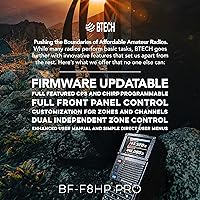
The 1000-channel capacity across 10 programmable zone banks is a step up that active operators genuinely use, especially those who travel between regions and want to pre-load local repeater groups into dedicated zones. Dual independent zone monitoring is a standout feature at this price, letting you watch two groups simultaneously.
Managing all of this manually through the radio's front panel is a painful experience that most buyers abandon quickly. Without CHIRP programming software and a compatible cable, the channel management system is more frustrating than useful for the majority of owners.
Programming & Ease of Setup
54%
46%
Once set up through CHIRP, the radio operates intuitively and the channel organization becomes genuinely useful. Experienced ham operators who already know CHIRP get the radio field-ready in under an hour, and the community-shared frequency files for most major metro areas make initial setup faster.
For newcomers, the out-of-box programming experience is steep — the manual is dense, menu navigation is non-obvious, and CHIRP itself has its own learning curve. Multiple buyers flagged that the PC03 programming cable is sold separately, which catches first-time buyers off guard and adds cost to the total setup.
Battery Life
84%
The 2500 mAh cell handles a full day of mixed transmit and monitor use comfortably for most owners, with several reporting two full days on moderate activity before needing a charge. The included desktop charger is a practical touch that keeps the radio topped up overnight without fuss.
Running consistently at 10W transmit power drains the battery noticeably faster, and buyers doing heavy voice traffic in the field may find themselves reaching for the charger mid-day. A small number of owners reported capacity degradation after several months of daily cycling, though this appears to be an outlier rather than a systemic issue.
USB-C Charging
81%
19%
The switch to USB-C is one of the most straightforwardly appreciated upgrades from older Baofeng generations — buyers can use the same cable they carry for phones and other devices, which simplifies packing for camping or emergency kits. Charging speed is reasonable, and the port feels sturdy in early use.
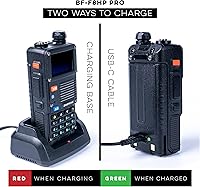
A handful of long-term owners flagged that the USB-C port showed wear or looseness after extended daily use, though this appears tied more to cable handling habits than a fundamental design flaw. Some buyers also noted the radio charges more reliably through the included desktop cradle than directly via the USB-C cable.
Firmware Updatability
69%
31%
The ability to push firmware updates via the PC03 cable is a meaningful long-term value argument — BTECH has pushed feature improvements post-launch, and owners appreciate not needing to replace the hardware to stay current. It signals a product the manufacturer intends to actively support rather than abandon.
The firmware update process is not beginner-friendly — it requires the right cable, specific software versions, and a precise sequence of steps that trip up a notable share of users on their first attempt. BTECH's support resources help, but buyers expecting a simple USB plug-and-update experience will be disappointed.
Audio Quality
76%
24%
Received audio is clear and loud enough to be heard over moderate ambient noise — useful when monitoring channels while working outdoors or driving with windows down. The noise reduction feature meaningfully cuts static on weaker signals compared to older BF-F8HP variants, according to experienced operators who compared both side by side.
The included earbuds are functional at best and uncomfortable for extended wear, so most active users swap them out immediately. Transmit audio quality has drawn occasional criticism from the other end of the conversation — a few operators reported being told their transmitted voice sounded slightly compressed or boxy on weak signals.
Value for Money
87%
For the feature set on offer — tri-band TX, GPS, NOAA, aviation RX, USB-C, 10W output, and 1000 channels — the price point is genuinely competitive. Buyers who've priced comparable feature-dense handhelds from other brands consistently note this BTECH radio delivers more functionality per dollar than most alternatives in the same tier.
The total cost of ownership is higher than the sticker price suggests once you factor in the separately purchased programming cable and potentially a better aftermarket antenna. Buyers on a strict budget should account for these additions, which are effectively mandatory for getting the most out of this tri-band handheld.

Suitable for:

The BAOFENG BF-F8HP PRO 7th Gen Tri-Band Radio is built for licensed amateur radio operators — specifically Technician and General class holders — who want more capability than their first entry-level handheld can deliver without jumping to a much higher price bracket. Emergency preparedness enthusiasts will find real value in having NOAA weather alerts and GPS location sharing consolidated into a single rugged device, rather than juggling separate tools when conditions deteriorate fast. Hikers, overlanders, and backcountry campers benefit from the IP54 weather resistance and a 2500 mAh battery that handles a full day of mixed use without constant top-ups. If you already operate within the Baofeng or BTECH ecosystem, the accessory compatibility alone makes this a logical next step — your existing cables, antennas, and speaker-mics carry right over. Aviation hobbyists who enjoy passively monitoring airband traffic will get a genuine bonus out of the 108–136 MHz receive capability, even if they never transmit a single watt.
Not suitable for:

If you do not hold an FCC amateur radio license — or have no intention of obtaining one — the BAOFENG BF-F8HP PRO 7th Gen Tri-Band Radio is simply the wrong purchase; transmitting on its frequencies without proper licensing is illegal, and no feature set changes that reality. Complete beginners who expect a radio they can pull out of the box and use immediately will likely be frustrated — CHIRP programming software is practically essential, and the learning curve is real enough that casual users often abandon the setup process partway through. Buyers expecting full GPS navigation with maps and routing will be disappointed, as the GPS here handles location sharing only, with no display or waypoint system attached. Anyone needing commercial or public-safety communications should look elsewhere entirely, since this radio carries no Part 90 certification and is strictly for amateur use. If submersion-level waterproofing is a hard requirement for your environment — kayaking, diving operations, or work in heavy rain — the IP54 rating will not be sufficient protection.

Specifications

  • Peak TX Power: Outputs up to 10W on VHF and UHF bands, and up to 5W on the 1.25M (220 MHz) band.
  • Power Levels: Three selectable power levels: Low (1W), Mid (3W), and High (10W) for flexible range and battery management.
  • TX Frequency Bands: Transmits across three amateur bands: VHF, UHF, and 1.25M (220 MHz).
  • RX-Only Bands: Receives FM broadcast and aviation band signals from 108–136 MHz using AM modulation with 8.33 kHz channel spacing.
  • Channel Capacity: Stores up to 1000 programmable channels organized across 10 banks of 100 channels each.
  • Zone Monitoring: Supports dual independent zone control, allowing simultaneous monitoring of two separate channel zones.
  • Battery: Includes a 2500 mAh lithium-ion battery rated at 7.4V, with a desktop charger and USB-C cable in the box.
  • Charging: Charges via USB-C connection, compatible with standard USB-C cables in addition to the included desktop cradle.
  • IP Rating: Rated IP54, meaning it is protected against limited dust ingress and water splashes from any direction.
  • GPS: Features built-in GPS designed for location sharing over the air, not turn-by-turn navigation or map display.
  • Weather Radio: Built-in NOAA weather radio mode allows passive monitoring of official weather alert broadcasts.
  • Dimensions: Radio body measures 5.3″ x 2.4″ x 1.5″ excluding antenna; ships with two antennas covering different band combinations.
  • Weight: Weighs 9.2 oz with the lithium-ion battery installed, making it a mid-weight handheld for its feature class.
  • Operating Temp: Rated to operate reliably between 0°F and 140°F, covering most outdoor and emergency use conditions.
  • Sensitivity: Receiver sensitivity is rated at -120 dBm at 12dB SINAD, indicating strong capability for picking up weaker signals.
  • Firmware: Firmware is user-updatable via the PC03 programming cable, allowing BTECH to deliver feature and performance improvements post-purchase.
  • Warranty: Backed by a one-year warranty for units purchased through authorized sellers, with US-based BTECH support available.
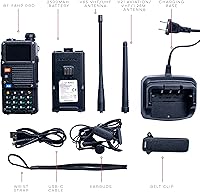
  • In the Box: Package includes the radio, 2500 mAh battery, desktop charger, USB-C cable, belt clip, earbuds, wrist strap, V85 dual-band antenna (VHF/UHF), V21 antenna (VHF/1.25M/Aviation), and user manual.

Related Reviews

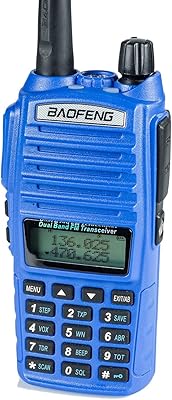
Baofeng BF-F8HP 8-Watt Dual Band Two-Way Radio
72%
88%
Signal Strength & Range
86%
Battery Life
74%
Build Quality & Durability
67%
Audio Clarity
52%
Ease of Programming
More
BTECH UV-5X3 Tri-Band Handheld Ham Radio
77%
91%
Value for Money
93%
Tri-Band Frequency Coverage
54%
Ease of Programming
88%
USB-C Charging Convenience
78%
Build Quality & Durability
More
Baofeng UV-21R Dual Band Ham Radio
75%
91%
Value for Money
68%
Build Quality
54%
Transmission Range
83%
Display & Interface
88%
Charging Convenience
More
Radioddity DB25 Pro Dual Band Mini Mobile Radio
88%
91%
Value for Money
87%
Signal Reception
89%
Ease of Use
92%
Display Quality
84%
Durability
More
Baofeng DM-1701 DMR Digital Two-Way Radio
70%
83%
Audio Clarity (DMR Mode)
41%
Programming Experience
78%
Value for Money
76%
Build Quality & Durability
86%
OpenGD77 Firmware Compatibility
More
Yaesu VX-6R Tri-Band Ham Radio Transceiver
80%
93%
Build Quality & Durability
91%
Waterproofing & Weather Resistance
88%
Receiver Performance
86%
Audio Clarity
77%
Transmit Power & Range
More
BaoFeng UV-82HP CAMO High Power Dual Band Radio
83%
88%
Performance & Range
93%
Build Quality & Durability
85%
Battery Life
75%
Ease of Use
60%
Programming & Software Compatibility
More
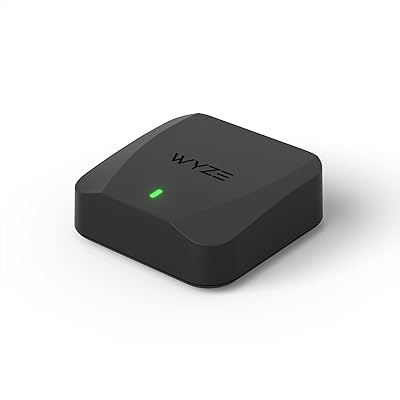
Wyze Mesh Router Pro Wi-Fi 6E Router
73%
91%
Setup & Ease of Use
78%
Wi-Fi Speed & Throughput
72%
Coverage & Range
66%
Connection Stability
69%
6 GHz Band Performance
More
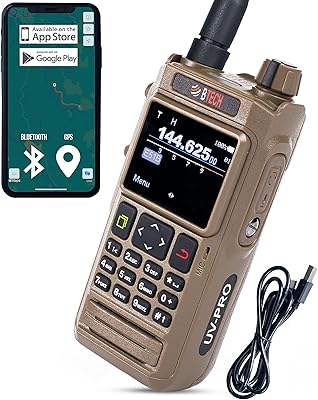
BTECH UV-PRO Dual Band Two-Way Radio
79%
86%
Build Quality
88%
Waterproofing & Durability
78%
Bluetooth App Integration
81%
APRS & GPS Performance
67%
Range & Signal Clarity
More
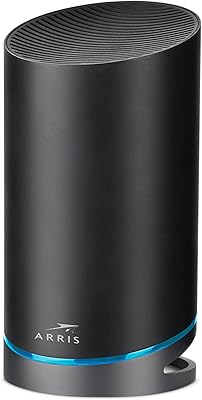
ARRIS SURFboard mAX Pro W133 Mesh Router
71%
83%
Wi-Fi Coverage
71%
Wi-Fi Speed Performance
52%
App & Software Experience
58%
Network Reliability & Stability
91%
Wired Port Availability
More

FAQ

Yes, absolutely — and this is worth knowing before you buy. The BAOFENG BF-F8HP PRO 7th Gen Tri-Band Radio requires an FCC amateur radio license to transmit legally on its frequency bands. You can listen and receive without a license, but transmitting without one is a federal violation. If you are new to ham radio, look into the Technician class exam — it is more accessible than most people expect.
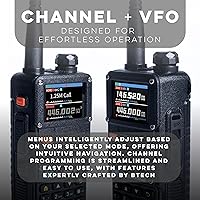
Technically yes, but practically speaking, most users find manual programming through the keypad tedious and error-prone. The menu system is dense, and entering frequencies one by one gets old fast. The vast majority of owners use CHIRP — free, open-source software — with a compatible programming cable to load channels in bulk. It is strongly recommended, especially if you need to set up more than a handful of channels.

No, the PC03 programming cable is sold separately. This catches a lot of first-time buyers off guard, so factor that into your budget if you plan to use CHIRP for setup or want to do firmware updates down the road.

It is a location-sharing GPS, not a navigation system. There is no map, no routing, and no waypoint display on the radio itself. What it does is allow you to broadcast your coordinates over the air to other operators — useful in group outings or emergency situations where knowing someone's position matters. If you need turn-by-turn navigation, you will still need a separate device.

No — and it is worth being clear on this. The aviation band (108–136 MHz) is receive-only on this radio. You can listen to tower and ground communications, but transmitting on those frequencies is both technically blocked and legally prohibited for unlicensed use. It is a useful monitoring feature for aviation hobbyists, not a two-way aviation communication tool.

The IP54 rating means it handles rain splashes and dusty environments without issue under normal outdoor conditions. Hikers and overlanders regularly use this BTECH radio in wet weather without problems. That said, IP54 is not submersion-proof — if you drop it in a river or get it fully soaked, do not expect it to survive. For truly harsh water exposure, you would want a higher-rated IP67 or IP68 device.

On moderate use — a mix of monitoring and periodic transmissions at mid or low power — most owners get through a full day comfortably on a single charge. If you are running at 10W consistently for extended transmissions, expect noticeably faster drain. The included desktop charger makes overnight top-ups easy, and the USB-C cable means you can also charge from a power bank in the field.

For most active operators, yes. The 7th generation adds tri-band TX on 1.25M, GPS, NOAA weather radio, USB-C charging, and a larger 2500 mAh battery — none of which were present on the original BF-F8HP. If you are still on a dual-band model without those features and find yourself wanting more flexibility on repeaters or in emergency scenarios, the upgrade makes sense at this price point.

The 1.25M band refers to the 220 MHz amateur frequency range, which sits between VHF and UHF. Its biggest practical advantage is that it tends to be far less congested than the standard 2M and 70cm bands, since fewer radios support it. Whether it is useful to you depends entirely on whether active repeaters exist in your area on that band — in some regions they are plentiful, in others nearly nonexistent. It is worth checking before making it a deciding factor.

The two included antennas — one for VHF/UHF, one covering 1.25M and aviation receive — are functional for getting started, but the general consensus among experienced operators is that the stock antennas underperform on range compared to quality aftermarket options. If you are serious about getting the most out of the BF-F8HP PRO's power output, budgeting for a better antenna is worthwhile, though it is not strictly necessary right out of the box.