Overview

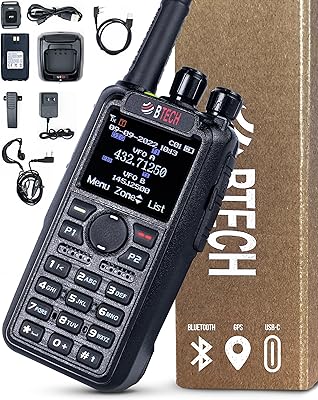
The BTECH UV-PRO Dual Band Two-Way Radio landed on the market in early 2025 and immediately stood out from the crowded field of budget dual-band handhelds. Where most radios at that price point offer little beyond basic VHF/UHF transmission, this handheld radio layers in APRS, integrated GPS, and Bluetooth connectivity — a combination you typically find only on far more expensive units. The IP67-rated housing is genuinely rugged, not marketing shorthand, and the overall build feels a step above typical entry-level gear. That said, it's new enough that long-term durability remains an open question.
Features & Benefits

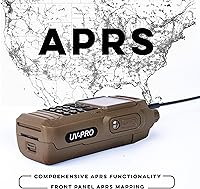
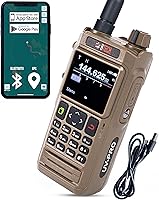
The UV-PRO connects to the BTECH UV Programmer App via Bluetooth, letting you program channels, send text messages, and share your GPS location — all from your phone. That alone saves considerable frustration compared to traditional keypad-only programming. APRS support means the radio can broadcast your position to a global tracking network, useful for solo hikers or search-and-rescue coordination, without needing a dedicated tracker. It also passively scans aviation frequencies and triggers automatic NOAA weather alerts, which matters in fast-changing backcountry conditions. The USB-C charging and 2600 mAh battery round out a surprisingly modern feature set for this category.

Best For

This dual-band HT is best suited to licensed amateur radio operators who want APRS and GPS capability without strapping on extra hardware. Hikers, hunters, and off-road crews will appreciate the IP67 protection and weather alerting in environments where conditions can shift fast. It also makes a strong case for emergency preparedness kits, covering NOAA alerts and wide-band scanning in one device. Worth noting: a Technician license or higher is required to legally transmit on amateur frequencies — this isn't a plug-and-play walkie-talkie for the general public. Aviation hobbyists wanting to monitor air traffic will find the receive-only aviation band a useful bonus.

User Feedback

Across roughly 300 ratings, the UV-PRO holds a 4.3-star average — solid, though not without reservations. Buyers consistently praise the Bluetooth programming experience and the quality of the housing, noting it feels more durable than comparably priced alternatives. The feature depth draws frequent appreciation. On the other side, some users report a steep learning curve for APRS configuration, and a handful flag occasional app connectivity hiccups. Range expectations also come up: the advertised 100-mile figure is theoretical line-of-sight — real-world suburban or forested performance is considerably shorter. Customer support responses from BTECH are generally described as responsive, which counts for something on a product this new.

Pros

  • IP67 waterproofing provides genuine protection in rain, mud, and shallow water submersion — not just light splash resistance.
  • Bluetooth app programming saves significant time compared to tedious keypad-only channel entry found on competing radios.
  • Built-in APRS lets you broadcast your GPS position to a global tracking network without carrying a separate device.
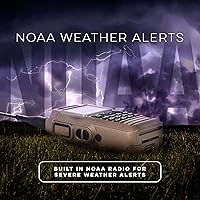
  • Automatic NOAA weather alerts give real advance warning of severe conditions when you are operating outdoors.
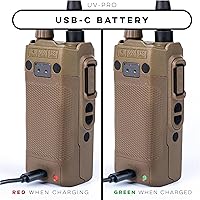
  • USB-C charging means you can use the same cable as your phone or laptop — no proprietary connectors to lose.
  • Aviation band scanning is a rare passive receive bonus useful for hobbyists and student pilots.
  • The 5W output option gives a meaningful signal boost in challenging terrain compared to fixed low-power competitors.
  • 180 programmable channels across six banks provide serious organizational capacity for multi-group field operations.
  • US-based BTECH customer support is generally responsive and technically knowledgeable, which stands out in this product category.

Cons

  • APRS configuration is poorly documented and can take hours to get working correctly, especially for first-time users.
  • The companion app has known stability issues on certain Android versions, with Bluetooth dropping mid-programming session.
  • Real-world communication range falls well short of the 100-mile advertised maximum in any realistic terrain or environment.
  • A valid amateur radio license is legally required to transmit — this is not a general-use walkie-talkie.
  • Battery drain accelerates significantly when GPS, APRS, and Bluetooth are all running simultaneously.
  • The warranty applies specifically to purchases through BaoFengTech.com, creating ambiguity for buyers who purchased via third-party Amazon listings.
  • Manual keypad programming is cumbersome and unintuitive without relying on the app.
  • The handheld radio launched only in early 2025, so long-term durability and component reliability data does not yet exist.
  • Audio output has a slightly thin character at higher volumes, making extended FM broadcast listening less comfortable.

Ratings

The BTECH UV-PRO Dual Band Two-Way Radio scores below were generated by AI after analyzing verified buyer reviews worldwide, with spam, bot-submitted, and incentivized feedback actively filtered out. Across hundreds of real-world accounts from hikers, preppers, licensed ham operators, and field crews, a clear picture emerges — this handheld radio punches above its class in features but carries a few genuine rough edges worth knowing before you buy. Both the strengths and the frustrations are reflected honestly in every score below.

Build Quality
86%
Most buyers are genuinely impressed by how solid the UV-PRO feels in hand — the housing has a density and grip texture that reads as purpose-built rather than budget-compromised. Field users report it surviving drops on rocky trails and dusty job sites without visible damage or performance loss.
A handful of reviewers note that some external buttons feel slightly loose after extended use, and the antenna connector, while functional, doesn't inspire the same confidence as the body itself. For a radio launched in early 2025, long-term wear data is still thin.
Waterproofing & Durability
88%
The IP67 certification here is the real deal — buyers who have accidentally submerged it during river crossings or left it out in heavy rain report zero water ingress and continued normal operation. That level of protection is not common at this price tier and is a meaningful advantage over unrated competitors.
IP67 covers submersion up to one meter for 30 minutes, which is solid but not dive-proof. A small number of users in very humid climates mention condensation forming around seals over time, suggesting the rating has practical limits under sustained exposure rather than single incidents.
Bluetooth App Integration
78%
22%
The BTECH UV Programmer App genuinely simplifies what is normally a tedious channel-programming process. Connecting via Bluetooth and pushing a channel configuration from your phone in minutes — rather than wrestling with keypad sequences — is one of the most appreciated quality-of-life improvements real buyers mention.
App stability is a recurring complaint, particularly on certain Android versions where the Bluetooth connection drops mid-session and requires repairing. iOS users tend to report a smoother experience, but even there, a few buyers flagged that app updates occasionally break features that were previously working fine.
APRS & GPS Performance
81%
19%
For users who understand what APRS does — broadcasting your GPS position to a publicly accessible tracking network — having it built into a handheld radio without a separate tracker is a genuine convenience. Solo hikers and search-and-rescue volunteers in particular describe this as a compelling safety feature that justifies the price premium on its own.
Setup is the sticking point. Multiple reviewers describe the APRS configuration process as confusing and poorly documented, especially for buyers new to the protocol. Without prior ham radio experience, getting APRS reliably transmitting can take several hours of trial and error that the manual does not adequately prepare you for.
Range & Signal Clarity
67%
33%
In open terrain — think flat farmland or mountain ridges with clear line of sight — experienced users report impressively clean audio and solid signal hold at distances well beyond what basic budget radios manage. The 5W output option makes a noticeable difference when you need to push through interference or distance.
The advertised 100-mile range is purely theoretical and under near-ideal conditions. Real-world performance in wooded areas, suburban neighborhoods, or broken terrain is dramatically shorter, often under 5 miles. Buyers who read the spec literally and expected long-distance urban coverage have been disappointed, and this is the single most common source of negative reviews.
Battery Life
83%
The 2600 mAh battery holds up well across a full day of moderate use — scanning, occasional transmission, and Bluetooth active — without needing a top-up. Buyers using it on multi-day camping trips report comfortable range with a single charge when GPS and Bluetooth are managed thoughtfully.
Heavy continuous use with GPS broadcasting and APRS active drains the battery noticeably faster than casual use would suggest. A few users on extended backcountry trips recommend carrying a backup battery or a small power bank, since the 2600 mAh capacity starts to feel limiting once all features are running simultaneously.
USB-C Charging
91%
Switching to USB-C is a small but meaningful upgrade that buyers consistently appreciate. Being able to charge with the same cable as your phone, laptop, or power bank eliminates the frustrating proprietary charging brick situation that plagues older radio designs, including many direct competitors still shipping with micro-USB or barrel connectors.
Charging speed is adequate rather than fast — buyers note it is not quick-charge compatible, so a full recharge from flat takes a few hours. This is a minor inconvenience for most, but if you need to top up quickly between shifts on a job site, it can feel slow compared to modern device charging standards.
NOAA Weather Alerts
89%
Automatic NOAA weather alerting works reliably and is loud enough to hear even when the radio is clipped to a pack. Buyers who camp or work outdoors in regions with unpredictable weather describe this as one of the most practically useful features — it has reportedly given several users advance warning before severe storms moved in.
The alert system is receive-only and dependent on being within range of a NOAA transmitter, which can be limited in very remote areas. A small number of reviewers in deep backcountry locations note gaps in reception that reduce the reliability of the alert feature precisely where emergency weather warnings matter most.
Aviation Band Scanning
74%
26%
Receive-only aviation band scanning is a genuinely fun bonus for student pilots and aviation hobbyists who want to monitor ground control or approach frequencies without a dedicated airband receiver. Several reviewers who use it at airshows or near busy airports describe the reception as clear and the scanning speed as responsive.
This is a passive listening feature only — there is no aviation transmit capability, nor should there be on an unlicensed consumer radio. A few buyers misread the listing and expected two-way aviation comms, which is not what this provides. The feature is useful for a specific audience but not a decision-making factor for most buyers.
Channel Programming & Memory
77%
23%
180 memory channels across six banks is a generous allocation that gives serious operators enough room to organize repeater groups, simplex frequencies, NOAA channels, and PLMR channels without running out of space. Field teams who pre-program shared channel banks via the app find the organizational structure logical once the initial setup is done.
Without the app, programming channels manually via the keypad is cumbersome and time-consuming, which is a pattern common across this radio category. The menu structure is not particularly intuitive for beginners, and the manual — while included — is dense enough that first-time ham radio buyers may find themselves on YouTube before they are fully set up.
Ease of Use for Beginners
58%
42%
Once fully configured, day-to-day operation of the UV-PRO is relatively straightforward — switching channels, adjusting volume, and triggering the scan function are all accessible without diving into menus. Experienced ham operators report being comfortable within an hour of unboxing.
For newcomers to amateur radio, the learning curve is steep. Between understanding frequency licensing requirements, navigating APRS setup, and configuring the app, the UV-PRO demands a meaningful time investment before it functions at its potential. This is not a radio for someone who wants to turn it on and start talking immediately.
Value for Money
79%
21%
Stacked against other radios offering even two or three of its headline features — APRS, GPS, Bluetooth, IP67, aviation scanning — the UV-PRO represents a reasonable concentration of capability at its price point. Buyers who use most of its feature set consistently describe feeling they got strong value relative to what individual alternatives would cost.
For buyers who only need basic dual-band communication, the price gap over a capable but simpler handheld is hard to justify. If APRS and GPS are irrelevant to your use case, you are paying a meaningful premium for features you will never touch, and simpler radios from competing brands would serve you just as well for less.
Audio Output Quality
72%
28%
The 2W audio output is adequately loud for outdoor environments — buyers on job sites and trail hikes report hearing incoming transmissions clearly even with ambient wind or machinery noise. The speaker placement works well when the radio is mounted on a shoulder strap or chest harness.
Audio reproduction is functional rather than crisp — some reviewers note a slightly tinny character at higher volume settings that makes long monitoring sessions less comfortable. For voice communication this is perfectly acceptable, but buyers hoping to use the FM broadcast receive function for music will find the audio quality underwhelming.
Customer Support & Warranty
82%
18%
BTECH's US-based support operation draws genuine appreciation from buyers who have needed help. Multiple reviewers describe prompt email responses with substantive troubleshooting guidance rather than scripted deflections, and a handful report warranty replacements processed without significant friction — an experience that stands out in a category full of gray-market products.
The stated one-year warranty applies specifically to purchases through BaoFengTech.com, which some Amazon buyers discover only after needing service. Buyers who purchased through third-party Amazon sellers report a slightly murkier warranty pathway, and response times can extend during peak periods, particularly for technical configuration questions.

Suitable for:

The BTECH UV-PRO Dual Band Two-Way Radio is a strong fit for licensed amateur radio operators who want APRS position tracking and GPS built into a single device rather than juggling separate hardware in the field. Hikers, hunters, and off-road crews who operate in environments where weather can turn fast will find genuine value in the IP67-rated housing and automatic NOAA weather alerting — these are not paper specs but features that hold up in rain, mud, and river crossings. Emergency preparedness households get a lot from one device: dual-band coverage, weather alerts, and APRS capability for coordinating with local amateur radio emergency networks. Construction supervisors and field team leads who want to streamline channel programming across a crew will appreciate how much faster Bluetooth app programming is compared to traditional keypad entry. Student pilots and aviation hobbyists who want to passively monitor air traffic as a secondary function will also find the aviation band scanning a useful and rare inclusion at this price tier.
Not suitable for:

The BTECH UV-PRO Dual Band Two-Way Radio is a poor match for anyone expecting a plug-and-play communication device — it requires a valid amateur radio license to legally transmit on its primary frequencies, and that is a non-negotiable legal requirement, not a technicality to work around. Buyers who only need basic walkie-talkie functionality for family camping or casual use will find the complexity and price premium hard to justify when simpler, cheaper options would do the job. If your expectations around range are based on the advertised 100-mile figure, prepare for a reality check: real-world performance in wooded terrain or built-up areas is a fraction of that, typically under five miles under typical conditions. The APRS setup process is genuinely time-consuming for newcomers, and if that feature is central to your purchase decision, be ready to invest hours in configuration rather than minutes. Finally, buyers who need a proven multi-year track record before committing should be aware that this radio only launched in early 2025, meaning long-term reliability data is simply not available yet.
Specifications

  • Dimensions: The radio measures 3″ deep by 3″ wide by 11″ tall and weighs 11 ounces with the battery installed.
  • Transmit Bands: The UV-PRO transmits on VHF and UHF amateur and PLMR frequencies only — no transmit capability on aviation or FM broadcast bands.
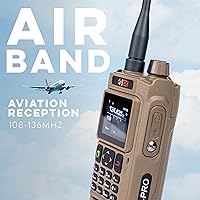
  • Receive Bands: Receive coverage includes VHF, UHF, FM broadcast, and aviation band for passive monitoring of air traffic frequencies.
  • Output Power: Three selectable power levels are available: 1W for short-range conserving battery, 3W for mid-range use, and 5W for maximum output.
  • Battery Capacity: The included lithium-ion battery pack holds 2600 mAh, providing a full day of mixed use under moderate transmit and scan activity.
  • Charging Port: Charging is handled via a standard USB-C port, compatible with most modern cables and wall adapters without proprietary accessories.
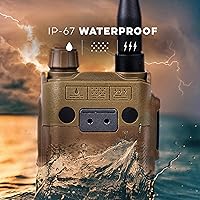
  • IP Rating: The IP67 rating confirms full dust-tight protection and the ability to withstand submersion in up to 1 meter of water for 30 minutes.
  • Memory Channels: Storage is organized across 6 channel banks with 30 channels each, giving a total of 180 programmable memory channels.
  • APRS Support: Built-in APRS allows the radio to broadcast and receive position data over the amateur radio network using the integrated GPS module.
  • Bluetooth: Bluetooth connectivity pairs the radio with the BTECH UV Programmer App on iOS and Android for programming, GPS sharing, and text messaging.
  • NOAA Alerts: The radio includes a dedicated NOAA weather alert receiver that can trigger automatic audio alerts when emergency broadcasts are detected.
  • Audio Output: The internal speaker produces up to 2W of audio output, suitable for outdoor environments with moderate ambient noise.
  • Sensitivity: Receiver sensitivity is rated at 0.16uV at 12dB SINAD, indicating strong ability to pull in weak signals on monitored frequencies.
  • Operating Temperature: The UV-PRO is rated to operate reliably between -5°F and 140°F, covering most outdoor and industrial working environments.
  • Compass: A built-in digital compass is included for basic directional navigation without relying on the GPS lock or an external device.
  • Channel Selectivity: Adjacent channel selectivity is rated at 68dB or greater, reducing interference from signals on neighboring frequencies during reception.
  • Intermodulation: Intermodulation immunity is rated at 65dB or greater, helping the receiver reject false signals caused by strong nearby transmitters.
  • Warranty: BTECH provides a one-year warranty for units purchased directly through BaoFengTech.com, with US-based support handling claims and technical issues.
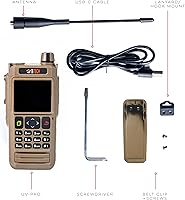
  • In-Box Contents: The package includes the radio, 2600 mAh battery, antenna, belt clip, USB-C charging cable, screws, screwdriver, and a printed user manual.
  • Availability Date: The UV-PRO first became available in March 2025, making it a recent product with limited long-term field reliability data at this time.

Related Reviews

BTECH DMR-6X2 PRO Two-Way Radio
87%
88%
Performance & Signal Quality
91%
Bluetooth Functionality
85%
GPS & APRS Features
83%
Battery Life
92%
Build Quality & Durability
More
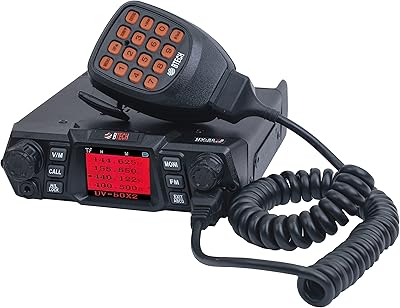
BTECH UV-50X2 Second Gen Mobile Radio
73%
88%
Transmission Performance
84%
Audio Clarity
79%
Build Quality
51%
Ease of Setup
47%
User Interface & Menu
More
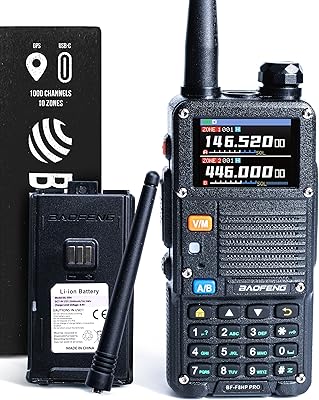
BAOFENG BF-F8HP PRO 7th Gen Tri-Band Radio
78%
88%
Transmission Power & Range
91%
Tri-Band Frequency Coverage
83%
Build Quality & Durability
79%
Weather Resistance (IP54)
67%
GPS Functionality
More
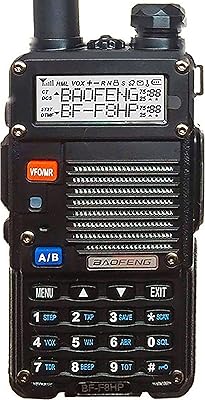
Baofeng BF-F8HP 8-Watt Dual Band Two-Way Radio
72%
88%
Signal Strength & Range
86%
Battery Life
74%
Build Quality & Durability
67%
Audio Clarity
52%
Ease of Programming
More
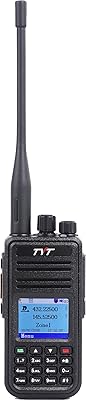
TYT MD-UV380 Dual Band VHF/UHF Two-Way Radio
77%
92%
Value for Money
88%
Range and Performance
85%
Build Quality and Durability
80%
Ease of Use
65%
Software and Setup Experience
More
BTECH UV-5X3 Tri-Band Handheld Ham Radio
77%
91%
Value for Money
93%
Tri-Band Frequency Coverage
54%
Ease of Programming
88%
USB-C Charging Convenience
78%
Build Quality & Durability
More
Baofeng UV-21R Dual Band Ham Radio
75%
91%
Value for Money
68%
Build Quality
54%
Transmission Range
83%
Display & Interface
88%
Charging Convenience
More
BTECH GMRS-20V2 20W Mobile Two-Way Radio
83%
91%
Performance & Range
93%
Durability & Waterproofing
74%
Ease of Use
70%
Setup & Programming
82%
Battery Life
More
Radioddity DB25 Pro Dual Band Mini Mobile Radio
88%
91%
Value for Money
87%
Signal Reception
89%
Ease of Use
92%
Display Quality
84%
Durability
More
BaoFeng UV-82HP CAMO High Power Dual Band Radio
83%
88%
Performance & Range
93%
Build Quality & Durability
85%
Battery Life
75%
Ease of Use
60%
Programming & Software Compatibility
More

FAQ

Yes — to legally transmit on the VHF and UHF frequencies this radio supports, you need at minimum a Technician class amateur radio license issued by the FCC. You can receive and listen on most frequencies without a license, but keying up to talk is a different matter. If you are not yet licensed, studying for the Technician exam is straightforward and the test is widely available.

APRS stands for Automatic Packet Reporting System. In practical terms, it lets the UV-PRO broadcast your GPS coordinates over the amateur radio network so others — or a website like aprs.fi — can see your location in near real time. It is genuinely useful for solo hikers, search-and-rescue volunteers, or anyone operating in remote terrain where knowing where people are matters. If you are just doing basic voice comms on a job site or campground, APRS is not something you need to worry about.

Not very, for most real-world situations. The BTECH UV-PRO Dual Band Two-Way Radio can theoretically hit that figure under perfect line-of-sight conditions — think two mountain peaks with nothing in between. In practice, on wooded trails, in suburban areas, or across rolling terrain, you are looking at somewhere between 1 and 5 miles of reliable communication range. This is normal for any handheld radio at this power level, not a defect.
For most people, yes — it is considerably easier than programming channels manually through the keypad. You pair the radio via Bluetooth, open the BTECH UV Programmer App, and push your channel configuration over. iOS users tend to report a smoother experience. Android users on some device and OS combinations have encountered Bluetooth pairing drops during sessions, so if that happens, re-pairing and retrying usually resolves it.

Yes, but receive only — it cannot transmit on aviation frequencies, nor should any unlicensed device. You can tune into approach control, ground, and tower frequencies at nearby airports and listen passively. The reception quality is generally reported as clear and useful for aviation hobbyists, student pilots, or anyone who wants to monitor air traffic for situational awareness.

IP67 means it can survive being submerged up to 1 meter deep for up to 30 minutes — so a dunking in a river crossing or a heavy rainstorm is well within its design tolerance. It is not rated for sustained deeper diving or continuous immersion, so do not clip it to your kayak and expect it to survive being underwater for extended periods. For hiking and most paddling scenarios, the waterproofing is genuinely adequate.

Harder than it should be, honestly. The documentation does not walk you through it in a beginner-friendly way, and getting your call sign, SSID, path settings, and beacon rate configured correctly requires some research beyond the manual. Budget a few hours if you are new to APRS, and resources like the APRS.org community and YouTube walkthroughs will be more useful than the included manual for this specific part of the setup.

The radio comes with everything you need to start using it: the radio itself, the 2600 mAh battery, an antenna, a belt clip, a USB-C charging cable, and a user manual. You do not need a separate charger dock. Some users eventually upgrade the stock antenna for better performance, but the included one is functional out of the box.

It can receive on those frequencies, but legally transmitting on GMRS requires a separate GMRS license, and FRS has its own strict power and antenna rules that a radio like this does not conform to. For family camping walkie-talkie use, this is genuinely not the right tool — a dedicated GMRS radio would serve that purpose better and keep you on the right side of FCC rules.

With moderate use — some voice transmissions, background scanning, and Bluetooth active — the 2600 mAh battery typically gets through a full day without needing a recharge. If you are running APRS with frequent GPS beaconing alongside Bluetooth and active scanning, battery drain is noticeably faster. For multi-day trips, carrying a USB power bank as a backup is a practical precaution rather than an absolute necessity.

Where to Buy