Overview

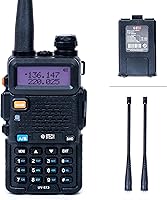
The BTECH UV-5X3 Tri-Band Handheld Ham Radio sits in a genuinely useful middle ground for licensed amateur radio operators who want more frequency coverage without spending serious money. Most handhelds at this price cover VHF and UHF — full stop. This tri-band handheld also adds the 220 MHz band, which is rare at any price point and makes a real difference for operators who frequent that slice of spectrum. BTECH has brought the design current with USB-C charging, meaning no more hunting for a proprietary cable. The included accessory bundle covers your bases right out of the box. Just know going in: this is a capable budget-to-mid-range radio, not a premium unit.
Features & Benefits

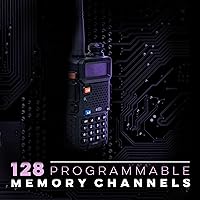
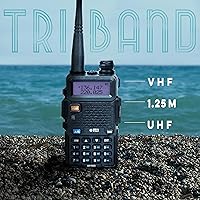
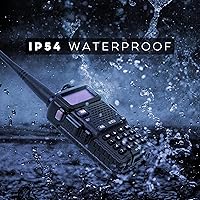
The UV-5X3 covers VHF (136–174 MHz), the 1.25M band (220–225 MHz), and UHF (400–480 MHz), plus passive FM receive — that frequency spread in a single handheld is legitimately uncommon. You get 128 memory channels, dual-watch, adjustable scanning modes, and full CTCSS and DCS privacy tone support. Output runs at 5W high or 0.5W low, and the K1 Kenwood-compatible jack means most aftermarket accessories plug right in. Remote functions like Stun, Kill, and Revive are handy for coordinated club or emergency operations. Display Sync keeps both screen zones aligned, and NOAA weather monitoring adds real everyday utility. The IP54 chassis handles rain and trail dust — just do not submerge it.

Best For

This BTECH radio is a natural fit for licensed Technician-class or higher operators who want 220 MHz band access without buying a dedicated single-band radio. It also slots comfortably into an emergency go-bag — the multi-band coverage and NOAA reception are practical advantages when conditions get serious. Newcomers will appreciate getting antennas, an earpiece, and a charger in the box, though earning a license before transmitting is not optional. Hikers, campers, and off-roaders will find the IP54 rating solid for typical outdoor conditions. Ham club members running multi-band nets will put the tri-band flexibility to consistent, genuine use.

User Feedback

Across more than 2,000 ratings, the UV-5X3 holds a 4.3-star average, and the consensus is fairly consistent: buyers praise the USB-C charging convenience and tri-band capability as the real draws, and build quality earns solid marks for the price. Where friction shows up is programming — manual keypad entry is tedious, and most experienced users simply use CHIRP software, which is honestly the smarter approach anyway. The bundled 220 MHz antenna draws some criticism for modest range; an aftermarket upgrade helps noticeably. The earpiece is functional but unremarkable. A few buyers flag the BaoFeng manufacturing connection, though BTECH's USA-based support and warranty handling address most post-purchase concerns effectively.

Pros

  • Tri-band VHF, 220 MHz, and UHF coverage in a single handheld is genuinely rare at this price point.
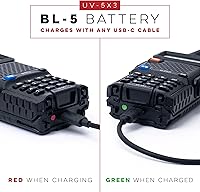
  • USB-C charging means one less proprietary cable to carry — a meaningful upgrade over older BTECH designs.
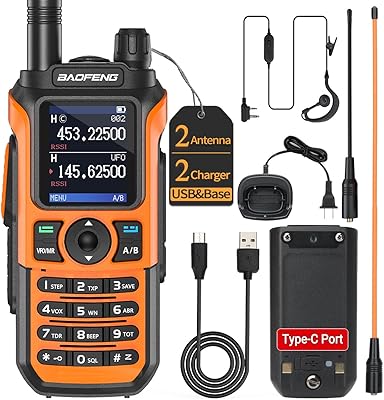
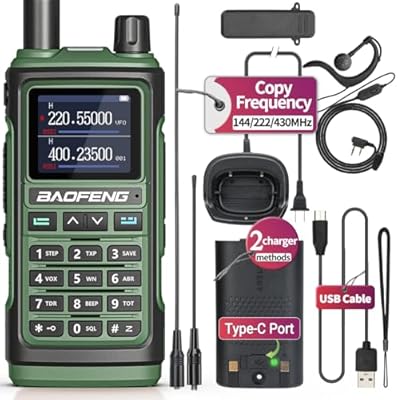
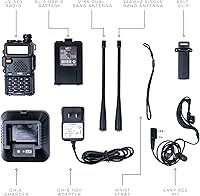
  • The included accessory bundle — two antennas, earpiece, charger, and clip — delivers strong out-of-the-box readiness.
  • K1 Kenwood-compatible jack opens up a wide ecosystem of affordable aftermarket speaker mics and earpieces.
  • NOAA weather channel monitoring adds practical everyday utility beyond standard amateur communications.
  • Remote Stun, Kill, and Revive functions give net control operators real tools for managing group communications.
  • 128 memory channels with dual-watch and adjustable scanning modes handle complex multi-frequency setups well.
  • USA-based BTECH support and warranty handling make post-purchase service notably less stressful than generic importers.
  • IP54 chassis holds up reliably through trail dust, light rain, and the bumps of regular outdoor field use.
  • Compatibility with UV-5R chassis accessories broadens upgrade options for operators already in the BaoFeng ecosystem.

Cons

  • Manual keypad programming is tedious and counterintuitive — CHIRP software and a cable are effectively required purchases.
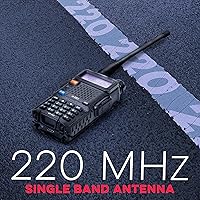
  • The included 220 MHz single-band antenna underdelivers on range; most serious operators upgrade it fairly quickly.
  • The bundled earpiece is functional but uncomfortable for extended wear and mediocre in audio quality.
  • Battery capacity at 1500mAh is adequate for casual use but drains fast during heavy scanning or sustained transmit sessions.
  • No automatic NOAA weather alert mode — monitoring requires active listening rather than passive alarm triggering.
  • Swapping between the dual-band and 220 MHz antennas for different frequency ranges is a physical inconvenience in the field.
  • The BaoFeng manufacturer branding appearing alongside the BTECH name causes confusion about warranty and support accountability.
  • The belt clip is the weakest accessory in the kit and tends to be the first component buyers replace.
  • The dual-display UI inherits the dated BaoFeng menu structure, which has a real learning curve for first-time users.
  • No extended-capacity battery option is available in the BTECH lineup for this model, limiting runtime flexibility.

Ratings

The BTECH UV-5X3 Tri-Band Handheld Ham Radio has been scored below by our AI system after parsing thousands of verified global buyer reviews, actively filtering out incentivized, bot-generated, and unverified submissions to surface what real operators actually experience. These scores reflect an honest cross-section of the UV-5X3's strengths and friction points — nothing has been softened to flatter the product.
Value for Money
91%
Most buyers land on the UV-5X3 after comparing it against single-band or dual-band alternatives and quickly realize the 220 MHz coverage alone justifies the price gap. Getting both antennas, an earpiece, a charger, and a belt clip in the box means new operators are genuinely ready to go without a follow-up shopping run.
A small segment of buyers feel the accessory quality — particularly the earpiece — does not quite match the radio's own build, making the bundle feel slightly uneven in value. Operators who already own accessories from other radios may feel they are paying for duplicates they will never use.
Tri-Band Frequency Coverage
93%
The 220 MHz band support is the single biggest reason most buyers choose this radio over a standard dual-band BaoFeng, and it delivers exactly what it promises. Club members running 1.25M nets report clean, reliable performance, and having VHF, 220, and UHF all in one handheld genuinely reduces what you need to carry to a field event.
The 220 MHz band is less active than VHF or UHF in many regions, so buyers in rural or lower-population areas may find that frequency largely unused locally. A handful of users noted the included single-band 220 antenna underperforms compared to an aftermarket upgrade, slightly limiting range on that band out of the box.
Ease of Programming
54%
46%
Once channels are loaded via CHIRP software — the approach most experienced operators take anyway — the UV-5X3 behaves predictably and is straightforward to manage. The 128-channel capacity and scanning options work well once the radio is properly configured, which CHIRP handles reliably with a cheap programming cable.
Manual keypad programming on this radio is genuinely frustrating, especially for newcomers who have not yet learned the BaoFeng/BTECH menu system. The user manual is functional but not beginner-friendly, and several buyers report spending hours troubleshooting before discovering that CHIRP eliminates most of the pain entirely.
USB-C Charging Convenience
88%
The shift to USB-C is a meaningful real-world upgrade over the proprietary charging systems on older BTECH and BaoFeng models — operators can top up the battery using the same cable as their phone, power bank, or laptop. Field users especially appreciate not needing a dedicated charger in their go-bag.
The 1500mAh battery capacity is adequate for typical day use but not generous by modern standards, and heavy-scan or high-transmit sessions can drain it faster than expected. A small number of buyers reported inconsistent charging contact on early units, though this appears to have been addressed in more recent production runs.
Build Quality & Durability
78%
22%
For the price tier, the chassis feels solid and purposeful — buttons have reasonable travel and feedback, the housing does not flex under normal grip pressure, and the radio has survived trail use, vehicle mounts, and casual drops without reported failures in the majority of reviews. BTECH's quality control has been more consistent than some competitors at this price.
It is not a ruggedized radio by any serious measure — the IP54 rating covers light rain and trail dust, but submersion or heavy weather exposure is out of scope. A few long-term users noted that the battery door fit loosens slightly over time, and the included belt clip feels like the weakest physical component in the kit.
Weather Resistance (IP54)
67%
33%
IP54 is genuinely useful for the kind of outdoor conditions most amateur radio operators encounter — a rain shower on a hiking trail, dusty conditions at an off-road event, or humid summer field day use. The radio has held up fine in those contexts for the majority of outdoor-focused reviewers.
Some product listing copy implies waterproofing that the IP54 spec simply does not support, and a few buyers were caught off guard when they treated the radio as fully waterproof. Anyone planning kayaking, paddling, or heavy rain use should pair it with a waterproof pouch rather than rely on the chassis rating alone.
Transmit Range & Signal Clarity
76%
24%
On VHF and UHF, the UV-5X3 performs about as expected for a 5W handheld — solid repeater access within reasonable distances and reliable simplex range in open terrain. Operators using it through well-placed repeaters report clear audio on both transmit and receive ends.
Like most handhelds in this class, range drops noticeably in dense urban environments or heavily wooded terrain. The 220 MHz performance in particular depends heavily on which antenna you are using — the included single-band 220 antenna is functional but not impressive, and a few buyers invested in an aftermarket option fairly quickly.
Battery Life
69%
31%
For casual daily monitoring and moderate transmit use, the 1500mAh battery comfortably covers a full day without needing a recharge. Emergency preparedness users appreciate that USB-C compatibility means charging options in the field are plentiful.
Heavy scanning or sustained transmit sessions push the battery into half-day territory, which is a limitation worth knowing going in. There is no extended-capacity battery option in the BTECH accessory lineup for this model, so users wanting longer runtime need to carry a spare or rely on a power bank.
Audio Quality
72%
28%
The internal speaker produces audio that is clear and loud enough for outdoor use — operators on a trail or at a noisy field day event can hear incoming transmissions without straining. Receive audio is generally described as clean and adequately punchy for a radio of this size.
The bundled earpiece is the most consistently criticized accessory in the kit — it works, but comfort and audio fidelity are both mediocre. Users who intend to wear the radio for extended monitoring sessions are better served by a quality aftermarket earpiece from the start.
Remote Control Functions
74%
26%
The Stun, Kill, Revive, Inspect, and Monitor remote functions give ARES, RACES, and club net control operators practical tools for managing a radio network in the field — features that simply do not exist on most competing handhelds at this price point. Emergency communications groups in particular find real operational value here.
For the average hobbyist or newcomer, these features may go entirely unused, which makes their contribution to the purchase decision radio-group-dependent. Setup requires some familiarity with the menu system or CHIRP, and casual users may not realize the features exist at all without reading the manual carefully.
NOAA Weather & Scanning
81%
19%
NOAA weather channel access is a genuinely useful inclusion that turns the UV-5X3 into a practical everyday carry tool even when you are not actively on amateur frequencies. Adjustable scanning modes and nuisance channel skip make managing a busy channel list much less tedious in the field.
NOAA receive is passive only — no alerts or alarm mode triggers automatically, so it requires manual monitoring rather than functioning like a dedicated weather radio. Scanning speed and squelch sensitivity are adequate but not best-in-class, and busy RF environments can cause the scanner to pause on noise rather than active transmissions.
Accessory Compatibility
86%
K1 Kenwood 2-pin compatibility is a major practical advantage — it opens up a large ecosystem of aftermarket earpieces, speaker mics, and programming cables without proprietary-jack frustration. Compatibility with UV-5R and BF-F8HP chassis accessories also broadens options for existing BaoFeng-ecosystem users.
The dual-antenna setup (one dual-band, one 220 MHz single-band) means users need to physically swap antennas when moving between frequency ranges, which can be an inconvenience during rapid band changes. A quality tri-band antenna is not included and represents a likely aftermarket purchase for serious operators.
Display & Interface Usability
66%
34%
The dual display with Display Sync is a helpful touch for operators monitoring two frequencies simultaneously — it reduces the cognitive load of tracking two channels at once. Backlight visibility in low-light conditions is sufficient for evening or indoor use.
The overall UI design is a direct descendant of the classic BaoFeng interface, which prioritizes feature density over intuitive operation. New users accustomed to modern device interfaces will find the menu navigation dated and counterintuitive until they spend time with the manual or a setup tutorial.
After-Sales Support & Warranty
79%
21%
BTECH operating out of the US is a meaningful differentiator from generic offshore sellers — buyers report responsive customer service and a warranty process that does not require navigating international returns. The brand specializes exclusively in radio products, which shows in the quality of support interactions.
Some buyers are initially confused by the BaoFeng manufacturer branding appearing alongside the BTECH brand name, which creates uncertainty about who actually stands behind the warranty. Response times during peak periods have occasionally stretched longer than buyers expected for warranty resolution.

Suitable for:

The BTECH UV-5X3 Tri-Band Handheld Ham Radio is the right call for licensed amateur radio operators — Technician class or higher — who want to cover VHF, UHF, and the less common 220 MHz band without carrying two radios or spending significantly more. It fits particularly well into emergency preparedness kits, where multi-band coverage, NOAA weather monitoring, and USB-C charging compatibility with everyday cables make it a practical, low-fuss addition. Newcomers to the hobby will find the included accessory bundle a genuine head start — both antennas, an earpiece, a charger, and a belt clip are all in the box. Outdoor enthusiasts who take their radio hiking, camping, or to off-road events will appreciate the IP54-rated chassis handling trail dust and light rain without babying. Ham club members who coordinate across multiple bands during nets or public service events will put the tri-band flexibility to consistent, real-world use.
Not suitable for:

Anyone expecting to transmit straight out of the box like a standard FRS walkie-talkie will be disappointed — the BTECH UV-5X3 Tri-Band Handheld Ham Radio is a Part 97 amateur radio device, and legal operation requires a valid FCC amateur license. Buyers who are not willing to spend time with CHIRP programming software may find initial setup genuinely frustrating; the manual keypad interface is not intuitive, and the included documentation will not hold your hand through the process. If your local ham community does not actively use the 220 MHz band, the radio's main differentiator loses most of its practical value, and a simpler dual-band option might serve you better for less. Operators who need submersion-level waterproofing — kayakers, paddlers, or anyone working in heavy rain — should look at radios with IP67 ratings or better, since IP54 covers splashes and dust but nothing more demanding. Finally, buyers expecting professional-grade audio, a long-haul battery, or the build precision of a Yaesu or Icom should calibrate their expectations — this is a capable budget-to-mid-range radio, not a premium one.
Specifications

  • Frequency Bands: Operates on VHF (136–174 MHz), 1.25M (220–225 MHz), and UHF (400–480 MHz), with passive FM broadcast receive also supported.
  • Output Power: Transmits at 5W on high power and 0.5W on low power, selectable per channel or globally through the menu.
  • Memory Channels: Stores up to 128 programmable memory channels, each supporting individual frequency, tone, and scanning settings.
  • Battery: Includes a 1500mAh lithium-ion rechargeable battery pack with a USB-C charging port built into the battery unit.
  • Weather Rating: Chassis carries an IP54 rating, meaning it is protected against dust ingress and light water splashing from any direction.
  • Dimensions: Measures 2.28″ wide by 1.26″ deep by 4.33″ tall, not including the antenna.
  • Weight: Weighs 8 ounces (approximately 0.5 lb) with the standard battery attached.
  • Accessory Jack: Equipped with a K1 Kenwood-style 2-pin accessory jack, compatible with a wide range of aftermarket speaker mics and earpieces.
  • Privacy Tones: Supports the full set of CTCSS and DCS privacy tones for repeater access and channel filtering.
  • Display: Features a dual-display layout with a Display Sync function that keeps both frequency readouts coordinated during dual-watch operation.
  • Scanning Modes: Offers multiple adjustable scanning modes including nuisance channel skip, busy channel lockout, and dual-watch simultaneous monitoring.
  • Remote Functions: Supports five remote control operations — Stun, Kill, Revive, Inspect, and Monitor — for use in coordinated group or emergency radio networks.
  • Additional Features: Includes NOAA weather channel receive, SOS alarm, DTMF keypad, transmit time-out timer, and adjustable squelch.
  • Included Accessories: Ships with a dual-band VHF/UHF antenna, a dedicated 220 MHz single-band antenna, earpiece, belt clip, wrist strap, CH-5 charger with 110V adapter, and user manual.
  • Accessory Compatibility: Chassis accessories designed for the BaoFeng UV-5R and BF-F8HP series are compatible with the UV-5X3.
  • Charging Voltage: Battery charges at 5V DC via the USB-C port, compatible with standard USB-C cables and power adapters.
  • Warranty & Support: Covered by a USA warranty backed by BTECH's US-based operations, with customer support handled domestically rather than through overseas channels.
  • Manufacturer: Manufactured by BaoFeng and distributed under the BTECH brand, which handles USA sales, support, and warranty fulfillment independently.

Related Reviews

Baofeng UV-21R Dual Band Ham Radio
75%
91%
Value for Money
68%
Build Quality
54%
Transmission Range
83%
Display & Interface
88%
Charging Convenience
More
BAOFENG UV-28 Plus Ham Radio Handheld
75%
86%
App Programming Experience
91%
Value for Money
67%
GPS Functionality
78%
Transmission Audio Clarity
83%
Receiver Coverage
More
BTECH UV-50X2 Second Gen Mobile Radio
73%
88%
Transmission Performance
84%
Audio Clarity
79%
Build Quality
51%
Ease of Setup
47%
User Interface & Menu
More
Yaesu VX-6R Tri-Band Ham Radio Transceiver
80%
93%
Build Quality & Durability
91%
Waterproofing & Weather Resistance
88%
Receiver Performance
86%
Audio Clarity
77%
Transmit Power & Range
More
BTECH UV-PRO Dual Band Two-Way Radio
79%
86%
Build Quality
88%
Waterproofing & Durability
78%
Bluetooth App Integration
81%
APRS & GPS Performance
67%
Range & Signal Clarity
More
BAOFENG UV-17R Dual Band Ham Radio
73%
91%
Value for Money
63%
Ease of Setup
54%
Real-World Range
67%
Build Quality
61%
Audio Quality
More
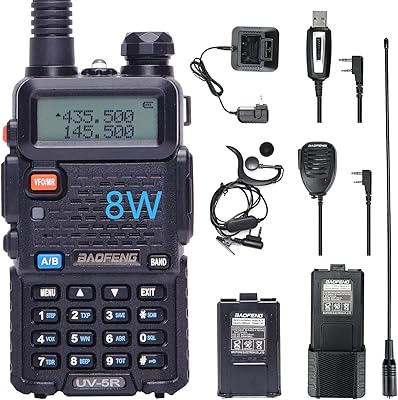
Baofeng UV-5R 8W Ham Radio
83%
84%
Performance
88%
Ease of Use
90%
Build Quality
85%
Range and Signal Strength
83%
Battery Life
More
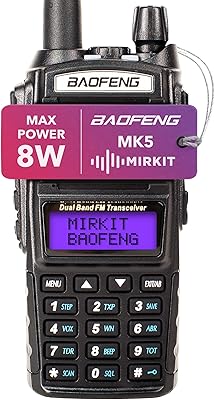
Mirkit Baofeng UV-82 MK5 Ham Radio
80%
88%
Range Performance
84%
Ease of Use
79%
Battery Life
82%
Build Quality
90%
Audio Clarity
More
Radtel RT-860 Multiband Ham Radio Transceiver
75%
88%
Value for Money
76%
Reception Range & Sensitivity
59%
SSB & HF Audio Quality
83%
Build Quality & Durability
62%
Ease of Programming & Setup
More
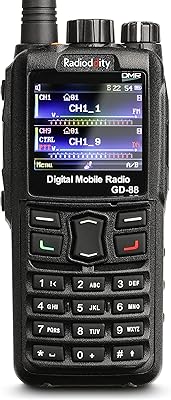
Radioddity GD-88 DMR Dual Band Ham Radio
75%
93%
Feature Depth
88%
GPS and APRS Performance
51%
Programming Experience
82%
Build Quality
63%
Audio Quality
More

FAQ

Yes — to transmit on amateur frequencies, you need a valid FCC amateur radio license at the Technician level or higher. The BTECH UV-5X3 Tri-Band Handheld Ham Radio is a Part 97 amateur device, not an FRS walkie-talkie. You can receive transmissions without a license, but keying up legally requires that credential.
You can program it manually, but most users find the keypad menu system tedious and error-prone — especially for loading a lot of repeater channels at once. CHIRP is free software that makes the whole process significantly faster and less frustrating. You will need an inexpensive USB programming cable, and from there it is straightforward even for first-timers.

The V-85 is a dual-band antenna covering VHF and UHF, while the second antenna is a single-band unit optimized specifically for the 220 MHz band. You will need to physically swap them depending on which band you are operating on. Some users invest in a quality tri-band antenna to avoid that inconvenience entirely.

It is not waterproof — the accurate rating is IP54, which means it can handle dust and light splashing from any direction. Do not submerge it or use it in heavy rain without protection. If you need true waterproofing, a radio rated IP67 or higher is what you want, or pair this one with a waterproof pouch for wet conditions.

For the most part, yes. The UV-5X3 is compatible with UV-5R and BF-F8HP chassis accessories, and its K1 Kenwood 2-pin jack means most aftermarket earpieces and speaker mics will plug right in. Just double-check compatibility on the accessory side before buying, since not all BaoFeng accessories use the same connector.

That depends entirely on your region. The 1.25M band has an active repeater network in some metro areas and ham club communities, but it is sparsely used in rural or lower-population zones. Before buying primarily for 220 MHz, it is worth checking repeaterbook.com to see what is active near you. If your local club runs a 220 net, the UV-5X3 is a natural fit.

These are remote control commands that allow a net control operator to disable (Stun or Kill), re-enable (Revive), or monitor another UV-5X3 on the same network from a distance. They are primarily useful in emergency communications groups, public service events, or organized club operations where managing a fleet of radios matters. For solo hobbyists, these features will likely go unused.

For typical monitoring with occasional transmitting, the 1500mAh battery handles a full day without issue. If you are scanning heavily or transmitting frequently on 5W, expect to recharge partway through the day. The USB-C charging is a genuine convenience — a standard power bank will top it up in the field without needing the dedicated wall charger.

BaoFeng manufactures the hardware, which is why you will see that name in the device internals and some documentation. BTECH is a US-based company that sources, brands, and supports this model independently — including handling the USA warranty and customer service domestically. They are separate entities, and BTECH's support experience is generally considered meaningfully better than dealing with BaoFeng directly.

It is a solid choice for a new licensee, especially one who wants to eventually explore all three bands without upgrading immediately. The included accessory bundle covers what you need to get started, and the feature set gives you room to grow. Just plan on spending time with CHIRP and the manual early on — the setup curve is real but manageable, and the online ham radio community is genuinely helpful for newcomers.

Where to Buy