Overview

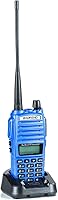
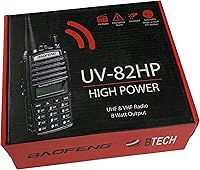
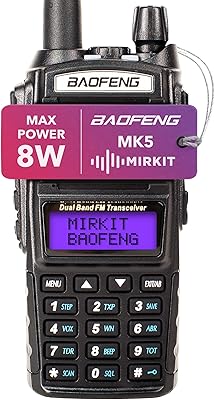
The BaoFeng UV-82HP Dual Band Ham Radio has been on the market since 2015, and the fact that it still ranks consistently among the best-selling amateur handhelds says something genuine about its staying power. It positions naturally as the next step up from the UV-5R — more output, a dual PTT layout, and coverage across both VHF and UHF bands in one compact unit. The BTECH relationship is worth understanding: BTECH handles USA-based warranty support for this line, which means you are not chasing a resolution overseas. One thing to state clearly before anything else — transmitting on this dual-band handheld legally requires at least a Technician-class amateur radio license in the US. That is not a footnote.
Features & Benefits

The UV-82HP's most practical strength is its three-tier power system — 7W when terrain demands it, 4W for everyday contacts, and 1W to stretch battery life on long days out. Storage for 128 channels with alphanumeric labels means navigating saved repeaters in the field is actually manageable. Programming manually through the radio menu is a genuinely frustrating experience, but CHIRP software removes that pain almost entirely — plan to pick up an FTDI cable separately, as it is a small but worthwhile addition. The waterproof build, VOX hands-free operation, and selectable wide or narrowband modes round out a feature set that holds up well for outdoor and emergency communication use.

Best For

This BaoFeng transceiver makes the most sense for licensed operators who want real output power without moving into commercial radio price territory. Emergency communications volunteers — ARES teams, EMCOMM groups, and similar organizations — will find the dual-band coverage and channel capacity genuinely useful when conditions get serious. Hikers and backcountry campers who rely on repeater networks get solid range from this dual-band handheld, particularly when running on high power. If you recently passed your Technician exam and are ready to move beyond a basic starter radio, the UV-82HP is a natural upgrade that does not reset your learning curve. Existing BaoFeng users will feel at home within minutes.

User Feedback

Owners consistently point to audio clarity and signal output as the UV-82HP's strongest qualities for what you pay. Most experienced operators treat CHIRP programming as a required setup step rather than optional — anyone who skips it tends to regret it. The stock antenna earns mixed but mostly reasonable marks; it works adequately, though aftermarket upgrades are a common and worthwhile swap. The bundled earpiece is the most frequent target of criticism — functional, but it feels like an afterthought. Battery life gets solid feedback for typical use, though anyone planning extended transmit sessions should keep a spare pack on hand. Newcomers to VFO mode occasionally find the menu structure steeper than expected.

Pros

  • Seven watts of output power gives this dual-band handheld genuine range that entry-level radios simply cannot match.
  • Three selectable power levels let you balance transmission distance against battery life depending on the situation.
  • Dual-band VHF and UHF coverage in a single radio reduces the need to carry multiple devices in the field.
  • 128 alphanumeric-labeled channels make organizing and navigating saved repeaters practical during actual use.
  • CHIRP software compatibility turns a frustrating manual setup process into a straightforward computer-based task.
  • The waterproof build holds up to rain and rough outdoor conditions better than most radios at this price point.
  • Dual PTT buttons allow quick switching between bands without diving into menus mid-communication.
  • USA-based BTECH warranty and support means customer service issues are handled domestically, not shipped overseas.
  • Audio clarity and received signal quality consistently earn praise from owners across a wide range of use environments.
  • At its price point, the overall feature-to-cost ratio is hard to argue with for licensed hobbyists and preparedness users.

Cons

  • Manual frequency programming without a computer is genuinely painful and borders on unusable for most people.
  • An FTDI programming cable is effectively required for a good setup experience but is sold separately without much fanfare.
  • The included earpiece feels like an afterthought — most users replace it quickly with any third-party option.
  • The stock antenna is functional but underwhelming; meaningful range improvements require an aftermarket upgrade.
  • Operators planning heavy transmit use will find the 1800mAh battery drains faster than expected and should budget for a spare.
  • The menu structure and VFO mode have a real learning curve that can frustrate operators new to amateur radio handhelds.
  • Despite the waterproof rating, the radio lacks ruggedized drop protection, so rough handling in the field is still a concern.
  • The radio design has changed little since its 2015 launch, and the interface shows its age compared to newer competitors.

Ratings

Our AI rating engine analyzed thousands of verified global owner reviews of the BaoFeng UV-82HP Dual Band Ham Radio, actively filtering out incentivized, bot-generated, and duplicate submissions to surface what real operators actually experience. The scores below reflect both the genuine strengths that keep this radio relevant nearly a decade after launch and the frustrations that consistently surface in honest feedback. No category has been inflated — where the UV-82HP falls short, the scores say so directly.

Value for Money
91%
For licensed amateur operators on a budget, this dual-band handheld delivers a feature-to-price ratio that is genuinely difficult to match. Seven watts of output, 128 channels, dual PTT, VOX, and waterproofing at this price point represents exceptional bang for the dollar in the amateur handheld category.
A fair total-cost calculation needs to include the FTDI programming cable purchased separately, which nudges the real entry price higher than the listed figure. That said, even factoring in that addition, most operators consider the overall value strong.
Signal Output & Range
88%
The 7W high-power mode consistently impresses operators using the radio for backcountry hiking, EMCOMM drills, and urban repeater access. Real-world reports of clean, punchy transmissions reaching distant repeaters confirm that the output power is genuine rather than a marketing figure.
Range expectations need to be tempered by terrain — dense forest and urban canyons cut effective distance significantly regardless of output. Some users also note that running high power continuously drains the battery fast enough to become a practical concern on longer outings.
Audio Clarity
83%
Received audio on this BaoFeng transceiver is notably clear and loud compared to what most budget-tier handhelds produce, which operators in noisy outdoor environments particularly appreciate. The built-in speaker handles 1W output and holds up well in wind and moderate ambient noise.
The earpiece included in the kit undermines audio quality at the ear significantly — its construction feels thin and the sound it delivers is noticeably inferior to what the internal speaker produces. Most users replace it within weeks of first use.
Build Quality & Durability
79%
21%
The UV-82HP has a noticeably more substantial feel than the UV-5R it replaces, with a chassis that holds up to daily field carry, camping trips, and rough handling in emergency communications exercises. The waterproof rating provides genuine peace of mind during wet-weather operation.
While it is waterproof, the radio is not drop-rated, and the plastic construction shows wear over time with regular field use. A few long-term owners report button feel degrading after extended use in dusty or gritty conditions.
Battery Life
74%
26%
For casual operators who primarily monitor and transmit occasionally, the 1800mAh lithium polymer battery comfortably covers a full day of typical use without reaching for the charger. The lower power modes help stretch runtime significantly when maximum range is not needed.
Heavy transmit users — particularly those running high power during events or emergency activations — regularly report needing a spare battery to get through a full session. The battery is adequate for the average hobbyist but tight for demanding operational scenarios.
Ease of Programming
52%
48%
Once connected to a computer via CHIRP software, bulk channel entry is fast, logical, and reliable — operators with even modest technical comfort can load a full channel plan in under 20 minutes. The CHIRP community is large and well-documented, making troubleshooting straightforward.
Manual programming directly through the radio keypad is genuinely one of the most frustrating experiences in this product category — the menu logic is unintuitive and error-prone. The need for a separately purchased FTDI cable means most new buyers are surprised by this dependency before they ever make their first transmission.
Channel Management
81%
19%
128 alphanumeric-labeled channels give operators the room to organize a thorough repeater directory, simplex frequencies, and emergency channels in a logical, field-navigable structure. Switching between stored channels during active use is fast and reliable once the radio is properly programmed.
Without CHIRP pre-programming, managing even a modest channel list through the radio interface is tedious enough to discourage proper organization. Operators who never invest time in upfront programming often end up underutilizing the channel capacity significantly.
Dual-Band Versatility
87%
Having full VHF and UHF transmit and receive capability in a single handheld is genuinely useful — it covers the two bands that amateur repeater networks rely on most heavily. The dual PTT buttons make flipping between bands during active operation noticeably more efficient than menu-based band switching.
The dual-band implementation is solid but not fully simultaneous — the radio monitors one band at a time in standard operation, which means active traffic on the unmonitored band can be missed. Cross-band repeat capability is absent, limiting some more advanced operating scenarios.
Ergonomics & Controls
76%
24%
The physical layout is familiar to anyone who has used a BaoFeng radio before, with a comfortable grip and logically placed primary controls. The dual PTT button placement is a genuine ergonomic improvement over single-PTT competitors in this class.
The radio is on the larger side for a handheld — 1 pound with battery and full-size dimensions mean it is not a comfortable pocket carry for extended periods. Operators with smaller hands also occasionally note that reaching all controls one-handed requires an awkward grip adjustment.
Display & Interface
71%
29%
The tri-color backlit display is readable under a variety of lighting conditions and shows the essential frequency and channel information clearly during field use. The color differentiation between bands provides a quick visual cue that operators find useful when switching modes.
The menu system behind the display is where the experience deteriorates — navigating settings feels dated and unintuitive compared to what competing radios at a similar price tier now offer. New operators frequently report spending more time fighting the interface than actually operating the radio.
Stock Antenna Performance
67%
33%
The included V85 dual-band antenna is functional enough to get new operators on local repeaters from day one, and for urban or suburban use near active repeater infrastructure, most users find it perfectly adequate for casual activity.
In backcountry or low-infrastructure environments, the stock antenna's limitations become apparent — range and receive sensitivity both improve noticeably with an aftermarket upgrade. A meaningful number of experienced operators describe replacing the antenna as essentially the first modification they make after unboxing.
VOX & Hands-Free Operation
77%
23%
The VOX function works reliably and is particularly appreciated by operators who need both hands free — hikers managing terrain, cyclists, and EMCOMM volunteers working in the field all cite it as a practical feature. Sensitivity adjustment gives users enough control to reduce false triggering.
In windy outdoor conditions, VOX sensitivity settings can require fine-tuning to prevent unintended transmissions triggered by ambient noise. Some users also note a slight activation delay that can clip the first syllable of a transmission if the threshold is set conservatively.
Included Accessories
54%
46%
The box contains everything needed to get on the air immediately — charger, antenna, earpiece, wrist strap, and belt clip are all present. For a radio at this price point, the inclusion of a complete accessory kit rather than just the bare unit is appreciated.
Quality across the included accessories is inconsistent — the earpiece in particular draws near-universal criticism for its flimsy construction and poor audio reproduction. The belt clip is functional but basic, and the user manual falls short of being genuinely helpful for newer operators navigating the feature set.
Warranty & Support
78%
22%
BTECH handling USA-based support for this line is a meaningful differentiator compared to direct-import alternatives — warranty claims are processed domestically and owners report reasonable resolution timelines. Having a real point of contact for support issues reduces the frustration that often accompanies budget electronics purchases.
Support quality, while better than the generic BaoFeng import experience, still does not match what buyers expect from established American or Japanese radio brands. Response times can vary, and documentation available through official channels is sometimes less thorough than what the CHIRP community independently provides.
Setup Experience
58%
42%
For operators who arrive prepared — with CHIRP installed, an FTDI cable in hand, and a clear frequency plan — the initial setup of the UV-82HP is genuinely manageable and takes less than an hour to complete. The CHIRP interface is user-friendly enough that even non-technical operators can work through it with minimal difficulty.
The out-of-box experience for operators who expect a plug-and-play setup is genuinely poor — the dependency on third-party software and a separately purchased cable is not clearly communicated upfront. New ham licensees who are not yet aware of CHIRP often describe the initial setup process as their biggest frustration with the radio.

Suitable for:

The BaoFeng UV-82HP Dual Band Ham Radio is best suited for licensed amateur radio operators — specifically those holding a Technician class license or higher — who want a capable, high-output handheld without paying commercial-tier prices. It is a natural fit for emergency communications volunteers, ARES and EMCOMM participants, and preppers who need dependable VHF and UHF coverage across a wide frequency range. Hikers, backcountry campers, and outdoor enthusiasts who already use ham repeater networks will appreciate the channel storage, high-power output, and waterproof construction. New licensees graduating from a UV-5R or similar entry-level radio will find this dual-band handheld familiar enough to adopt quickly while gaining meaningful capability upgrades. Anyone already comfortable in the BaoFeng and BTECH ecosystem will slot right in without much of an adjustment period.
Not suitable for:

The BaoFeng UV-82HP Dual Band Ham Radio is not the right choice for anyone who does not hold a valid amateur radio license, since transmitting on this radio without one is illegal in the United States — full stop. It is also a poor fit for buyers expecting a polished, plug-and-play experience; the manual programming interface is notoriously tedious, and getting the most out of this transceiver realistically requires a computer, CHIRP software, and an FTDI programming cable purchased separately. Users who need a simple, no-setup solution for basic family or group communication — think hiking trips or events — would be better served by a dedicated FRS or GMRS radio that requires no license for casual use. Professionals or public safety users who need commercial-grade durability, guaranteed frequency accuracy, and formal certifications should look at purpose-built commercial handhelds instead. Finally, anyone sensitive to a learning curve around radio concepts like VFO mode, squelch settings, and repeater offsets may find the experience more frustrating than rewarding.
Specifications

  • Output Power: Transmits at three selectable levels: 7W (High), 4W (Medium), and 1W (Low), allowing users to balance range against battery consumption.
  • Frequency Range: Covers VHF 136–174 MHz and UHF 400–520 MHz for both transmit and receive on a single dual-band device.
  • Channel Capacity: Stores up to 128 programmable channels with alphanumeric labeling for organized, field-friendly navigation.
  • Battery: Powered by an included 1800mAh lithium polymer rechargeable battery pack rated at 7.4V.
  • Display: Features a tri-color backlit screen that provides clear readability across different lighting conditions.
  • Push-to-Talk: Equipped with dual PTT buttons enabling fast, direct switching between VHF and UHF bands during operation.
  • Water Resistance: Rated as waterproof, offering protection during rain and outdoor field use without requiring a separate case.
  • Programming: Fully compatible with CHIRP open-source software for PC-based channel programming; requires a separate FTDI USB cable.
  • Special Features: Includes VOX hands-free activation, Busy Channel Lock-Out (BCLO), Squelch Tail Elimination (STE), and Transmission Time-Out Timer.
  • Bandwidth: Supports selectable wide (25 kHz) and narrow (12.5 kHz) channel bandwidth modes to meet local repeater requirements.
  • Antenna: Ships with the V85 dual-band antenna covering both VHF and UHF ranges; compatible with standard SMA-female aftermarket antennas.
  • Dimensions: Measures 4″ deep by 10″ wide by 7″ tall, making it a full-size handheld rather than a compact or ultralight unit.
  • Weight: Weighs approximately 1 pound with battery installed, which is typical for a high-power dual-band handheld in this class.
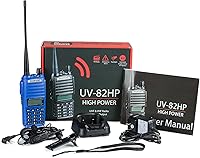
  • In the Box: Includes the radio, 1800mAh battery, V85 antenna, CH-8 charger with 110V adapter, earpiece, wrist strap, belt clip, and user manual.
  • Warranty & Support: Backed by USA-based BTECH customer service and warranty support, with claims handled domestically rather than through overseas channels.
  • Speaker Output: Built-in speaker delivers up to 1W of audio output, which is adequate for most outdoor and field communication scenarios.
  • License Requirement: Transmitting on this radio in the United States legally requires a valid FCC Technician class amateur radio license or higher.

Related Reviews

Baofeng UV-21R Dual Band Ham Radio
75%
91%
Value for Money
68%
Build Quality
54%
Transmission Range
83%
Display & Interface
88%
Charging Convenience
More
BAOFENG UV-17R Dual Band Ham Radio
73%
91%
Value for Money
63%
Ease of Setup
54%
Real-World Range
67%
Build Quality
61%
Audio Quality
More
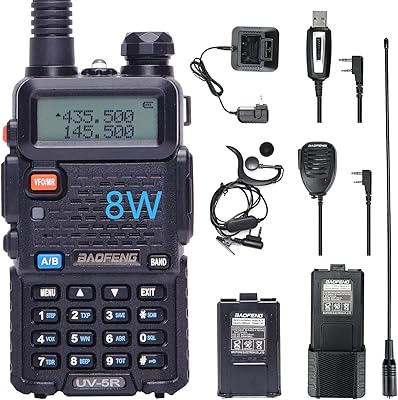
Baofeng UV-5R 8W Ham Radio
83%
84%
Performance
88%
Ease of Use
90%
Build Quality
85%
Range and Signal Strength
83%
Battery Life
More
Mirkit Baofeng UV-82 MK5 Ham Radio
80%
88%
Range Performance
84%
Ease of Use
79%
Battery Life
82%
Build Quality
90%
Audio Clarity
More
Retevis RT95 Dual Band Mobile Ham Radio
77%
88%
Audio Clarity
67%
Ease of Programming
91%
Display & Readability
86%
Value for Money
74%
Build Quality
More
Baofeng DM-1701 DMR Digital Two-Way Radio
70%
83%
Audio Clarity (DMR Mode)
41%
Programming Experience
78%
Value for Money
76%
Build Quality & Durability
86%
OpenGD77 Firmware Compatibility
More
BTECH UV-50X2 Second Gen Mobile Radio
73%
88%
Transmission Performance
84%
Audio Clarity
79%
Build Quality
51%
Ease of Setup
47%
User Interface & Menu
More
BAOFENG UV-28 Plus Ham Radio Handheld
75%
86%
App Programming Experience
91%
Value for Money
67%
GPS Functionality
78%
Transmission Audio Clarity
83%
Receiver Coverage
More
Baofeng BF-F8HP 8-Watt Dual Band Two-Way Radio
72%
88%
Signal Strength & Range
86%
Battery Life
74%
Build Quality & Durability
67%
Audio Clarity
52%
Ease of Programming
More
BTECH UV-PRO Dual Band Two-Way Radio
79%
86%
Build Quality
88%
Waterproofing & Durability
78%
Bluetooth App Integration
81%
APRS & GPS Performance
67%
Range & Signal Clarity
More

FAQ

Yes, absolutely. To legally transmit on the BaoFeng UV-82HP Dual Band Ham Radio in the United States, you need at least a Technician class amateur radio license issued by the FCC. You can listen without a license, but keying up without one is a violation of federal law. The good news is the Technician exam is straightforward and widely available.

If you already own a UV-5R and find yourself wishing for more output power or a more robust PTT setup, the UV-82HP is a meaningful step up. The higher maximum wattage, dual PTT buttons, and sturdier feel make it noticeably more capable, while the interface stays familiar enough that existing BaoFeng users won't need to relearn much.

Technically yes, but manually entering frequencies through the keypad and menu system is genuinely tedious and error-prone. Most operators treat computer programming via CHIRP as the only practical approach. You will need a separate FTDI USB programming cable to connect the radio to your PC — it is a small additional cost but consider it part of the setup budget.

You need an FTDI-based USB programming cable compatible with BaoFeng radios — specifically one with a genuine FTDI chip, not a counterfeit version, as cheap knock-offs frequently cause connection issues. Once connected, the free CHIRP software handles all channel and frequency management from your computer.

The radio carries a waterproof rating, which means it can handle rain and light splashing without damage. That said, it is not designed for submersion, so do not treat it like a dive device. For typical outdoor use — hiking, camping, working in wet weather — it holds up well.

Real-world range depends heavily on terrain, obstructions, and whether you are using repeaters. On high power in flat, open terrain with line-of-sight, you can expect several miles of direct communication. Through dense forest or in urban environments, that drops significantly. Using a local VHF or UHF repeater dramatically extends practical range and is how most operators use this dual-band handheld day to day.

The included V85 antenna is functional and gets you on the air right away, but many experienced operators swap it out for an aftermarket dual-band antenna fairly quickly. A quality replacement antenna — even an inexpensive one — can noticeably improve both transmit range and receive sensitivity, and the standard SMA-female connector makes swapping straightforward.

For casual use with a balanced mix of receive and occasional transmit, the 1800mAh pack typically lasts through a full day without issue. If you plan extended sessions with frequent transmitting on high power, the battery drains faster than you might expect. Picking up a spare battery pack is a sensible precaution for anyone using this transceiver in the field for extended periods.

It is genuinely well-suited for that role. The dual VHF/UHF coverage, 128-channel storage, and high output power hit most of the practical requirements for emergency communications work. Many ARES and EMCOMM volunteers use this exact radio or similar BaoFeng handhelds as a cost-effective way to stay equipped. Just make sure your license is current and your frequencies are pre-programmed before you actually need the radio.

The core transmit and receive functions are simple enough to pick up quickly, but features like VFO mode, offset programming, and CTCSS/DCS tone setup can be confusing for newcomers. The user manual is not particularly well-written, so most new operators rely on online resources and the CHIRP community for guidance. If you are brand new to amateur radio, budget some time for self-study — the radio rewards users who take the time to understand it.

Where to Buy