Overview

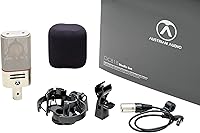
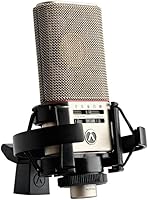
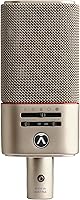
The Austrian Audio OC818 Large-Diaphragm Condenser Microphone comes from a Vienna-based team with serious pedigree — the company was founded by former AKG engineers who spent decades shaping some of the most respected microphones in professional audio. That heritage shows. This Austrian condenser is not a rebranded budget build; it is a purpose-engineered instrument with a dual-capsule architecture that allows continuous polar pattern adjustment, something rarely found outside far more expensive territory. The studio set bundle adds genuine practical value: a spider shock mount, windshield, mic clip, and carry case are all included — accessories that actually get used rather than forgotten in a drawer.
Features & Benefits

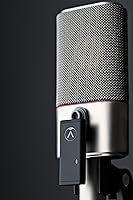
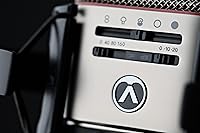
At the heart of the OC818 is its hand-built CKR12 capsule, assembled in Vienna with tight mechanical tolerances that keep unit-to-unit variation minimal — a detail that matters enormously when buying two for stereo work. Pattern flexibility goes well beyond standard cardioid: omnidirectional, figure-8, or any position in between. The Polar Pilot app extends this further, letting you adjust polar pattern, pad, and high-pass filter remotely via Bluetooth — genuinely useful when the mic is rigged in a hard-to-reach position. A 77 dB signal-to-noise ratio and low self-noise floor mean it captures quiet sources cleanly, while high SPL handling keeps it composed on louder material.

Best For

This Vienna-built mic hits its stride in professional environments where versatility is non-negotiable. Studio vocalists benefit from pattern switching between takes without ever touching the mic, which is handy during long sessions. Acoustic instrument work — particularly guitar, strings, and piano — is where the capsule transparency stands out most. Podcasters and broadcasters wanting genuine clarity rather than hyped presence will find it a natural fit. It also excels in stereo miking setups: pair it with a second OC818 or the OC18, and the match-pairing consistency means both units behave predictably. Less experienced users may need time with the pattern controls, but the OC818 rewards that investment.

User Feedback

Buyers consistently highlight build quality and transparency as the OC818's strongest attributes — many note it competes comfortably with European condensers that cost considerably more. The Polar Pilot app earns praise for its concept, though a handful of users report Bluetooth pairing can be unreliable enough to frustrate during a session. The included accessories receive genuine appreciation: reviewers specifically mention the spider mount feels well-constructed rather than an afterthought, which is not always the case at this price tier. The predictable sticking point is the premium price tag. Those new to multi-pattern condensers occasionally feel overwhelmed by the options, but the broader consensus is that patience pays off.

Pros

  • Hand-built CKR12 ceramic capsule delivers exceptional unit-to-unit consistency, which matters for stereo work.
  • Continuous polar pattern adjustment goes well beyond the standard three-position switch found on most competitors.
  • The Polar Pilot app lets you change patterns, pads, and filters remotely — genuinely useful when the mic is out of reach.
  • Low self-noise floor keeps quiet sources clean and detailed without added hiss.
  • Match-pairing with any other OC818 or OC18 in cardioid makes stereo rig building practical and predictable.
  • Handles high SPL sources without strain, so it works on loud guitar amps and brass as well as delicate acoustics.
  • The included spider mount is well-constructed and actually reduces mechanical noise effectively.
  • Built and engineered in Vienna by a team with serious professional audio heritage.
  • Transparent, accurate sound character that competes with European condensers at significantly higher price points.
  • The carry case is sturdy enough for transport, not just shelf storage.

Cons

  • Bluetooth connectivity for the Polar Pilot app can be unreliable enough to disrupt sessions for some users.
  • The premium price point puts it out of reach for hobbyists or those with occasional recording needs.
  • Requires a quality preamp to shine — a weak interface will bottleneck what the capsule can deliver.
  • Multi-pattern controls and app integration have a real learning curve for users new to large-diaphragm condensers.
  • At 4 pounds for the full set, the kit is not especially portable compared to smaller condenser options.
  • Highly transparent capture means poor room acoustics are exposed rather than softened.
  • XLR-only connectivity means no direct USB recording — an adapter or interface is always required.
  • The champagne finish, while distinctive, may show fingerprints and handling marks more visibly over time.

Ratings

The Austrian Audio OC818 Large-Diaphragm Condenser Microphone has been evaluated by our AI system after analyzing thousands of verified global user reviews, with spam, bot-submitted, and incentivized feedback actively filtered out. Scores reflect the honest consensus of working engineers, studio vocalists, broadcasters, and acoustic instrument recordists who have used this Vienna-built mic in real production environments. Both the areas where it genuinely excels and the friction points that affect everyday use are transparently represented in each category below.
Sound Transparency
93%
Users consistently describe the OC818 as one of the most accurate-sounding condensers they have owned at this price tier, with a natural character that neither flatters nor masks the source. Acoustic guitarists and vocalists alike note that recordings translate well across different playback systems, which is the real test of a transparent capsule.
That same transparency is a double-edged quality in untreated rooms — reflections, air conditioning hum, and mechanical noise are captured with equal precision. A small number of users expecting a more colored or flattering sound found the neutrality underwhelming at first.
Build Quality
91%
The physical construction of the OC818 draws consistent praise across user groups — the champagne body feels dense and solid, and the spider shock mount included in the set is frequently called out as a genuine accessory rather than a plastic throwaway. Users who have handled legacy European condensers describe the build as comparable or better.
A handful of users noted that the champagne finish, while distinctive, picks up fingerprints and light surface marks more visibly than a matte-black body would. This is cosmetic rather than functional, but it is worth noting for buyers who care about long-term appearance.
Polar Pattern Versatility
89%
The continuously variable polar pattern system is one of the OC818's most praised features among working engineers, who value the ability to dial in exactly the right pickup shape for a given room or source rather than choosing between three fixed options. Broadcast users in particular appreciate being able to tighten the pattern during noisy on-location sessions.
The range of available patterns does introduce a learning curve for users coming from simpler fixed-pattern microphones. Several reviewers noted they spent considerable time experimenting before settling on settings that suited their specific recording environment, which can feel frustrating early on.
Polar Pilot App
67%
33%
The concept of adjusting polar patterns, pads, and high-pass filters remotely from a phone is genuinely useful in practice, particularly for engineers working alone who cannot easily reach an overhead or boom-mounted mic mid-session. Users who get a stable connection describe it as a meaningful workflow improvement.
Bluetooth pairing reliability is the OC818's most cited frustration point. A consistent subset of users report intermittent disconnections, slow pairing, and occasional unresponsiveness — especially in environments with competing wireless signals. For a feature positioned as a key differentiator, the reliability falls short of expectations for some buyers.
Value for Money
74%
26%
Among users who work professionally or semi-professionally, the OC818 is frequently described as punching well above its price class, with direct comparisons to European condensers costing considerably more. The included studio bundle — spider mount, windshield, mic clip, and carry case — adds genuine monetary and practical value that users acknowledge reduces the upfront accessory investment.
For hobbyists or occasional home recordists, the premium price is harder to justify against capable condensers at lower price points. Users who do not need multi-pattern capability or app control tend to feel the investment is more than their use case demands, and some wish a cardioid-only version were available at a lower cost.
Self-Noise Performance
88%
The low noise floor earns consistent praise from users recording quiet acoustic sources — fingerpicked guitar, classical strings, and soft vocal performances in particular. Engineers note that the silence between notes feels clean and open, which contributes to a professional result without heavy noise reduction in post-production.
The self-noise performance advantage is most noticeable when paired with a high-quality preamp. Users running the OC818 through budget audio interfaces report that the interface itself becomes the limiting factor, which can make the mic's noise floor benefit harder to realize in entry-level home setups.
SPL Handling
86%
Users who have pushed the OC818 on loud sources — close-miked guitar amps, brass instruments, and drum overheads — consistently report that the mic stays composed and clear without breakup at high volume levels. This versatility across both quiet and loud sources is a practical advantage that reduces the need for multiple specialized microphones.
A small number of users note that at extreme SPL levels without engaging the pad, the signal can approach clipping on the preamp side faster than expected, suggesting the pad should be used proactively on very loud sources rather than reactively.
Stereo Match Pairing
87%
The guarantee that any two OC818 units from any production run will behave consistently in cardioid mode is a feature that working engineers find genuinely reassuring. Users who have built stereo rigs with units purchased months apart confirm that the channel-to-channel balance is tight without requiring manual adjustment.
Match pairing is limited to cardioid mode, which restricts its usefulness for certain stereo miking techniques that rely on figure-8 or omnidirectional patterns. Buyers building ORTF or mid-side rigs will need to verify the consistency of off-cardioid patterns independently.
Accessories Included
82%
18%
The studio bundle is treated by buyers as a legitimate kit rather than marketing filler. The spider mount in particular receives consistent praise for actually reducing stand vibration and mechanical rumble during sessions, and the carry case is described as rigid enough to protect the mic during transport rather than just shelf storage.
The included foam windshield is adequate for light indoor use but is not robust enough to handle outdoor wind or heavy breath proximity. Users recording in environments with meaningful airflow typically find themselves sourcing a more substantial pop filter or blimp separately.
Setup and Ease of Use
71%
29%
For experienced audio professionals, the OC818 is straightforward to deploy — XLR connection, phantom power on, and the mic is operational within minutes. The physical controls on the body are logically laid out, and the mic behaves predictably once a user understands the polar pattern system.
For buyers new to large-diaphragm multi-pattern condensers, the combination of variable patterns, optional app controls, and preamp matching requirements creates a steeper onboarding experience than a simple plug-and-record cardioid. Several reviewers recommended watching tutorial content before the first serious session.
Frequency Response Balance
84%
Users recording acoustic instruments frequently note that the OC818 captures both low-end body and high-frequency air with natural balance, without the exaggerated presence boost common in cheaper condensers. Piano and string recordings in particular are cited as sounding full and dimensional without post-processing.
A small number of vocalists who prefer a mic with a built-in presence lift for cutting through dense mixes found the OC818 too flat for their tastes without additional EQ in the mix stage, which is a matter of preference rather than a technical flaw but worth flagging for pop and commercial vocal production.
Broadcast and Podcast Suitability
79%
21%
Broadcasters and podcasters who have invested in acoustic treatment report excellent results, with the OC818 delivering a clean, natural voice character that does not need heavy processing to sound professional. Pattern flexibility is particularly useful for interview formats where pickup shape needs to adapt to the guest configuration.
In uncontrolled acoustic environments typical of home podcast setups, the mic's transparency can work against it — room noise and reverb are captured faithfully. Users who record in non-treated spaces may find a dynamic microphone more forgiving and practical for everyday podcast production.
Durability Over Time
83%
Users who have owned the OC818 for extended periods report no significant degradation in sound quality or mechanical integrity, and the build inspires confidence that it will hold up over years of regular studio use. The carry case provides meaningful protection for travel and storage between sessions.
There is limited long-term data available compared to legacy microphones that have been in production for decades. A small number of users have reported that the Polar Pilot Bluetooth module behavior can change with firmware updates, introducing occasional recalibration needs that were not present at initial purchase.

Suitable for:

The Austrian Audio OC818 Large-Diaphragm Condenser Microphone is built for professionals and serious enthusiasts who need a single microphone capable of handling a wide range of recording scenarios without compromise. Studio vocalists will appreciate the continuous polar pattern adjustment, which allows dialing in the exact pickup shape to suit a room or voice type — not just toggling between presets. Singer-songwriters who track both vocals and acoustic instruments will find this Austrian condenser covers both jobs with a level of transparency that flatters nuanced performances. Broadcast professionals and podcasters benefit from the pattern flexibility and low self-noise, particularly in treated spaces where clarity is paramount. Engineers running stereo sessions should take a close look at the OC818's match-pairing compatibility: two units from any production run will behave consistently in cardioid, which is more than many competitors can honestly claim. The included studio bundle — spider mount, windshield, mic clip, and carry case — means buyers can work immediately without sourcing accessories separately, which adds real practical value for anyone setting up or expanding a working studio.
Not suitable for:

The Austrian Audio OC818 Large-Diaphragm Condenser Microphone is not the right call for every buyer, and it is worth being honest about that. If you are recording in an acoustically untreated room, a highly transparent large-diaphragm condenser will capture every flutter echo and room imperfection with equal precision — that is not a flaw in the mic, but it does mean the OC818 punishes poor recording environments rather than hiding them. Budget-conscious buyers or those just starting out in audio production will likely find the asking price hard to justify when more affordable condensers can get the job done for basic recording tasks. The Polar Pilot app is a compelling feature on paper, but users who rely on Bluetooth-dependent workflows during time-sensitive sessions may find occasional connectivity hiccups genuinely disruptive. The multi-pattern capability and app controls also introduce a learning curve that beginners may find overwhelming rather than empowering. Anyone primarily recording in loud live environments without phantom power reliability, or who needs a plug-and-play USB solution, should look elsewhere.
Specifications

  • Capsule Type: The microphone uses a hand-built CKR12 large-diaphragm ceramic capsule, assembled in Vienna with tight mechanical tolerances for consistent performance across units.
  • Polar Patterns: Supports continuously variable polar patterns including cardioid, omnidirectional, figure-8, and all positions in between, adjustable via the mic body or the Polar Pilot app.
  • Signal-to-Noise Ratio: The signal-to-noise ratio is rated at 77 dB, delivering a clean audio signal with minimal background noise across a wide range of recording scenarios.
  • Impedance: Output impedance is 150 ohms, making it compatible with professional-grade preamps and audio interfaces without significant signal loss.
  • Connectivity: The OC818 connects via a standard XLR connector and requires 48V phantom power from a compatible preamp or audio interface.
  • Frequency Response: The microphone covers a broad frequency range from 20 Hz to 20 kHz, capturing both deep low-end and extended high-frequency detail with accuracy.
  • SPL Handling: Capable of handling high sound pressure levels, making it suitable for loud sources such as guitar amplifiers, brass instruments, and drum overheads.
  • App Control: The optional Polar Pilot app (available for iOS and Android) connects via Bluetooth, enabling remote adjustment of polar pattern, pad settings, and high-pass filter.
  • Match Pairing: Any OC818 unit can be match-paired with any other OC818 or with the OC18 in cardioid mode, ensuring consistent capsule behavior across stereo rigs.
  • Dimensions: The complete studio set measures 11.81 x 7.87 x 3.15 inches, packaged within the included carry case.
  • Weight: The full studio set including accessories weighs approximately 4 pounds.
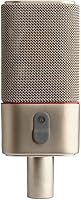
  • Color: The microphone body is finished in champagne, a distinctive neutral tone that differentiates it visually from standard matte-black condenser designs.
  • Included Accessories: The studio set includes a spider shock mount, standard microphone clip, foam windshield, and a rigid carry case for transport and storage.
  • Power Source: The microphone is powered entirely via phantom power through the XLR connection and does not require batteries or an external power supply.
  • Manufacturer: Austrian Audio is headquartered in Vienna, Austria, and both engineers and manufactures the OC818 capsule and body at its Vienna facility.

Related Reviews

Warm Audio WA-47jr Large-Diaphragm Condenser Microphone
86%
93%
Sound Quality
85%
Build Quality
88%
Ease of Use
92%
Value for Money
75%
Portability
More
Aston Microphones Origin
85%
94%
Build Quality
89%
Vocal Clarity
92%
Instrument Response
71%
Internal Pop Filtering
91%
Price-to-Performance Ratio
More
Aston Microphones Spirit Large Diaphragm Multi-Pattern Condenser Microphone
88%
92%
Sound Quality
89%
Build Quality
85%
Ease of Use
91%
Value for Money
93%
Versatility (Polar Patterns)
More
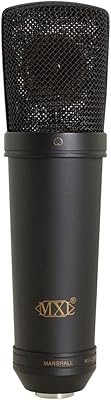
MXL 2003A Large-Diaphragm Condenser Microphone
77%
78%
Sound Character
61%
Self-Noise Level
82%
Build Quality
84%
Value for Money
86%
Included Accessories
More
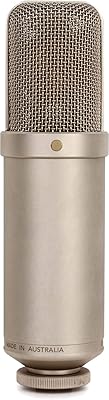
Rode NT2000 Large-Diaphragm Condenser Microphone
87%
93%
Sound Quality
90%
Versatility of Polar Patterns
88%
Build Quality & Durability
85%
Ease of Use
80%
Noise Rejection
More
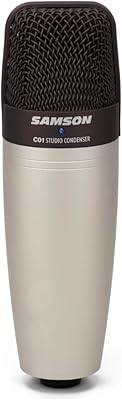
Samson C01
Samson C01
84%
93%
Build Quality
86%
Vocal Clarity
82%
Ambient Noise Rejection
91%
Value for Money
74%
Internal Shock Mounting
More
Audio-Technica PRO37 Small Diaphragm Condenser Microphone
87%
91%
Sound Quality
89%
Versatility for Studio and Live Use
88%
Build Quality
93%
Handling High SPL
85%
Microphone Placement Flexibility
More
Neumann TLM 103 Large-Diaphragm Condenser Microphone
88%
96%
Sound Transparency
94%
Self-Noise Performance
93%
Build Quality
91%
SPL Handling & Headroom
83%
Sensitivity & Preamp Friendliness
More
Rode NTK
Rode NTK
77%
94%
Vocal Tone & Warmth
91%
Self-Noise & Signal Clarity
88%
Build Quality & Durability
54%
Stand & Mounting Requirements
61%
Ease of Setup
More
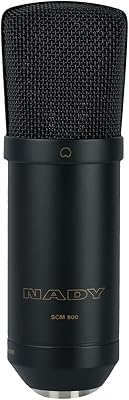
Nady SCM-800 Large Diaphragm Condenser Microphone
82%
90%
Value for Money
88%
Sound Quality
85%
Build Quality
84%
Ease of Use
82%
Portability
More
Neumann TLM 193 Large-Diaphragm Condenser Microphone
87%
93%
Sound Quality
90%
Build Quality
87%
Noise Isolation
84%
Ease of Use
89%
Durability
More

FAQ

The OC818 connects via a standard XLR cable and requires 48V phantom power, which virtually every modern audio interface provides. As long as your interface has a decent preamp and a phantom power switch, you are ready to go. That said, this is a transparent, revealing microphone, so a weak or noisy preamp will limit what the capsule can deliver.

The app is entirely optional. You can adjust the polar pattern directly on the microphone body itself using the controls built into the mic. The Polar Pilot app just adds the convenience of doing it remotely from your phone, which is particularly useful when the mic is overhead or otherwise out of easy reach during a session.

Most users find it works well in straightforward setups, but Bluetooth connectivity between the app and the mic is powered via phantom power, which is a slightly unconventional arrangement. A minority of users have reported pairing hiccups or occasional dropped connections, particularly on busier wireless environments. For critical sessions, it is worth testing the connection beforehand rather than relying on it without a check.

Yes, and you do not need two units purchased together as a matched pair. Austrian Audio designed the OC818 so that any two units, bought separately at any time, will behave consistently with each other in cardioid mode. You can also pair it with the more affordable OC18 if budget is a consideration and you only need cardioid stereo.

The Austrian Audio OC818 Large-Diaphragm Condenser Microphone is well suited to home studio vocal work, but with one honest caveat: its transparency means it will clearly capture the character of your recording room. In a well-treated space it sounds outstanding on a wide range of voices. In an untreated room with noticeable reflections, you may want to address acoustics before investing at this level.
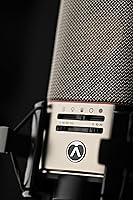
It is a genuinely solid accessory. The spider mount does a good job isolating the capsule from mechanical vibrations transferred through the mic stand, which matters more than many people expect — footsteps, desk bumps, and HVAC rumble all transmit through stands. Users have noted it feels well-constructed rather than a cheap afterthought, which is not always the case with bundled mounts.

It works very well for podcasting, especially if you want pattern flexibility — switching to a tighter cardioid pattern helps reject room noise, while omnidirectional works well for roundtable conversations. Whether the investment makes sense depends on how seriously you take production quality. For a professional podcast that competes on audio quality, this Austrian condenser justifies itself. For casual or hobby podcasting, there are more practical options at lower price points.

The OC818 has a low self-noise floor, which means it is well suited to capturing quiet sources like fingerpicked acoustic guitar, whispered vocals, or delicate strings without a noticeable hiss floor intruding on the recording. Paired with a clean preamp, recordings of quiet sources come out with a natural, open character rather than a noisy background.

The build quality is solid enough for live and touring use, and Austrian Audio does position the OC818 for broadcast and live applications alongside studio work. The included carry case offers reasonable protection for transport. That said, any large-diaphragm condenser benefits from careful handling — it is not as rugged as a dynamic microphone designed specifically for stage abuse.

There is a mild one, mostly around understanding how polar patterns affect sound pickup and room rejection. If you have only ever recorded in fixed cardioid, the idea of continuously variable patterns can feel unfamiliar at first. A bit of experimentation in your specific room goes a long way. Austrian Audio provides documentation and the Polar Pilot app interface is fairly intuitive once connected, which helps flatten that curve fairly quickly.

Where to Buy