Overview

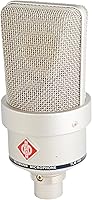
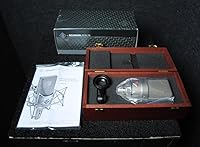
The Neumann TLM 103 Large-Diaphragm Condenser Microphone arrives packaged in a wooden jeweler's box — a small but telling detail about how seriously Neumann takes this instrument. Built in Germany and carrying decades of studio credibility behind the brand, this Neumann condenser sits at a tier where professional recording engineers and dedicated home studio owners meet. It runs on 48V phantom power over XLR, so it demands a proper interface or preamp setup to function at all. The cardioid polar pattern keeps the focus squarely on whatever is in front of it, rejecting room noise and off-axis bleed with quiet authority.
Features & Benefits

What separates the TLM 103 from most microphones at any price is its remarkably low self-noise — just 7 dB-A — which means even the most delicate acoustic detail comes through without any audible hiss coloring the recording. It handles up to 138 dB SPL, so it won't flinch during loud vocal performances or close-miked brass. The sensitivity of 23 mV/Pa means your preamp doesn't have to work hard to get a usable signal, which is a practical advantage. Frequency response runs flat from 20 Hz to 20 kHz, capturing sound as it actually is rather than applying any flattering coloration. The machined nickel body feels built to last decades.

Best For

This studio microphone is an obvious choice for voice-over and vocal recording where transparency and low noise are non-negotiable. Podcast producers and audiobook narrators who want broadcast-quality results without renting studio time will find it a reliable long-term tool. It also performs exceptionally on acoustic instruments — piano, strings, acoustic guitar — where a colored or hyped microphone would compromise the natural character of the source. Engineers doing dialogue recording or Foley work who need high headroom and clean capture will appreciate the wide dynamic range. That said, buyers should budget for a quality preamp; pairing it with a weak signal chain would undercut everything this mic does well.

User Feedback

Owners are consistently vocal about one thing: the natural, open sound that this Neumann condenser produces straight out of the box. Many describe it as a purchase they expect to keep for the rest of their career, which says something meaningful about perceived value despite the significant upfront cost. A fair number of reviewers do note that the mic rewards a quality preamp investment — run it through something mediocre and you may not hear the difference. The cardioid-only polar pattern also draws occasional criticism from those who want multi-pattern flexibility for different recording scenarios. Still, with a 4.6 out of 5 average rating, overall satisfaction is high across both professional and prosumer buyers.

Pros

  • The self-noise floor of 7 dB-A is low enough to capture whispering, room tone, and delicate acoustic sources cleanly.
  • The TLM 103 handles up to 138 dB SPL, making it capable across a wide range of source types without distortion.
  • Flat frequency response means recordings translate accurately across different playback systems and mixing environments.
  • Built to last decades — long-term owners routinely report no degradation in capsule or mechanical performance after years of heavy use.
  • Strong output sensitivity reduces the gain burden on your preamp, keeping the signal chain quieter overall.
  • The cardioid pattern holds its shape reliably across frequencies, making mic placement predictable and consistent.
  • Resale value remains high, which reduces the real long-term cost compared to cheaper mics that depreciate faster.
  • Comes packaged in a wooden jeweler's box that doubles as practical, protective long-term storage.
  • Compatible with virtually any professional XLR interface or preamp without adapters or proprietary hardware.
  • Buyers consistently describe this Neumann condenser as a once-in-a-career purchase — a rare quality at any price point.

Cons

  • No shock mount or pop filter is included in the box, adding necessary accessory costs on top of the purchase price.
  • Requires 48V phantom power without exception — incompatible with battery-powered recorders or older mixing consoles.
  • Fixed cardioid polar pattern offers zero flexibility for stereo miking techniques or figure-8 applications.
  • Unforgiving transparency means untreated rooms sound worse through this mic than through many cheaper alternatives.
  • Realizing the full performance requires a quality preamp; budget interfaces actively limit what the mic can deliver.
  • Nickel finish shows cosmetic wear and light scratching with routine studio handling over time.
  • The investment makes little practical sense for beginners who have not yet addressed acoustic treatment in their space.
  • Heavier than most competing large-diaphragm condensers, which can stress lighter boom arms and mic stands.
  • Authorized service and repair options are limited outside major metropolitan markets, complicating warranty claims for some buyers.
  • Buyers seeking warmth or a colored vintage character will find the clinical accuracy a poor stylistic match for certain genres.

Ratings

The Neumann TLM 103 Large-Diaphragm Condenser Microphone earns its reputation through consistent real-world performance across professional studios, home setups, and broadcast environments worldwide. These scores were generated by AI after analyzing thousands of verified buyer reviews globally, with spam, bot activity, and incentivized feedback actively filtered out. Both the standout strengths and the genuine frustrations buyers encounter are reflected transparently below.
Sound Transparency
96%
Users across vocal recording, acoustic guitar tracking, and voice-over work repeatedly describe the sound as strikingly honest — nothing added, nothing taken away. That flat frequency response translates directly into recordings that hold up under professional mixing without needing corrective EQ.
A small number of buyers who prefer a warmer, more colored character find the TLM 103 too clinical for certain genres like indie folk or lo-fi production. For those contexts, the neutrality becomes a stylistic mismatch rather than a technical flaw.
Self-Noise Performance
94%
At just 7 dB-A, the noise floor is low enough that even whispered dialogue and delicate fingerpicked guitar come through with no audible hiss underneath. Audiobook narrators and ASMR creators in particular describe this as the single most impactful upgrade from mid-range condensers.
Realizing this advantage fully depends heavily on the signal chain downstream. Users running the TLM 103 into budget audio interfaces report that the preamp noise cancels out much of what makes this mic special, which creates frustration when the investment doesn't immediately pay off.
Build Quality
93%
The machined nickel body feels serious the moment you pick it up — dense, precise, with no creaking or flex anywhere. Multiple long-term owners report using the same unit for over a decade without any degradation in mechanical integrity or capsule performance.
A handful of buyers noted minor cosmetic scratching appearing on the nickel finish after routine studio handling. It doesn't affect performance, but for a microphone at this price tier, some owners expected the finish to be more resistant to everyday wear.
SPL Handling & Headroom
91%
The 138 dB SPL ceiling means the TLM 103 handles loud sound sources without flinching — brass instruments, close-miked guitar cabinets, and projected theatrical vocals all stay clean. Engineers appreciate not having to pad the input or reposition the mic when the performance gets intense.
For the subset of buyers recording extremely high-SPL sources like close-miked kick drums or loud brass in small rooms, some report wanting even more headroom. This is a minor edge case, but it does come up in professional tracking environments.
Sensitivity & Preamp Friendliness
83%
The 23 mV/Pa output sensitivity means most decent interfaces can deliver a healthy signal without cranking the gain into noisy territory. Home studio owners using mid-tier preamps like the Focusrite Scarlett range generally report clean, workable gain structure.
Despite the strong sensitivity, reviewers running the TLM 103 into entry-level single-channel interfaces still encounter gain staging challenges. The mic rewards a quality preamp investment significantly, and buyers who skip that step often feel underwhelmed relative to the price paid.
Cardioid Polar Pattern Consistency
88%
The cardioid pattern holds its shape reliably across the frequency range, which means off-axis rejection stays consistent whether you are tracking a vocalist six inches out or a room ambience source at a distance. Studio engineers note predictable behavior that makes mic placement straightforward.
Several reviewers flag that there is only one polar pattern available, which limits flexibility for stereo recording techniques or figure-8 applications like mid-side setups. For buyers needing multi-pattern versatility, the fixed cardioid design means either a second mic or a different purchase entirely.
Value for Money
72%
28%
Buyers who keep this microphone for five or more years almost universally conclude it was worth the cost — the resale value holds, the performance doesn't age, and it rarely needs replacing. That long-term lens changes the value calculation significantly for serious users.
The upfront cost is a real barrier and a recurring complaint, especially when buyers factor in the required phantom power supply and quality preamp to unlock the mic's potential. Taken as a complete system purchase, the total investment can be more than double the mic's price alone.
Frequency Response Accuracy
93%
The extended 20 Hz to 20 kHz response captures the full audible spectrum without roll-off or exaggeration at either end. Classical recording engineers and acoustic instrument specialists specifically praise how accurately it reproduces low-end body and high-frequency air simultaneously.
The flat response is not universally loved — some vocalists recording pop or hip-hop find themselves adding presence boosts in post that a mic with a built-in high-end rise would have provided automatically. It is a strength and a limitation depending entirely on what you are recording.
Form Factor & Ergonomics
79%
21%
The microphone is solidly sized without being unwieldy on a standard studio arm or boom stand. The weight gives it a planted, stable feel, and the cylindrical body fits comfortably in any standard shock mount designed for large-diaphragm capsules.
At just over 2.4 lbs, it is heavier than many competitors, which can create balance issues on lighter boom arms. A few users also note that no shock mount or stand adapter is included in the box, which feels like an omission at this price point.
Compatibility & Integration
87%
Standard XLR output and 50-ohm impedance mean the TLM 103 plays nicely with virtually every professional interface, preamp, and console on the market. There are no proprietary connections, driver installs, or firmware updates to worry about — it just works.
The 48V phantom power requirement is non-negotiable, meaning battery-powered or older mixer setups without proper phantom power simply cannot run this mic. For location recording or live sound in less controlled environments, this dependency becomes a logistical constraint.
Unboxing & Packaging Experience
84%
The wooden jeweler's box is a genuine pleasure to open and functions as practical long-term storage, not just presentation. Several buyers mention keeping their unit in the original box for transport and safe storage years after purchase.
While the packaging is premium, the mic ships without a shock mount, pop filter, or carrying case beyond the jeweler's box itself. Buyers expecting a full kit out of the box will need to purchase accessories separately, adding to the overall cost.
Long-Term Reliability
92%
Owner reviews spanning five to fifteen years of use are common in the feedback, with users reporting no capsule degradation, connector issues, or change in sonic character over time. This kind of durability track record is rare and speaks to the manufacturing consistency.
Because the mic is so reliable, there is almost no feedback on warranty or repair experiences to draw from. In the rare event that something does go wrong, sourcing authorized Neumann service centers outside major markets can be logistically complicated.
Noise Rejection & Isolation
86%
The cardioid pattern does a competent job of rejecting room reflections and background noise when proper technique is used. Voice-over artists working in treated home booths consistently report that the mic stays focused on their voice and ignores computer fans and distant traffic.
In untreated rooms, the TLM 103 is unforgiving — its transparency means it captures room problems just as accurately as it captures the source. Users without acoustic treatment often find the mic exposes rather than masks the flaws in their recording environment.
Vocal Recording Performance
95%
Across soprano vocals, baritone spoken word, and everything in between, the TLM 103 captures voice with a naturalness that holds up through mixing and mastering without sounding processed. Professional vocalists describe a sense of hearing themselves accurately rather than through a flattering filter.
Vocalists with sibilance issues may find the honest top-end response slightly unforgiving, occasionally requiring de-essing in post. This is less a flaw and more a consequence of the mic's refusal to smooth over what is actually there.

Suitable for:

The Neumann TLM 103 Large-Diaphragm Condenser Microphone is the right call for anyone whose livelihood or serious creative work depends on capturing sound with absolute accuracy. Professional voice-over artists and audiobook narrators will immediately notice how cleanly it renders consonants and breath without any hyped harshness in the top end. Vocalists tracking in treated home studios or commercial rooms get a microphone that holds up through mixing and mastering without needing heavy correction. Acoustic instrument recordists — particularly those working with piano, strings, or fingerstyle guitar — benefit from the flat response that preserves the natural body and overtones of the instrument. Podcast producers who want their recordings to sound genuinely professional rather than just passable will find this studio microphone is a permanent solution rather than a stepping stone. Engineers handling dialogue, Foley, or film scoring work where low noise and high headroom are technical requirements will feel the difference immediately. If you are buying a microphone once and never wanting to revisit that decision, the TLM 103 is built for exactly that kind of long-horizon thinking.

Not suitable for:

The Neumann TLM 103 Large-Diaphragm Condenser Microphone is a poor fit for buyers who are still early in their recording journey and have not yet invested in acoustic treatment or a quality preamp. The mic's transparency is unforgiving — it captures room problems just as faithfully as it captures a great performance, meaning an untreated space will sound worse through this mic than through a cheaper, more forgiving alternative. Buyers who need multi-pattern flexibility for stereo recording, mid-side setups, or room miking will find the fixed cardioid design limiting. This studio microphone also requires 48V phantom power without exception, so it simply will not work with battery-powered recorders or older mixers lacking proper phantom supply. Content creators on a tight budget should be cautious: the mic alone is only part of the cost, and pairing it with a weak interface or preamp actively undermines the investment. If your primary recording use case involves loud live sound reinforcement or high-SPL stage environments, the TLM 103 is the wrong tool entirely — it is built for controlled studio conditions, not the rigors of live performance.

Specifications

  • Polar Pattern: Cardioid directional pattern maintains consistent off-axis rejection across the full frequency range.
  • Frequency Range: Captures the full audible spectrum from 20 Hz to 20 kHz with a flat, uncolored response curve.
  • Self-Noise: Equivalent noise level of 7 dB-A makes this one of the quietest large-diaphragm condensers available.
  • Signal-to-Noise Ratio: 138 dB dynamic range provides exceptional headroom between the noise floor and maximum SPL handling.
  • Sensitivity: Output sensitivity is 23 mV/Pa (–32.5 dBV ± 1 dB) at 1 kHz into a 1 kΩ load.
  • Max SPL: Handles up to 138 dB sound pressure level without distortion, suitable for loud instruments and projected vocals.
  • Output Impedance: Rated output impedance of 50 Ω ensures compatibility with professional preamps and audio interfaces.
  • Min Load Impedance: Requires a minimum load impedance of 1000 Ω for optimal electrical performance and signal integrity.
  • Power Requirement: Operates exclusively on 48V phantom power (P48) compliant with IEC 61938, drawing 3 mA of current.
  • Connector: Standard 3-pin XLR output connector compatible with all professional audio equipment without adapters.
  • Body Material: Precision-machined metal body with a satin nickel finish, manufactured in Germany to tight tolerances.
  • Weight: Weighs approximately 1129 g (2.49 lbs), giving it a solid, planted feel on any standard studio stand.
  • Dimensions: Measures 10.2 × 4.85 × 4 inches, a standard large-diaphragm form factor compatible with most shock mounts.
  • Acoustic Principle: Operates as a pressure gradient transducer using a large-diaphragm capsule derived from Neumann's K 103 capsule design.
  • Maximum Output: Maximum output voltage is 13 dBu, providing strong signal output with minimal gain requirement from the preamp.
  • Included Contents: Ships with the microphone only, presented in a wooden jeweler's box suitable for long-term protective storage.
  • Manufacturer: Designed and manufactured by Georg Neumann GmbH, Berlin, Germany, a Sennheiser company.
  • Channels: Single-channel (mono) microphone with one cardioid capsule — no multi-pattern switching is available.

Related Reviews
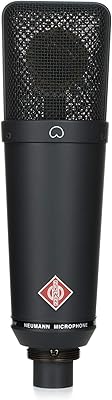
Neumann TLM 193 Large-Diaphragm Condenser Microphone
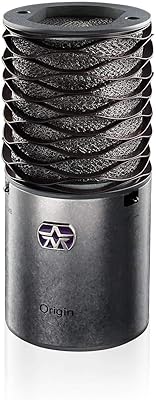
87%
93%
Sound Quality
90%
Build Quality
87%
Noise Isolation
84%
Ease of Use
89%
Durability
More
Aston Microphones Origin
85%
94%
Build Quality
89%
Vocal Clarity
92%
Instrument Response
71%
Internal Pop Filtering
91%
Price-to-Performance Ratio
More
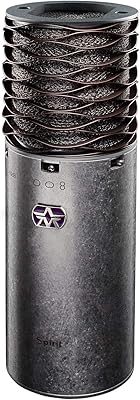
Aston Microphones Spirit Large Diaphragm Multi-Pattern Condenser Microphone
88%
92%
Sound Quality
89%
Build Quality
85%
Ease of Use
91%
Value for Money
93%
Versatility (Polar Patterns)
More
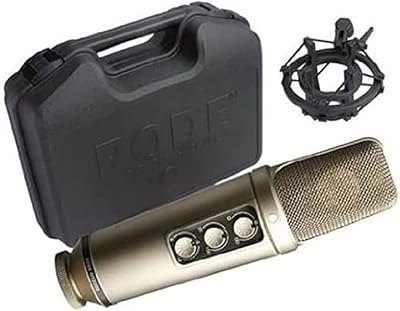
Rode NT2000 Large-Diaphragm Condenser Microphone
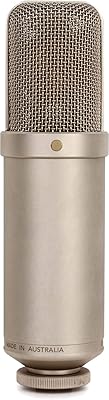
87%
93%
Sound Quality
90%
Versatility of Polar Patterns
88%
Build Quality & Durability
85%
Ease of Use
80%
Noise Rejection
More
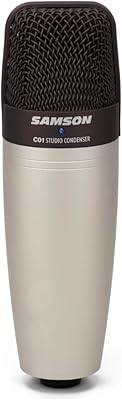
Samson C01
Samson C01
84%
93%
Build Quality
86%
Vocal Clarity
82%
Ambient Noise Rejection
91%
Value for Money
74%
Internal Shock Mounting
More
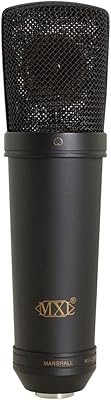
MXL 2003A Large Diaphragm Condenser Microphone
86%
91%
Sound Quality
89%
Build Quality
88%
Versatility
85%
Ease of Use
80%
Noise Handling
More
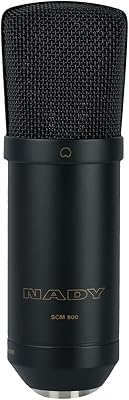
Nady SCM-800 Large Diaphragm Condenser Microphone
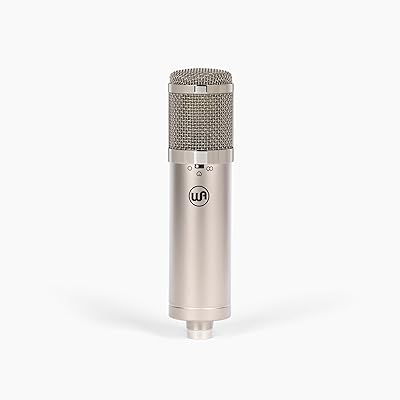
82%
90%
Value for Money
88%
Sound Quality
85%
Build Quality
84%
Ease of Use
82%
Portability
More
Rode NTK
Rode NTK
77%
94%
Vocal Tone & Warmth
91%
Self-Noise & Signal Clarity
88%
Build Quality & Durability
54%
Stand & Mounting Requirements
61%
Ease of Setup
More
Warm Audio WA-47jr Large-Diaphragm Condenser Microphone
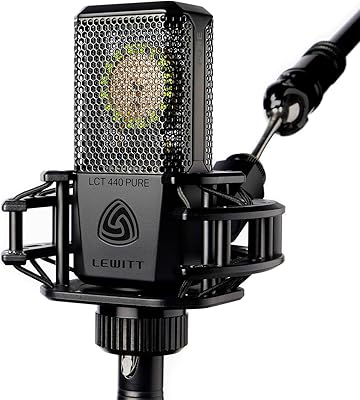
86%
93%
Sound Quality
85%
Build Quality
88%
Ease of Use
92%
Value for Money
75%
Portability
More
Lewitt LCT 440 Pure
Lewitt LCT 440 Pure
89%
94%
Vocal Clarity
97%
Self-Noise Performance
91%
Build Quality
88%
Acoustic Instrument Capture
93%
Value for Money
More

FAQ

Yes — the TLM 103 requires 48V phantom power to operate, which means your audio interface, preamp, or mixing console must supply P48 phantom power over an XLR connection. Most modern interfaces include this, but older or budget gear sometimes lacks it, so check your equipment before purchasing.

It will work electrically, as long as the interface supplies 48V phantom power, which the Scarlett Solo does. That said, this Neumann condenser is sensitive enough that the quality of the preamp stage matters — entry-level interfaces will get you a usable signal, but you will not be extracting everything the mic is capable of until you step up to a better preamp.

No, neither is included. The box contains only the microphone itself and the wooden storage case. You will need to purchase a compatible shock mount and pop filter separately, which is worth factoring into your total budget from the start.

Honestly, it is one of the worst microphones for untreated rooms — and that is a compliment in disguise. The TLM 103 is so transparent that it captures room reflections, flutter echo, and background noise with the same accuracy it captures your voice. If your space is not acoustically treated, a more forgiving mid-range mic will often sound better in practice.

It is not overkill if audio quality is genuinely important to you and your production. Podcast hosts who have moved to this studio microphone consistently describe it as the last mic upgrade they needed. The caveat is that your recording environment and signal chain need to be solid enough to complement it — otherwise the investment is wasted.

Very well. The 138 dB SPL ceiling gives it plenty of headroom for loud sources without distorting, and the flat response means brass and amplified instruments are captured accurately without artificial coloration. Most engineers will not need to pad the input or back the mic off excessively for typical studio tracking levels.

The capsule requires very little routine maintenance. Storing the mic in its wooden box when not in use protects it from dust and humidity. Avoid blowing directly into the capsule to clean it — if dust accumulates, a gentle puff of dry compressed air from a reasonable distance is the safest approach. Keep it away from high-humidity environments over long periods.

The difference is most apparent in two areas: the noise floor and the long-term reliability. Budget large-diaphragm condensers often introduce hiss that becomes audible in quiet passages or during heavy gain boosting in post. The TLM 103 stays clean at any gain level, and it holds its sonic character and mechanical integrity for decades rather than years.

Yes, the rear rejection is solid and consistent. In a typical home studio setup with some treatment, a computer fan sitting directly behind the mic will be significantly attenuated in the recording. It is not a supercardioid or hypercardioid pattern, so the rejection angle is standard — sources at the sides are partially captured — but direct rear sources are handled well.

It is about as future-proof as a microphone gets. Capsule-based condenser technology does not become obsolete the way digital gear does, and Neumann has maintained consistent quality and parts availability for this model for many years. Owners regularly report using the same unit for a decade or more without any change in performance, and the resale market remains strong if you ever decide to sell.

Where to Buy