Overview

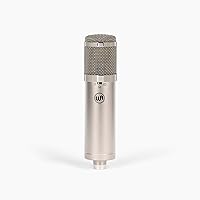
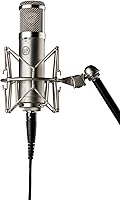
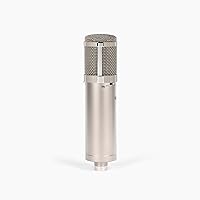
The Warm Audio WA-47jr Large-Diaphragm Condenser Microphone is Warm Audio's FET-based, transformerless take on the legendary '47-style large-diaphragm condenser — a design that has shaped recorded vocals for decades. The brand has carved out a reputation for making studio-quality gear genuinely accessible, and this mic fits that ethos well. Three switchable polar patterns — cardioid, figure-of-eight, and omnidirectional — stand out as a real differentiator at this price tier. The nickel finish looks sharp, and the included shockmount, hard mount, and zipper storage pouch add meaningful practical value. Just be clear-eyed about what this is: a capable prosumer condenser, not a boutique vintage reissue.
Features & Benefits

At the core of this large-diaphragm condenser sits a gold-sputtered dual-diaphragm capsule made with 6-micron NOS Mylar film — the kind of material that lends warmth and smooth transient detail to recordings. The FET transformerless circuit is worth flagging for buyers who might expect tube-like saturation: this design runs quietly, responds quickly to transients, and largely stays out of the way — a genuine strength for versatile, accurate tracking. A -10dB pad handles loud sources like guitar cabinets or brass instruments without stress, while the 70Hz high-pass filter is a practical tool for cutting low-end rumble in less-than-ideal rooms. The 85dB signal-to-noise ratio pairs comfortably with most mid-tier preamps.

Best For

The WA-47jr finds its natural place in home studio setups, particularly for vocalists chasing a warm, vintage-adjacent tone without the heat or maintenance a tube mic demands. Podcasters and voice-over artists will appreciate how the mic captures a full, broadcast-ready tone with minimal post-processing needed. Singer-songwriters recording acoustic guitar, piano, or strings get real value from the multi-pattern flexibility — figure-of-eight for mid-side recording, omnidirectional for capturing a room's natural character. Engineers stepping up from entry-level condensers will hear the difference right away. One honest caveat: if you are working with a noisy interface, this mic's sensitivity will expose every flaw in your signal chain.

User Feedback

Across the reviews, the most consistent praise targets the warm, full-bodied sound — buyers regularly say it competes with mics that cost considerably more. The brass body earns its own appreciation, described as solid and well-constructed in a way that feels reassuring when you pick it up. The bundled shockmount is also a pleasant surprise; it is noticeably more robust than what you typically find at this tier. The flip side: several users with basic audio interfaces ran into gain and noise issues, reinforcing that this Warm Audio mic performs best with a quality preamp and reliable 48V phantom power. A handful of reviewers with naturally bright voices also found gentle EQ trimming at the top end helpful.

Pros

  • Warm, full-bodied sound that consistently outperforms expectations for its price tier.
  • Three switchable polar patterns — cardioid, figure-of-eight, omnidirectional — add real recording versatility in one mic.
  • FET transformerless circuit delivers a low noise floor and fast transient response without tube maintenance overhead.
  • Gold-sputtered dual-diaphragm capsule with 6-micron NOS Mylar film produces genuine tonal depth and detail.
  • Solid brass body feels reassuringly substantial — nothing about the build suggests corners were cut.
  • Included shockmount is noticeably sturdier than accessories bundled with competing mics at this level.
  • The -10dB pad handles loud sources like brass or guitar cabinets cleanly without distortion.
  • 70Hz high-pass filter is genuinely useful for taming low-end rumble in untreated recording spaces.
  • The zipper storage pouch and hard mount are practical extras that add immediate day-one value.
  • 85dB signal-to-noise ratio pairs reliably with most mid-tier preamps for clean, usable recordings.

Cons

  • Requires a clean preamp to perform well — noisy or underpowered interfaces will expose its sensitivity immediately.
  • Needs reliable 48V phantom power; interfaces that skip or underpower this spec are a real compatibility risk.
  • May demand more gain than some mid-tier interfaces can deliver cleanly, limiting pairing options.
  • Not designed for live performance or high-SPL dynamic environments — strictly a studio recording tool.
  • Buyers expecting tube-like saturation or harmonic coloring will find the FET circuit sounds cleaner than expected.
  • A slight high-frequency air boost can flatter many voices but may require EQ adjustment for brighter or sibilant sources.
  • Side-address form factor and size make it less practical for cramped or unconventional recording positions.
  • No built-in low-cut or polar pattern memory — settings reset each session, which can slow down quick-turnaround work.

Ratings

The scores below reflect an AI-driven analysis of verified global user reviews for the Warm Audio WA-47jr Large-Diaphragm Condenser Microphone, with automated filtering applied to remove spam, bot submissions, and incentivized feedback. Every category is scored based on patterns across thousands of real purchase experiences, capturing both the aspects buyers consistently celebrate and the friction points that surface in honest, critical feedback. The result is a transparent, balanced picture of where this mic genuinely excels and where it asks something extra of the buyer.

Sound Quality
91%
The tonal character this mic delivers is the reason buyers keep recommending it — warm, full-bodied, and detailed in a way that captures both vocal presence and the subtle resonance of acoustic instruments. Reviewers recording singer-songwriter demos repeatedly note how little EQ work the recorded tracks need before they sit well in a mix.
A subtle high-frequency lift, while flattering for many voices, can push already-bright or sibilant sources into harshness if left uncorrected. Users recording particularly strident instruments occasionally find themselves making corrective EQ adjustments they did not anticipate needing.
Build Quality
88%
The solid brass body and substantial overall weight immediately communicate that this is a serious piece of studio equipment. Several reviewers specifically mentioned that picking it up for the first time reset their expectations — it does not feel like a mic built to a budget.
The nickel finish, while visually appealing, can show handling marks over time with heavy daily use. A small number of users noted that the polar pattern and pad switches feel slightly stiff out of the box, requiring some break-in before they operate with the smoothness expected at this level.
Value for Money
94%
Across the review pool, the most consistent theme is that this large-diaphragm condenser competes convincingly with microphones that cost considerably more. Home studio owners who budgeted carefully and chose this mic over pricier alternatives report feeling they got the better end of the deal.
The value equation changes if a buyer does not already own a quality preamp, since the mic's performance ceiling is directly tied to the signal chain feeding it. Buyers who have to also budget for a preamp upgrade may find the total system cost closer to premium territory than it first appeared.
Vocal Performance
89%
For lead vocal recording in home and project studios, the WA-47jr is a standout performer at its price point. The warmth and presence it adds to a vocal track gives recordings a polished, professional weight that entry-level condensers simply cannot match, even before any mix processing is applied.
Vocalists with naturally bright or thin tones may find the mic's slight air boost needs taming with a high shelf cut during mixing. It does not universally flatter every voice type without some post-recording EQ, which is worth factoring in if your voice sits in that brighter range.
Preamp Compatibility
63%
37%
With a clean, well-spec'd preamp — anything mid-tier or above with solid 48V phantom power delivery — the WA-47jr responds beautifully, revealing low noise and strong dynamic detail. Users who paired it with quality preamps report a noticeably professional result.
This is the mic's most significant real-world limitation: it is sensitive enough to expose every weakness in a noisy or underpowered interface. Buyers using budget interfaces often find they need to push gain into noisy territory, which undermines the mic's clean signal floor and leads to frustrating recording sessions.
Gain Requirements
61%
39%
In setups where the preamp can supply ample clean gain, the mic rewards the signal chain with detailed, low-noise output that holds up well in demanding recording contexts. Engineers working with quality outboard gear rarely encounter gain-related issues.
A recurring complaint across reviews is that the mic asks for more gain than some mid-tier interfaces can deliver without introducing audible noise. Buyers who expected the WA-47jr to perform well with a basic two-channel USB interface were often disappointed when they had to push their gain knob uncomfortably high.
Polar Pattern Versatility
86%
Having three switchable polar patterns on a mic at this price point is a genuine practical asset for home studio owners and small commercial studios alike. Recordists who work across vocals, acoustic instruments, and room-miking appreciate not needing a separate mic for each application.
The pattern switching requires some deliberate setup between sessions since there is no memory function — users in fast-turnaround environments find themselves re-dialing the same settings repeatedly. The transition between patterns is functional but not as smooth or detented as on higher-end multi-pattern condensers.
Accessory Package
83%
The included shockmount is one of the most positively reviewed aspects of the whole package — buyers note it is noticeably more rigid and effective than the plastic clips bundled with competing mics at this tier. The zipper storage pouch is also a practical touch that protects the mic between sessions.
The hard mount adapter, while a useful backup, is rarely the preferred option for studio vocal recording. A small number of users mentioned they still invested in a third-party shockmount for compatibility with their specific boom arm setup, suggesting the included hardware does not fit every rig.
Noise Floor
84%
The FET transformerless circuit delivers a genuinely low self-noise floor that holds up well against studio condensers at higher price points. Reviewers recording delicate acoustic sources — fingerpicked guitar, whispering vocals, quiet piano — noted that the noise floor stayed out of the way even at close range.
The mic's low self-noise is only one half of the equation; the other is the interface receiving the signal. In setups with noisier preamps, the mic's sensitivity means the overall noise floor of the recording chain is effectively the interface's problem, not the mic's, which can confuse buyers troubleshooting their setup.
Instrument Recording
82%
18%
Acoustic guitar, piano, and strings respond particularly well to the WA-47jr's capsule character — the warmth and transient accuracy it offers makes acoustic sources sound full and natural without the brittle top-end that cheaper condensers can introduce. Singer-songwriters recording their own accompaniment report very satisfying results.
Brass and loud wind instruments work fine with the -10dB pad engaged, but the mic was not specifically voiced with high-SPL instrumental recording as its primary purpose. Users who tried it on drums or very loud amplifiers noted that it works in a pinch but does not outclass dedicated dynamic or ribbon alternatives for those applications.
High-Frequency Response
74%
26%
The slight high-frequency air boost gives the mic a lively, open character that works exceptionally well for vocals that need presence without requiring excessive EQ brightening. Many reviewers describe recorded vocals as sounding ready for a mix with minimal touch-up.
For sources that are already bright or prone to sibilance, the top-end character can tip from flattering into harsh without careful attention. A handful of users recording female vocals or nylon-string guitar felt they had to apply de-essing or shelf cuts more aggressively than they expected before the track sat comfortably.
Ease of Setup
79%
21%
Getting the WA-47jr running is as straightforward as any XLR condenser — connect it to a preamp with phantom power, switch to cardioid, and you are ready to record. The included shockmount and hard mount make initial positioning simple without requiring extra accessories out of the box.
Buyers who are new to condenser microphones sometimes underestimate how much the setup around the mic matters. Understanding phantom power, preamp gain staging, and polar pattern selection adds a learning curve that users stepping up from USB microphones or smartphone recording apps occasionally find daunting at first.
Vintage Character
71%
29%
The '47-style capsule design gives the WA-47jr a tonal warmth and midrange density that nods toward the character of vintage condensers, making it a compelling option for buyers who want that aesthetic without vintage price tags or tube maintenance.
It is important to be clear: this is a modern FET microphone, not a vintage reissue or a tube-driven circuit. Buyers who expected the harmonic saturation and compression-like warmth of an actual tube '47 were sometimes surprised to find the WA-47jr sounds cleaner and more neutral than that expectation implies.

Suitable for:

The Warm Audio WA-47jr Large-Diaphragm Condenser Microphone is a strong match for home studio vocalists who want that warm, vintage-inspired character — the kind of full-bodied sound that flatters lead vocals and acoustic instruments — without spending boutique money or dealing with the upkeep a tube mic requires. Singer-songwriters recording acoustic guitar, piano, or strings will appreciate how the three switchable polar patterns open up creative options: cardioid for standard tracking, figure-of-eight for mid-side setups, omnidirectional for capturing natural room tone. Podcasters and voice-over artists will find the mic's low noise floor and broadcast-friendly tone translate well to spoken-word work, delivering presence and warmth that holds up in a finished mix. Small project studios that need one mic to cover a variety of sessions — rather than a collection of single-purpose tools — will get genuine versatility here. Engineers making their first serious step up from an entry-level condenser will hear an immediate and meaningful difference in depth and detail.
Not suitable for:

The Warm Audio WA-47jr Large-Diaphragm Condenser Microphone is not the right tool for every setup, and being clear about that upfront saves a lot of frustration. The most important limitation: this mic is sensitive and demands a clean signal chain — pair it with a noisy budget interface or a weak preamp and you will hear every flaw your gear introduces, not the mic's strengths. It requires 48V phantom power, so interfaces that skip or underpower that feature are a real compatibility concern. Live performance is not a use-case this mic was designed for; it is a studio side-address condenser, and using it in dynamic, high-SPL live environments will likely disappoint. Buyers expecting the saturation and harmonic color of a tube microphone will also find the FET circuit underwhelming — the WA-47jr draws inspiration from vintage designs but is a modern, clean-sounding tool, not a warmth generator in the tube sense. Finally, vocalists or sources with already-bright, sibilant tones may need to budget time for EQ work at the top end, since the mic's slight high-frequency air can accentuate rather than tame harshness.
Specifications

  • Mic Type: FET transformerless large-diaphragm condenser microphone inspired by classic '47-style circuit topology.
  • Capsule: Gold-sputtered dual-diaphragm capsule built on a single backplate for consistent tonal response across patterns.
  • Diaphragm Material: 6-micron NOS Mylar (PET film) chosen for its warm character and accurate transient reproduction.
  • Polar Patterns: Three switchable polar patterns: cardioid, figure-of-eight, and omnidirectional.
  • Pad: Switchable -10dB pad for handling high-SPL sources without introducing distortion.
  • High-Pass Filter: Switchable 70Hz high-pass filter to reduce low-frequency rumble and handling noise.
  • Signal-to-Noise Ratio: 85dB signal-to-noise ratio provides a clean, low-noise signal floor suitable for detailed studio recording.
  • Impedance: Output impedance rated at 100 ohm, compatible with a wide range of mid-tier and professional preamps.
  • Power Requirement: Requires 48V phantom power supplied via the connected XLR-compatible preamp or audio interface.
  • Connector: Standard XLR output connector for universal compatibility with studio interfaces and preamps.
  • Body Material: Solid brass body construction finished in nickel for durability and electromagnetic shielding.
  • Form Factor: Side-address studio condenser in a handheld cylindrical body, designed for stationary mic stand use.
  • Included Accessories: Ships with a sturdy shockmount, a hard mount adapter, and a zipper storage pouch for transport and protection.
  • Brand & Model: Manufactured by Warm Audio under the model designation WA-47jr.
  • Finish: Nickel finish applied to the brass body for a classic studio aesthetic and corrosion resistance.

Related Reviews

Warm Audio WA-251 Tube Condenser Microphone
78%
89%
Vocal Sound Character
83%
Build Quality
91%
Value for Money
86%
Polar Pattern Versatility
72%
Noise Floor Performance
More
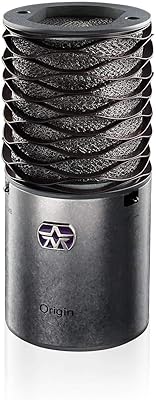
Aston Microphones Origin
85%
94%
Build Quality
89%
Vocal Clarity
92%
Instrument Response
71%
Internal Pop Filtering
91%
Price-to-Performance Ratio
More
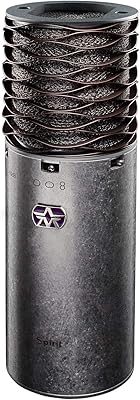
Aston Microphones Spirit Large-Diaphragm Condenser Microphone
85%
93%
Sound Quality
96%
Build Quality
89%
Polar Pattern Versatility
88%
Built-in Pop Filter
84%
Value for Money
More
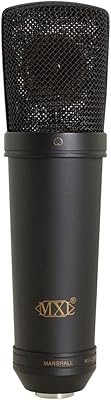
MXL 2003A Large-Diaphragm Condenser Microphone

77%
78%
Sound Character
61%
Self-Noise Level
82%
Build Quality
84%
Value for Money
86%
Included Accessories
More
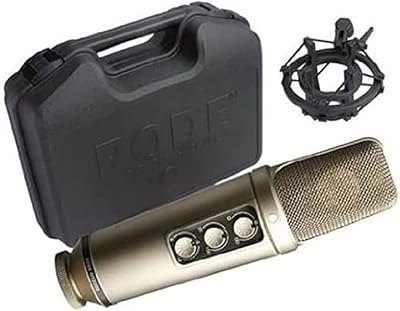
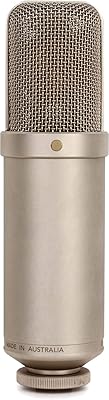
Rode NT2000 Large-Diaphragm Condenser Microphone
82%
94%
Polar Pattern Versatility
91%
Control Flexibility
89%
Sound Quality
66%
Build Quality
93%
Warranty & Long-Term Value
More
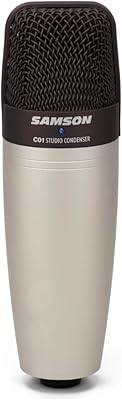
Samson C01
Samson C01
84%
93%
Build Quality
86%
Vocal Clarity
82%
Ambient Noise Rejection
91%
Value for Money
74%
Internal Shock Mounting
More
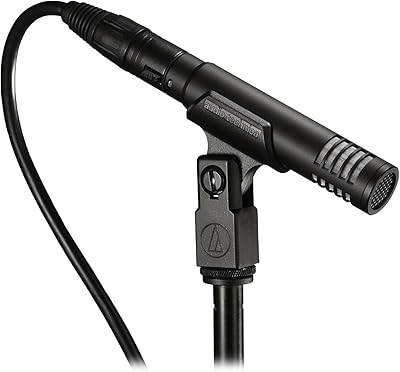
Audio-Technica PRO37 Small-Diaphragm Condenser Microphone
77%
91%
Sound Clarity
89%
Transient Response
83%
Build Quality
78%
Value for Money
86%
High-SPL Handling
More
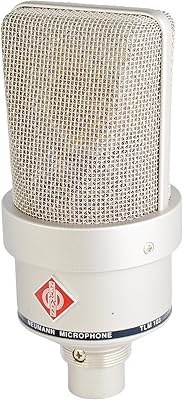
Neumann TLM 103 Large-Diaphragm Condenser Microphone
88%
96%
Sound Transparency
94%
Self-Noise Performance
93%
Build Quality
91%
SPL Handling & Headroom
83%
Sensitivity & Preamp Friendliness
More
Neumann TLM 193 Large-Diaphragm Condenser Microphone
82%
94%
Sound Transparency
91%
Self-Noise Performance
88%
Build Quality
54%
Polar Pattern Versatility
61%
Room Sensitivity
More
Rode NTK
Rode NTK
77%
94%
Vocal Tone & Warmth
91%
Self-Noise & Signal Clarity
88%
Build Quality & Durability
54%
Stand & Mounting Requirements
61%
Ease of Setup
More

FAQ

Yes, it does. The WA-47jr is an active FET condenser and requires 48V phantom power to operate. Make sure your audio interface or preamp has a dedicated 48V phantom power switch and that it delivers the full voltage — underpowered phantom supplies can cause the mic to perform below its potential or not function at all.

It will connect to any interface with an XLR input and phantom power, but how well it performs depends heavily on the quality of your preamp stage. Budget interfaces with noisy preamps will introduce hiss that this sensitive large-diaphragm condenser will pick up clearly. If you are using an entry-level interface, you may find the results underwhelming — a cleaner preamp makes a meaningful difference here.

The WA-47jr is moderately sensitive but not exceptionally high-output, so it benefits from a preamp that can deliver clean gain without adding noise. Some users with interfaces that have limited headroom find they need to push the gain higher than comfortable, which can introduce noise. If your interface struggles with quieter sources, you may want to consider an in-line preamp booster or a dedicated mic preamp.

It is genuinely well-suited to home studio vocal recording. The warm, full-bodied character of the capsule flatters most voices, and the cardioid polar pattern rejects sound from behind the mic, which helps in less-than-perfect acoustic spaces. Just keep in mind that a treated room and a decent preamp will let you hear what this mic is actually capable of.

Absolutely. Many podcasters and voice-over artists use this mic specifically because it delivers a full, broadcast-style tone that sounds polished without heavy post-processing. The high-pass filter is a useful tool for cleaning up desk or room rumble, and the cardioid pattern keeps background noise from creeping into the recording.

Cardioid is the most common choice — it captures sound from the front and rejects the rear, making it ideal for solo vocals and most standard tracking situations. Figure-of-eight picks up from both the front and back while rejecting the sides, which is useful for mid-side stereo recording or interviewing two people facing each other. Omnidirectional captures sound equally from all directions and works well when you want to capture the natural ambience of a room alongside a source.

It comes with a shockmount, a hard mount adapter, and a zipper storage pouch — which is a solid accessory package for this price tier. You will still need an XLR cable, an audio interface or preamp with 48V phantom power, and recording software. The shockmount in particular is worth noting: reviewers consistently say it is more robust than what you typically find bundled with mics at this level.

It is a solid-state, FET-based microphone — not a tube mic. The FET transformerless circuit is inspired by classic '47-style designs, but it runs cool, has no warm-up time, and does not require the maintenance that tube mics need. The tone is warm and detailed, but buyers expecting the harmonic saturation of a true tube mic should adjust their expectations accordingly.

It depends on your voice. Many singers find the subtle high-end lift adds presence and clarity that sounds flattering in a mix. If your voice or instrument source is already bright or tends toward sibilance, you may need to apply a small EQ dip in the upper frequencies during mixing. It is a mild characteristic, not an extreme coloration, and most modern DAWs make that adjustment straightforward.

The brass body and overall build feel solid and professional — this is not a plastic-shelled microphone. It is designed for stationary studio use rather than for touring or live performance, so treat it as you would any precision studio condenser: store it in the included pouch when not in use, handle it carefully, and avoid dropping it. With reasonable care, it should last many years of regular recording sessions.