Rode NT2000 Large-Diaphragm Condenser Microphone
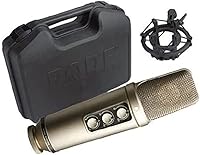
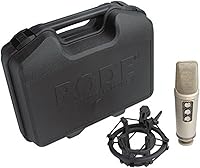
Overview
The Rode NT2000 Large-Diaphragm Condenser Microphone is one of the more enduring studio mics to come out of Australia's RØDE Microphones, earning its place on recording desks since 2005. What sets this studio condenser apart isn't just its large-diaphragm capsule — it's the continuously variable controls for polar pattern, pad, and high-pass filter that give recordists a level of flexibility most condensers simply don't offer. It sits comfortably above entry-level territory, competing with serious prosumer options, and comes bundled with a shock mount plus a 10-year warranty, a combination that points to genuine long-term value rather than a one-time purchase.
Features & Benefits
The defining characteristic of the NT2000 is that its polar pattern control isn't a simple three-position switch — it's a smooth continuous dial that lets you tune precisely the pickup behavior you need, whether a tighter cardioid for isolating a vocalist or a figure-8 for capturing a room's natural ambience. The same logic applies to its variable pad and high-pass filter, which you can adjust to the source rather than accepting a fixed setting. Internal capsule shock mounting keeps handling noise from coloring the signal, and a 78 dB signal-to-noise ratio means this variable-pattern mic stays quiet even when pushed. It connects via standard XLR with phantom power — no proprietary connectors, no surprises.
Best For
This studio condenser makes the most sense for people who record a variety of sources and don't want to swap between multiple microphones. A home studio owner tracking vocals, acoustic guitar, and the occasional voice-over session will get real mileage from its pattern flexibility. Podcasters and broadcasters working in less-than-ideal spaces will appreciate dialing back the pickup arc to reject ambient noise or rolling off low-end rumble on the fly. Voice actors — who often prioritize clean, quiet recordings above almost everything else — tend to gravitate toward this mic for its low self-noise. Project studio engineers wanting professional-grade versatility without a locker full of specialized mics will also find it earns its spot.
User Feedback
Owners consistently praise the feel of the dials — there's something satisfying about controls that sweep smoothly rather than clicking between fixed positions, and buyers note the variable features actually deliver in real sessions, not just on paper. Those running higher-quality preamps report noticeably better results, so the NT2000 does reward investment in the surrounding signal chain. On the critical side, a fair number of buyers point out that the plastic construction feels underwhelming given the price point — it's a legitimate observation worth knowing before you buy. The mic's 831g weight also demands a sturdy, heavy-duty stand. That said, many long-term owners specifically cite the 10-year warranty as something that has genuinely paid off, which speaks to real-world durability.
Pros
- Continuously variable polar pattern gives you precise control no fixed three-position switch can match.
- Variable pad and high-pass filter let you adapt the mic to the source rather than working around it.
- Internal capsule shock mounting reduces handling noise without depending entirely on an external cradle.
- The included shock mount adds practical value right out of the box, no extra purchase needed.
- A 78 dB signal-to-noise ratio keeps recordings impressively quiet, even in demanding sessions.
- Pairs exceptionally well with quality preamps, rewarding those who invest in their signal chain.
- The 10-year warranty is unusually long and has genuinely paid off for many long-term owners.
- Standard XLR connectivity fits naturally into any professional or semi-professional studio setup.
- Has maintained market relevance since 2005, which says something real about its sustained usefulness.
- The tactile feel of the control dials is consistently praised — they feel deliberate, not cheap.
Cons
- The plastic body feels underwhelming at this price point compared to metal-housed competitors.
- Buyers running budget preamps or entry-level interfaces may not hear the full capability of this mic.
- At 831 grams, it demands a sturdy, heavy-duty stand — a flimsy boom arm will not hold it securely.
- The variable controls add complexity that beginners may not need or fully use.
- Phantom power is required, so a USB-only interface without XLR support will not work here.
- The investment is harder to justify if your recording needs are limited to a single, consistent use case.
- Some buyers report the variable dials can be accidentally nudged if not locked in place during sessions.
- Compared to similarly priced options with all-metal construction, the exterior finish may show wear over time.
Ratings
The scores below reflect an AI-driven analysis of verified global buyer reviews for the Rode NT2000 Large-Diaphragm Condenser Microphone, with spam, bot-generated, and incentivized submissions actively filtered out to protect accuracy. Each category captures what real owners consistently praised and where genuine frustrations surfaced — nothing is softened or cherry-picked. Both the standout strengths and the recurring pain points are represented transparently so you can make a fully informed decision.
Polar Pattern Versatility
Control Flexibility
Sound Quality
Build Quality
Warranty & Long-Term Value
Ease of Setup
Compatibility
Value for Money
Self-Noise Performance
Polar Pattern Accuracy
Weight & Handling
Included Accessories
Preamp Pairing Sensitivity
Longevity & Reliability
Suitable for:
The Rode NT2000 Large-Diaphragm Condenser Microphone is a strong match for anyone who records a variety of source types and wants a single, versatile microphone to handle them all. Home studio owners who move between vocals, acoustic instruments, and voice-over work will get the most out of the continuously variable polar pattern, since they can fine-tune the pickup angle for each session rather than committing to a fixed setting. Voice actors and narrators, in particular, tend to thrive with this studio condenser — its low self-noise keeps recordings clean, and a tight cardioid setting does a respectable job rejecting room reflections. Podcasters and broadcasters working in untreated rooms will also appreciate the ability to dial back the pickup arc and roll off low-end rumble on the fly. Project studio engineers who want professional-grade flexibility without investing in multiple specialty microphones will find the NT2000 earns its place across a wide range of recording scenarios, and the 10-year warranty makes it an easier long-term commitment.
Not suitable for:
The Rode NT2000 Large-Diaphragm Condenser Microphone is not the right choice for every buyer, and it is worth being honest about where it falls short. If you are just starting out and primarily need a single cardioid microphone for straightforward vocal or podcast recording, the variable controls — while genuinely useful — may be more than you actually need, and the investment may not be fully justified. Buyers who place a high value on premium physical build quality should be aware that the plastic body is a genuine point of contention among owners; at this price level, competing microphones offer metal housings that simply feel more substantial in hand. The mic also weighs in at around 831 grams, which means a lightweight or low-quality stand is not going to cut it, adding a potential extra cost to the setup. Additionally, this variable-pattern mic rewards better preamps upstream — those running budget audio interfaces may not hear the full benefit, and pairing it with entry-level gear is arguably not getting the most out of the purchase.
Specifications
- Polar Pattern: The polar pattern is continuously variable, allowing a smooth sweep between omnidirectional, cardioid, and figure-8 pickup configurations.
- Pad: The attenuation pad is continuously variable, letting you reduce the input signal level to suit loud sources without switching between fixed steps.
- High-Pass Filter: The high-pass filter is continuously variable, enabling precise low-end roll-off to reduce room rumble or handling noise as needed.
- Signal-to-Noise Ratio: The signal-to-noise ratio is 78 dB, indicating very low self-noise suitable for quiet acoustic sources and demanding studio applications.
- Impedance: Output impedance is rated at 200 Ohm, which is standard for professional condenser microphones and compatible with typical preamp inputs.
- Connector: The microphone uses a standard XLR connector and requires 48V phantom power from a compatible audio interface or preamp.
- Capsule Type: The microphone uses a large-diaphragm condenser capsule with internal shock mounting to reduce mechanical vibration and handling resonance.
- Frequency Response: The microphone captures audio up to 20 kHz, covering the full range of human hearing and most musical and vocal applications.
- Weight: The microphone body weighs 831 g (approximately 1.83 lbs), requiring a heavy-duty mic stand or boom arm for secure placement.
- Dimensions: The product dimensions are listed as 16 x 6 x 13 inches, reflecting the mic body and its packaged footprint.
- Power Source: The NT2000 is powered entirely via phantom power through the XLR connection and is not compatible with USB-only audio interfaces.
- Included Accessories: The package includes a shock mount, which is designed specifically for this microphone and eliminates the need for an immediate third-party purchase.
- Warranty: RØDE provides a 10-year manufacturer warranty on this microphone, which is significantly longer than the industry standard for condenser microphones.
- Body Material: The microphone housing is constructed from plastic, which keeps weight manageable but has drawn mixed reactions from buyers expecting an all-metal build.
- Color: The microphone is finished in silver, giving it a professional studio appearance consistent with RØDE's flagship condenser lineup.
- Brand Origin: The NT2000 is designed and manufactured by RØDE Microphones, an Australian audio company with a long-standing reputation in the professional recording market.
- Channels: The microphone operates as a single-channel (mono) input device, as is standard for studio condenser microphones of this type.
- Availability: The NT2000 has been available since October 2005, making it one of the longer-running models in RØDE's studio condenser catalog.
Related Reviews
Rode NTK
Rode NT1-A
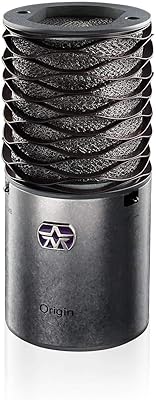
Aston Microphones Origin
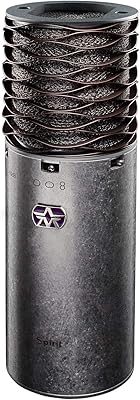
Aston Microphones Spirit Large-Diaphragm Condenser Microphone
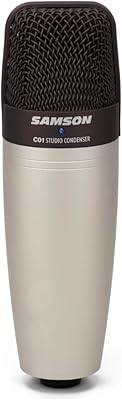
Samson C01

Rode NT3 Medium-Diaphragm Condenser Microphone
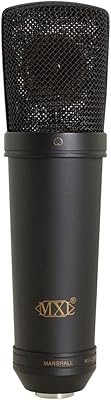
MXL 2003A Large-Diaphragm Condenser Microphone
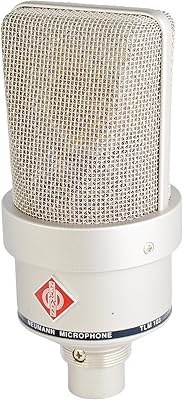
Neumann TLM 103 Large-Diaphragm Condenser Microphone
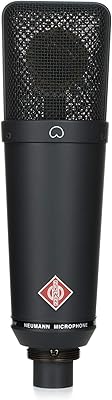
Neumann TLM 193 Large-Diaphragm Condenser Microphone
