Overview

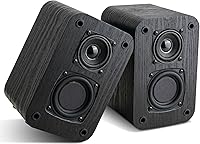
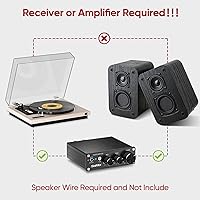
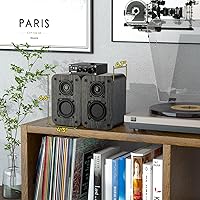
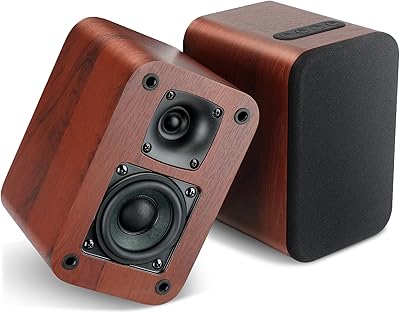
The RIOWOIS DS6500M Passive Bookshelf Speakers arrived in late 2023 as a compact, budget-friendly option for anyone building a desktop stereo or home theater setup from scratch. One thing to understand upfront: these are passive speakers, meaning they need an external amplifier or receiver to work — they won't produce sound on their own. That's not a flaw, just how passive speakers operate. The wood grain cabinet finish gives them a warmer, more considered look than the plain black plastic common at this price point, making them a reasonable fit for living rooms and home offices where appearance matters alongside audio.

Features & Benefits

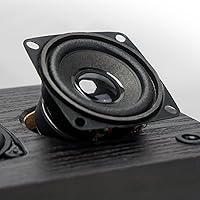
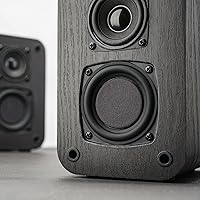
Inside each cabinet, a 2.75-inch woofer and a 2-inch tweeter work as a team — the woofer handles the midrange and what bass these small drivers can produce, while the tweeter takes care of higher frequencies. That split-driver arrangement generally delivers cleaner, more defined sound than a single full-range driver of comparable size. The 6-ohm impedance and 5–20W input range make the RIOWOIS passive speakers easy to match with most entry-level stereo amplifiers. Frequency response runs from 65Hz to 20kHz, which is honest and practical for everyday listening — just don't expect much below 65Hz. A wall-mount kit ships in the box; speaker wire and an amplifier do not, which is standard for passive pairs but worth budgeting for separately.

Best For

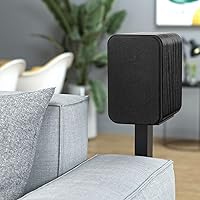
These bookshelf speakers are well-suited to a specific type of buyer: someone setting up their first stereo system, pairing speakers with a turntable, or upgrading from a TV's built-in audio on a modest budget. Their compact footprint — just under 6.6 inches tall — makes them practical for desks, shelves, and smaller rooms. The included wall-mount hardware adds flexibility for tight spaces where shelf placement isn't an option. That said, this speaker pair isn't the right tool for bass-heavy genres or filling a large room at high volume. Think vocal-forward music, podcasts, or movies at moderate listening levels where clarity matters more than raw power.

User Feedback

With a 4.4-star average across more than 370 ratings, the RIOWOIS passive speakers have earned a solid standing for the price tier. Buyers consistently highlight mid and high clarity — voices, acoustic instruments, and higher-frequency detail come through well. The cabinet's wood grain finish gets repeated compliments for looking more expensive than it is. On the downside, a handful of reviewers were caught off guard by the missing speaker wire — a minor cost to budget for, but it trips up first-time passive speaker owners. A few buyers also note that low-end performance is thin, which is expected from 2.75-inch drivers. Pair them with a decent amplifier and realistic expectations, and most users come away satisfied.

Pros

  • Mid-range and vocal clarity punches above the price tier for casual and near-field listening.
  • The wood grain cabinet finish looks noticeably more premium than plastic alternatives at a similar cost.
  • A dual-driver design with a dedicated tweeter delivers more balanced sound than single full-range budget speakers.
  • 6-ohm impedance makes the RIOWOIS passive speakers broadly compatible with most entry-level stereo amplifiers.
  • Wall-mount hardware ships in the box, saving an extra purchase and enabling flexible room placement.
  • Compact footprint fits cleanly on desks, small shelves, and entertainment units without dominating the space.
  • Frequency response up to 20kHz handles everyday listening content — podcasts, vocals, and acoustic music — with solid definition.
  • Over 370 verified ratings with a 4.4-star average suggests consistent satisfaction among budget-tier buyers.
  • Shockproof tabs and rear hooks make wall installation straightforward with standard household tools.

Cons

  • No speaker wire or amplifier included — first-time passive speaker buyers often underestimate the additional cost involved.
  • Bass extension below 65Hz is essentially absent, making low-frequency content sound thin and underwhelming.
  • Cabinet walls are relatively thin and produce audible resonance when pushed to higher volume levels.
  • The wood grain surface is a printed wrap, not real veneer — it looks good from a distance but feels less premium up close.
  • High-volume listening introduces distortion fairly quickly, limiting the speakers to small-room and near-field use.
  • No Bluetooth or wireless connectivity of any kind — incompatible with modern all-wireless setups.
  • Sound quality is noticeably dependent on amplifier quality; a weak amp will significantly undermine the output.
  • Tweeter brightness on sibilant vocal sounds can cause listening fatigue during extended high-volume sessions.
  • Long-term durability data is limited given the product only launched in late 2023.
  • Mounting angle is fixed with no adjustment, which can make precise speaker aiming on walls more difficult.

Ratings

The RIOWOIS DS6500M Passive Bookshelf Speakers have been scored across 12 performance and usability categories by our AI rating system, which analyzed verified global buyer reviews while actively filtering out incentivized, bot-generated, and low-quality feedback. Scores reflect real-world usage patterns from casual desktop listeners to first-time home theater builders, capturing both what these speakers do well and where they fall short for specific use cases.

Sound Clarity
83%
Reviewers consistently single out vocal reproduction and mid-range definition as genuine strengths for the price tier. Spoken-word content like podcasts and audiobooks comes through with noticeable sharpness, and acoustic instruments retain reasonable texture at moderate volumes.
Clarity starts to soften at higher playback levels, where the tweeter can edge toward brightness rather than true detail. Listeners who switch from even modestly better speakers will notice a ceiling on resolution that the small drivers cannot overcome.
Bass Performance
51%
49%
For a 2.75-inch woofer in a cabinet this compact, the low-end output is adequate for background music and TV dialogue. Buyers who stream pop or folk at desk volume report that the bass feels present enough not to feel hollow.
The 65Hz floor is a real limitation — kick drums lack weight and bass guitars lose body quickly. Hip-hop, electronic, and cinematic soundtracks all expose the physical constraints of these small drivers, and no amount of amplifier power corrects that.
Value for Money
88%
At this price point, getting a dual-driver passive pair with a wall-mount kit already included is genuinely competitive. Buyers building a starter stereo system on a tight budget consistently rate these as a smart entry point that outperforms similarly priced plastic-cabinet alternatives.
The value equation shifts if you factor in the cost of a compatible amplifier and speaker wire, both of which need to be purchased separately. First-time buyers who overlook that can find the total spend meaningfully higher than the sticker price suggests.
Build Quality
76%
24%
The wood grain cabinet finish is the standout physical attribute — it feels more considered and solid than the glossy plastic shells common at this price. Cabinet seams are tidy and the drivers sit flush without visible gaps, which signals reasonable assembly standards for the category.
Close inspection reveals the wood grain is a printed wrap rather than real veneer, and the cabinet walls are relatively thin. At higher volumes there is some low-level resonance from the enclosure itself, which more rigid construction would suppress.
Design & Aesthetics
84%
The black-and-wood-grain combination reads as neutral and tasteful, slotting comfortably into home offices, living room shelves, and entertainment units without demanding attention. Multiple reviewers specifically mention these look more expensive than they are when placed on a desk or bookshelf.
The design is conservative by intention, so buyers wanting a bolder or more modern speaker aesthetic will find this pair unremarkable. The rectangular cabinet profile is also fairly generic and does nothing to distinguish the brand visually at a distance.
Amplifier Compatibility
81%
19%
The 6-ohm impedance and 5–20W input range are forgiving enough to work with a wide spread of budget integrated amplifiers and stereo receivers. Users pairing these with entry-level Lepai or Fosi Audio amps report stable, clean output without clipping at normal listening volumes.
Underpowered or low-quality amplifiers do expose a thinness in the sound that better amplification can partially resolve. The speakers are sensitive to the quality of the amp chain — they are not particularly forgiving of harsh or distorting source equipment.
Ease of Setup
79%
21%
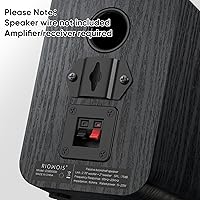
Physical setup is straightforward once you have an amplifier: strip the wire ends, insert them into the binding posts, and you are running. The binding posts accept bare wire cleanly and the terminals are clearly labeled for polarity.
The passive nature of the speakers adds a setup step that active or Bluetooth alternatives skip entirely. First-time passive speaker buyers sometimes report unexpected friction when realizing they need to source both an amplifier and speaker wire before they can hear anything at all.
Wall-Mount Usability
86%
The included mounting hardware is a genuine convenience — the rear hooks and shockproof pads make wall installation straightforward and stable. Reviewers in smaller apartments specifically praise the ability to free up desk or shelf space without buying third-party brackets.
The mounting system works best on drywall with standard screw anchors, and a few users report that the angle of the hooks offers limited adjustment for optimizing speaker aim. Cable management after wall mounting can also get untidy without additional planning.
High-Frequency Performance
77%
23%
The dedicated 2-inch tweeter handles cymbals, string harmonics, and high vocal registers with reasonable airiness for a speaker at this size and cost. Listeners who prioritize clarity in the upper registers over bass depth tend to rate this aspect positively.
Extended high-frequency listening at louder volumes can feel slightly fatiguing, particularly with compressed streaming audio. The tweeter lacks the refinement to avoid a mild edge on sibilant sounds — an S or T in vocals can occasionally feel sharper than natural.
Volume Capability
62%
38%
For desktop or near-field listening in a small to medium room, these bookshelf speakers produce enough output to fill the space at comfortable levels. Background listening while working or watching TV at normal conversational volume is well within their range.
Push them toward high volume and distortion creeps in noticeably, particularly in the bass frequencies. They are not suited for parties, large rooms, or any listening context where the speakers need to project across more than roughly 150 square feet.
Packaging & Accessories
73%
27%
The box arrives with both speakers, wall-mount hardware, and mounting fasteners all intact and reasonably well-protected. Including the wall-mount kit in the base price is a practical touch that avoids an unnecessary extra purchase for buyers who want ceiling or wall placement.
Speaker wire is not included, which is standard for passive pairs but is not communicated boldly enough in all purchase channels, catching some buyers off guard. There is no printed quick-start guide explaining the amplifier requirement, which contributes to occasional return rates among first-time buyers.
Longevity & Durability
67%
33%
Short-term durability reports from buyers are generally positive — the drivers and cabinet show no early signs of wear or failure under normal use conditions. The brand includes a limited warranty and claims 24/7 after-sales support, which adds some confidence for a newer label.
The product has only been on the market since late 2023, so long-term durability data is genuinely limited. Cabinet resonance at high volumes and the thin enclosure walls raise questions about how well the build holds up after extended high-power use over several years.

Suitable for:

The RIOWOIS DS6500M Passive Bookshelf Speakers are a strong match for anyone assembling a first stereo system on a modest budget who already owns — or is actively shopping for — an entry-level amplifier or receiver. Turntable enthusiasts looking to step up from a record player's built-in speakers will find these a practical and visually appealing upgrade without a steep investment. They also work well as a TV audio improvement in bedrooms or smaller living rooms where the goal is clearer dialogue and more defined sound rather than cinematic bass. Compact enough for a desktop setup, they suit home office workers who want better audio during long workdays without cluttering their workspace. The included wall-mount hardware makes this speaker pair a smart pick for renters or small-apartment dwellers who need to maximize floor and shelf space.

Not suitable for:

The RIOWOIS DS6500M Passive Bookshelf Speakers are not the right choice for buyers who want a plug-and-play solution — you will need a separate amplifier, receiver, and speaker wire before these produce a single note, which adds both cost and setup effort. Anyone who primarily listens to bass-heavy genres like hip-hop, EDM, or orchestral film scores will find the low-end output thin and ultimately unsatisfying; the 2.75-inch woofer simply cannot move enough air to deliver meaningful bass weight. These speakers are also not built for large rooms or high-volume listening — they start to distort under pressure and lack the output to fill a space much beyond 150 square feet comfortably. Bluetooth-only households have no use case here either, as connectivity is strictly wired. Audiophiles or experienced listeners with a reference point for quality bookshelf speakers in a higher price bracket will likely find the resolution ceiling frustrating over time.

Specifications

  • Speaker Type: Passive bookshelf design requiring an external amplifier or receiver to operate — no built-in amplification.
  • Woofer: 2.75-inch dynamic driver handles mid-range frequencies and limited low-end reproduction.
  • Tweeter: 2-inch dedicated driver manages high-frequency output for improved clarity in vocals and upper harmonics.
  • Power Handling: Peak power handling reaches 30W, with a recommended continuous input range of 5–20W.
  • Impedance: 6-ohm nominal impedance ensures broad compatibility with most entry-level stereo amplifiers and receivers.
  • Frequency Response: Rated frequency response spans 65Hz to 20kHz, covering everyday listening content but not deep sub-bass.
  • Sensitivity: Sound pressure level is rated at 75dB, indicating moderate efficiency suited to near-field and small-room use.
  • Dimensions: Each speaker cabinet measures 6.6″ in height, 4.7″ in width, and 4.3″ in depth.
  • Weight: The pair weighs approximately 4.8 pounds total, making them lightweight enough for wall mounting without heavy anchoring.
  • Cabinet Material: Enclosures feature a 3D wood grain textured wrap over an MDF-style cabinet, finished in black.
  • Connectivity: Connection is via bare-wire or banana-plug binding posts on the rear panel — no Bluetooth or wireless capability.
  • Channel Config: Configured as a 2.0 stereo pair, compatible with stereo amplifiers or as front/surround channels in a multi-speaker setup.
  • Mounting: Wall-mount kit is included in the box, with rear hooks and shockproof pads for secure wall installation.
  • Driver Type: Both the woofer and tweeter use dynamic driver technology, which is standard for passive speakers in this price range.
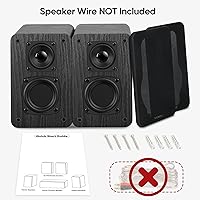
  • Included Items: Package contains one pair of passive bookshelf speakers and a wall-mount accessory kit — speaker wire and amplifier are not included.
  • Warranty: Covered by a limited manufacturer warranty, with after-sales support provided by Saiyin Electronic Co., Ltd.
  • Color: Available in a single black colorway with a wood grain cabinet finish.
  • Waterproofing: These speakers carry no waterproof or water-resistant rating and are intended strictly for indoor dry environments.

Related Reviews
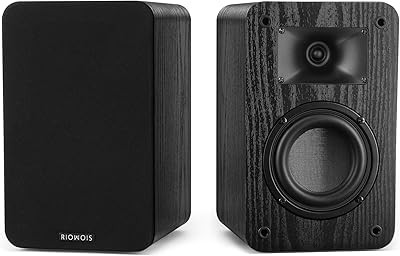
Riowois DS6800M Bookshelf Speakers
83%
85%
Sound Quality
90%
Ease of Installation
82%
Build Quality
88%
Space-Saving Design
78%
Bass Performance
More
Edifier P12
Edifier P12
78%
83%
Sound Clarity
61%
Bass Performance
79%
Treble Quality
86%
Build Quality
91%
Wall-Mount Bracket
More
Saiyin SDS6400M Passive Bookshelf Speakers
82%
87%
Sound Quality
89%
Ease of Installation
82%
Design & Aesthetics
80%
Build Quality
91%
Value for Money
More
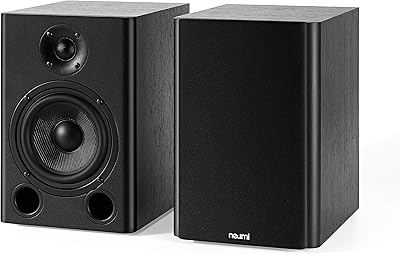
Audioengine P4 Passive Bookshelf Speakers
84%
92%
Sound Quality
89%
Build Quality
80%
Ease of Setup
74%
Bass Response
82%
Compatibility with Amplifiers
More
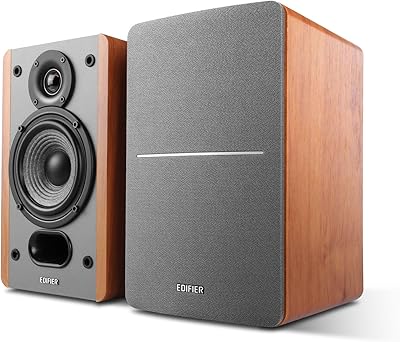
NEUMI BS5 Passive Bookshelf Speakers
85%
89%
Sound Quality
91%
Build Quality
78%
Ease of Setup
92%
Value for Money
84%
Bass Performance
More
Micca OoO Passive Bookshelf Speakers
79%
86%
Sound Clarity
61%
Bass Performance
83%
Build Quality
89%
Design & Aesthetics
88%
Placement Versatility
More
Kanto YU Passive 4″ Bookshelf Speakers (YUP4W)
79%
91%
Sound Neutrality
88%
Treble Quality
67%
Bass Performance
62%
Amplifier Compatibility
84%
Build Quality
More
RIOWOIS DS6701NP Powered Bluetooth Bookshelf Speakers
85%
87%
Sound Quality
93%
Ease of Setup
91%
Connectivity Options
88%
Design & Aesthetics
75%
Bass Performance
More
Micca COVO-S Bookshelf Speakers
76%
83%
Sound Quality
54%
Bass Performance
79%
Build Quality
91%
Value for Money
88%
Midrange Clarity
More
ELAC BS41-BK 4″ Passive Wired Bookshelf Speakers
80%
85%
Sound Quality
90%
Value for Money
92%
Size and Design
75%
Ease of Setup
80%
Build Quality
More

FAQ

You will need a separate amplifier or stereo receiver before these produce any sound. The RIOWOIS DS6500M Passive Bookshelf Speakers have no built-in power source — that is what passive means in this context. Budget for an amplifier and a short length of speaker wire in addition to the speakers themselves.

Any stereo amplifier or receiver with a speaker output rated between 5W and 20W per channel into 6 ohms will work well. Entry-level integrated amps from brands like Fosi Audio, SMSL, or Lepai are popular, affordable pairings. Avoid amplifiers with very high wattage ratings at low impedance, as overpowering a small passive speaker risks damaging the drivers.

Not directly. Phones, laptops, and most TVs do not have speaker-level outputs capable of driving passive speakers. You need an amplifier in between. The exception is a TV or receiver that has dedicated speaker binding posts or a stereo pre-amp output, which can then run into a separate amplifier.

No, speaker wire is not included — this is standard practice for passive speaker pairs, not an oversight. You will need to pick up a short run of 16-gauge or 18-gauge speaker wire separately, which is inexpensive and widely available. Most desktop setups only need a meter or two per speaker.

Honestly, bass is the weakest point of these bookshelf speakers. The 2.75-inch woofer starts rolling off around 65Hz, so kick drums and bass lines will sound thin compared to what you are used to from headphones or larger speakers. For bass-heavy genres, you would either need to add a subwoofer to the setup or consider a different speaker with larger drivers.

Yes, their compact size and included wall-mount hardware actually make them a practical choice as rear surround channels in a modest home theater system. Pair them with a receiver that has surround speaker outputs and they handle ambient sound effects and dialogue well enough for casual movie watching.

Most users find it straightforward. The rear hooks slot onto standard wall screws, and the shockproof pads help keep the cabinet stable once hung. You will need a drill, appropriate wall anchors for your wall type, and a level. The whole process typically takes under 20 minutes per speaker.

No, it is a printed wrap applied over the cabinet — not real wood veneer. That said, the texture and color are convincingly warm and most buyers agree it looks better in person than photos suggest. At close range you can tell it is a surface treatment, but on a shelf or desk it reads as genuinely attractive.

Yes, and this is actually one of their better use cases. Connect your turntable to a phono preamp, run that into a stereo amplifier, and wire these bookshelf speakers to the amp outputs. Vinyl listening at moderate volumes in a small room is well within their capabilities, and the wood grain aesthetic pairs naturally with a record player aesthetic.

At close range — a desk or small room — they sound clean and balanced at moderate listening levels. Once you push them past roughly 70 to 75 percent of your amplifier's volume range, distortion becomes noticeable, particularly in the bass frequencies. These are near-field speakers at heart, and they perform best when you are sitting within a few feet of them rather than trying to fill a large space.