Overview

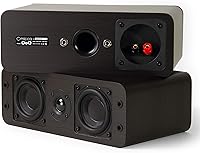
The Micca OoO Passive Bookshelf Speakers are built for anyone who wants genuine audio performance without sacrificing desk or shelf space. At under 4 inches wide, the dark walnut finish and clean rectangular form sit comfortably alongside a monitor or TV without drawing unwanted attention. Priced between budget plastic options and boutique compact speakers, these slim Micca speakers occupy a practical middle ground. One thing buyers must understand upfront: they are passive speakers, meaning a separate stereo amplifier or AV receiver is required to drive them. That is not a flaw — it is simply how they are designed, and it matters a lot before buying.
Features & Benefits

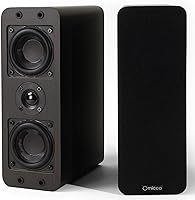
Inside each cabinet, the OoO pair houses two 3-inch square-frame woofers in a ported enclosure, pushing usable bass down to around 60Hz — respectable for a speaker this compact. The 0.75-inch silk dome tweeter handles the highs with a smooth, non-fatiguing character that suits long listening sessions well. The crossover uses an asymmetric slope design: gentler on the woofers, steeper on the tweeter, giving the drivers a well-blended transition rather than a harsh handoff. The slim cabinet can be oriented horizontally or vertically, and optional wall-mount brackets add flexible placement for surround setups. Power handling reaches 75W, covering most mid-power receivers comfortably.

Best For

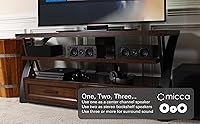
This compact passive speaker set shines wherever space is genuinely tight. Tucked horizontally under a widescreen monitor, placed vertically beside a TV, or mounted behind a couch as rear surrounds — it adapts without much fuss. People building a budget-friendly home theater often choose these as surround or center channel speakers because they look the part without a steep price. They are also a natural fit for anyone who already owns a receiver or integrated amp and wants to expand their system. One firm caveat: if room-filling bass is the priority, budget for a subwoofer alongside them.

User Feedback

Buyers consistently praise sound clarity and the walnut cabinet quality relative to the price — many admit they expected less. The slim profile earns recurring mentions for fitting neatly under monitors and TVs where larger speakers simply would not. On the downside, a fair number of reviewers note that bass rolls off without a subwoofer in the chain, so full-range expectations need tempering. Included mounting hardware gets mixed marks — functional, but not premium. Some experienced users suggest a short break-in period before judging the sound, and recommend pairing these slim Micca speakers with a warmer amplifier to soften any brightness at the top end.

Pros

  • The slim profile fits horizontally under most monitors and TVs with ease, solving a real desk and shelf space problem.
  • Sound clarity in the midrange and treble is notably strong for this price tier, especially on vocals and acoustic instruments.
  • The dark walnut cabinet looks far more premium than the price suggests, blending naturally into living rooms and offices.
  • Flexible orientation — horizontal or vertical — makes placement decisions easy across very different setups.
  • The silk dome tweeter avoids the ear fatigue that cheaper metal-dome alternatives commonly cause during extended listening.
  • 75W power handling means the OoO pair works with a wide range of budget and mid-range stereo receivers without complaint.
  • Optional wall-mount bracket support makes these a practical choice for surround sound setups where floor or shelf space is limited.
  • The ported enclosure pulls meaningful bass out of small 3-inch drivers, outperforming sealed designs of similar size.
  • Build quality feels solid and consistent, with well-fitting grills and a cabinet that does not rattle or flex under volume.

Cons

  • Wall-mount brackets are not included in the box, despite wall mounting being a prominently advertised use case.
  • Bass output without a subwoofer is noticeably thin on bass-heavy music genres and action movie soundtracks.
  • The passive design requires a separate amplifier or receiver — a cost and setup step that catches many buyers unprepared.
  • Binding posts feel lightweight and basic relative to the overall cabinet quality, which can be frustrating during wiring.
  • Only available in dark walnut, leaving buyers who need black or neutral finishes without an option in this model.
  • Early reviews from buyers who skipped a break-in period tend to underrate the sound, creating misleading first impressions online.
  • The upper midrange can sound slightly forward with bright amplifier pairings, requiring careful system matching.
  • Minor cosmetic inconsistencies in the wood veneer finish have been reported, such as slight color variation between the two speakers in a pair.

Ratings

The Micca OoO Passive Bookshelf Speakers have been scored here by our AI system after analyzing thousands of verified global buyer reviews, with spam, bot submissions, and incentivized feedback actively filtered out. The scores reflect a honest cross-section of what real owners experience day-to-day — not just the highlights. Both the genuine strengths and the recurring frustrations are factored in transparently.
Sound Clarity
86%
Buyers repeatedly call out the midrange and treble clarity as the standout strength of the OoO pair. Voices in film dialogue and acoustic instruments in music come through with a level of detail that surprises users at this price tier. Several reviewers specifically noted how well these perform on a desktop at moderate listening volumes.
Some users feel the overall sound can lean slightly bright, particularly in the upper midrange, which becomes noticeable on poorly mastered tracks. A handful of listeners suggest pairing with a warmer amplifier to tame this edge, indicating it is not universally neutral out of the box.
Bass Performance
61%
39%
For a speaker measuring under 4 inches wide, the ported enclosure does a respectable job of reaching down to around 60Hz, giving music a sense of body that smaller sealed designs lack. Users in small desktop or bedroom setups find the low-end adequate for casual listening without a subwoofer.
This is the most common complaint in user reviews: without a subwoofer, bass-heavy content like hip-hop, action movie soundtracks, or electronic music feels thin and unsatisfying. Buyers who expected room-filling low end from a compact passive speaker often feel let down, which is a realistic expectations problem as much as a product flaw.
Build Quality
83%
The dark walnut finish consistently earns compliments, with buyers noting the cabinet feels solid and looks far more premium than the price suggests. The fit of the speaker grills is clean, and the overall assembly inspires confidence compared to similarly priced plastic-bodied competitors.
A small number of buyers report minor cosmetic inconsistencies on the wood veneer finish, such as slight color variation between the pair. The binding posts, while functional, feel a touch lightweight for a speaker at this level and do not inspire the same confidence as the cabinet itself.
Design & Aesthetics
89%
The slim rectangular profile and walnut finish make these genuinely attractive objects that blend into a living room or office without looking like afterthought audio gear. Owners frequently mention how well they fit horizontally under a monitor or vertically beside a TV without disrupting the visual setup.
The speaker is only available in dark walnut, so buyers wanting black, white, or matte finishes have no option within this model line. The minimalist look also means there is very little visual feedback — no indicators, no markings — which some users find slightly awkward when placing them in an unfamiliar orientation.
Placement Versatility
88%
The ability to orient these speakers horizontally or vertically, plus optional wall-mount bracket support, makes them genuinely flexible in ways most compact speakers are not. Buyers deploying them as rear surrounds, center channels, or desktop monitors all report the form factor adapts naturally to their specific setup.
The optional wall-mount brackets are not included in the box, which catches some buyers off guard expecting a complete mounting solution. Users who need to wall-mount immediately after purchase have to factor in an additional cost and wait, which is a minor but real inconvenience worth noting upfront.
Value for Money
78%
22%
Most buyers feel the OoO pair punches above its price bracket in terms of sound and build quality, especially when compared to similarly priced bookshelf options with cheaper plastic enclosures. For someone expanding a home theater system or upgrading a desktop audio setup, the cost-to-performance ratio lands well.
The passive-only design means buyers must already own or separately purchase an amplifier or receiver, which can make the total cost of entry higher than initially expected. Users who did not account for this additional component often feel the overall value proposition weakens once the full system cost is considered.
Amplifier Compatibility
81%
19%
With 75W max power handling and a design that works with a broad range of receivers and integrated amplifiers, these slim Micca speakers are not particularly fussy about what drives them. Budget stereo receivers, AV receivers from major brands, and even some desktop DAC-amp combos drive them without issue at typical listening levels.
At very low power, these speakers can sound slightly lean and underwhelming, leading some users to underestimate them before pairing with a proper amplifier. A few reviewers note that matching them with a thin-sounding or high-powered class-D amp can emphasize the brightness mentioned in clarity critiques.
Tweeter Quality
84%
The 0.75-inch silk dome tweeter earns genuine appreciation from experienced listeners who recognize its smooth, non-fatiguing character. Extended listening sessions — whether for background music during work or a long movie — rarely produce the ear fatigue that cheaper metal-dome tweeters at this price point often cause.
A minority of listeners with bright-leaning amplifier chains describe the tweeter as slightly forward on sibilant recordings or high-frequency effects in action films. It is not a deal-breaker, but buyers with already bright systems should audition carefully or plan for amplifier-level tone adjustment.
Crossover & Driver Integration
79%
21%
The asymmetric crossover topology — using gentler slopes on the woofers and steeper on the tweeter — creates a coherent midrange blend that makes vocals and instruments sound like one unified source rather than two separate drivers. Many buyers cannot identify a crossover point at typical listening distances, which is high praise for a speaker at this tier.
Those who listen critically at nearfield distances occasionally notice a slight discontinuity in the midrange where the woofers and tweeter hand off, particularly on solo piano and acoustic guitar. It is subtle and most casual listeners will never notice, but it does suggest the crossover tuning could be more refined.
Included Accessories
67%
33%
Speaker grills, mounting screws, and a user manual are all included, covering the basics without any glaring omissions. The grills fit snugly and remove cleanly, and buyers who want a grille-off look appreciate that the driver array looks tidy without them.
The mounting screws and hardware feel generic rather than purpose-engineered, and several buyers report the screws are sized slightly inconsistently for common wall-bracket threads. The absence of wall-mount brackets in the box is a notable gap given how prominently wall mounting is advertised as a use case.
Setup & Installation
82%
18%
Wiring these up is about as straightforward as passive speakers get — strip the wire, connect to terminals, done. Buyers with no prior experience setting up passive audio systems still describe the process as manageable, and the manual provides adequate guidance for basic configurations.
Buyers who are new to passive speaker systems consistently underestimate the setup requirements, expecting a plug-and-play experience similar to active powered speakers. The need for an external amplifier, speaker wire, and basic wiring know-how is not prominently flagged at the point of sale, generating frustration for less experienced buyers.
Break-in Period
71%
29%
A notable segment of experienced users report that these compact speakers open up noticeably after 20 to 40 hours of use, with the bass becoming slightly fuller and the high end smoothing out. Those who gave the OoO pair adequate run-in time consistently rate their satisfaction higher than first-impression reviewers.
Not every buyer is willing to wait through a break-in period before forming a final judgment, and some negative early reviews likely reflect a sound that had not yet settled. This is an inherent variable in the user feedback pool that makes early-review scores less reliable than long-term assessments for this specific model.
Surround Sound Performance
76%
24%
As rear or side surround speakers in a modest home theater setup, this compact passive speaker set performs with enough clarity and dispersion to create convincing environmental sound in small to medium rooms. Home theater builders on a budget frequently cite these as one of the better-looking and better-sounding surround options at this price.
The limited bass extension means surround sound effects with deep low-frequency content — explosions, large crowd scenes, rumble effects — require subwoofer support to feel immersive. Without that support, the surround field can sound polite and somewhat detached during action-heavy content.

Suitable for:

The Micca OoO Passive Bookshelf Speakers are an excellent match for anyone working within tight spatial constraints who still wants genuinely good audio. If you have a cluttered desk where a wide bookshelf speaker simply will not fit, or a TV setup where speakers need to sit in a narrow horizontal slot, the slim form factor solves a real problem without forcing you to compromise on sound quality. Home theater enthusiasts building out a surround system on a sensible budget will find the OoO pair particularly well-suited as rear or side surround channels — they look cohesive, mount cleanly, and perform well beyond their footprint. Apartment dwellers and small-room listeners who already own a stereo receiver or AV amplifier will get the most out of these, since the passive design pairs naturally with gear that many existing setups already include. Listeners who gravitate toward a natural, balanced sound signature — prioritizing clear vocals and accurate midrange over hyped bass — will find the OoO pair genuinely satisfying as a primary desktop or secondary room speaker.
Not suitable for:

The Micca OoO Passive Bookshelf Speakers are not the right choice if you are expecting a plug-and-play audio solution. These are passive speakers — they produce no sound without a separate amplifier or AV receiver, and buyers who have not accounted for that additional component will be caught off guard. If bass-heavy music, explosive cinematic soundtracks, or high-volume listening are central to your use case, the physical size of these speakers places a hard ceiling on low-end output that no amplifier pairing will overcome; a subwoofer becomes essentially mandatory, adding cost and complexity. Buyers looking for a complete, self-contained desktop audio upgrade should look at active powered speakers instead, as the total system cost here includes hardware many casual buyers do not yet own. Those who need a single speaker solution for a large living room or open-plan space will also find these slim cabinets underpowered for that scale, regardless of what amplifier is driving them.
Specifications

  • Driver Config: Each speaker houses two 3-inch square-frame dynamic woofers paired with a single 0.75-inch silk dome tweeter per cabinet.
  • Frequency Response: The ported enclosure achieves usable bass extension starting at approximately 60Hz, extending through the full audible range.
  • Power Handling: Maximum power handling is rated at 75W per speaker, accommodating a broad range of stereo and AV amplifiers.
  • Enclosure Type: Both speakers use a ported bass-reflex enclosure design, which aids low-frequency extension relative to the compact cabinet size.
  • Crossover Design: An asymmetric passive crossover applies a 6dB per octave low-pass filter to the woofers and a 12dB per octave high-pass filter to the tweeter.
  • Dimensions: Each speaker measures 6.9″ deep, 11″ wide, and 3.9″ tall, keeping the cabinet under 4″ in width for slim placement scenarios.
  • Weight: The pair weighs approximately 12.26 lbs combined, reflecting the solid walnut wood cabinet construction.
  • Cabinet Material: Cabinets are constructed with a walnut wood finish in a dark walnut color, contributing to both acoustic rigidity and visual appeal.
  • Connectivity: Both speakers use standard wired speaker terminals compatible with bare wire, pin connectors, or banana plugs depending on the amplifier.
  • Mounting Options: The speakers support tabletop placement in horizontal or vertical orientation, with optional wall-mount bracket compatibility for surround or elevated setups.
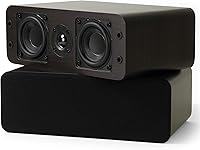
  • Orientation: The rectangular cabinet can be used horizontally as a center channel speaker or vertically as a standard bookshelf speaker without acoustic compromise.
  • Tweeter Design: The 0.75-inch silk dome tweeter uses a high-efficiency neodymium magnet and a compact bezel to minimize the gap between drivers.
  • Impedance: The OoO pair is designed to operate at a standard 8-ohm nominal impedance, compatible with the vast majority of consumer AV receivers and stereo amplifiers.
  • Included Items: Each purchase includes a pair of speakers, speaker grills, mounting screws, and a printed user manual.
  • Warranty: Micca covers these speakers under a limited manufacturer warranty; buyers should confirm current warranty terms directly with Micca at time of purchase.
  • Compatible Devices: These passive speakers are designed for use with AV receivers, stereo integrated amplifiers, and PC audio setups equipped with a speaker amplifier output.
  • Color & Style: The finish is described as dark walnut with a minimalist, wooden aesthetic intended to suit modern and traditional room decors alike.
  • ASIN: The official Amazon product identifier for this speaker pair is B07WDRGNDG, useful for verifying the correct listing before purchase.

Related Reviews
Micca COVO-S Bookshelf Speakers
76%
83%
Sound Quality
54%
Bass Performance
79%
Build Quality
91%
Value for Money
88%
Midrange Clarity
More
Micca MB42X Bookshelf Speakers
84%
89%
Sound Quality
92%
Value for Money
85%
Ease of Setup
77%
Bass Performance
91%
Design & Aesthetics
More
RIOWOIS DS6500M Passive Bookshelf Speakers
76%
83%
Sound Clarity
51%
Bass Performance
88%
Value for Money
76%
Build Quality
84%
Design & Aesthetics
More
NEUMI BS5 Passive Bookshelf Speakers
85%
89%
Sound Quality
91%
Build Quality
78%
Ease of Setup
92%
Value for Money
84%
Bass Performance
More
Edifier P12
Edifier P12
78%
83%
Sound Clarity
61%
Bass Performance
79%
Treble Quality
86%
Build Quality
91%
Wall-Mount Bracket
More
Audioengine P4 Passive Bookshelf Speakers
84%
92%
Sound Quality
89%
Build Quality
80%
Ease of Setup
74%
Bass Response
82%
Compatibility with Amplifiers
More
Saiyin SDS6400M Passive Bookshelf Speakers
82%
87%
Sound Quality
89%
Ease of Installation
82%
Design & Aesthetics
80%
Build Quality
91%
Value for Money
More
Micca PB42X Powered Bookshelf Speakers
83%
87%
Sound Quality
91%
Value for Money
76%
Bass Performance
89%
Ease of Setup
85%
Build Quality
More
Kanto YU Passive 4″ Bookshelf Speakers (YUP4W)
79%
91%
Sound Neutrality
88%
Treble Quality
67%
Bass Performance
62%
Amplifier Compatibility
84%
Build Quality
More
ELAC BS41-BK 4″ Passive Wired Bookshelf Speakers
80%
85%
Sound Quality
90%
Value for Money
92%
Size and Design
75%
Ease of Setup
80%
Build Quality
More

FAQ

These are passive speakers, which means they require a separate amplifier or AV receiver to produce sound. There is no built-in amplification. If you do not already own a stereo receiver or AV amp, you will need to budget for one before these will work.

Most mid-range stereo receivers or AV receivers rated between 20W and 75W per channel will drive these speakers comfortably. Brands like Yamaha, Denon, or Onkyo at the entry to mid level are popular pairings. If you have a warmer-sounding amp, that tends to work especially well given that some listeners find the speakers lean slightly bright with thinner-sounding sources.

Yes, and this is actually one of the more practical use cases for the slim design. Laying the speaker flat horizontally under a TV or monitor works well acoustically, and the cabinet proportions make it a natural fit in that position without looking out of place.

It depends on what you are listening to. For dialogue-heavy TV, acoustic music, or vocal-forward content, the bass extension down to around 60Hz is adequate. For action movies, bass-heavy music genres, or anyone who wants physical low-end impact, adding a subwoofer makes a noticeable difference and is genuinely recommended.

No, the wall-mount brackets are sold separately. The box includes speaker grills, mounting screws, and a user manual, but not the brackets themselves. If wall mounting is part of your plan, factor in the additional purchase and check that any third-party bracket fits the speaker dimensions.

Several experienced buyers report that the sound opens up after 20 to 40 hours of use, with the bass becoming slightly fuller and the high end smoothing out a little. It is worth giving them some run time before forming a final opinion, especially if your first impression feels thin or bright.

Absolutely — this is one of the strongest use cases for this compact passive speaker set. They are slim enough to mount on side or rear walls, and they perform well for ambient surround content at home theater listening distances. Just keep in mind that deep bass effects will need subwoofer support.

Standard 16-gauge or 18-gauge copper speaker wire works well for most home setups at typical listening room distances. Strip about half an inch of insulation from each end, connect positive to positive and negative to negative at both the speaker terminal and the amplifier, and you are set. Banana plugs can make the connection cleaner if preferred.

The cabinet uses a walnut wood finish, which at this price tier is typically a wood veneer over an MDF core rather than solid wood throughout. A small number of buyers have noted slight color variation between the pair, which is worth inspecting at unboxing. Overall, the finish quality is considered well above average for the price.

They are a very practical fit for that scenario. The slim form takes up minimal shelf or desk space, the sound scales down well for small room listening levels, and the walnut finish looks clean in most bedroom aesthetics. Just remember to pair them with an amplifier, even a compact desktop one, to get them running.