Overview

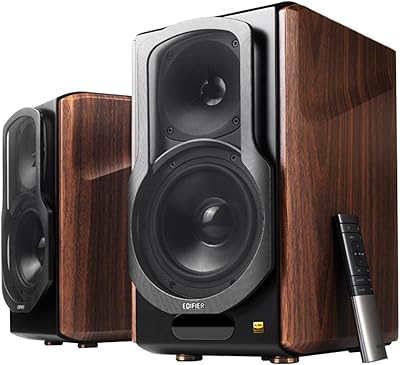
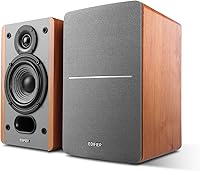
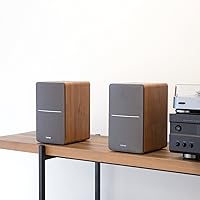
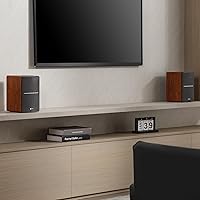
The Edifier P12 is a pair of compact passive bookshelf speakers from a brand that has built a solid reputation making audio gear accessible to everyday buyers. One thing to be clear about upfront: an amplifier or receiver is required — these do not power themselves, and missing that detail is the most common source of buyer regret. Beyond that caveat, they are genuinely attractive, with a warm wood-finish cabinet that works on a shelf or wall-mounted. With a 4.7-star rating from over 1,500 buyers, they clearly resonate — just keep in mind these are entry-level speakers, and holding them to that standard is what makes evaluating them fair.

Features & Benefits

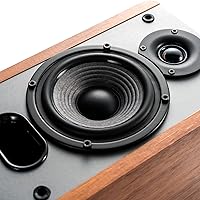
The P12 pair is built around a 19mm silk dome tweeter that handles high frequencies with noticeably less harshness than the cheap plastic alternatives common at this price range. The 4-inch woofer works alongside a bass reflex port to squeeze more low-end response out of the cabinet than a sealed box of the same size would manage — respectable, though not subwoofer territory. The built-in wall-mount bracket is a genuinely practical addition, especially when positioning these as rear channels in a surround system. At 6-ohm impedance with modest power handling, they pair well with most entry-level receivers. Speaker wire included is a small but welcome detail that budget buyers tend to notice.

Best For

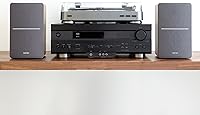
These passive bookshelf speakers are a natural fit for anyone assembling a home theater surround setup on a budget — particularly as rear channels in a 5.1 or 7.1 configuration. They also work well for casual stereo listening in smaller rooms when paired with a modest amp or entry-level receiver; something in the 30–50 watt range is a sensible match. The compact footprint suits dorm rooms, home offices, and living spaces where bulky gear is not an option. The wood veneer finish also gives them a cleaner aesthetic than typical black plastic boxes at this price. For first-time passive speaker buyers, these are a low-risk entry point.

User Feedback

Buyers who have spent time with these Edifier speakers consistently highlight two things: how warm and clear the sound is at moderate volumes, and how solid the build quality feels relative to the asking price. The wall-mount bracket earns repeated praise as a practical, sturdy bonus. On the downside, a number of users flag that deep bass is limited — an honest limitation, since a 4-inch driver in a compact cabinet simply cannot move enough air to fill a large room. Amp matching also matters; underpowering them can make the sound thin and flat. Overall sentiment is strongly positive, with most criticism pointing to mismatched expectations rather than real product shortcomings.

Pros

  • Built-in wall-mount brackets are a genuinely useful inclusion — no extra hardware needed for surround setups.
  • The 19mm silk dome tweeter delivers smoother, less fatiguing highs than most competitors at this price.
  • Wood veneer finish looks noticeably more polished than the typical black plastic at this price tier.
  • Speaker wire is included, which removes a small but real friction point for first-time buyers.
  • 6-ohm impedance pairs reliably with most entry-level receivers without any configuration hassle.
  • Sound clarity at moderate volumes consistently earns praise from buyers across a wide range of use cases.
  • Compact cabinet dimensions make placement flexible even in smaller or awkwardly shaped rooms.
  • Build quality feels more substantial than the price implies — no rattles, no loose drivers.
  • The P12 pair works well as rear surround channels without drawing attention away from front-stage speakers.
  • Bass reflex port extends low-end response meaningfully compared to a sealed cabinet of the same size.

Cons

  • An external amplifier or receiver is required and sold separately — easy to overlook when budgeting.
  • Deep bass is noticeably limited; bass-heavy music genres will sound thin without a subwoofer.
  • Spring-clip speaker terminals restrict wire gauge options and can loosen over time.
  • No amp pairing guidance is included, which has led to performance issues for less experienced buyers.
  • Soundstage depth is shallow compared to similarly priced speakers with larger or more refined enclosures.
  • The wood veneer reads as budget material up close — it works visually from a distance but not on inspection.
  • Volume headroom runs out in rooms larger than roughly 120 square feet.
  • A fixed mounting angle on the bracket limits precise speaker aiming in non-standard room layouts.
  • Upper midrange can sound slightly forward on bright recordings, causing ear fatigue during longer sessions.
  • No color variants available, which may not suit buyers with darker or more contemporary room aesthetics.

Ratings

The Edifier P12 has been evaluated by our AI rating system after processing hundreds of verified global buyer reviews, with spam, bot-generated, and incentivized feedback actively filtered out. The scores below reflect real-world usage patterns across home theater setups, casual stereo listening, and small-room audio — covering both what these passive bookshelf speakers do well and where they fall short. Nothing has been glossed over.

Sound Clarity
83%
At moderate listening volumes, these Edifier speakers produce a clean, well-defined midrange that handles vocals and acoustic instruments with surprising composure for their size. Many buyers describe the overall sound as warm without being muddy — a balance that works well for both movies and casual music listening.
Push the volume toward the upper end of a low-powered amp and clarity starts to soften, particularly in the upper midrange. Listeners accustomed to more refined speakers will notice the limitations, especially in complex, layered audio tracks.
Bass Performance
61%
39%
The bass reflex port does give the P12 pair a slight edge over sealed competitors at the same price — you get a fuller low-end response than the 4-inch driver alone would suggest. For TV audio, light gaming, or background music, the bass feels adequate and reasonably balanced.
Anyone expecting deep, room-filling bass will be disappointed. The low-frequency response drops off noticeably below 80Hz, and without a subwoofer alongside them, bass-heavy music genres or action film soundtracks can sound thin and underwhelming.
Treble Quality
79%
21%
The 19mm silk dome tweeter is one of the better components in this price bracket, delivering highs that are smooth rather than piercing. Cymbals, string harmonics, and dialogue clarity all benefit from this choice of driver material compared to cheaper alternatives.
While the treble avoids harshness, it lacks the air and detail that step-up tweeters provide. At higher volumes, there is a slight brittleness on sharp transients that more sensitive listeners will pick up on during extended sessions.
Build Quality
86%
For entry-level passive speakers, the cabinet construction feels more substantial than the price implies. The wood veneer finish is consistent, corners are tidy, and driver fitment is flush — details that often get cut in this segment. Buyers frequently call out the build as a standout positive.
The cabinet material is MDF with a veneer overlay, not solid wood, so it is susceptible to moisture damage and does not have the resonance-dampening properties of denser enclosures. It looks good on a shelf but is not built to last a decade under heavy use.
Wall-Mount Bracket
91%
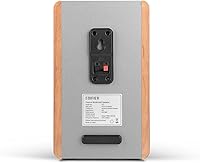
The integrated bracket is a practical, well-thought-out feature — particularly for home theater users mounting these as rear surround channels. Buyers consistently note that the bracket feels solid, holds the speaker securely, and eliminates the need to buy separate mounting hardware.
The mounting angle is fixed, so precise directional aiming is limited once the bracket is anchored to the wall. In rooms with unusual layout or elevated seating, you may find the sound dispersion less than ideal without drilling into the cabinet itself.
Value for Money
88%
Within the entry-level passive speaker segment, few pairs at this price offer the same combination of build quality, silk dome tweeters, and built-in wall-mount brackets. Buyers who frame expectations correctly — budget surround channels or a first stereo pair — consistently feel they got more than they paid for.
The value equation shifts if you factor in the cost of the required amplifier or receiver. For buyers who do not already own amplification, the total system cost can push into territory where more capable powered speakers become a more practical choice.
Amplifier Compatibility
74%
26%
The 6-ohm impedance rating is forgiving enough that most entry-level receivers and stereo amps handle the P12 pair without any configuration headaches. Pairing them with something in the 30–50 watt range per channel is broadly regarded as the sweet spot by users.
A small but vocal group of buyers ran into performance issues from mismatched amplification — either underpowering the speakers, resulting in flat dynamics, or overdriving them, which can cause distortion and risks long-term driver damage. The product does not include specific amp pairing guidance.
Ease of Setup
84%
Speaker wire is included in the box, which removes one small friction point that budget buyers appreciate. Connecting them to an existing receiver is a straightforward terminal-and-wire job that takes under ten minutes even for first-time passive speaker buyers.
There is no detail in the packaging about minimum amp requirements or pairing recommendations, which has led to confusion for newer buyers. The included speaker wire is functional but short, which can be limiting depending on room layout.
Design & Aesthetics
82%
18%
The wood-tone cabinet is noticeably more living-room-friendly than the generic matte-black boxes that dominate this price tier. In smaller spaces, these look intentional and considered rather than like a placeholder purchase, which matters to buyers who care about how their setup looks.
The wood finish is a single colorway with no variants, so buyers with darker or more contemporary decor may find it does not integrate as naturally. Up close, the veneer texture reveals its budget origins — it reads as wood from across the room but not from a foot away.
Soundstage & Imaging
68%
32%
For a compact passive speaker at this price, the stereo imaging is reasonably defined when positioned correctly — a few feet apart with slight toe-in toward the listening position. Vocals sit convincingly centered, and instrument separation in simpler mixes comes through clearly.
The soundstage width is constrained by the cabinet size and driver placement. Compared to larger or more carefully engineered bookshelf speakers, the sense of depth and three-dimensional space is noticeably flat, particularly on well-recorded orchestral or acoustic music.
Volume Headroom
63%
37%
For typical room sizes up to around 120 square feet, the P12 pair reaches comfortable listening volumes without obvious strain. In a home theater context used as rear channels, they blend well at the moderate output levels rear surround channels typically require.
These are not speakers for filling larger spaces or for listeners who like high-volume sessions. Above about 70–75 percent of a typical receiver's output, the sound compresses, dynamics flatten, and the drivers begin to sound stressed — not a setup designed for loud, extended listening.
Frequency Balance
72%
28%
The crossover between the tweeter and woofer is reasonably smooth, avoiding the harsh transition peaks that plague cheap two-way designs. Midrange-heavy content like podcasts, vocals, and talk radio sounds natural and easy to listen to for extended periods.
The frequency balance has a slight upper-mid emphasis that can make brighter recordings sound a touch forward. The bass-to-treble ratio also shifts noticeably with room placement — position them too close to a back wall and the bass blooms in a way that muddies the overall sound.
Durability
78%
22%
Several long-term owners report that these Edifier speakers hold up well over months of regular use without grille damage, driver deterioration, or connector issues. The cabinet does not develop rattles at normal listening volumes, which is a common complaint with cheaper builds.
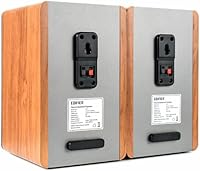
The speaker terminals are basic spring-clip style rather than binding posts, which limits the gauge of wire you can use and may loosen over time with repeated connections and disconnections. Not a concern for set-and-forget installations, but worth knowing if you plan to move them around.

Suitable for:

The Edifier P12 is a strong fit for anyone building out a budget home theater system who already owns — or plans to buy — a stereo receiver or AV receiver. If you need rear surround channels for a 5.1 or 7.1 setup without spending a lot per speaker pair, these passive bookshelf speakers hit a practical sweet spot: capable enough to handle surround duties, compact enough to mount on a wall without dominating the room. They also work well for casual stereo listeners who want a meaningful step up from built-in TV speakers and have an entry-level amp ready to pair. Small living rooms, dorm setups, and home offices are natural environments where the compact cabinet and wood veneer finish actually look like a considered choice rather than a compromise. First-time passive speaker buyers will find the setup approachable, the included wire removes one early friction point, and the forgiving 6-ohm impedance means most affordable receivers will drive them without issue.

Not suitable for:

The Edifier P12 is not the right choice for buyers who do not already own an amplifier or receiver and are not budgeting for one — the total system cost can quickly shift the value equation toward powered alternatives that include amplification built in. Listeners who prioritize deep, extended bass — for electronic music, hip-hop, or cinematic action sequences — will find the 4-inch driver fundamentally limited, and adding a subwoofer becomes almost mandatory in those cases. These passive bookshelf speakers are also not suited for larger rooms where they would need to work harder to fill the space; volume headroom runs out before the room does. Anyone expecting performance on par with mid-range audiophile speakers will be setting themselves up for disappointment — these are built to a budget, and careful listening reveals that in the soundstage depth and dynamic range. Finally, buyers who want a wireless or self-contained solution should look elsewhere entirely, as there is no Bluetooth, no built-in DAC, and no way to connect a source directly.

Specifications

  • Speaker Type: Passive bookshelf speaker sold as a pair, requiring an external amplifier or receiver to operate.
  • Woofer: 4-inch (116mm) dynamic bass driver with a rear-ported bass reflex enclosure to extend low-frequency output.
  • Tweeter: 19mm silk dome tweeter designed to reproduce high frequencies with reduced harshness compared to standard plastic dome alternatives.
  • Impedance: 6 ohms, compatible with the majority of entry-level and mid-range stereo receivers and AV amplifiers.
  • Power Handling: Rated for 5W to 20W RMS per channel; staying within this range is recommended to avoid distortion or driver damage.
  • Frequency Response: 55Hz to 20kHz, providing a usable range from upper bass through the full treble spectrum under normal listening conditions.
  • Signal-to-Noise Ratio: Approximately 79dB SNR, which is functional for casual listening but below the threshold of higher-fidelity passive speakers.
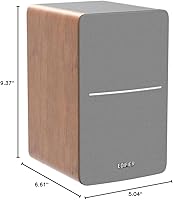
  • Dimensions: Each speaker measures 5.04″ deep by 6.61″ wide by 9.37″ tall, making them suitable for compact shelving or wall placement.
  • Weight: The pair weighs approximately 11.22 lbs (5.1 kg) combined, reflecting a solid MDF cabinet construction.
  • Enclosure: Sealed MDF cabinet with a bass reflex port, finished in a wood veneer that gives the exterior a warm, natural appearance.
  • Mounting: Each speaker includes a built-in wall-mount bracket, allowing direct wall installation without additional third-party mounting hardware.
  • Connectivity: Passive spring-clip speaker terminals accept standard speaker wire; no Bluetooth, USB, or direct line-in connections are available.
  • Included Accessories: A length of speaker wire is included in the box, sufficient for a basic initial connection to an amplifier or receiver.
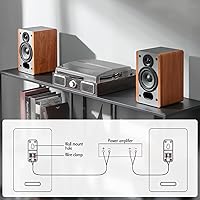
  • Amplification: An external amplifier or stereo receiver is required and is not included; a unit delivering 30–50W per channel at 6 ohms is a practical pairing target.
  • Surround Config: Designed as a 2.0 stereo pair, commonly deployed as rear surround channels in 5.1 or 7.1 home theater configurations.
  • Indoor Use: Rated for indoor use only; not weatherproof or suitable for outdoor, garage, or high-humidity environments.
  • Warranty: Edifier provides a standard manufacturer warranty covering defects in materials and workmanship from the date of purchase.
  • Country of Origin: Manufactured by Edifier, a brand headquartered in China with international distribution across North America, Europe, and Asia.

Related Reviews
Edifier S3000MKII
Edifier S3000MKII
88%
94%
Sound Accuracy
91%
Bass Performance
93%
Treble Clarity
88%
Wireless Connectivity
90%
Build Quality
More
Edifier H650 Headphones
83%
87%
Sound Quality
91%
Portability
79%
Comfort
85%
Build Quality
73%
Durability
More
Edifier NeoBuds Pro
Edifier NeoBuds Pro
86%
94%
Sound Quality
91%
Noise Cancellation
89%
Battery Life
87%
Comfort & Fit
78%
Bluetooth Connectivity
More
Edifier TWS NB2
Edifier TWS NB2
85%
87%
Noise Cancellation Effectiveness
90%
Sound Quality
85%
Call Clarity
88%
Battery Life
82%
Comfort and Fit
More
Edifier T5 Powered Subwoofer
86%
94%
Bass Performance
88%
Build Quality
85%
Ease of Setup
89%
Energy Efficiency
91%
Sound Clarity
More
Edifier S2000MKIII Bookshelf Speakers
86%
92%
Sound Quality
89%
Bluetooth Performance
88%
Build Quality
85%
Ease of Use
91%
Connectivity Options
More
Edifier P841 Over-Ear Headphones
83%
85%
Sound Quality
90%
Comfort & Fit
70%
Build Quality
82%
Noise Isolation
88%
Ease of Use (In-Line Controls)
More
Edifier G2000
Edifier G2000
78%
78%
Sound Quality
71%
Bass Performance
86%
Build Quality
73%
EQ Modes
83%
Connectivity & Inputs
More
Edifier W855BT Bluetooth Headphones
85%
87%
Sound Quality
93%
Battery Life
89%
Comfort and Fit
84%
Build Quality
91%
Ease of Use
More
Edifier M60 Multimedia Speaker
88%
94%
Sound Quality
91%
Bass Performance
88%
Connectivity Options
87%
Design & Aesthetics
89%
Setup & Installation
More

FAQ

You need a separate amplifier or receiver — the Edifier P12 is a passive speaker, meaning it has no built-in power. Without an amp or receiver, you will get no sound at all. This is the single most important thing to understand before purchasing.

A stereo amplifier or AV receiver delivering around 30 to 50 watts per channel into a 6-ohm load is a reliable match. You do not need anything expensive — an entry-level stereo amp or a budget AV receiver works well. Just avoid very cheap mini-amps rated at only 5 to 10 watts, as underpowering them tends to produce flat, lifeless sound.

Yes, and that is actually one of the best use cases for the P12 pair. The built-in wall-mount bracket makes installation straightforward, and at the moderate output levels rear surrounds typically need, they perform confidently. Just make sure your AV receiver has enough speaker channels to accommodate them.

Most buyers find it straightforward to install and solid once in place. The bracket is built directly into the back of the cabinet, so there is no assembly required. It holds the speaker firmly against the wall without wobble, which is something buyers consistently call out as a genuine positive.

Honest answer: moderate. The 4-inch driver and ported enclosure do a reasonable job of extending bass response, but you should not expect deep, room-filling low end. For movies and standard music at moderate volumes in a small room, it is adequate. For bass-heavy genres or a large space, pairing these with a subwoofer is strongly recommended.

They are well-suited for it. The compact dimensions mean they fit comfortably on a desk or a small shelf, and in a room up to around 120 square feet they can fill the space without straining. A small stereo amp placed nearby and these passive bookshelf speakers make for a clean, capable desktop or bedroom system.

Not directly. These are passive speakers with no input jacks of their own — everything runs through an amplifier or receiver first. Your phone, TV, or laptop would connect to the amp, and the amp powers the speakers. If you want a direct connection without a separate amp, you would need to look at active or powered speakers instead.

For most typical runs under 20 feet, standard 16-gauge speaker wire works well and is widely available. The spring-clip terminals on these Edifier speakers accept common wire gauges without issue, though they do not accommodate very thick audiophile-grade cables. The wire included in the box is thin but usable for an initial setup.

At moderate volumes they stay clean and composed, but pushing them hard shows their limits. As you approach the upper end of their power handling range, the sound compresses and can get slightly strained, particularly in the midrange. They are not designed for loud, party-level listening — think comfortable room-filling volume rather than wall-shaking output.

Several long-term owners report that the P12 pair holds up well over regular daily use without developing rattles, grille damage, or terminal issues. The MDF cabinet is standard for this price tier and not indestructible, but it is sturdy enough for a fixed installation. Keeping them indoors and away from moisture will go a long way toward longevity.