Overview

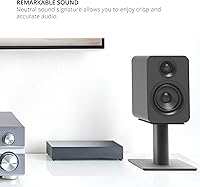
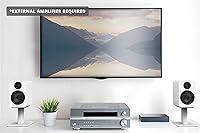
The Kanto YU Passive 4″ Bookshelf Speakers (YUP4W) are a mid-range passive speaker pair built for audio enthusiasts ready to step up from all-in-one or Bluetooth systems into a proper hi-fi setup. Before anything else, understand this: an external amplifier is required — specifically one capable of 70W per channel into 4 ohms. That is not a footnote; it is the central purchase decision. The compact MDF cabinets come in matte black or matte white, and they have held a 4.6-star average since launching in 2021, which reflects how well they have landed with the audience they are built for.
Features & Benefits

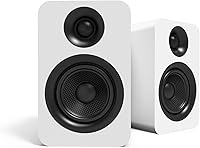
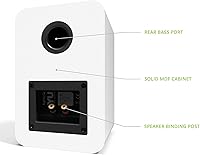
The 4-inch Kevlar woofer handles low-end duties with real control — the kind you notice most on acoustic bass lines and kick drums. It stays tight and defined without any bloat. A rear-firing tuned port extends bass reach a bit further, though the 60 Hz floor means deep sub-bass simply is not there. Up top, the silk dome tweeter is easy on the ears for extended listening; it never gets harsh or sibilant. Solid MDF cabinets keep unwanted resonances out of the sound. At 4 ohms and 86 dB sensitivity, these passives need a proper amp — not a cheap mini amplifier — to perform as intended.

Best For

These passive bookshelf speakers are the right call if you already own — or are actively planning to buy — a stereo amp or AV receiver. They work best in small-to-medium rooms: a bedroom, home office, or dedicated listening corner where a floor-standing speaker would simply be too much. If you want to hear music the way it was recorded, without added warmth or exaggerated bass, the YUP4W pair rewards that preference. They also work well as secondary home theater speakers. Both the black and white finishes look sharp in minimalist or clean-lined spaces, which is a real plus for design-conscious buyers.

User Feedback

Owners of Kanto's 4-inch passives tend to split into two camps. Those who bought them knowing what they were getting — a proper passive speaker that needs a good amp — are consistently happy, pointing to the natural, uncolored sound and fatigue-free treble as the highlights. The compact footprint and clean looks get frequent praise as well. On the other side, a handful of buyers were caught off guard by the amplifier requirement, and some found the bass underwhelming in larger rooms without a subwoofer. Several users compared these against Elac and Polk at similar price points and felt the Kantos more than held their own. Go in informed and the odds of satisfaction are high.

Pros

  • Neutral, uncolored sound character lets you hear recordings accurately without artificial enhancement.
  • Silk dome tweeter stays smooth and non-fatiguing across hours of continuous listening.
  • Kevlar woofer delivers tight, well-defined bass in small-to-medium rooms without bloat.
  • Solid MDF cabinet construction keeps resonance and coloration out of the sound.
  • Compact dimensions fit real desk and bookshelf spaces without dominating the room.
  • Clean matte finish in black or white works with a wide range of interior styles.
  • Kanto stand compatibility allows further vibration isolation for cleaner low-end performance.
  • Competes convincingly with similarly priced passive options from established speaker brands.
  • Hi-Res Audio certified, meaning the YUP4W pair is built to handle high-quality source material properly.
  • Strong long-term buyer satisfaction among owners who matched them with a quality amplifier.

Cons

  • An external amplifier is a mandatory additional purchase — this cost is easy to underestimate upfront.
  • Bass rolls off noticeably below 60 Hz, making a subwoofer near-essential for electronic or cinematic content.
  • Low 86 dB sensitivity means weak or budget mini-amplifiers will produce flat, compressed results.
  • Rear-firing port requires some distance from the wall to avoid bass buildup and muddiness.
  • Not suitable for large rooms where volume demands will outpace what the drivers can cleanly deliver.
  • Grilles feel noticeably less substantial than the cabinet itself, which some buyers find disappointing.
  • The neutral sound tuning may feel underwhelming to listeners accustomed to bass-heavy consumer speakers.
  • No wireless or powered option exists in this exact form factor for buyers who change their mind later.

Ratings

The Kanto YU Passive 4″ Bookshelf Speakers (YUP4W) earned their scores after our system analyzed verified buyer reviews from global marketplaces, actively filtering out incentivized, duplicate, and bot-generated submissions. What remains is a clear picture of how real owners — from first-time hi-fi builders to seasoned audiophiles — actually experience these passive bookshelf speakers day to day. Both what works well and where the frustrations lie are reflected honestly in every score below.
Sound Neutrality
91%
Buyers who care about hearing recordings accurately, rather than through a heavily colored or bass-boosted filter, consistently call out the YUP4W pair as a standout in this price range. Acoustic instruments, vocals, and orchestral passages come through with clarity and balance that feels honest rather than artificially enhanced.
That very neutrality can feel underwhelming to listeners conditioned by consumer Bluetooth speakers or bass-heavy soundbars. A handful of reviewers described the sound as too flat or clinical, especially before the drivers had time to break in over the first several hours of use.
Treble Quality
88%
The silk dome tweeter draws consistent praise for being smooth and forgiving during long listening sessions — whether that is a two-hour album playback or background music throughout a workday. High hats, string overtones, and vocal sibilance are rendered cleanly without any hardness or ear fatigue.
Absolute top-end extension above 16 kHz is not the sharpest, so listeners who prioritize razor-crisp air and sparkle in their treble may find the presentation slightly soft. It is a deliberate tuning choice, but not universally loved.
Bass Performance
67%
33%
For a 4-inch driver in a compact cabinet, the Kevlar woofer handles mid-bass with real control and punch. Kick drums, upright bass, and electric bass lines in smaller rooms come through with definition and tightness that outperforms the physical cabinet size.
Below around 60 Hz, the output drops off noticeably — deep bass from electronic music, pipe organs, or cinematic soundtracks simply is not there without a subwoofer. In rooms larger than a typical bedroom or home office, even the mid-bass can start to feel thin and insufficient.
Amplifier Compatibility
62%
38%
When paired with a quality budget-to-mid-tier stereo amplifier, these passive bookshelf speakers genuinely open up and perform well above their price point. Owners running them through capable integrated amps frequently report being surprised by the overall coherence and dynamics.
The 4-ohm impedance and 86 dB sensitivity are a real constraint — pair them with an underpowered or high-impedance mini amplifier and the result is flat, compressed, and disappointing. This is the single most common source of negative reviews, and it is almost always an amplifier mismatch problem rather than a speaker deficiency.
Build Quality
84%
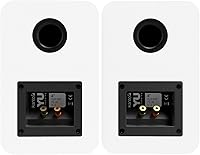
The solid MDF cabinet feels dense and well-constructed out of the box — no creaks, no rattles, and the matte vinyl finish looks noticeably more premium than the price might suggest. Binding posts are solid and accept both bare wire and banana plugs without issue.
The vinyl wrap on corners can show minor scuffing with rough handling, and a few buyers noted the grilles feel slightly flimsy compared to the cabinet itself. Nothing that affects performance, but worth noting if you are particular about long-term cosmetic condition.
Design & Aesthetics
89%
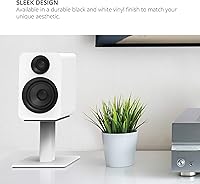
The clean rectangular cabinet with a matte finish looks genuinely good on a desk or bookshelf without drawing too much attention to itself. Both the black and white color options work well in modern, minimalist, or Scandinavian-style interiors, which buyers specifically mention as a reason they chose this over bulkier alternatives.
The design is intentionally understated, which means it may read as too plain for those who want a speaker to serve as a visual centerpiece. There is no wood veneer option and the overall look, while refined, lacks the character some competitors offer at this price.
Midrange Clarity
86%
Vocals sit naturally in the mix without being pushed forward or recessed. Acoustic guitar, piano, and human voice in particular benefit from the uncolored midrange tuning — these are the frequencies where the YUP4W pair earns its reputation for honest, natural sound reproduction.
The midrange, while clean, lacks the density and body that some larger-driver competitors can produce. Listeners coming from warm-sounding speakers may initially perceive the mids as lean, even if technically accurate.
Value for Money
83%
For buyers who factor in the total cost of a passive system realistically, these passive bookshelf speakers hold up well against Elac, Polk, and entry-level Klipsch offerings at comparable prices. The build and sound quality feel honest for what is being charged, without the padding of unnecessary features.
The amplifier requirement adds real cost to the total system price, which some buyers discover only after purchase. If you are budgeting purely for the speakers without accounting for a quality amp, the apparent value proposition shifts considerably.
Soundstage & Imaging
78%
22%
Proper placement on stands or well-positioned shelves yields a convincing stereo image with reasonable width and decent instrument separation. In a well-treated small room, the YUP4W pair can project a soundstage that sounds much larger than the cabinet dimensions would imply.
Soundstage performance is highly dependent on room acoustics and amplifier quality — in a live or reflective room, imaging collapses quickly. They are also not particularly forgiving of poor placement near walls or corners due to the rear port design.
Ease of Setup
74%
26%
For anyone comfortable with basic speaker wire connections, setup is fast and uncomplicated. The binding posts are clearly laid out, the cabinet is a manageable size to position, and there are no firmware updates, apps, or pairing procedures to deal with — just wire, connect, and listen.
The passive nature means there is a meaningful learning curve for buyers new to hi-fi. Selecting an appropriate amplifier, understanding impedance matching, and running speaker wire is straightforward for enthusiasts but genuinely intimidating for first-timers without guidance.
Sensitivity & Volume Output
63%
37%
In a properly matched system in a small-to-medium room, the speakers can reach comfortable listening volumes without obvious strain. The Kevlar driver handles dynamic peaks reasonably well and does not sound compressed at moderate output levels.
At 86 dB sensitivity, these are not efficient speakers. Underpowered setups will hit the ceiling early, and listeners who like to play music loudly in medium or large rooms will likely find the maximum output frustrating without a high-current amplifier pushing them.
Long-Term Listening Comfort
92%
This is arguably where the YUP4W pair earns its strongest consistent feedback. The tuning prioritizes ear comfort across genres and extended sessions — listeners report spending hours with these running without any desire to turn them down due to harshness or fatigue.
The tradeoff for that comfort is a top end that lacks some crispness and a bottom end that stays conservative. For critical listening or monitoring applications, the relaxed tuning may smooth over details that more analytically voiced speakers would expose.
Compatibility with Stands & Accessories
81%
19%
The ability to bolt these to Kanto-compatible speaker stands is a genuine advantage for users who care about resonance control — coupling to a solid stand measurably reduces cabinet vibration and cleans up the low-end presentation in side-by-side comparisons reported by buyers.
Stand compatibility is brand-specific, which adds cost and limits flexibility. Buyers using third-party stands or relying on shelf placement without isolation padding may not get the same performance improvement, and not everyone wants to invest in stands on top of the speakers and amplifier.
Port Noise & Low-End Behavior
72%
28%
At normal listening volumes in small rooms, the rear-firing port operates cleanly without audible chuffing or port noise. The tuning of the port contributes meaningfully to the usable bass range, making the speaker feel more complete than a sealed box design of similar dimensions would.
Placement too close to a rear wall can cause bass buildup and muddiness as the port interacts with the boundary. A few reviewers noted boomy low-end specifically when the speakers were used on a shelf flush against a wall — a common bookshelf setup that requires some distance management.

Suitable for:

The Kanto YU Passive 4″ Bookshelf Speakers (YUP4W) are built for a specific kind of buyer: someone who is either already invested in a stereo amplifier setup or actively planning to build one. They are a natural fit for audiophiles and hobbyists who want honest, neutral sound reproduction without paying a premium for built-in amplification they do not need. Bedroom and home office listeners in particular get a lot out of these — the compact footprint fits real-world spaces, and the natural tuning handles both focused critical listening and all-day background music without wearing on the ears. They also work well as secondary speakers in a home theater zone, or as a desktop upgrade for someone running a proper DAC and amp combo at their workstation. If you already own a capable integrated amplifier and want a speaker that stays out of the way of the music, these passive bookshelf speakers are a genuinely strong option at this price point.
Not suitable for:

The Kanto YU Passive 4″ Bookshelf Speakers (YUP4W) are the wrong choice for anyone who wants a plug-and-play audio solution. There is no built-in amplifier, no Bluetooth, and no USB input — you will need a separate amplifier rated at 70W per channel into 4 ohms minimum, and cutting corners on that component will directly undermine everything these speakers are capable of. Buyers in larger living rooms or open-plan spaces will likely find the bass output insufficient without a dedicated subwoofer, and the 86 dB sensitivity means that underpowered setups will hit their limits before reaching satisfying volume levels. Listeners who prefer a warm, bass-forward, or V-shaped sound signature will probably find the neutral tuning unrewarding — these are not speakers that flatter every recording. Anyone on a tight all-in budget who has not factored in the amplifier cost should pause and reconsider the total system spend before purchasing.
Specifications

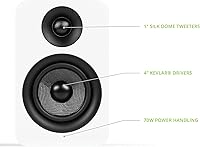
  • Driver Config: Each speaker uses a 4-inch Kevlar woofer paired with a 1-inch silk dome tweeter for a two-way passive design.
  • Power Handling: Each speaker handles up to 70 watts of continuous power input from an external amplifier.
  • Impedance: Speaker impedance is rated at 4 ohms, requiring a compatible amplifier designed to drive 4-ohm loads safely.
  • Sensitivity: Sensitivity is rated at 86 dB measured at 2.83V at 1 meter, meaning a capable amplifier is necessary to reach satisfying volume levels.
  • Frequency Response: The speakers reproduce frequencies from 60 Hz up to 20 kHz, covering the full audible range for most music content in smaller rooms.
  • Bass Loading: A rear-firing tuned bass port extends low-frequency output and reduces port-induced distortion at normal listening levels.
  • Cabinet Material: Cabinets are constructed from solid MDF to minimize unwanted internal resonances and reduce cabinet coloration in the sound.
  • Cabinet Finish: The exterior is wrapped in matte vinyl available in either matte black or matte white.
  • Dimensions: Each cabinet measures 7.5″ deep, 5.5″ wide, and 8.7″ tall.
  • Pair Weight: The pair weighs approximately 11 pounds combined, making placement and repositioning straightforward.
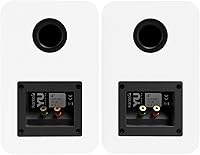
  • Connectivity: These are fully passive speakers with no built-in amplification, Bluetooth, or digital inputs — connection is via bare wire or banana plugs.
  • Binding Posts: Standard five-way binding posts accept bare wire, pin connectors, spade lugs, and banana plugs for flexible amplifier connection.
  • Amplifier Req.: An external stereo amplifier or AV receiver rated at a minimum of 70W per channel into 4 ohms is required for operation.
  • Stand Compat.: The speakers are compatible with Kanto speaker stands and can be bolted directly to them for improved vibration isolation via mechanical coupling.
  • Mounting Type: Designed primarily for shelf mounting, though stand mounting with compatible Kanto hardware is supported.
  • Hi-Res Audio: The YUP4W pair carries Hi-Res Audio certification, confirming the drivers and crossover are capable of reproducing high-resolution audio source material accurately.
  • Warranty: Kanto provides a limited warranty on manufacturing defects; buyers should verify current warranty terms directly with Kanto or the authorized retailer at time of purchase.
  • Availability: The speakers are sold as a stereo pair and are available in both matte black and matte white finish options.
  • Model Number: The official model designation is KO-YUP4W for the white variant, with the product listed under ASIN B0921BV85J on Amazon.
  • Release Date: The YUP4W was first made available for purchase in April 2021 and remains an active product in the Kanto lineup.

Related Reviews

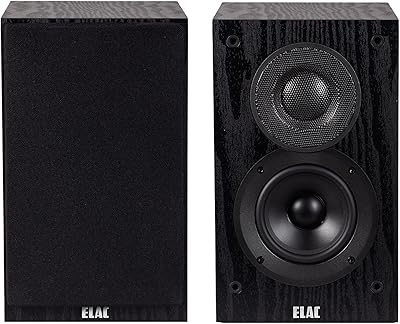
ELAC BS41-BK 4″ Passive Wired Bookshelf Speakers
80%
85%
Sound Quality
90%
Value for Money
92%
Size and Design
75%
Ease of Setup
80%
Build Quality
More
Edifier P12
Edifier P12
78%
83%
Sound Clarity
61%
Bass Performance
79%
Treble Quality
86%
Build Quality
91%
Wall-Mount Bracket
More
RIOWOIS DS6500M Passive Bookshelf Speakers
76%
83%
Sound Clarity
51%
Bass Performance
88%
Value for Money
76%
Build Quality
84%
Design & Aesthetics
More
NEUMI BS5 Passive Bookshelf Speakers
85%
89%
Sound Quality
91%
Build Quality
78%
Ease of Setup
92%
Value for Money
84%
Bass Performance
More
Kanto TUK Powered Bookshelf Speakers
88%
88%
Sound Quality
72%
Bass Response
93%
Setup & Installation
90%
Connectivity Options
85%
Build Quality
More
Saiyin SDS6400M Passive Bookshelf Speakers
82%
87%
Sound Quality
89%
Ease of Installation
82%
Design & Aesthetics
80%
Build Quality
91%
Value for Money
More
Audioengine P4 Passive Bookshelf Speakers
84%
92%
Sound Quality
89%
Build Quality
80%
Ease of Setup
74%
Bass Response
82%
Compatibility with Amplifiers
More
Micca OoO Passive Bookshelf Speakers
79%
86%
Sound Clarity
61%
Bass Performance
83%
Build Quality
89%
Design & Aesthetics
88%
Placement Versatility
More
Edifier R980T 4″ Active Bookshelf Speakers
85%
87%
Sound Quality
72%
Bass Performance
91%
Build Quality
93%
Ease of Setup
85%
Connectivity Options
More
Herdio HOS-401B 4-Inch Passive Outdoor Speakers
82%
85%
Sound Quality
91%
Ease of Installation
88%
Build Quality
72%
Bass Performance
90%
Durability
More

FAQ

No, they do not. The Kanto YU Passive 4″ Bookshelf Speakers (YUP4W) are fully passive, which means they have no internal amplification at all. You will need a separate stereo amplifier or AV receiver to power them — ideally one rated at 70W per channel into 4 ohms. This is the single most important thing to understand before purchasing.
Look for a stereo integrated amplifier or AV receiver explicitly rated to drive 4-ohm speakers. Budget-friendly options from brands like Yamaha, Denon, or SMSL in the stereo integrated category work well. Avoid cheap class-D mini amplifiers rated only for 8-ohm loads — they will produce noticeably flat, compressed sound and may run hot or clip at moderate volumes.

Yes, and they actually work very well in a desktop setup — provided you have a DAC and amplifier in the chain. A compact stereo integrated amp or a desktop DAC-amp combination placed near your monitor is a common and effective solution. The compact cabinet size suits desk placement nicely.

In a small room — a bedroom, office, or dedicated listening corner — the bass is tight and satisfying for most music genres. Below around 60 Hz the output drops off, so electronic music, film soundtracks, or bass-heavy content in a medium or large space will feel thin. Adding a subwoofer fills that gap cleanly if you need it.

Because of the rear-firing bass port, you want at least 6 to 8 inches of clearance behind each cabinet. Placing them flush against a wall traps the port output and causes bass buildup that muddies the low end. Even a modest gap makes a noticeable difference in how clean the bass sounds.

They handle both well in the right setup. For a stereo music zone or a secondary home theater listening area, these passive bookshelf speakers perform admirably. For a full home theater main system, you would want to pair them with a subwoofer and a surround AV receiver to cover the full dynamic range of film audio.

The main trade-off is system complexity versus sound quality per dollar. Powered speakers at this price include a built-in amp, which is convenient but limits your ability to upgrade components independently. These passives, when paired with a quality amp, can outperform most powered speakers at an equivalent total price because the amplification budget is not constrained by the need to fit everything in one box.

No speaker wire is included in the box. You will need to purchase your own — 16-gauge or 14-gauge oxygen-free copper wire is a solid choice for runs under 20 feet, and it is widely available and inexpensive. The binding posts accept bare wire directly, so no special connectors are required unless you prefer banana plugs or spades.

The matte vinyl surface wipes down easily with a dry or slightly damp microfiber cloth for everyday dust. Avoid abrasive cleaners or solvents, which can damage the vinyl wrap over time. The white finish does show smudges and fingerprints more readily than the black version, so placement in a lower-traffic spot helps keep it looking sharp.

Yes, with the right setup. If your turntable has a built-in phono preamp, you can connect it directly to a stereo amplifier and then to these passive bookshelf speakers. If your turntable lacks a built-in phono stage, you will need a separate phono preamp between the turntable and the amplifier. It is a very popular pairing for vinyl enthusiasts who want accurate, uncolored playback.