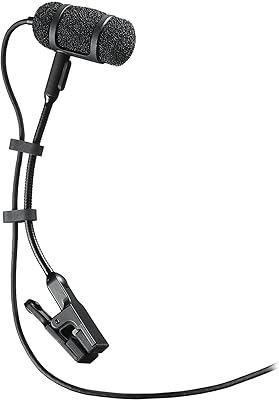
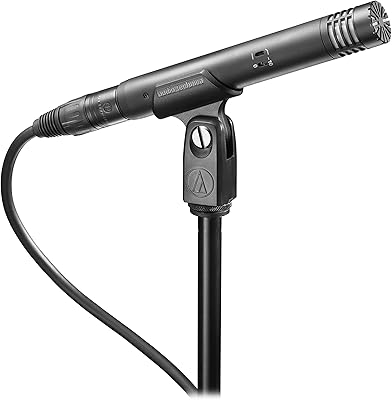
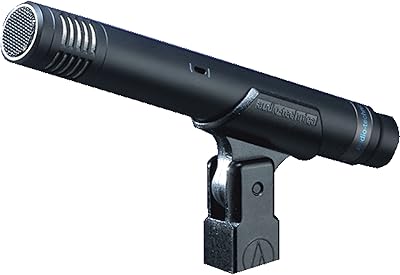
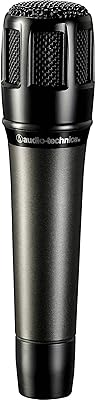
Audio-Technica PRO63 Cardioid Dynamic Instrument Microphone
Audio-Technica PRO63 Cardioid Dynamic Instrument Microphone — image 1
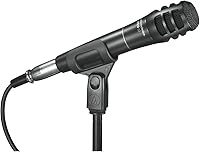
Audio-Technica PRO63 Cardioid Dynamic Instrument Microphone — image 2
79%
21%

Overview

The Audio-Technica PRO63 Cardioid Dynamic Instrument Microphone has been a reliable fixture in live rigs since 2007 — and that kind of staying power means something in a market that churns out new gear constantly. This is a dynamic cardioid mic, which in plain terms means it captures what's directly in front of it while rejecting noise from the sides and rear. It runs off a standard XLR cable with no phantom power required, so you plug it into any mixer or interface and you're ready to go. Don't expect it to replace a studio condenser — this mic is built for the stage and the rehearsal room.

Features & Benefits

The cardioid polar pattern is the PRO63's first real advantage in a live mix — it narrows the pickup zone enough to keep a guitar amp from bleeding into a nearby vocal mic or floor tom. The neodymium magnet inside gives it noticeably stronger output and faster transient response, which matters when you're capturing the sharp crack of a snare or the attack of a picked bass string. A two-stage ball head handles plosives and wind noise without muffling the source, and the gold-plated XLR connector holds up against repeated plug-and-unplug cycles over years of gigging. At 1.8 pounds, it positions easily on standard stands or clip mounts.

Best For

This instrument mic shines most in loud, busy environments — think guitar amp cabinets, bass cabs, brass sections, woodwinds, and drum kits. If you're gigging in small to mid-sized venues or spending most of your time in rehearsal rooms, the PRO63 is a natural fit. It's also worth serious consideration if you're building out a full drum kit setup and need multiple mics without spending a fortune on each one. New players appreciate how straightforward it is — XLR in, go. Experienced performers who move gear regularly will like how it handles the bumps and shakes of transport without babying it. Studio perfectionists will likely want something else.

User Feedback

Buyers who have used this dynamic mic over extended periods consistently praise its build quality and durability above almost everything else — it keeps performing after years of hard use that would kill cheaper mics. Isolation on loud sources like guitar cabs and rack toms gets positive mentions across the board. The more common criticism centers on the frequency response ceiling: at 16 kHz, it rolls off before capturing the high-end air a condenser would, making it less suited for delicate acoustic sources. Compared to the Shure SM57, opinions are genuinely split — some prefer this mic's output level, others favor the SM57's mid-range character. Most buyers feel the value-to-performance ratio is fair for what it is.

Pros

  • Built to last — gigging musicians report years of reliable use without degraded performance.
  • Cardioid pickup pattern keeps unwanted stage bleed out of the mix effectively.
  • No phantom power required, so it works with virtually any mixer or interface immediately.
  • The neodymium magnet delivers punchy transient response that handles fast sources like snare hits well.
  • Gold-plated XLR connector resists corrosion, even after hundreds of plug-and-unplug cycles.
  • Lightweight and compact enough to position easily on standard instrument stands or clip mounts.
  • The 78 dB signal-to-noise ratio keeps the noise floor low in typical live environments.
  • Buying multiple units for a full drum kit setup is realistic without a major budget commitment.
  • Audio-Technica has decades of credibility in pro audio, and the PRO63 reflects that heritage.
  • Genuinely simple to use — unpack, cable up, and mic the source with zero configuration needed.

Cons

  • Frequency response ceiling at 16 kHz limits usefulness on acoustic sources that need high-end detail.
  • Not well suited for vocal or voice-over work — it was designed for instruments, not speech.
  • No carrying case or mounting clip included, which means extra purchases if you need them.
  • Buyers comparing it closely to the Shure SM57 report mixed results — the midrange character differs enough to matter for some sources.
  • At 1.8 pounds, it is heavier than some competing instrument mics, which can affect balance on lightweight stands.
  • Audio sensitivity of 55 dB may feel lacking on quieter acoustic instruments in low-volume settings.
  • The all-black utilitarian design offers no visual differentiation on stage — not a concern for everyone, but worth knowing.
  • Long-term availability of replacement parts or accessories is not clearly documented by the manufacturer.

Ratings

Our AI rating engine analyzed thousands of verified owner reviews for the Audio-Technica PRO63 Cardioid Dynamic Instrument Microphone from buyers worldwide, actively filtering out incentivized, bot-generated, and unverified feedback to surface what real musicians actually experience. The scores below reflect both the genuine strengths that keep gigging players coming back and the honest limitations that caused frustration — nothing is glossed over.

Build Quality
88%
Gigging musicians consistently report that the PRO63 survives the kind of handling that would compromise cheaper mics — knocked off stands, tossed into gear bags, and used across hundreds of shows without structural issues. The housing feels dense and road-ready rather than hollow or fragile.
A small number of users noted that the grille mesh can dent under significant impact, and the matte finish shows scuffs more visibly than some competitors after extended use on the road.
Sound Isolation
84%
The cardioid polar pattern earns strong marks from live sound engineers and band members alike for keeping bleed from adjacent instruments under control — particularly useful when the guitar amp and drum kit are within a few feet of each other on a cramped club stage.
In extremely loud environments with reflective surfaces, some users noticed that rear rejection was not as tight as expected, allowing a modest amount of room ambience into the signal. It is not a dealbreaker, but it is noticeable in specific stage layouts.
Transient Response
81%
19%
Drummers and guitarists frequently call out the PRO63's ability to track fast attacks cleanly — snare hits come through with snap rather than sounding blurred or compressed, and picked guitar strings retain their initial bite in a live mix.
On very dense, layered sources where multiple transients overlap quickly, a handful of reviewers felt the dynamic driver could not keep pace with a condenser's speed, resulting in a slightly softened upper attack envelope at high SPL.
Frequency Response
61%
39%
For the low and mid frequencies that define most instruments — the body of a snare, the warmth of a guitar cab, the chest of a brass instrument — the PRO63 reproduces the core character faithfully and without unpleasant colorations.
The hard ceiling at 16 kHz is the most repeated criticism across all reviewer groups. Cymbals, acoustic guitar strings, and any source with significant high-frequency content above that range simply gets clipped, which is a real limitation for anyone expecting studio-level fidelity.
Output Level
77%
23%
The neodymium magnet gives this dynamic mic a noticeable output advantage over older ferrite-based designs in the same category. Users running budget preamps or entry-level mixers appreciate not having to push gain so hard to get a usable signal level.
Compared to active ribbon mics or higher-sensitivity dynamics, the 55 dB sensitivity rating still requires a reasonable amount of clean gain. On preamps with limited headroom or higher noise floors, the difference becomes audible at higher gain settings.
Connector Reliability
86%
The gold-plated XLR connector is one of the more praised physical components of this mic — long-term users report no oxidation or signal dropout after years of regular connection cycles, which is a genuine differentiator from cheaper zinc or bare-copper alternatives.
A small subset of users reported that the connector housing fit felt slightly looser than expected with certain XLR cable brands, suggesting minor tolerance variation in manufacturing rather than a systemic flaw.
Ease of Setup
93%
Near-universal praise here — new musicians especially value that the PRO63 requires nothing more than an XLR cable and an input to get going. No phantom power switches to worry about, no configuration, no drivers. Plug in and go is exactly how it works.
The only setup friction cited is the absence of a clip or stand adapter in the box, which means first-time buyers occasionally discover mid-setup that they need an extra purchase before the mic can actually be mounted.
Handling Noise
69%
31%
In fixed instrument-miking applications — where the mic stays clamped to a stand pointed at a cab or rack tom — handling noise is essentially a non-issue, and users in those scenarios rarely raise any concerns about mechanical interference.
Because this mic was not designed for handheld use, the body transfers vibration more readily than a vocal dynamic would. Users who tried to hold it during performance noticed low-frequency rumble that required a dedicated shock mount to resolve.
Durability Over Time
87%
Long-term owners — some citing ownership spanning five or more years of regular gigging — report that the PRO63 performs the same today as it did when new. That kind of functional consistency over time is a strong signal for working musicians who cannot afford unexpected gear failures.
Some users who subjected their units to particularly harsh environments, including outdoor gigs with humidity and temperature swings, noticed cosmetic degradation on the body finish, though functional performance was rarely affected.
Value for Money
79%
21%
Most buyers feel the PRO63 delivers a fair return on investment for a live instrument mic — it is solidly built, reliable, and sounds appropriate for its target application without requiring buyers to spend significantly more to get stage-worthy performance.
A portion of reviewers noted that competitors in a similar price bracket — particularly the Shure SM57 — offer a more industry-standard midrange character that engineers are more accustomed to working with, making the value proposition feel less clear-cut in direct comparisons.
Versatility
63%
37%
Within the instrument miking world, this dynamic mic handles a satisfying range of sources — from tight miking of a snare to positioning in front of a brass bell or bass cabinet — without major adjustments between applications.
Take it outside that instrument-miking lane and limitations surface quickly. Vocals, acoustic sources with extended high-frequency content, and studio tracking all expose the frequency ceiling and sensitivity constraints that make the PRO63 feel out of its depth.
SPL Handling
83%
Placing this dynamic mic directly in front of a cranked guitar amp or a hard-hitting snare drum produces no distortion or clipping in normal use. Owners of tube amps running at full volume specifically mention the mic holding its composure where cheaper alternatives fell apart.
Technical SPL ceiling data is not published by the manufacturer, which makes it harder for engineers to spec the mic precisely for extreme high-volume applications like miking a loud kick drum at close range in a professional recording context.
Pop Rejection
74%
26%
The two-stage ball head does meaningful work controlling plosive energy on vocal sources and wind instruments, keeping low-frequency pops from swamping the signal during live performance where a pop filter is not practical to use.
Reviewers who tested it on vocals at close range found the pop suppression adequate but not on par with mics specifically designed for vocal applications, with harder consonant bursts still occasionally punching through the head case on dynamic vocal deliveries.
Weight and Portability
72%
28%
At 1.8 pounds, the PRO63 is compact enough to position on most standard instrument stands without counterweight issues, and its relatively small footprint makes it easy to pack alongside other gear without consuming excessive space in a bag or case.
A handful of users noted that 1.8 pounds feels heavier than competing instrument mics at a similar price, which can make stands tip-prone if the boom arm is extended and the base is lightweight. It is a minor ergonomic concern rather than a dealbreaker.
Brand Credibility
91%
Audio-Technica's decades-long reputation in pro audio carries real weight with buyers who are deciding between an established name and an unfamiliar brand. The PRO63's 2007 market debut gives it a track record that newer releases simply cannot claim.
Some buyers noted that Audio-Technica's customer support responsiveness can be inconsistent depending on region, and warranty claim experiences were occasionally cited as slower or less communicative than expected from a premium-tier manufacturer.

Suitable for:

The Audio-Technica PRO63 Cardioid Dynamic Instrument Microphone is a strong pick for gigging musicians who need a dependable, no-nonsense mic that holds up night after night without demanding extra care. It fits naturally into live setups where you're miking guitar amps, bass cabinets, snare drums, toms, or brass and woodwind instruments on a real stage. Bands that rehearse frequently and need to mic multiple sources simultaneously will appreciate being able to buy several units without straining the gear budget. It's also a smart entry point for beginners who want a proper XLR mic that works with any standard mixer or audio interface straight out of the box — no phantom power, no fuss. If your priority is consistent, reliable performance in loud rooms rather than chasing the last bit of studio polish, this dynamic mic fits that brief well.

Not suitable for:

The Audio-Technica PRO63 Cardioid Dynamic Instrument Microphone is not the right tool if your primary environment is a professional or home recording studio where capturing fine sonic detail matters. Its frequency response rolls off at 16 kHz, which means it misses the high-end air and shimmer that condensers reproduce on acoustic instruments, cymbals, or vocals. Singers and podcasters who want a smooth, full-frequency mic for voice work should look elsewhere, as this mic was purpose-built for instruments rather than speech or vocal performance. Similarly, if you're miking delicate acoustic sources — fingerpicked guitar, strings, or upright bass — the PRO63 won't give you the sensitivity or top-end clarity those recordings usually require. Anyone expecting studio-grade results from this mic will likely come away disappointed.

Specifications

  • Microphone Type: Dynamic cardioid design that converts sound to signal passively, requiring no battery or phantom power to operate.
  • Polar Pattern: Unidirectional cardioid pattern that focuses pickup on the front of the mic while rejecting sound from the sides and rear.
  • Frequency Response: Captures audio from the low end up to 16,000 Hz, covering the core range of most instruments and vocals.
  • Signal-to-Noise Ratio: Rated at 78 dB, which keeps background noise low enough for clean, usable audio in live and rehearsal environments.
  • Audio Sensitivity: Output sensitivity is 55 dB, providing adequate signal level when connected to standard mixers and audio interfaces.
  • Magnet Type: Hi-energy neodymium magnet improves output strength and sharpens the mic's ability to track fast transients accurately.
  • Head Case Design: Two-stage ball-type head case reduces plosive bursts and filters wind noise before they reach the capsule.
  • Connector: Gold-plated XLRM-type connector resists oxidation and maintains consistent electrical contact through repeated connection cycles.
  • Power Source: Corded electric operation via XLR cable; no phantom power or batteries are required.
  • Channels: Single-channel mono output suitable for standard instrument miking applications.
  • Weight: Weighs 1.8 pounds, making it manageable for most standard microphone stands and clip-style instrument mounts.
  • Dimensions: Measures 9.8 x 5.1 x 2.9 inches, giving it a compact footprint that fits close to instrument sources without obstruction.
  • Color: Finished in matte black, consistent with standard professional live and stage microphone aesthetics.
  • Compatible Devices: Works with amplifiers, speakers, standard mixing consoles, and any audio interface equipped with an XLR input.
  • Model Number: Officially designated as model PRO63 by Audio-Technica, the manufacturer.
  • Manufacturer: Produced by Audio-Technica, a Japanese pro-audio company with over five decades of experience in microphone design.
  • Market Availability: First made available in November 2007, indicating a product with a long and tested track record in the market.
  • Included Components: Package includes the microphone only; no mounting clip, carrying case, or XLR cable is included in the box.
  • Discontinuation Status: The PRO63 has not been discontinued by the manufacturer and remains an active product in the Audio-Technica lineup.
  • UPC: Universal Product Code is 042005134335, used for retail identification and inventory tracking.

Related Reviews
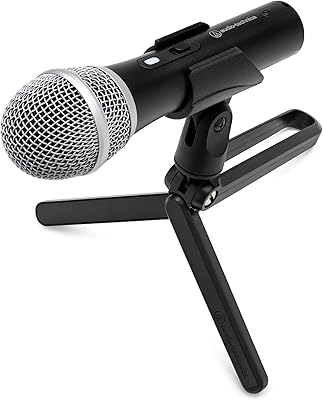
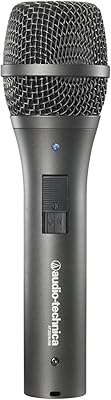
Audio-Technica ATR2100x-USB Cardioid Dynamic Microphone
83%
83%
Voice Clarity
91%
Build Quality
94%
Ease of Setup
89%
Dual Output Versatility
57%
USB Gain Level
More
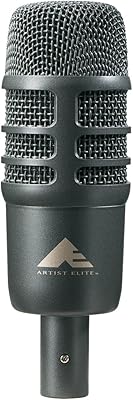
Audio-Technica AE2500 Dual-Element Instrument Microphone
80%
93%
Sound Quality
96%
Phase Coherence
51%
Connectivity & Cabling
91%
Live Performance
94%
Transient Response
More
Audio-Technica AT2005USB
88%
93%
Build Durability
88%
Vocal Clarity
91%
Ambient Noise Rejection
96%
Plug-and-Play Simplicity
87%
Zero-Latency Monitoring
More
Audio-Technica PRO 35
88%
93%
Audio Clarity
96%
High-SPL Handling
89%
Mounting Security
91%
Isolation & Feedback Rejection
87%
Build Durability
More
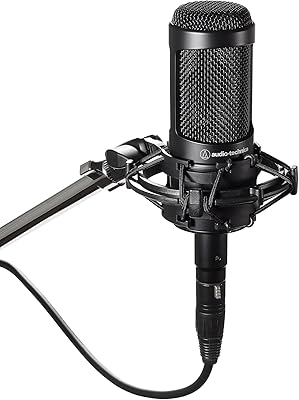
Audio-Technica AT4021 Cardioid Condenser Microphone
81%
93%
Tonal Accuracy
88%
Noise Floor Performance
87%
Build & Durability
84%
Value for Money
92%
Transient Response
More
Audio-Technica AT2020
81%
92%
Vocal Clarity
94%
Build Durability
96%
Value for Money
83%
Background Noise Rejection
62%
Plosive Management
More
Audio-Technica AT2035
87%
91%
Audio Transparency
88%
Build Durability
86%
Self-Noise Levels
93%
High SPL Handling
74%
Environmental Isolation
More
Audio-Technica ATM650 Hypercardioid Dynamic Microphone
78%
84%
Stage Isolation Performance
81%
Build Quality
78%
Handling Noise Rejection
61%
Value for Money
79%
Transient Response
More
Audio-Technica ATM710 Cardioid Condenser Microphone
78%
86%
Vocal Clarity & Detail
74%
Stage Performance
83%
Build Quality
84%
Handling Noise Rejection
81%
Plosive & Sibilance Control
More
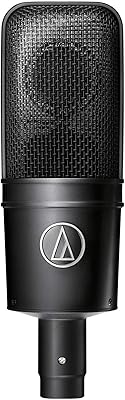
Audio-Technica AT4040
83%
92%
Sound Transparency
88%
Build Quality
86%
Transient Response
83%
Value for Money
84%
Off-Axis Rejection
More

FAQ

No, it does not. The PRO63 is a dynamic microphone, which means it generates its signal passively through electromagnetic induction. You simply plug it into any XLR input on a mixer or interface and it works — no phantom power switch required, and no risk of damage if phantom power is accidentally left on.

It can work for home drum recording, especially on toms, snare, and kick, where you want a mic that handles high sound pressure levels without distorting. That said, it rolls off above 16 kHz, so it will not capture the full sparkle of cymbal overtones the way a condenser would. For a budget home kit recording setup, it is a reasonable option, but dedicated studio condensers will outperform it on overheads.

These two mics are frequent comparisons in the same category. The SM57 has a notably pronounced midrange presence peak that many engineers rely on for guitar amps, while the PRO63 tends to offer a slightly flatter response with higher output from its neodymium magnet. Neither is strictly better — preference often comes down to the specific source and the sound you are after. Both are solid live instrument mics, and some engineers keep both on hand.

Technically yes, but it is not designed with vocals as the primary use case. The two-stage ball head does help control plosive pops, but the frequency response and sensitivity profile are optimized for instruments rather than the full range of the human voice. If vocals are your main need, a dedicated vocal dynamic mic will serve you better.

You need a standard XLR cable — the kind with a three-pin connector on each end. The mic uses an XLRM-type output, which is the standard male XLR that connects to the female XLR input on virtually any mixer, preamp, or audio interface. No adapters or special cabling is required.

Yes, durability is one of the things the PRO63 is consistently praised for. The housing is solid, the gold-plated connector holds up through repeated plugging and unplugging, and gigging musicians have reported using these mics for years without functional degradation. It is not fragile gear — it is built with working musicians in mind.

No, the package includes only the microphone itself. You will need to purchase a microphone clip or stand adapter separately if you plan to mount it on a standard mic stand. Most universal mic clips fit this mic without any issues given its standard form factor.

Absolutely — that is exactly the environment this mic is designed for. It handles high sound pressure levels well, and the cardioid pattern does a good job of rejecting bleed from other nearby instruments on a loud stage. Position it close to the speaker cone at a slight angle and you should get a solid, focused tone through the PA.

Yes, as long as your interface has an XLR input, which virtually all audio interfaces do. It will not work directly with a USB port on a computer or with interfaces that only accept 3.5mm connections. If your interface has an XLR combo jack or a dedicated XLR input, this dynamic mic will connect and work without any additional gear.

Yes, this is one of the use cases where it performs well. Brass instruments produce strong, directional sound and can generate high pressure levels that cheaper mics struggle with. The PRO63 handles that without issue, and the cardioid pattern keeps the pickup focused on the bell of the instrument rather than picking up the whole room.

Where to Buy