

Overview
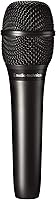
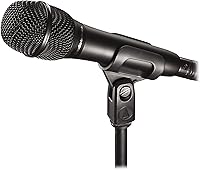
The Audio-Technica AT2010 effectively brings the detailed clarity of a studio condenser to the rugged environment of a live stage. While most touring singers rely on dynamic mics for their durability, this handheld condenser offers a different path by capturing high-frequency nuances that usually get lost in a mix. It is built to bridge that gap, offering the articulate vocal response typical of a recording booth without the fragile nature of a desktop mic. To keep things clean during a high-energy set, it features specialized internal shock mounting to dampen the thuds and scrapes from moving around. This design ensures that the focus remains entirely on the performance, delivering a smooth and natural sound that feels remarkably close to the original source.
Features & Benefits
Performance on a loud stage requires a specific set of tools, and this vocal microphone delivers with a tight cardioid polar pattern. This design is crucial for rejecting off-axis noise, which helps prevent the screech of feedback from floor monitors when the volume climbs. Despite its sensitivity, the AT2010 handles high sound pressure levels with ease, so even the most powerful singers won't worry about digital-sounding distortion. The multi-stage grille is another smart addition, acting as a built-in pop filter to tame aggressive plosives while keeping the high-end detail crisp. Under the hood, a gold-plated XLRM connector ensures a clean, corrosion-resistant signal path for long-term reliability. The fixed-charge back plate provides a fast transient response, making every syllable sound snappy and defined.
Best For
If you find that industry-standard dynamic mics make your voice sound muddy or dark, the AT2010 might be the solution you need. It is particularly well-suited for vocalists who crave extra air and presence in their live mix. Beyond the stage, houses of worship and corporate presenters will appreciate how this handheld condenser brings a professional, high-fidelity edge to speech reinforcement. It also serves as a versatile tool for home studios, offering a familiar form factor for those who feel more comfortable holding a mic than singing into a large-diaphragm unit on a stand. Acoustic performers will also find it useful, as it captures the subtle tonal nuances of both the voice and unplugged instruments with impressive accuracy.
User Feedback
Real-world users frequently praise this handheld condenser for its crisp high-frequency air, often noting it provides a level of detail that a standard SM58 simply cannot match. However, buyers must remember that this vocal microphone requires 48V phantom power to operate, which is a standard feature on most modern mixers but worth double-checking. The physical build earns high marks for its solid, weighty feel, giving performers a sense of confidence during a set. Some reviewers do point out that the AT2010 is more sensitive than a typical dynamic mic, meaning it might pick up a bit more ambient room noise in untreated spaces. Despite this sensitivity, the overall consensus is that the clarity gained far outweighs the need for careful gain staging and proper mic technique.
Pros
- Provides studio-quality vocal clarity that helps singers cut through a dense live mix effortlessly.
- The internal shock mounting effectively dampens minor handling noises during a live performance.
- Handles high sound pressure levels without distortion, even for the most powerful vocalists.
- Built with a rugged all-metal body that feels substantial and durable for regular gigging.
- The multi-stage grille design helps manage plosives while maintaining high-frequency definition.
- Gold-plated XLR connectors ensure a reliable, corrosion-resistant signal path for years of use.
- Offers a much more natural and articulate frequency response than most dynamic stage microphones.
- Excellent for capturing the nuances of acoustic instruments like guitars during unplugged sessions.
Cons
- Strictly requires 48V phantom power to function, which may not be available on all entry-level equipment.
- The AT2010 is more prone to picking up background stage bleed than tighter dynamic microphones.
- Increased sensitivity makes it less forgiving of poor mic technique or heavy-handed movements.
- Can sound overly bright or brittle in rooms with a lot of natural echo or hard surfaces.
- Lacks an on/off switch, which might be a drawback for speakers who manage their own sound.
- Sensitive internal components make it more susceptible to damage from drops compared to a dynamic mic.
- The smooth finish can feel a bit slippery if your hands get particularly sweaty during a long set.
- Captures more room ambience in home studios that are not acoustically treated.
Ratings
Our data analysts synthesized thousands of global buyer experiences to evaluate the Audio-Technica AT2010, ensuring our scores reflect genuine hands-on usage while filtering out incentivized or bot-generated noise. This breakdown highlights where the microphone shines on stage and where technical requirements might catch some users off guard. By balancing verified strengths against common real-world pain points, we provide a transparent look at how this unit performs in the wild.
Vocal Clarity & Articulation
High-Frequency Detail
Feedback Resistance
Handling Noise Suppression
SPL Handling
Build Quality & Durability
Off-Axis Rejection
Plosive Protection
Signal Reliability
Ergonomics & Handheld Feel
Versatility across Applications
Ease of Setup
Suitable for:
The Audio-Technica AT2010 is a standout choice for vocalists who feel like their voice sounds muddy or muffled through standard dynamic microphones. Its condenser capsule captures high-end detail and “air” that usually requires a studio setup, making it ideal for singers in acoustic bands or houses of worship where clarity is paramount. Public speakers and corporate presenters will also appreciate the crisp articulation it provides, ensuring every word reaches the back of the room without straining the listener. If you prefer the comfort of a handheld microphone for your home studio over a stationary desk mic, this unit bridges that gap perfectly.
Not suitable for:
Touring rock bands performing on extremely loud, cramped stages may find the Audio-Technica AT2010 a bit too sensitive compared to a standard SM58. Because it is a condenser, it picks up more ambient stage noise and bleed from nearby drums or guitar amps, which can lead to feedback issues in poorly managed sonic environments. It is also a poor choice for anyone using entry-level karaoke machines or older portable PA systems that lack 48V phantom power, as the mic will not produce any sound without it. Additionally, if you have a very heavy-handed style with lots of mic-tapping or cable-fiddling, the increased sensitivity to handling noise might become a distraction.
Specifications
- Transducer Type: Fixed-charge back plate with a permanently polarized condenser element.
- Polar Pattern: Cardioid pickup pattern for focused sound capture and rear rejection.
- Frequency Range: Audio response spans from 40 Hz to 20,000 Hz.
- Sensitivity: Open circuit sensitivity is rated at –48 dB (3.9 mV) re 1V at 1 Pa.
- Output Impedance: Low impedance design at 100 ohms for long cable runs.
- Max SPL: Handles up to 136 dB SPL at 1 kHz with 1% total harmonic distortion.
- Dynamic Range: Delivers a wide 113 dB dynamic range at 1 kHz at maximum SPL.
- Signal-to-Noise: Provides a 71 dB signal-to-noise ratio at 1 kHz at 1 Pa.
- Power Needs: Requires 48V DC phantom power with a typical 2 mA draw.
- Connection: Equipped with an integral 3-pin gold-plated XLRM-type connector.
- Weight: The unit weighs approximately 8.2 oz (233 g).
- Dimensions: Measures 7.05″ in length with a maximum body diameter of 1.89″.
- Grille Design: Features a multi-stage hardened metal grille for pop and sibilance protection.
- Internal Mount: Specialized internal shock mounting helps isolate the capsule from handling vibrations.
- Finish: Coated in a professional matte black corrosion-resistant finish.
Related Reviews
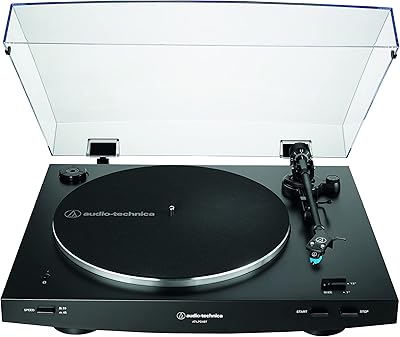
Audio-Technica AT-LP3XBT
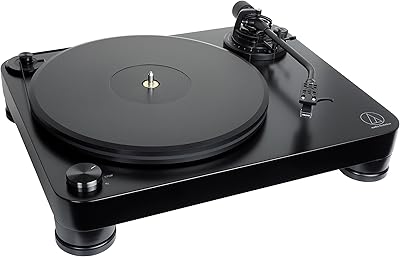
Audio-Technica AT-LP7 Turntable
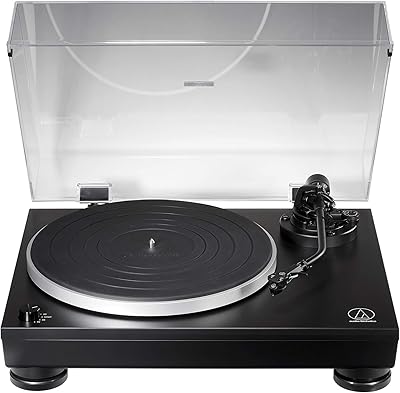
Audio-Technica AT-LP5X
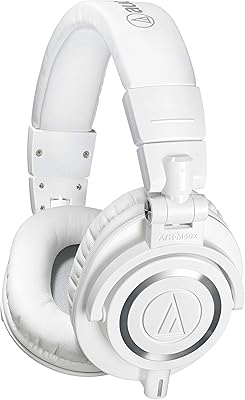
Audio-Technica ATH-M50xWH
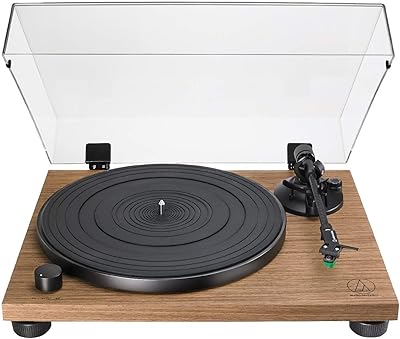
Audio-Technica AT-LPW40WN
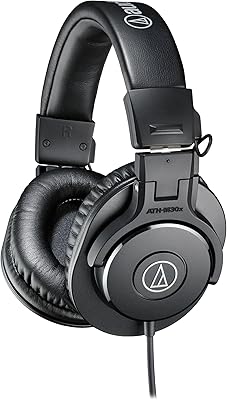
Audio-Technica ATH-M30x
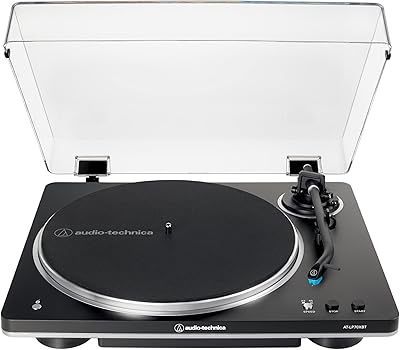
Audio-Technica AT-LP70XBT
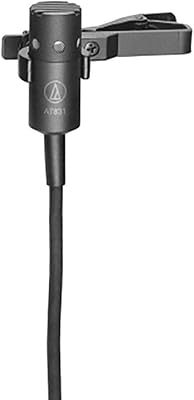
Audio-Technica AT831B Cardioid Lavalier Microphone

Audio-Technica AT875R