Audio-Technica ATM650 Hypercardioid Dynamic Microphone
Overview
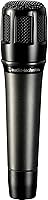
The Audio-Technica ATM650 Hypercardioid Dynamic Microphone has been around since 2004 — long enough that its staying power says something genuine about its reliability in working environments. Audio-Technica holds a well-earned reputation in pro audio, and this instrument mic sits in their practical, stage-ready lineup rather than their high-end studio tier. It was designed with a clear purpose: getting close to loud sound sources and capturing them with minimal interference from whatever else is happening on stage. If you go in expecting a versatile all-rounder that handles vocals and delicate acoustics equally well, you will be let down. This is a specialized live instrument mic, and it rewards buyers who use it exactly that way.
Features & Benefits
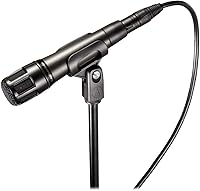
What separates this dynamic mic from standard cardioid alternatives is its hypercardioid polar pattern, which delivers noticeably tighter off-axis rejection. On a crowded stage full of monitor wash and drum bleed, that narrower pickup angle can make a real difference in your final mix. The dual-wall floating capsule construction mechanically isolates the element from stand vibrations and handling noise — something you appreciate immediately if you have ever fought a mic that picks up every knock on the boom arm. A neodymium magnet boosts output level and sharpens transient response compared to standard ceramic magnets. The flat multi-stage grille allows tight placement against an instrument without awkward repositioning, and no phantom power is needed.
Best For
The ATM650 earns its place in a handful of specific, demanding scenarios. Drum engineers will find its compact build and low-profile grille useful for positioning close to a snare or tom without interfering with stick movement. Guitar cabinet miking is another natural fit — the tight polar pattern cuts bleed from neighboring amps significantly, which matters in loud multi-instrument live rigs. Brass and woodwind players in live settings also benefit from the isolation it provides against surrounding stage noise. Touring engineers running multi-mic setups who need consistent unit-to-unit performance will appreciate the corrosion-resistant build. It is not a strong choice for quiet acoustic sessions or controlled studio recording work.
User Feedback
With only 19 ratings and a 3.8-star average, the feedback pool is too small to draw solid conclusions, and that limitation is worth keeping in mind. Buyers who respond positively tend to highlight build quality and isolation as genuine strengths, consistent with what the design actually delivers on stage. On the critical side, some users feel the frequency response does not translate equally well across all instruments, and a few raise value concerns when comparing it to alternatives like the Shure SM57, which carries a larger buyer base and often a lower street price. No single complaint dominates the reviews, but the middling score does suggest a portion of buyers came in with the wrong expectations for this mic's intended purpose.
Pros
- Tight hypercardioid pattern cuts stage bleed significantly in loud live environments.
- Dual-wall floating capsule construction reduces handling and stand vibration noticeably.
- Neodymium magnet improves output level and transient response over standard magnets.
- No phantom power required — just plug into any standard XLR input and go.
- Flat multi-stage grille allows close placement in physically tight spots on a drum kit.
- Corrosion-resistant build holds up well to regular transport and touring conditions.
- Consistent unit-to-unit performance makes it reliable for multi-mic live setups.
- Has been on the market since 2004, suggesting a proven and stable design.
- 80 dB signal-to-noise ratio keeps noise floor low even with high-SPL sources.
Cons
- Only 19 Amazon ratings make it hard to assess real-world reliability across many users.
- A 3.8-star average suggests a meaningful portion of buyers were not fully satisfied.
- Frequency response may not translate equally well across all instrument types.
- Competing options with larger user bases offer more documented performance data for comparison.
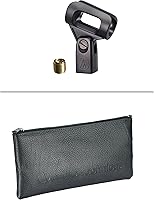
- No carrying case or mount accessories are included, adding to setup costs.
- The specialized design limits resale appeal if your miking needs change over time.
- Some buyers report value concerns relative to similarly priced or lower-priced alternatives.
- Not well suited for any recording scenario outside close-miking loud live instruments.
Ratings
Our AI-generated scores for the Audio-Technica ATM650 Hypercardioid Dynamic Microphone were produced by analyzing verified buyer reviews from multiple global markets, with spam, incentivized, and bot-generated feedback actively filtered out before scoring. The ratings reflect the honest distribution of real user experiences — both where this instrument mic earns genuine praise and where it falls short of expectations for certain buyers.
Stage Isolation Performance
Build Quality
Handling Noise Rejection
Value for Money
Transient Response
Ease of Placement
Compatibility & Setup
Frequency Response Consistency
Durability Over Time
Signal-to-Noise Performance
Unit-to-Unit Consistency
Brand Reputation & Trust
Suitable for:
The Audio-Technica ATM650 Hypercardioid Dynamic Microphone is built for musicians and engineers who need a dependable, purpose-built tool for live instrument miking rather than a jack-of-all-trades solution. Drummers will find it particularly practical — its compact, low-profile form factor positions cleanly near snares, toms, and hi-hats without getting in the way of sticks or brushes. Guitar and bass cabinet engineers working in loud live environments will appreciate how the tight hypercardioid pickup angle reduces bleed from neighboring sound sources, keeping the mix cleaner without heavy EQ correction. Brass and woodwind players performing on busy stages benefit from the same isolation advantage. Sound engineers building out multi-mic stage rigs who need reliable, consistent performance from unit to unit will find this a sensible choice, and the corrosion-resistant build makes it a realistic option for gear that gets packed, transported, and unpacked on a regular touring schedule.
Not suitable for:
Buyers expecting the Audio-Technica ATM650 Hypercardioid Dynamic Microphone to pull double duty as a vocal mic or a quiet acoustic recording tool will likely walk away disappointed. The hypercardioid pattern and dynamic transducer design are optimized for close-miking loud sources in live environments — not for capturing the nuance and air of acoustic guitars, piano, or voice in a controlled studio setting. Podcasters, home studio beginners, or anyone shopping for a single versatile microphone should look elsewhere, as this instrument mic does not serve those needs well. Buyers on the fence about price versus performance may also find stronger value in alternatives like the Shure SM57, which has a much larger user base and broader documented use cases. The relatively small pool of user reviews makes it harder to predict how this dynamic mic will perform across every instrument type, so buyers with very specific frequency response requirements should research carefully before committing.
Specifications
- Polar Pattern: Hypercardioid pickup pattern provides tighter off-axis rejection than a standard cardioid, reducing bleed from surrounding sound sources on stage.
- Transducer Type: Dynamic transducer requires no phantom power and handles high sound pressure levels without distortion.
- Magnet Type: Neodymium magnet delivers higher output sensitivity and faster transient response compared to standard ceramic magnet designs.
- Connector: Standard XLR output connector is compatible with professional mixers, audio interfaces, and stage snake systems.
- Signal-to-Noise Ratio: 80 dB signal-to-noise ratio ensures a clean, low-noise signal even when close-miking loud instruments.
- Audio Sensitivity: Output sensitivity is rated at 56 dB, providing strong signal output suitable for high-SPL instrument sources.
- Construction: Dual-wall floating capsule mount mechanically isolates the element from handling vibration and stand-transmitted noise.
- Grille Design: Multi-stage flat grille profile keeps the mic body low-profile, allowing placement in physically tight spaces near drums or guitar cabs.
- Weight: The mic body weighs 1.25 pounds, making it manageable for standard boom stands and close-mic clip mounts.
- Dimensions: Body measures 5.1 x 9.5 x 2.8 inches, compact enough for tight drum kit positioning without obstructing stick movement.
- Power Source: Corded electric operation with no battery or phantom power requirement; draws signal power passively through the XLR connection.
- Channels: Single mono channel output is standard for close-miking individual instruments in live and recording environments.
- Surface Finish: Corrosion-resistant finish helps the exterior withstand humidity, sweat, and the general wear of regular live touring use.
- Compatibility: Designed for use with standard audio mixers and XLR-equipped interfaces; no proprietary adapters or special connectors required.
- Availability: First made available in July 2004, giving the model over two decades of documented field use in live sound applications.
- Manufacturer: Produced by Audio-Technica U.S., a manufacturer with a long-standing presence in professional microphone design and live sound equipment.
- Model Number: Official model designation is ATM650, part of Audio-Technica's ATM series of instrument microphones.
Related Reviews
Audio-Technica PRO61 Hypercardioid Dynamic Microphone
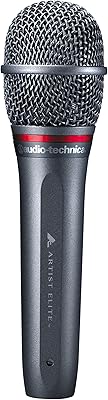
Audio-Technica AE6100 Hypercardioid Dynamic Microphone
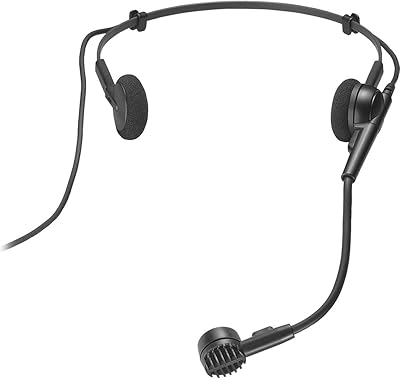
Audio-Technica PRO-8HEMW Headworn Dynamic Microphone
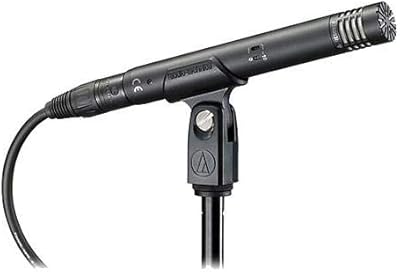
Audio-Technica AT4053B Hypercardioid Condenser Microphone
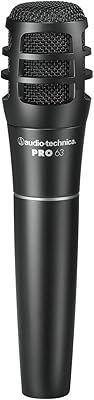
Audio-Technica PRO63 Cardioid Dynamic Instrument Microphone
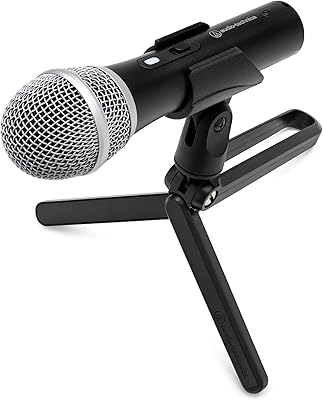
Audio-Technica ATR2100x-USB Cardioid Dynamic Microphone
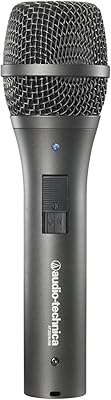
Audio-Technica AT2005USB
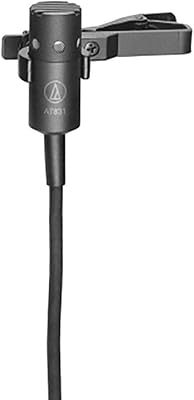
Audio-Technica AT831B Cardioid Lavalier Microphone
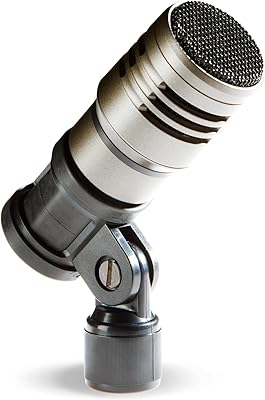
CAD Audio TSM411 Super-Cardioid Dynamic Microphone
