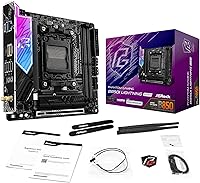
Overview

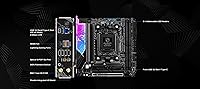
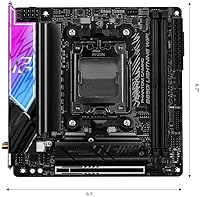
The ASRock B850I Lightning WiFi Mini-ITX Motherboard enters a competitive but underserved space: high-performance builds crammed into a 170x170mm footprint. Built around AMD's B850 chipset, it targets Ryzen 9000, 8000, and 7000 series builders who refuse to sacrifice capability for size. The B850 sits in an interesting middle ground — it offers real overclocking headroom beyond the B650 without demanding the premium of X870. Launched in early 2025, this compact AM5 motherboard lands squarely on the DDR5 platform, staying relevant for current and near-future processor generations. With 72 ratings averaging 3.6 stars, reception is notably mixed — enough to warrant a careful look.
Features & Benefits

Power delivery is where this Mini-ITX board makes a real statement. A 10+1+1 phase design backed by 110A Smart Power Stage modules keeps voltage stable even under sustained loads — important in tight chassis where airflow is limited. Storage options are genuinely strong: a PCIe Gen5x4 M.2 slot handles current flagship SSDs, while a secondary Gen4x4 slot covers everything else. The single PCIe 5.0 x16 slot accommodates the latest GPUs without compromise. DDR5 support stretches to 8200+ MHz with overclocking, though hitting those peak speeds reliably depends heavily on your specific memory kit. Killer 2.5G LAN and WiFi 6E round out a connectivity package that punches well above its class for an ITX board.

Best For

This compact AM5 motherboard is an obvious fit for builders who want a powerful PC in a small enclosure — think living room HTPCs, LAN party rigs, or a desktop that simply doesn't dominate your desk. It suits AMD platform adopters moving to Ryzen 9000 or 8000-series processors who want modern DDR5 support without committing to a large ATX board. The dual M.2 setup, especially with the PCIe Gen5 slot, appeals to storage-heavy workflows where speed genuinely matters. Built-in WiFi 6E also makes it practical for setups where running Ethernet isn't an option. If you're upgrading from a B550 or X570 ITX build, this is a natural next step into the AM5 generation.

User Feedback

With only 72 reviews and a 3.6-star average, the B850I Lightning WiFi sits below what you'd expect from a board in this segment. Positive reviewers tend to praise its feature density and the inclusion of BIOS Flashback — a tool that lets you update firmware without a CPU installed, which is genuinely helpful on a newer platform. Critical voices point more often to BIOS maturity and RAM compatibility issues, both well-known friction points on AM5 boards. Some users also flag that component clearance inside compact cases can get tight. The sample size is still modest, so sentiment here could shift meaningfully as more builders share their experiences over time.

Pros

  • Genuine PCIe Gen5 M.2 slot makes this one of the most storage-capable ITX boards at this price.
  • BIOS Flashback lets you update firmware without a CPU, a real time-saver on the AM5 platform.
  • Built-in WiFi 6E and Bluetooth eliminate the need for a separate wireless card in your build.
  • 10+1+1 phase power delivery with 110A stages is unusually robust for a Mini-ITX design.
  • Killer 2.5G LAN delivers noticeably faster wired speeds than standard gigabit in supported networks.
  • PCIe 5.0 x16 slot keeps your GPU options open well into the next hardware generation.
  • HDMI and USB-C DisplayPort output let you run a monitor without a dedicated GPU if needed.
  • Supports up to 128GB of DDR5 RAM across two DIMM slots, covering even memory-heavy workloads.
  • The B850 chipset offers meaningful overclocking capability without requiring a premium X870 board.

Cons

  • A 3.6-star average from early buyers points to real friction that goes beyond typical ITX trade-offs.
  • RAM compatibility and achieving stable high-speed DDR5 profiles can require trial and error.
  • BIOS maturity is still catching up — some users report needing updates before the system behaves as expected.
  • Only two DIMM slots means no room to expand memory beyond the initial configuration.
  • Tight component spacing inside compact cases can complicate cable management and cooler installation.
  • A single PCIe slot leaves no room for add-in cards if your GPU is already occupying it.
  • Limited SATA ports restrict traditional hard drive or SATA SSD storage expansion.
  • The review pool of 72 ratings is still small, making it harder to judge long-term reliability with confidence.
  • Users sensitive to VRM temperatures in poorly ventilated cases may need to plan cooling carefully.

Ratings

Our AI-generated scores for the ASRock B850I Lightning WiFi Mini-ITX Motherboard were produced by analyzing verified global buyer reviews, with spam, bot activity, and incentivized feedback actively filtered out before scoring. The result is a transparent picture of where this compact AM5 board genuinely delivers and where real-world builders have run into friction. Both the strengths and the pain points are reflected honestly across every category below.
Feature Density
88%
For a 170x170mm board, the list of included hardware is hard to argue with — PCIe 5.0 GPU slot, dual M.2 including a Gen5 slot, 2.5G LAN, WiFi 6E, and display output all on a single ITX board. Builders who've priced out comparable options quickly notice how much ground this compact AM5 motherboard covers without add-in cards.
Having this many features crammed onto a small PCB means physical space for cables and cooler clearance is tighter than average. A handful of users found that accessing certain connectors required partial disassembly after the initial build was seated in a compact case.
BIOS Maturity
54%
46%
ASRock has been pushing firmware updates since launch, and users who stay current report a noticeably more stable experience than early adopters encountered. BIOS Flashback — which lets you update without a CPU installed — has been consistently praised as a practical lifesaver on the AM5 platform.
This is one of the most frequently cited pain points across reviews. Early buyers reported instability, missing features, and behaviors that required multiple BIOS revisions to resolve. For a board launched in early 2025, the firmware still feels like it is catching up rather than fully baked.
DDR5 Compatibility
57%
43%
When a memory kit is on the tested compatibility list and runs at its rated EXPO or XMP profile, the experience is solid. Dual-channel DDR5 at mid-range speeds works reliably for the majority of users who stick to well-supported kits from major brands.
Pushing toward the advertised 8200+ MHz ceiling is where things get complicated. Multiple reviewers flagged that achieving stable high-speed DDR5 profiles required significant manual tuning, and some kits simply would not POST at rated speeds without intervention. RAM compatibility is the single most common complaint in the review pool.
VRM & Power Delivery
76%
24%
The 10+1+1 phase design with 110A Smart Power Stage modules is a genuinely capable implementation for an ITX board, handling mid-to-high-end Ryzen processors without obvious instability under normal workloads. Builders running Ryzen 7 and Ryzen 9 chips in well-ventilated cases report no thermal throttling concerns.
In tighter cases with limited airflow, VRM temperatures have drawn some attention. This is not unique to this board, but it is worth factoring into case selection — passive or low-airflow ITX enclosures are not the ideal pairing for sustained CPU-heavy workloads.
Build Quality
81%
19%
The physical construction of the B850I Lightning WiFi earns consistent praise across reviews, with users noting solid PCB rigidity, well-seated M.2 slots, and a rear I/O shield that aligns cleanly. For a mid-range board, the material quality feels a step above what the price bracket typically delivers.
A small number of users reported QC concerns such as bent pins on the AM5 socket and inconsistent PCIe slot retention. These appear to be isolated incidents rather than a systemic problem, but they are worth noting for buyers who won't have easy return access.
Storage Performance
87%
Having a PCIe Gen5 x4 M.2 slot on an ITX board is a genuine differentiator — builders running top-tier NVMe drives like the Samsung 990 Pro or WD Black SN850X get full bandwidth without compromise. The secondary Gen4 slot handles everything else cleanly, covering most real-world storage setups without any bottleneck.
With only two M.2 slots and limited SATA ports, builders who need heavy multi-drive configurations will hit a ceiling quickly. The storage layout is optimized for speed over quantity, which suits most SFF builds but may frustrate users migrating from larger systems with more drives.
Wireless Connectivity
83%
WiFi 6E performs reliably in everyday use, with users noting strong signal stability and low latency on 6GHz bands when connecting to a compatible router. Having both 2.5G LAN and WiFi 6E built in means you genuinely have premium options on both sides of the connectivity equation.
A few users noted that the included antenna cables are on the shorter side, which can limit placement flexibility inside taller or unusually laid-out ITX cases. Bluetooth performance has been described as functional but unremarkable compared to dedicated adapters.
Installation Experience
62%
38%
Builders familiar with ITX builds generally found the layout logical, and the BIOS Flashback button on the rear I/O is a thoughtful touch that simplifies initial setup. The manual is reasonably detailed by motherboard standards.
First-time SFF builders flagged a steeper-than-expected learning curve, particularly around memory slot access and front-panel header placement. Component density makes it easy to accidentally unseat a cable during a second pass, and tight chassis make corrections frustrating.
Overclocking Headroom
71%
29%
The B850 chipset unlocks CPU and memory overclocking that the B650 does not, and experienced tuners have reported meaningful gains with compatible Ryzen 9000 series processors. For users who enjoy extracting extra performance manually, the headroom here is real.
Getting stable results at aggressive memory frequencies demands patience and a compatible kit, and not all users are willing to invest that time. Casual builders who expect XMP to just work at the advertised ceiling will sometimes be disappointed without manual BIOS intervention.
Value for Money
73%
27%
The feature-to-price ratio is competitive when the board is firing on all cylinders — getting PCIe 5.0 storage, WiFi 6E, and a robust VRM in a Mini-ITX package at this price point is legitimately difficult to match from other brands. Builders who do their homework on memory compatibility tend to feel the price is justified.
For buyers who encounter BIOS instability or RAM compatibility issues out of the box, the value proposition erodes quickly. Time spent troubleshooting effectively raises the real cost of ownership, and some reviewers felt they were paying to beta-test firmware.
Display Output
78%
22%
Having both HDMI and USB-C with DisplayPort Alt-mode on the rear I/O gives builders real flexibility for running a monitor without a discrete GPU — particularly useful for Ryzen 8000 series APU builds or temporary setup before a GPU arrives. Both outputs work reliably according to users who tested them.
Neither output supports 4K at 120Hz, which limits their usefulness for high-refresh monitor setups. These ports are best treated as secondary or convenience options rather than primary display solutions for gaming.
Thermal Management
69%
31%
In open-air or well-ventilated ITX cases with active airflow across the VRM area, thermal performance is reasonable and sustained loads are handled without visible throttling on mid-range Ryzen CPUs. The board does not run unusually hot under typical desktop and gaming workloads.
Passive or restricted-airflow enclosures expose the VRM section's limitations more readily. Users building in ultra-compact cases with minimal fan throughput should plan their airflow path carefully to avoid sustained temperature creep under load.
Long-Term Reliability
63%
37%
Boards that have been running smoothly after a successful initial setup — including BIOS updates and a compatible memory kit — have shown no notable failure patterns in the review window. Build quality and component selection suggest this board has a reasonable durability ceiling.
The combination of a relatively new platform, an early firmware state, and a modest 72-review sample size makes long-term reliability hard to assess with confidence. Buyers should consider that the full reliability picture is still developing and may look different in 12 months.

Suitable for:

The ASRock B850I Lightning WiFi Mini-ITX Motherboard is built for a specific kind of builder — one who wants genuine performance hardware in the smallest possible footprint. If you're putting together a compact gaming rig, a living room PC, or a portable workstation that needs to travel, this compact AM5 motherboard checks a lot of practical boxes. Ryzen 9000, 8000, or 7000 series owners who've been waiting for a capable ITX option on DDR5 will find the feature set here hard to match at this price point. The dual M.2 slots — one of which runs at PCIe Gen5 speeds — make it particularly appealing for creators or developers who move large files regularly and need fast storage without occupying a full-size case. Built-in WiFi 6E and 2.5G LAN also make it a strong pick for anyone setting up in a room where cable runs aren't practical, removing the need for a separate wireless adapter entirely.
Not suitable for:

The ASRock B850I Lightning WiFi Mini-ITX Motherboard is not the right call for everyone, and being honest about that matters. If you're not constrained by space, a mid-range ATX or Micro-ATX board will typically offer better airflow options for VRMs, more DIMM slots, additional PCIe lanes, and a broader ecosystem of tested memory compatibility — often at a similar price. Builders who push DDR5 overclocking hard should know that hitting the advertised 8200+ MHz ceiling is a best-case scenario; real-world stability at those speeds varies significantly by kit and requires tuning patience. If BIOS confidence is important to you and you'd rather not troubleshoot firmware updates on a relatively new platform, the mixed user feedback here suggests this board still has some maturing to do. Those needing multiple GPU slots, extensive USB expansion, or heavy multi-drive SATA setups will also find the ITX form factor too limiting regardless of which board they choose.
Specifications

  • Form Factor: Mini-ITX layout measuring 170x170mm, designed to fit standard small form factor cases with Mini-ITX support.
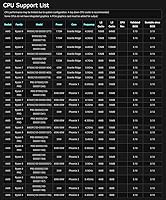
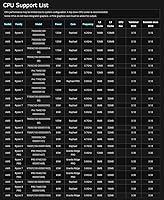
  • CPU Socket: AMD Socket AM5, compatible with Ryzen 9000, 8000, and 7000 series processors.
  • Chipset: AMD B850 chipset, offering overclocking support and PCIe 5.0 bandwidth beyond the entry-level B650.
  • Memory Slots: Two DDR5 DIMM slots supporting dual-channel configurations with a maximum capacity of 128GB.
  • Memory Speed: Native and overclocked DDR5 profiles supported up to 8200+ MHz (OC) depending on memory kit compatibility.
  • PCIe Slot: One PCIe 5.0 x16 slot for discrete graphics cards, providing full bandwidth for current and next-generation GPUs.
  • M.2 Slot 1: Blazing M.2 slot running at PCIe Gen5 x4 speeds, suited for the fastest available NVMe SSDs.
  • M.2 Slot 2: Hyper M.2 slot running at PCIe Gen4 x4, compatible with the current mainstream NVMe SSD ecosystem.
  • SATA Storage: SATA3 interface at 6.0 Gb/s supports traditional SSD or hard drive connections for supplemental storage.
  • Wired Network: Killer 2.5G Ethernet LAN port delivers wired network speeds up to 2.5 Gigabits per second.
  • Wireless: Intel-based WiFi 6E with Bluetooth provides tri-band wireless connectivity and low-latency wireless performance.
  • Display Output: Rear I/O includes one HDMI port and one USB Type-C port with DisplayPort Alt-mode for monitor output.
  • Power Design: 10+1+1 phase VRM with 110A Smart Power Stage modules for stable CPU power delivery under sustained load.
  • BIOS Feature: BIOS Flashback allows firmware updates via USB without a CPU or memory installed in the board.
  • Battery: Requires one CR2032 coin cell battery for the real-time clock, included with the board.
  • Weight: The board weighs 2.4 pounds without accessories, typical for a feature-dense Mini-ITX design.
  • Platform: Certified for Windows 11 and compatible with current AMD Ryzen platform software and driver ecosystems.
  • Launch Date: First made available in January 2025, making it one of the earlier B850 chipset ITX boards on the market.

Related Reviews
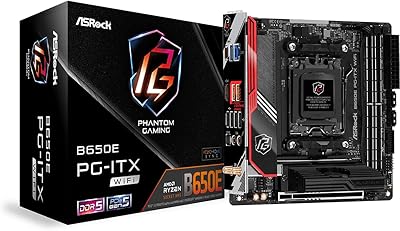
ASRock B650E PG-ITX WiFi Mini-ITX Motherboard
70%
91%
Platform Capability
83%
Power Delivery
61%
DDR5 Compatibility
58%
BIOS Maturity
88%
Form Factor & Design
More
ASRock A520M-ITX/AC Mini ITX Motherboard
87%
87%
Performance
91%
Build Quality
90%
Setup & Installation
85%
Wi-Fi and Bluetooth Connectivity
93%
Processor Compatibility
More
ASRock B650M PG Lightning WiFi Micro-ATX Motherboard
76%
88%
Value for Money
79%
Build Quality
86%
BIOS Experience
84%
WiFi 6E Performance
91%
Installation & Setup
More
GIGABYTE H610I Mini-ITX DDR5 Motherboard
68%
78%
Value for Money
81%
Build Quality
86%
Ease of Installation
74%
CPU Compatibility
76%
DDR5 Memory Support
More
ASRock Z790 PG Lightning ATX Motherboard
73%
84%
Value for Money
81%
Build Quality
77%
CPU Power Delivery
79%
Memory Compatibility
66%
BIOS Experience
More
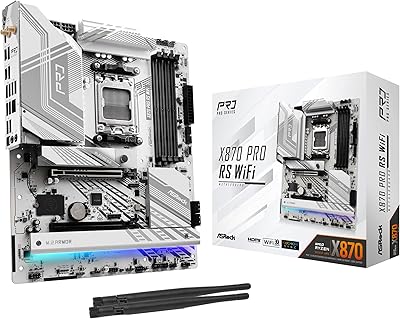
ASRock X870 Pro RS WiFi Motherboard
84%
91%
Performance
95%
Connectivity Options
88%
Stability and Overclocking
70%
Ease of Setup
94%
DDR5 Compatibility
More
ASRock B650M PG Riptide WiFi AM5 Motherboard
79%
88%
Value for Money
79%
Build Quality
91%
CPU Compatibility
71%
VRM & Power Delivery
84%
BIOS Experience
More
MINISFORUM BD790I X3D Mini ITX Motherboard
78%
91%
CPU Performance
88%
Build Quality
84%
Thermal Management
89%
Storage Performance
61%
BIOS Maturity
More
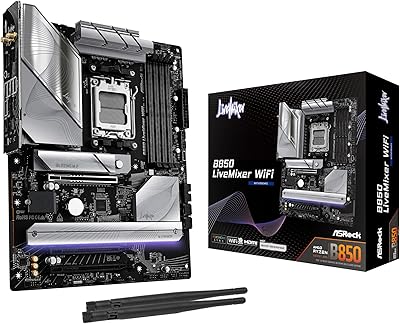
ASRock B850 LiveMixer WiFi Motherboard
79%
88%
VRM & Power Delivery
86%
Memory Compatibility
91%
PCIe 5.0 & M.2 Storage
84%
BIOS Experience
79%
WiFi 7 Performance
More
GIGABYTE B550I AORUS PRO AX Mini-ITX Motherboard
84%
93%
Feature Density
88%
VRM & Power Delivery
91%
Wireless Connectivity
89%
Storage Options
74%
BIOS & Software
More

FAQ

Yes, the socket AM5 design supports Ryzen 7000, 8000, and 9000 series processors, so the 7700X is fully compatible. You may want to check for a BIOS update if your CPU is on the newer end of that range, just to be safe.

Technically yes, but practically it depends heavily on your specific memory kit and how much time you want to spend tuning. The 8200+ MHz figure is an overclocked ceiling, not a guaranteed out-of-the-box speed. Most users will see better stability running their RAM at its rated XMP or EXPO profile first and pushing further from there.

BIOS Flashback lets you update the motherboard firmware using just a USB drive, without needing a CPU or RAM installed. On the AM5 platform, where BIOS versions can affect CPU compatibility significantly, this feature is genuinely useful — especially if you buy the board ahead of a new processor launch. It has saved a lot of builders from a frustrating dead-end situation.

Yes, it follows the standard 170x170mm Mini-ITX spec, so it will fit any case that supports Mini-ITX motherboards. That said, component clearance inside compact cases can be tight, so check your cooler and RAM heights against your case specs before buying.

It is a strong option for a compact gaming PC, particularly if you value a Gen5 M.2 slot and PCIe 5.0 GPU support in a small chassis. The main trade-off is that ITX boards inherently offer fewer expansion options, and some users have flagged BIOS quirks that needed updating before everything ran smoothly. If you go in prepared to do a BIOS update early on, the gaming performance foundation here is solid.

You get two M.2 slots — one PCIe Gen5 and one Gen4 — plus SATA3 connections for traditional drives. For most compact builds that is more than enough, though the ITX form factor does limit total drive count compared to larger boards.

WiFi 6E and Bluetooth are built in, so no add-in card is needed. The antennas typically connect to the rear I/O bracket, and setup is straightforward once drivers are installed.

Yes, the board includes both an HDMI port and a USB-C port with DisplayPort Alt-mode on the rear I/O, so you can connect a monitor directly as long as your CPU has integrated graphics. Ryzen 8000 series processors include integrated graphics; most Ryzen 7000 and 9000 non-G models do not.

The mixed reviews mostly point to two recurring themes: RAM compatibility challenges when running high-speed DDR5 profiles, and BIOS maturity issues that were more common around the board's early launch window. Neither is unusual for a newer platform board, and ASRock has been pushing firmware updates. It is worth checking that your BIOS is current before drawing conclusions about stability.

The B850 gives you PCIe 5.0 support and solid overclocking capability at a more accessible price than X870. The main things X870 adds are USB4 on more ports, slightly more PCIe lane flexibility, and a higher-tier feature set overall. For most ITX builders, B850 hits the sweet spot — you get the modern platform without paying the full flagship premium.