Overview

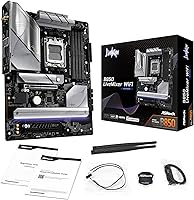
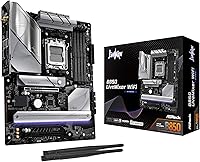
The ASRock B850 LiveMixer WiFi Motherboard arrived in January 2025 as a compelling answer to one specific question: how much modern platform capability can you pack into a B-series board before the price climbs into X870 territory? Quite a lot, it turns out. What sets this B850 board apart visually is the LiveMixer aesthetic — a stylized, colorful design that breaks from the monotone look dominating most boards at this tier. Hitting #76 in Computer Motherboards on Amazon points to genuine buyer traction rather than just spec-sheet curiosity. The value density is real, though a few trade-offs are worth understanding before committing.
Features & Benefits

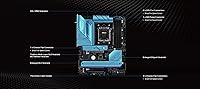
The power delivery setup on the LiveMixer WiFi is where things get genuinely interesting for anyone running a Ryzen 9000 chip under extended workloads. A 14+2+1 phase VRM backed by 80A Dr.MOS components means the board handles sustained CPU loads without the voltage droop cheaper boards sometimes show under pressure. The PCIe 5.0 x16 slot paired with a Gen5x4 M.2 slot provides real future-proofing at a price point where that is far from guaranteed. WiFi 7 onboard saves a PCIe slot and eliminates adapter cost entirely. The front-panel USB 3.2 Gen2x2 Type-C header typically appears only on pricier boards, and BIOS Flashback lets you update firmware without a working CPU installed.

Best For

ASRock's B850 offering makes the most sense for a builder pairing it with a Ryzen 9000 or 7000 series processor who wants solid overclocking headroom without paying for an X870 chipset. The windowed-case crowd will especially appreciate the LiveMixer's distinctive look — it is not just another black PCB. Going wireless? The integrated WiFi 7 means one less adapter, one less decision. Anyone already eyeing PCIe 5.0 SSDs will be glad they do not need to swap platforms to get there. Where it falls short: if you still rely on several traditional drives, two SATA ports will feel limiting fast. ASUS's ROG Strix B850-F offers more SATA headroom, but at a noticeably higher price.

User Feedback

Buyers consistently highlight how approachable the BIOS is, with memory hitting rated XMP speeds right out of the box — not something every B-series board gets right on the first boot. The visual design draws consistent praise, particularly from builders who invest in their overall build aesthetic. On the downside, the two-SATA-port limitation comes up often enough to flag seriously; anyone with more than a couple of older drives will hit a wall quickly. A handful of users also note that large air coolers can sit uncomfortably close to the nearest M.2 slot. WiFi 7 gets positive marks overall, and compared to competing B850 boards from MSI or Gigabyte, most buyers feel the feature set justifies the choice.

Pros

  • The 14+2+1 phase VRM handles sustained Ryzen 9000 loads confidently without throttling under pressure.
  • PCIe 5.0 support for both the GPU slot and primary M.2 slot is rare at this price tier.
  • WiFi 7 is included out of the box, saving the cost and hassle of a separate adapter.
  • BIOS Flashback lets you update firmware without needing a compatible CPU already installed — a genuine convenience.
  • DDR5 memory hits XMP speeds reliably on first boot, which is not a given with every B850 board.
  • The front-panel USB 3.2 Gen2x2 Type-C header is a feature most competing boards reserve for pricier models.
  • The LiveMixer visual design stands out in a windowed case without needing extra RGB accessories.
  • Realtek 2.5G LAN provides a meaningful bandwidth step up from standard gigabit for wired users.
  • BIOS navigation is approachable enough for first-time AM5 builders while offering enough depth for experienced overclockers.
  • Three M.2 slots total — one Gen5 and two Gen4 — give strong NVMe flexibility for current and future drives.

Cons

  • Only two SATA ports is a hard stop for anyone needing more than two legacy storage devices.
  • Large air CPU coolers may partially obstruct the nearest M.2 slot depending on cooler dimensions.
  • No built-in 10G LAN option for users with high-throughput network needs in a home lab setup.
  • The LiveMixer aesthetic may not appeal to builders going for a minimalist or all-black build theme.
  • B850 chipset still limits some advanced overclocking features compared to X870 for serious tuning enthusiasts.
  • Bluetooth and WiFi 7 add value only if you actually use wireless — wired-only builders are paying for unused hardware.
  • Only two SATA ports with no onboard SATA expansion headers means no easy workaround without an add-in card.
  • The board is ATX only — compact or mATX case builds are simply not an option here.

Ratings

The scores below for the ASRock B850 LiveMixer WiFi Motherboard were generated by AI after systematically analyzing verified global buyer reviews, actively filtering out incentivized, bot-generated, and duplicate submissions to surface what real builders actually experienced. Both the standout strengths and the recurring frustrations are reflected honestly in each category — no category has been softened to protect the overall impression. If a trade-off matters to real buyers, you will find it scored and explained here.
VRM & Power Delivery
88%
Builders running Ryzen 9000 chips under sustained workloads — rendering, long gaming sessions, heavy compilation — consistently report stable voltage without thermal throttling. The 80A Dr.MOS components give this board a power delivery foundation that genuinely punches above the typical B-series expectation.
A small number of users attempting aggressive all-core overclocks on higher-TDP Ryzen 9000X chips noted the VRM running noticeably warm without active airflow over the heatsink. Cases with poor top-area airflow should factor this in.
Memory Compatibility
86%
Out-of-box XMP and EXPO profile loading is reliable across most DDR5 kits in the 6000–7200 MHz range, and a significant portion of buyers report hitting rated speeds on the first boot without manual intervention. This saves real time during a new build.
A few users with higher-binned DDR5 kits pushing toward 8000 MHz reported needing multiple BIOS attempts or manual sub-timing adjustments to achieve full stability. Edge-case kit compatibility is not perfect, as with most B850 boards.
PCIe 5.0 & M.2 Storage
91%
Having a Gen5x4 M.2 slot alongside two Gen4x4 slots at this price tier is genuinely uncommon and draws consistent praise from buyers planning to adopt high-speed NVMe storage now or soon. Builders appreciate not being forced to upgrade the board when they move to PCIe 5.0 SSDs.
The Gen5 slot does run warm under sustained read/write loads, and a handful of users noted that the passive heatsink coverage on that slot is adequate but not exceptional for drives that already run hot by design.
BIOS Experience
84%
First-time AM5 builders repeatedly call out how approachable the BIOS layout is compared to competing boards, with logical menu organization and clear labeling. BIOS Flashback further reduces anxiety for new builders who may receive a board with older firmware.
Some more experienced overclockers feel the advanced tuning menus lack the depth and granularity found in ASUS's UEFI or MSI's Click BIOS at comparable price points, particularly for fine-grained memory sub-timing control.
WiFi 7 Performance
79%
21%
Users who upgraded from WiFi 6E adapters report noticeably more consistent throughput, particularly in congested multi-router environments. For wireless-first builds in apartments or offices with many competing networks, the real-world improvement is tangible.
The full benefit requires a WiFi 7 router, which many buyers do not yet own, creating a gap between theoretical capability and current real-world gains. A handful also report the antenna positioning making a meaningful difference — poor routing leads to weaker signal.
SATA Connectivity
47%
53%
The two included SATA3 ports are reliable and run at full 6 Gb/s bandwidth without any configuration required, making them fine for builders with a single SSD or HDD alongside their NVMe primary drive.
Two SATA ports is the single most cited frustration across buyer reviews, and rightfully so. Anyone migrating drives from an older build or running a home media setup routinely hits this ceiling immediately, requiring an expansion card that adds cost and complexity.
USB Connectivity
82%
18%
The front-panel USB 3.2 Gen2x2 Type-C header stands out as a feature buyers typically associate with boards costing significantly more, and users with modern cases featuring high-speed front ports genuinely notice the faster transfer speeds during day-to-day use.
The rear USB port count is adequate but not abundant — power users with multiple peripherals, external drives, and dongles simultaneously connected may find themselves reaching for a hub more often than they would like.
Aesthetic & Design
87%
The LiveMixer visual identity consistently earns praise in windowed-case builds, with buyers noting it avoids the anonymous look of most boards at this tier. Open-frame showcase rigs benefit particularly, and the design photographs well for social builds.
The style is distinctly personality-forward, which is polarizing — builders going for a minimal or monochromatic build theme find it clashes rather than complements. There is no subdued colorway option for those who prefer understated hardware.
Thermal Management
73%
27%
Under typical gaming and productivity workloads, heatsink coverage across the VRM and M.2 areas keeps temperatures in a comfortable range. Most users running mid-tower cases with reasonable airflow report no thermal-related issues during normal operation.
Edge cases with poor case airflow or high-ambient-temperature environments reveal that the VRM heatsink and Gen5 M.2 cover are on the smaller side. A targeted case fan aimed at the top of the board makes a measurable difference in these scenarios.
Value for Money
89%
Buyers consistently express that this B850 board delivers a feature set that would have required stepping up to a higher-cost chipset just one generation ago. PCIe 5.0, WiFi 7, a strong VRM, and a Gen5 M.2 slot together represent strong value concentration at the asking price.
The value calculation shifts for buyers who will not use WiFi and do not need PCIe 5.0 storage immediately — in that narrower scenario, cheaper B850 options exist that meet those specific needs without paying for features that will sit unused.
Build Quality
83%
The board feels solid in hand during installation, with well-reinforced M.2 slots, a latched PCIe 5.0 x16 slot for GPU retention, and consistent connector quality reported across multiple buyer batches from the January 2025 launch onward.
A small number of buyers noted that the M.2 screw standoffs felt less precise than expected during installation, requiring careful alignment. Nothing structurally concerning, but a minor fit-and-finish detail that more expensive boards handle more cleanly.
Software & Utilities
64%
36%
The LiveMixer software utility covers RGB sync, audio tuning, and basic monitoring in a single install, which is convenient enough for builders who want a one-stop ASRock dashboard without juggling multiple applications.
Several users describe the software as functional but unpolished compared to ASUS Armoury Crate or MSI Center, with occasional UI quirks and inconsistent background process behavior reported after extended use. It is not a selling point in its own right.
Cooler Compatibility
68%
32%
Standard ATX mounting holes follow AMD's AM5 specification precisely, and the board installs without issues using the vast majority of current AM5 coolers, including popular towers from Noctua, Deepcool, and be quiet!
Users with large dual-tower coolers have flagged proximity concerns with the top M.2 slot and nearby capacitors, with a small number reporting the cooler backplate putting pressure on components during tightening. Checking clearance maps before buying a large air cooler is genuinely necessary here.
Connectivity Breadth
81%
19%
The combination of 2.5G LAN, WiFi 7, Bluetooth, front USB 3.2 Gen2x2, and multiple M.2 slots covers the connectivity needs of most modern builds in a single board without add-in cards or adapters, which buyers consistently appreciate.
The absence of Thunderbolt 4 or USB4 on rear I/O is the one area where the connectivity story falls short for users with Thunderbolt peripherals or high-speed external storage enclosures requiring that standard.
Installation Experience
85%
Buyers — including self-described first-time builders — consistently describe installation as smooth, crediting the clear BIOS layout, reliable XMP loading, and the overall logical component placement on the board as reducing build anxiety meaningfully.
The included manual, while adequate, lacks the step-by-step detail that would help true beginners navigate BIOS Flashback or EXPO profile selection confidently. Online resources fill the gap, but the printed documentation could be more thorough.

Suitable for:

The ASRock B850 LiveMixer WiFi Motherboard is a strong pick for anyone building around a Ryzen 9000, 8000, or 7000 series processor who wants a platform that can handle modern workloads without immediately hitting a ceiling. The robust VRM makes it a particularly good fit for content creators, streamers, or power users who leave their machines running demanding tasks for hours at a stretch — this is not a board that cuts corners on CPU power delivery. Builders who plan to adopt PCIe 5.0 NVMe storage in the near term will appreciate not having to swap boards to get there. The integrated WiFi 7 makes it an easy recommendation for wireless-first setups or clean desk builds where running Ethernet is not practical. Anyone putting their system in a windowed case will find the LiveMixer aesthetic a genuine differentiator compared to the sea of identical dark PCBs at this price tier.
Not suitable for:

If your storage setup relies heavily on traditional SATA drives — think multiple HDDs for a home server or NAS-adjacent rig — the ASRock B850 LiveMixer WiFi Motherboard will create immediate headaches with its two-port SATA limit. Builders who need more than a pair of legacy drives should either invest in a SATA expansion card or look at alternatives like the ASUS ROG Strix B850-F, which provides more SATA connectivity out of the box. Users running very large air coolers should also verify clearance carefully, as the nearest M.2 slot can end up partially obstructed depending on the cooler's footprint. If you are looking for the absolute top tier of B850 overclocking support with extensive tuning software ecosystems, X870 boards offer a more mature platform for that use case. Finally, buyers who have no need for WiFi and are looking purely for the lowest-cost AM5 entry point may find they are paying for features they will never use.
Specifications

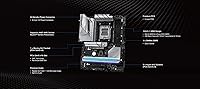
  • Chipset: The board uses the AMD B850 chipset, which sits below X870 in ASRock's AM5 lineup but still supports PCIe 5.0 and USB 3.2 Gen2x2 natively.
  • CPU Socket: Socket AM5 (LGA1718) is used, supporting AMD Ryzen 9000, 8000, and 7000 series processors.
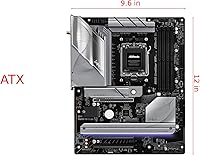
  • Form Factor: Standard ATX form factor measures approximately 12 × 9.6 inches, fitting most mid-tower and full-tower cases.
  • Memory Slots: Four DDR5 DIMM slots support dual-channel configurations with a maximum installed capacity of 256GB.
  • Memory Speed: Officially rated for DDR5 speeds up to 8000+ MHz under XMP/EXPO overclocking profiles.
  • VRM Design: A 14+2+1 phase power delivery system uses 80A Dr.MOS components to supply stable voltage to the CPU, SOC, and MISC rails.
  • PCIe Slot: One full-length PCIe 5.0 x16 slot is provided for discrete graphics cards.
  • M.2 Storage: Three M.2 slots are included: one Gen5x4 (Blazing) and two Gen4x4 (Hyper), all supporting NVMe SSDs.
  • SATA Ports: Two SATA3 ports running at 6.0 Gb/s are available for traditional HDDs or SSDs.
  • Wireless: Integrated WiFi 7 and Bluetooth are included, with no separate adapter or PCIe card required.
  • Wired LAN: A Realtek 2.5 Gigabit Ethernet controller handles wired network connectivity.
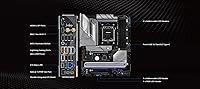
  • Rear USB: Rear I/O includes USB 3.2 Gen2 Type-C and Type-A ports alongside additional USB 3.2 Gen1 connections.
  • Front USB: A USB 3.2 Gen2x2 Type-C front-panel header delivers up to 20 Gbps for compatible case front ports.
  • Video Output: One HDMI port and one DisplayPort output allow direct display connection when using a Ryzen processor with integrated graphics.
  • BIOS Flashback: The BIOS Flashback feature allows firmware updates using only a USB drive and a power connection, with no installed CPU required.
  • Audio: Onboard audio is present; the LiveMixer branding also references ASRock's software-based audio tuning utility included with the board.
  • Battery: One CR2032 coin cell battery (included) powers the real-time clock and CMOS memory retention when the system is unpowered.
  • Board Weight: The board itself weighs 4.44 pounds, which is typical for a fully featured ATX motherboard with integrated I/O shield.
  • Release Date: The board became commercially available in January 2025, positioning it as a current-generation AM5 platform option.
  • Warranty: ASRock typically provides a limited three-year manufacturer warranty on its motherboards, though buyers should confirm regional terms at purchase.

Related Reviews
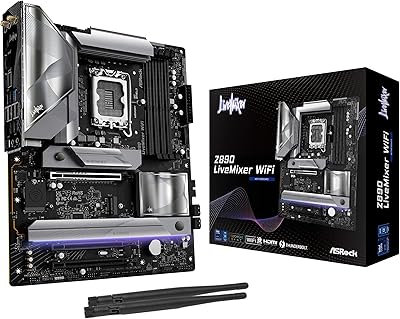
ASRock Z890 LiveMixer WiFi 7 DDR5 ATX Motherboard
87%
94%
Performance
92%
WiFi Connectivity
88%
Build Quality
89%
Overclocking Potential
91%
I/O and Port Availability
More
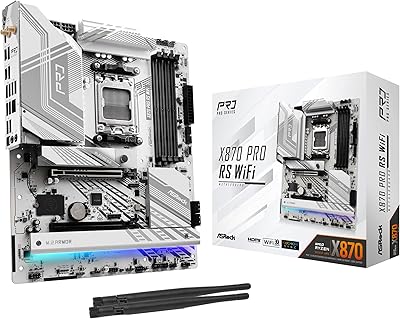
ASRock X870 Pro RS WiFi Motherboard
84%
91%
Performance
95%
Connectivity Options
88%
Stability and Overclocking
70%
Ease of Setup
94%
DDR5 Compatibility
More
ASRock B650M PG Riptide WiFi AM5 Motherboard
79%
88%
Value for Money
79%
Build Quality
91%
CPU Compatibility
71%
VRM & Power Delivery
84%
BIOS Experience
More
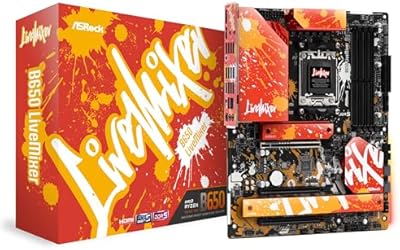
ASRock B650 LIVEMIXER AM5 DDR5 Motherboard
87%
91%
Performance with Ryzen 7000 Processors
89%
Build Quality
92%
PCIe Gen 5 & Expansion Slots
86%
Audio Quality (7.1-channel & Nahimic)
75%
Ease of Installation
More
MSI B850 Gaming Plus WiFi Motherboard
86%
92%
Performance
90%
Cooling Efficiency
88%
Connectivity Options
85%
Build Quality
80%
Ease of Installation
More
MSI MPG B850 Edge TI WiFi Motherboard
86%
91%
Performance
89%
Build Quality
93%
Cooling Efficiency
75%
Ease of Installation
90%
Wi-Fi and Connectivity
More
ASRock B850i Lightning WiFi Mini ITX Motherboard
85%
91%
Performance
88%
Build Quality
93%
Overclocking Stability
89%
Connectivity
75%
Ease of Setup
More
ASUS ROG Strix B850-I Mini-ITX Motherboard
82%
91%
Build Quality
88%
BIOS Usability
93%
Power Delivery
74%
Thermal Management
89%
Connectivity & I/O
More
ASUS ROG Strix B850-A ATX Motherboard
83%
93%
Power Delivery
88%
BIOS Experience
86%
Storage Throughput
91%
Wireless Connectivity
89%
Build & Aesthetics
More
ASRock B650M PG Lightning WiFi 6E Motherboard
85%
88%
Overall Performance
91%
WiFi 6E Performance
86%
Build Quality
94%
Compatibility with AMD Ryzen 7000
83%
Ease of Setup
More

FAQ

It works fine with Ryzen 7000 series chips on the AM5 socket. You do not need to buy a newer Ryzen 9000 CPU to use this board — any current AM5 processor from the 7000, 8000, or 9000 lineup is compatible.

Possibly, depending on when the board was manufactured. The good news is that the BIOS Flashback feature lets you flash the latest firmware using just a USB drive and a power cable — no working CPU needed. It is worth doing this before your first boot if you are pairing it with a brand-new Ryzen 9000 chip.

For most home users, WiFi 7 is not going to transform your experience overnight since it depends on having a WiFi 7 router to see the full benefit. That said, even on a WiFi 6E router the onboard adapter performs well, and having WiFi 7 built in means you are ready when your router catches up without spending anything extra on an adapter.

Unfortunately, no. The board only has two SATA ports, so you can connect a maximum of two SATA devices without adding an expansion card. If you need more than that, either plan to use NVMe drives for additional storage or budget for a SATA expansion card.

It can, depending on the specific cooler. A handful of users have reported that very wide air coolers sit uncomfortably close to the top M.2 slot. Before buying, check your cooler's dimensions against ASRock's board layout diagram, which is available in the product manual on their website.

It handles DDR5 overclocking well, with official support for XMP and EXPO profiles up to 8000+ MHz. In practice, most DDR5 kits in the 6000–7200 MHz range load their profiles reliably on the first boot without manual tweaking.

LiveMixer is ASRock's bundled utility that covers audio tuning, RGB lighting control, and some system monitoring. It is entirely optional — the board works perfectly without it. If you care about customizing audio presets or syncing lighting across components, it is worth installing; otherwise, feel free to skip it.

Both, actually. The primary M.2 slot is Gen5x4, which supports the latest PCIe 5.0 NVMe drives capable of exceeding 10,000 MB/s read speeds. The x16 slot also runs PCIe 5.0 for your graphics card. The remaining two M.2 slots are Gen4x4, which is still very fast for current drives.

It is genuinely accessible for first-time builders. The BIOS is well-organized, memory kits tend to load XMP profiles without fuss, and the BIOS Flashback feature removes a lot of the anxiety around firmware compatibility. You do not need to be an overclocking veteran to get stable, well-performing results out of this board.

The LiveMixer WiFi competes well on feature density — the combination of PCIe 5.0 M.2, WiFi 7, and a strong VRM at this price is hard to match. Where boards like the MSI MAG B850 Tomahawk or ASUS TUF B850-Plus have an edge is in SATA port count and sometimes in software ecosystem maturity. If SATA storage or brand software preference matters to you, those alternatives are worth comparing side by side before deciding.