Overview

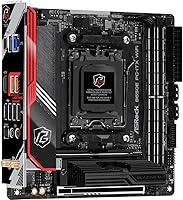
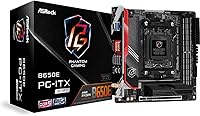
The ASRock B650E PG-ITX WiFi Mini-ITX Motherboard occupies one of the most specific niches in PC building: a high-end AM5 board crammed into a compact 17×17cm footprint. Mini-ITX choices for Ryzen 7000 are genuinely scarce, and most of those that exist make chipset compromises. This one doesn't — it runs the B650E platform, meaning full PCIe 5.0 support rather than the watered-down B650 variant. That said, a 3.6-star average across 77 reviews is a flag worth reading carefully. This is a board for enthusiasts who understand exactly what they are trading away by going small.
Features & Benefits

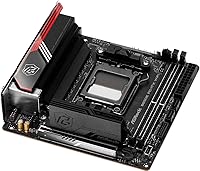
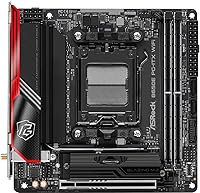
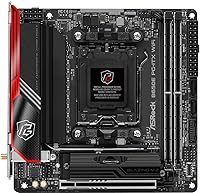
The B650E PG-ITX WiFi packs a surprising amount of capability into its compact frame. The PCIe 5.0 x16 slot is the headline — given you only ever get one expansion slot in a Mini-ITX build anyway, having it run at full gen-5 bandwidth future-proofs GPU upgrades meaningfully. The 10+2+1 phase power design with Smart Power Stage controllers handles sustained CPU loads better than you might expect from a board this size, which matters when airflow inside a tight case is limited. DDR5 support reaches 6400+ MHz with overclocking, though you are capped at two DIMM slots and 64 GB total. Built-in WiFi and an HDMI output round out a feature set that punches well above its footprint.

Best For

This Mini-ITX AM5 board is purpose-built for a specific kind of builder. If you are putting together a compact living room PC, a mini workstation, or a small gaming rig around a Ryzen 7000 series CPU, this is one of the very few boards that lets you do it without sacrificing chipset tier. Gamers who want PCIe 5.0 GPU readiness in a small chassis will find few alternatives at this level. However, it is not the right pick for everyone. If you need more than two RAM slots, multiple M.2 storage drives, or extensive overclocking headroom, the Mini-ITX constraint will frustrate you quickly.

User Feedback

The B650E PG-ITX WiFi's 3.6-star average from 77 ratings is worth interpreting carefully — it is neither a resounding endorsement nor a clear warning, but it does reflect a divided user base. Owners who praise it tend to appreciate its form factor rarity and the sheer density of features packed into such a small board. Critics point to BIOS maturity issues, DDR5 training instability that plagued early AM5 boards broadly, and thermal management challenges inside tight SFF cases. Some negative reviews read more like compatibility frustrations than fundamental product failures. With only 77 total ratings, the sample size is thin, so treat the average score as a directional signal rather than a final verdict.

Pros

  • One of the only Mini-ITX boards on the AM5 platform that uses the full B650E chipset rather than a cut-down variant.
  • PCIe 5.0 x16 support means your GPU slot is ready for current and next-generation graphics cards without any compromise.
  • The 10+2+1 Smart Power Stage design delivers stable, sustained power to demanding Ryzen 7000 processors even inside thermally tight cases.
  • DDR5 overclocking up to 6400+ MHz gives memory enthusiasts real headroom for performance tuning.
  • Onboard HDMI and eDP outputs make it a practical choice for HTPC and iGPU-only builds.
  • Integrated WiFi removes the need for a separate wireless card in a chassis where every slot and cable counts.
  • The compact ASRock motherboard fits a wide range of Mini-ITX cases, giving builders flexibility in chassis selection.
  • 64 GB maximum RAM capacity covers the vast majority of gaming, streaming, and prosumer workloads comfortably.

Cons

  • Only two DIMM slots means you must buy your maximum RAM configuration upfront — there is no room to expand later.
  • DDR5 training instability was a known pain point on early AM5 boards, and some owners report compatibility friction with certain kits.
  • BIOS maturity at launch was a recurring complaint; users who bought early faced a steeper troubleshooting curve.
  • Thermal management inside tight SFF cases can be a real challenge — this board does not compensate for poor case airflow.
  • The 3.6-star average across just 77 reviews makes it hard to draw firm conclusions about long-term reliability.
  • M.2 storage expansion is limited compared to ATX or mATX alternatives at a similar chipset tier.
  • The WiFi specification listed is ambiguous; buyers should verify the exact standard before assuming WiFi 6E capability.
  • Premium pricing for a Mini-ITX board leaves little financial cushion if compatibility issues require returns or replacements.

Ratings

The scores below for the ASRock B650E PG-ITX WiFi Mini-ITX Motherboard were produced by our AI rating engine after analyzing verified buyer reviews from global markets, with spam, bot-generated, and incentivized feedback actively filtered out before scoring. Each category reflects the honest distribution of praise and frustration found across real ownership experiences — nothing is softened to protect the score. Where this board genuinely stands out and where it falls short are both reflected with equal weight.
Platform Capability
91%
Enthusiasts consistently highlight that running the full B650E chipset in a Mini-ITX board is genuinely rare — most compact AM5 boards step down to standard B650. Builders appreciate having PCIe 5.0 on the primary GPU slot without any bandwidth compromise, which is especially relevant as Gen 5 graphics cards become mainstream.
A handful of users expected B650E to unlock more overclocking flexibility, only to find that the Mini-ITX power and thermal constraints impose their own ceiling independent of chipset capability. The chipset advantage is real but not unlimited.
Power Delivery
83%
The 10+2+1 phase design with Smart Power Stage controllers earns consistent praise from builders running mid-to-high-end Ryzen 7000 CPUs under sustained workloads like video rendering and gaming sessions. Owners report stable voltage delivery even inside compact cases with limited airflow.
Users pairing this board with top-tier 170W TDP processors inside very restrictive chassis — under 8 liters — have reported thermal throttling tied to VRM heat buildup during extended stress tests. The power delivery is solid, but it has a ceiling that tight cases can expose.
DDR5 Compatibility
61%
39%
When RAM kits from the official QVL are used, owners generally report stable operation and successful XMP or EXPO profile activation at speeds well above base DDR5 rates. The memory controller ceiling above 6000 MHz is appreciated by performance-focused builders.
DDR5 training instability at launch was one of the most common complaints across reviews, with multiple users spending hours troubleshooting kits that were technically supported. While BIOS updates have improved this substantially, users who bought kits outside the QVL still report inconsistent boot behavior and occasional POST failures.
BIOS Maturity
58%
42%
Owners who updated to later BIOS revisions report a meaningfully better experience, with improved RAM compatibility, more reliable boot sequences, and fewer manual tweaking requirements. ASRock has continued pushing updates since the October 2022 launch, which buyers on later production runs benefit from directly.
Early adopters were hit hardest — multiple reviews describe frustrating experiences with the initial BIOS versions, including RAM instability, difficult EXPO profile activation, and sparse tuning options compared to ATX-class boards. The BIOS is functional now, but it left a permanent mark on the board's overall review average.
Form Factor & Design
88%
Builders who have handled this board consistently comment on the component layout quality — fitting a PCIe 5.0 slot, DDR5 support, onboard WiFi, and a multi-phase power design onto a 17×17 cm PCB without obvious layout compromises is genuinely impressive engineering. The board fits standard Mini-ITX cases without adapter issues.
Some builders note that the M.2 slot placement makes installation awkward inside very compact chassis, requiring GPU removal to access storage. Component density, while impressive, also means less airflow clearance around the VRM heatsink than you would find on a larger board.
Storage Expansion
54%
46%
The available M.2 slot supports NVMe SSDs at speeds appropriate for the platform, and for single-drive builds — which many SFF systems are — the onboard storage connectivity is entirely sufficient. Builders focused on a clean, cable-minimal setup appreciate not needing a SATA data cable at all.
Users coming from ATX or mATX platforms feel the storage expansion limitation acutely. With only one or two M.2 slots and limited SATA headers, anyone who wants a primary NVMe drive plus a secondary storage drive quickly runs out of native options, and adding a PCIe storage card means sacrificing the only GPU slot.
WiFi & Connectivity
74%
26%
Having integrated wireless is a meaningful practical benefit in Mini-ITX builds where adding a PCIe WiFi card is simply not an option. Owners building HTPC or bedroom gaming rigs appreciate not having to route an ethernet cable, and Bluetooth connectivity adds peripheral flexibility without dongles.
The WiFi specification is ambiguously documented — the listed 802.11a reference confused multiple buyers who expected clarity on whether they were getting WiFi 6 or WiFi 6E capability. For a board at this price tier, buyers reasonably expect transparent wireless specs, and the ambiguity created unnecessary friction.
Integrated Display Output
77%
23%
The onboard HDMI port works reliably with Ryzen 7000 CPUs that carry integrated graphics, making this board genuinely viable as an HTPC foundation. Living room PC builders running Plex, streaming apps, or light desktop tasks without a discrete GPU report a stable, no-fuss display experience.
The eDP connector is practical for embedded display applications but rarely useful in a standard desktop or HTPC build. Buyers expecting multiple display outputs for a multi-monitor iGPU setup will find the output options limited, and the HDMI spec should be confirmed for 4K 120Hz support before assuming capability.
Memory Capacity Ceiling
66%
34%
For gaming, home theater, and general prosumer workloads, 64 GB across two DIMM slots is enough — most Ryzen 7000 gaming builds run comfortably on 32 GB, leaving room to upgrade later. The DDR5 platform also means future high-density DIMMs will push the practical ceiling higher as prices drop.
Two DIMM slots means no incremental upgrade path — you buy your final configuration upfront or you replace both sticks when you want more RAM. Builders who anticipate memory-heavy workloads like large virtual machines, professional video editing, or RAMdisk setups will feel the two-slot constraint more sharply over time.
Thermal Management
63%
37%
In cases with reasonable airflow — particularly those designed with SFF thermals in mind — the VRM heatsink keeps temperatures within safe operating ranges under typical gaming and productivity loads. Builders in well-ventilated chassis report no sustained throttling with mid-range Ryzen processors.
In thermally aggressive scenarios — dense cases, high ambient temperatures, or power-hungry CPUs — VRM temperatures climb faster than expected, and sustained all-core workloads can trigger protective throttling. This is partly an SFF physics problem, not purely a board flaw, but it is a real constraint buyers need to plan for.
USB & Rear I/O
71%
29%
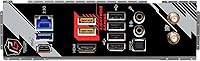
The rear I/O panel includes a useful mix of USB 3.2 Gen 2 Type-A and Type-C ports alongside legacy connectivity, which covers most peripheral and storage needs for a compact daily driver. Builders setting up a clean desk configuration appreciate having enough ports to avoid a hub.
Mini-ITX naturally limits rear I/O real estate, and some users feel the port count is tight for a build intended as a primary workstation. The absence of Thunderbolt 4 on the rear panel is a notable gap for users who connect high-bandwidth external displays or storage enclosures.
Value for Money
67%
33%
For buyers who specifically need a B650E chipset in Mini-ITX form — and understand that alternatives are nearly nonexistent — the pricing reflects genuine market scarcity rather than arbitrary premium. The feature density for the size is objectively high, and enthusiasts who need exactly this board find the value proposition defensible.
For buyers who are not locked into Mini-ITX, the same budget applied to a micro-ATX or ATX B650E board buys significantly more expansion, better BIOS options, and more storage slots. The value equation only holds if the form factor is a hard requirement, not a preference.
Documentation & Setup Experience
59%
41%
The included manual covers the physical installation process adequately, and ASRock's online support resources — including BIOS download pages and compatibility lists — are accessible and reasonably maintained. Experienced builders report a standard setup process with no missing hardware in the box.
First-time builders and users new to DDR5 consistently report that the documentation does not sufficiently address early AM5 RAM training quirks or BIOS update procedures before first boot. Several negative reviews trace back to setup confusion that better documentation or an included quick-start card could have prevented.
Long-Term Reliability
69%
31%
Owners who got past the initial DDR5 stabilization period and updated to current BIOS versions largely report a stable, issue-free experience over months of daily use. The board appears to be durably built for its segment, with no widespread reports of premature hardware failure surfacing in reviews.
The low review volume — 77 ratings — limits confidence in any long-term reliability assessment. With such a small sample, a cluster of early failures or persistent edge-case issues could shift the score meaningfully, and the current data simply does not provide the statistical depth needed for a high-confidence reliability verdict.

Suitable for:

The ASRock B650E PG-ITX WiFi Mini-ITX Motherboard was built for a narrow but passionate group of PC builders — those who refuse to accept a chipset downgrade just because they want a small machine. SFF enthusiasts putting together a Ryzen 7000 build inside a compact chassis will find this one of the only boards that checks all the right boxes without forcing compromises on connectivity or platform capability. Home theater PC builders will appreciate the onboard HDMI output, which lets a Ryzen CPU with integrated graphics drive a display without a discrete card. Gamers who want their small form factor rig ready for next-generation GPUs will value the full PCIe 5.0 x16 slot, a feature that simply does not show up often at this size. Secondary workstation builders — people adding a capable compact machine to their desk setup — will also find the power delivery robust enough to run a demanding Ryzen chip without throttling concerns.
Not suitable for:

Builders with broader or more demanding requirements will run into real walls with the B650E PG-ITX WiFi fairly quickly. If you need four RAM slots to push past 64 GB or to run a quad-channel-style configuration, this board cannot help you — two DIMM slots is a hard ceiling on this platform. Users who rely on multiple M.2 NVMe drives for large storage arrays or professional media workflows will find the expansion options frustratingly limited. Anyone planning serious manual overclocking should also look elsewhere; while the power delivery is competent, Mini-ITX thermal constraints and limited BIOS tuning depth on B650E ITX boards generally do not favor aggressive CPU overclocking. The 3.6-star average from a relatively small pool of reviews also suggests that first-time builders or users unfamiliar with DDR5 training quirks and SFF case compatibility research may have a rougher experience than expected.

Specifications

  • Form Factor: Mini-ITX (17 × 17 cm), designed for compact small form factor chassis builds.
  • CPU Socket: AMD Socket AM5, compatible exclusively with AMD Ryzen 7000 series processors.
  • Chipset: AMD B650E, the extended variant that enables full PCIe 5.0 support across the platform.
  • Memory Slots: Two DDR5 DIMM slots supporting a maximum installed capacity of 64 GB.
  • Memory Speed: Native DDR5 at 3200 MHz with overclocking support rated up to 6400+ MHz.
  • PCIe Slot: One PCIe 5.0 x16 slot for discrete graphics card installation.
  • Power Design: 10+2+1 phase power delivery using Smart Power Stage (SPS) controllers for stable CPU power under sustained load.
  • Display Output: One HDMI port and one eDP connector for integrated graphics display output.
  • Wireless: Integrated WiFi adapter with Bluetooth; listed as 802.11a — buyers should confirm the exact WiFi generation (likely WiFi 6E) before purchase.
  • USB Ports: Rear I/O includes a combination of USB 3.2 Gen 2 Type-A and Type-C ports, with additional internal headers for front-panel connectivity.
  • Storage: Onboard M.2 slot support for NVMe SSDs; expansion is limited relative to larger form factor boards.
  • Audio: Integrated Realtek HD audio codec with rear I/O audio jacks for analog output and input.
  • LAN: Onboard 2.5 Gigabit Ethernet controller for wired network connectivity.
  • Weight: The board weighs 2.2 pounds, typical for a densely populated Mini-ITX design.
  • OS Support: Compatible with Windows 10 and later versions of Windows; Linux compatibility varies by distribution and driver availability.
  • Release Date: First made available in October 2022, coinciding with the broader AM5 platform launch window.

Related Reviews
ASRock B850i Lightning WiFi Mini ITX Motherboard
85%
91%
Performance
88%
Build Quality
93%
Overclocking Stability
89%
Connectivity
75%
Ease of Setup
More
ASRock A520M-ITX/AC Mini ITX Motherboard
87%
87%
Performance
91%
Build Quality
90%
Setup & Installation
85%
Wi-Fi and Bluetooth Connectivity
93%
Processor Compatibility
More
ASRock B650M PG Riptide WiFi AM5 Motherboard
79%
88%
Value for Money
79%
Build Quality
91%
CPU Compatibility
71%
VRM & Power Delivery
84%
BIOS Experience
More
ASRock B650M PG Lightning WiFi Micro-ATX Motherboard
76%
88%
Value for Money
79%
Build Quality
86%
BIOS Experience
84%
WiFi 6E Performance
91%
Installation & Setup
More
ASRock Z790 PG Lightning ATX Motherboard
73%
84%
Value for Money
81%
Build Quality
77%
CPU Power Delivery
79%
Memory Compatibility
66%
BIOS Experience
More
GIGABYTE H610I Mini-ITX Motherboard
85%
89%
Performance
85%
Build Quality
92%
Value for Money
91%
Ease of Installation
75%
Connectivity Options
More
ASRock X870 Pro RS WiFi Motherboard
84%
91%
Performance
95%
Connectivity Options
88%
Stability and Overclocking
70%
Ease of Setup
94%
DDR5 Compatibility
More
ASRock B550 Phantom Gaming 4 ATX Motherboard
79%
93%
Value for Money
91%
CPU Compatibility
84%
Storage Flexibility
89%
BIOS Experience
78%
Power Delivery
More
MINISFORUM BD790I X3D Mini ITX Motherboard
78%
91%
CPU Performance
88%
Build Quality
84%
Thermal Management
89%
Storage Performance
61%
BIOS Maturity
More
ASUS ROG Strix B650E-I Mini-ITX Motherboard
81%
91%
VRM & Power Delivery
94%
Feature Set for Form Factor
83%
BIOS & Software Experience
74%
DDR5 Memory Compatibility
88%
Wireless Connectivity
More

FAQ

It is designed for the full AMD Ryzen 7000 series lineup on Socket AM5, which includes standard, X, and X3D variants. That said, X3D processors can run warm, so make sure your SFF case has adequate airflow — the board's power delivery is competent, but thermal headroom inside tight chassis is always the limiting factor.

The board includes M.2 slots, but the count is limited compared to full-size ATX boards — this is an inherent constraint of the Mini-ITX footprint. If your build depends on running two or more NVMe drives simultaneously, you will likely need to use a USB or PCIe M.2 expansion card, which then conflicts with your only GPU slot.

The WiFi module on this compact ASRock motherboard uses an M.2 Key-E slot, which means it is technically replaceable if you want to swap in a different WiFi card. The listed spec references 802.11a, but the actual included card is expected to be a more modern standard — confirm this with ASRock or check the product manual before assuming WiFi 6E is included.

ECC memory support on B650E consumer boards is not officially guaranteed, and ASRock does not prominently advertise ECC compatibility for this model. If ECC is a hard requirement for your workload, a professional-grade AMD platform would be a more reliable foundation.

Early AM5 boards, including this one at launch, had well-documented DDR5 training instability — particularly with high-speed kits running XMP or EXPO profiles. BIOS updates have improved this significantly over time, but it is still worth cross-referencing ASRock's official memory QVL (Qualified Vendor List) before buying RAM to avoid compatibility headaches.

On the B650E chipset, PCIe 5.0 is guaranteed for the primary x16 graphics slot. PCIe 5.0 M.2 NVMe support depends on the specific board routing — check ASRock's specification sheet for the B650E PG-ITX WiFi to confirm whether any M.2 slot runs at Gen 5 speeds, as this varies by board design.

Yes, the onboard HDMI port is connected to the CPU's integrated display output, so it works with Ryzen 7000 series processors that include integrated graphics — which is most of the lineup. Just make sure your specific Ryzen CPU is not a GPU-less variant (the models without an iGPU will not drive any display output without a discrete card).

The board supports standard AM5 cooler mounting, so it is mechanically compatible with most AM5-rated coolers. Whether a large air cooler physically fits depends entirely on your case, not the board. In most Mini-ITX builds, cooler height is the binding constraint — check your case's maximum CPU cooler clearance spec before buying a tall tower cooler.

The 3.6-star average from 77 reviews is worth taking seriously but not at face value. A meaningful portion of negative reviews on AM5 launch-era boards trace back to DDR5 instability and BIOS immaturity — issues that are largely resolved through firmware updates today. That said, the review pool is small, so the score reflects a noisier-than-usual signal. Reading individual reviews for patterns is more useful here than relying on the aggregate number alone.

It follows the standard Mini-ITX form factor, so it fits any case designed for Mini-ITX boards — there is no proprietary sizing involved. The more relevant compatibility check is rear I/O cutout alignment and CPU cooler height clearance, both of which vary by case. If you are pairing this with a particularly compact case like those under 10 liters, double-check cooler and GPU length compatibility before committing.

Where to Buy