Overview

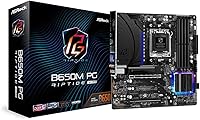
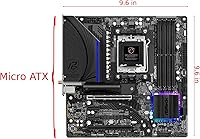
The ASRock B650M PG Riptide WiFi AM5 Motherboard arrived at a time when affordable AM5 options were genuinely scarce, making it one of the more practical early choices for builders who wanted to adopt AMD's latest platform without stretching their budget. It runs on the B650 chipset, which handles everything most mid-range builds will ever need — PCIe 4.0 support, DDR5 memory, and solid platform longevity. Worth noting upfront: this is a Micro-ATX board, so double-check your case dimensions before buying. For builders who don't need the extra connectivity overhead of X670, this tier hits a sensible balance between cost and capability.
Features & Benefits

The 12+2+1 power phase setup with Dr.MOS components gives this board enough VRM muscle for a Ryzen 5 or Ryzen 7 without breaking a sweat, though it's not built for pushing a Ryzen 9 under extreme sustained loads. Four DDR5 slots support up to 128GB and can run memory at 6200MHz with XMP profiles, which is a real upgrade over DDR4 setups. Two PCIe 4.0 x16 slots cover your GPU and any NVMe expansion cards cleanly. Built-in Wi-Fi 6 and Bluetooth remove the need for a separate wireless card entirely — a genuine convenience for compact builds where extra slots are precious.

Best For

This ASRock motherboard is a natural fit for first-time AM5 builders who want a reliable, modern platform without overpaying for features they'll never use. If you're pairing it with a Ryzen 5 7600 or Ryzen 7 7700, you'll get everything you need and nothing you don't. It also suits AM4 upgraders ready to move to DDR5 who want built-in wireless without buying extras. Just keep in mind this is a Micro-ATX board — it works in most mid-tower cases but won't fit a full ATX slot. Single-GPU gaming rigs and compact home office builds are the sweet spot here.

User Feedback

Most owners of the Riptide WiFi come away satisfied, particularly praising straightforward BIOS navigation and how quickly the board posts on a first build. The value-for-money reputation holds up well in community discussions, where it frequently gets recommended over pricier B650 alternatives. On the critical side, a handful of users have flagged that VRM temperatures can climb noticeably when running productivity workloads for extended periods — adding a case fan with good airflow over the VRM area is a common workaround. BIOS updates have been fairly consistent, though some users note ASRock's support response times can vary. Wi-Fi connectivity is generally praised as reliable out of the box.

Pros

  • Built-in Wi-Fi 6 and Bluetooth mean one less card to buy and one less slot used up.
  • DDR5 support up to 6200MHz gives real memory bandwidth headroom for current and near-future CPUs.
  • The B650 chipset covers PCIe 4.0 storage and GPU needs for the vast majority of mid-range builds.
  • BIOS is consistently praised for being approachable, even for first-time builders.
  • Four RAM slots and up to 128GB capacity leave plenty of room to expand memory down the road.
  • Dual PCIe 4.0 x16 slots handle a GPU plus an add-in NVMe card without compromising bandwidth.
  • Micro-ATX sizing works well in a wide range of mid-tower and compact cases.
  • 12 USB 2.0 ports provide generous connectivity for peripherals without needing a hub.
  • Strong value positioning among early AM5 boards makes it one of the more cost-efficient platform entries.
  • Compatible with Ryzen 7000, 8000, and 9000 series CPUs, giving the platform solid longevity.

Cons

  • VRM temperatures can climb under prolonged heavy CPU loads, requiring deliberate case airflow planning.
  • No PCIe 5.0 support limits future-proofing for users who want next-gen storage speeds.
  • Onboard audio is basic — dedicated sound card users or audiophiles will notice the gap immediately.
  • Rear I/O panel is relatively sparse compared to competing boards at a similar price point.
  • ASRock customer support response times have been inconsistent based on user reports.
  • The Micro-ATX form factor can be a sourcing headache if your chosen case only fits ATX boards.
  • Limited RGB headers may frustrate builders with elaborate lighting setups.
  • Wi-Fi antenna setup has confused some users, with the included hardware feeling a bit flimsy.
  • No Thunderbolt support, which matters for creators using high-speed external devices.
  • BIOS update cadence, while decent, has occasionally lagged behind for newer Ryzen CPU compatibility patches.

Ratings

The scores below for the ASRock B650M PG Riptide WiFi AM5 Motherboard were generated by our AI system after analyzing verified buyer reviews from multiple global markets, with spam, bot-submitted, and incentivized feedback actively filtered out. We've weighted both the praise and the frustrations equally, so what you see here reflects real-world ownership — not marketing. Strengths and genuine pain points are reflected transparently across every category.
Value for Money
88%
Among early AM5 boards, this one consistently gets called out as one of the smarter buys at its price tier. Builders who compared it against competing B650 options frequently noted that getting Wi-Fi 6 and Bluetooth included without paying a premium felt like a genuine win, not a compromise.
A few buyers felt the price crept slightly higher than ideal once they factored in needing new DDR5 RAM to go with it. The overall platform cost — board plus DDR5 kit — can sting for budget-first upgraders coming from AM4.
Build Quality
79%
21%
The enlarged VRM heatsink gives the board a more substantial feel than you might expect at this price point, and most users reported solid physical construction with no issues around slot reinforcement or connector wobble during installation.
The Wi-Fi antenna hardware feels noticeably lightweight and cheap compared to the rest of the board, which some users found frustrating. A handful of reviewers also noted that the overall aesthetic is functional rather than impressive — fine for a closed case, less so for a windowed panel build.
CPU Compatibility
91%
Supporting Ryzen 7000, 8000, and 9000 series in a single socket is a real platform longevity advantage. Builders who picked this board early have been able to drop in newer-generation chips without swapping boards, which is exactly what AM5 promised.
A small number of users received units with older BIOS versions that required a CPU-compatible chip to flash before newer processors would boot — a frustrating catch-22 for first-time builders without a spare chip on hand.
VRM & Power Delivery
71%
29%
For Ryzen 5 and Ryzen 7 builds running everyday gaming or office workloads, the 12+2+1 Dr.MOS power stage handles thermals without issue. Most users pairing this board with a 65W or 105W CPU reported no throttling or instability.
Under extended productivity loads — long video renders, sustained multi-threaded tasks — VRM temperatures climb enough that case airflow becomes a real consideration rather than an optional one. Users running Ryzen 9 chips have flagged thermal discomfort more consistently.
BIOS Experience
84%
First-time builders in particular praised how quickly they got a stable system running without needing to dig deep into advanced settings. Enabling XMP or EXPO for DDR5 memory is handled cleanly in EZ Mode, which reduces a common early-build frustration significantly.
BIOS update cadence has occasionally lagged behind for brand-new Ryzen CPU compatibility, leaving some users waiting longer than expected after a CPU launch. The advanced mode, while functional, lacks the visual polish of some competing brands.
Memory Performance
83%
DDR5 support up to 6200MHz gives builders real headroom beyond base speeds, and most users found XMP profiles loaded without drama on reputable memory kits. Four slots with 128GB ceiling means the platform stays relevant as RAM requirements grow.
A subset of users reported that pushing memory above 6000MHz required additional BIOS tuning to maintain stability, which can be frustrating for builders expecting plug-and-play XMP behavior at the highest advertised speeds.
Wireless Connectivity
77%
23%
Wi-Fi 6 performs reliably for gaming and streaming in typical home environments, and the vast majority of users reported clean, stable connections after initial setup. Having Bluetooth onboard is a quiet but practical bonus for wireless peripherals.
The antenna design and placement drew some criticism — the included antenna is basic, and users in larger homes or environments with more interference noted the signal strength was adequate but not exceptional. A few users reported the antenna connector felt fragile during installation.
Expansion & Storage
81%
19%
Two M.2 PCIe 4.0 slots cover the storage needs of virtually any mid-range build, and the dual PCIe 4.0 x16 slots give GPU installation and add-in cards genuine bandwidth rather than a compromised shared lane setup.
There is no PCIe 5.0 support anywhere on the board, which is a real ceiling for builders planning to adopt next-generation NVMe storage. For most users today this is irrelevant, but it is worth knowing if you are building with a multi-year upgrade mindset.
USB & I/O
74%
26%
Twelve USB 2.0 ports is a surprisingly generous count that covers keyboard, mouse, USB hubs, and front-panel headers without running short. Rear panel DisplayPort and HDMI outputs are a practical inclusion for anyone running integrated graphics temporarily.
The rear I/O panel lacks USB 3.2 Gen 2x2 or USB4 ports that some competing boards in the same category now offer. Builders with high-speed external SSDs or modern docking stations may find the bandwidth ceiling limiting.
Installation Ease
86%
The layout is logical and well-labeled, and multiple users highlighted that this was their first build with no confusion about where components go. The BIOS is accessible without prior experience, which reduces the anxiety factor for new builders considerably.
The M.2 screw standoff placement has tripped up a few users who found the default standoff position did not match their drive length, requiring a small but annoying mid-install adjustment. Documentation could be more thorough for complete beginners.
Thermal Management
69%
31%
The enlarged VRM heatsink does its job well under normal to moderate loads, and the board runs cool and quiet during casual gaming or office use. For the target audience of mid-range CPU users, thermal performance is genuinely sufficient.
The board has no active cooling on the VRM, which is standard at this price but becomes a limitation in poorly ventilated cases or when paired with power-hungry CPUs. Users who did not plan their case airflow carefully reported the board running noticeably warm during extended sessions.
Long-term Reliability
76%
24%
The majority of owners who have run this board for over a year report no hardware failures or degrading performance, which builds confidence in ASRock's component selection at this tier. Community forums reflect a generally positive long-term ownership picture.
There is a smaller-than-ideal pool of long-term reviews to draw firm conclusions from, given the board's 2022 release date. A few isolated reports of early unit failures exist, though these appear to be exceptions rather than a systemic pattern.
Manufacturer Support
63%
37%
ASRock has maintained a reasonable BIOS update schedule for this board, and the support documentation available online covers most common setup questions adequately. For straightforward issues, community forums often fill the gap faster than official channels.
Users who needed direct manufacturer support reported inconsistent response times, with some waiting significantly longer than expected for useful replies. Compared to competitors like ASUS or MSI, ASRock's support infrastructure feels thinner at the consumer level.
Form Factor Fit
80%
20%
The Micro-ATX footprint is a practical advantage for builders who want a modern platform in a compact or mid-tower case without sacrificing meaningful features. It installs cleanly in any mATX or compatible ATX case with standard mounting points.
Buyers who overlooked the Micro-ATX spec and ordered it for a full ATX build occasionally reported regret — the board leaves visible gaps in a full-size chassis and cannot fill dedicated ATX slot positions, which can affect both airflow and aesthetics in open cases.

Suitable for:

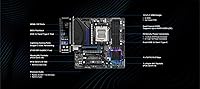
The ASRock B650M PG Riptide WiFi AM5 Motherboard is a strong match for builders who want a modern AMD platform without committing to a premium-tier budget. If you're pairing a Ryzen 5 7600 or Ryzen 7 7700 with a single graphics card for gaming or everyday productivity, this board gives you everything you realistically need. It's also a smart pick for AM4 veterans who are finally making the jump to DDR5 and want built-in Wi-Fi 6 so they don't have to buy extra hardware. The Micro-ATX form factor suits mid-tower and smaller cases well, making it a practical choice for compact home office or dorm room builds. Content creators running light-to-moderate workloads will find the platform plenty capable without paying for chipset features they'd never touch.
Not suitable for:

Builders with serious overclocking ambitions or those planning to run a high-core-count Ryzen 9 processor under sustained heavy workloads should look elsewhere, as the VRM thermal headroom on this board has real limits. The ASRock B650M PG Riptide WiFi AM5 Motherboard is also not the right foundation for anyone who needs multiple high-bandwidth PCIe 5.0 devices or advanced connectivity options typically found on X670E boards. If you're building in a full ATX case and want a board that fills the tray properly, the Micro-ATX size will likely disappoint — case aesthetics and mounting points won't line up. Enthusiasts who prioritize extensive RGB control, onboard audio upgrades, or a dense rear I/O panel may find this board a bit spartan. And if you're counting on rapid, hands-on manufacturer support, some users have found ASRock's response times inconsistent.
Specifications

  • Form Factor: This board uses the Micro-ATX form factor, measuring 11.89 x 11.15 inches, so verify your case supports mATX before purchasing.
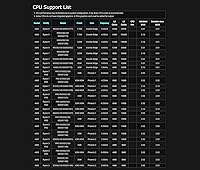
  • CPU Socket: Socket AM5 supports AMD Ryzen 7000, 8000, and 9000 series processors exclusively — it is not backward compatible with AM4 CPUs.
  • Chipset: Built on the AMD B650 chipset, which provides a solid mid-range feature set including PCIe 4.0 support without the added cost of X670.
  • Memory Type: Supports DDR5 RAM only across four DIMM slots, with a maximum capacity of 128GB total.
  • Memory Speed: Native DDR5 speeds are supported up to 6200MHz via XMP/EXPO overclocking profiles.
  • Power Phases: Features a 12+2+1 power phase design using Dr.MOS components paired with an enlarged VRM heatsink for improved thermal management.
  • PCIe Slots: Includes two PCIe 4.0 x16 slots and two PCIe 3.0 x1 slots, covering GPU installation and add-in card expansion.
  • Video Output: Rear panel provides one HDMI port and one DisplayPort output for use with AMD Ryzen processors that include integrated graphics.
  • Wireless: Wi-Fi 6 (802.11ax) is built in, delivering faster wireless speeds and better performance in congested network environments compared to older Wi-Fi standards.
  • Bluetooth: Bluetooth is included onboard, enabling wireless connections to peripherals such as headsets, keyboards, and mice without a separate adapter.
  • USB Ports: The board provides 12 USB 2.0 ports in total, along with additional USB connections on the rear I/O panel for modern peripherals.
  • Storage Interface: Supports M.2 NVMe drives via PCIe 4.0 for high-speed solid-state storage, in addition to SATA connections for traditional drives.
  • OS Support: Officially compatible with Windows 10 and Windows 11; Linux support is community-reported but not officially specified by the manufacturer.
  • Board Weight: The board weighs 2.19 pounds, which is typical for a Micro-ATX motherboard with a reinforced heatsink assembly.
  • Brand: Manufactured by ASRock, a Taiwanese company with an established reputation in the mid-range and budget motherboard segment.
  • Release Date: First made available in October 2022, positioning it as one of the earlier affordable AM5 platform options on the market.
  • Dimensions: Physical dimensions are 11.89 x 11.15 x 2.76 inches, consistent with standard Micro-ATX mounting hole placements.
  • Market Rank: Holds a top-150 ranking in the Computer Motherboards category on Amazon, reflecting steady buyer interest and consistent sales volume.

Related Reviews
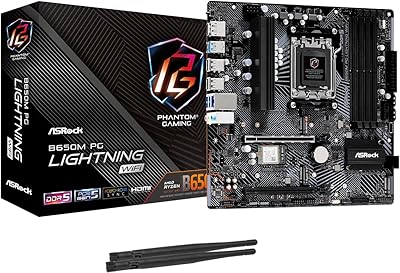
ASRock B650M PG Lightning WiFi 6E Motherboard
85%
88%
Overall Performance
91%
WiFi 6E Performance
86%
Build Quality
94%
Compatibility with AMD Ryzen 7000
83%
Ease of Setup
More
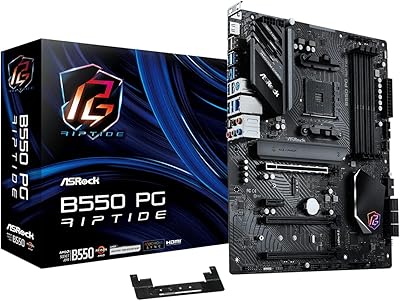
ASRock B550 PG Riptide ATX Motherboard
86%
89%
Performance
94%
Build Quality
88%
Ease of Installation
92%
Compatibility with Ryzen CPUs
85%
Expansion Options (PCIe, M.2)
More
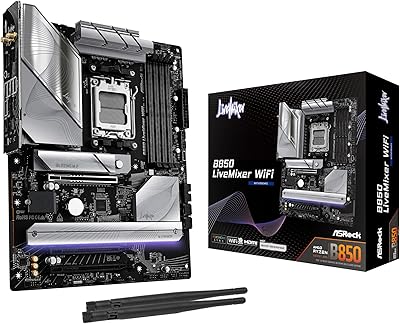
ASRock B850 LiveMixer WiFi Motherboard
79%
88%
VRM & Power Delivery
86%
Memory Compatibility
91%
PCIe 5.0 & M.2 Storage
84%
BIOS Experience
79%
WiFi 7 Performance
More
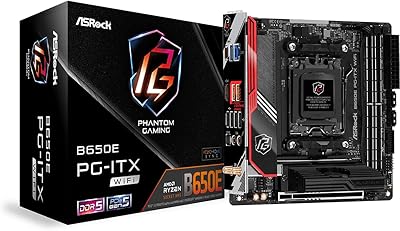
ASRock B650E PG-ITX WiFi Mini-ITX Motherboard
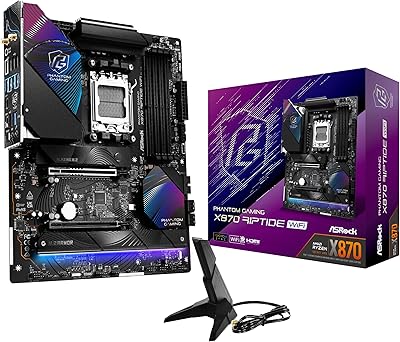
84%
88%
Performance
84%
Build Quality
91%
Wi-Fi Connectivity
72%
Overclocking Stability
89%
Compatibility
More
ASRock Phantom Gaming X870 Riptide WiFi 7 ATX Motherboard
88%
92%
Performance
89%
Overclocking Support
94%
WiFi Performance
90%
Build Quality
93%
Power Delivery
More
ASRock Z790 PG Lightning Motherboard
84%
91%
Performance with High-End CPUs
87%
DDR5 Memory Support
92%
PCIe 5.0 Support
88%
Power Delivery and Stability
84%
Cooling Efficiency
More
ASRock X870E Taichi AM5 Motherboard
85%
91%
Performance
88%
Build Quality
89%
Overclocking Capability
87%
Cooling System
84%
Installation Ease
More
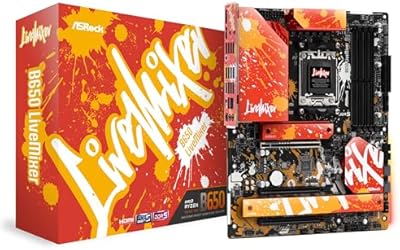
ASRock B650 LIVEMIXER AM5 DDR5 Motherboard
87%
91%
Performance with Ryzen 7000 Processors
89%
Build Quality
92%
PCIe Gen 5 & Expansion Slots
86%
Audio Quality (7.1-channel & Nahimic)
75%
Ease of Installation
More
MSI PRO B650M-A WiFi V1 Motherboard
79%
88%
Value for Money
91%
BIOS & Setup Experience
86%
Memory Compatibility & OC
84%
Thermal Management
72%
Connectivity & I/O
More
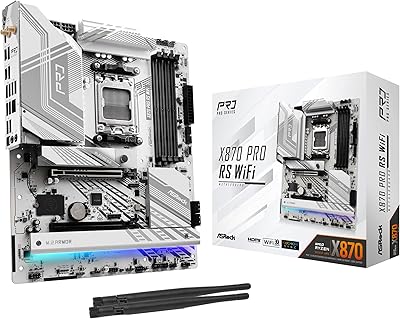
ASRock X870 Pro RS WiFi Motherboard
84%
91%
Performance
95%
Connectivity Options
88%
Stability and Overclocking
70%
Ease of Setup
94%
DDR5 Compatibility
More

FAQ

In most cases, yes — but it depends on the BIOS version pre-installed on the board you receive. Some early units shipped with BIOS versions that needed an update before booting newer CPUs. If you are buying new stock today, there is a good chance it already has an updated BIOS, but it is worth confirming with the retailer or checking the ASRock support page for the latest compatibility notes.

No, it does not. This board is DDR5 only, and there is no hybrid support. If you have leftover DDR4 sticks from a previous build, they will not work here — you will need to budget for new DDR5 kits when planning your upgrade.

You need a case that supports Micro-ATX boards. Most mid-tower cases labeled as ATX-compatible also accept Micro-ATX, but always check the manufacturer specs for your specific case. Full-tower cases will fit it too, though the smaller board will leave visible gaps in a large chassis.

Technically the socket is compatible, but it is not a great idea for sustained workloads. The VRM on this board is designed with mid-range CPUs in mind, and a 170W TDP processor like the 7950X can push thermal limits under heavy loads. If you are building a high-end workstation or content creation rig with a flagship chip, a board with a more robust power delivery system would serve you better.

Yes, an antenna is included. Installation is straightforward — it screws into two SMA connectors on the rear I/O panel. A small number of users have noted the antenna hardware feels a bit lightweight, but functionally it works fine for typical home and office environments.

ECC memory support on B650 boards is limited and depends largely on the CPU rather than the board itself. Some Ryzen Pro variants support ECC, but consumer Ryzen 7000 chips do not officially support it. For a workstation requiring ECC, you would need to look at a different CPU and platform combination.

The Riptide WiFi includes two M.2 slots, both supporting PCIe 4.0 NVMe drives. This covers the needs of most standard builds comfortably, letting you run an OS drive and a secondary storage drive without using any SATA ports.

Generally yes — ASRock's BIOS interface has improved significantly over the years and is considered approachable for first-time builders. The EZ Mode view gives you a clean overview of your hardware, and enabling XMP or EXPO for your RAM is typically just one click. Most users report getting up and running without needing to dive deep into advanced settings.

For most people, it is not worth the extra spend. X670 adds PCIe 5.0 support for both GPU and storage slots, plus more USB bandwidth — features that genuinely matter if you are running cutting-edge PCIe 5.0 SSDs or need maximum I/O headroom. For gaming, general productivity, and even light content creation, the B650 chipset on this ASRock board handles everything you will realistically throw at it.

Yes, as long as your CPU has integrated graphics, which the Ryzen 7 7700 does. The rear HDMI and DisplayPort outputs connect directly to the CPU's integrated GPU. Note that Ryzen 7000X3D chips and some other variants do not include integrated graphics, so in those cases the onboard video outputs will not function.

Where to Buy