Overview

The ASRock B650M-HDV/M.2 Motherboard is a micro-ATX board built for anyone stepping into AMD's AM5 platform without wanting to spend a fortune to get there. It supports the full run of Ryzen 7000, 8000, and 9000 series chips, and ASRock backs that compatibility with an 8+2+1 power phase setup paired with Dr.MOS components, which keeps voltage delivery stable even when the CPU is working hard. Sitting on the B650 chipset puts it a notch below pricier B650E and X670 boards, so don't expect flagship-tier extras. One nice touch: the integrated RDNA 2 graphics output means you can get a display running before a graphics card ever shows up, which matters for budget or small-footprint builds.
Features & Benefits

Spec-wise, this AM5 motherboard punches reasonably well above its price. DDR5 support tops out at 6400+ MHz with overclocking, so there's headroom to upgrade memory later without hitting a wall. For expansion, you get two PCIe 4.0 x16 slots and a PCIe 4.0 x1 slot, which is plenty for a board in this class, plus a dedicated M.2 Key E slot reserved specifically for a WiFi card rather than storage, a detail worth noting before you go shopping for an M.2 drive. The Dr.MOS power stages also help with thermal efficiency under sustained loads. A CR2032 battery powers the BIOS, which is standard but easy to overlook. The one real letdown: there's no onboard RGB header, which will frustrate anyone planning a lighting-heavy build.

Best For

The B650M-HDV/M.2 makes the most sense for budget-conscious builders putting together their first AM5 system, especially if you're not chasing aggressive overclocking or benchmark records. It's also a solid pick for anyone working with a micro-ATX case where board size and slot layout actually matter. If you want a fallback display option before installing a dedicated GPU, the built-in graphics handle that without complaint. People migrating from an older AM4 setup who mainly want DDR5 memory and current-generation Ryzen support, without paying a premium for features they won't use, will find this board does exactly what's needed. It's a poor match, though, for builders who care about RGB lighting integration as part of their aesthetic.

User Feedback

Owner feedback on this micro-ATX board skews positive overall, with most reviewers citing dependable stability and solid value for what they paid. The most common complaint is the missing RGB connector, which a number of buyers expected given how common RGB headers are even on entry-level boards now. Opinions on the BIOS update process are mixed and seem to depend heavily on which Ryzen generation was installed, with some flashes going smoothly and others requiring extra patience. A handful of users also wished ASRock had documented the M.2 slot allocation and lane-sharing behavior more clearly, since it's easy to misconfigure storage without realizing it. Taken together, the rating pattern suggests a board well-suited to everyday builds rather than anything pushed to its limits.

Pros

  • Affordable entry point into the AM5 platform without feeling cheaply built
  • Stable power delivery thanks to the 8+2+1 phase design with Dr.MOS components
  • DDR5 support up to 6400+ MHz (OC) leaves room to upgrade memory later
  • Integrated graphics output means you don't need a GPU just to boot and configure
  • Dual PCIe 4.0 x16 slots offer decent expansion for a board in this class
  • Dedicated WiFi-ready M.2 slot keeps your storage M.2 ports free for drives
  • Compact micro-ATX footprint fits well in smaller case builds
  • Owners consistently report solid day-to-day stability for typical home and office use

Cons

  • No onboard RGB header, which will disappoint anyone planning lighting effects
  • BIOS update experience seems inconsistent depending on the Ryzen generation installed
  • M.2 slot allocation and lane sharing aren't clearly documented out of the box
  • Power delivery is adequate but not built for serious overclocking
  • Sits below ASRock's B650E and X670 boards, so some premium features are simply absent
  • Buyers expecting the M.2 Key E slot to hold storage will need to double-check before purchasing a drive
  • CMOS battery isn't pre-installed, which catches some first-time builders off guard

Ratings

These scores for the ASRock B650M-HDV/M.2 Motherboard come from an AI-driven analysis of verified buyer reviews collected from real-world purchases around the globe, with spam, bot activity, and incentivized reviews filtered out before scoring. Each category below reflects an honest blend of what owners praised and what genuinely frustrated them, so you can see the full picture before deciding.
Value for Money
88%
Buyers consistently mention getting solid AM5 functionality without paying flagship prices, which matters a lot for anyone building their first DDR5 system on a tight budget. The feature set feels appropriately matched to the price point rather than stripped down.
A few owners felt the missing RGB header and basic documentation made the board feel slightly cheaper than its price suggested. It's good value, but not without minor compromises that some buyers wish were addressed.
CPU Compatibility
91%
Support spans Ryzen 7000, 8000, and 9000 series chips, which gives builders real flexibility whether they're starting fresh or planning a future CPU upgrade. Most reviewers reported their chosen processor worked right away.
A handful of users needed a BIOS update before a newer Ryzen chip would post correctly, which added an unexpected extra step. It's a known AM5 quirk, but still catches first-time builders off guard.
Power Delivery & VRM Performance
84%
The 8+2+1 phase design with Dr.MOS components handles everyday workloads and moderate boost clocks without breaking a sweat, even during longer gaming or rendering sessions. Owners running mid-tier Ryzen chips reported stable voltages.
It's clearly tuned for typical use rather than sustained high-wattage loads, so anyone pairing it with a power-hungry flagship CPU under heavy overclocking may notice it's working closer to its limits.
Build Quality & Stability
86%
Day-to-day reliability is where this board earns its reputation, with owners reporting smooth boots, consistent uptime, and no random crashes during normal home or office use over extended periods.
Stability does appear to vary slightly depending on the specific Ryzen generation and BIOS version installed, suggesting firmware maturity plays a bigger role here than on more polished higher-tier boards.
RGB & Aesthetic Customization
41%
59%
For buyers who don't care about lighting, the clean, no-frills layout keeps things simple and avoids unnecessary clutter on the board itself.
The complete absence of an onboard RGB header is the most repeated complaint among owners, especially those expecting at least basic lighting support at this price tier. Anyone planning an RGB build will need a separate controller or a different board entirely.
Memory Support & DDR5 Headroom
79%
21%
DDR5 support up to 6400+ MHz (OC) gives builders genuine room to upgrade memory speed later without needing a new board, which several reviewers appreciated for future-proofing their builds.
Reaching those higher speeds reliably depends heavily on the specific memory kit and number of sticks used, and a few owners noted needing to manually tune settings rather than relying on automatic profiles.
Expansion & Connectivity
76%
24%
Two PCIe 4.0 x16 slots plus a x1 slot cover most builders' needs for a GPU and a secondary expansion card, which reviewers found sufficient for typical desktop configurations.
Slot count is reasonable but not generous, so anyone planning multiple add-in cards or a more elaborate expansion setup may find the layout limiting compared to larger ATX boards.
BIOS Experience
68%
32%
Once configured, most users found the BIOS interface straightforward enough for basic tweaks like enabling memory profiles or adjusting boot order without much hassle.
Update consistency is the recurring pain point, with some owners describing smooth flashes and others running into compatibility hiccups tied to their specific Ryzen generation, which adds friction during initial setup.
Integrated Graphics Performance
74%
26%
The RDNA 2 output sourced from compatible Ryzen chips lets builders get a display working immediately, which is genuinely handy for system setup, troubleshooting, or basic desktop use before adding a GPU.
Performance is naturally limited to light tasks rather than gaming, and a few users initially confused this CPU-driven feature with something built into the motherboard itself, leading to mismatched expectations.
Storage & M.2 Slot Clarity
61%
39%
Having a dedicated M.2 Key E slot for WiFi keeps the main storage M.2 ports free for drives, which several builders found genuinely convenient once they understood the layout.
Documentation around which M.2 slots handle storage versus WiFi wasn't always clear out of the box, and a few owners mentioned wanting better labeling or manual diagrams to avoid early confusion.
Wireless Readiness
80%
20%
Builders who wanted WiFi appreciated not having to sacrifice a storage slot, since the dedicated Key E slot made adding a wireless card simple and didn't complicate their drive planning.
The board doesn't include a WiFi module out of the box, so buyers expecting wireless connectivity pre-installed need to budget for and source a compatible card separately.
Ease of Setup for First-Time Builders
77%
23%
Many reviewers building their first AM5 system described the overall installation process as approachable, with clearly labeled headers and a layout that made cable management reasonably painless.
A missing CMOS battery and occasional BIOS quirks meant a few newcomers hit small unexpected snags, like needing to source a CR2032 battery separately before the system would even power on correctly.

Suitable for:

The ASRock B650M-HDV/M.2 Motherboard makes the most sense for someone building their first AM5 system on a realistic budget rather than chasing top-end performance. It's a strong fit for builders working in micro-ATX cases, where the compact layout actually matters and full-size ATX boards feel like overkill. Anyone migrating from an aging AM4 rig who just wants modern DDR5 memory and current Ryzen support, without paying for features they'll never touch, should be happy here. The integrated graphics output is genuinely useful too, letting you get a display running and the system configured before a dedicated GPU arrives. It also suits home or office builds where day-to-day reliability matters more than overclocking headroom, based on how steady the feedback has been from regular owners.
Not suitable for:

This board isn't the right call for anyone planning an RGB-themed build, since there's no onboard lighting header to work with. Enthusiasts chasing aggressive overclocks or pushing high-end Ryzen chips to their limits will likely find the power delivery adequate but unremarkable rather than exciting. Buyers who assume the dedicated M.2 slot near the rear I/O is for storage will be disappointed, since it's wired specifically for a WiFi card. If documentation and BIOS clarity are a priority for you, some owners have flagged inconsistent experiences depending on which Ryzen generation they installed. The ASRock B650M-HDV/M.2 Motherboard is also a poor match for anyone wanting a feature-rich flagship board, since it sits clearly in the value tier rather than competing with B650E or X670 options.
Specifications

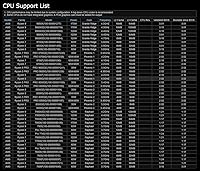
  • CPU Socket: The board uses an AM5 socket and supports AMD Ryzen 7000, 8000, and 9000 series processors.
  • Chipset: It is built around the AMD B650 chipset, which sits in the mid-range tier of ASRock's AM5 lineup.
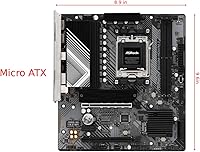
  • Form Factor: This is a micro-ATX board measuring 12.2 x 8.27 x 1.97 inches and weighing 2.2 pounds.
  • Memory Support: It supports DDR5 memory with speeds up to 6400+ MHz when overclocked.
  • Power Delivery: Power delivery uses an 8+2+1 phase design with Dr.MOS components for stable voltage under load.
  • Expansion Slots: The layout includes two PCIe 4.0 x16 slots and one PCIe 4.0 x1 slot.
  • Wireless Connectivity: A dedicated M.2 Key E slot is included specifically for adding a WiFi module.
  • Integrated Graphics: The board outputs video through the CPU's integrated AMD RDNA 2 graphics, eliminating the need for a discrete GPU to get a display working.
  • RGB Support: There is no onboard RGB header included on this board.
  • CMOS Battery: The board requires one CR2032 battery, which is not pre-installed and must be sourced separately.
  • Operating System: The board is listed as compatible with Windows 10.
  • Brand and Model: This board is manufactured by ASRock under the model number B650M-HDV/M.2.
  • Item Identifier: The product's Amazon ASIN is B0BY6YRT41 for reference purposes.
  • Release Date: This model first became available for purchase on March 16, 2023.

Related Reviews
ASRock B660M-HDV MicroATX Motherboard
71%
88%
Value for Money
84%
BIOS & Setup Experience
82%
Stability & Reliability
47%
Connectivity & I/O
91%
GPU Compatibility
More
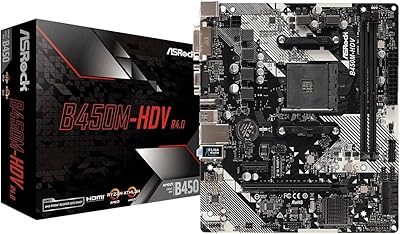
ASRock B450M-HDV R4.0 Motherboard
83%
91%
Value for Money
87%
Performance
89%
Ease of Installation
65%
RAM Compatibility and Overclocking
84%
Build Quality
More
ASRock B650M PG Riptide WiFi AM5 Motherboard
79%
88%
Value for Money
79%
Build Quality
91%
CPU Compatibility
71%
VRM & Power Delivery
84%
BIOS Experience
More
ASRock B550M-HDV Micro-ATX Motherboard
76%
91%
Value for Money
88%
CPU Compatibility
86%
Ease of Setup
89%
Stability & Reliability
58%
VRM & Power Delivery
More
ASRock B650M PG Lightning WiFi Micro-ATX Motherboard
76%
88%
Value for Money
79%
Build Quality
86%
BIOS Experience
84%
WiFi 6E Performance
91%
Installation & Setup
More
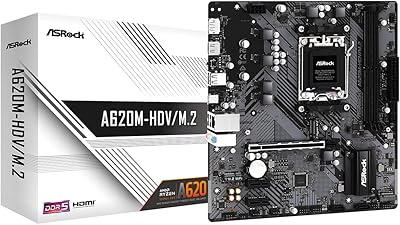
ASRock A620M-HDVM.2 Micro-ATX AM5 Motherboard
85%
89%
Value for Money
93%
Performance with Ryzen 7000 CPUs
85%
Ease of Setup and BIOS
88%
Build Quality and Durability
90%
Compatibility with DDR5
More
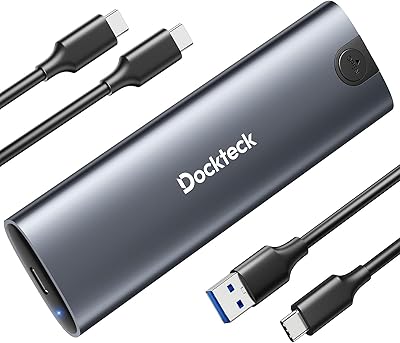
dockteck DH0002 M.2 NVMe/SATA SSD Enclosure
84%
88%
Transfer Speed (NVMe)
76%
SATA Drive Performance
83%
Build Quality
93%
Ease of Setup
79%
Thermal Management
More
ChenYang CY-SA-060 mSATA M.2 SATA SSD Enclosure
70%
88%
Value for Money
54%
Drive Compatibility
79%
JBOD Functionality
58%
Build Quality
72%
Installation Ease
More
ORICO Dual M.2 NVMe SSD Enclosure
79%
88%
Build Quality
84%
Thermal Management
82%
Transfer Speed
71%
Drive Compatibility
91%
Ease of Installation
More
ADATA EC700G M.2 NVMe SATA SSD Enclosure
81%
88%
Build Quality
83%
Transfer Speed
91%
Drive Compatibility
93%
Ease of Installation
72%
Thermal Performance
More

FAQ

Yes, this AM5 motherboard officially supports the Ryzen 9000, 8000, and 7000 series processors. Just make sure your BIOS is updated to the latest version before installing a newer-generation chip, since boards that shipped earlier sometimes need a firmware update first.

Not necessarily. As long as you're using a Ryzen chip with integrated RDNA 2 graphics, you can plug a monitor directly into the board's video output and get a display without a dedicated GPU. If you pick a CPU without integrated graphics, though, you'll need a discrete card.

No, this is one area where this micro-ATX board cuts costs. There's no onboard RGB header, so if you're planning a lighting-heavy build, you'll want to look at a different model or rely on fans and accessories with their own standalone controllers.

Yes, there's a dedicated M.2 Key E slot built specifically for a WiFi module. Just keep in mind that slot is wired for wireless cards only, not for NVMe storage drives, so don't expect to use it as extra drive space.

It should, since this is a micro-ATX board measuring about 12.2 by 8.27 inches. That said, always double-check your specific case's motherboard tray dimensions and clearance before buying, especially if you're working with a particularly tight small form factor enclosure.

Officially, the board supports DDR5 speeds up to 6400+ MHz when overclocking, though real-world results depend on your specific memory kit, your CPU's memory controller, and how many sticks you install. Two-stick configurations generally hit higher speeds more reliably than four.

It can handle light to moderate overclocking thanks to its Dr.MOS power stages, but it's not built for pushing a high-end Ryzen chip to its absolute limits. If serious overclocking is your priority, a board higher up ASRock's B650E or X670 lineup would serve you better.

It requires one CR2032 battery to power the BIOS settings, but it's not pre-installed in the board out of the box. You'll need to grab one separately, which is a common surprise for first-time builders.

Some owners have reported a smoother experience updating the BIOS than others, and it seems to vary depending on which Ryzen generation they're installing. It's worth checking ASRock's support page for the latest BIOS version before you start your build, especially if you're using a newer CPU.

The exact count of usable M.2 slots and SATA ports for storage can vary slightly by revision, so it's worth checking ASRock's official spec sheet for the ASRock B650M-HDV/M.2 Motherboard before finalizing your drive plans. Just remember the dedicated M.2 Key E slot is reserved for WiFi, not storage, so don't count that one toward your drive total.