Overview

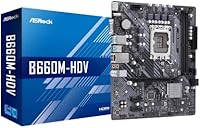
The ASRock B660M-HDV MicroATX Motherboard is a straightforward, no-frills entry point into Intel's 12th Gen platform — built for builders who need reliability without paying for features they will never use. The B660 chipset sits in the middle of Intel's stack: it gives you more than the entry-level H610 but does not carry the premium of a Z690, which means no CPU multiplier overclocking but solid everyday performance. MicroATX boards measure roughly 9.8 by 7.9 inches, fitting comfortably in mid-tower and most compact cases. Released in early 2022, the B660M-HDV still holds up well on today's new and used market as a cost-conscious LGA1700 option.
Features & Benefits

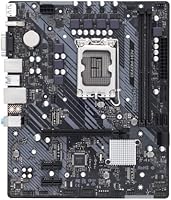
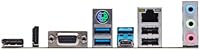
The B660M-HDV supports DDR4 memory with overclocked speeds up to 5066MHz, though keep in mind the B660 chipset locks the CPU multiplier, so that headroom applies to RAM XMP profiles rather than pushing your processor beyond its rated speed. A PCIe 4.0 x16 slot handles modern graphics cards without any bandwidth penalty, while two PCIe 3.0 x1 slots leave room for a sound card or capture card down the line. There is an M.2 Key-E slot for an optional WiFi module, but nothing ships in that slot — you will need to budget for a card separately. The rear I/O offers four USB 2.0 ports, which is serviceable but notably lean compared to boards even slightly above this price tier.

Best For

This MicroATX motherboard makes the most sense for budget-conscious PC builders putting together a home workstation or office machine on Intel's 12th Gen platform. Pair it with a locked Core i3 or i5 — nothing with a K suffix — and you get a stable, sensible system without wasting money on chipset features you cannot use anyway. The compact footprint works well in smaller cases, and first-time builders will appreciate how approachable the BIOS and physical layout are. It also makes a practical upgrade path for anyone still on an older Intel socket who wants access to PCIe 4.0 storage speeds without committing to a premium board.

User Feedback

Across 174 ratings, this budget B660 board holds a 4.3-star average — a healthy result for a competitive price segment. Buyers consistently highlight how easy it is to get up and running, with BIOS navigation praised even by first-time builders. On the critical side, the limited rear USB selection comes up often, and four USB 2.0 ports does feel thin by current standards. The lack of built-in WiFi is a recurring gripe worth factoring into your total build cost. A handful of users also noted needing a BIOS update before certain 12th Gen CPUs would initialize correctly, so checking compatibility before your first boot is a smart precaution.

Pros

  • Solid entry point into Intel 12th Gen without paying for chipset features most everyday builders never use.
  • PCIe 4.0 x16 slot ensures modern GPUs run at full bandwidth with no compromise.
  • MicroATX sizing fits a wide range of mid-tower and compact cases with ease.
  • BIOS is clean and beginner-friendly, which meaningfully reduces setup friction for first-time builders.
  • DDR4 support with XMP profiles up to 5066MHz gives memory flexibility within a tight budget.
  • Two PCIe 3.0 x1 slots leave room to add a capture card, sound card, or network adapter later.
  • Stable day-to-day performance for office work, web browsing, and general home computing tasks.
  • Competitive pricing makes it one of the more sensible LGA1700 options in the budget segment.
  • 128GB maximum RAM capacity leaves headroom for future upgrades without needing a new board.

Cons

  • Only four USB 2.0 ports on the rear panel — no USB 3.2 Gen 2 or rear Type-C anywhere.
  • No WiFi module included; wireless connectivity requires a separately purchased adapter.
  • The 6-phase VRM can struggle under sustained heavy workloads, limiting pairing with power-hungry CPUs.
  • B660 chipset prevents CPU multiplier overclocking, which rules out any meaningful processor tuning.
  • Some users reported needing a BIOS update before certain 12th Gen CPUs would even post correctly.
  • A single M.2 slot is available only for a WiFi card, leaving no M.2 option for NVMe storage.
  • Rear I/O overall feels dated compared to similarly priced competing boards from other manufacturers.
  • 174 ratings is a relatively small sample size, so long-term reliability data is still somewhat limited.

Ratings

The scores below reflect an AI-driven analysis of verified global buyer reviews for the ASRock B660M-HDV MicroATX Motherboard, with spam, bot activity, and incentivized feedback actively filtered out before scoring. Each category is evaluated on real-world usage patterns drawn from builders across home, office, and entry-level gaming contexts. Both the genuine strengths and the recurring frustrations are represented transparently so you can make a confident, eyes-open purchase decision.

Value for Money
88%
For builders trying to get onto Intel's 12th Gen platform without overspending, this board delivers a surprisingly capable foundation at a price that leaves budget for the CPU and RAM. Buyers consistently feel they got what they paid for, and few report feeling shortchanged after a few months of daily use.
The sense of value erodes a little once you factor in the cost of a separate WiFi adapter, which most wireless-dependent builders will need to purchase. At that point, the total spend starts approaching boards that offer slightly better I/O out of the box.
BIOS & Setup Experience
84%
First-time builders repeatedly highlight how approachable the BIOS interface is, with clear labeling and sensible defaults that get a system posting without much fuss. The layout is clean enough that even someone who has never touched a BIOS before can navigate memory settings and boot order confidently.
A recurring frustration is that some units require a BIOS update before certain 12th Gen CPUs will initialize correctly, which is a real obstacle if you do not have a spare compatible CPU to perform the flash. ASRock does not always make this requirement obvious at the point of purchase.
Stability & Reliability
82%
18%
Day-to-day stability is where this board earns its reputation — users running it as a home workstation or office machine report consistent uptime with no unexpected crashes or memory instability over extended periods. Paired with a locked Core i5, it just runs without drama.
The 6-phase VRM design is adequate for everyday loads but shows its limits when paired with more power-hungry processors under sustained multi-threaded workloads. A small number of users noticed thermal throttling behavior during prolonged encoding or rendering sessions.
Connectivity & I/O
47%
53%
The dual PCIe 3.0 x1 slots provide useful expandability for builders who want to add a sound card or network adapter without giving up the primary GPU slot, which is a practical touch at this price level.
Four USB 2.0 rear ports is the single most criticized aspect of this board across all buyer feedback, and the frustration is understandable — there is no USB 3.0, no rear Type-C, and transfer speeds for external storage devices are noticeably sluggish. For anyone managing backups or moving large files regularly, this becomes a genuine daily annoyance.
GPU Compatibility
91%
The PCIe 4.0 x16 slot means current-generation graphics cards run at their full rated bandwidth with no artificial limitation, which matters for anyone pairing this board with a mid-range or higher discrete GPU. Buyers using cards like the RX 7600 or RTX 4060 report no compatibility issues whatsoever.
There is only one x16 slot, so multi-GPU configurations are off the table entirely — though that is not a realistic concern at this price point or chipset level. A minor annoyance is the placement of the two x1 slots relative to the x16, which can limit airflow depending on the card cooler size.
Memory Performance
74%
26%
XMP profile support allows DDR4 kits rated up to 5066MHz to run at their advertised speeds, giving builders a reasonable upgrade path without changing the board. In practice, most users running 3200MHz or 3600MHz kits see rock-solid stability with profiles enabled on the first boot.
The B660 chipset does not allow CPU overclocking, so memory tuning is the only real lever available for performance tweaks, which feels limiting for more enthusiast-minded buyers. A handful of users reported needing to manually set XMP profiles after BIOS updates reset their memory configuration to stock speeds.
Build Quality & PCB
78%
22%
The physical construction feels appropriately solid for a budget board — PCIe slot retention clips are firm, DIMM latches operate smoothly, and the overall finish does not feel flimsy during installation. For a first build, the handling experience inspires confidence.
The component layout is functional but tight, and routing cables neatly in a smaller MicroATX case requires some planning. The board lacks any heatsink coverage on the VRM area, which is a visible cost-cutting measure that more experienced builders tend to notice immediately.
CPU Compatibility Range
76%
24%
Support spans the full LGA1700 12th Gen lineup from entry-level Celerons through Core i9 variants, giving builders flexibility if they decide to upgrade the processor later without replacing the board. That headroom makes the board a reasonable longer-term investment in the platform.
The modest VRM means you realistically should not pair this board with anything above a Core i5 non-K under sustained workloads, which narrows the practical upgrade path more than the spec sheet suggests. Running an i7 or i9 on it for light tasks is technically possible but leaves capability on the table.
Wireless Connectivity
31%
69%
The M.2 Key-E slot at least signals that ASRock designed the board with wireless as a future option, meaning buyers are not completely locked out — they just need to source a compatible module and install it themselves.
The complete absence of onboard WiFi or Bluetooth is a significant omission that catches many buyers off guard, especially those building in living room or bedroom setups where running an Ethernet cable is impractical. The added cost and effort of sourcing a separate wireless card diminishes the appeal of the board's otherwise competitive price.
Overclocking Headroom
38%
62%
Memory XMP overclocking works reliably and is straightforward to enable through the BIOS, which is the one meaningful tuning option available on the B660 platform for non-K CPUs.
CPU overclocking is simply not possible here — the B660 chipset locks the multiplier on all non-K processors, which is an architectural constraint rather than a board-specific failing, but it still meaningfully limits the platform for anyone interested in performance tuning. Buyers who purchase this board expecting any CPU frequency headroom will be disappointed.
Expansion Slots
69%
31%
Two PCIe 3.0 x1 slots alongside the main x16 slot give builders genuine flexibility to add peripheral cards without sacrificing the GPU slot, which is more than some competing boards at this price offer.
The absence of any M.2 NVMe storage slot is a real drawback for anyone planning a modern SSD-centric build, as you are forced to rely entirely on SATA connections or a PCIe adapter workaround. This feels like an unusual omission even for a budget board in 2022 and beyond.
Case Compatibility
86%
At 9.84 by 7.87 inches, this MicroATX board fits into a wide range of cases — from compact MicroATX enclosures to full mid-tower ATX builds — giving builders solid flexibility without needing a specialty case. The standard mounting hole layout causes no reported fitment issues across popular case brands.
The compact size does mean slightly tighter cable management in smaller enclosures, and the rear I/O shield alignment has drawn occasional criticism for being slightly stiff to seat properly during initial installation.
Driver & OS Support
81%
19%
Windows 10 and Windows 11 64-bit are both officially supported, and most buyers report that driver installation proceeds without complications using ASRock's bundled utility or manual downloads from the support page. The board behaved predictably across clean OS installs in the majority of reported experiences.
ASRock's driver support software has been described as basic compared to offerings from ASUS or MSI, and a few users noted that locating the correct chipset and audio drivers on the website takes more digging than it should. Linux support works but is largely community-driven rather than officially documented.

Suitable for:

The ASRock B660M-HDV MicroATX Motherboard is a strong fit for builders who want a dependable Intel 12th Gen platform without spending on features they will realistically never touch. If you are pairing a locked Core i3 or i5 with a mid-range GPU for everyday computing, media consumption, or light productivity work, this board covers every base you actually need. First-time builders will find the layout approachable and the BIOS straightforward to navigate, which lowers the stress of an already involved process. The compact MicroATX footprint — just under 9.9 by 7.9 inches — slots comfortably into most mid-tower and many compact cases, making it a practical choice for space-constrained desk setups or living room builds. It also serves well as an affordable upgrade path for anyone migrating from an older Intel socket who wants access to PCIe 4.0 storage without committing to a premium board.
Not suitable for:

The ASRock B660M-HDV MicroATX Motherboard is not the right call for anyone planning to push their hardware beyond stock settings. The B660 chipset locks the CPU multiplier on non-K processors, so if you have overclocking ambitions — even modest ones — you will need a Z-series board instead. Power users running demanding workloads like video encoding, 3D rendering, or sustained multi-threaded tasks may also find the 6-phase VRM design a limiting factor under prolonged load. The rear I/O situation is genuinely thin: four USB 2.0 ports with no USB 3.2 Gen 2 or Type-C on the rear panel will frustrate anyone with a busy peripheral setup. Wireless connectivity is not included out of the box either, so if you cannot run an Ethernet cable to your build location, factor in the added cost of a WiFi adapter. Enthusiasts who want extensive fan headers, robust RGB control, or multiple M.2 NVMe slots should look further up the product stack.
Specifications

  • Form Factor: This board follows the MicroATX standard, measuring 9.84 by 7.87 inches, which fits comfortably in most mid-tower and compact ATX-compatible cases.
  • Chipset: Built on the Intel B660 chipset, positioned between the entry-level H610 and the enthusiast-grade Z690 in Intel's 12th Gen platform lineup.
  • CPU Socket: Uses the LGA1700 socket, compatible exclusively with Intel 12th Gen Core processors including the i3, i5, i7, and i9 series.
  • Memory Type: Supports DDR4 memory in DIMM format across two slots, with a maximum installable capacity of 128GB.
  • Memory Speed: RAM runs at standard DDR4 speeds with XMP overclocking profile support up to 5066MHz, subject to module compatibility.
  • PCIe x16 Slot: One PCIe 4.0 x16 slot is available for a discrete graphics card, providing full-bandwidth support for current-generation GPUs.
  • PCIe x1 Slots: Two PCIe 3.0 x1 slots allow installation of expansion cards such as sound cards, capture cards, or additional network adapters.
  • M.2 Slot: One M.2 Key-E slot is present for an optional WiFi module; no NVMe M.2 storage slot is available on this board.
  • USB Ports: The rear I/O panel provides four USB 2.0 Type-A ports; no USB 3.2 Gen 2 or rear Type-C ports are included.
  • Power Design: A 6-phase power delivery system supports stable operation for non-K Intel 12th Gen CPUs under typical everyday workloads.
  • Wireless: No WiFi or Bluetooth connectivity is built in; wireless requires a separately purchased M.2 Key-E WiFi adapter card.
  • Dimensions: The board measures 9.84 inches in length by 7.87 inches in width, with a physical depth of 1.97 inches including port protrusions.
  • Weight: The board weighs 1.7 pounds without a CPU or RAM installed, which is typical for a MicroATX motherboard in this category.
  • OS Support: Officially supported operating systems include Microsoft Windows 10 64-bit and Windows 11 64-bit.
  • Power Connector: Requires a standard 24-pin ATX motherboard power connector and a CPU power connector from a compatible ATX power supply.
  • Battery: Requires one CR2032 lithium coin cell battery for the CMOS real-time clock, which is typically pre-installed on the board.

Related Reviews
ASRock B450M-HDV R4.0 Motherboard
83%
91%
Value for Money
87%
Performance
89%
Ease of Installation
65%
RAM Compatibility and Overclocking
84%
Build Quality
More
ASRock B550M-HDV Micro-ATX Motherboard
76%
91%
Value for Money
88%
CPU Compatibility
86%
Ease of Setup
89%
Stability & Reliability
58%
VRM & Power Delivery
More
ASRock B650M-HDV/M.2 Motherboard
83%
88%
Value for Money
84%
Performance under Load
91%
Compatibility with Ryzen 7000 Series
89%
Build Quality
85%
Ease of Installation
More
ASRock B550 PRO4 Motherboard
85%
88%
Performance
84%
Build Quality
90%
Ease of Setup
91%
Compatibility with AMD Ryzen 3rd Gen
85%
PCIe 4.0 Performance
More
ASRock B660M-ITX/ac
ASRock B660M-ITX/ac
87%
96%
CPU Compatibility
91%
Memory Support
88%
WiFi Performance
93%
Form Factor Efficiency
79%
Expansion Options
More
ASRock H610M-HVS Micro ATX Motherboard
72%
83%
Value for Money
74%
Build Quality
78%
CPU Compatibility
77%
BIOS Experience
71%
Memory Support
More
ASRock Z390 PRO4 ATX Motherboard
77%
91%
Value for Money
88%
Out-of-Box Stability
72%
Overclocking Capability
67%
BIOS Experience
74%
Build Quality
More
ASRock B550 Steel Legend AM4 Motherboard
83%
88%
Value for Money
91%
Build Quality
86%
CPU Compatibility
89%
VRM & Power Delivery
79%
BIOS Experience
More
ASRock X870E Taichi AM5 Motherboard
85%
91%
Performance
88%
Build Quality
89%
Overclocking Capability
87%
Cooling System
84%
Installation Ease
More
ASRock B450M STEEL LEGEND Motherboard
85%
91%
Value for Money
88%
Gaming Performance
94%
Ease of Installation
65%
Overclocking Capability
89%
Build Quality
More

FAQ

Yes, the i5-12400 is a supported 12th Gen LGA1700 processor and a natural pairing for this board. Just make sure your BIOS is up to date before installing the CPU, as some units may ship with an older firmware version that requires a quick update for full compatibility.

Not in the traditional sense. The B660 chipset locks the CPU multiplier, so you cannot push a non-K processor beyond its stock speeds. What you can do is run DDR4 XMP memory profiles, which lets your RAM operate at faster rated speeds — but that is the extent of tuning available here.

No, it does not. There is an M.2 Key-E slot on the board specifically designed for a WiFi adapter card, but nothing is included in the box. If you need wireless connectivity, you will need to purchase a compatible M.2 WiFi module separately or use a USB WiFi adapter as an alternative.

The board has two DDR4 DIMM slots, so you can install up to two sticks of RAM. The maximum supported capacity is 128GB total, which is more than enough for any realistic home or office use case.

MicroATX boards fit in both MicroATX cases and standard ATX mid-tower cases, since most ATX cases include mounting points for the smaller form factor. You would only run into trouble with Mini-ITX enclosures, which are too small for this board.

It depends on when the board was manufactured. Some earlier units shipped with a BIOS version that did not fully support all 12th Gen CPU variants out of the box. If possible, check ASRock's website for the latest firmware and flash it before your first boot to avoid any initialization issues.

Unfortunately, no. The only M.2 slot on this board is a Key-E type intended for a WiFi card, not storage. For NVMe SSD connectivity you would need to use a PCIe adapter card in one of the available x1 slots, though this is not an elegant solution. If onboard NVMe support is important to you, a different board in the B660 lineup would serve you better.

Any standard ATX power supply with a 24-pin motherboard connector and a CPU power connector will work. Given that this board is designed for use with non-K processors and budget builds, a reliable 450W to 550W unit from a reputable brand is typically more than sufficient for a typical configuration.

It depends on your setup. For a basic keyboard, mouse, and one or two other peripherals, four ports gets you by. However, all four are USB 2.0, which means transfer speeds are limited — fine for input devices, but slow for external drives. If you regularly move files via USB or use several high-speed peripherals, a powered USB hub or a different board with USB 3.0 rear ports would be a worthwhile consideration.

The B660M-HDV targets the very bottom of the B660 price range, and it delivers on reliability and simplicity without any extras. Boards from competitors at a similar price often offer a bit more on the I/O side — an extra USB 3.0 port here, a rear Type-C there — so it is worth a quick comparison if connectivity is a priority. That said, for straightforward office or home builds where you just need a stable platform for a locked Core i5 or i3, the B660M-HDV holds its own and is hard to fault at its price point.

Where to Buy