
Overview

The ASA CX-3 Electronic Flight Computer has held its ground in the aviation market since 2017 — longer than most niche calculators manage. It does two things well: it handles real flight planning calculations and qualifies as an exam-approved device for both FAA and Canadian knowledge tests. Compared to the circular slide rule that generations of pilots trained on, this electronic E6B is considerably slimmer, fitting easily in a shirt pocket or kneeboard pouch. For a device in the mid-to-premium price tier, it covers a lot of practical territory without becoming unnecessarily complex to pick up and use.

Features & Benefits

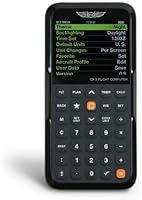
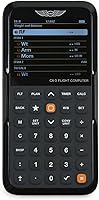
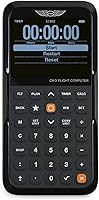
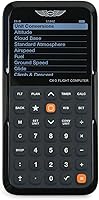
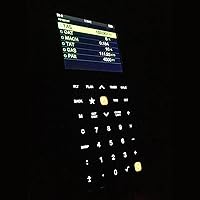
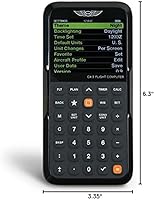
The color LCD screen is one of the first things you notice, and it is organized around the natural stages of a flight rather than arbitrary categories. That matters when you are trying to nail a wind correction angle quickly. Calculation coverage is wide: time, speed, distance, fuel burn, altitude, and weight and balance all live within a few keystrokes. Adjustable backlighting, themes, and time zone settings help during long evening study sessions. A favorites function lets you pin the calculations you return to most, and the snap-on protective cover combined with a no-slip strip on the back keeps the device stable whether you are at a desk or in a cockpit.

Best For

This aviation flight computer makes most sense for student pilots working toward FAA private, instrument, or commercial certificates — it is exam-legal, which eliminates one potential headache on test day. Canadian aviation students are equally covered, since Transport Canada approves it as well. Flight instructors use it as a quick reference during ground briefings rather than reaching for a chart or slide rule. If you are coming from a manual E6B, the adjustment is manageable; the menu logic is straightforward enough that most people get comfortable within a few practice sessions. It also suits anyone who needs a compact, bag-friendly aviation computer that travels light.

User Feedback

Pilots who have used the CX-3 routinely praise its screen readability and menu organization, with exam candidates specifically noting that the layout holds up well under test-day pressure. On the downside, battery consumption is a recurring complaint — four AAA batteries is an odd requirement, and a few users have been caught off guard mid-session. Build quality opinions lean positive but are not unanimous; the snap-on cover works, though some buyers feel it does not match the sturdiness they expected at this price. Analog E6B loyalists occasionally point out that relying heavily on this calculator can create gaps in foundational understanding, which is a fair warning — knowing the concepts still matters more than having the right tool.

Pros

  • FAA and Transport Canada exam approval means you can bring it directly into the testing room without any compliance concerns.
  • The color LCD menu is organized around actual flight planning flow, which makes finding the right function faster under pressure.
  • Wide calculation coverage — wind correction, fuel burn, weight and balance, altitude — handles nearly every preflight scenario in one device.
  • A favorites feature lets you bookmark the functions you use constantly, cutting down on repetitive menu navigation.
  • Slim enough to fit in a shirt pocket or kneeboard pouch without adding meaningful weight to your flight bag.
  • The no-slip strip on the back keeps the CX-3 stable on desks and flat cockpit surfaces during active use.
  • Adjustable backlighting and theme options make evening study sessions noticeably more comfortable on the eyes.
  • On the market continuously since 2017 with no discontinuation — a reassuring sign that replacement units and support remain accessible.
  • Calculation results align closely with manual E6B outputs, giving users reasonable confidence in its accuracy during real planning tasks.

Cons

  • Requires four AAA batteries, which is an unusual and slightly inconvenient power setup compared to devices using standard AA or USB charging.
  • The snap-on protective cover feels less robust than expected at this price point, according to a consistent subset of buyers.
  • Users migrating from analog E6Bs report a noticeable adjustment period before the digital menu logic feels intuitive.
  • No rechargeable battery option means you need to keep spare AAAs on hand, particularly during intensive study periods.
  • Pilots who are deeply embedded in EFB apps or tablet-based flight planning software may find this aviation flight computer adds redundancy rather than value.
  • The device does not replace the need to understand the underlying aeronautical concepts — students who skip the analog fundamentals may develop blind spots.
  • Build quality, while adequate, does not inspire the same confidence as some competing devices at a similar price tier.
  • Battery life under heavy exam-prep use has drawn complaints, with some users reporting faster drain than they anticipated.

Ratings

The ASA CX-3 Electronic Flight Computer scores here are generated by AI after analyzing verified global user reviews, with spam, bot activity, and incentivized feedback actively filtered out. The ratings reflect where this electronic E6B consistently earns trust from real pilots and students — and where it falls short — so you get an honest picture before committing to a purchase.

Calculation Accuracy
93%
Pilots and exam candidates consistently report that results from this aviation flight computer align closely with manual E6B outputs across wind correction, fuel burn, and time-speed-distance problems. That reliability builds genuine confidence during preflight planning and especially on exam day when there is no room for second-guessing.
A small number of users noted minor discrepancies in edge-case altitude calculations, though these instances appear infrequent. For standard flight planning scenarios, accuracy concerns are rarely raised.
Exam Readiness
91%
The FAA and Transport Canada approval is a real, practical advantage — students bring it directly into the testing room without any compliance friction. Many exam candidates specifically credit the logical menu flow for helping them locate functions quickly under time pressure.
Owning an approved calculator does not substitute for genuinely understanding the aeronautical concepts behind the calculations. Some students who leaned too heavily on the device during study reported feeling underprepared when test questions required conceptual reasoning rather than raw computation.
Menu & Navigation
88%
The menu structure is organized around how a flight actually unfolds, which means pilots transitioning from analog tools find the logic intuitive rather than arbitrary. The favorites feature is particularly appreciated by users who cycle through the same handful of functions during study sessions.
A handful of users — particularly those coming from touchscreen apps — found the button-based navigation slightly clunky in the early stages. The adjustment period is typically short, but it is a real friction point in the first few hours of use.
Screen Readability
86%
The color LCD earns consistent praise for clarity during indoor study and low-light conditions, where the adjustable backlighting genuinely helps reduce eye strain during long evening prep sessions. Font sizing and contrast were called out positively by multiple reviewers.
In direct sunlight or a bright cockpit environment, the LCD struggles — contrast drops noticeably, which is a practical limitation for pilots who want to use it airborne. This is a known constraint of the display technology rather than a defect, but it limits versatility.
Portability & Form Factor
89%
At 6.3 x 3.35 x 0.71 inches, this electronic E6B slides into a kneeboard pocket or flight bag side compartment without any rearranging. Pilots who carry minimal kit specifically appreciate that it adds almost no physical burden to their loadout.
The slim profile is largely a positive, but a few users with larger hands found the button layout slightly cramped during extended calculation sessions. This is a minor ergonomic trade-off rather than a dealbreaker.
Build Quality
71%
29%
The overall construction is functional and adequately sturdy for a device that lives in a flight bag. Most buyers report no physical failures after months of regular use, and the no-slip strip on the back is a small but genuinely useful design touch.
The snap-on protective cover is a recurring source of disappointment at this price point — several users describe it as feeling thin and loosely fitted over time. A subset of buyers expected a more premium feel given the cost, and the cover is usually where that expectation breaks down.
Battery Performance
58%
42%
The device works reliably on standard AAA batteries, which are universally available and cheap enough that replacement costs stay low over time. Casual users who pick it up occasionally report battery changes are infrequent.
Heavy users — particularly students in intensive exam prep — report faster-than-expected drain, and the requirement for four AAA batteries rather than a more common two-battery setup adds to the inconvenience. The absence of a USB charging option is a consistent complaint.
Customization Options
82%
18%
Adjustable backlighting, selectable themes, and time zone settings give this aviation flight computer a degree of personalization that generic scientific calculators simply do not offer. Evening study sessions feel markedly more comfortable with the right lighting dialed in.
The customization options, while appreciated, are fairly surface-level — themes and lighting do not extend to rearranging the core menu structure or adding user-defined calculation shortcuts beyond the favorites list. Power users may find the flexibility ceiling modest.
Ease of Initial Setup
84%
Out of the box, the CX-3 requires no software installation or pairing — insert batteries, power on, and the menus are immediately navigable. Most users report being able to run their first calculation within minutes of opening the box.
The included documentation, while sufficient, leaves some gaps for users who want a deeper guided walkthrough of every function. A few buyers resorted to third-party tutorial videos to get fully up to speed on less obvious features.
Value for Money
74%
26%
For student pilots who use it heavily through exam prep and into their early flying career, the cost distributes well across a genuinely useful, multi-year tool. Its dual role as a training aid and an exam-legal device adds practical weight to the investment.
Recreational pilots who fly infrequently may find the price harder to justify compared to free or low-cost smartphone apps that handle similar calculations. The build quality of the protective cover in particular can make the price feel slightly steep for what you physically receive.
Learning Curve
76%
24%
Pilots transitioning from a manual E6B generally adapt to the digital menu system within a few sessions, and the logical menu flow shortens that transition meaningfully. Flight instructors who recommend it report that most students reach comfortable fluency within a week of regular practice.
Users migrating from smartphone-based aviation apps face a steeper adjustment than expected — touchscreen habits do not translate well to button navigation. The learning curve is real, even if it is not particularly long.
Function Coverage
91%
The range of calculations supported — wind correction, fuel planning, altitude, weight and balance, time-speed-distance — covers the full breadth of what a student pilot encounters from ground school through their knowledge exam. Very few users report missing a function they genuinely needed.
The CX-3 does not perform moving-map navigation or integrate with flight data in the way EFB software does, which means it complements rather than replaces a full digital planning setup for more advanced operations.
Durability Over Time
77%
23%
The core unit itself holds up well under regular use — buttons remain responsive and the screen shows no degradation issues reported over extended ownership periods. Several long-term owners have used it across multiple certificate exams without issues.
The protective cover tends to loosen or feel less secure with repeated removal and reattachment over months of use. Physical wear on the cover is the most commonly cited durability complaint from buyers who have owned the device for a year or more.

Suitable for:

The ASA CX-3 Electronic Flight Computer is the right call for student pilots who are actively working toward their FAA private, instrument, or commercial certificates and want a single device that pulls double duty in training and on exam day. Because it carries both FAA and Transport Canada approval, Canadian aviation students can rely on it without needing a separate tool for their knowledge tests. Flight instructors will also find it useful as a quick desktop reference during preflight briefings, especially when running through wind correction or fuel planning scenarios with students. Pilots who have trained on a manual circular slide rule and want to transition to a digital workflow without rebuilding their mental model from scratch will find the menu structure logical rather than disorienting. Compact enough to slip into a kneeboard pocket or a small flight bag, it suits anyone who values having a dedicated, purpose-built aviation calculator rather than relying on a smartphone app.

Not suitable for:

The ASA CX-3 Electronic Flight Computer is not the right fit for pilots who prefer working with an analog E6B and want to maintain fluency with the manual slide rule method — digital menus will not reinforce those analog instincts, and some instructors actively discourage students from skipping that foundational step. Buyers on a tight budget may find the mid-to-premium price point harder to justify if they only need a calculator for occasional recreational flying rather than structured exam preparation. Those who expect a rock-solid, tank-like build may be underwhelmed; the device is slim and functional, but the protective cover has drawn mixed reactions from users who expected something more substantial. Anyone who relies on rechargeable battery setups will find the four-AAA power requirement inconvenient over time. Finally, pilots who are already deep into glass cockpit environments and use sophisticated EFB software may find this electronic E6B redundant with tools they already carry.

Specifications

  • Brand: Manufactured by ASA (Aviation Supplies and Academics), a long-established publisher and equipment provider in the aviation training industry.
  • Model: The CX-3 is ASA's primary electronic E6B flight computer, introduced to the market in October 2017 and still actively sold.
  • Dimensions: The unit measures 6.3 x 3.35 x 0.71 inches, making it slim enough to fit in a standard flight bag side pocket or kneeboard pouch.
  • Screen: Features a color LCD display measuring 4.24 inches, organized with menus that follow the natural sequence of flight planning tasks.
  • Power Source: Runs on 4 AAA batteries; no rechargeable or USB-powered option is built in, so carrying spares is advisable during extended study sessions.
  • Calculator Type: Classified as an engineering and scientific calculator, capable of handling the aeronautical math required for flight planning and FAA knowledge exams.
  • Exam Approval: Approved for use on all FAA pilot, mechanic, and dispatcher knowledge exams, as well as Canadian aviation knowledge tests administered under Transport Canada.
  • Core Functions: Performs calculations across time, speed, distance, wind correction, fuel burn, altitude conversions, and weight and balance scenarios.
  • Interface: Menu-driven navigation with a favorites feature that allows users to bookmark and quickly return to their most frequently used calculation functions.
  • Backlighting: Offers adjustable backlighting with selectable themes, making the screen comfortable to read in low-light conditions such as evening study or early morning preflight.
  • Time Zones: Includes adjustable time zone settings, which is useful for cross-country flight planning and for pilots operating across multiple regions.
  • Anti-Slip Design: A no-slip strip on the reverse side keeps the device stable on flat surfaces, reducing the chance of it sliding off a desk or cockpit tray.
  • Protective Cover: Comes with a snap-on cover that attaches to the back of the unit when not in use, offering basic protection for the screen during transport.
  • Form Factor: Slim profile design positions it as a portable, purpose-built aviation tool rather than a bulky multifunction device.
  • Availability: Not discontinued by the manufacturer; replacement units and accessories remain available through authorized aviation retailers.
  • Weight: Extremely lightweight at approximately 0.01 ounces as listed, making it one of the least burdensome items a student pilot can add to their kit.
  • Item Model Number: The manufacturer model number is 8541748200, useful for verifying compatibility with replacement accessories or locating the correct unit when purchasing.

Related Reviews
Sporty's E6B Electronic Flight Computer
79%
96%
FAA Exam Compliance
91%
Calculation Accuracy
88%
Feature Breadth
67%
Ease of Learning
74%
Build Quality
More
KCEVE KC-303X Triple Monitor KVM Switch
78%
88%
Setup & Installation
83%
Video Signal Quality
79%
Switching Speed & Reliability
71%
Remote Controller
81%
USB Peripheral Performance
More
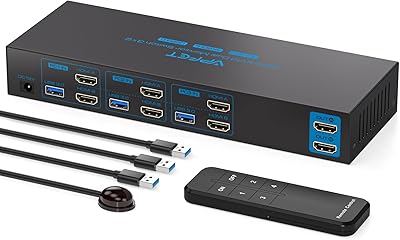
Camgeet KVM Switch 3 Monitors 3 Computers HDMI+2 DisplayPort
88%
95%
Display Resolution Support
93%
Multi-Computer Switching
89%
USB Connectivity
82%
Setup and Installation
91%
Compatibility Across OS
More
AILVLVNG HDMI KVM Switch 2 Monitors 3 Computers 4K@60Hz USB 3.0
84%
91%
Ease of Setup
88%
Dual Monitor Functionality
87%
USB Port Performance
84%
Display Consistency (EDID Emulator)
80%
Switching Speed (Button vs Remote)
More
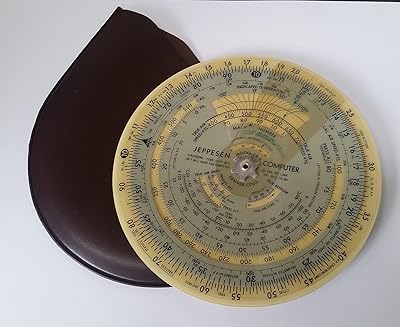
CYA E6B Plastic Aviation Flight Computer
78%
88%
Value for Money
84%
Readability
63%
Build Quality
91%
Portability
67%
Scale Accuracy
More
Timpano TPT-360 3-Way Electronic Crossover
85%
89%
Performance
85%
Ease of Installation
90%
Build Quality
88%
Sound Clarity & Balance
91%
Customization Options
More
LIGHT FLIGHT 17.3-inch Laptop Backpack
86%
91%
Value for Money
88%
Build Quality
85%
Comfort & Ergonomics
93%
Storage Capacity
80%
Water Resistance
More
Cykvis 3-in-1 USB Computer Speaker
83%
88%
Voice Pickup Range
92%
USB Hub Utility
94%
Plug-and-Play Reliability
67%
Volume & Audio Output
96%
Desk Footprint
More
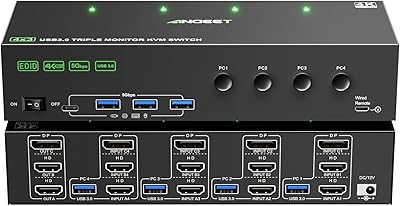
Jeppesen CR-3 6-Inch Circular Flight Computer
77%
88%
Build Quality
84%
Scale Legibility
61%
Ease of Use
91%
Calculation Range
96%
FAA Exam Compatibility
More
ANGEET KVM Switch 3 Monitors 4 Computers
87%
90%
Performance Stability
93%
Ease of Setup
85%
Display Quality
88%
Compatibility with Multiple OS
91%
Switching Convenience (Wired Remote)
More

FAQ

The ASA CX-3 Electronic Flight Computer is on the FAA approved calculator list, so you can bring it into any FAA knowledge test without prior approval from the testing center. That said, it is always worth double-checking the current FAA approved device list before your exam date, since that list can be updated.

The manual E6B builds strong foundational instincts and many instructors still recommend learning on it first. This electronic E6B handles the same calculations faster and with less room for manual error, but it does not necessarily deepen your understanding of the underlying aeronautical concepts the way working a slide rule does. Ideally, learn both — use the analog version to understand the why, and the digital one for speed and accuracy during exam prep.

It is approved for both FAA and Canadian Transport Canada knowledge exams, so Canadian aviation students can use it without needing a different device for their tests.

Battery life varies depending on how frequently the backlight is used, but several users report that the four AAA batteries drain faster than expected during intensive study periods. Keeping a spare set on hand is a practical habit, especially in the weeks leading up to an exam.

The snap-on cover provides reasonable everyday protection against minor scratches during transport, but it is not a ruggedized case. If you plan to toss it loosely into a bag with other gear regularly, a small padded pouch would add meaningful extra protection.

There is a short adjustment period. Smartphone apps tend to have more visual interfaces, so navigating a physical menu-based device feels different at first. Most users report getting comfortable with the layout within a few hours of practice.

It handles real flight planning calculations — wind correction angles, fuel burn estimates, time-speed-distance, weight and balance — so it is genuinely useful in practical flying, not just test prep. Many working pilots keep one in their flight bag as a quick backup to their primary planning tools.

This aviation flight computer covers the main E6B functions: time, speed, distance, wind correction, fuel planning, altitude, and weight and balance. It is not a navigation computer or a moving map, and it does not replace dedicated EFB software for full route planning, but for the core aeronautical math, it covers what most pilots need.

The color LCD performs reasonably well indoors and in moderate light conditions, but like most LCD screens, direct sunlight can reduce contrast and readability. Adjusting the backlighting settings helps to a degree, but it is not a sunlight-readable display in the way some dedicated aviation instruments are.

Yes, the favorites feature lets you pin frequently used calculations so you can access them without digging through the full menu structure. It is a small but genuinely useful time-saver when you are running through the same calculations repeatedly during study sessions.

Where to Buy

Aircraft Spruce and Specialty
In stock $119.95
Marv Golden Pilot Supplies
In stock $124.95
Aviation Depot
In stock $124.95
Pilot Stuff Online
In stock $124.95
High Tide Aviation
In stock $125.00
Sporty's Pilot Shop
In stock $129.95