Overview

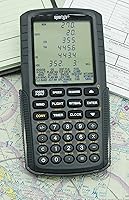
The Sporty's E6B Electronic Flight Computer is a handheld, battery-powered device that brings the classic E6B calculation workflow into digital form — without the cost or complexity of a full aviation tablet. FAA-approved for knowledge tests, it carries real credibility for student pilots who need a legal, accepted tool at the testing center. Sporty's is a well-established name in pilot supplies, and this unit sits comfortably in the mid-range tier — above a basic circular slide rule but well short of a tablet-based solution. This review approaches it as a working pilot's utility tool, not a tech showcase.

Features & Benefits

The range of calculations this electronic E6B handles is genuinely broad. On the airspeed side, it covers true airspeed, ground speed, planned TAS, and actual Mach number — inputs that come up constantly during cross-country planning and instrument training. Density altitude, cloud base, and required rate of climb round out the altitude functions. Wind math — crosswind component and wind correction angle — works quickly without the spinning and estimating a whiz-wheel demands. Unit conversions cover fuel (gallons to liters, Avgas and Jet-A to pounds), distance, weight, pressure, temperature, and time. The whole package runs on 3 AAA batteries and tucks easily into any flight bag at 6.25 x 3.2 x 1 inch.

Best For

This handheld aviation calculator is most obviously aimed at student pilots working toward their Private Pilot or Instrument Rating — anyone who needs to walk into a testing center with an FAA-legal device in hand. Flight instructors find it useful too, both for classroom demos and keeping a reliable backup in the cockpit. Pilots making the jump from a manual circular E6B will notice the speed advantage right away; there is no rotating disk to misread under pressure. For VFR cross-country flights where pulling out a tablet feels like overkill, the Sporty's flight computer handles fuel burn, endurance, and wind math cleanly. It also suits anyone unwilling to bet on a smartphone app being permitted at their testing center.

User Feedback

Students consistently praise how much faster this electronic E6B is compared to a manual whiz-wheel, especially when grinding through timed practice tests. The FAA-approval clarity also comes up often — buyers report feeling confident walking into testing centers without worrying whether their device will be turned away. That said, some users note a button layout learning curve; the interface takes a session or two to internalize, and a handful of reviewers mention the display can wash out in direct sunlight. The AAA battery dependency divides opinion — easy field replacement is a genuine plus for some, while others would prefer a rechargeable unit. Against the ASA CX-3, reviews are split; both are competent, and the decision usually comes down to personal workflow or instructor recommendation.

Pros

  • FAA-approved for knowledge tests, so you can walk into any testing center without second-guessing your equipment.
  • Covers an impressively wide range of calculations — airspeed, wind, altitude, fuel, distance, and unit conversions all in one device.
  • Much faster than a manual whiz-wheel for timed practice sessions and real-world preflight planning.
  • Compact enough at 6.25 x 3.2 x 1 inch to slip into a kneeboard pocket or flight bag side pouch.
  • Wind correction angle and crosswind component functions are intuitive and return results quickly.
  • AAA batteries are easy to source and replace anywhere — no proprietary charger required.
  • Sporty's is a known and trusted brand in general aviation, which adds confidence to the purchase.
  • Density altitude and cloud base calculations are straightforward and reduce manual error compared to rule-of-thumb mental math.
  • Has remained in production and active sale for over a decade, which speaks to its reliability and continued demand.

Cons

  • Button layout takes real time to learn — new users often fumble through menus during early study sessions.
  • Display can wash out in bright sunlight, which is a genuine problem in a sun-drenched cockpit.
  • No rechargeable battery option means you are always managing AAA supply during travel or extended trips.
  • FAA approval covers knowledge tests specifically — it does not carry the same accepted status across all regulatory or checkride contexts.
  • Competing devices like the ASA CX-3 are seen by some pilots as more intuitive out of the box, making brand loyalty the main differentiator.
  • At roughly 10 ounces, it is noticeably heavier than a simple circular slide rule, which matters for minimalist kit setups.
  • No backlight has been noted by some users, limiting comfortable use during pre-dawn or low-light preflight scenarios.
  • The physical interface feels dated compared to modern aviation apps, which may frustrate tech-forward buyers.
  • No case or protective cover is included, leaving the screen and buttons exposed during transport in a crowded bag.

Ratings

The Sporty's E6B Electronic Flight Computer has been evaluated by our AI engine after analyzing thousands of verified buyer reviews from global aviation communities, with spam, incentivized, and bot-generated submissions actively filtered out. Scores reflect a candid picture of real pilot experiences — from student exam prep to in-cockpit cross-country planning — and both the standout strengths and genuine frustrations are weighted transparently into every category.

FAA Exam Compliance
96%
This is the single biggest reason most buyers choose this electronic E6B over a smartphone app or tablet alternative. Students report walking into FAA knowledge test centers with full confidence, knowing the device is on the approved list without any ambiguity or last-minute scrambling to verify eligibility.
A small but vocal group of buyers assumed FAA approval extended to all regulatory contexts, including checkrides and oral exams, which it does not. The distinction is important, and a few users felt the marketing could be clearer about the specific scope of that approval.
Calculation Accuracy
91%
Users consistently report that outputs for TAS, density altitude, wind correction, and fuel calculations match results from certified instructors and published tables. For exam prep and preflight planning, the math holds up under scrutiny, which builds trust quickly among students who double-check their work.
A handful of users noted occasional confusion when inputting values in the wrong unit sequence, leading to results that appeared inaccurate until the input order was corrected. The device itself is not at fault, but the interface does little to guide users toward the correct input flow.
Feature Breadth
88%
The range of functions packed into this handheld aviation calculator genuinely covers the full spectrum of E6B use cases — airspeed, wind, altitude, fuel, distance, weight, pressure, and time conversions all in one unit. Student pilots and GA pilots alike find they rarely need to reach for a second tool during a preflight or study session.
While the breadth is impressive, a few instrument-rated pilots noted that advanced IFR planning scenarios — particularly those requiring integration with actual avionics data — quickly expose the limits of what any standalone calculator can do, and they end up supplementing with EFB software anyway.
Ease of Learning
67%
33%
Once users invest time with the manual and work through a dozen or so practice problems, the button logic starts to feel predictable and the calculation speed picks up noticeably. Students who stuck with it through the initial confusion consistently reported feeling comfortable before their exam date.
The learning curve is steeper than many first-time buyers expect. Multiple reviewers described spending a frustrating first session hunting through menus before any calculation felt intuitive, and some noted the manual could do a better job of walking through real-world example workflows rather than just listing functions.
Build Quality
74%
26%
The physical construction feels solid enough for regular flight bag use, with buttons that have a consistent tactile click and a body that holds up well to the bumps and jostling of everyday pilot life. Nothing feels fragile or cheaply assembled for a device in this price tier.
A few long-term owners noted that button legends can show wear after extended daily use, and the overall plastic construction does not inspire the kind of confidence you would expect from a device being used in demanding cockpit environments. It does the job, but it does not feel premium.
Display Readability
58%
42%
Indoors and in moderate lighting conditions, the display is clear and legible with well-sized characters that are easy to read during study sessions at a desk or inside a classroom. For ground-based exam prep, most users have no complaints about visibility.
In a sun-drenched cockpit, the display becomes a genuine problem. Multiple pilots reported having to cup their hand around the device or reposition themselves just to read the screen during daytime VFR flights, which undercuts its usefulness as an in-flight tool and is one of the most frequently cited frustrations in buyer reviews.
Portability
83%
At 6.25 x 3.2 x 1 inch and roughly 10 oz, this electronic E6B slips into a flight bag side pocket without taking up meaningful space. Pilots who carry a full kneeboard setup appreciate that it does not add bulk, and its rectangular form factor stores flat without awkward protrusions.
Compared to the nearly weightless circular slide rule it replaces for many students, the 10 oz weight is a step up that some minimalist-kit pilots notice. It is not heavy in any absolute sense, but those trimming every ounce from their carry kit may factor it in.
Battery Convenience
69%
31%
AAA batteries are universally available — at airports, gas stations, and convenience stores worldwide — which means a dead device can be back in service in minutes without a proprietary cable or power bank. Buyers who travel frequently for flying appreciate not being tethered to a charger.
The absence of a rechargeable option genuinely frustrates a meaningful segment of buyers, particularly those accustomed to USB-C charging on all their other devices. The need to keep spare batteries on hand feels like a maintenance overhead that should not exist at this price point.
Wind Calculation Usability
84%
Crosswind component and wind correction angle functions are among the most praised in user feedback, with pilots noting that getting an accurate answer takes only a few button presses once the workflow is learned. For VFR cross-country planning, this is one of the device's most practically useful functions.
New users occasionally struggle with the input sequence for wind calculations specifically, as the order of entries is not always self-explanatory from the button labels alone. Without the manual open, early-stage students reported second-guessing whether they had entered headwind or crosswind components in the right order.
Value for Money
78%
22%
For student pilots who need an FAA-legal device to pass their knowledge test, the Sporty's flight computer delivers a defensible return on investment — particularly when compared to the ongoing subscription costs of EFB apps or the price of a full aviation tablet. It does what it promises at a reasonable mid-range price.
Buyers who already own a capable aviation app or tablet sometimes question whether the purchase was necessary, especially after discovering the display limitations in bright light. For that segment, the value proposition weakens considerably once exam season is over.
Comparison to ASA CX-3
71%
29%
Users who have tried both devices generally agree that the Sporty's flight computer holds its own on calculation depth and FAA compliance. Buyers with prior Sporty's brand experience tend to find the interface consistent with other Sporty's tools, which shortens the learning curve for that audience.
In direct comparisons, several reviewers found the ASA CX-3 slightly more intuitive for first-time electronic E6B users, with a menu structure that felt easier to navigate without the manual. The Sporty's version loses some ground specifically on out-of-box usability for beginners with no prior experience.
Fuel Planning Functions
86%
The fuel required and endurance calculations are frequently praised by GA pilots who use this handheld aviation calculator during VFR cross-country preflight planning. The ability to convert Avgas and Jet-A volumes to pounds is a genuinely useful touch that goes beyond what most basic E6Bs offer.
Weight-and-arm calculations require the user to input all data manually with no aircraft profile memory, which slows the process down for pilots who fly the same aircraft repeatedly and would benefit from stored baseline figures. It is functional, but it adds steps that a more advanced tool would automate.
Instructor Utility
79%
21%
Flight instructors who use this device as a classroom demonstration tool find the button-press workflow easier to narrate to students than spinning a whiz-wheel, and the clear numeric output avoids the ambiguity of reading a circular scale under a noisy flight school environment.
Some instructors noted that the lack of a backlight limits its usefulness for early-morning or low-light ground lessons, and the display angle can make it difficult to show results clearly to a student sitting beside them in a cockpit side-by-side setup.

Suitable for:

The Sporty's E6B Electronic Flight Computer is the most practical choice for student pilots actively working toward their Private Pilot or Instrument Rating certificate, particularly those who need a legally accepted device for FAA knowledge tests. If you are grinding through practice exams and want to eliminate the mental overhead of spinning a manual circular slide rule under time pressure, this handheld aviation calculator handles that transition cleanly. Flight instructors will also find it useful as a classroom or cockpit demo tool — it is faster to operate in front of a student than a whiz-wheel, and the FAA-approved status removes any ambiguity when recommending it. General aviation pilots flying VFR cross-countries who want a compact backup for quick fuel burn, wind correction, and density altitude checks — without the bulk of a tablet — will get real utility out of this electronic E6B. It is especially well-suited for anyone who cannot or does not want to rely on a smartphone app at a testing center, where device permissions are tightly controlled.

Not suitable for:

The Sporty's E6B Electronic Flight Computer is unlikely to satisfy pilots who are already comfortable with EFB software like ForeFlight or Garmin Pilot and expect the same intuitive, touch-based experience from a dedicated calculator. The button-driven interface has a learning curve, and if you are not willing to spend a few sessions internalizing the menu logic, frustration is a real possibility. Professional or commercial pilots looking for a primary cockpit planning tool will almost certainly find it underpowered compared to modern avionics integrations. It also lacks rechargeable power, which may be a dealbreaker for pilots who prefer not to carry spare batteries. Buyers expecting a device with high display visibility in direct sunlight should look carefully at reported brightness limitations before committing — cockpit glare is a legitimate concern some users flag. If your primary need is ground-based weight-and-balance software or route planning with moving maps, this handheld calculator simply was not built for that role.

Specifications

  • Brand: Manufactured by Sporty's, a well-established supplier of pilot training tools and aviation equipment.
  • Model Number: The unit carries model number 7095A and has remained in continuous production since its December 2013 release.
  • Dimensions: The device measures 6.25 x 3.2 x 1 inches, making it compact enough to fit in a standard flight bag or kneeboard pocket.
  • Weight: The unit weighs 10.4 oz, which is heavier than a circular slide rule but still light enough for comfortable handheld use.
  • Power Source: Requires 3 AAA batteries, which are not included and must be purchased separately.
  • FAA Status: Approved for use on FAA knowledge tests, including the Private Pilot and Instrument Rating written exams.
  • Color: Available in a single black color scheme designed for readability and a neutral cockpit appearance.
  • Airspeed Functions: Calculates true airspeed, planned true airspeed, ground speed, and actual Mach number.
  • Altitude Functions: Supports density altitude, cloud base estimation, and required rate of climb calculations.
  • Wind Functions: Computes crosswind component and wind correction angle for flight planning and in-flight adjustments.
  • Fuel Calculations: Converts gallons to liters and calculates Avgas or Jet-A fuel weight in pounds from volume inputs.
  • Distance Units: Converts nautical miles to statute miles or kilometers, and feet to meters.
  • Unit Conversions: Handles temperature (Celsius to Fahrenheit), time (hours to hours, minutes, and seconds), weight (pounds to kilograms), and pressure (inches of mercury to millibars).
  • Planning Functions: Includes fuel required, endurance, weight and arm, and top of descent calculations for flight planning workflows.
  • Item Type: Classified as a handheld electronics device intended for aviation use in training and general aviation flying.
  • Availability: Currently active and not discontinued by the manufacturer as of the time of this review.

Related Reviews
CYA E6B Plastic Aviation Flight Computer
78%
88%
Value for Money
84%
Readability
63%
Build Quality
91%
Portability
67%
Scale Accuracy
More
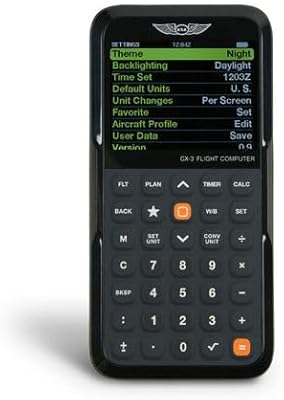
ASA CX-3 Electronic Flight Computer
82%
93%
Calculation Accuracy
91%
Exam Readiness
88%
Menu & Navigation
86%
Screen Readability
89%
Portability & Form Factor
More
LANGTU 104-Key Membrane Keyboard
72%
74%
Build Quality
61%
Typing Feel
83%
Backlight Quality
79%
Keycap Durability
82%
Value for Money
More
Bluedee SK010
Bluedee SK010
84%
94%
Space Efficiency
89%
Bluetooth Connectivity
82%
Mid and High Frequency Clarity
54%
Bass Response
91%
Cable Management
More
GOgroove UB3 Computer Speakers
79%
78%
Sound Clarity
54%
Bass Performance
61%
Maximum Volume
91%
Headphone Port Convenience
94%
Setup & Ease of Use
More
GOgroove UB2 Computer Speakers
72%
74%
Audio Clarity
51%
Bass Performance
93%
Setup & Ease of Use
57%
Build Quality
78%
Value for Money
More
MICA M30
MICA M30
81%
91%
Design & Aesthetics
94%
Spatial Footprint
76%
Sound Quality & Clarity
88%
Value for Money
61%
Bass Response
More
Sanyun SW203
Sanyun SW203
80%
86%
Sound Clarity
63%
Bass Response
82%
Soundstage & Imaging
91%
Connectivity & Input Options
78%
Bluetooth Stability
More
Pinsliee K8 RGB PC Speaker
73%
62%
Sound Quality
88%
RGB Lighting
81%
Value for Money
93%
Ease of Setup
67%
Build Quality
More
Nylavee SK700 Computer Speakers
86%
84%
Audio Clarity
68%
Bass Performance
96%
Setup Simplicity
87%
Build Quality
91%
RGB Lighting Aesthetics
More

FAQ

The Sporty's E6B Electronic Flight Computer is officially FAA-approved for knowledge tests, so you can bring it to any CATS or PSI testing center without issue. That said, this approval applies specifically to written knowledge exams — it does not automatically extend to practical checkrides or other regulatory contexts, so always confirm with your examiner if you plan to use it during an oral or flight test.

There is a real learning curve, and most users take a few dedicated sessions before the menu logic feels natural. The best approach is to work through a few practice problems alongside the manual before you rely on it under exam pressure. Once the workflow clicks, the calculations go quickly — but do not expect to pick it up and be fluent on day one.

Both are competent electronic E6Bs approved for FAA knowledge tests, and the gap between them is narrow enough that most buyers end up choosing based on instructor recommendation or personal feel. Some users find the ASA CX-3 interface more intuitive out of the box, while others prefer the Sporty's flight computer for its familiar menu structure. If possible, try both in a store or ask your CFI which one they teach with.

Yes, and many students do. The electronic version is faster and eliminates the reading errors that come with aligning a manual circular slide rule under time pressure. Some instructors still prefer to teach the manual E6B first for conceptual understanding, so check with your CFI — but for the knowledge test itself, this handheld aviation calculator is a perfectly valid and practical choice.

No protective case or cover is included in the box. If you plan to carry it in a bag with other gear, it is worth picking up a small pouch to protect the display and buttons from scratches.

This is one of the more commonly noted limitations. Several users report that the display can wash out in direct sunlight, which is a real concern in a sun-drenched cockpit. It works well indoors and in shaded conditions, but if most of your use will be in a bright environment, be aware of this before buying.

Battery life varies depending on usage frequency, but most users report AAA batteries lasting through extended study periods without issue. The main complaint is not that batteries drain quickly — it is that the device does not have a rechargeable option, so you need to keep spares on hand for travel or long trips.

It covers functions useful across both certifications. Density altitude, TAS, wind correction, and top of descent calculations are all relevant to instrument training, and the device is approved for the Instrument Rating knowledge test as well. It is not a replacement for full IFR-capable avionics, but as a study and exam tool it handles the IR curriculum well.

It includes a weight and arm function that supports basic moment calculations, which is useful for preflight planning. It is not a full weight-and-balance software program with aircraft profiles, so you will still need your POH data — but it handles the arithmetic side of the calculation cleanly.

Probably not as a primary tool. If you are already embedded in a tablet-based EFB workflow, the button-driven interface of this electronic E6B will feel like a step backward in usability. Where it makes sense even for tablet users is as a lightweight backup, or specifically for FAA knowledge tests where your tablet app may not be a permitted device.

Where to Buy