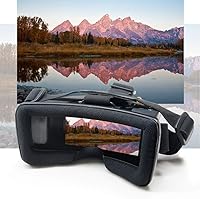
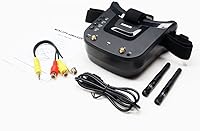
Overview

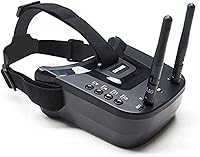
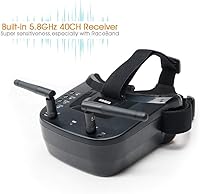
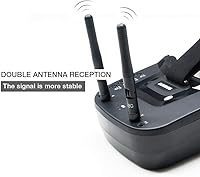
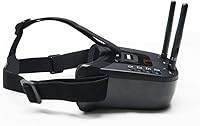
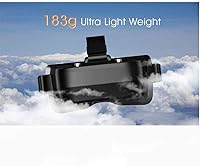
The ARRIS VR-009 FPV Video Goggles arrived on the scene in 2018 and have quietly held their ground in the entry-level FPV market ever since. That kind of staying power is telling — not many budget headsets manage to remain relevant as the hobby evolves. This headset is compact, tipping the scales at just 183g, and its built-in rechargeable battery means you can grab it and head to the field without hunting for external power packs. The dual-antenna design adds a layer of signal reliability that you would not necessarily expect at this price point. For beginners getting into drone racing or freestyle flying, it offers a practical starting point.

Features & Benefits

The 5.8GHz receiver covers all 40 channels including Raceband, so these FPV goggles will pair with the vast majority of FPV video transmitters on the market. The auto-channel search is one of those small conveniences that makes a real difference on a flying day — instead of manually scanning frequencies, you just power on and let the headset lock onto the signal. The 3-inch 16:9 display is not going to impress anyone coming from high-end gear, but it delivers a clear, low-latency feed that is more than adequate for learning the ropes. At 183g, extended sessions rarely result in neck discomfort, which is a genuine plus for newer pilots still building their flying stamina.

Best For

These FPV goggles are really aimed at one specific type of pilot: someone just starting out who wants to get in the air without spending a fortune. If you are flying a 5.8GHz micro or mini quad, the VR-009 fits the role of a grab-and-go headset well. The smaller form factor also suits pilots with narrower faces or younger users who find full-sized box goggles uncomfortable. Experienced racers chasing the sharpest possible image or widest field of view will likely find it limiting, but for casual weekend flying, this headset holds its own and delivers solid value relative to what you pay.

User Feedback

Among owners who picked up these FPV goggles as their first headset, the most consistent praise centers on easy setup — the auto-search channel feature in particular gets repeated mentions for taking the guesswork out of getting started. Reception holds up reasonably well in open spaces, though some users report it can fall behind pricier alternatives as distance or obstacles increase. The display draws mixed reactions: beginners find it adequate, but anyone stepping down from higher-spec goggles will notice the limited field of view. Battery life generally meets expectations, and fit is comfortable for most users, though pilots with larger faces occasionally flag it as snug.

Pros

  • Lightweight at 183g, so it rarely causes discomfort during a typical flying session.
  • Built-in rechargeable battery means no external power cables or separate battery packs to manage.
  • Auto-channel search locks onto your transmitter quickly, cutting down pre-flight setup time.
  • Full 40-channel coverage including Raceband makes these FPV goggles compatible with most 5.8GHz video transmitters.
  • Dual-antenna reception adds meaningful signal stability compared to single-antenna budget alternatives.
  • Low-latency video feed gives pilots enough responsiveness for learning and casual freestyle flying.
  • Compact dimensions make it easy to toss in a bag without a bulky case.
  • Accessible entry price lowers the financial risk for pilots who are still figuring out if FPV flying is for them.
  • Works reliably with standard 5.8GHz micro and mini quads right out of the box.

Cons

  • The 3-inch display delivers a noticeably narrow field of view compared to dedicated FPV racing goggles.
  • Display clarity drops off relative to mid-range and premium headsets, which becomes obvious in low-light conditions.
  • Reception range can fall short when flying at greater distances or in signal-heavy environments.
  • The built-in battery is not replaceable in the field, so a dead cell eventually means replacing the whole unit.
  • Fit can feel snug or tight for pilots with larger faces, limiting comfortable wear time.
  • The headset has not seen hardware updates since 2018, meaning newer budget competitors may now offer better specs at a similar price.
  • No DVR or recording capability, so there is no way to review your flights after landing.
  • Limited upgrade path — no modular antenna ports or accessory ecosystem to grow into.

Ratings

The scores below reflect our AI-driven analysis of verified global user reviews for the ARRIS VR-009 FPV Video Goggles, with spam, bot-submitted, and incentivized feedback actively filtered out before scoring. Each category is rated on a 0–100 scale to give you an honest, transparent picture of where this headset genuinely excels and where real-world owners have run into frustrations.

Value for Money
83%
For pilots just getting into FPV flying, the price-to-functionality ratio is one of the most commonly praised aspects across user reviews. The built-in battery, dual-antenna setup, and full 40-channel support at this tier consistently surprise first-time buyers who expected a more stripped-down experience.
Experienced pilots who have owned better gear tend to rate value lower, noting that newer budget competitors have closed the gap since 2018. For someone buying today rather than a few years ago, the value proposition is less clear-cut than it once was.
Ease of Setup
89%
The auto-channel search feature is consistently the most praised aspect of the ownership experience, with beginners especially noting how fast they were up and flying after unboxing. Most users report the entire setup process taking just a few minutes without consulting any manual.
A small number of users on crowded 5.8GHz frequencies found the auto-search occasionally landing on a noisy channel, requiring a manual override. The interface for manual channel selection is functional but not intuitive for complete newcomers.
Display Quality
58%
42%
For entry-level flying and learning basic orientation, the 3-inch 16:9 screen delivers a watchable, low-latency picture that gets the job done in good lighting conditions. Beginners generally report being satisfied with the image during their first weeks of flying.
The field of view is noticeably narrow compared to larger FPV goggles, and display sharpness draws regular criticism from anyone who has used mid-range or premium alternatives. Low-light performance in particular is a recurring complaint, with the image becoming noticeably grainy in overcast or shaded conditions.
Signal Reception
71%
29%
The dual-antenna configuration gives this headset a meaningful edge over single-antenna budget alternatives, and most users flying in open spaces at moderate distances report a stable, glitch-free feed. Raceband support means compatibility is rarely an issue with modern 5.8GHz quads.
At longer ranges or in areas with competing 5.8GHz signals, users report more dropouts than they would experience with higher-end receivers. Flying near other pilots on the same band can cause interference that the dual-antenna setup does not fully resolve.
Build Quality
67%
33%
The plastic shell feels reasonably solid for the price, and most users report no cracking or structural issues after months of regular use. The overall assembly comes across as deliberate rather than flimsy, which is not always guaranteed at this budget tier.
The materials do not inspire confidence for rough handling or frequent travel without a protective case. Some users have noted that the foam face padding begins to degrade faster than expected with regular use, and there are no replacement pads readily available.
Comfort & Fit
66%
34%
At only 183g, the headset rarely causes the neck fatigue that heavier box-style goggles can produce during longer sessions. Pilots with average to smaller face sizes generally find the fit snug and secure without feeling oppressive during a 30-to-45-minute flying session.
Pilots with larger faces or wider head measurements report a noticeably tight fit that becomes uncomfortable over time. The lack of significant adjustment range means the headset works well for some face shapes but not others, and glasses wearers face an added challenge with the limited clearance inside.
Battery Life
73%
27%
The built-in 1200mAh cell reliably covers a standard hobbyist flying outing without needing a recharge mid-session, which aligns with what most casual pilots actually need. Users appreciate not having to carry or manage a separate external battery pack.
The non-removable battery is a long-term reliability concern, since there is no field-swappable option if the charge runs out unexpectedly. After extended ownership spanning a year or more, some users note capacity degradation that shortens usable session time noticeably.
Video Latency
81%
19%
Real-time video return is smooth enough for the kinds of casual and learning-phase flights this headset is aimed at, and most users report no perception of meaningful delay during normal forward flight. For beginner proximity flying and line-of-sight transitions, the latency feels transparent.
In side-by-side comparisons with higher-spec goggles, some pilots notice a subtle lag during fast directional changes, which can matter when navigating tighter spaces. This is unlikely to frustrate beginners but is a real consideration for anyone progressing toward competitive racing.
Channel Compatibility
86%
Covering all 40 channels across standard bands plus Raceband means this headset pairs with virtually every 5.8GHz video transmitter on the consumer market, which is a genuine practical advantage for pilots who switch between multiple quads or fly with friends on different setups.
While channel coverage is broad, the receiver hardware itself is not upgradeable, so there is no path to improving sensitivity or adding support for different frequency bands as your flying evolves. The 5.8GHz-only design also limits future compatibility if you move to a digital FPV system.
Portability
88%
The compact footprint and sub-200g weight make this one of the easiest FPV headsets to drop into a backpack or gear bag without dedicating a separate case to it. Pilots who hike or bike to flying spots specifically cite the size as a practical advantage over bulkier alternatives.
The compact dimensions, while great for carrying, do contribute to the narrower display and tighter fit that some users find limiting. Portability and viewing comfort are somewhat in tension here, and the headset clearly prioritizes the former.
Durability
63%
37%
Under normal, careful use the headset holds up well enough for a beginner who is not crashing repeatedly or storing it loosely in a bag. Several users with over a year of ownership report no major functional issues beyond battery capacity loss.
The face padding and exterior finish show wear relatively quickly under frequent use, and the headset does not appear to be built to withstand drops or rough treatment. For pilots who are still crashing regularly during the learning phase, the construction feels more fragile than ideal.
Beginner Friendliness
87%
The auto-search channel feature, minimal controls, and included battery make this one of the more approachable entry points for pilots who have never used FPV goggles before. The learning curve from unboxing to first flight is genuinely low, which is exactly what a new hobbyist needs.
There is almost no documentation included that explains FPV concepts for true first-timers, so beginners without any community support may still feel confused about channel selection or transmitter pairing. The product assumes a baseline familiarity that not every new buyer will have.
Long-Term Value
54%
46%
For pilots who use it primarily during their first six to twelve months of flying and then upgrade, the headset delivers adequate value for that transitional period. It covers the basics without asking for a significant financial commitment up front.
As a long-term keeper, the non-replaceable battery, aging hardware, and limited upgrade path make it a weaker investment than it might initially appear. By the time a pilot develops the skills to notice its limitations, they will almost certainly want a significant upgrade.

Suitable for:

The ARRIS VR-009 FPV Video Goggles are a strong fit for anyone just stepping into the world of first-person-view flying and not yet ready to invest in premium gear. If you are picking up your first FPV quad — particularly a 5.8GHz micro or mini drone — this headset pairs well right out of the box without any complicated setup. Casual hobbyists who fly occasionally on weekends will appreciate the built-in battery and compact form factor, since there is nothing extra to charge or carry. The lightweight build makes it comfortable enough for shorter to moderate flying sessions, which is exactly the kind of use pattern a new pilot tends to have. It also suits younger pilots or those with smaller faces who find full-sized box goggles awkward or oversized.

Not suitable for:

The ARRIS VR-009 FPV Video Goggles will likely frustrate experienced FPV pilots who have already flown with higher-end headsets and grown accustomed to wider fields of view, sharper displays, or modular antenna upgrades. Competitive racers who rely on crystal-clear video to navigate tight tracks at speed may find the 3-inch display limiting compared to what dedicated racing goggles offer. Pilots who frequently fly at longer ranges or in signal-congested environments may also hit the limits of the reception performance sooner than they would like. If you are looking for a headset you can grow into over several years of increasingly serious flying, the hardware here has a relatively low ceiling. Those who fly in groups with multiple 5.8GHz pilots nearby may occasionally experience interference that a more capable receiver would handle better.

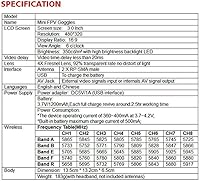
Specifications

  • Brand: Manufactured by ARRIS, under the parent company Hobby Wing.
  • Model Number: The exact model designation for this headset is VR-009.
  • Frequency: Operates on the 5.8GHz band, the most widely used frequency in consumer FPV flying.
  • Channels: Supports 40 channels across multiple bands, including Raceband, for broad transmitter compatibility.
  • Display Size: Features a 3-inch screen with a 16:9 aspect ratio for a widescreen video feed.
  • Video Latency: Delivers a real-time video return with very low latency, suitable for reactive flight control.
  • Antenna: Equipped with a dual-antenna receiver configuration to help maintain a more stable signal.
  • Battery: Built-in 3.7V 1200mAh lithium polymer battery is included and rechargeable, with no external pack required.
  • Weight: The headset weighs 183g (approximately 6.45oz), keeping it light for extended wear.
  • Dimensions: Physical dimensions measure 5.31 x 5.20 x 2.56 inches, resulting in a compact goggle profile.
  • Channel Search: Includes an automatic channel search function that scans and locks onto available 5.8GHz signals.
  • Compatibility: Designed for use with 5.8GHz FPV quadcopter drones and similarly equipped micro and mini aircraft.
  • Max Devices: Supports connection to one video transmitter source at a time.
  • Battery Type: Uses a lithium polymer (LiPo) cell; one battery is included in the box.
  • First Available: This headset was first listed for sale in April 2018 and remains actively sold.
  • Department: Listed under Unisex Adult, making it appropriate for teen and adult pilots.
  • Manufacturer: Produced by Hobby Wing, the parent organization behind the ARRIS accessory line.
  • Discontinued: As of the latest available product data, this headset has not been discontinued by the manufacturer.

Related Reviews
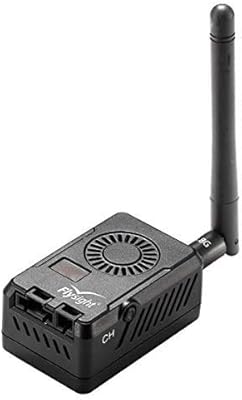
Flysight Black Mamba TX5820 V2 FPV Transmitter
72%
83%
Transmission Range
79%
Signal Stability
71%
Build Quality
66%
Heat Management
58%
Ease of Installation
More
ARRIS G18 Cable Modem Router Combo
80%
88%
Setup & Activation
79%
WiFi Speed & Throughput
67%
WiFi Range & Coverage
91%
Connection Stability
93%
Modem Performance
More
Calibrite ColorChecker Video Color Calibration Chart
78%
93%
Color Accuracy
91%
Gray Scale Precision
89%
White Balance Reliability
67%
Build Quality
84%
Usability On Set
More
ARRIS SBG7400AC2 Modem Router Combo
80%
91%
Value for Money
88%
Setup & Activation
72%
Wi-Fi Performance
93%
Wired Connectivity
86%
Long-Term Reliability
More
YFDSPSM QY360 Mini Projector
74%
83%
Image Clarity
61%
Brightness
91%
Setup Experience
74%
Portability
77%
Smart OS & App Access
More
ARRIS SURFboard S33
ARRIS SURFboard S33
77%
88%
Connection Stability
83%
Speed Performance
79%
ISP Compatibility
91%
Value for Money
84%
Setup & Activation
More
ARRIS T25 DOCSIS 3.1 Cable Modem
69%
83%
Connection Stability
81%
Speed Performance
67%
Voice Service Quality
63%
Setup & Activation
78%
Value for Money
More
ARRIS SB6183 DOCSIS 3.0 Cable Modem
76%
91%
Value for Money
78%
Connection Stability
83%
ISP Compatibility
86%
Setup & Activation
74%
Speed Performance
More
VIDBOX Video Conversion for Mac
84%
88%
Ease of Setup
84%
Performance
91%
Compatibility with iMovie
77%
Build Quality
85%
Software Experience
More
ARRIS S34
ARRIS S34
78%
91%
Connection Speed & Throughput
88%
Setup & Activation Experience
83%
ISP Compatibility
89%
Value for Money
79%
Build Quality & Design
More

FAQ

It works with any drone or camera system that transmits video on the 5.8GHz frequency band. As long as your quad's video transmitter operates on 5.8GHz and falls within the 40 supported channels, including Raceband, you should have no compatibility issues. Brand does not matter here — it is all about the frequency.

The easiest approach is to use the built-in auto-search feature. Power on the goggles, activate auto-search, and the headset will scan all 40 channels and lock onto whichever one your transmitter is broadcasting on. It takes only a few seconds and works reliably in most open environments.

ARRIS rates the 1200mAh cell for a reasonable flying session, though real-world results vary depending on screen brightness and usage. Most users report getting somewhere in the range of an hour to an hour and a half before needing to recharge. It is worth charging fully before heading out, since you cannot swap the battery in the field.

The battery is built into the headset rather than being user-removable, which means replacing it is not a straightforward swap. If the cell degrades significantly over time, your options are limited to either a DIY repair if you are comfortable with electronics, or contacting the manufacturer for support. It is worth keeping this in mind for long-term ownership.

For beginner and casual flying it is perfectly workable. The 3-inch screen gives you enough of a picture to orient yourself, avoid obstacles, and enjoy the FPV experience. That said, the field of view is narrower than you would get with a larger or more expensive goggle, so experienced pilots stepping down from premium gear will likely notice the difference.

The compact form factor of the VR-009 is not specifically designed with over-glasses accommodation in mind, so it can be a tight fit for spectacle wearers. Some pilots manage it depending on their frame size, but others find it more comfortable to fly without glasses if their prescription allows. It is one of the trade-offs of the smaller goggle design.

With 40 channels available you generally have enough room to find a clear frequency even in a small group. The auto-search function helps by identifying an unoccupied channel quickly. In larger gatherings with many pilots on 5.8GHz simultaneously, you may experience some interference, though this is a common limitation across all budget-tier 5.8GHz receivers, not specific to this headset.

No, there is no built-in DVR or recording capability on this headset. If flight recording is important to you, you would need to rely on a camera or flight controller with onboard recording, or consider a different goggle that includes DVR functionality. This is one of the features typically found in more expensive models.

It can be a solid starter option for older kids and teens, given the light weight and compact sizing. The headset is listed for unisex adult use, so younger children with very small faces may find the fit loose. Overall, though, the simplicity of setup and the lightweight design make it less intimidating than bulkier alternatives for new pilots of most ages.

That is a fair thing to consider. The FPV accessory market has moved quickly, and there are newer options at a similar price point that may offer improved display resolution or additional features. This headset still holds its own for basic use, but if you are shopping fresh today it is worth comparing a few current-generation alternatives before committing, especially if display quality is a priority for you.