Overview

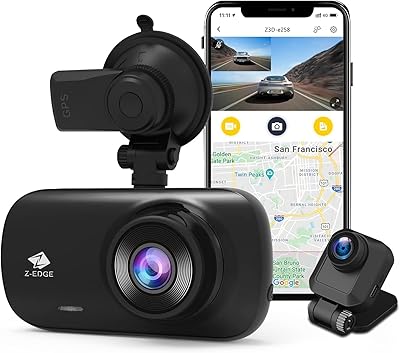
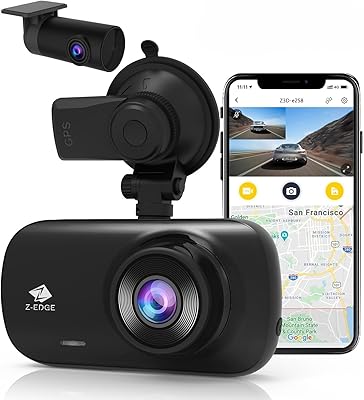
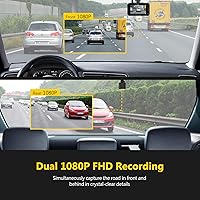
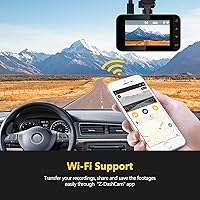
The Z-Edge R1 WiFi Dual Dash Cam sits in a competitive mid-range segment where Z-Edge has built a reputation for focused, no-nonsense in-car cameras. This front-and-rear camera records both channels simultaneously — front at 1296P and rear at 1080P — giving drivers meaningful coverage without the complexity of a multi-device setup. Built-in Wi-Fi means you can pull up footage on your phone through the Z-DashCam app, skipping the card-reader shuffle entirely. With nearly 2,800 reviews and a 4.0-star average, real-world adoption speaks for itself. It isn't a flagship, but it hits a practical sweet spot for drivers who want reliable dual coverage at a fair price.

Features & Benefits

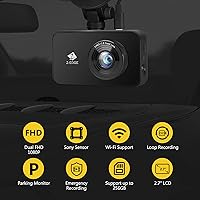
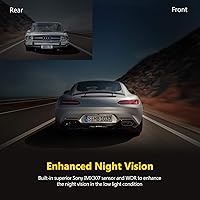
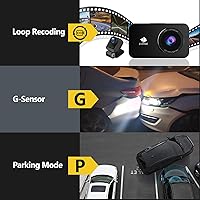
The dual-channel setup is where this dual dash cam earns its keep. The front lens captures at 1296P with a wide 140-degree angle, while the rear handles 1080P at 110 degrees — solid coverage of what's ahead and what's behind. WDR night vision won't turn darkness into daylight, but it does a notably better job than budget alternatives at picking out license plates and road markings in low light. The G-sensor protection automatically locks clips during hard braking or impact, so critical footage doesn't get overwritten by loop recording. Supporting cards up to 256GB, you can store around 40 hours before anything cycles out. The included 19.6-foot cable is a genuine plus for larger vehicles.

Best For

This front-and-rear camera is a strong match for daily commuters who want both channels covered without the hassle of manually ejecting a memory card to review clips. SUV and truck drivers in particular benefit from the extra-long power cable, which makes a clean install far more realistic than with the short cords most competitors include. If you drive at night regularly — city streets, early mornings, unlit roads — the improved low-light performance justifies the step up from a single-camera setup. It also suits drivers who want passive parking protection without immediately wiring in a hardwire kit. Those who prefer a touchscreen interface for in-camera browsing may find the app-centric approach a slight adjustment.

User Feedback

Across close to 2,800 ratings, the Z-Edge R1 holds a 4.0-star average — respectable, and representative of a camera that delivers on its core promises for most buyers. Daylight video clarity and easy installation come up consistently in positive reviews. Where things get more nuanced: the Wi-Fi app experience has drawn mixed reactions, particularly on certain Android phones where connection drops or slow transfer speeds are mentioned. A notable share of buyers were caught off guard by the missing SD card — at this price tier, bundling storage would have strengthened the overall value. Parking mode earns solid marks overall, though reviewers recommend pairing it with a dedicated hardwire kit for longer monitoring sessions.

Pros

  • Records front and rear simultaneously, giving you complete coverage of any incident without a second device.
  • Wireless footage access via the Z-DashCam app is genuinely convenient — no card readers, no fuss.
  • The 19.6-foot USB cable is a standout inclusion for SUV and truck owners who need a clean install.
  • Low-light performance is meaningfully better than budget alternatives, making night driving footage more usable.
  • G-sensor automatically protects collision clips from being overwritten by loop recording.
  • Supports memory cards up to 256GB, translating to roughly 40 hours of continuous footage.
  • Built-in battery enables parking mode monitoring without requiring an immediate hardwire kit investment.
  • Nearly 2,800 real-world reviews with a 4.0-star average reflects consistent, dependable day-to-day performance.
  • Installation is straightforward — a suction cup mount and long cable make setup approachable for most drivers.

Cons

  • No SD card included — buying a quality high-endurance card adds notable extra cost at this price tier.
  • No built-in GPS, so there is no trip logging, speed overlay, or location data on saved footage.
  • The Wi-Fi app has reported connection drops and slow transfer speeds on certain Android devices.
  • Routing the rear camera cable can be fiddly in some vehicle layouts, particularly around tight door seals.
  • The 2.7-inch screen feels limiting if you prefer reviewing footage directly on the camera rather than through a phone.
  • Parking mode battery life is modest — extended overnight monitoring really calls for a separate hardwire kit.
  • The rear camera tops out at 1080P, which is adequate but lags behind front-only modes on comparable rivals.
  • App-dependent clip management may frustrate users who prefer a more self-contained, standalone camera experience.

Ratings

The scores below for the Z-Edge R1 WiFi Dual Dash Cam were generated by our AI engine after analyzing thousands of verified global buyer reviews, actively filtering out incentivized, duplicate, and bot-flagged submissions to surface what real drivers actually experienced. Both the genuine strengths and the recurring frustrations are reflected transparently — no cherry-picking. If something consistently bothered buyers, you will see it in the numbers.

Daytime Video Quality
84%
In clear daylight conditions, most drivers found the front camera sharp enough to read plates at a reasonable following distance, which is ultimately the primary job of any dash cam. Footage held up well during highway driving reviews, with good color fidelity and minimal overexposure in bright sun.
A portion of reviewers noted that fine detail softens at the edges of the wide-angle frame, which is a known limitation of budget-to-mid-range lenses at this field of view. The rear camera, recording at a lower resolution, shows a more noticeable quality gap compared to the front — adequate, but not impressive.
Night Vision Performance
71%
29%
The WDR processing does a better-than-average job of managing the harsh contrast between headlights and dark road sections during urban nighttime driving. Nearby license plates are typically legible, and the footage avoids the washed-out look that plagues cheaper alternatives in lit street conditions.
In genuinely dark environments — rural roads, unlit parking lots — the limitations of the sensor become apparent, and fine detail degrades noticeably. Buyers who expected consistent plate readability in all low-light conditions reported disappointment, particularly with the rear camera after dark.
Wi-Fi & App Experience
62%
38%
The concept works well when it works: connecting your phone and pulling a clip wirelessly without digging out a card reader is genuinely more convenient than the old-school approach. iPhone users tended to report a more consistent experience, with clips downloading at acceptable speeds for short segments.
Android compatibility is a real sore point across a notable slice of reviews, with connection drops, slow pairing, and app stability issues cited repeatedly. For a feature that is central to the camera's appeal, the inconsistency is frustrating enough that some buyers resorted to card readers anyway, undermining the whole point.
Installation Ease
81%
19%
The suction cup mount is genuinely easy to position and reposition, and the 19.6-foot power cable was called out by multiple SUV and truck owners as a standout practical inclusion. Getting the front camera up and running takes most people under 20 minutes.
The rear camera installation is a different story — routing the cable the full length of the cabin and tucking it behind headliner trim is fiddly work, and the experience varies significantly depending on vehicle layout. A small set of reviewers with certain sedan or hatchback body styles found the routing particularly awkward around rear door seals.
G-Sensor Reliability
78%
22%
The automatic clip-locking feature worked as advertised for the majority of buyers, giving drivers confidence that incident footage would still be there when they needed it. Several reviewers specifically mentioned it triggering correctly during minor parking lot scrapes and emergency stops.
A small but vocal group reported the G-sensor being either too sensitive — triggering on speed bumps and rough roads — or not sensitive enough to catch a low-speed tap. Sensitivity calibration options exist in the menu but require some trial and error to land on a setting that suits your driving environment.
Loop Recording & Storage
86%
Loop recording works reliably and automatically, meaning drivers do not need to manually manage storage or worry about the card filling up mid-trip. Support for up to 256GB cards gives buyers the flexibility to extend recording time significantly if they choose a larger card.
The SD card is not included, which is the single biggest value complaint across reviews at this price point — buyers expecting a ready-to-use camera out of the box are immediately hit with an extra purchase. Not all card brands perform equally here; lower-quality cards have caused playback and write errors for some users.
Parking Mode
67%
33%
Parking mode is a useful inclusion for drivers who want passive protection without immediately committing to a hardwire installation, and the built-in battery handles short-duration monitoring sessions reasonably well. Buyers who used it for brief daytime stops in urban areas generally reported satisfactory results.
Extended overnight parking monitoring is where the built-in battery falls short — it simply is not designed for that use case, and reviewers who expected all-night coverage were left unprotected. A dedicated hardwire kit is the practical solution for longer sessions, which adds cost and complexity that the base purchase does not make obvious.
Build Quality & Durability
73%
27%
The camera feels solid enough for a mid-range product, and the plastics do not feel cheap or flimsy when handling the unit. Several long-term owners noted no degradation in recording quality or hardware reliability after a year or more of daily use.
The suction cup mount has drawn intermittent complaints about losing grip in extreme summer heat, which is a common issue for this mount type but worth flagging for drivers in hot climates. The small LCD screen also feels dated compared to touch-enabled rivals at a similar price.
Value for Money
69%
31%
The dual-channel setup, WDR night capability, Wi-Fi connectivity, and G-sensor protection together represent a genuine feature set for a mid-range price, and most buyers felt they received reasonable utility for what they spent. The inclusion of the long USB cable and dual-port car adapter adds practical value without inflating the price further.
The omission of an SD card, combined with the absence of GPS, makes the overall value feel less complete than some rivals at a similar or slightly higher price point. Buyers who factor in the cost of a quality high-endurance memory card may find the real-world price-to-feature ratio tighter than expected.
Front Camera Coverage
83%
The 140-degree front field of view captures multiple lanes and roadside details comfortably, which is wide enough for most real-world incident documentation needs. Drivers reported that the angle felt natural and well-calibrated, avoiding the extreme fisheye distortion that makes some wide-angle cams harder to use as evidence.
At the very edges of the frame, some barrel distortion is visible, which can slightly compress the apparent distance of vehicles in the far corners. This is a cosmetic complaint for most use cases but could matter if footage is being used in a formal dispute.
Rear Camera Coverage
68%
32%
The rear camera at 110 degrees covers the zone directly behind the vehicle effectively, and for the core job of documenting a rear-end collision, most buyers found it more than adequate. Daylight footage from the rear was considered clear and useful by the majority of reviewers.
The narrower angle compared to the front, combined with the lower 1080P resolution, means the rear camera feels like a secondary component rather than an equal partner. In low light, the rear performance gap versus the front is noticeable enough that some drivers questioned whether the rear feed was worth relying on after dark.
App Clip Management
59%
41%
For users who get a stable connection, being able to preview, tag, and download clips directly to a smartphone without any adapters is a real workflow improvement over card-reader-only cameras. The app interface is straightforward enough that most buyers could navigate it without consulting a manual.
Beyond connectivity issues, the app itself received criticism for slow loading times and occasional crashes during video playback on older smartphones. The feature set is also fairly basic — there is no meaningful in-app editing, tagging system, or cloud backup, which limits its usefulness beyond simple clip retrieval.
Ease of Use
79%
21%
Once installed and configured, the camera runs automatically with no ongoing input required from the driver — it powers on with the vehicle, records, loops, and locks emergency footage without any manual steps. The set-and-forget nature is a consistent positive across reviews from less tech-savvy buyers.
Initial setup, particularly configuring the Wi-Fi pairing and adjusting G-sensor sensitivity through the small 2.7-inch screen, has a mild learning curve. The menu interface is functional but not intuitive, and the absence of a touchscreen makes navigating settings noticeably slower than on comparable rivals.

Suitable for:

The Z-Edge R1 WiFi Dual Dash Cam is a practical pick for everyday drivers who want reliable front-and-rear coverage without overcomplicating their setup. Daily commuters benefit most — the wireless clip access means you can check footage from the driver's seat using your phone rather than hunting for a card reader after a fender-bender. SUV and truck owners will appreciate the 19.6-foot power cable, which is long enough to route cleanly through a larger cabin without unsightly dangling wires. Night drivers in urban environments also get meaningful value here, since the WDR-assisted low-light performance is noticeably better than what entry-level single-camera alternatives offer. If you want basic parking protection without immediately committing to a hardwire installation, the built-in battery handles short monitoring sessions reasonably well.

Not suitable for:

Buyers expecting a premium, feature-complete package out of the box will likely find the Z-Edge R1 WiFi Dual Dash Cam falls short in a few key areas. The SD card is sold separately, which is a real friction point — budgeting for a quality high-endurance card on top of the camera's price adds up quickly and should factor into your decision. Drivers who rely heavily on GPS for trip logging or speed data will need to look elsewhere, as there is no GPS module built in. If you manage clips primarily through an in-camera touchscreen rather than a phone app, this setup will frustrate you — the 2.7-inch LCD is functional but the experience is clearly designed around the companion app workflow. Android users in particular should be aware that the Wi-Fi app has drawn mixed reviews around connection reliability, so if seamless wireless access is a top priority, it may not always deliver consistently.

Specifications

  • Front Resolution: The front camera records at 1296P (2304x1296) resolution at 30 frames per second, capturing fine details like license plates and road signs.
  • Rear Resolution: The rear camera records simultaneously at 1080P (1920x1080) at 30 frames per second, providing clear coverage of what is behind the vehicle.
  • Front Lens: The front lens has an F1.8 aperture and a 140-degree field of view, allowing it to capture wide road scenes with improved light intake.
  • Rear Lens: The rear lens operates at F2.1 with a 110-degree angle of view, suited for monitoring the space directly behind the vehicle.
  • Display: A built-in 2.7-inch LCD screen allows for basic in-camera playback and menu navigation without needing a phone or external device.
  • Processor: The camera is powered by the Hi3556V200 processor, which handles simultaneous dual-channel encoding and image processing.
  • Night Vision: Wide Dynamic Range (WDR) technology is used to balance exposure across bright and dark zones, improving footage legibility in low-light conditions.
  • Wi-Fi: Built-in Wi-Fi connects to the Z-DashCam app on Android and iPhone, enabling wireless browsing, previewing, and downloading of footage without removing the memory card.
  • G-Sensor: An integrated G-sensor detects sudden impacts or hard braking and automatically locks the relevant footage to prevent it from being overwritten during loop recording.
  • Loop Recording: Continuous loop recording automatically overwrites the oldest unlocked footage once the memory card reaches capacity, keeping storage managed without manual intervention.
  • Storage Support: The camera supports microSD cards up to 256GB in capacity, which can hold approximately 40 hours of dual-channel footage before looping begins.
  • Parking Mode: A built-in lithium polymer battery powers parking mode monitoring, allowing the camera to operate for a limited time without the engine running.
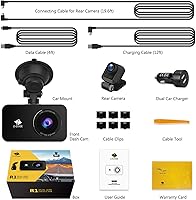
  • Power Cable: A 19.6-foot USB power cable is included, providing enough length for clean routing and installation in larger vehicles such as SUVs and trucks.
  • Mount Type: The camera attaches to the windshield via a suction cup mount, included in the box, allowing for repositioning without tools or adhesive residue.
  • Operating Temp: When powered via USB, the camera operates safely within a temperature range of 14°F to 158°F (-10°C to 70°C).
  • GPS: There is no built-in GPS module; the camera does not record location data, speed overlays, or route tracking.
  • SD Card: No memory card is included in the box; buyers need to purchase a compatible high-endurance microSD card separately before the camera can record.
  • In the Box: The package includes the front camera unit, rear camera unit, suction cup mount, dual-port USB car adapter, and the 19.6-foot USB power cable.

Related Reviews
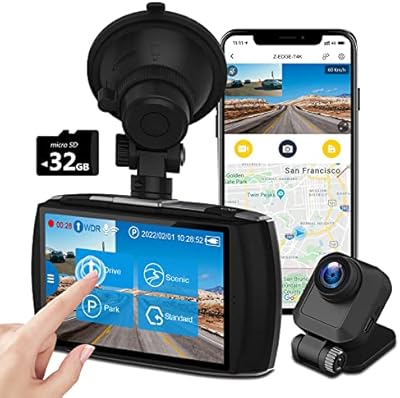
Z-Edge T4K Dual Dash Cam 4K+1080P
82%
91%
Video Quality
88%
Ease of Use
85%
Night Vision Performance
87%
WiFi and App Integration
83%
Build Quality
More
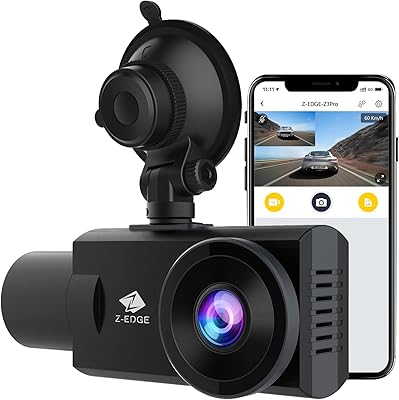
Z Z-Edge Z3Pro Dash Cam Front and Inside 2K+1080P
83%
91%
Video Quality
88%
Night Vision Performance
70%
Ease of Setup
75%
Wi-Fi Connectivity
85%
Durability
More
Z-Edge Z3D Dash Cam
Z-Edge Z3D Dash Cam
81%
90%
Video Quality
75%
Ease of Installation
88%
Night Vision Performance
84%
Wi-Fi and Connectivity
80%
GPS Functionality
More
Z-Edge Z3D 4K Dash Cam
85%
96%
Video Quality Front Camera
91%
Video Quality Rear Camera
89%
Night Vision Performance
88%
G-Sensor Accuracy
85%
Parking Mode Reliability
More
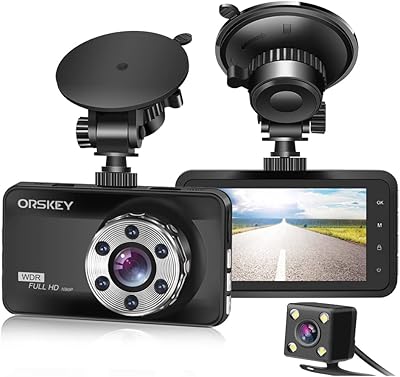
ORSKEY S800 Dual Dash Cam
73%
88%
Value for Money
82%
Front Camera Video Quality
53%
Rear Camera Video Quality
61%
Night Vision Performance
91%
Ease of Installation
More
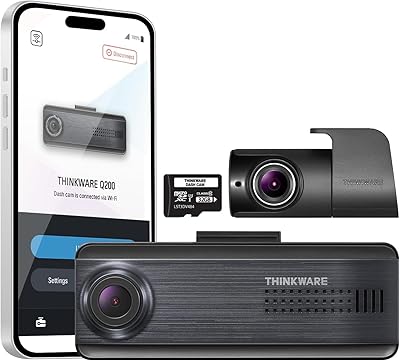
Thinkware Q200 2-Channel Dash Cam
76%
84%
Front Camera Clarity
67%
Rear Camera Clarity
72%
Night Vision Performance
76%
Parking Mode
63%
GPS Alert Accuracy
More
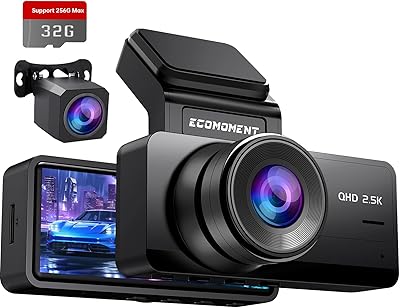
Ecomoment S70 Dual Dash Cam
71%
88%
Value for Money
84%
Daytime Video Quality
61%
Night Vision Performance
91%
Ease of Installation
82%
Display & Playback
More
70mai A410 Dual Dash Camera
78%
88%
Daytime Video Clarity
71%
Night Vision Performance
74%
Rear Camera Quality
67%
App & Wi-Fi Experience
84%
GPS Accuracy & Data Logging
More
Kingslim D4 Dual Dash Cam
75%
88%
Daytime Video Quality
71%
Night Vision Performance
84%
GPS Accuracy
57%
App & WiFi Connectivity
76%
Ease of Installation
More
IIWEY N2 4K Dual Dash Cam
83%
92%
Video Quality
84%
Ease of Use
89%
Durability
60%
Installation Process
90%
Wi-Fi Functionality
More

FAQ

No memory card is included. You will need to purchase a microSD card separately before the camera can record anything. A high-endurance card rated for continuous write cycles is strongly recommended — standard cards can fail prematurely in dash cam use. The Z-Edge R1 WiFi Dual Dash Cam supports cards up to 256GB.

You connect to the camera using the Z-DashCam app on your phone. The camera broadcasts its own Wi-Fi signal, so you join it from your phone settings and then open the app to browse, preview, or download clips wirelessly. It works on both Android and iPhone, though some Android users have reported occasional connection hiccups.

Both cameras record simultaneously and continuously. The front records at 1296P and the rear at 1080P, both at 30 frames per second. You do not need to switch between them — they run together as long as the camera is powered.

No, the G-sensor takes care of that. When it detects a hard impact or sudden braking, it automatically locks the clip containing that event so loop recording cannot overwrite it. You can also manually lock a clip through the app or camera menu if you notice an incident after the fact.

Parking mode does work using the built-in battery, but for short monitoring windows only. If you park for several hours and want the camera actively watching your car that entire time, a dedicated hardwire kit connected to your vehicle's fuse box is the better long-term solution. The built-in battery is fine for brief stops but is not designed for overnight or all-day monitoring.

The included 19.6-foot USB power cable is specifically long enough to tuck along the roofline and A-pillar of larger vehicles, keeping things tidy. Most reviewers with SUVs and trucks find the length genuinely useful rather than excess. You may still want some cable clips or adhesive channels to keep everything flush.

It is better than what you would get from a budget entry-level cam, but temper your expectations. The WDR technology does a good job balancing headlight glare against dark road sections, and nearby plates are usually legible. At high speeds or in very low-light rural conditions, results will vary. Think of it as noticeably improved rather than exceptional.

A 64GB or 128GB high-endurance microSD card is a practical choice for most drivers — that covers many hours of footage with comfortable headroom. Brands like Samsung Endurance, SanDisk High Endurance, or Kingston Canvas Go are well-regarded for continuous recording applications. Avoid cheap no-name cards, as they are more likely to corrupt footage or fail early.

The installation is manageable for most people, but routing the rear camera cable the full length of the vehicle is the most time-consuming part of the setup. You will need to tuck it along the headliner and door seal trim to reach the back windshield. A few reviewers found this fiddly depending on their vehicle's interior trim style, so allow yourself 30 to 60 minutes and a plastic trim pry tool helps.

Yes, the front camera includes a built-in microphone and records audio alongside the video footage. If you prefer privacy, audio recording can typically be switched off through the camera menu. The rear camera does not have a separate microphone, so audio is captured from inside the cabin only.