Overview

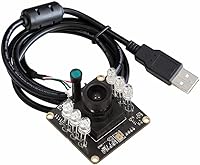
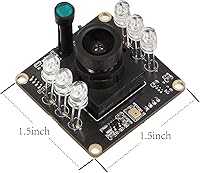
The Arducam B0205 1080p IR-Cut USB Webcam is not a Zoom call camera — it's a bare-board monitoring tool built for people who want eyes on a space around the clock. The defining characteristic is its automatic IR-Cut filter, which switches between visible-light and infrared modes depending on ambient light, no manual intervention needed. At just 38mm x 38mm, this board camera fits into tight or discreet spaces that a bulkier unit never could. It works across Windows, Linux, Android, and macOS via UVC compliance. Going in with the right expectations matters — this is a maker's tool, not a retail-boxed webcam.
Features & Benefits

The OV2710 CMOS sensor handles up to 1920x1080 resolution, but the frame rate story deserves attention before you buy. In MJPG format, you get a smooth 30fps across all resolutions including full 1080p — that's the format you want for most use cases. Switch to YUY2 and full 1080p drops to just 5fps, workable for snapshots but not fluid video. The IR-Cut filter transitions automatically when light levels fall, activating 850nm IR LEDs for functional — if not cinematic — night imaging. A 100° horizontal field of view covers wide areas well, and the f/1.6 aperture helps in dim conditions. No drivers needed on any major platform.

Best For

This board camera is purpose-built for situations where you need continuous day-and-night coverage without swapping between different camera setups. It's a natural fit for DIY home surveillance, Raspberry Pi-based monitoring projects, or wildlife observation rigs where lighting is completely unpredictable. Makers who need to embed a camera inside a custom housing will appreciate the tiny footprint — though that bare-board form means you're responsible for sourcing your own enclosure. It also works well as a budget baby monitor or indoor pet cam where night vision matters more than resolution. If you just need a webcam for video calls, this IR-cut webcam is simply not the right tool.

User Feedback

Across 173 reviews, the Arducam day-night camera holds a 4.4 out of 5 rating — a strong signal that buyers who understand what it's designed for tend to walk away satisfied. The most consistent praise centers on IR switching reliability and how cleanly it transitions between day and night modes without user input. Linux and Raspberry Pi users frequently highlight how well it works straight out of the box. On the downside, the bare-board form factor catches some buyers off guard — a few noted they had to source or 3D-print their own enclosure. The YUY2 frame rate drop at higher resolutions is another recurring point of confusion worth knowing upfront.

Pros

  • Automatic IR-Cut switching handles day-to-night transitions without any manual input or software trigger.
  • Fully UVC-compliant — recognized instantly on Raspberry Pi, Linux, Windows, and macOS with zero driver setup.
  • Delivers a genuine 30fps at full 1080p when using MJPG output, which covers most monitoring use cases well.
  • The 38mm x 38mm board footprint fits into enclosures and installations where no consumer camera would.
  • A 100-degree horizontal field of view covers wide areas without repositioning, useful for room-corner deployments.
  • The f/1.6 aperture provides useful low-light sensitivity before IR LEDs even need to activate.
  • Works reliably with standard tools like FFmpeg, OpenCV, and Motion — no proprietary software stack required.
  • Strong 4.4-star rating across 173 verified reviews reflects consistent satisfaction among its target audience.
  • Competitively priced for a camera that combines automatic IR-Cut switching and 1080p resolution in one unit.

Cons

  • No enclosure, mount, or housing included — buyers must source or fabricate their own before deployment.
  • YUY2 output at 1080p is limited to just 5fps, which catches many buyers off guard and disrupts some pipelines.
  • Onboard IR LEDs have a limited effective range; image detail degrades quickly in larger or outdoor spaces.
  • Android compatibility is inconsistent and depends heavily on the host device's USB OTG implementation.
  • Official documentation is sparse for advanced configuration, pushing users toward community forums for answers.
  • Barrel distortion at the edges of the wide-angle frame can be noticeable when edge detail matters.
  • The USB connector at the board end is not especially secure, creating potential for intermittent disconnections in vibration-prone installs.
  • Continuous IR LED operation generates noticeable warmth, which needs to be managed in sealed enclosures.
  • No built-in utility for adjusting exposure, white balance, or IR sensitivity — all tuning requires V4L2 tools or third-party software.

Ratings

The Arducam B0205 1080p IR-Cut USB Webcam has been evaluated by our AI system after analyzing verified global user reviews, with spam, bot-generated, and incentivized feedback actively filtered out. Scores reflect the real-world experience of makers, developers, and hobbyists who deployed this board camera in surveillance rigs, Raspberry Pi builds, and DIY monitoring projects. Both the genuine strengths and the friction points buyers consistently encounter are transparently baked into every score below.
Night Vision Performance
83%
The automatic IR-Cut switching is the core selling point, and it delivers reliably. Users running 24/7 surveillance rigs report that the transition from daylight to infrared mode happens cleanly without manual input, and the 850nm IR LEDs illuminate enough to identify motion and objects in otherwise pitch-dark rooms.
Night imaging is functional, not impressive. The IR LEDs produce a fairly narrow usable range, and image quality in low light is noticeably grainy compared to dedicated security cameras at higher price points. Anyone expecting crisp, cinematic night footage will come away underwhelmed.
IR-Cut Filter Reliability
88%
Across hundreds of reviews, the automatic switching mechanism earns consistent praise for just working. Users who set up outdoor-facing or windowsill cameras note that dawn and dusk transitions happen without artifacts or manual resets, which matters a lot for unattended long-term deployments.
A small subset of users reported occasional hesitation in transitioning under mixed or fluctuating light conditions, such as near a flickering light source or in partially shaded environments. These edge cases are uncommon but worth knowing if your installation environment has variable artificial lighting.
Image Quality (Daytime)
76%
24%
In good lighting, the OV2710 sensor produces clean, detailed 1080p images with accurate color. Users monitoring workbenches, entry points, or outdoor spaces during daylight hours generally report sharp enough footage to identify faces and objects at reasonable distances.
Color accuracy can drift slightly in mixed lighting, and the auto-exposure occasionally blows out bright backgrounds when subjects are closer to the camera. It is not a flaw that affects most surveillance use cases, but users expecting webcam-quality video for streaming will notice the limitations.
Frame Rate Flexibility
61%
39%
In MJPG format, the camera delivers a solid 30fps all the way up to full 1080p, which is genuinely useful for projects that need smooth motion capture in well-configured pipelines. Developers who know to target MJPG output tend to be satisfied with the performance headroom available.
The YUY2 frame rate cliff is a real gotcha. At 1080p in YUY2 mode you are looking at just 5fps, which is borderline unusable for anything requiring fluid motion. This trips up buyers who are not familiar with the format trade-off, and it is a recurring source of disappointment in reviews from less technical users.
Plug-and-Play Compatibility
91%
UVC compliance genuinely earns its keep here. Users across Windows 10, Ubuntu, Raspberry Pi OS, and macOS consistently report that the camera is recognized instantly with zero driver installation. For Pi-based projects in particular, this kind of out-of-the-box compatibility saves meaningful setup time.
Android compatibility appears more inconsistent depending on the host device and USB OTG implementation. A handful of reviewers also noted that some older Linux kernel versions require a manual configuration tweak to unlock full resolution options, though this affects a small minority of setups.
Build Quality & Form Factor
67%
33%
The 38mm x 38mm board footprint is genuinely impressive for what it packs in, and the PCB construction feels solid enough for embedded use. Makers who integrate this board camera into 3D-printed housings or custom enclosures report it holds up well once secured properly.
The bare-board design means there is no housing, no mount, and no protection out of the box. This is expected in the maker space, but buyers who do not account for enclosure sourcing ahead of time end up frustrated. The exposed PCB also makes it unsuitable for any installation where moisture or dust is a concern.
Field of View
84%
A 100-degree horizontal field of view covers a wide area without requiring camera repositioning, which is a meaningful advantage for room-corner surveillance or wildlife setups where you cannot easily adjust the angle after installation. Most single-room monitoring scenarios are well covered.
The wide angle introduces noticeable barrel distortion at the edges of the frame, which is standard for lenses in this range but worth acknowledging. If precise edge-of-frame detail matters for your use case — like reading a door number or license plate — the distortion may be a factor.
Low-Light Sensitivity
72%
28%
The f/1.6 aperture gives this board camera a reasonable edge in dim-but-not-dark conditions compared to cameras with slower lenses. Users monitoring poorly lit hallways or garages during dusk hours report usable visible-light images before the IR-Cut filter even kicks in.
Once ambient light drops to near-zero, the camera is fully dependent on its onboard IR LEDs, and their effective range is limited. In larger rooms or outdoor settings beyond a few meters, the IR illumination falls off and image detail degrades quickly.
Ease of Integration
86%
Developers building with Python, OpenCV, or standard V4L2 pipelines on Linux report a smooth integration experience. The camera behaves predictably as a generic UVC device, meaning existing code written for other USB cameras typically works with minimal modification.
Documentation from Arducam, while improving, can be sparse for some advanced configuration scenarios. Users trying to lock in specific frame rates or access manual exposure controls sometimes have to rely on community forums and GitHub threads rather than official support material.
Value for Money
81%
19%
For a camera that handles both daytime color imaging and automatic IR night vision in a package this small, the price point is genuinely competitive. Buyers using it in Raspberry Pi surveillance projects or wildlife cams consistently note they would have paid more for comparable functionality elsewhere.
The value equation depends heavily on your ability to source or fabricate an enclosure. Factor in the cost of a 3D-printed or off-the-shelf housing, and the total spend starts to approach alternatives that come more ready-to-deploy. Bare-board buyers need to plan that additional spend upfront.
Cable & Connector Quality
63%
37%
The included USB cable is functional and long enough for most bench or tabletop setups. Users running short-distance Raspberry Pi connections report no signal issues or power instability during extended operation.
The cable quality feels utilitarian at best, and several reviewers noted that the connector fit at the board end is not the most secure — relevant if the camera is mounted in a position where vibration or movement could cause intermittent disconnections. A locking connector solution would improve long-term reliability.
Software & Driver Ecosystem
77%
23%
Because this board camera is fully UVC-compliant, it works with a wide range of existing software without any proprietary stack. Motion, fswebcam, FFmpeg, and OBS all recognize it natively, which keeps the integration surface predictable and well-documented through community resources.
There is no dedicated companion app or configuration utility from Arducam for fine-tuning exposure, white balance, or IR sensitivity thresholds. Advanced users who want granular control need to rely on V4L2 command-line tools or third-party applications, which adds friction for less experienced builders.
Thermal Performance
74%
26%
Users running the Arducam day-night camera in always-on surveillance configurations report that the board remains warm but stable over extended periods. No widespread reports of thermal throttling or unexpected shutdowns have surfaced across the review base.
Without a housing or heat-dissipation plan, the board does accumulate warmth during continuous IR LED operation. In enclosed enclosures with poor airflow, this can become a consideration for long-term reliability, though it has not translated into widespread failure reports.

Suitable for:

The Arducam B0205 1080p IR-Cut USB Webcam was built for a specific kind of buyer, and if you fit the profile, it punches well above its price. Raspberry Pi enthusiasts and single-board computer hobbyists will find it one of the most friction-free USB cameras available — UVC compliance means it just works on Raspberry Pi OS, Ubuntu, and most Linux distributions without touching a driver. Makers building custom surveillance enclosures, wildlife monitoring rigs, or embedded security systems will appreciate the 38mm x 38mm board footprint, which fits into spaces that no consumer camera could. Developers who need a camera that handles both daylight color imaging and functional infrared night vision in a single unit — without manually switching modes — get real operational value from the automatic IR-Cut mechanism. It also suits budget-conscious parents who want a basic night-vision baby monitor they can integrate into an existing home automation setup, provided they are comfortable sourcing or printing a housing for the bare board.

Not suitable for:

If you are shopping for a webcam to use in video calls, content creation, or live streaming, the Arducam B0205 1080p IR-Cut USB Webcam is simply the wrong tool for the job — and buying it for those purposes will leave you frustrated. The bare-board form factor means there is no housing, no clip mount, and no tripod socket out of the box; you are expected to fabricate or source your own enclosure, which is a non-starter for anyone without maker skills or access to 3D printing. Users who need smooth, high-resolution YUY2 output at 1080p will hit a hard wall at 5fps — a limitation that affects software pipelines relying on that format specifically. The night vision, while functional, is not suitable for applications requiring clear imaging beyond a few meters in total darkness; it is a monitoring tool, not a security-grade IR camera. Android users should also proceed with caution, as compatibility is inconsistent across devices and depends heavily on USB OTG implementation.
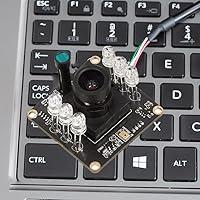
Specifications

  • Image Sensor: Uses a 1/2.9″ OV2710 CMOS sensor capable of capturing 2 megapixels at full 1920x1080 resolution.
  • Resolution: Maximum video resolution is 1920x1080 (1080p Full HD), with multiple lower resolutions supported down to 320x240.
  • Frame Rates: Achieves 30fps at all supported resolutions in MJPG format; YUY2 mode tops out at 5fps at 1080p and 30fps only at 320x240.
  • Video Formats: Outputs in MJPG and YUY2 formats, selectable by the host application depending on processing and quality requirements.
  • Field of View: Provides a 100° horizontal and 138° diagonal field of view, suited for wide-area room coverage and surveillance applications.
  • Aperture: Fixed aperture of f/1.6 allows useful light intake in dim environments before infrared illumination is needed.
  • IR-Cut Filter: Equipped with an automatic mechanical IR-Cut filter that switches to infrared-sensitive mode when ambient light drops below a set threshold.
  • IR Illumination: Onboard 850nm infrared LEDs provide night-time illumination for low-light imaging in total darkness at close to medium range.
  • Interface: Connects via USB 2.0 and is fully UVC-compliant, requiring no additional drivers on Windows, Linux, macOS, or Android.
  • Board Dimensions: The PCB measures 38mm x 38mm, enabling installation in tight enclosures, custom housings, and space-constrained project builds.
  • Physical Size: Overall unit dimensions are 3.15 x 1.97 x 1.97 inches including the lens assembly and onboard IR LEDs.
  • Weight: The assembled board camera weighs 2.39 ounces, making it practical for lightweight mounting configurations.
  • OS Compatibility: Officially supported on Windows, Linux, macOS, and Android; also confirmed compatible with Raspberry Pi OS and other Debian-based distributions.
  • Focus Type: Ships with a fixed-focus lens; some variants support manual focus adjustment via the lens barrel depending on the specific model purchased.
  • Housing: Sold as a bare PCB board with no enclosure, protective case, or integrated mount — buyers must source or fabricate their own housing.
  • Power Source: Draws power entirely from the USB host connection and requires no external power supply under normal operating conditions.
  • Availability: This camera board has been commercially available since December 2019 and carries an Amazon Best Sellers Rank of approximately 125 in the Webcams category.

Related Reviews

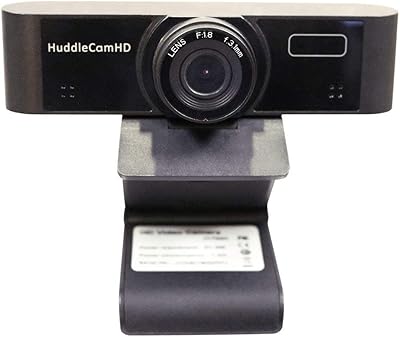
HuddleCamHD HC-WEBCAM-94
77%
83%
Video Quality (Daylight)
51%
Low-Light Performance
91%
Field of View
94%
Ease of Setup
57%
Audio Quality
More
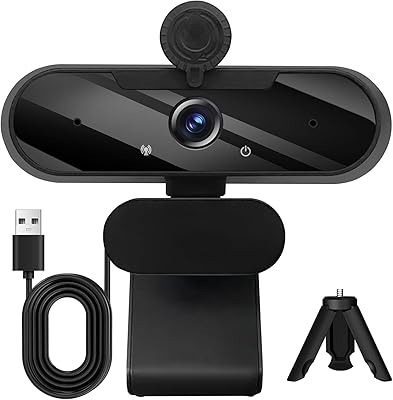
MTORED 1080p USB Webcam
84%
89%
Video Quality
94%
Ease of Setup
78%
Microphone Quality
85%
Wide-Angle Lens
82%
Build Quality
More
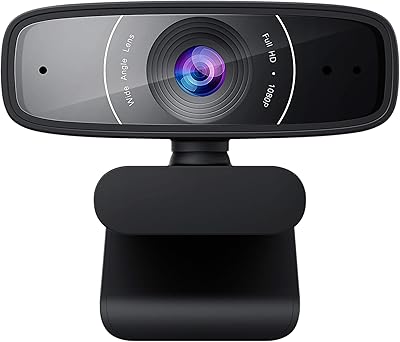
ASUS Webcam C3 1080p HD USB Camera
85%
88%
Video Quality
72%
Audio Quality
94%
Ease of Use
85%
Field of View
90%
Adjustability (Tilt/Rotation)
More
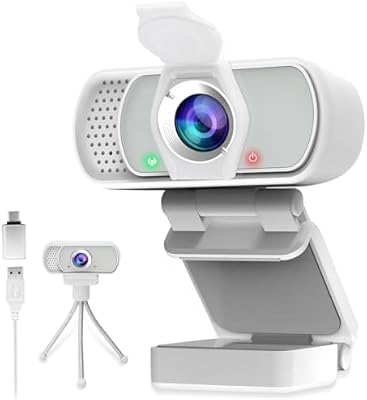
Akyta 1080P Webcam
Akyta 1080P Webcam
82%
88%
Video Quality
85%
Audio Quality
94%
Ease of Setup
82%
Field of View
80%
Noise Reduction
More
ZIQIAN 1080P Webcam
ZIQIAN 1080P Webcam
83%
88%
Video Quality
76%
Audio Performance
91%
Ease of Setup
85%
Wide-Angle Lens
78%
Microphone Quality
More
MOKOSE 4K USB Webcam
87%
91%
Video Quality
88%
Manual Focus Precision
72%
Low-Light Performance
95%
Ease of Setup
94%
Compatibility Across Platforms
More
NexiGo N680 1080P Webcam
83%
94%
Ease of Setup
88%
Video Quality
84%
Audio Performance
91%
Privacy Features
61%
Low-Light Performance
More
Nulaxy C900 USB Webcam
84%
88%
Video Quality
82%
Microphone Performance
94%
Ease of Setup
75%
Field of View
91%
Privacy Shutter Feature
More
Maciebelle CP008
Maciebelle CP008
79%
71%
Video Quality
83%
Microphone Performance
74%
Built-in Speaker
94%
Ease of Setup
88%
Privacy Controls
More
eMeet Nova 1080P Webcam
85%
92%
Value for Money
88%
Video Quality
83%
Audio Quality
95%
Ease of Setup
86%
Low-Light Performance
More

FAQ

It switches completely on its own. The mechanical IR-Cut filter responds to ambient light levels — when light drops, the filter moves out of the optical path and the IR LEDs activate. There is no software trigger, scheduler, or manual button involved. Most users find the transition reliable even in gradual light changes like dusk.

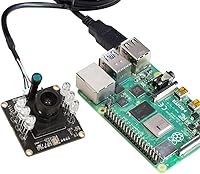
Yes, in most cases. The camera is UVC-compliant, so Raspberry Pi OS recognizes it as a standard USB video device with no driver installation needed. You can access it immediately through tools like fswebcam, Motion, or OpenCV. A small number of users on older kernel versions have needed minor V4L2 configuration to unlock full resolution options, but this is the exception rather than the rule.

Yes, but only in MJPG format. If your software is set to capture in YUY2 format, 1080p is limited to 5fps, which is essentially a slideshow. Make sure your capture application or pipeline is explicitly configured for MJPG output if smooth 1080p video is what you need. This is the single most common source of confusion for new buyers.

Realistically, expect useful illumination up to about 3 to 5 meters in a typical indoor environment. Beyond that, the 850nm LEDs lose enough intensity that image detail degrades noticeably. This board camera is designed for room-scale monitoring, not for illuminating large outdoor spaces or long hallways.

No, the Arducam B0205 1080p IR-Cut USB Webcam ships as a bare PCB board. There is no enclosure, no mounting bracket, and no tripod socket. This is standard for maker-oriented camera boards, but it does mean you need to plan for a housing before deployment — whether that is a 3D-printed case, an off-the-shelf electronics enclosure, or a custom bracket.
Technically it will work — it shows up as a webcam on any UVC-compatible system. But it is not designed for that use case, and the image output will feel less polished than a consumer webcam at a similar price. The wide-angle lens introduces barrel distortion, and the auto-exposure behavior is tuned for surveillance rather than face-to-camera framing. There are better options if video calls are your primary use.

Generally yes. UVC compliance means macOS recognizes it as a camera device without any third-party drivers. You can access it through QuickTime, OBS, or any app that supports standard webcam input. Some users have noted that macOS camera permission prompts need to be accepted for each new application the first time, which is standard OS behavior and not specific to this camera.

It does get noticeably warm, especially when the IR LEDs are running continuously in night mode. In open air this is generally fine, but if you are mounting it inside a sealed or poorly ventilated enclosure, you should plan for some passive airflow. There are no widespread reports of overheating failures, but thermal management is worth thinking about for always-on deployments.

It can work with Android devices that support USB OTG and UVC camera access, but compatibility is less consistent here than on Linux or Windows. Whether it works depends on the specific device, Android version, and the app being used. If Android compatibility is a hard requirement for your project, it is worth testing early rather than assuming it will work.

The lens on this board camera is typically fixed-focus, though some variant listings allow manual focus adjustment via the lens barrel. For exposure and white balance, there is no dedicated companion app from Arducam — you would need to use V4L2 control tools on Linux or a third-party application that exposes UVC camera controls. It is workable but requires a bit more setup than a consumer webcam with its own software.