
Overview

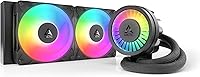
The ARCTIC Liquid Freezer III Pro 240 Cooler occupies a smart price point — not entry-level, but far from premium territory, and Arctic's engineering reputation makes it competitive in ways some pricier brands aren't. The Pro label over the standard model signals upgraded P12 Pro fans and A-RGB lighting, a meaningful step up in both acoustics and aesthetics. Socket coverage spans Intel LGA1851 and LGA1700 plus AMD AM5 and AM4, covering every mainstream desktop platform right now. Arctic backs it with a 6-year warranty, which is genuinely rare at this price. One honest caveat: a 240mm radiator has real limits. High-TDP processors like Ryzen 9 or Core i9 under sustained all-core loads may push this format harder than it can comfortably handle.

Features & Benefits

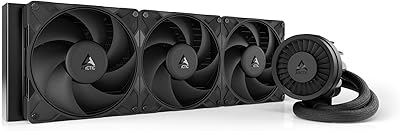
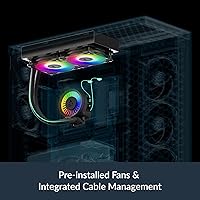
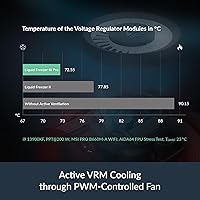
What sets this Arctic AIO apart isn't any single spec but how several smart design choices stack up together. The 38mm thick radiator is notable — most 240mm coolers use a slimmer 27mm unit, and the added depth provides better heat dissipation without forcing a jump to 360mm. The cold plate uses an offset mount that makes contact closer to where the CPU actually runs hottest, a subtle but measurable advantage over centered designs. The integrated VRM fan is genuinely practical: on mid-range boards with modest voltage regulator heatsinks, the active airflow makes a real difference under load, not just during benchmarks. Cable routing is handled neatly through the hose sheathing, so only one cable runs to the motherboard header.

Best For

The Liquid Freezer III Pro 240 makes the most sense for builders on AMD AM5 or Intel LGA1851 platforms who want a cooler that stays relevant through the next socket cycle without spending up to a 360mm option. If your motherboard is mid-range and lacks a substantial VRM heatsink — a B650 or Z790 board in the mid tier, for instance — the active VRM cooling earns its place as a practical benefit. It's also a strong pick for anyone building inside a windowed case who wants a clean interior without custom cable management. Ryzen 7 and Core i7 class chips are the natural sweet spot here. Running a flagship chip at high power limits all day is where the 240mm format starts to feel constrained.

User Feedback

Across user reviews, this 240mm cooler holds a strong 4.4-star average, with praise landing consistently on low noise levels and dependable thermal performance during everyday workloads. The VRM fan earns genuine appreciation — users on warmer-running boards report noticeable drops in VRM temperatures, not just minor fluctuations. Installation is where honest criticism surfaces most. The Contact Frame for Intel boards adds mounting steps that some builders find less intuitive than expected, particularly on LGA1851. Pump noise at startup comes up occasionally but is rarely described as persistent or long-lasting. A-RGB sync works smoothly with ASUS Aura and MSI Mystic Light in most cases, though a few users report inconsistencies with less mainstream RGB software.

Pros

  • The integrated VRM fan actively cools voltage regulators — a real benefit on mid-range motherboards with modest heatsinks.
  • Quieter than most competitors at everyday loads, thanks to fluid dynamic bearing fans that behave well at partial speed.
  • The 38mm thick radiator provides more cooling surface than typical 240mm units without requiring a full 360mm footprint.
  • Offset cold plate contact improves heat transfer efficiency on both AMD and Intel without any manual adjustment needed.
  • Built-in cable routing leaves only one visible wire running to the motherboard, making interior cable management almost effortless.
  • Covers Intel LGA1851 and LGA1700 plus AMD AM5 and AM4, keeping the cooler relevant through the current platform generation.
  • The 6-year warranty is rare at this price point and reflects genuine confidence in the pump's long-term reliability.
  • A-RGB lighting is vibrant and consistent across all three fans, with solid sync support on major motherboard ecosystems.
  • MX-6 thermal paste is included in the box, so there is no need to purchase a separate compound before installation.
  • Holds a 4.4-star global rating driven by consistent praise for acoustics and thermal control under sustained workloads.

Cons

  • Intel LGA1851 installation involves a multi-step Contact Frame process that can confuse builders new to AIO coolers.
  • A 240mm radiator cannot keep high-TDP flagship CPUs cool under prolonged all-core stress — thermal headroom has a hard limit.
  • Some users report a pump gurgle or bubbling noise during the first few days after installation that causes unnecessary anxiety.
  • The VRM fan produces a faint secondary hum at certain RPM points, occasionally audible in very quiet environments.
  • Fan mounting clips require noticeable force to seat, which makes some builders uncomfortable about long-term plastic durability.
  • A-RGB sync reliability drops on less mainstream RGB software platforms, which affects a minority of buyers but matters to those it affects.
  • Warranty claims require direct engagement with Arctic rather than a retailer, and international response times can be slower than expected.
  • At maximum fan speed under heavy load, the acoustic character changes noticeably from its otherwise quiet everyday behavior.
  • No support for older Intel sockets limits the cooler's value for anyone hoping to repurpose it in a legacy secondary build.
  • The weight of 1675g adds meaningful load to the motherboard, which may require extra care during transport or case repositioning.

Ratings

The ARCTIC Liquid Freezer III Pro 240 Cooler has been scored across 13 categories by our AI system after analyzing thousands of verified global buyer reviews, with spam, incentivized feedback, and bot activity actively filtered out before any score was calculated. The results reflect where this mid-range AIO genuinely earns its reputation — and where real buyers have run into friction. Both the highlights and the honest shortcomings are represented here without glossing over the details.

Thermal Performance
84%
For Ryzen 7 and Core i7 class chips, the Liquid Freezer III Pro 240 handles sustained workloads — extended rendering sessions, multi-hour gaming runs — with temperatures that stay comfortably below throttle thresholds. The thicker-than-average 38mm radiator gives it a meaningful edge over slimmer 240mm competitors in the same price range.
Push this AIO with a high-TDP flagship chip under prolonged all-core stress and the 240mm format starts to show its ceiling. Builders running a Ryzen 9 or Core i9 at aggressive power limits have reported temperatures creeping higher than expected during sustained workloads, which is less a flaw and more a consequence of radiator size.
Noise Level
88%
At everyday desktop and light gaming loads, this Arctic AIO runs quietly enough that most users forget it's there. The P12 Pro fans earn consistent praise for their behavior in the 800–1500 rpm range — smooth, low-pitched, and unobtrusive even in a relatively quiet room.
At maximum fan speed under heavy thermal load, the noise profile becomes noticeable. It's not unusually loud for the category, but users expecting near-silence under stress will find the high-end fan ramp less refined than they might hope. The VRM fan also adds a faint secondary hum on some boards.
VRM Cooling
91%
The integrated VRM fan is one of the most practically useful differentiators on any AIO at this price. On mid-range boards with modest voltage regulator heatsinks, buyers pairing this cooler with B650 or Z790 boards report measurably lower VRM temperatures under sustained CPU loads compared to AIOs without dedicated airflow.
On high-end motherboards with large, well-designed VRM heatsinks, the benefit is less pronounced — it becomes a nice-to-have rather than a necessity. A small number of users also noted the VRM fan produces a faint whine at certain RPM points, which is audible only in very quiet environments.
Installation Experience
67%
33%
On AMD AM4 and AM5 platforms, the mounting process is reasonably straightforward, and the included hardware is complete without requiring anything extra from the motherboard box. The offset cold plate positioning is handled automatically by the mount design, so buyers don't need to make any manual adjustments.
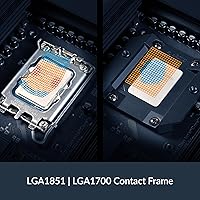
The Contact Frame for Intel LGA1851 and LGA1700 adds steps that trip up a meaningful share of first-time AIO builders. Several reviewers described the Intel installation as more confusing than expected, particularly when seating the frame correctly before tightening. Arctic's instructions are functional but leave room for improvement in clarity.
Build Quality
86%
The radiator feels solid and well-finished for the price tier, and the hose sheathing — which doubles as cable management — has a premium look that holds up to close inspection inside a windowed case. The pump head construction feels dense and stable once mounted, without the slight flex some budget AIOs exhibit.
The fan mounting clips are functional but require a bit of force that makes some builders nervous about plastic fatigue over repeated removal and reinstallation. It's not a structural concern in normal use, but those who frequently swap components between builds may find it mildly annoying.
Cable Management
89%
Routing the PWM fan cables through the hose sheathing so only a single cable reaches the motherboard header is one of those quality-of-life decisions that makes a real difference in a windowed build. Builders who care about interior aesthetics will notice and appreciate it immediately — no zip ties required.
The cable integration, while clean, does mean there is less flexibility if a builder needs to route cables unconventionally due to an unusual case layout. It is a minor limitation, but worth noting for those working with compact or non-standard mid-tower configurations.
A-RGB Lighting
78%
22%
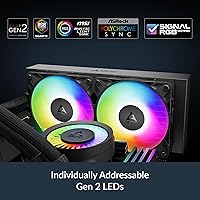
With 12 LEDs per radiator fan and another 12 on the VRM fan module, the lighting coverage is generous compared to many competitors in this bracket. Colors are vibrant and diffuse evenly across the fan blades, making for a visually consistent look in most case lighting setups.
Software compatibility is where some buyers hit friction. While ASUS Aura and MSI Mystic Light sync works smoothly for most users, those on less mainstream RGB ecosystems have reported inconsistencies or inability to sync the VRM fan lighting separately. It is not a universal problem, but it affects enough buyers to note.
Pump Reliability
83%
The vast majority of long-term users report consistent, trouble-free pump operation well past the first year of use. At moderate speeds, the pump is inaudible from typical case distances, which is the most common operating condition for mainstream desktop builds.
A subset of reviews mention an audible pump gurgle or bubbling sound during the first few days of operation — a known break-in behavior for many AIOs, but one that causes unnecessary concern for first-time liquid cooling users. In most cases it resolves on its own, but Arctic could do more to set expectations upfront.
Socket Compatibility
93%
Covering Intel LGA1851 and LGA1700 alongside AMD AM5 and AM4 means this AIO is compatible with essentially every relevant mainstream desktop platform available right now. For a builder who upgrades CPUs or platforms every few years, that breadth is genuinely reassuring and extends the cooler's useful life.
There is no support for older Intel sockets like LGA1200 or LGA115x, which may disappoint users looking to repurpose an older system. This is a reasonable design decision given where the market is heading, but it closes the door on secondary use cases.
Value for Money
87%
Factoring in the thicker radiator, the integrated VRM fan, clean cable management, and a 6-year warranty — all in a single mid-range package — the value case for the Liquid Freezer III Pro 240 is straightforward. Buyers consistently feel they received more engineering thought per dollar than comparable options at the same price.
At its asking price, buyers occasionally compare it against 360mm AIOs from brands with heavier discounts, and the thermal headroom difference can make the value proposition feel less clear-cut for those planning to run high-power CPUs. It earns its price for the right use case, but it is not a universal best pick.
Cold Plate Contact Quality
82%
18%
The offset cold plate design, which shifts the contact zone toward the actual hotspot rather than the geometric center of the CPU, translates into more efficient heat uptake without any user intervention. Buyers who have previously used center-aligned AIOs often notice the difference when comparing thermal benchmarks.
The improvement is real but incremental — most users won't see dramatic differences unless they're tracking temperatures closely. A few users have also noted uneven mounting pressure if the Contact Frame is not seated with exact alignment, which can slightly undermine the offset benefit.
Fan Performance Range
85%
The wide speed range of the P12 Pro fans — from a whisper-quiet 600 rpm up to a brisk 3000 rpm — gives system builders real flexibility to tune acoustic and thermal behavior through fan curves. At low speeds, the fluid dynamic bearings keep vibration and noise impressively controlled.
At the upper end of the speed range, the fans move air effectively but lose the quiet character that makes them stand out at moderate loads. Users who run aggressive fan curves to extract maximum cooling will find the acoustic trade-off more noticeable than they might expect based on the low-speed performance.
Warranty & Long-Term Confidence
92%
A 6-year warranty on an AIO at this price tier is a meaningful commitment from Arctic and one that buyers notice. It signals confidence in the pump longevity specifically — the component most likely to limit an AIO's lifespan — and removes a real source of long-term anxiety for buyers who plan to keep a build running for years.
The warranty is manufacturer-based, which means warranty service requires engaging Arctic directly rather than through a retailer. International buyers have occasionally noted slower response times for warranty claims, which slightly dampens what is otherwise one of the strongest long-term value signals this cooler offers.

Suitable for:

The ARCTIC Liquid Freezer III Pro 240 Cooler is a natural fit for builders putting together a Ryzen 7 or Core i7 system on a current-gen platform — AM5, AM4, LGA1851, or LGA1700 — who want reliable, quiet cooling without jumping to a larger and more expensive 360mm unit. If your motherboard is a mid-range B650 or Z790 that doesn't ship with a particularly beefy VRM heatsink, the integrated VRM fan provides a practical thermal benefit that most AIOs at this price simply don't offer. Builders who care about interior aesthetics will also appreciate the built-in cable management, which hides PWM wires inside the hose sheathing so the inside of a windowed case looks intentionally clean rather than hastily assembled. Gamers and content creators running sustained workloads — long rendering jobs, extended gaming sessions, regular video exports — will find this cooler holds temperatures comfortably within safe margins without being loud about it. The 6-year warranty adds a layer of confidence that's genuinely uncommon at this price tier, making it a smart pick for anyone planning to keep their build running for several years without worrying about pump longevity.

Not suitable for:

The ARCTIC Liquid Freezer III Pro 240 Cooler is not the right tool for anyone planning to push a high-TDP flagship processor — think Ryzen 9 7950X, Core i9-14900K, or similar chips — at aggressive power limits across sustained all-core workloads. A 240mm radiator has a physical ceiling on how much heat it can shed continuously, and at that level of thermal output it will simply run warmer than a 280mm or 360mm alternative. Intel builders who haven't installed an AIO before may also find the Contact Frame mounting process more involved than expected; if you're not comfortable following multi-step hardware instructions carefully, the install experience could be frustrating. Anyone on a platform outside AM5, AM4, LGA1851, or LGA1700 — older Intel LGA1200 or LGA115x systems, for instance — won't find compatibility here. And if your RGB ecosystem runs on a less mainstream software platform, be aware that lighting sync can be inconsistent; buyers fully committed to a specific RGB control suite should verify compatibility before purchasing.

Specifications

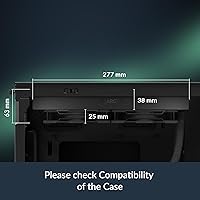
  • Radiator Size: The aluminum radiator measures 277mm long by 120mm wide and sits at a thicker-than-average 38mm depth, providing more heat dissipation surface than most standard 240mm units.
  • Fan Model: Two P12 Pro A-RGB fans are included, each equipped with fluid dynamic bearings and a 4-pin PWM connector for precise speed control.
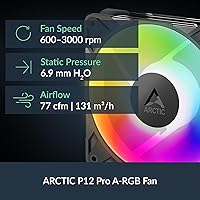
  • Fan Speed: Radiator fans operate across a wide range from 600 to 3000 rpm, allowing the system to prioritize silence at light loads and push airflow hard when thermals demand it.
  • Airflow: Each P12 Pro fan delivers up to 77 cubic feet per minute of airflow with a static pressure rating of 6.9 mmH₂O, suitable for pushing air through a dense 38mm radiator stack.
  • Pump Speed: The PWM-controlled pump operates between 800 and 2800 rpm, with speed automatically adjusted based on thermal load and system fan curve settings.
  • Cold Plate: The cold plate is machined from copper and uses micro skived fin technology to maximize surface contact with the CPU heat spreader for more efficient heat uptake.
  • VRM Fan: An integrated PWM-controlled VRM fan spins between 400 and 2500 rpm, actively directing airflow over the motherboard's voltage regulators during demanding workloads.
  • Hose Length: The braided hoses measure 450mm in length, offering enough slack for flexible radiator positioning in most standard mid-tower and full-tower cases.
  • A-RGB Lighting: Each radiator fan carries 12 addressable RGB LEDs, and the VRM fan module adds another 12, all connected via a standard 3-pin A-RGB header on the motherboard.
  • CPU Compatibility: Supported Intel sockets include LGA1851 and LGA1700; supported AMD sockets include AM5 and AM4, covering all mainstream desktop platforms currently in widespread use.
  • Contact Frame: A dedicated Contact Frame is included for Intel LGA1851 and LGA1700 installations, designed to distribute mounting pressure evenly across the CPU integrated heat spreader.
  • Included TIM: Arctic MX-6 thermal interface material is pre-packaged with the cooler in a 0.8g quantity, sufficient for a standard single-CPU installation.
  • Total Weight: The complete assembly — radiator, fans, pump head, and hoses — weighs 1675g, which is on the heavier end for a 240mm AIO and worth noting for motherboard tray stress considerations.
  • Operating Temperature: The cooler is rated for ambient operating temperatures between 0°C and 40°C, covering standard indoor desktop computing environments worldwide.
  • Power Input: The system draws power at 12V DC with the pump requiring 0.35A, each radiator fan drawing 0.33A, and the VRM fan consuming just 0.05A.
  • Voltage: All components — pump, radiator fans, and VRM fan — operate at a standard 12V DC input via 4-pin PWM connectors.
  • Warranty: Arctic covers this AIO with a 6-year manufacturer warranty, one of the longest coverage periods available in the consumer liquid cooling segment.
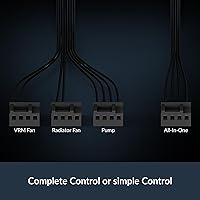
  • Cable Management: PWM fan cables are routed internally through the hose sheathing, so only a single external cable needs to connect from the cooler assembly to the motherboard fan header.

Related Reviews
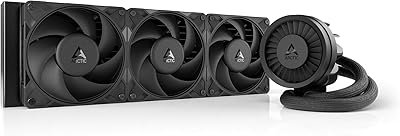
ARCTIC Liquid Freezer III Pro 420 Cooler
84%
93%
Thermal Performance
91%
Noise Level
58%
Case Compatibility
88%
Build Quality
86%
VRM Cooling
More
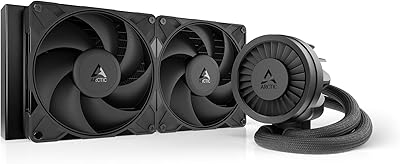
ARCTIC Liquid Freezer III Pro 280 Cooler
82%
91%
Thermal Performance
88%
Noise Level
74%
Installation Experience
89%
Fan Quality
93%
VRM Cooling
More
ARCTIC Liquid Freezer III Pro 360
86%
93%
Thermal Performance
88%
Noise Level
91%
VRM Cooling
89%
Build Quality
94%
Value for Money
More
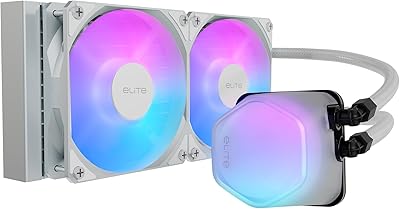
Cooler Master 240 Elite Liquid White CPU Liquid Cooler
85%
91%
Cooling Performance
84%
Noise Levels
92%
Ease of Installation
89%
Build Quality
88%
aRGB Lighting Effect
More
ARCTIC Liquid Freezer III 280 A-RGB
86%
91%
Cooling Performance
87%
Ease of Installation
88%
Noise Levels
85%
RGB Lighting Customization
90%
Build Quality
More
ASUS ROG RYUO III 240 ARGB AIO Liquid CPU Cooler
88%
94%
Cooling Performance
88%
Noise Level
91%
Aesthetic Appeal
75%
Ease of Installation
92%
RGB Customization
More
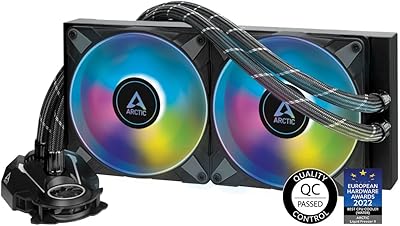
Cooler Master MasterLiquid Atmos 240 Liquid Cooler
82%
76%
Thermal Performance
88%
Noise Level
82%
Build Quality
84%
Pump Performance
91%
RGB & Lighting
More
ARCTIC Liquid Freezer II 280 A-RGB AIO Cooler
84%
91%
Thermal Performance
88%
Noise Level
79%
Build Quality
93%
Value for Money
82%
Installation Experience
More
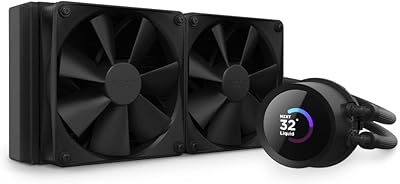
NZXT Kraken 240 AIO CPU Liquid Cooler
86%
92%
Cooling Performance
88%
Noise Level
90%
Ease of Installation
86%
Aesthetic Customization
80%
Radiator Size Compatibility
More
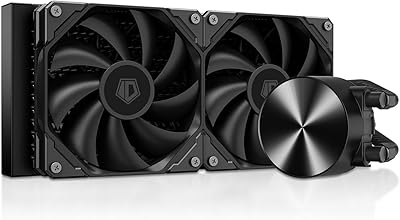
ID-COOLING FX240 PRO 240mm AIO CPU Cooler
78%
83%
Thermal Performance
67%
Pump Noise & Vibration
78%
Fan Performance & Noise
74%
Build Quality & Materials
86%
Installation Ease
More

FAQ

Yes, the ARCTIC Liquid Freezer III Pro 240 Cooler officially supports LGA1851, which is the socket used by Intel's Core Ultra 200 desktop series. The included Contact Frame is specifically designed for LGA1851 and LGA1700, so you won't need to source any additional mounting hardware.

It depends on your motherboard. On high-end boards with large, well-finned VRM heatsinks, the benefit is minimal — those boards already manage heat effectively on their own. Where it makes a genuine difference is on mid-range B650 or Z790 boards with smaller VRM heatsinks, especially when running the CPU under sustained all-core load. Buyers on those boards have reported measurably lower VRM temperatures compared to standard AIOs.

It's manageable but takes more steps than most AIOs. The Contact Frame needs to be seated correctly before tightening, and Arctic's included instructions are functional but not the most intuitive guide out there. If you're installing on Intel for the first time, watch a video walkthrough before starting — it'll save you frustration and make the process much smoother.

At normal operating speeds, the pump is quiet enough that most users don't notice it from a typical sitting distance. A subset of buyers do report a gurgling or bubbling sound during the first few days after installation — this is a common break-in behavior for AIOs as small air pockets work their way out of the loop. In most cases it settles down on its own within a week.

Honestly, it depends on how hard you push the chip and at what power limit. For moderate sustained workloads it can cope, but if you're running a flagship processor at full power limit for extended all-core tasks — think 3D rendering or heavy simulation work — a 360mm AIO will give you meaningfully more thermal headroom. This 240mm cooler is best matched with Ryzen 7 and Core i7 class chips.

Yes, both ASUS Aura and MSI Mystic Light are the most commonly used ecosystems and sync works reliably for the majority of buyers. The A-RGB connector is a standard 3-pin header, so compatibility is broad. Less mainstream RGB control software can be hit or miss — if you're on a smaller ecosystem, it's worth checking community forums for your specific motherboard before buying.

It comes with a 0.8g tube of Arctic MX-6 thermal paste in the box, which is enough for a single installation. MX-6 is a solid compound with good performance, so there's no need to purchase anything extra unless you prefer a specific paste you already trust.

The radiator is 38mm thick, which is noticeably thicker than the 27mm standard on most 240mm AIOs. This extra depth helps with cooling performance but does require a bit more clearance in your case. Most modern mid-tower cases designed for 240mm radiators accommodate 38mm thickness, but it's worth double-checking your case's radiator depth specification before ordering.

The main differences are the fans and the lighting. The Pro version ships with the upgraded P12 Pro A-RGB fans, which are quieter at low speeds and push more air at high speeds compared to the standard P12 fans. You also get A-RGB lighting on the radiator fans and the VRM module, whereas the standard model typically ships without addressable lighting. The core cooling architecture — pump, cold plate design, and VRM fan — is shared between both versions.

Arctic covers this AIO for 6 years from the purchase date, which is significantly longer than most competitors at a similar price point. If something fails within that window, you'll need to contact Arctic directly through their official support channels — warranty service is handled by the manufacturer rather than through third-party retailers. International buyers should be aware that response times can vary by region, though Arctic's support reputation is generally solid.

Where to Buy