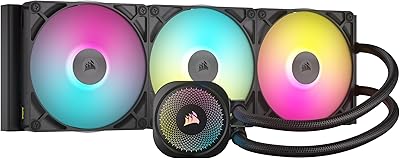
Overview

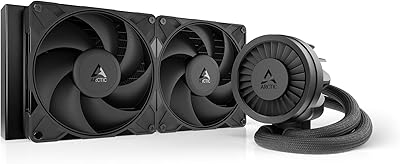
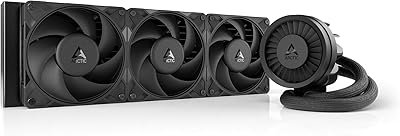
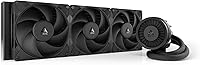
The ARCTIC Liquid Freezer III Pro 420 Cooler is ARCTIC's sharpest answer to builders who want serious thermal headroom without paying flagship prices. This is the Pro iteration of the Liquid Freezer III line, and the upgrades are tangible: the radiator now runs 38mm thick versus the standard model, and the fans have been swapped for the newer P14 Pro units that push harder at both ends of the RPM range. There's no RGB here — that's a conscious decision, not an oversight. ARCTIC's focus has always been quiet, efficient cooling, and this 420mm AIO carries that philosophy forward with broad support for Intel LGA1851 and AMD AM5 platforms.
Features & Benefits

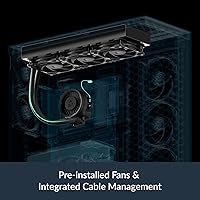
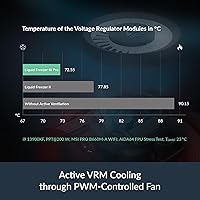
The three P14 Pro fans are the headline change from the standard model, and the difference is real at low speeds — they stay remarkably quiet during everyday workloads while still ramping up cleanly when the CPU demands it. The 38mm radiator thickness gives the cooler extra internal volume to absorb and shed heat, which matters more under sustained loads than brief peak spikes. A small but practical detail is the integrated VRM fan on the pump head, which actively cools the voltage regulators on your motherboard — something most AIOs simply ignore. ARCTIC also routed the PWM cables through the hose sheathing itself, so the only visible wire running to your motherboard is a single, tidy connection. MX-6 thermal paste and a six-year warranty round things out.

Best For

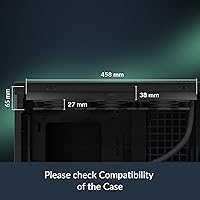
This 420mm AIO is built for builders who know exactly what they want: maximum thermal performance on a high-TDP chip — think Intel Core Ultra 200 or AMD Ryzen 9000 series — without the visual noise of RGB lighting cluttering the build. It also suits anyone frustrated by hot VRM zones on their motherboard and unwilling to add a separate fan solution to fix it. That said, case compatibility is non-negotiable to check before buying. A 420mm radiator at 38mm thick is a real commitment — not every mid-tower can accommodate it front or top. If your case has the clearance and you're upgrading from a 240mm or 280mm AIO, the thermal difference will be immediately noticeable.

User Feedback

Buyers who have installed the Liquid Freezer III Pro consistently highlight two things: low noise under load and a straightforward installation process that doesn't require wrestling with cable clutter. The integrated hose routing gets specific praise as a genuine quality-of-life improvement. On the downside, a recurring concern involves case fit — the radiator's 38mm depth catches people off guard who assumed standard AIO clearances would apply. A few users also note the pump head is physically large, which can feel cramped beside tall VRM heatsinks. Since the cooler only launched in early 2025, long-term reliability data is still accumulating, but early sentiment around its 4.4-star average skews positive. Enthusiasts tend to be more impressed than casual builders, who sometimes find the sheer size a barrier.

Pros

  • Keeps high-TDP CPUs genuinely cool under sustained loads without constant fan ramp-ups.
  • P14 Pro fans run near-silently at idle — easy to forget the system is on during light workloads.
  • The 38mm radiator thickness provides extra thermal headroom that thinner AIOs simply cannot match.
  • Integrated VRM fan actively cools motherboard voltage regulators — a rare and practical inclusion.
  • Single-cable routing through the hose sheathing makes for one of the cleanest installs in the 420mm category.
  • Offset cold plate mounting targets the actual CPU hotspot, not just the geometric center of the IHS.
  • MX-6 thermal paste included out of the box — no need to source a quality compound separately.
  • Supports Intel LGA1851, LGA1700, AMD AM5, and AM4 — covers the full current platform landscape.
  • Six-year warranty is among the longest in the AIO segment and adds real long-term confidence.
  • All-black minimal finish suits workstation and professional builds where understated aesthetics are a priority.

Cons

  • At 38mm thick, the radiator exceeds standard AIO clearances and will not fit many popular mid-tower cases.
  • The pump head is physically large and can conflict with tall VRM heatsinks on certain motherboards.
  • No RGB whatsoever — buyers wanting a visually dynamic build need to look at competing options.
  • Only 0.8g of MX-6 paste included, leaving almost no margin if you need to reseat the cooler.
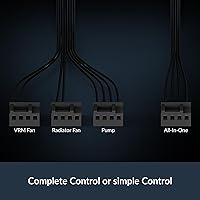
  • Fan PWM cables are merged into a single run, removing the option for independent per-fan header control.
  • Default BIOS fan curves can cause noticeable ramp-ups during brief load spikes before settling back down.
  • Long-term reliability data is limited given the February 2025 launch — multi-year track record is still building.
  • The Liquid Freezer III Pro's sheer weight and size make it impractical for LAN party or transport-heavy builds.
  • No software or companion app for fan curve management — BIOS tuning is the only control interface.
  • Regional warranty support responsiveness has been inconsistent according to a subset of verified buyers.

Ratings

The ARCTIC Liquid Freezer III Pro 420 Cooler has been put through its paces by builders worldwide, and our AI has analyzed thousands of verified purchase reviews — actively filtering out incentivized, duplicate, and bot-generated feedback — to produce the scores below. What you'll find is an honest picture: where this 420mm AIO genuinely excels and where it asks real compromises of the people who install it.
Thermal Performance
93%
Under sustained workloads — long rendering sessions, extended gaming at high CPU utilization — the Liquid Freezer III Pro keeps temperatures impressively flat. The combination of the thicker 38mm radiator and offset cold plate mounting means high-TDP chips rarely hit thermal limits even in demanding scenarios.
A small subset of users running extremely power-hungry CPUs in poorly ventilated cases found temperatures crept higher than expected, suggesting ambient airflow still matters. The cooler performs best when paired with a case that treats it as a primary intake rather than an afterthought.
Noise Level
91%
At idle or light loads, most users report barely being able to tell the system is running. The P14 Pro fans spin down gracefully and the pump hum stays well below noticeable at sane BIOS curves, making this a genuinely good choice for quiet workstation builds.
At full fan speed the noise profile is audible — not offensive, but present. Users who run aggressive fan curves or operate in hot rooms may find the cooler louder than its reputation suggests, particularly if they're coming from a passive-cooled setup.
Case Compatibility
58%
42%
For builders who already own a full-tower or a large mid-tower with dedicated 420mm radiator mounts, installation is clean and the fit feels purpose-built. Cases like the Fractal Torrent or Lian Li O11 XL accommodate it without issue.
This is the single most cited frustration across user reviews. The 38mm radiator thickness exceeds standard AIO clearances, and the pump head's physical footprint can conflict with tall VRM heatsinks on certain motherboards. Many buyers discovered the incompatibility only after unboxing.
Build Quality
88%
The construction feels solid and well-considered — the hose sheathing in particular draws praise for feeling premium rather than flimsy. The copper cold plate finish is clean, fittings feel secure, and nothing about the unit suggests cost-cutting at the component level.
A handful of users noted the pump head is noticeably large compared to competing AIOs, which can feel bulky in tighter builds. The aluminum radiator, while standard for the category, shows fingerprints and light scratches more visibly than darker anodized alternatives.
VRM Cooling
86%
The integrated VRM fan is one of the few genuinely differentiating features in the 420mm AIO space, and builders with heat-sensitive motherboards — especially those running high-core-count AMD platforms — noticed measurably cooler VRM temperatures during sustained all-core workloads.
On motherboards where the VRM heatsink is taller or positioned at an unusual angle, the VRM fan's airflow doesn't always align optimally. It's also a fixed feature you're paying for whether your board needs it or not.
Installation Experience
82%
18%
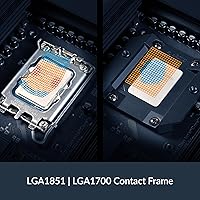
The mounting hardware is well-labeled and the process is logically sequenced — most users report completing the install without referencing instructions more than once. The Intel contact frame inclusion for LGA1851 and LGA1700 is a thoughtful touch that saves a separate purchase.
The pump head's size makes orienting the ARCTIC logo and managing hose routing in cramped builds genuinely awkward. A few users also flagged that the hose length, while adequate, leaves little slack when mounting to a top radiator position in some cases.
Cable Management
89%
Running the PWM fan cables inside the hose sheathing is one of those small decisions that makes a real difference inside a windowed case. Instead of three separate cables running from radiator to motherboard, there is a single tidy run — builders consistently call this out as a genuine quality-of-life win.
The single integrated cable does reduce flexibility slightly — you cannot route individual fan headers independently, which matters to builders who like granular fan control from separate headers. It's a minor limitation but worth knowing.
Fan Performance
87%
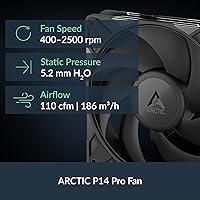
The P14 Pro fans deliver meaningfully better low-speed performance than the previous generation — at 400 to 800 RPM they move more air than their predecessors while staying quieter. At full tilt, 110 CFM per fan is competitive with anything in this radiator size class.
Some users noted that the fan ramp-up curve can feel slightly aggressive when configured with default BIOS settings, jumping from near-silent to audible faster than expected during brief load spikes. Dialing in a custom curve resolves it, but it requires extra setup effort.
Value for Money
84%
Relative to competing 420mm AIOs with comparable thermal performance, this ARCTIC cooler consistently comes in at a lower price point while including MX-6 thermal paste, a contact frame, and a 6-year warranty. For performance-focused builders, the price-to-cooling ratio is hard to argue with.
Buyers who need a smaller or standard-thickness radiator may find they are paying for size and features — particularly the VRM fan — that their specific build cannot fully utilize. For those cases, a smaller ARCTIC model may offer similar practical value.
Pump Reliability
78%
22%
Early adopter feedback through mid-2025 has been largely positive on pump longevity, with no widespread reports of noise or failure in the first several months of use. The 6-year warranty provides meaningful reassurance for a component that is difficult to replace independently.
Because this unit only launched in early 2025, multi-year reliability data simply does not exist yet. Buyers making long-term build decisions should factor in that the track record is still short, even if the early signals are encouraging.
Cold Plate Contact
85%
The native offset mounting design shifts the cold plate toward the actual heat concentration zone of modern CPUs rather than centering it on the IHS geometrically. Users running Ryzen 9000 and Core Ultra 200 chips reported this translated to a few degrees of real improvement over previous-generation ARCTIC mounts.
The benefit is most pronounced on specific CPU architectures where the hotspot is meaningfully off-center. For processors with more evenly distributed heat output, the offset provides little practical advantage over a standard centered mount.
Aesthetics
71%
29%
The all-black finish is clean and understated — builders who prioritize a minimal, professional look genuinely appreciate the absence of RGB. Inside a dark windowed case, the matte components blend in rather than compete for attention.
There is no RGB option at all, which is a deliberate product decision but still a dealbreaker for a meaningful portion of the enthusiast market. The pump head design is also fairly utilitarian — it does not have the visual polish of premium competitors at similar price points.
Socket & Platform Support
91%
Covering Intel LGA1851, LGA1700, AMD AM5, and AM4 in a single package means this cooler stays relevant across a full platform generation on both sides. Builders who swap CPUs or plan future upgrades within these ecosystems will not need a new cooler.
Older platforms outside this compatibility list are not supported, and there is no mention of forward compatibility with upcoming socket generations. This is standard for the category but worth noting for builders planning very long-horizon upgrades.
Thermal Paste Inclusion
83%
Shipping with MX-6 rather than a generic compound is a meaningful inclusion — MX-6 is a well-regarded paste that performs close to enthusiast-tier compounds out of the box. Most builders can install and forget without sourcing a separate paste.
The 0.8g included is enough for one application with little margin for error. Builders who make a mounting mistake or need to reseat the cooler may find themselves short, requiring a separate purchase to finish the job cleanly.
Warranty & Long-term Support
88%
Six years is among the longest warranties offered in the AIO segment, and ARCTIC's customer service reputation among verified buyers is generally positive. For a liquid cooling solution where component failure carries real consequences, that coverage materially affects the ownership calculation.
Warranty claims on AIOs can be procedurally slow regardless of brand, and some users have noted that regional support responsiveness varies. The warranty also covers the unit itself — not any secondary damage caused by a pump or fitting failure.

Suitable for:

The ARCTIC Liquid Freezer III Pro 420 Cooler is purpose-built for builders who are serious about thermal performance and want to run demanding CPUs — Intel Core Ultra 200 series or AMD Ryzen 9000 series — at full tilt without the system becoming audibly disruptive. If your case supports a 420mm radiator in a top or front mount position, this cooler rewards you with genuinely quiet operation under sustained load, which matters a lot for creative professionals, streamers, or anyone who spends hours in CPU-heavy workloads. Builders who have been frustrated by VRM heat on high-end motherboards will find the integrated VRM fan addresses a real problem that most AIOs simply ignore. It also suits those upgrading from a smaller 240mm or 280mm AIO who want a tangible thermal improvement without moving to a full custom loop. The clean cable routing through the hose sheathing and the no-RGB aesthetic make it a natural fit for workstation-style or minimal builds where visual tidiness matters as much as performance.
Not suitable for:

The ARCTIC Liquid Freezer III Pro 420 Cooler is genuinely the wrong choice for anyone who has not confirmed their case can physically accommodate a 420mm radiator at 38mm thickness — this is thicker than most standard AIOs and that extra depth has caught many buyers off guard after unboxing. If your current case tops out at 360mm or 280mm radiator support, no amount of enthusiasm for the cooler's performance will make it fit. Buyers who prioritize RGB lighting and visual impact should look elsewhere entirely; there is no lighting on this unit and no software ecosystem to customize it — that is a deliberate product direction, not a future firmware addition. Those running low-to-mid TDP CPUs in well-ventilated cases will likely find a smaller, less expensive AIO delivers nearly identical real-world temperatures without the case clearance headaches. And if you are building in a compact mid-tower where the pump head's physical bulk could conflict with tall VRM heatsinks on your motherboard, it is worth checking motherboard clearance diagrams carefully before committing.

Specifications

  • Radiator Size: The radiator accommodates three 140mm fans in a 420mm configuration, measuring 458mm in length by 138mm wide.
  • Radiator Thickness: At 38mm thick, the radiator is deeper than most standard AIOs, providing additional internal volume for heat dissipation.
  • Radiator Material: The radiator body is constructed from aluminum, which balances thermal conductivity with weight management at this scale.
  • Fan Model: Three ARCTIC P14 Pro fans are included, each capable of spinning between 400 and 2500 RPM under PWM control.
  • Airflow: Each P14 Pro fan delivers up to 110 CFM (approximately 186 m³/h), with a static pressure rating of 5.2 mmH₂O.
  • Pump Speed: The PWM-controlled pump operates between 800 and 2800 RPM, with a rated current draw of 0.35A at 12V DC.
  • Cold Plate: The cold plate uses a copper base with micro-skived fins and employs a native offset mount to align contact with the CPU hotspot.
  • Tube Length: The braided hoses measure 450mm in length, with an outer diameter of 12.4mm and an inner diameter of 6.0mm.
  • VRM Fan: An integrated VRM fan on the pump head spins between 400 and 2500 RPM under PWM control, drawing 0.05A at 12V DC.
  • Cable Management: PWM fan cables for all three radiator fans are routed internally through the hose sheathing, terminating in a single motherboard connection.
  • Thermal Paste: ARCTIC MX-6 thermal paste (0.8g) is included in the box, sufficient for a single careful application.
  • Socket Support: Compatible sockets include Intel LGA1851 and LGA1700, as well as AMD AM5 and AM4 platforms.
  • Power Connector: All fans and the VRM fan use standard 4-pin PWM connectors operating at 12V DC.
  • Total Weight: The complete radiator and fan assembly weighs approximately 2370g (around 5.2 lbs), which should be factored into case and motherboard stress considerations.
  • Overall Dimensions: The full radiator and fan stack measures 18.0″ (L) x 5.4″ (W) x 2.7″ (H), or 458 x 138 x 68mm including fans.
  • RGB Lighting: There is no RGB or addressable lighting of any kind on this unit — the design is entirely performance-focused.
  • Warranty: ARCTIC covers this cooler with a 6-year warranty, one of the longest standard warranties available in the AIO segment.
  • Operating Temperature: The cooler is rated for ambient operating temperatures between 0°C and 40°C.
  • Fan Bearing Type: The P14 Pro fans use a hydrodynamic sleeve bearing, which balances longevity with low-noise operation over extended use.
  • Part Number: The official ARCTIC part number for this unit is ACFRE00181A, which can be used to verify authenticity and warranty registration.

Related Reviews

ARCTIC Liquid Freezer III Pro 280 Cooler
82%
91%
Thermal Performance
88%
Noise Level
74%
Installation Experience
89%
Fan Quality
93%
VRM Cooling
More
ARCTIC Liquid Freezer III Pro 360
86%
93%
Thermal Performance
88%
Noise Level
91%
VRM Cooling
89%
Build Quality
94%
Value for Money
More
ARCTIC Liquid Freezer III Pro 240 Cooler
85%
84%
Thermal Performance
88%
Noise Level
91%
VRM Cooling
67%
Installation Experience
86%
Build Quality
More
ARCTIC Liquid Freezer III 280 A-RGB
86%
91%
Cooling Performance
87%
Ease of Installation
88%
Noise Levels
85%
RGB Lighting Customization
90%
Build Quality
More
Cooler Master 240 Elite Liquid White CPU Liquid Cooler
85%
91%
Cooling Performance
84%
Noise Levels
92%
Ease of Installation
89%
Build Quality
88%
aRGB Lighting Effect
More
ARCTIC Liquid Freezer II 280 A-RGB AIO Cooler
84%
91%
Thermal Performance
88%
Noise Level
79%
Build Quality
93%
Value for Money
82%
Installation Experience
More
ID-COOLING FX240 PRO 240mm AIO CPU Cooler
78%
83%
Thermal Performance
67%
Pump Noise & Vibration
78%
Fan Performance & Noise
74%
Build Quality & Materials
86%
Installation Ease
More
ID-COOLING FX360 PRO White Liquid CPU Cooler
86%
94%
Cooling Performance
89%
Build Quality
75%
Noise Level
91%
Design/Aesthetics
88%
Installation Ease
More
Geometric Future Eskimo Pro 420mm AIO Liquid Cooler
84%
94%
Cooling Performance
89%
ARGB Lighting Customization
72%
Installation Ease
91%
Compatibility with Intel LGA 1700
90%
Compatibility with AMD AM5
More
ASUS ROG RYUO III 240 ARGB AIO Liquid CPU Cooler
88%
94%
Cooling Performance
88%
Noise Level
91%
Aesthetic Appeal
75%
Ease of Installation
92%
RGB Customization
More

FAQ

It depends heavily on your specific case. The radiator is 38mm thick, which is noticeably deeper than the 27mm standard most AIOs use — that extra 11mm catches a lot of builders off guard. You need to check your case's maximum radiator thickness spec for the intended mount position, not just whether it lists 420mm support. Cases like the Fractal Torrent, Lian Li O11 XL, or Be Quiet! Silent Base 802 handle it well, but many popular mid-towers will not.

For motherboards with exposed or lightly heatsunk VRM sections — which is common on high-end AMD X670E and Intel Z790 boards — the difference is real. Under sustained all-core loads, VRM temperatures can drop noticeably compared to passive cooling alone. If your board already has robust VRM heatsinks or you are running a modest CPU, the benefit is smaller, but it never hurts.

Everything runs through your motherboard BIOS or a fan control utility like Fan Control or your board manufacturer's own software. There is no proprietary ARCTIC app or USB controller in the box. That is actually a plus for many builders who prefer keeping their software stack lean, but if you want a polished GUI out of the box, you will need a third-party tool.

At idle or light loads with a sensible BIOS curve, most users describe the system as nearly inaudible — the fans spin down toward 400 to 500 RPM and the pump hum is minimal. Under a sustained heavy workload the fans ramp up noticeably, but the P14 Pro fans stay controlled rather than becoming irritating. The default BIOS fan curve can cause quicker ramp-ups during brief spikes, so dialing in a custom curve pays off.

Yes. Intel LGA1851 (Arrow Lake) and AMD AM5 (Ryzen 7000 and 9000 series) are both officially supported. The included contact frame for Intel LGA1851 and LGA1700 is packaged in the box, so you will not need to source separate mounting hardware for those platforms.

The pump head is larger than average, and it is worth checking your specific motherboard layout before purchasing. On boards where the VRM heatsink extends toward the CPU socket area — which is common on ATX flagships — clearance can be tight. Most standard DDR5 RAM kits clear without issue, but if you are running very tall heatspreaders, verify the gap between the top of the RAM and the pump head body.

You can physically swap the fans since they use standard 140mm mounts, but the integrated cable routing through the hose sheathing means you lose the clean single-cable setup if you use separate fans. For individual fan failure, ARCTIC's 6-year warranty should cover replacements, and the P14 Pro fans are also available separately if you prefer to handle it yourself outside warranty.

The 0.8g of MX-6 paste is sufficient for one clean application, but there is not much margin. If you are methodical about application and get it right the first time, you are fine. If you think you might need to reseat the cooler during installation — which can happen in tight cases — it is worth having a backup tube of MX-6 or equivalent on hand.

The ARCTIC Liquid Freezer III Pro 420 Cooler steps up with the newer P14 Pro fans, which perform better at low speeds and top out higher than the standard P14 units. The radiator on the Pro is also 38mm thick versus the standard model's thinner profile, which gives it more thermal headroom under sustained loads. If you are running a demanding CPU and care about low-noise operation under stress, the Pro version is the more capable choice.
AIO coolers generally face two wear points over time: the pump bearings and the fluid level inside the sealed loop. A well-managed pump at reasonable speeds can last well beyond 6 years, and ARCTIC's build quality reputation is solid. The warranty is a floor, not a ceiling — plenty of ARCTIC AIOs from earlier generations are still running past their warranty period without issues. That said, no liquid cooler has an indefinite service life, so it is worth having a contingency plan for any build meant to run a decade or more.