Overview

The ARCTIC Liquid Freezer II 280 A-RGB AIO Cooler sits in a sweet spot that not many coolers manage to occupy: genuinely competitive thermal performance without the inflated price tag of flagship alternatives. ARCTIC has built a reputation for no-nonsense hardware that punches above its weight class, and this 280mm unit continues that tradition. The addition of addressable RGB lighting is a nice touch, but it never feels like a distraction from the cooler's core job. Broad socket support across current Intel and AMD platforms makes it a practical choice for most modern builds, though buyers chasing extreme overclocking records may want to look at larger 360mm options.

Features & Benefits

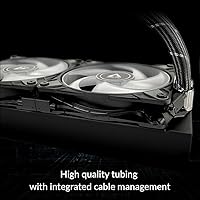
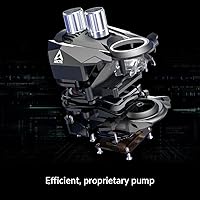
The dual 140mm PWM fans are one of this ARCTIC cooler's strongest selling points. Spinning anywhere from 200 to 1900 RPM, they stay near-inaudible during light workloads and ramp up purposefully under sustained CPU load. That flexibility is harder to find than you might expect at this price tier. The integrated cable routing through the hose sheathing is a small engineering detail that makes a real difference during a build — fewer loose cables fighting for space in an already crowded case. The cold plate and pump combo handles heat transfer efficiently, and the Fluid Dynamic Bearing fans suggest this unit is built with longevity in mind, not just launch-day benchmarks.

Best For

This 280mm AIO makes the most sense for builders running mid-to-high-end CPUs — think Ryzen 7 or 9 series, or Intel Core i7 and i9 chips on LGA1700 or AM5 platforms — where sustained thermal headroom actually matters. It also suits anyone building inside a mid or full-tower case with a 280mm radiator mount available. If you care about a clean interior and cohesive RGB lighting, the integrated cable management and addressable fans work together nicely. For those stepping up from a tower air cooler or a 240mm AIO, the performance difference is noticeable and worth the investment. It is not overkill; it is appropriately sized.

User Feedback

Buyers are largely satisfied, with thermal performance per dollar earning consistent praise across reviews. The cable management through the tubing sleeve gets called out repeatedly as a genuine build-quality win. That said, a handful of users report a faint pump hum during the first few hours of operation — most say it fades, but it is worth knowing going in. Early production batches drew some fit-and-finish criticism, and ARCTIC responded with a QC verification program that appears to have improved consistency. The LGA1700 bracket included out of the box is a practical detail that Intel builders appreciate, saving the hassle of sourcing an adapter separately.

Pros

  • Thermal performance consistently punches above its weight class for the price paid.
  • The 280mm radiator delivers a meaningful cooling advantage over 240mm AIOs under sustained CPU load.
  • Fan speed range from 200 to 1900 RPM keeps the system near-silent during everyday tasks.
  • Integrated cable routing through the hose sheathing makes the interior of a windowed build look genuinely clean.
  • LGA1700 and AM5 brackets are included in the box, removing the headache of sourcing mounting hardware separately.
  • The Liquid Freezer II 280 A-RGB produces even, well-diffused lighting without the hotspot effect common in budget RGB fans.
  • Fluid Dynamic Bearing fans are a longevity-focused choice that holds up well compared to sleeve-bearing alternatives.
  • Wide socket compatibility means the cooler can move between Intel and AMD platform upgrades without replacement.
  • ARCTIC addressed early batch consistency concerns proactively with a QC verification program on newer units.

Cons

  • A faint pump hum during the first hours of operation unsettles some builders expecting silence from the start.
  • The 38mm radiator thickness can create clearance conflicts with tall VRM heatsinks in tighter mid-tower cases.
  • No white colorway exists for this A-RGB variant, limiting its appeal in light-themed builds.
  • Tubing stiffness can make radiator positioning awkward in cases where mounting points are far from the CPU socket.
  • Square ILM bracket for 2011-3 and 2066 socket users is not consistently included across all regional packages.
  • Cable lengths may fall short of some header positions in larger full-tower cases, requiring extensions.
  • Early production quality inconsistencies still shadow the product reputation despite ARCTIC's corrective efforts.
  • At maximum fan speed the acoustic output is noticeable enough to bother users in quiet room environments.

Ratings

The ARCTIC Liquid Freezer II 280 A-RGB AIO Cooler has been scored below using an AI-driven analysis of verified global buyer reviews, with spam, bot-generated, and incentivized submissions actively filtered out before scoring. Ratings reflect the honest consensus of real builders — from first-time AIO adopters to experienced system integrators — across multiple regional marketplaces. Both the standout strengths and the recurring frustrations are weighted transparently into every number you see here.

Thermal Performance
91%
Users pairing this cooler with Ryzen 7, Ryzen 9, and Intel i7 chips consistently report CPU temperatures that sit comfortably below what their previous air coolers or 240mm AIOs achieved under sustained workloads. Sustained rendering tasks and long gaming sessions are where buyers notice the headroom most.
A small segment of users running heavily overclocked i9 or Threadripper-class CPUs feel the 280mm radiator approaches its ceiling under extreme loads. It is not designed to be a flagship overclocking tool, and buyers pushing those limits would benefit from a 360mm alternative.
Noise Level
88%
At low to moderate CPU loads, the fans spin so slowly that most users describe the system as effectively silent. The wide RPM range means the cooler rarely needs to ramp hard, and when it does, the ramp-up is gradual rather than jarring.
At full fan speed the noise is audible and noticeable, though not offensive. The more common complaint is a faint pump hum some users detect during the first few hours of operation — it typically fades, but it is enough to cause concern for builders expecting complete silence from day one.
Build Quality
79%
21%
The radiator feels solid, the fittings are tight, and the braided tubing has a premium look that holds up well over months of use. The materials — aluminum, copper, polycarbonate, and rubber — feel appropriately matched to the price tier and give the unit a reassuringly sturdy presence during installation.
Early production batches attracted criticism around minor fit-and-finish inconsistencies, including slight variations in mounting hardware tolerances. ARCTIC introduced a QC sticker verification program in response, and newer units appear more consistent, but residual skepticism from those early reports still surfaces in reviews.
Value for Money
93%
This is where the Liquid Freezer II 280 A-RGB earns its strongest praise. Buyers repeatedly note that the thermal and acoustic performance competes with AIOs priced significantly higher, making it one of the more defensible purchases in the 280mm segment for builders on a real-world budget.
The value proposition softens slightly if a buyer already owns a competing 280mm AIO from a previous build. The performance delta may not justify a repurchase, and the RGB lighting, while nice, is not a strong enough differentiator on its own to drive an upgrade decision.
Installation Experience
82%
18%
The mounting hardware covers an impressively wide range of sockets — including LGA1700 and AM5 out of the box — which removes the anxiety of sourcing extra brackets after purchase. Most builders report the installation process as straightforward, with clear enough hardware groupings to navigate without consulting a manual repeatedly.
The radiator's 38mm thickness can create clearance conflicts with tall VRM heatsinks in some mid-tower cases, and a few users mention the tubing stiffness makes routing to certain radiator positions more awkward than expected. Case compatibility research beforehand is genuinely worth the time.
Cable Management
89%
Routing the PWM and A-RGB cables inside the hose sheathing is a practical design decision that pays off visibly inside the case. Builders who spend time on cable presentation consistently call it out as one of the cooler's most appreciated real-world conveniences.
The integrated cable length may not reach all motherboard headers in larger full-tower cases with radiators mounted at the top rear, requiring extension cables that partially undo the clean routing advantage. It is a niche issue but worth checking against your specific case dimensions.
RGB Lighting Quality
83%
The 24 addressable LEDs distributed across the two fan hubs produce even, well-diffused illumination rather than the blotchy hotspot effect common in cheaper RGB fans. Color accuracy and brightness hold up well at a distance, making it a solid fit for windowed builds where the fans are visible.
The RGB header requires a 3-pin 5V addressable connection, which is standard on modern boards but may require an adapter on older platforms. Users with non-addressable RGB ecosystems will find the lighting locked out of synchronization entirely without additional hardware.
Pump Reliability
76%
24%
The vast majority of long-term owners report no pump failures or performance degradation after extended use, which speaks to the underlying engineering. The pump runs quietly enough in steady state that most users forget it is there after the initial break-in period.
The startup hum reported by a meaningful subset of users is the main credibility dent here. While it typically resolves within hours, it is unsettling enough that some buyers initially fear a defective unit. ARCTIC's support response for pump concerns has been described as inconsistent in a handful of reviews.
Fan Performance
87%
The dual 140mm fans deliver strong static pressure optimized for pushing air through a radiator, which is exactly the use case that matters. At mid-range RPMs the airflow-to-noise ratio is genuinely impressive, and the Fluid Dynamic Bearing design gives builders reason to trust these fans will last.
At maximum RPM the fans produce a noticeable whoosh that, while expected, is louder than some competing 140mm fan sets at equivalent speeds. Users who prioritize acoustic comfort above all else may want to cap fan curves manually in their motherboard software.
Compatibility & Socket Support
94%
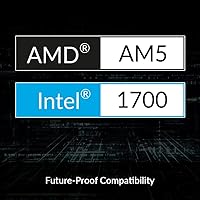
Covering Intel sockets from 115X through LGA1700 and AMD from AM4 through AM5 in a single retail box is a genuine convenience. Builders upgrading platforms without replacing their cooler, or those building multiple systems, find the included hardware variety unexpectedly useful.
The 2011-3 and 2066 socket support requires a Square ILM bracket not included in all regional retail packages, which catches some enthusiast-platform builders off guard. Confirming the exact bracket contents for your region before ordering is a small but necessary step.
Radiator Size & Case Fit
74%
26%
The 280mm format hits a practical balance for mid-tower builds — more radiator surface than a 240mm without demanding the dedicated top-mount real estate that a 360mm typically requires. Builders in mid-towers consistently find it a comfortable fit with room to spare.
The radiator is notably thick at 38mm, and combined with fan depth this creates a total mounted depth that conflicts with RAM clearance or VRM heatsink fins in tighter cases. Checking both radiator and fan clearance against case specs — not just radiator length — is genuinely necessary.
Aesthetic Design
81%
19%
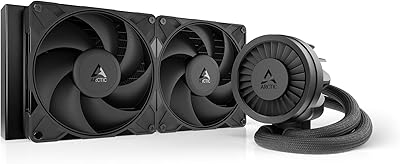
The all-black colorway and clean hose routing give this ARCTIC cooler an understated, purposeful look that complements a wide range of build themes. The transparent fan rotors let the RGB diffuse naturally without looking like an afterthought tacked onto a utilitarian product.
There is currently no white colorway option for this specific A-RGB variant, which limits its appeal for all-white or light-themed builds. The head unit on the pump block is functional in appearance but lacks the visual polish of some competitors at a similar price point.
Long-Term Durability
80%
20%
Fluid Dynamic Bearing fans have a proven track record for longevity compared to sleeve-bearing alternatives, and multi-year ownership reports from early adopters of the Liquid Freezer II series are largely positive with no widespread leaking or pump failure patterns emerging.
The long-term durability picture is still incomplete for newer A-RGB variants specifically, given the product's relatively recent launch. Buyers who keep systems running for five or more years are essentially trusting ARCTIC's engineering track record rather than an established long-run data set.

Suitable for:

The ARCTIC Liquid Freezer II 280 A-RGB AIO Cooler is a strong match for PC builders running mid-to-high-end CPUs — particularly Ryzen 7 and Ryzen 9 chips on AM4 or AM5, or Intel Core i7 and i9 processors on LGA1700 — who want real thermal headroom without stepping into flagship AIO pricing territory. It suits anyone building inside a mid-tower or full-tower case that can accommodate a 280mm radiator, where the extra surface area over a 240mm unit translates into meaningfully lower sustained temperatures during workloads like video editing, 3D rendering, or extended gaming sessions. Builders who care about a clean interior will appreciate the integrated cable routing, which keeps the hose run tidy without requiring aftermarket sleeves or cable combs. If your build has a windowed side panel and you want addressable RGB that syncs with the rest of your system, the fan lighting is bright, consistent, and connects via a standard 3-pin 5V header found on virtually every modern motherboard. This cooler is also a genuinely practical choice for anyone upgrading from a tower air cooler or a smaller 240mm AIO who wants a noticeable step up in cooling capacity without overcomplicating the build process.
Not suitable for:

The ARCTIC Liquid Freezer II 280 A-RGB AIO Cooler is not the right tool for builders pushing the absolute thermal limits of heavily overclocked flagship CPUs, where a 360mm radiator and higher-static-pressure fans become almost necessary to keep temperatures in check. Compact case builders working with ITX or small mATX enclosures will likely find the 280mm radiator physically incompatible with their chassis, and the 38mm radiator thickness adds another layer of clearance complexity that smaller cases rarely accommodate. Buyers chasing an all-white or light-themed aesthetic will be disappointed — the only available colorway for this A-RGB variant is black, and the pump head design is functional rather than visually striking. Anyone who needs near-complete pump silence from the moment of first boot may find the initial startup hum unsettling, even though it typically settles quickly. Finally, builders on older platforms requiring the Square ILM bracket for 2011-3 or 2066 sockets should confirm their regional retail package includes that hardware before purchasing, as its inclusion is not universal.
Specifications

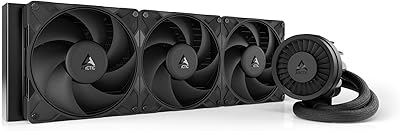
  • Radiator Size: The radiator measures 317 x 138 x 38 mm, placing it in the 280mm class with a thickness that requires clearance checks in tighter cases.
  • Fan Configuration: Two 140mm PWM fans are pre-installed on the radiator, optimized for static pressure to push air efficiently through the fin stack.
  • Fan Speed Range: Fan RPM spans from 200 at near-silent idle up to 1900 under full load, giving the system a wide thermal and acoustic operating range.
  • Airflow: Each fan delivers up to 68.9 cubic feet per minute of airflow at maximum speed, providing strong heat dissipation during sustained CPU workloads.
  • Noise Output: Rated at 0.3 Sones, the cooler operates at a very low noise floor during light tasks, though noise increases noticeably at peak fan speeds.
  • Bearing Type: Both fans use Fluid Dynamic Bearing technology, which generally offers longer operational lifespan and lower noise compared to sleeve-bearing alternatives.
  • Pump Connector: The pump connects via a standard 4-Pin PWM header on the motherboard, enabling speed control and monitoring through standard fan management software.
  • RGB Specification: Each fan contains 12 addressable A-RGB LEDs for a total of 24 across both fans, connected via a 3-pin 5V addressable header at 0.4A per fan.
  • Socket Support: Compatible sockets include Intel LGA 1150, 1151, 1155, 1156, 1200, 1700, 2011-3, and 2066, plus AMD AM4 and AM5, with Square ILM brackets required for 2011-3 and 2066.
  • Materials: The radiator and cold plate use aluminum and copper respectively, while tubing and fittings incorporate rubber and polycarbonate for durability and leak resistance.
  • Cable Management: PWM and A-RGB cables for both radiator fans are routed internally through the braided hose sheathing, reducing visible cable runs inside the case.
  • Power Draw: Total system power consumption is rated at 2.04 watts, making this an extremely low-draw component relative to the cooling capacity it provides.
  • Unit Weight: The complete cooler assembly weighs 1600 grams, which is typical for a 280mm AIO and requires standard ATX case motherboard tray support.
  • Voltage: The unit operates at 12 volts DC, compatible with standard PC power delivery through the motherboard fan and pump headers.
  • Color: The cooler is available in black only for this A-RGB variant, with no white or alternative colorway currently offered in this specific configuration.
  • Item Model: The official model number is ACFRE00106A, which can be used to verify compatibility documentation and locate the correct mounting hardware for your platform.

Related Reviews
ARCTIC Liquid Freezer III Pro 280 Cooler
82%
91%
Thermal Performance
88%
Noise Level
74%
Installation Experience
89%
Fan Quality
93%
VRM Cooling
More
ARCTIC Liquid Freezer III 280 A-RGB
86%
91%
Cooling Performance
87%
Ease of Installation
88%
Noise Levels
85%
RGB Lighting Customization
90%
Build Quality
More
ARCTIC Liquid Freezer III Pro 360
86%
93%
Thermal Performance
88%
Noise Level
91%
VRM Cooling
89%
Build Quality
94%
Value for Money
More
ARCTIC Liquid Freezer III Pro 420 Cooler
84%
93%
Thermal Performance
91%
Noise Level
58%
Case Compatibility
88%
Build Quality
86%
VRM Cooling
More
Cooler Master MasterLiquid ML240L V2 AIO Cooler
77%
78%
Thermal Performance
91%
Installation Experience
63%
Pump Noise & Vibration
82%
Fan Performance
88%
ARGB Lighting
More
ARCTIC Liquid Freezer III Pro 240 Cooler
85%
84%
Thermal Performance
88%
Noise Level
91%
VRM Cooling
67%
Installation Experience
86%
Build Quality
More
NZXT Kraken X53 RGB 240mm AIO Liquid Cooler
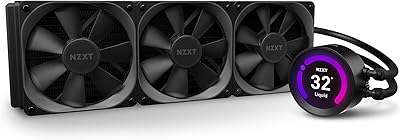
85%
88%
Performance Under Load
92%
Cooling Efficiency
85%
RGB Aesthetic & Design
87%
Noise Level
80%
Installation Process
More
Asus ROG RYUO 240 RGB AIO Liquid CPU Cooler
84%
94%
Cooling Performance
88%
Noise Levels
73%
Ease of Installation
90%
RGB Lighting and Visual Appeal
85%
Build Quality and Durability
More
NZXT Kraken Z73 360mm AIO RGB CPU Liquid Cooler
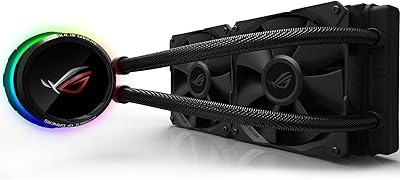
84%
92%
Cooling Performance
87%
Noise Level
72%
Installation Ease
80%
Software Control (CAM V4)
90%
Aesthetic Customization (LCD Display)
More
Lian Li Hydroshift II-C 360TL
87%
96%
Aesthetic & Design
88%
Installation Ease
93%
Cooling Performance
91%
Screen Quality & Customization
97%
Cable Management
More

FAQ

Yes, the LGA1700 bracket is included in the retail box, which is one of the more practical details ARCTIC got right on this unit. You will not need to track down a separate adapter kit for Intel 12th or 13th gen builds.

It is fairly common with this ARCTIC cooler and not necessarily a sign of a defective unit. Most users report a subtle hum during the first few hours of operation that fades once the pump settles in. If it persists beyond that, reaching out to ARCTIC support is the right next step.

The 280mm length fits many popular mid-towers, but the 38mm radiator thickness is the dimension to watch. When you add fan depth on top of that, the total mounted depth can conflict with tall RAM heatspreaders or VRM coolers. Always cross-reference your specific case clearance specs before committing.

Yes, the fans connect via a standard 3-pin 5V addressable header, which is compatible with Aura Sync, Mystic Light Sync, and most other major motherboard RGB ecosystems. If your board has a 5V A-RGB header, it should sync without any additional software beyond what you already use.

It manages well under most workloads, but a 16-core chip under full all-core stress is close to the upper boundary of what a 280mm AIO handles comfortably. Expect temperatures to stay controlled during typical rendering or gaming scenarios, but if you are running sustained synthetic benchmarks or heavy overclocks, a 360mm option would give you more breathing room.

In most cases, yes. Moving from 240mm to 280mm adds meaningful radiator surface area, and combined with the efficient cold plate design on this cooler, the drop in sustained load temperatures is real and noticeable. It is one of the more cost-effective upgrades for builders already in the AIO ecosystem.

ARCTIC acknowledged those early batch concerns and introduced a QC verification sticker program on units that have passed additional testing. Newer units in circulation appear more consistent based on recent buyer feedback, though it is worth buying from a reputable retailer so you have a clear return path if needed.

The cable integration is genuine and one of the more appreciated practical features of the ARCTIC Liquid Freezer II 280 A-RGB AIO Cooler. The PWM and RGB cables for both fans are threaded through the hose braiding, so from the radiator to the hose run, the wiring is essentially invisible. You will still have cables at the motherboard end, but the radiator side stays very clean.

Without a compatible header, the fans will still spin and cool your CPU normally, but the lighting will not function or be controllable. You would need a standalone RGB controller with a 5V addressable output to drive the LEDs independently, which adds cost and complexity. It is worth checking your motherboard specs before assuming full compatibility.

The tubing length is sufficient for the majority of standard mid-tower and full-tower configurations with top or front radiator mounts. That said, in very large cases where the CPU socket is positioned far from the top mounting point, the tubing stiffness can make positioning awkward. Checking a few case-specific build logs online before you commit is a good idea for unusually large chassis.

Where to Buy