
Overview

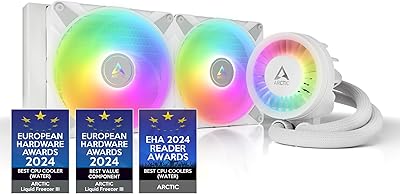
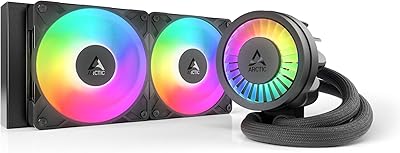
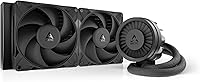
The ARCTIC Liquid Freezer III Pro 280 Cooler enters a crowded 280mm AIO market with a clear identity: serious thermal performance, low noise, and zero RGB distraction. ARCTIC has built a strong reputation for quiet, efficient cooling, and this Pro iteration pushes that further with a 38mm thick radiator — significantly deeper than the 25–27mm units most competitors ship. That extra material translates to more thermal mass and better sustained heat dissipation under load. It covers Intel LGA1851 and LGA1700 alongside AMD AM5 and AM4 out of the box, no adapter kits needed. If you want addressable lighting, look elsewhere — this ARCTIC cooler is built for builders who let temperatures do the talking.

Features & Benefits

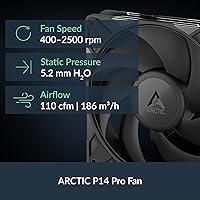
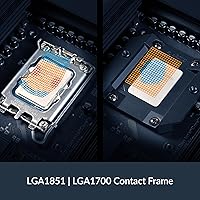
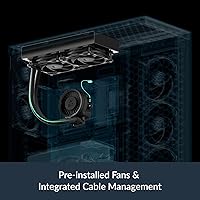
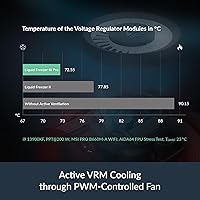
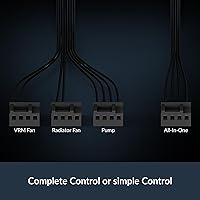
The dual P14 Pro fans are worth paying attention to — running between 400 and 2500 RPM on fluid dynamic bearings, they deliver noticeably more airflow and static pressure than the standard P14, especially at lower speeds. The cold plate is offset toward the CPU die hotspot on both Intel and AMD platforms, improving thermal contact in a meaningful way. Intel users on LGA1851 and LGA1700 get an included contact frame that distributes mounting pressure more evenly — a real concern on higher-TDP chips. The standout detail is the integrated VRM fan, a PWM-controlled unit that actively cools voltage regulators during heavy workloads — something almost no other AIO includes. Cable routing is handled through the hose sheathing, so only one cable runs to the motherboard fan header, keeping things tidy.

Best For

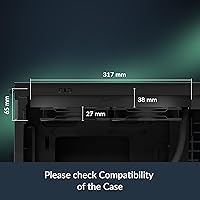
This 280mm AIO is an ideal pick for builders who want serious thermal headroom without the noise penalty — particularly those running power-hungry Intel 13th, 14th gen, or Arrow Lake processors, where the included contact frame eliminates the need for aftermarket mounting solutions. AM5 users pairing with a high-TDP Ryzen 9 chip will also appreciate the VRM fan, which adds an extra layer of stability in compact mid-tower builds where airflow around the socket area is limited. The Liquid Freezer III Pro 280 suits those stepping up from a 240mm AIO or a top-tier tower air cooler who want a genuine performance difference. One practical caveat: confirm your case supports a 38mm thick radiator — not just 280mm radiators generically — before purchasing.

User Feedback

Buyers have responded positively overall, with a 4.4-out-of-5 rating reflecting genuine satisfaction. The most consistent praise centers on near-silent operation at idle and light loads, along with clean installations thanks to the integrated cable routing. Thermal performance under sustained loads draws frequent approval, especially from Ryzen 9 and Core i9 users. That said, a portion of buyers report a brief but noticeable pump noise on cold startup — it typically settles within a minute but can be surprising the first time. A few builders also flagged clearance issues when fitting the thicker radiator into cases that only barely list 280mm support. Long-term reliability feedback is still limited given the relatively recent launch, but early impressions around build quality and hose durability are largely encouraging.

Pros

  • The 38mm thick radiator stores and dissipates heat more effectively than the thin radiators most AIOs ship with.
  • Integrated VRM fan actively cools voltage regulators during heavy workloads — a rare and genuinely useful addition.
  • P14 Pro fans run whisper-quiet at low speeds while still ramping up effectively under full CPU load.
  • Cable management through hose sheathing keeps the build interior clean with minimal visible wiring.
  • Included contact frame for Intel LGA1851 and LGA1700 removes the need for third-party mounting hardware.
  • Offset cold plate design improves contact with the actual CPU die hotspot on both Intel and AMD platforms.
  • MX-6 thermal paste comes pre-applied, saving time and reducing the chance of application errors during install.
  • Broad platform compatibility covers Intel LGA1851 and LGA1700 alongside AMD AM5 and AM4 out of the box.
  • Six-year warranty provides genuine long-term peace of mind for a component that lives inside a sealed loop.
  • Fluid dynamic bearings on the fans contribute to a long service life with minimal degradation over time.

Cons

  • No RGB lighting at all — builders who want a visually expressive build will need to look at competing options.
  • The 38mm radiator thickness can cause fitment issues in cases that only marginally support 280mm radiators.
  • Some users report an audible pump noise on cold startup that can take up to a minute to settle.
  • At nearly 1.9 kg total, the Liquid Freezer III Pro 280 is heavy enough to stress cheaper case radiator mounts.
  • Long-term reliability data is still limited given the product launched in early 2025.
  • Installation complexity on Intel platforms is slightly higher than competing AIOs that skip the contact frame.
  • The single visible cable, while cleaner than most, still requires a nearby fan header with PWM support.
  • No software ecosystem or fan curve customization beyond what the motherboard BIOS or fan control utility provides.

Ratings

The scores below reflect an AI-driven analysis of verified global user reviews for the ARCTIC Liquid Freezer III Pro 280 Cooler, with spam, incentivized, and bot-generated feedback actively filtered out to ensure accuracy. Each category captures what real buyers consistently praised or struggled with across thousands of hands-on experiences. Both the strengths and the friction points are represented transparently — no category has been softened to favor the product.

Thermal Performance
91%
Users running sustained workloads on Core i9 and Ryzen 9 chips consistently report that the Liquid Freezer III Pro 280 keeps temperatures in check where thinner 240mm AIOs begin to struggle. The 38mm radiator depth gives the cooler genuine staying power during extended rendering sessions or back-to-back gaming hours.
A small number of users pushing heavily overclocked setups in poorly ventilated cases found temperatures crept closer to the thermal limits than expected, suggesting case airflow still plays a significant role in real-world results. Performance gains over a quality 240mm AIO are meaningful but not dramatic for lightly loaded systems.
Noise Level
88%
At idle and moderate loads, this ARCTIC cooler is genuinely quiet — most users describe it as essentially inaudible from a normal seated distance. The P14 Pro fans in particular earn consistent praise for staying hushed even as CPU temperatures begin to climb, which matters during long quiet work sessions.
Cold-start pump noise is a recurring complaint across multiple user reports — a gurgling or rattling sound during the first 30 to 90 seconds after powering on can be jarring, especially for users in quiet rooms. It settles quickly, but for buyers expecting silence from the very first second, it is worth knowing upfront.
Installation Experience
74%
26%
Experienced builders generally find the process logical and well-documented, with ARCTIC including all required hardware and a clear instruction sheet in the box. The pre-applied MX-6 paste removes one potential source of error for newer builders, and the hose length gives reasonable flexibility for radiator placement.
The Intel contact frame adds steps that simpler backplate-and-bracket designs do not require, and a portion of first-time AIO installers found the process confusing enough to require video guides. AM5 users also noted the mounting sequence requires more patience than rival coolers with more streamlined bracket systems.
Fan Quality
89%
The P14 Pro fans draw consistent praise for delivering strong airflow with low noise across the full speed range — users frequently note they perform noticeably better than the standard P14 variants at lower RPMs, which is where most desktop workloads actually operate. Fluid dynamic bearings contribute to a smooth, vibration-free feel.
At maximum RPM under peak load, a minority of users found the fans audible enough to be distracting in otherwise quiet environments. There is no independent fan control without BIOS access, which can frustrate users who prefer standalone fan controllers.
VRM Cooling
93%
The integrated VRM fan is the feature that most consistently surprises buyers — users pairing this cooler with high-TDP chips in mid-tower cases report measurably lower VRM temperatures compared to passive cooling setups. For Ryzen 9 and Core i9 builds where power delivery runs hot under sustained load, this addition provides real stability benefits.
The VRM fan positioning is fixed, so its effectiveness varies depending on motherboard layout and the proximity of voltage regulator components to the pump head. On some boards with atypical VRM placement, users found the benefit less pronounced than expected.
Build Quality
86%
Buyers consistently describe the overall construction as solid and premium-feeling, with hoses that resist kinking and a pump head that feels robustly assembled. The radiator finish and fan frame materials align with what you would expect from a cooler in this market segment.
A handful of users raised concerns about the long-term durability of the hose sleeving, noting it can show minor wear at bend points over time. Given the product launched in early 2025, multi-year reliability data is still limited, which tempers confidence for longevity-focused buyers.
Cable Management
92%
Routing fan PWM cables through the hose sheathing is a genuinely clever solution that keeps the build interior cleaner than virtually any competing AIO in this size range. Builders working in glass-panel cases with visible interiors specifically call this out as a deciding factor.
The single cable exiting the assembly still needs to reach a motherboard fan header, and depending on radiator placement and case layout, cable length can be tight. Users mounting the radiator at the front of larger full-tower cases occasionally found themselves wishing for a slightly longer run.
Case Compatibility
63%
37%
For cases explicitly rated for 38mm or thicker radiators, installation is clean and straightforward. Builders who verified compatibility beforehand report no fitment surprises, and the 450mm hose length handles both top and front mounting positions without strain in most mid-tower enclosures.
The 38mm radiator thickness is a genuine compatibility risk — multiple users report that cases listing 280mm support assumed a 25–27mm radiator and could not close the panel properly. This is the single most common source of negative reviews, and it is entirely avoidable with pre-purchase case spec verification.
Platform Compatibility
87%
Out-of-the-box support for Intel LGA1851, LGA1700, and AMD AM5 and AM4 covers the vast majority of current and recent mainstream builds without requiring separate adapter kits. Buyers upgrading existing systems particularly appreciate not having to source additional mounting hardware.
Older sockets such as LGA1200, LGA1151, and AM3 are not supported, which limits upgrade path options for users on aging platforms. ARCTIC has not indicated plans to expand socket support beyond current listings.
Value for Money
84%
Buyers consistently feel the pricing is justified given the 38mm radiator depth, P14 Pro fans, integrated VRM fan, and 6-year warranty — features that would cost significantly more as separate upgrades on competing products. The pre-applied MX-6 paste is a small but appreciated addition that adds perceived value.
A subset of users who primarily run light to moderate workloads feel the full feature set is more than their usage demands, making the pricing feel slightly high relative to what they personally benefit from. Competing 280mm AIOs at lower price points can match its thermals on less demanding CPUs.
Aesthetics
58%
42%
Buyers who prefer a clean, functional look actively appreciate the absence of RGB — the all-black design with minimal branding suits stealth builds and professional workstation aesthetics. For this audience, the understated appearance is a deliberate positive rather than a missing feature.
Buyers expecting visual customization or addressable lighting will find nothing here — no RGB, no A-RGB connector, no software ecosystem for color control. In a market where competing AIOs offer full lighting integration at similar price points, this is a real trade-off that turns away a portion of potential buyers.
Warranty & Support
88%
The 6-year warranty is one of the strongest coverage periods available on a 280mm AIO and gives long-term builders genuine peace of mind. Users who have interacted with ARCTIC support during the review period generally describe the process as responsive and straightforward.
Because the product launched in early 2025, there are few real-world warranty claim experiences to draw on yet. Users looking for confirmation of how ARCTIC handles claims on older units from this specific lineup will find limited community data available at this stage.
Pump Reliability
77%
23%
Once past the initial startup period, users report the pump runs quietly and consistently across extended use. Early adopters from the first months after launch describe hose condition and pump behavior as holding up well under regular daily use.
Cold-start pump behavior remains the most discussed reliability concern — while most users accept it as normal, a minority worry the sound indicates a potential long-term issue. Longitudinal durability data beyond six months of ownership is still too sparse to draw firm conclusions.
Thermal Paste Inclusion
83%
Shipping with MX-6 already applied is a thoughtful touch that removes a step many builders find stressful, particularly those installing their first AIO. MX-6 is a well-regarded compound and performs adequately for the vast majority of builds without any user intervention.
Pre-applied paste complicates dry-fit test installations, since any contact with the CPU IHS means the paste is partially compromised and ideally should be refreshed before a final mount. Builders who like to dry-fit components before committing will find this slightly inconvenient.

Suitable for:

The ARCTIC Liquid Freezer III Pro 280 Cooler is a strong fit for PC builders who want real thermal performance without chasing RGB aesthetics or paying a premium for a 360mm radiator. It makes particular sense for Intel LGA1851 and LGA1700 users — the included contact frame handles mounting pressure distribution properly on high-TDP chips, something that matters more than most buyers realize until temperatures creep under sustained load. AMD AM5 builders running Ryzen 9 processors will also find the integrated VRM fan genuinely useful, since mid-tower cases often leave voltage regulator thermals unaddressed. If you are upgrading from a 240mm AIO or a high-end air cooler and want a meaningful step forward without jumping to a bulkier 360mm unit, this 280mm AIO hits a practical sweet spot. Builders with tight cable management requirements will appreciate that only a single fan cable connects to the motherboard header.

Not suitable for:

The ARCTIC Liquid Freezer III Pro 280 Cooler will disappoint anyone building a system where visual impact is the priority — there is no addressable RGB here, and that is unlikely to change with a software update. Buyers should also verify case compatibility carefully before ordering: the 38mm radiator thickness exceeds what many cases assume when they list 280mm support, and a few millimeters can mean the difference between a clean fit and a frustrating return. Users who prefer a completely silent boot experience may find the pump noise during cold startup irritating, even if it resolves within a minute or so. Those on very tight budgets who only need to cool a mid-range or low-power CPU will find the feature set here is more than their workload demands. Finally, builders locked into older sockets like LGA1200 or AM3 will need to look elsewhere, as compatibility is limited to current and recent mainstream platforms only.

Specifications

  • Radiator Size: The radiator measures 317mm long by 138mm wide by 38mm thick, making it notably deeper than the 25–27mm radiators common on most competing 280mm AIOs.
  • Fan Model: Two P14 Pro 140mm fans are included, running on fluid dynamic bearings across a speed range of 400 to 2500 RPM.
  • Airflow Output: Each P14 Pro fan delivers up to 110 CFM of airflow with a static pressure rating of 5.2 mmH₂O at maximum speed.
  • Pump Speed: The PWM-controlled pump operates between 800 and 2800 RPM and runs at 12V DC with a rated current draw of 0.35A.
  • VRM Fan: An integrated PWM-controlled VRM fan runs between 400 and 2500 RPM at 12V DC, actively cooling motherboard voltage regulators during sustained high-load operation.
  • Cold Plate: The cold plate is machined from copper with micro skived fins and is offset toward the CPU die hotspot to improve thermal contact on both Intel and AMD platforms.
  • Radiator Material: The radiator body is constructed from aluminum, which balances effective heat dissipation with a manageable overall weight.
  • Tube Length: The reinforced hoses measure 450mm in length, providing reasonable routing flexibility for both top and front radiator mounting positions.
  • Total Weight: The complete assembly, including radiator and fans, weighs 1905g (approximately 4.2 lbs), which is on the heavier side for a 280mm AIO.
  • Thermal Paste: ARCTIC MX-6 thermal paste (0.8g) is pre-applied to the cold plate at the factory, eliminating the need for buyers to source or apply their own compound.
  • Noise Level: Rated noise output is 0.08 Sones under typical operating conditions, placing this ARCTIC cooler among the quieter options in the 280mm AIO segment.
  • Connector Type: All fan and pump connections use standard 4-pin PWM connectors, compatible with any modern motherboard fan header that supports PWM control.
  • Compatibility: Supported sockets include Intel LGA1851 and LGA1700, as well as AMD AM5 and AM4, with no additional adapter kits required for any of these platforms.
  • Contact Frame: An Intel-specific contact frame is included in the box, designed to distribute mounting pressure more evenly across LGA1851 and LGA1700 CPUs.
  • Cable Routing: Fan PWM cables are routed through the hose sheathing, so only a single cable exits the assembly and connects to the motherboard, reducing visible wiring significantly.
  • Operating Temp: The cooler is rated for ambient operating temperatures between 0°C and 40°C, which covers all standard indoor desktop use cases.
  • Voltage: All active components — pump, fans, and VRM fan — operate at 12V DC, consistent with standard ATX power delivery through motherboard headers.
  • Warranty: ARCTIC backs this product with a 6-year manufacturer warranty, which is one of the longer coverage periods available for an AIO liquid cooler in this category.

Related Reviews
ARCTIC Liquid Freezer III Pro 360
86%
93%
Thermal Performance
88%
Noise Level
91%
VRM Cooling
89%
Build Quality
94%
Value for Money
More
ARCTIC Liquid Freezer III Pro 420 Cooler
84%
93%
Thermal Performance
91%
Noise Level
58%
Case Compatibility
88%
Build Quality
86%
VRM Cooling
More
ARCTIC Liquid Freezer III 280 A-RGB
86%
91%
Cooling Performance
87%
Ease of Installation
88%
Noise Levels
85%
RGB Lighting Customization
90%
Build Quality
More
ARCTIC Liquid Freezer III Pro 240 Cooler
85%
84%
Thermal Performance
88%
Noise Level
91%
VRM Cooling
67%
Installation Experience
86%
Build Quality
More
ARCTIC Liquid Freezer II 280 A-RGB AIO Cooler
84%
91%
Thermal Performance
88%
Noise Level
79%
Build Quality
93%
Value for Money
82%
Installation Experience
More
Cooler Master 240 Elite Liquid White CPU Liquid Cooler
85%
91%
Cooling Performance
84%
Noise Levels
92%
Ease of Installation
89%
Build Quality
88%
aRGB Lighting Effect
More
ID-COOLING FX240 PRO 240mm AIO CPU Cooler
78%
83%
Thermal Performance
67%
Pump Noise & Vibration
78%
Fan Performance & Noise
74%
Build Quality & Materials
86%
Installation Ease
More
Geometric Future Eskimo Pro 420mm AIO Liquid Cooler
84%
94%
Cooling Performance
89%
ARGB Lighting Customization
72%
Installation Ease
91%
Compatibility with Intel LGA 1700
90%
Compatibility with AMD AM5
More
ID-COOLING FX360 PRO White Liquid CPU Cooler
86%
94%
Cooling Performance
89%
Build Quality
75%
Noise Level
91%
Design/Aesthetics
88%
Installation Ease
More
ASUS ROG RYUO III 240 ARGB AIO Liquid CPU Cooler
88%
94%
Cooling Performance
88%
Noise Level
91%
Aesthetic Appeal
75%
Ease of Installation
92%
RGB Customization
More

FAQ

Not necessarily — and this is worth checking carefully before you order. The radiator on this unit is 38mm thick, whereas many cases that list 280mm support are designed around the more common 25–27mm thickness. Even a few millimeters can prevent the side panel from closing or put stress on the mounting points. Pull up your case specs and confirm the maximum supported radiator thickness, not just the fan size.

Yes, and it is actually a particularly good pairing for those chips. The included LGA1700 contact frame distributes mounting pressure more evenly across the IHS, which helps with thermal performance on CPUs that are known to run hot under sustained load. The VRM fan also adds an extra layer of stability when those processors are drawing heavy power over extended periods.

It does. LGA1851 support is built in, and the contact frame included in the box covers that socket as well, so there is nothing additional to purchase or adapt.

No — ARCTIC MX-6 paste comes pre-applied to the cold plate straight from the factory. It is a quality compound and perfectly adequate for most builds. If you ever reseat the cooler after initial installation, you will want to clean the plate and reapply fresh paste at that point.

At normal operating temperatures it is genuinely quiet — among the quieter AIOs in this size range. However, a number of buyers have noted that the pump produces an audible bubbling or gurgling sound for the first minute or so after a cold start. It is not a defect; air works its way out of the loop as the coolant warms up. Most people stop noticing it after the first few boots, but if you are particularly noise-sensitive, it is worth knowing upfront.

Yes. All connections use standard 4-pin PWM headers, so your motherboard fan control works exactly as it would with any other PWM fan. You can set custom fan curves through your BIOS or any compatible fan control utility. There is no proprietary software required.

No, and that is a deliberate design choice rather than an oversight. ARCTIC focuses the Liquid Freezer lineup on thermal and acoustic performance rather than lighting effects. If RGB is important to your build, this is not the right cooler — but if you would rather have cleaner thermals and a lower noise floor, the lack of lighting is unlikely to bother you.

The VRM fan sits at the pump head and directs airflow toward the voltage regulator modules on your motherboard. Under sustained heavy workloads — long gaming sessions, rendering, or extended stress tests — VRM temperatures can creep up on mid-tower builds where case airflow around the socket area is limited. The fan helps keep those components cooler, which contributes to more stable power delivery over time. Whether you strictly need it depends on your use case, but it is a useful safeguard for high-TDP builds and costs you nothing extra.

Most buyers find it straightforward, though the Intel contact frame adds a couple of steps compared to simpler bracket-and-backplate designs. ARCTIC includes clear instructions and all required hardware in the box. If you have installed an AIO before, you will likely find the process manageable. First-time builders should set aside an extra 20 to 30 minutes to read through the steps before starting.

ARCTIC offers a 6-year warranty on this cooler, which covers manufacturing defects including pump failure. It is one of the longer warranty periods you will find on an AIO at this price point, and it reflects a degree of confidence in the product's long-term reliability. If you do run into a defect within that window, ARCTIC's customer support process is generally well-regarded in the enthusiast community.