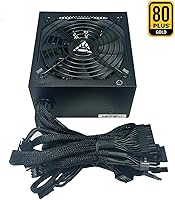
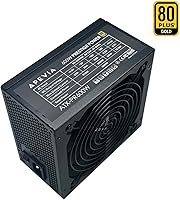
Overview

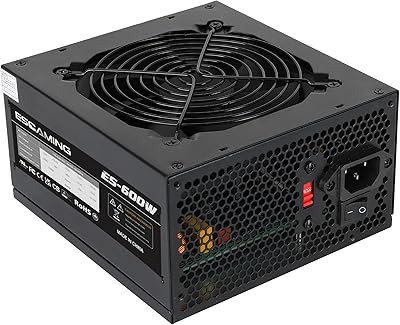
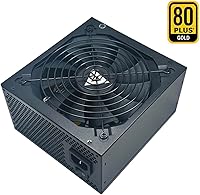
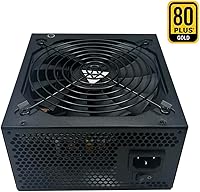
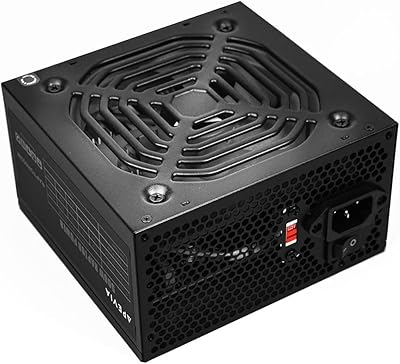
The Apevia Prestige 600W ATX Power Supply is a straightforward, no-frills option for PC builders who want certified efficiency without paying flagship prices. Apevia occupies a familiar spot in the market — budget-friendly units that punch above their weight on paper, even if they lack the reputation of tier-one PSU makers like Seasonic or Corsair. What sets this particular unit apart from the crowded value segment is its 80 Plus Gold certification, which is genuinely uncommon at this price tier. First released in early 2019, it has held its ground as a capable pick for modest builds. Think of it as a dependable workhorse, not a showpiece.

Features & Benefits

The efficiency story centers on the Gold-rated power conversion, which keeps heat and waste in check under typical gaming loads — a real plus when your case airflow is less than ideal. Active PFC handles fluctuating input power cleanly, adding a layer of protection for your other components. The DC-to-DC converter design on the minor rails is a welcome detail at this price, delivering tighter voltage regulation than cheaper designs typically manage. Two 6+2-pin PCIe connectors mean the Prestige 600W can handle most single-GPU builds without issue. The 135mm thermally controlled fan stays genuinely quiet during light tasks, only ramping up when the load demands it.

Best For

This ATX power supply hits its sweet spot with single-GPU mid-range builds — think an RTX 3060 or an RX 6600 paired with a mainstream six-core CPU. At 600W, there is comfortable headroom for that class of hardware without paying for unused capacity. First-time builders will appreciate the standard ATX form factor and a connector lineup covering the essentials without overwhelming complexity. It also slots in well for productivity or light office machines where running an efficient PSU matters more than raw power headroom. If you are planning a power-hungry workstation or dual high-end GPU rig, this Apevia unit is not the right tool — but for sensible budget builds, it earns its place.

User Feedback

Buyers frequently highlight the clean installation experience, noting that cables reach their destinations without the frustrating stretching common in cheaper units. Fan noise gets consistent praise too — most users report near-silence during casual use, which matters in quieter home setups. On the flip side, some reviewers have raised fair questions about long-term reliability, a reasonable concern with any value-tier PSU brand. Build quality draws mixed reactions: it looks and feels adequate, though a handful of buyers expected more given the Gold certification on the box. The 3-year warranty does seem to reassure most purchasers, and Apevia's support, while not industry-leading, appears to function adequately for standard claims.

Pros

  • 80 Plus Gold certification is a genuine achievement at this price point, keeping energy waste low under load.
  • The DC-to-DC converter design delivers tighter voltage stability than most competing units in this budget range.
  • Active PFC adds meaningful component protection, which budget PSUs often skip entirely.
  • The 135mm fan stays quiet during light gaming and everyday desktop tasks.
  • Cable length is consistently praised by buyers as adequate for standard mid-tower cases.
  • A 3-year warranty provides solid coverage and peace of mind for a value-tier purchase.
  • RoHS compliance signals responsible manufacturing standards, a plus for environmentally aware buyers.
  • The single 12V rail design simplifies power delivery for typical single-GPU gaming builds.
  • Standard ATX dimensions mean it drops into almost any compatible case without clearance headaches.
  • Two 6+2-pin PCIe connectors cover the vast majority of current mid-range graphics cards without adapters.

Cons

  • Apevia lacks the brand reputation and third-party testing pedigree of top-tier PSU manufacturers.
  • Long-term reliability data is thinner compared to established names, making multi-year durability harder to predict.
  • Only four SATA connectors limits expansion for builders with multiple drives or optical storage needs.
  • No modular or semi-modular cabling means extra cables add clutter in tidy builds.
  • Community PSU tier lists generally rank Apevia units outside the top recommended tiers.
  • Build quality perception among buyers is mixed — the unit looks budget-grade on close inspection.
  • 600W leaves minimal headroom if you upgrade to a higher-TDP GPU in the future.
  • No independent professional review coverage makes it harder to verify manufacturer efficiency claims.

Ratings

The scores below reflect our AI-driven analysis of verified global buyer reviews for the Apevia Prestige 600W ATX Power Supply, with spam, bot submissions, and incentivized feedback actively filtered out before scoring. Each category captures both what real users genuinely appreciated and where frustrations surfaced — nothing has been smoothed over. The result is a transparent, balanced picture of where this unit earns its place and where it asks you to manage expectations.

Value for Money
83%
At this price tier, landing an 80 Plus Gold certified unit with Active PFC and DC-to-DC conversion is genuinely hard to beat. Budget builders consistently note feeling like they got more than they paid for on paper, especially when comparing certifications across competitors in the same range.
A few buyers who researched PSU tier lists after purchasing felt the brand's lower community standing slightly undercuts the perceived value. The absence of modular cabling also stings a little when you factor in the hidden cost of cable management time in cleaner builds.
Efficiency & Thermals
88%
The Gold certification delivers in practice — users in small to mid-size cases report noticeably less heat buildup compared to Bronze-rated units they replaced. Under typical gaming loads with a mid-range GPU, the PSU runs warm but not hot, which directly benefits overall system temperatures.
Under sustained heavy loads — like extended rendering sessions or prolonged gaming marathons — a handful of users noted the unit getting warmer than expected for a Gold-rated design. It performs better in well-ventilated cases than in compact builds with restricted airflow.
Noise Level
81%
19%
The 135mm fan's thermal control works well in everyday scenarios — browsing, light gaming, and office tasks all pass with near-inaudible operation. Users who built home theater PCs or quiet workstations specifically called out how pleasantly unobtrusive the fan is at idle and low load.
When the system is pushed hard — think GPU-intensive games at high settings for extended sessions — the fan audibly ramps up to a level some users found distracting in quieter rooms. It is not loud by budget PSU standards, but it is noticeable enough to disappoint buyers expecting whisper-quiet operation throughout.
Build Quality
61%
39%
Out of the box, the unit looks presentable and installs without drama — the housing is solid enough that first-time builders rarely feel uncertain about it. Cable sleeving is basic but functional, and the connectors seat firmly without excessive force.
Side-by-side with units from Seasonic, Fractal, or Corsair, the Prestige 600W feels noticeably lighter in construction quality. Several experienced builders flagged thin casing walls and average-quality capacitors as concerns that feed into broader worries about how the unit will hold up past the two-year mark.
Installation Experience
86%
Cable lengths are generous enough for standard mid-tower cases, which buyers specifically praised after dealing with shorter cables on competing budget units. The familiar ATX connector set means anyone following a basic build guide can have it seated and running without confusion.
Non-modular wiring means you are dealing with a full bundle of cables regardless of how many you actually need — stuffing unused peripheral and SATA cables behind a panel adds friction for builders who care about interior presentation. In smaller cases with limited cable routing space, this becomes a more meaningful annoyance.
Voltage Stability
79%
21%
The DC-to-DC converter design on the minor rails provides measurably tighter voltage regulation than traditional group-regulated budget PSUs, which shows up in stable system performance during mixed workloads. Users who stress-tested their builds reported no system crashes or instability issues attributable to the PSU.
Independent voltage testing data from community reviewers is limited for this specific model, making it harder to verify manufacturer claims with precision. A small number of users reported minor fluctuations under peak multi-component load, though these did not result in system instability in most documented cases.
Connector Availability
67%
33%
For a standard single-GPU build with an SSD and one hard drive, the included connector set covers everything you need without requiring adapters. The dual 6+2-pin PCIe connectors handle modern mid-range graphics cards cleanly, and the 4/8-pin CPU connector works with current AMD and Intel platforms alike.
Four SATA ports is the clearest bottleneck — anyone building a system with multiple storage drives, optical media, or SATA-powered accessories will quickly feel constrained. Builders upgrading from a drive-heavy older system may need to purchase a SATA splitter, which somewhat undercuts the plug-and-play convenience.
Long-Term Reliability
54%
46%
Many buyers report trouble-free operation across the first year or two of use, and the three-year warranty provides a concrete backstop if something does go wrong. For builders who plan to refresh their system every few years, the warranty window roughly aligns with the intended use cycle.
Apevia does not appear in the upper tiers of community PSU rankings, and there are recurring patterns in reviews of early failures after the 18-to-24-month mark — enough to be a credible concern rather than statistical noise. Long-term builders or those powering expensive component sets should weigh this risk seriously before committing.
Warranty & Support
69%
31%
A three-year warranty is a reasonable commitment for a unit at this price point, and most buyers who filed claims within the first year reported a functional, if slow, resolution process. Knowing a warranty exists makes the purchase feel less risky for first-time builders who cannot diagnose PSU failures themselves.
Apevia's customer support infrastructure is not as polished or responsive as what you get from larger PSU brands, with some users describing lengthy response times and unclear RMA instructions. The warranty terms also require retaining proof of purchase, which casual buyers sometimes overlook until they actually need it.
Compatibility
91%
Standard ATX dimensions and a broadly compatible connector set mean this unit fits virtually any mid-tower or full-tower case without modification. Support for both legacy 4-pin and modern 8-pin CPU connectors makes it adaptable to a wide range of motherboard generations without adapter cables.
The unit is strictly ATX format, ruling it out entirely for Mini-ITX and SFF builds that require SFX or SFX-L power supplies. It also lacks newer ATX 3.0 PCIe 5.0 connectors, which may require a native power adapter for upcoming GPU generations designed around that standard.
Fan Quality
72%
28%
The 135mm fan moves adequate airflow for the unit's thermal demands and keeps operation quiet during the low-to-medium loads that define most everyday PC use. Buyers assembling home office machines appreciated that the fan never became a notable noise source during their working hours.
Fan bearing quality is a recurring concern among buyers who have owned the unit for two or more years, with a small but consistent group reporting increased fan noise over time. This is a known trade-off with budget fan components and does not affect all units equally, but it is worth tracking.
Packaging & Accessories
74%
26%
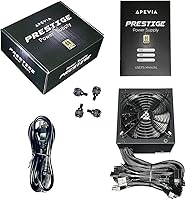
The unit arrives well-protected, and most buyers found the included mounting screws and basic documentation sufficient to complete their build without extra purchases. Packaging is practical rather than premium — no unnecessary waste, just functional protection for transit.
No cable ties, Velcro straps, or cable management accessories are included, which feels like a minor but noticeable omission given that non-modular cables already challenge cable tidiness. A brief printed installation guide would also help less experienced builders who are not relying on video tutorials.
Brand Reputation
48%
52%
Apevia has a long enough product history that it is not an unknown entity, and the Gold certification on this specific unit lends it more credibility than an uncertified budget brand. For buyers making a first PSU purchase and primarily guided by certification badges, the brand presence is adequate.
Among experienced PC builders and hardware communities, Apevia consistently ranks outside the recommended PSU tier lists, which is a real reputational disadvantage that cannot be ignored. Buyers who research deeply before purchasing often end up second-guessing the choice after discovering the brand's standing in enthusiast circles.

Suitable for:

The Apevia Prestige 600W ATX Power Supply is a practical choice for first-time PC builders and budget-conscious gamers who want certified efficiency without stretching their spending. If you are putting together a mid-range gaming rig around a GPU like the RTX 3060 or RX 6600 paired with a six-core mainstream CPU, this unit covers the power requirements with room to spare. It also fits naturally into productivity or home office builds where long hours of operation make Gold-tier efficiency genuinely worth having — lower heat output and reduced energy waste add up over time. Compact ATX cases are no obstacle, and the standard form factor means installation is straightforward for anyone working from a beginner tutorial. The three-year warranty provides a reasonable safety net for those who are understandably cautious about trusting a lesser-known brand with their entire system.

Not suitable for:

Builders planning high-wattage systems should look elsewhere — the Apevia Prestige 600W ATX Power Supply simply does not have the headroom for power-hungry CPU and GPU combinations like a Core i9 paired with an RTX 4080. Enthusiasts who prioritize long-term reliability and want a PSU from a tested, community-vetted brand — Seasonic, be quiet!, or Fractal — will likely find the value proposition here unconvincing regardless of the Gold cert. The connector count, while adequate for a basic single-GPU build, becomes a bottleneck in storage-heavy setups needing more than four SATA connections. Anyone planning a dual-GPU workstation or a content creation rig with multiple drives and high TDP components should budget for something with more capacity and a stronger reliability track record. If resale value or long-term upgrade flexibility matters to you, investing a bit more in a tier-one unit upfront is the smarter call.

Specifications

  • Rated Output: The unit delivers a total continuous output of 600W, sufficient for most mid-range single-GPU gaming builds.
  • Efficiency Rating: Carries an 80 Plus Gold certification, meaning it operates at 87–90% efficiency under typical load conditions.
  • Form Factor: Built to the standard ATX form factor, fitting the vast majority of mid-tower and full-tower PC cases.
  • Rail Design: Uses a single 12V rail architecture, which simplifies power delivery and avoids current-sharing complications across components.
  • PFC Type: Equipped with Active Power Factor Correction, which improves power quality and reduces strain on both the PSU and connected components.
  • Converter Design: Employs a DC-to-DC converter on minor rails, providing tighter voltage regulation compared to traditional group-regulated designs.
  • Cooling Fan: A 135mm fan with automatic thermal control adjusts its speed based on internal temperature, keeping noise low during lighter workloads.
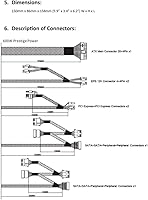
  • Main Connector: Ships with a 20/24-pin main ATX connector compatible with virtually all modern consumer motherboards.
  • CPU Connector: Includes a 4/8-pin 12V CPU power connector supporting both older and current-generation mainstream motherboards.
  • PCIe Connectors: Provides two 6+2-pin PCIe connectors, covering single-GPU builds using most current mid-range graphics cards without adapters.
  • SATA Connectors: Offers four SATA power connectors, adequate for a basic build with an SSD and one or two additional drives.
  • Peripheral Connectors: Includes four 4-pin Molex peripheral connectors for legacy drives, fan controllers, or other accessories requiring older power connections.
  • Dimensions: Measures 6.2 x 5.9 x 3.4 inches, conforming to standard ATX PSU dimensions for broad case compatibility.
  • Weight: Weighs 4.5 pounds, in line with other non-modular units in this output class.
  • Compliance: Meets RoHS (Restriction of Hazardous Substances) compliance standards, reflecting responsible material usage in manufacturing.
  • Warranty: Backed by a 3-year manufacturer warranty from Apevia, covering defects under normal operating conditions.
  • Modular Design: Non-modular cable management means all cables are permanently attached, which may add some clutter in smaller cases.
  • Model Number: Sold under the model designation ATX-PR600W, useful when cross-referencing compatibility documentation or warranty claims.

Related Reviews
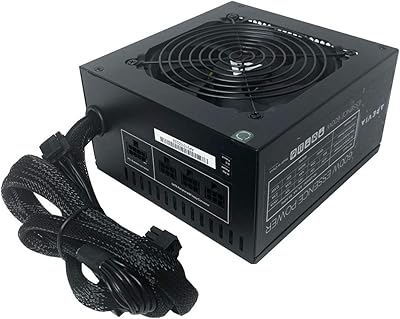
Apevia Essence 600W Semi-Modular ATX Power Supply
72%
78%
Value for Money
81%
Cable Management
74%
Noise Level
86%
Ease of Installation
62%
Build Quality
More
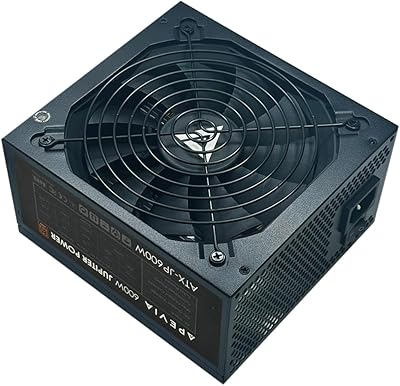
Apevia Jupiter 600W ATX Power Supply
72%
81%
Value for Money
58%
Long-Term Reliability
63%
Voltage Stability
86%
Installation Experience
78%
Noise Level
More
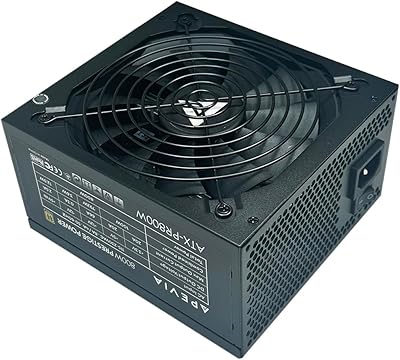
Apevia ATX-PR800W 800W ATX Gaming Power Supply
75%
81%
Value for Money
61%
Reliability & Longevity
84%
Efficiency & Power Delivery
86%
Cable & Connector Variety
72%
Noise Level
More
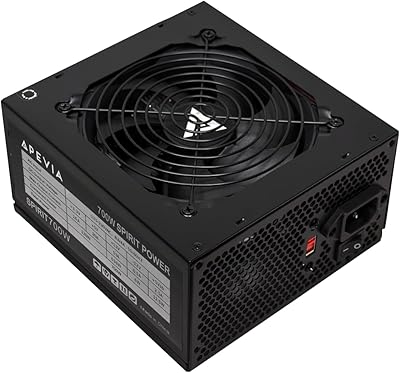
Apevia ATX-SP700 700W ATX Power Supply
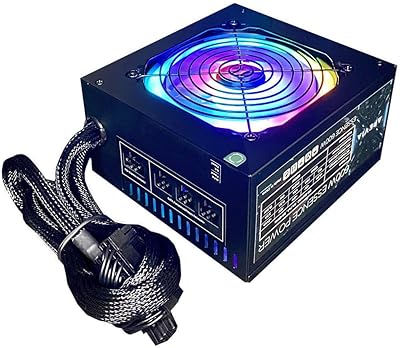
71%
83%
Value for Money
88%
Installation Ease
54%
Long-Term Reliability
71%
Noise Level
79%
Connector Variety
More
Apevia Essence 700W ATX Power Supply
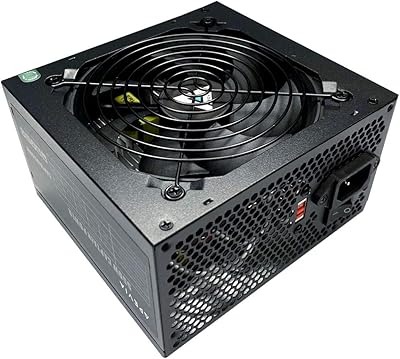
71%
81%
Value for Money
78%
Cable Management
74%
Power Stability
49%
Efficiency
63%
Build Quality
More
Apevia CAPTAIN550 550W ATX Power Supply
70%
78%
Value for Money
54%
Reliability
83%
Cable Quality & Aesthetics
81%
Connector Compatibility
84%
Ease of Installation
More
ESGAMING 600W Non-Modular ATX Power Supply
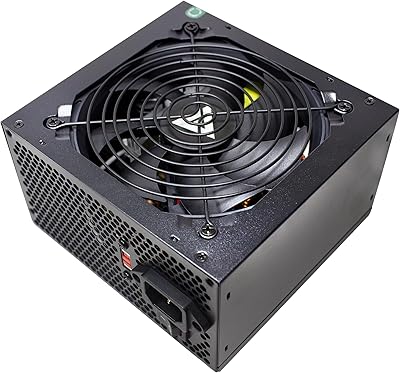
75%
88%
Value for Money
83%
Noise Level
91%
Ease of Installation
86%
Connector Coverage
67%
Cable Quality
More
Apevia Venus 450W ATX Power Supply
70%
83%
Value for Money
88%
Installation Ease
81%
Noise Level
74%
Connector Availability
62%
Build Quality
More
Apevia Raptor 500W ATX Power Supply
72%
83%
Value for Money
88%
Ease of Installation
74%
Connector Availability
58%
Reliability & Longevity
79%
Fan Noise
More
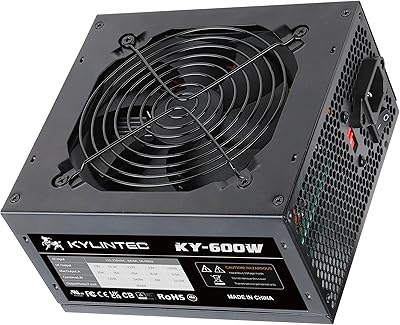
KYLINTEC 600W Power Supply ATX PSU
81%
90%
Ease of Installation
85%
Cooling Performance
88%
Power Stability
75%
Cable Management
80%
Build Quality
More

FAQ

For most single-GPU builds — say, an RTX 3060 or RX 6600 paired with a six-core CPU like a Ryzen 5 or Core i5 — 600W provides comfortable headroom. Where you need to be careful is if you are running a high-TDP processor alongside a power-hungry GPU like an RTX 4070 Ti or above, in which case you should look at a 750W or 850W unit instead.

Yes. The 20/24-pin main connector and 4/8-pin CPU connector are standard across virtually all current consumer motherboards from AMD and Intel platforms. Just confirm your motherboard does not require the newer 12+4-pin ATX 3.0 connector, which this unit does not include.

Most users report it runs quietly during web browsing, light productivity, and even moderate gaming sessions. The 135mm fan only ramps up noticeably under sustained heavy load, which is the expected behavior for a thermally controlled design.

Apevia is a budget-oriented brand and does not carry the same community reputation as tier-one names like Seasonic or Fractal. That said, the Apevia Prestige 600W ATX Power Supply does hold a legitimate 80 Plus Gold certification, which is an independently verified efficiency standard. For a secondary build or a budget-first system, it is a reasonable choice — just be aware you are trading some long-term reliability confidence for a lower price.

Technically it has two PCIe connectors, but 600W is genuinely tight for a dual-GPU configuration. Modern dual-GPU setups are rare, and for any serious multi-GPU workstation you would want significantly more headroom and a higher-tier PSU. Stick to single-GPU builds for best results.

The Prestige 600W ships with four SATA power connectors, which handles one or two SSDs and a hard drive without issue. If you are building a NAS-adjacent rig or need five or more drives, you will find the connector count limiting and may want a unit with more SATA outputs.

No, it is fully non-modular, meaning every cable comes permanently attached. That is completely normal at this price point, but if cable management in a compact case matters to you aesthetically, expect to spend some time routing and bundling the unused cables out of the way.

The unit includes standard protections expected of a certified PSU — over-voltage, under-voltage, over-current, and short-circuit protection. Active PFC also adds a layer of input-side stability. These are not unique features, but their presence is reassuring and not something every budget unit guarantees.

This is a full ATX-sized PSU at standard dimensions, so it fits ATX and most Micro-ATX cases that accept full ATX power supplies. It will not fit in Mini-ITX builds that require SFX or SFX-L form factor units — always double-check your case spec sheet before ordering.

Apevia covers manufacturing defects under normal use conditions for three years from the purchase date. It does not cover damage from improper installation, power surges, or physical misuse. Keep your proof of purchase and check Apevia's support page for the current RMA process, as the experience can vary.

Where to Buy