Overview

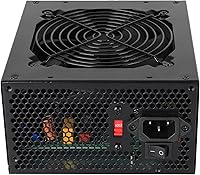
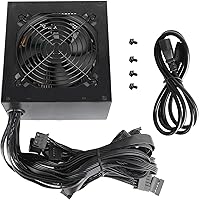
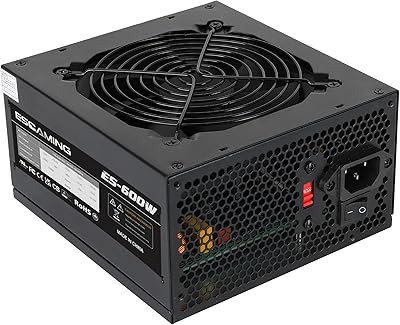
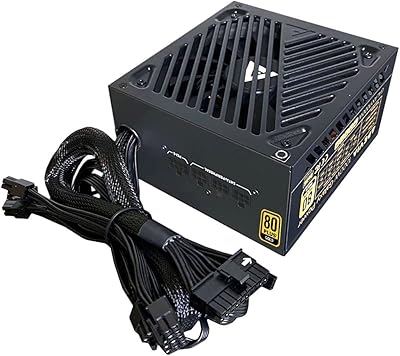
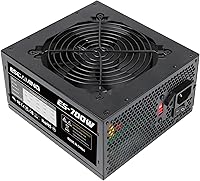
The ESGAMING 700W ATX Non-Modular Power Supply is a straightforward, no-frills option for anyone trying to put together a functional desktop without spending a lot. It sits comfortably in the entry-level tier — not a unit you'd buy for bragging rights, but one that covers the basics without drama. The fixed cable setup means everything is pre-attached, which actually simplifies installation for first-timers who don't want to puzzle over which cables go where. At just over 3 pounds and fitting any standard ATX case, the physical footprint is unremarkable in the best way. It also carries a global voltage switch — a small but genuinely useful feature if you ever need 220V support.
Features & Benefits

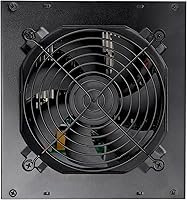
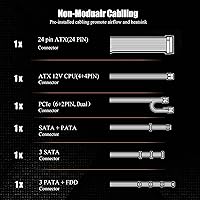
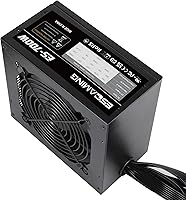
The 120mm thermally controlled fan is one of the more practical aspects of this non-modular PSU — it ramps up only when the unit actually needs cooling, keeping things relatively quiet during everyday tasks. The protection suite covers six failure scenarios including over-voltage, short-circuit, and over-temperature, which is reassuring at this price point. Connectivity is broader than you might expect: four SATA ports, two 6+2 PCIe connectors, a 4+4 CPU lead, and even legacy PATA headers for older drives. The 8-pin connectors split apart, adding flexibility across different motherboard and GPU configurations. Worth flagging though — this is not 80 Plus certified, so power efficiency under sustained load may fall short of pricier alternatives.

Best For

This budget ATX power supply makes the most sense for first-time PC builders who need something functional at a low cost — think a basic home office machine or a light gaming rig running an older mid-range GPU. It also works well as a secondary build unit, a repurposed office PC, or a quick replacement when something in your parts pile fails. The 115V/220V switch makes it genuinely usable internationally without a separate adapter. What it is not suited for is driving a high-wattage GPU or sustaining a heavily overclocked CPU — demanding workloads call for a certified, higher-grade unit with proven rail stability and a verified efficiency rating.

User Feedback

Buyers who picked up the ESGAMING 700W unit for basic builds tend to come away satisfied — easy installation and a solid connector count get mentioned often, and most report it boots without issue. The fan stays quiet enough under light loads that noise rarely draws complaints. That said, there are recurring concerns worth taking seriously: a handful of users report units arriving dead out of the box, and long-term reliability past the one-year mark is a real question given the absence of efficiency certification. Cable stiffness is another gripe — in compact cases, the permanently attached cables can make tidy routing a genuine frustration.

Pros

  • Covers a wide range of connectors out of the box, including four SATA, two PCIe, and legacy PATA headers.
  • The 115V/220V voltage switch is a practical bonus for international users or builders who relocate frequently.
  • Thermally controlled fan stays quiet during low-demand tasks, reducing background noise in everyday use.
  • Six built-in hardware protections offer a reasonable safety net for basic desktop components.
  • Splittable 8-pin connectors add compatibility flexibility across a wider range of motherboards and GPUs.
  • Fits any standard ATX case without modifications — straightforward drop-in installation.
  • Strong value for the asking price in the entry-level PSU segment, especially for non-critical builds.
  • Non-modular cable layout simplifies installation for beginners who do not want to match cables manually.

Cons

  • No 80 Plus efficiency certification means actual power delivery under sustained load is unverified.
  • Permanently attached cables create clutter in smaller cases where cable management space is limited.
  • Long-term reliability past the first year is uncertain, based on mixed patterns in user feedback.
  • Some buyers report DOA units, and customer support responsiveness from ESGAMING appears inconsistent.
  • Cable stiffness can make routing difficult, particularly in tight builds with limited clearance.
  • Not suited for powering modern high-draw GPUs that demand stable, certified power delivery.
  • Lacks a modular option, so unused cables take up space regardless of your build configuration.
  • No independent efficiency or safety certifications beyond the manufacturer's own claims.

Ratings

The ESGAMING 700W ATX Non-Modular Power Supply has been scored by our AI system after processing verified global buyer feedback, with spam, bot-generated, and incentivized reviews actively filtered out before analysis. Scores reflect the full picture — where real users found genuine value and where they ran into frustrating limitations. Both sides are weighted honestly, so the numbers you see here represent what actual builders experienced, not marketing claims.
Value for Money
83%
For builders who just need a working PSU without spending much, the price-to-connector ratio is hard to argue with. First-time builders and secondary rig assemblers consistently call it a solid deal, especially when factoring in the broad cable set included out of the box.
The value calculation gets murkier when you factor in the absence of efficiency certification — you may be paying less upfront but losing more power as heat over time. A few buyers felt the savings were offset by uncertainty around longevity.
Build Quality
61%
39%
The unit feels reasonably solid for its price tier, and the casing does not flex noticeably during installation. Most users report it arriving intact with no cosmetic damage, which clears a baseline expectation for this segment.
Compared to certified PSUs in the same wattage class, the internal construction leaves experienced builders unconvinced. Concerns about long-term component quality surface regularly in feedback, particularly from users who have owned units from more established brands.
Reliability & Longevity
54%
46%
For short-to-medium build cycles — a spare PC, a student machine, or a temporary rig — a number of users report no issues over several months of regular use. The six hardware protections provide at least a basic layer of defense against electrical faults.
Long-term reliability is the single biggest concern in user feedback. Reports of units developing instability or failing outright beyond the one-year mark are frequent enough to be a genuine red flag, especially for anyone building a machine they depend on daily.
Connector Variety
88%
Four SATA ports, two 6+2 PCIe leads, four PATA connectors, and an FDD header give this non-modular PSU an impressively broad cable spread for its price point. Builders with mixed storage setups or older peripherals appreciate not needing adapters.
Having every connector permanently attached means you deal with the full cable bundle regardless of how many you actually use. In builds where only a fraction of the cables are needed, the leftover mass can be frustrating to manage cleanly.
Fan Noise
74%
26%
Under light workloads — web browsing, office tasks, or casual gaming — the thermally controlled 120mm fan runs at low speeds and stays largely inaudible. Users in quiet home office environments report it blends into the background without drawing attention.
Push the system harder and the fan ramps up noticeably. Under sustained gaming or rendering loads, the noise becomes more present, and a handful of users found it louder than expected compared to similarly priced competing units.
Ease of Installation
86%
The non-modular design actually works in favor of beginners — all cables are pre-attached and labelled clearly enough that first-time builders can get everything connected without cross-referencing a manual repeatedly. Standard ATX fitment means no case compatibility surprises.
Experienced builders who prefer a clean installation find the fixed cable bundle adds unnecessary work. Routing and tucking unused cables in a tidy way takes extra effort, particularly in mid-tower builds with limited hidden routing channels.
Power Efficiency
48%
52%
For basic desktop use — spreadsheets, light browsing, and casual tasks — the unit draws power without obvious issues, and most entry-level users will never notice inefficiency in everyday operation.
The absence of any 80 Plus certification is a meaningful gap. There is no independent verification of how efficiently this unit converts AC to DC power under load, which translates to unknown heat generation and potentially higher electricity draw compared to certified alternatives.
Cable Quality & Length
58%
42%
Cable lengths are adequate for standard mid-tower builds, reaching most common drive bays and GPU slots without extension cables. Users building in larger full-tower cases generally find reach sufficient.
Cable stiffness is a recurring complaint — the wiring is rigid enough to resist neat bending, making tight routing genuinely difficult. In compact ATX cases, stiff cables can push back against side panels or obstruct airflow if not carefully managed.
Hardware Protections
71%
29%
Six protection modes covering over-voltage, short-circuit, over-temperature, and more do provide a meaningful safety baseline. Several users credit the OCP and OVP protections with preventing damage during power fluctuations, which is a real-world benefit worth acknowledging.
Without third-party testing, the actual trigger thresholds and response speed of these protections are unverified. Buyers building systems with expensive components may prefer the documented protection performance that certified PSUs provide.
Voltage Switch Utility
79%
21%
The manual 115V/220V toggle is a practical feature that buyers in international markets or dual-voltage households genuinely appreciate. It removes the need to purchase a separate power supply when relocating or shipping a build overseas.
The switch being manual rather than auto-sensing introduces a real risk of user error — plugging in without setting the correct voltage can cause immediate failure. A few users report this happening, which underscores the need for clear guidance at setup.
DOA & Out-of-Box Experience
63%
37%
The majority of buyers report units arriving functional and booting without issue on first use. For a budget-tier product, the out-of-box pass rate appears acceptable to most entry-level builders who purchase through established marketplaces with return coverage.
Dead-on-arrival reports are frequent enough to stand out in user feedback patterns. While not epidemic, the DOA rate is higher than what buyers would see from established PSU brands, making it wise to test the unit early within the return window.
Thermal Management
69%
31%
The auto-thermal fan control does its job at keeping operating temperatures reasonable during everyday use. Users running the unit in well-ventilated cases report no thermal shutdowns under typical light-to-moderate loads.
Under sustained heavy loads, thermal performance becomes harder to predict without certification data. A few users in poorly ventilated setups or warmer climates report unexpected shutdowns, suggesting thermal headroom is tighter than the rated wattage might imply.
Customer Support
44%
56%
Some users who reached out to ESGAMING for troubleshooting received responses and were guided through basic diagnostics, which is at least a starting point for post-purchase support at this price tier.
Feedback on ESGAMING's customer support is consistently lukewarm to negative. Response times, warranty clarity, and resolution rates all draw criticism, with several buyers ultimately relying on the retailer's own return policy rather than the manufacturer for issue resolution.
Compatibility
82%
18%
Standard ATX dimensions and a broad connector set mean this budget ATX power supply works with a wide range of cases, motherboards, and GPU configurations without needing additional adapters. The splittable connectors extend compatibility to both 4-pin and 8-pin CPU sockets.
It is not suited for SFX, FlexATX, or proprietary slim case formats. Builders eyeing a compact ITX build will need to look elsewhere, as the fixed cable bundle also makes it a poor fit for space-constrained enclosures regardless of physical dimensions.

Suitable for:

The ESGAMING 700W ATX Non-Modular Power Supply is a practical pick for anyone building a basic desktop on a tight budget — particularly first-timers who just need something that works without overthinking connector management. If you are putting together a simple home office machine, a light homework PC for a student, or resurrecting an older system with a mid-range GPU, this non-modular PSU covers the essentials without demanding a premium. The broad connector spread — four SATA ports, two PCIe leads, and legacy PATA headers — means it can handle a variety of drive and expansion card configurations without needing adapters. The built-in 115V/220V voltage switch is a quiet but meaningful plus for anyone living abroad or building a machine that may move internationally. DIY builders who are comfortable with a messier cable run in exchange for a lower price point will likely find this unit does exactly what it promises.
Not suitable for:

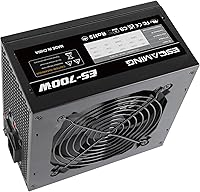
The ESGAMING 700W ATX Non-Modular Power Supply is a hard pass for anyone running a high-wattage GPU, an overclocked CPU, or a workstation that stays under heavy load for hours at a stretch. Without any 80 Plus efficiency certification, you have no independent guarantee of how cleanly this unit delivers power under stress — and that matters when protecting expensive components. Compact case builders will also run into friction: permanently attached cables leave you wrestling with a full bundle whether you use every connector or not, which becomes a real headache in small ATX or micro-form-factor enclosures. Enthusiasts chasing a polished build aesthetic should look elsewhere, as the non-modular design makes tidy cable routing genuinely difficult. If long-term reliability and verified rail stability are priorities — and they should be for any serious rig — a certified unit from an established PSU brand is the smarter investment.
Specifications

  • Brand: Manufactured by ESGAMING, a budget-focused PC component brand targeting entry-level desktop builders.
  • Wattage: Rated at 700W total output, intended for standard desktop configurations without high-wattage GPUs.
  • Form Factor: Standard ATX form factor, compatible with the vast majority of mid-tower and full-tower desktop cases.
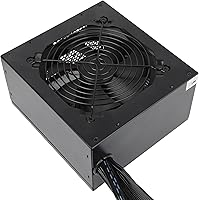
  • Cable Design: Non-modular design with all cables permanently attached to the unit — no detachable or optional cable sets.
  • Fan Size: Equipped with a single 120mm black fan that adjusts speed automatically based on internal temperature readings.
  • Input Voltage: Supports switchable input voltage of 115V or 220V via a rear-mounted red toggle button for regional compatibility.
  • Main Connector: Includes one 24-pin ATX main power connector for motherboard power delivery.
  • CPU Connector: Features one 4+4 pin CPU connector, split from an 8-pin lead, compatible with both 4-pin and 8-pin CPU sockets.
  • PCIe Connectors: Provides two 6+2 pin PCIe connectors, each splittable from an 8-pin lead, supporting a range of mid-range GPUs.
  • SATA Connectors: Includes four SATA power connectors for connecting solid-state and hard disk drives.
  • PATA Connectors: Offers four legacy PATA (Molex) connectors for older drives, fans, or accessory components that require them.
  • FDD Connector: Ships with one FDD (floppy disk drive) connector, useful for legacy hardware or certain older case accessories.
  • Protections: Built-in hardware protections cover six failure scenarios: Short-Circuit (SCP), Over-Current (OCP), Over-Voltage (OVP), Over-Power (OPP), Under-Voltage (UVP), and Over-Temperature (OTP).
  • Efficiency Rating: This unit carries no 80 Plus efficiency certification; actual power conversion efficiency under load is not independently verified.
  • Dimensions: Measures 5.91 x 5.51 x 3.15 inches, matching the standard ATX PSU footprint for straightforward case fitment.
  • Weight: Weighs approximately 3.36 pounds, which is typical for a non-modular unit in this wattage class.
  • Cooling Method: Uses a single fan with auto-thermal control — fan speed scales with heat output rather than running at a fixed rate.
  • Compatible Devices: Designed exclusively for standard ATX desktop PCs; not compatible with SFX, mini-ITX-only, or proprietary OEM case formats.

Related Reviews
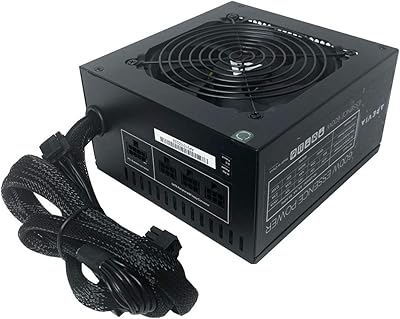
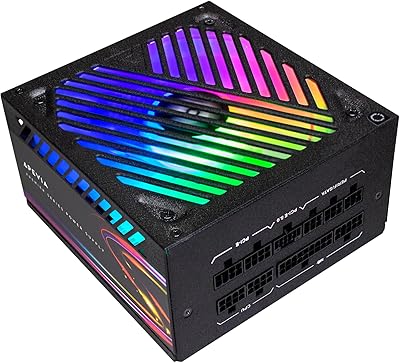
Apevia ATX-ES700-RGB Essence 700W ATX Semi-Modular Power Supply
81%
85%
Performance & Power Output
78%
Cooling & Noise Control
82%
Build Quality
90%
Installation & Cable Management
87%
RGB Customization & Aesthetics
More
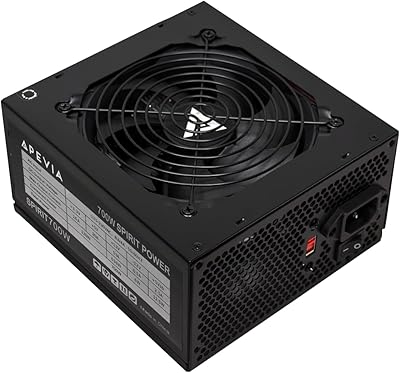
Apevia ATX-SP700 Spirit 700W ATX Power Supply
85%
93%
Power Output
88%
Build Quality
85%
Cooling Performance
90%
Value for Money
80%
Ease of Installation
More
Apevia ATX-ES600W Essence 600W ATX Semi-Modular Power Supply
85%
88%
Value for Money
84%
Performance under Load
87%
Cooling Efficiency
90%
Cable Management Ease
82%
Build Quality
More
ESGAMING 600W ATX Power Supply PSU
85%
88%
Performance & Reliability
84%
Setup & Installation
92%
Noise Levels
70%
Cable Management
85%
Build Quality
More
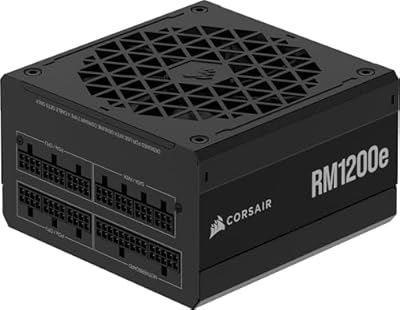
Corsair RM1200e Fully Modular ATX Power Supply
89%
93%
Performance Under Load
90%
Noise Level
88%
Modular Cabling System
92%
Power Efficiency
85%
Installation Ease
More
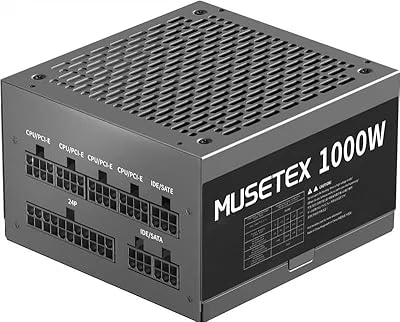
MUSETEX MU1000 1000W ATX Power Supply
79%
88%
Value for Money
91%
Cable Management
84%
Noise Level
89%
Installation Ease
67%
Efficiency
More
Corsair RM750x 750W Fully Modular ATX Power Supply
89%
94%
Quiet Operation
91%
Build Quality
88%
Ease of Installation
96%
Energy Efficiency
89%
Cable Management
More
Apevia ATX-PM1200W 1200W Fully Modular RGB Power Supply
87%
88%
Performance
91%
Build Quality
94%
Energy Efficiency
90%
Modularity and Cable Management
70%
Noise Levels
More
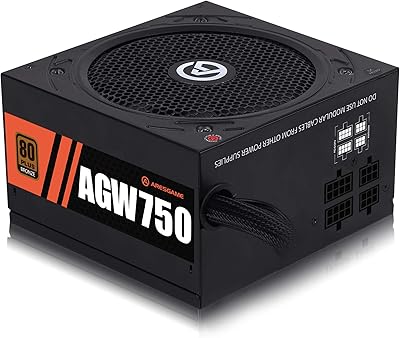
ARESGAME AGW750 750W 80+ Bronze Semi-Modular ATX Power Supply
84%
89%
Reliability Under Load
85%
Efficiency & Power Delivery
82%
Noise Levels
80%
Cable Management
87%
Build Quality & Durability
More
Apevia ATX-SN900 900W Semi-Modular Power Supply
77%
88%
Value for Money
91%
Wattage Headroom
82%
Cable Management
61%
Long-Term Reliability
74%
Noise Level
More

FAQ

Yes, it uses the standard ATX form factor at 5.91 x 5.51 x 3.15 inches, so it will drop right into any case with a standard ATX PSU bay. Just double-check your case specs if you are using a compact or slim enclosure, since those sometimes have clearance restrictions.

For a build centered around a mid-range GPU — something like an older GTX 1660 or RX 6600 class card — 700W is technically sufficient headroom. That said, keep in mind this unit is not efficiency-certified, so the usable stable wattage under sustained load may be somewhat lower than the rated figure. Avoid pairing it with power-hungry flagship GPUs or heavily overclocked CPUs.

If you are in the US or Canada, set the switch to 115V before powering on. The switch does not auto-detect — it is a manual toggle. Using the wrong setting can cause immediate failure, so it is worth double-checking before the first boot.

Under light to moderate loads — web browsing, office work, or light gaming — the fan runs quietly because the thermal control keeps it at low speeds. You will notice it spin up more noticeably under sustained heavy workloads, but for casual everyday use most people find the noise level acceptable.

Absolutely. With four SATA connectors and two 6+2 PCIe leads, there is plenty of connectivity for a typical single-GPU build with multiple drives. The non-modular design means all those cables are present whether you use them or not, so expect some extra bundling inside the case.

It can, especially in smaller builds. Because all cables are permanently attached on this non-modular PSU, you end up managing a full harness even if only half the connectors are in use. In a full or mid-tower with decent cable management routing space, it is manageable. In a compact case, it takes more effort to tuck everything out of the airflow path.

The 4+4 connector is a single 8-pin lead that splits into two separate 4-pin sections. If your motherboard has an 8-pin CPU power socket, you plug both halves in together. If it only has a 4-pin socket, you use just one half. It is compatible with the large majority of consumer motherboards on the market.

The six built-in protections — covering over-voltage, short-circuit, and over-temperature among others — do provide a basic safety layer against common electrical failures. However, because this unit lacks independent efficiency certification, it is wise to avoid running it at or near maximum load for extended continuous periods. For always-on workstations or servers, a certified unit from a well-established brand is a safer long-term choice.

First, verify the voltage switch is set correctly for your region before assuming the unit is faulty. If it still fails to power the system, check all connections and test with a PSU tester if available. User feedback suggests DOA incidents do occur occasionally with this unit, so contacting the seller promptly with documentation is the fastest path to a replacement.

ESGAMING does not prominently advertise a standard multi-year warranty the way established PSU brands do, and warranty terms can vary by seller. Before purchasing, check the seller page for warranty details and review the return window. For a budget build, Amazon's standard return policy often provides the most reliable short-term protection if something goes wrong early.