Overview

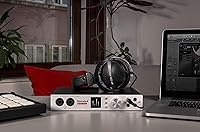
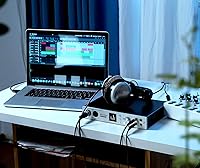
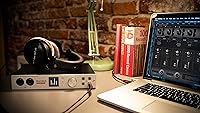
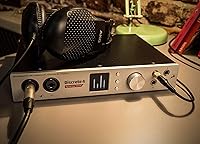
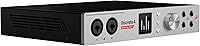
The Antelope Discrete 4 Synergy Core Audio Interface is a serious desktop unit built for home studio producers and semi-professional engineers who want professional-grade hardware without moving to a full rack setup. It connects via both Thunderbolt 2 and USB 2.0, giving you real flexibility depending on your existing rig. At the heart of this Antelope interface is the Synergy Core FPGA platform — onboard DSP that handles plugin processing independently from your computer, which matters enormously when you're running a demanding session. The unit has been around since 2017, and while newer competitors have appeared, it still holds its ground. Expect a learning curve and a meaningful dependency on Antelope's proprietary software ecosystem.
Features & Benefits

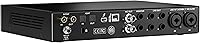
The four discrete preamps are genuinely one of the strongest arguments for choosing the Discrete 4 Synergy Core. Each uses a 6-transistor circuit with a low-noise design, and the headroom and transparency they offer is noticeably better than what you'd find in interfaces at a lower price tier. The AD/DA converters pair with Antelope's Acoustically Focused Clocking — a proprietary approach that keeps recordings tight and artifact-free from 44.1 up to 192kHz. I/O is impressively deep for a compact desktop form: four headphone outputs, ADAT, S/PDIF, dual word clock outs, and DC-coupled line outputs for synth integration. Up to 32 of the included 37 analog-modeled plugins can run simultaneously without touching your CPU.

Best For

The Discrete 4 Synergy Core is best suited to intermediate and advanced users — specifically home studio producers who regularly track multiple sources and want to offload plugin processing away from their DAW host. Singer-songwriters and vocalists who want real-time analog emulation while tracking will appreciate zero-latency monitoring with plugins already in the chain. It also makes sense for engineers already invested in a Thunderbolt 2 or USB 2.0 workflow who want to build a plugin library over time within one ecosystem. It is not the right pick for beginners. The software environment is complex, and the financial commitment is substantial — including the fact that the Thunderbolt cable is sold separately, which catches first-time buyers off guard.

User Feedback

With only 12 ratings and a 3.6 out of 5 average, the user verdict on this Antelope interface is too thin to be definitive — but the patterns are worth noting. Experienced users tend to praise the preamp transparency and the low-latency monitoring experience. The complaints, however, are persistent: driver and firmware instability on certain OS versions, a control panel that takes real time to master, and customer support that has left some buyers frustrated. A few users have flagged compatibility issues after OS updates, so checking Antelope's current firmware release notes before purchasing is genuinely advisable. The divided opinion reflects a capable product that rewards patient, technically-minded users but punishes those expecting a plug-and-play experience.

Pros

  • Four discrete 6-transistor preamps deliver noticeably transparent, low-noise recordings that outperform most interfaces in this class.
  • The Synergy Core FPGA platform offloads plugin processing from your computer, keeping sessions fast and CPU usage low.
  • 37 analog-modeled plugins are included from day one, covering EQs, compressors, and classic preamp emulations.
  • Near-zero latency monitoring with plugins active in the chain is a genuine advantage for vocalists and instrumentalists tracking live.
  • Dual Thunderbolt 2 and USB 2.0 connectivity gives you real flexibility across different studio setups and machines.
  • Four headphone outputs make it easy to run a session with multiple performers monitoring simultaneously.
  • ADAT, S/PDIF, and dual BNC word clock outputs support serious studio routing and multi-device synchronization.
  • DC-coupled line outputs allow direct integration with CV-capable synthesizers and modular gear.
  • Sample rate support up to 192kHz satisfies high-resolution recording requirements for critical productions.
  • The compact desktop footprint keeps the unit practical for home studios where rack space is limited.

Cons

  • Antelope's software ecosystem has had documented stability issues, and OS updates have disrupted driver functionality for some users.
  • The Thunderbolt cable is not included, adding an immediate extra cost that many buyers only discover at setup.
  • The control panel and software routing matrix have a steep learning curve that takes significant time to master.
  • Customer support has received consistent criticism in user feedback, which is a real concern if you hit technical problems.
  • Expanding the plugin library beyond the included 37 requires purchases from the Antelope store, creating ongoing costs.
  • With only 12 ratings on Amazon, the available user feedback is too limited to draw confident conclusions about long-term reliability.
  • Thunderbolt 2 connectivity, while functional, is an aging standard that may create compatibility headaches with newer machines.
  • Heavy dependency on Antelope's proprietary software means your workflow is locked into their ecosystem with limited exit options.

Ratings

Our editorial team used AI to analyze verified buyer reviews for the Antelope Discrete 4 Synergy Core Audio Interface from global sources, actively filtering out incentivized, bot-generated, and duplicate submissions to surface what real users actually experience. The scores below reflect both the genuine strengths and the recurring frustrations that informed buyers report across home studio, semi-professional, and live recording contexts. Nothing has been softened — where the unit underperforms, the scores say so plainly.
Preamp Quality
88%
The four discrete 6-transistor preamps consistently earn praise from experienced engineers for their transparency and low noise floor. Vocalists and acoustic instrument recordists in particular report that the unit captures detail and dynamic range that budget interfaces simply cannot match, even at high gain settings.
A small number of users note that the preamp gain staging can feel less intuitive to control compared to interfaces with more tactile, dedicated hardware knobs per channel. Those coming from analog-heavy setups may find the software-based gain management slightly less immediate in fast-paced tracking sessions.
Onboard DSP Performance
83%
The Synergy Core platform genuinely delivers on its promise of near-zero latency plugin processing without loading the host CPU, which is a practical advantage during dense tracking sessions. Producers running 20-plus plugin instances while recording report no perceptible monitoring delay, which is rare at this form factor.
The DSP capacity, while impressive, is finite, and pushing toward the 32-plugin ceiling on complex chains requires careful prioritization. Some users also report that certain plugin combinations can produce unexpected interactions within the onboard processing environment that would not occur in a standard DAW host.
Software Stability
47%
53%
When the software is running well on a compatible OS version, the control panel provides a genuinely deep routing environment with flexible signal path options that rival far more expensive hardware. Users on stable, non-cutting-edge OS builds report consistent performance during extended sessions.
This is the most consistently flagged problem area. Driver instability after macOS and Windows major updates has disrupted workflows for a meaningful portion of users, sometimes requiring rollbacks or waiting weeks for Antelope to issue firmware patches. For anyone in a professional context where uptime is critical, this represents a real operational risk.
Included Plugin Library
74%
26%
Thirty-seven analog-modeled plugins covering EQs, compressors, tape emulations, and preamp characters is a genuinely strong starting bundle at this tier. Users transitioning from software-only setups appreciate having a working analog-emulation toolkit available immediately without additional purchases.
The 37 included plugins are a starting point rather than a complete toolkit, and several of the most sought-after specific vintage emulations sit behind additional paywalls in the Antelope store. For users who came in expecting a fully self-contained plugin ecosystem, the upsell structure has caused frustration after purchase.
Connectivity & I/O Depth
86%
The combination of ADAT, S/PDIF, four headphone outputs, dual word clock BNC outputs, and DC-coupled line outs gives this unit an I/O profile that most competitors at this size cannot match. Producers running hybrid setups with external gear, modular synthesizers, or multiple monitoring paths find real value in the routing flexibility.
The Thunderbolt 2 standard is aging, and users on newer machines with Thunderbolt 3 or 4 ports need an adapter that is not included. The fact that even the Thunderbolt cable itself is absent from the box adds friction to setup and has generated consistent complaints from first-time buyers.
Ease of Setup
43%
57%
Once fully configured, the software matrix offers a level of routing control that rewards the time investment, and users who work through the learning curve report that the system becomes second nature over weeks of regular use.
Initial setup involves software installation, device registration, and plugin activation before the unit is fully functional — a process that multiple users describe as unnecessarily fragmented and time-consuming. Beginners attempting to use this as a first interface have reported hours of troubleshooting before achieving a stable, working configuration.
Build & Physical Design
79%
21%
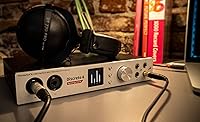
The compact desktop chassis feels solid and sits stably on a studio desk without occupying excessive space. Front-panel controls are logically laid out, and the unit does not feel plasticky or fragile during everyday studio handling.
The absence of a front-panel display means you rely entirely on the software panel to monitor gain levels and routing state, which can be inconvenient when the computer is positioned away from the interface. Some users also note the front-panel knob resolution feels slightly coarse for fine gain adjustments.
Monitoring Experience
81%
19%
Four independent stereo headphone outputs with individually routable mixes through the software matrix make this unit genuinely practical for small live recording sessions where multiple performers need different cue mixes simultaneously. The near-zero monitoring latency with active plugins is consistently praised.
Headphone output volume maxes out at a level that some users find insufficient for louder closed-back headphones, particularly at high-impedance loads. A few users note that the headphone amp section, while functional, does not match the quality floor set by the preamp section.
AD/DA Conversion Quality
82%
18%
Antelope's Acoustically Focused Clocking technology delivers measurably low jitter, and users working at higher sample rates like 96kHz and 192kHz report that the converter transparency holds up well without introducing harshness or smearing on transients.
At standard 44.1kHz and 48kHz sessions, the conversion quality advantage over competing interfaces in the same price bracket is audible but not dramatic. Buyers expecting a night-and-day difference from mid-range converters may need to listen critically in a controlled environment to appreciate the distinction.
Customer Support
38%
62%
Antelope does maintain an active user community and publishes firmware updates, and some buyers report eventually resolving technical issues through the official support channel after persistent follow-up.
Poor customer support is among the most repeated complaints in user feedback, with reports of slow response times, generic troubleshooting scripts, and difficulty escalating complex driver or firmware issues. For a product at this price point with significant software dependency, the support infrastructure falls well short of what buyers reasonably expect.
Value for Money
61%
39%
For users who fully leverage the onboard DSP, the preamp quality, and the included plugin bundle, the unit delivers a feature set that would cost significantly more to assemble from separate components. Experienced producers who stay on stable OS versions tend to feel the investment is justified.
The premium pricing, combined with the additional cost of a Thunderbolt cable, potential plugin store purchases, and the real risk of software instability, makes the total cost of ownership higher than the list price suggests. Buyers who run into persistent driver problems may feel they paid professional prices for a sub-professional experience.
DAW Compatibility
71%
29%
The unit works as a standard audio device in all major DAWs including Pro Tools, Logic Pro, Ableton Live, and Reaper, with the Synergy Core plugins appearing as available inserts through the Antelope software layer. Most users report no fundamental routing conflicts with their chosen DAW.
Some DAW-specific edge cases, particularly around buffer settings and aggregate device configurations on macOS, have caused intermittent issues for a subset of users. The proprietary plugin ecosystem also means Synergy Core FX cannot be used in other hardware interfaces, creating a lock-in that some engineers find limiting.
Latency Performance
84%
Round-trip latency when monitoring through the DAW is low enough for comfortable tracking at moderate buffer sizes, and the onboard direct monitoring path makes the latency issue largely irrelevant for singers and instrumentalists who use it during recording.
At very low buffer sizes required for live performance triggering or highly latency-sensitive MIDI work, some users report occasional audio dropouts, particularly over USB rather than Thunderbolt. Thunderbolt 2 connectivity delivers the more stable low-latency performance, which reinforces the importance of having the right cable available.

Suitable for:

The Antelope Discrete 4 Synergy Core Audio Interface is genuinely well-suited to intermediate and advanced home studio producers who have outgrown entry-level interfaces and want professional preamp quality without moving to a full rack system. If you regularly track vocals, guitars, and other sources simultaneously, the four discrete preamps and deep I/O options give you real headroom to work with. The onboard Synergy Core DSP is a practical advantage for anyone whose DAW sessions are already CPU-intensive — you can run up to 32 analog-modeled plugins in real time without touching your processor budget. Engineers who want to build a cohesive plugin library within a single hardware ecosystem over time will find the Antelope store integration appealing, provided they go in knowing that expansion costs money beyond the initial purchase. It also suits Mac and Windows users who are already working with Thunderbolt 2 or USB 2.0 setups and want a unit that can anchor a well-connected studio with ADAT, S/PDIF, word clock, and DC-coupled outputs for synth rigs.
Not suitable for:

The Antelope Discrete 4 Synergy Core Audio Interface is not the right choice for beginners or anyone expecting a simple plug-and-play experience. The software routing matrix and control panel have a steep learning curve that has frustrated even experienced users, and the hardware is heavily dependent on Antelope's proprietary software ecosystem — which has had documented reliability issues across OS updates. If you are on the latest macOS or Windows version, you should check Antelope's current firmware compatibility before committing, as some users have encountered driver problems after routine system updates. Budget-conscious buyers should also factor in that the Thunderbolt cable is not included, which adds immediate cost and often catches people off guard at setup. Anyone primarily looking for a straightforward interface to record demos or podcasts casually would be overpaying for complexity they will never fully use, and there are simpler, more stable options available at lower price points for those scenarios.
Specifications

  • Form Factor: Compact desktop unit measuring 10.3 x 8.2 x 1.7 inches, designed to sit flat on a studio desk without requiring rack mounting.
  • Weight: The unit weighs 3.75 pounds, making it stable on a desktop surface while still being portable enough to transport between locations.
  • Connectivity: Connects to a host computer via Thunderbolt 2 or USB 2.0, supporting up to 16 channels of audio throughput on either connection type.
  • Preamps: Equipped with four discrete 6-transistor microphone preamps featuring a low-noise circuit design for transparent, high-headroom signal capture.
  • Analog Inputs: Offers two Mic/Line inputs and two Mic/Line/Hi-Z inputs, accommodating microphones, line-level sources, and high-impedance instruments like guitars.
  • Analog Outputs: Provides one stereo monitor output pair, four TRS line outputs, and four stereo headphone outputs for flexible monitoring configurations.
  • Digital I/O: Includes one ADAT port supporting up to 8 channels and one S/PDIF port supporting up to 2 channels for integration with external digital gear.
  • Word Clock: Features two BNC word clock outputs at 75 Ohms and 3Vpp, enabling precise clock synchronization with other studio hardware across the supported sample rate range.
  • Sample Rates: Supports sample rates of 32, 44.1, 48, 88.2, 96, 176.4, and 192 kHz, covering everything from standard broadcast quality to high-resolution recording formats.
  • DSP Platform: Built on Antelope's Synergy Core FPGA and ARM processor platform, which handles real-time plugin processing independently from the host computer's CPU.
  • Included Plugins: Ships with 37 analog-modeled Synergy Core effects including EQs, compressors, and preamp emulations drawn from classic studio hardware references.
  • Plugin Capacity: Up to 32 Synergy Core plugins can run simultaneously in real time without consuming host CPU resources, enabling zero-latency monitoring with a full processing chain active.
  • Clocking: Uses Antelope's proprietary Acoustically Focused Clocking technology to minimize jitter and maintain converter accuracy across all supported sample rates.
  • OS Compatibility: Compatible with both macOS and Windows operating systems, though buyers should verify current driver support against their specific OS version before purchasing.
  • Thunderbolt Cable: A Thunderbolt cable is not included in the box and must be purchased separately, which is a practical consideration for first-time setup costs.
  • DC-Coupled Outputs: The four line outputs are DC-coupled, allowing direct voltage control integration with CV-compatible synthesizers and modular equipment.
  • Software: Requires Antelope's proprietary software control panel for routing, plugin management, and device configuration; third-party control software is not supported.
  • Availability: Originally released in October 2017 and confirmed as not discontinued by the manufacturer as of the most recent product listing data.

Related Reviews
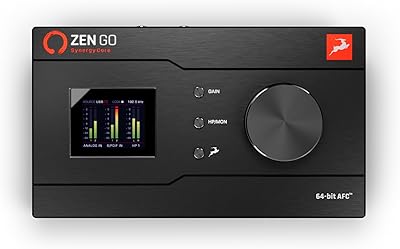
Antelope Audio Zen Go Synergy Core Interface
76%
93%
Preamp Quality
88%
Onboard Effects
54%
Software Experience
57%
Windows Stability
91%
Portability
More
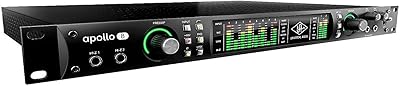
Universal Audio Apollo 8 QUAD Audio Interface
79%
93%
Preamp Quality
91%
DSP Performance
89%
Audio Conversion
92%
Build Quality
74%
Software & Console 2.0
More
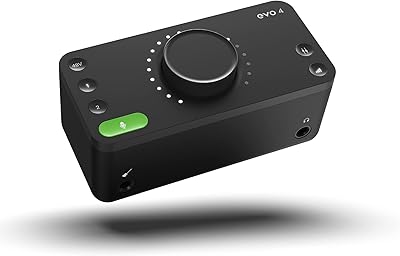
Audient EVO 4
Audient EVO 4
89%
96%
Ease of Setup
92%
Preamplifier Clarity
89%
Software Loopback
94%
Portability & Form Factor
71%
Build Materials
More
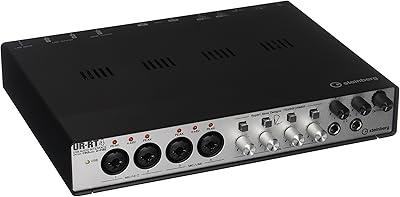
Steinberg UR242 4-Channel USB Audio Interface
77%
88%
Preamp Quality
68%
Driver Stability
44%
Mac Compatibility
86%
MIDI Connectivity
76%
Value for Money
More
Steinberg UR-RT4 USB Audio Interface
78%
93%
Preamp Quality
91%
Transformer Character
88%
Build Quality
62%
Driver Stability
84%
DSP Monitoring
More
M-Audio AIR 192|4
M-Audio AIR 192|4
85%
93%
Build Durability
91%
Tactile Control Experience
88%
Preamplifier Transparency
87%
Recording Latency
86%
Software Bundle Value
More
JK Audio Autohybrid Telephone Audio Interface
75%
88%
Audio Signal Clarity
84%
Sidetone Rejection
86%
Build Quality
61%
Ease of Setup
31%
VoIP Compatibility
More
Universal Audio Arrow Thunderbolt 3 Audio Interface
77%
93%
Audio Conversion Quality
91%
Unison Preamp Performance
88%
Real-Time UAD Processing
58%
Thunderbolt 3 Connectivity
61%
Windows Compatibility
More
Recoil DI550.4 4-Channel Car Audio Amplifier
74%
91%
Value for Money
78%
Power Output
86%
Ease of Installation
74%
Sound Quality
67%
Build Quality
More
M-Audio M-Track 2X2 USB Audio Interface
76%
84%
Build Quality
76%
Preamp Performance
82%
Ease of Setup
58%
Driver Stability
79%
Value for Money
More

FAQ

No, it does not. This catches a lot of buyers off guard. You will need to purchase a Thunderbolt 2 cable separately before you can use that connection. If you plan to run USB 2.0 instead, a standard USB cable is typically included, but double-check the box contents when yours arrives.

You can connect via USB 2.0 on any modern Mac or Windows machine without issue. For Thunderbolt, you would need a Thunderbolt 2 to Thunderbolt 3 adapter, which Apple sells separately. That said, before going that route, verify that Antelope's current drivers fully support your specific macOS version, since compatibility has been inconsistent across major OS updates.

It is more involved than most plug-and-play interfaces. You will need to install Antelope's software control panel, register the device, and activate your included plugins before they become available. The software routing matrix is genuinely powerful but takes time to understand. If you have used other professional interfaces with dedicated control software before, the learning curve is manageable. If this is your first interface, expect to spend a few hours getting comfortable.

The 37 plugins are a solid starting point, not the complete catalog. Antelope has an online store where you can purchase additional emulations — including more specific vintage EQs, compressors, and preamp models — at extra cost. The included bundle covers most common studio processing needs, but if you want specific pieces of gear modeled, budget for additional purchases.

Yes. The Synergy Core plugins process entirely on the unit's onboard FPGA hardware, not on your computer. Whether you connect via Thunderbolt 2 or USB 2.0, the DSP behavior and plugin count remain the same. The connection type affects audio channel throughput and latency, not the onboard processing capability.

It depends on your priorities. The preamp quality and onboard DSP are still competitive, and if you find it at a reduced price, the value proposition improves considerably. The main risks are software-related: Antelope has had a mixed track record with driver updates, and a unit that has been sitting in a warehouse may need firmware updates before it works reliably with current OS versions. Check Antelope's support forums and release notes for your specific platform before committing.

When you activate the unit's direct monitoring mode through the software matrix, your input signal is routed through the onboard DSP rather than traveling to your computer and back. This means you hear yourself through your headphones with plugins applied — compression, EQ, reverb — with virtually no perceptible delay. It is a genuine advantage for vocalists and guitarists who need to hear themselves processed while they perform.

Yes. The four TRS line outputs are DC-coupled, which means they can pass control voltage signals. This allows you to use the unit as a CV interface between your DAW and CV-compatible synthesizers or modular gear, provided your software supports it. It is a feature aimed at more advanced setups but adds meaningful flexibility for producers working across both digital and analog hardware.

It is, and this is one of the more practical strengths of the unit. Four separate stereo headphone outputs are built in, and the software matrix allows you to configure independent mixes for each output. For a small recording session where the drummer, vocalist, guitarist, and bassist each want a different headphone mix, this covers you without needing an external headphone distribution amp.

Honestly, it has been a recurring complaint. Several users report slow response times and difficulty getting useful technical help from Antelope when driver or software issues arise. This is worth factoring into your decision, especially since the unit is software-dependent and firmware problems do occasionally surface after OS updates. Checking Antelope's user forums and community resources is advisable, as peer support there tends to be more responsive than official channels.

Where to Buy