Overview

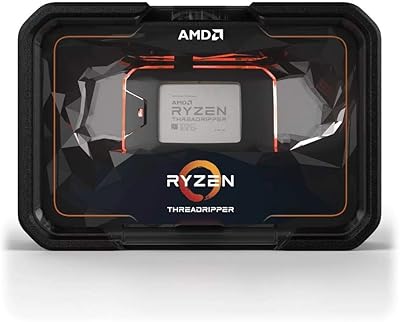
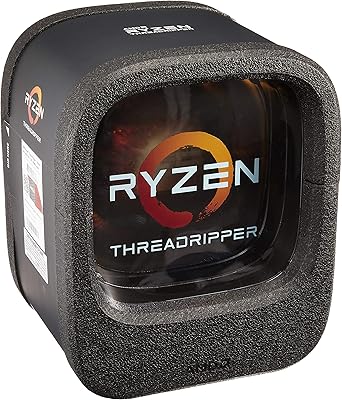
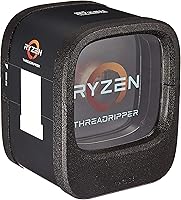
The AMD Ryzen Threadripper 1950X Desktop Processor arrived in mid-2017 and immediately shifted expectations for what a desktop workstation CPU could deliver. At a time when Intel owned the high-end desktop segment, AMD's 16-core answer turned heads among prosumers, engineers, and creative professionals who needed real multi-threaded power without jumping to full server hardware. One critical planning note: this chip requires the Socket TR4 platform, meaning a dedicated X399 motherboard — not something you drop into an existing build. That adds real cost. With over 1,000 verified buyer ratings averaging 4.6 out of 5, the reception is strong, though it bears saying clearly upfront — this is a workstation-class processor, not a mainstream gaming chip.
Features & Benefits

What defines the 1950X is sheer thread count. Sixteen physical cores and 32 threads mean you can run a heavy Blender render, transcode 4K footage, and keep a full workflow open simultaneously without the system slowing down. Precision Boost can push clocks to 4.0 GHz, and XFR can reach 4.2 GHz under optimal thermal conditions — though both are conditional on cooling quality and board support, not guaranteed. The 40MB of combined cache helps considerably with large dataset workloads. Then there are the 64 PCIe Gen3 lanes, which allow multi-GPU setups, NVMe RAID arrays, and high-bandwidth peripherals to coexist without fighting for bandwidth. Quad-channel DDR4 adds serious memory throughput. At 180W TDP, thoughtful cooling is not optional.

Best For

This HEDT processor is purpose-built for demanding professional workloads. If you are a video editor or 3D animator pushing complex timelines with heavy effects, the core and thread count pays dividends in real time — exports finish faster, previews hold steady. Data scientists and machine learning developers running local CPU-based model training will find the combination of thread count and quad-channel memory bandwidth genuinely practical. Simultaneous streaming, recording, and encoding are handled without compromise. The 64 PCIe lanes make it attractive for workstations housing multiple NVMe drives or stacked GPUs. Linux and Unix users will find it officially supported as well, which matters in production-adjacent environments. Just do not expect it to compete on single-threaded gaming benchmarks.

User Feedback

Across a wide base of long-term buyers, multi-threaded performance and platform expandability are the most consistently praised qualities. The PCIe lane count draws particular appreciation from professionals running complex multi-drive or multi-GPU configurations. That said, reviews surface a few recurring friction points: a BIOS update is sometimes required before the system fully stabilizes, and the TR4 cooler mounting process has a learning curve that catches first-time builders off guard. Several users also flag that single-core performance trails newer-generation chips, which matters if your workload is not heavily parallelized. On longevity, the tone is notably positive — many owners are still running this chip years on, describing it as a high-value long-term purchase for sustained professional use.

Pros

  • Sixteen cores and 32 threads handle demanding multi-threaded workloads — rendering, encoding, and simulation — with serious headroom.
  • Sixty-four PCIe Gen3 lanes allow complex multi-GPU and NVMe RAID configurations without any bandwidth compromise.
  • Quad-channel DDR4 memory support delivers significantly higher memory bandwidth than mainstream desktop platforms.
  • Long-term owners consistently report years of productive professional use, making this a strong value proposition on the used market.
  • Official Linux and Unix platform support makes it a credible choice for developers and researchers running non-Windows environments.
  • 40MB of combined cache keeps large dataset workloads running efficiently without constant trips to main memory.
  • The platform's expandability makes it easy to grow a workstation over time as storage, GPU, or networking needs increase.
  • A 4.6 out of 5 star average from over 1,000 verified buyers reflects consistent, broad satisfaction across diverse professional use cases.

Cons

  • Single-core performance trails modern alternatives, which noticeably limits gaming and lightly-threaded application responsiveness.
  • TR4 motherboards are expensive and limited in selection, adding meaningful cost and complexity to the initial build.
  • The cooler mounting process is more involved than standard desktop sockets, with a real risk of seating issues for first-time builders.
  • Some early builds required a BIOS update before the system would POST, catching less experienced builders off guard.
  • The Socket TR4 platform is a dead end — there is no upgrade path to newer Threadripper generations without replacing the board entirely.
  • Memory configuration errors are common; running fewer than four populated channels leaves significant bandwidth performance unrealized.
  • At 180W TDP, underspeccing the cooling solution is easy to do and leads to thermal throttling under sustained loads.
  • First-generation Zen memory latency is higher than newer architectures, which is noticeable in latency-sensitive workloads.

Ratings

The AMD Ryzen Threadripper 1950X Desktop Processor earns its strong reputation among professionals, and the scores below reflect exactly that — the genuine highs and the real frustrations. Our AI has analyzed verified global buyer reviews, actively filtering out incentivized submissions and bot activity, to produce a rating picture grounded in authentic user experience. Both the areas where this HEDT processor genuinely excels and the trade-offs that real owners have encountered are reflected transparently here.
Multi-Threaded Performance
94%
For rendering, encoding, and parallel workloads, the 16-core, 32-thread configuration is where the 1950X earns its keep. Video editors report dramatically faster export times compared to mainstream desktop chips, and 3D artists running Blender or Cinema 4D see tangible time savings on complex scenes.
The gap in multi-threaded performance versus newer-generation HEDT chips has grown over the years, so professionals on the bleeding edge of compute-heavy pipelines may feel the ceiling. The architecture is now a generation behind in efficiency terms, which matters in sustained workloads.
Single-Core & Gaming Performance
61%
39%
Clock speeds reaching up to 4.2 GHz under XFR conditions are respectable for a chip of this core count, and lightly-threaded tasks run without obvious sluggishness in everyday desktop use. Users doing mixed workloads still find it more than capable for general productivity alongside heavy tasks.
Single-core performance is a known limitation compared to both contemporary Intel options at launch and modern AMD chips today. Gamers who expected competitive frame rates in CPU-bound titles were frequently disappointed, and this trade-off is one of the most consistently mentioned pain points across long-term owner reviews.
PCIe Lane Availability
96%
Sixty-four PCIe Gen3 lanes is a genuinely differentiating feature for workstation builders. Users running dual GPUs alongside NVMe RAID arrays and capture cards report zero bandwidth contention — a situation that mainstream platform users frequently have to compromise on. For complex multi-device builds, this headroom is hard to overstate.
The value of those lanes depends entirely on building out the rest of the system to match, which adds significant cost. Users who only need standard single-GPU configurations may find the lane count largely irrelevant to their day-to-day workflow, making this a feature that rewards specific use cases more than general ones.
Platform & Motherboard Ecosystem
63%
37%
X399 motherboards offered solid feature sets and strong VRM designs from manufacturers like ASUS and MSI, giving builders a reliable foundation. Professionals who invested in the full TR4 ecosystem report it as a stable, long-lived platform that held up well over years of heavy use.
The TR4 platform is expensive and narrow — board options are limited compared to mainstream sockets, and compatibility research is essential before buying. Several users flagged that BIOS updates were necessary out of the box before the system would POST correctly, which is a friction point for less experienced builders.
Thermal Management & Cooling Requirements
67%
33%
At 180W TDP, the chip runs within manageable limits when paired with an appropriate cooler, and builders who invested in quality 360mm AIO or custom water loops report stable thermals even under sustained full-load renders. The 68°C max rated temperature gives some headroom in well-ventilated cases.
The cooler mounting process for Socket TR4 is genuinely more involved than standard desktop sockets, and multiple users noted the learning curve as a real frustration during first builds. Underspeccing cooling is a common early mistake — air coolers that work well on mainstream sockets often fall short here under sustained loads.
Memory Performance & Bandwidth
88%
Quad-channel DDR4 support delivers a meaningful bandwidth advantage for workloads that are memory-throughput sensitive — data scientists running in-memory datasets and video editors working with high-resolution proxies benefit noticeably. Filling all four channels correctly unlocks the full potential of the memory subsystem.
Memory configuration requires attention; running fewer than four populated channels leaves performance on the table, and not all users are aware of this at purchase. DDR4 pricing at the higher capacities needed to feed this platform properly adds another layer to the already substantial system build cost.
Cache & Latency
79%
21%
The 40MB of combined cache helps the 1950X handle large, complex datasets without constantly reaching back to main memory, which is particularly noticeable in professional applications that benefit from keeping data close to the cores. Compiling large codebases and working with high-polygon scene files feels smoother as a result.
First-generation Zen architecture has higher memory latency characteristics compared to subsequent Zen 2 and Zen 3 designs, and users migrating from those platforms will notice the difference in snappiness. Latency-sensitive workloads are not where this chip was optimized to compete.
Value for Money
82%
18%
Relative to its original launch price, the 1950X has aged into strong value territory on the used and refurbished market, making it an accessible entry point into high-core-count workstation computing for professionals on a tighter budget. Long-term owners consistently describe it as a worthwhile investment given how many years of productive use they have extracted.
The total platform cost — processor, X399 board, quad-channel DDR4, and a capable cooler — adds up quickly and can surprise buyers who only factor in the CPU price. For anyone building from scratch today, newer platforms may offer better performance-per-dollar without the legacy overhead.
Build & Installation Experience
71%
29%
The physical chip is well-engineered with a large, solid IHS that makes contact with coolers reliably. Experienced builders report the installation process as straightforward once they are familiar with the TR4 retention mechanism and torque requirements for the socket.
The sheer physical size of the TR4 socket and the torque-sensitive cooler installation process is intimidating for builders new to HEDT platforms. Several users mentioned stripped mounting screws or uneven cooler seating on their first attempt, leading to thermal issues that required a teardown to fix.
Software & OS Compatibility
91%
Official support across Windows, Linux, and Unix environments makes this a legitimate choice for developers and researchers running mixed-OS workflows or dedicated Linux workstations. AMD's platform drivers have matured well, and Linux kernel support for the first-gen Threadripper platform is solid.
Some early users on Windows encountered NUMA topology-related performance inconsistencies that required a specific memory interleaving setting in the BIOS to resolve. While patches addressed most of these issues, it added an unexpected configuration step that non-technical buyers did not anticipate.
Longevity & Future-Proofing
77%
23%
Perhaps the most repeated theme in long-term owner feedback is genuine satisfaction with how long the chip has remained relevant. Professionals who bought the 1950X at launch are still running production workloads on it today, which speaks to how well-specced the platform was for its era.
The TR4 socket is a dead-end platform — there is no upgrade path to newer Threadripper generations, which require entirely different motherboards. Buyers today are committing to hardware with no forward migration path, which is a real consideration for anyone thinking beyond a three-to-four-year horizon.
Overclocking Headroom
72%
28%
Manual overclocking on the 1950X is well-documented in the enthusiast community, and builders with strong cooling solutions have found meaningful all-core frequency headroom. XFR already provides some automatic boost headroom, giving casual overclockers a low-effort starting point.
First-gen Zen does not overclock as cleanly as later architectures, and pushing all-core frequencies often requires significant voltage increases that compound the already demanding thermal output. The returns diminish quickly, and some users found that aggressive OC attempts led to stability issues under extended rendering sessions.
Workstation Expandability
93%
The combination of 64 PCIe lanes and quad-channel memory support makes this platform genuinely future-flexible for workstation configurations. Users have successfully added NVMe boot drives, secondary storage arrays, a GPU, and a 10GbE card simultaneously without hitting bandwidth walls — a scenario mainstream platforms simply cannot match.
Expandability is only valuable if the builder has the budget and the use case to take advantage of it. For users running a simpler one-GPU, two-drive setup, much of what the platform offers goes unused, and the premium paid for that headroom does not translate into noticeable daily benefit.

Suitable for:

The AMD Ryzen Threadripper 1950X Desktop Processor is built for professionals whose daily work is defined by heavy, sustained parallel computation — not occasional bursts of it. Video editors cutting 4K or 6K timelines with complex color grading and effects layers will feel the difference immediately, as will 3D artists running overnight renders who want those jobs to finish before morning. Data scientists and machine learning engineers running CPU-based model training or large in-memory data processing pipelines will find the combination of 16 cores, 32 threads, and quad-channel DDR4 bandwidth a genuinely capable foundation. Content creators who simultaneously capture, encode, and stream without wanting to compromise any single task are exactly the audience this chip was designed around. It also appeals strongly to power users building out expandable workstations — if you need multiple NVMe drives, a secondary GPU, and a high-bandwidth network card coexisting without bottlenecks, the 64 PCIe lanes make that possible in ways mainstream platforms simply cannot. Linux and Unix workstation builders will find official platform support, which matters in development and production-adjacent environments where OS stability is non-negotiable.
Not suitable for:

The AMD Ryzen Threadripper 1950X Desktop Processor is a poor fit for anyone whose primary use case is gaming or single-threaded workloads. Gamers chasing high frame rates in CPU-bound titles will be consistently underwhelmed — the single-core performance lags behind both contemporary and modern alternatives, and that gap has only widened with newer architectures. Budget-conscious builders also need to think carefully here: the TR4 platform demands a compatible X399 motherboard and a capable cooling solution, both of which push the total system cost significantly beyond the CPU price alone. Anyone expecting a straightforward drop-in upgrade will run into a hard stop — this socket is incompatible with all previous and subsequent AMD mainstream or HEDT consumer platforms, meaning a full platform rebuild is mandatory. Casual users who run standard productivity tasks, light photo editing, or web browsing would be massively overbuying, paying a platform premium for capability they will never realistically access. Finally, buyers planning to upgrade their CPU in a few years should note that the TR4 socket is a closed ecosystem with no upgrade path forward — what you build today is what you keep.
Specifications

  • Core Count: The processor features 16 physical cores built on AMD's first-generation Zen architecture, enabling genuine parallel execution across demanding workloads.
  • Thread Count: With simultaneous multithreading enabled, the chip exposes 32 logical threads to the operating system, maximizing throughput in multi-threaded applications.
  • Base Clock: The processor operates at a base frequency of 3.4 GHz across all cores under full load conditions.
  • Precision Boost: Precision Boost can dynamically raise clock speeds up to 4.0 GHz on lightly loaded cores when thermal and power headroom permits.
  • XFR Boost: Extended Frequency Range can push select core clocks to a maximum of 4.2 GHz when an exceptional cooling solution provides sufficient thermal margin.
  • Total Cache: The chip carries 40MB of combined L2 and L3 cache, reducing latency when working with large datasets or complex in-memory workloads.
  • PCIe Lanes: Sixty-four PCIe Gen3 lanes are available directly from the processor, supporting multi-GPU arrays, NVMe RAID, and high-bandwidth peripherals simultaneously.
  • Memory Type: The processor supports quad-channel DDR4 SDRAM, with all four channels populated delivering the highest available memory bandwidth on the TR4 platform.
  • CPU Socket: This chip requires a Socket TR4 motherboard, which is exclusive to the first-generation Threadripper platform and is not compatible with any other AMD socket.
  • TDP: The rated thermal design power is 180W, requiring a robust cooling solution — a high-end 280mm or 360mm AIO, or a custom water loop, is strongly recommended.
  • Max Temperature: AMD specifies a maximum operating temperature of 68°C for this processor; sustained operation above this threshold will trigger thermal throttling.
  • Architecture: The chip is built on AMD's first-generation Zen microarchitecture, using a multi-die design that combines two Zeppelin dies on a single package.
  • Process Node: Fabricated on a 14nm FinFET process node by GlobalFoundries, consistent with the first-generation EPYC and Ryzen product family.
  • Platform Support: Officially supported operating systems include Windows, Linux, and Unix, making it a valid choice for mixed-OS professional and development environments.
  • Dimensions: The processor measures 3.1 x 2.2 x 0.3 inches, reflecting the large TR4 package size required to accommodate the multi-die configuration and dense pin array.
  • Weight: The chip weighs 3.2 ounces, noticeably heavier than mainstream desktop processors due to the larger integrated heat spreader and multi-die substrate.
  • Model Number: The official AMD part number is YD195XA8AEWOF, which can be used to verify authenticity and confirm compatibility with supported motherboard QVLs.
  • Memory Channels: Four independent memory channels connect the processor to system RAM, and pairing matched kits across all four slots is required to achieve full bandwidth.

Related Reviews
AMD Ryzen Threadripper 2970WX Desktop Processor
74%
93%
Multi-Threaded Performance
61%
Single-Threaded Speed
58%
Thermal Management
52%
Platform & Ecosystem Cost
89%
Memory Bandwidth
More
AMD Ryzen Threadripper 1920X 12-Core Processor
82%
94%
Multi-Core Performance
90%
Processing Speed
91%
Video Rendering Performance
58%
Power Consumption
60%
Heat Management
More
AMD Ryzen Threadripper 3960X 24-Core Processor
83%
94%
Overall Performance
98%
Multi-Threaded Performance
89%
Overclocking Potential
93%
Core & Thread Count
61%
Thermal Management
More
AMD Ryzen Threadripper 3970X Desktop Processor
75%
97%
Multi-Threaded Performance
74%
Single-Threaded Responsiveness
58%
Platform Value & Total Cost
62%
Thermal Management
94%
PCIe Lane Density & Expandability
More
AMD Ryzen Threadripper 3990X Desktop Processor
73%
97%
Multi-Threaded Rendering Performance
96%
Core Count and Thread Scalability
41%
Platform and Total Build Cost
53%
Thermal Management
93%
I/O and Bandwidth
More
AMD Ryzen 5 5500 B550M K Bundle
78%
88%
Value for Money
79%
Gaming Performance at 1080p
91%
Ease of Installation
83%
Motherboard Feature Set
74%
CPU Thermal Performance
More
AMD Ryzen 5 1400 Processor
82%
92%
Value for Money
85%
Gaming Performance
88%
Overclocking Potential
80%
Thermal Management
90%
Setup and Installation
More
AMD Ryzen 5 PRO 4650G Processor
87%
85%
Gaming Performance
92%
Value for Money
87%
Overclocking Potential
89%
Multitasking Efficiency
88%
Integrated Graphics Quality
More
AMD Ryzen 5 8500G
AMD Ryzen 5 8500G
77%
83%
CPU Performance
71%
Integrated Graphics
78%
Value for Money
67%
Gaming Capability
88%
Platform Longevity
More
AMD Ryzen 9 7900X3D Desktop Processor
79%
93%
Gaming Performance
81%
Multi-Core Productivity
67%
Thermal Management
72%
Value for Money
88%
Platform Longevity
More

FAQ

You need a dedicated X399 motherboard — the Socket TR4 used by this chip is physically and electrically incompatible with AM4, AM5, or any other AMD socket. TR4 boards are larger, typically E-ATX form factor, and the socket itself is noticeably bigger than a standard desktop socket. Budget for the motherboard separately when planning your build.

No, it does not include a bundled cooler. AMD does include a torque tool and thermal paste applicator to assist with installation, but you will need to source a compatible TR4 cooler separately. Given the 180W TDP, a quality 280mm or 360mm AIO liquid cooler, or a custom loop, is the practical choice — most air coolers are either incompatible or inadequate for sustained full-load use.

It is primarily a workstation chip and performs best in heavily multi-threaded applications like 3D rendering, video encoding, and data processing. For gaming, the single-core performance is behind both its contemporary Intel competitors and modern AMD options, so frame rates in CPU-bound games will be noticeably lower than you might expect from the core count. If gaming is your main use case, a mainstream Ryzen or Core processor will serve you better.

The platform supports up to 128GB of DDR4 RAM across eight DIMM slots on most X399 boards. It does matter significantly how you populate those slots — the processor has four memory channels, and you need at least one stick per channel (ideally a matched quad-channel kit) to hit full memory bandwidth. Running just two sticks in dual-channel mode leaves a meaningful portion of memory throughput on the table.

Yes, any cooler that explicitly supports the TR4 socket will work, and both Noctua and Corsair have compatible options. Be careful to check that the cooler mounting bracket specifically says TR4 or sTRX4 — some manufacturers offer TR4 mounting kits as optional accessories rather than including them in the box. Also follow the recommended torque sequence carefully during installation; it is a different process from mainstream socket cooler mounting.

Some X399 motherboards shipped with early BIOS versions that require an update before the system will POST correctly with this chip. The safest approach is to check your motherboard manufacturer's website before building and confirm whether your board's current BIOS revision fully supports the 1950X. Most boards in circulation today have firmware versions that handle it without issue, but it is worth verifying rather than assuming.

Yes, Linux support is solid and officially recognized by AMD. The platform is well-supported in mainstream kernel versions, and most major distributions handle it without needing manual driver intervention. Developers and researchers who use Linux as their primary OS regularly use this chip in production workstation environments without issues.

It handles combined workloads very well. The thread count means you can dedicate cores to a live encoding task — say, OBS capturing and streaming — while simultaneously running a video editor with a complex timeline, and neither task has to heavily compromise the other. This is genuinely one of the strongest use cases for the platform and one of the most frequently praised real-world scenarios by long-term owners.

It depends entirely on your workload and budget. For heavily parallelized professional tasks — rendering, encoding, data processing — the 1950X still delivers capable performance, and on the used market it can represent strong value compared to new mainstream alternatives with similar thread counts. If you need competitive single-core performance, low memory latency, or a platform with an upgrade path, newer options are the smarter choice. Many professionals are still running it productively years after purchase, which says a lot about its longevity.

Given the 180W TDP of the processor alone, and accounting for a discrete GPU, NVMe drives, and other components, a minimum of an 850W 80 Plus Gold rated PSU is a sensible starting point for a mid-range configuration. If you are running dual GPUs or a heavily expanded workstation, stepping up to a 1000W or 1200W unit gives you proper headroom and keeps the PSU operating efficiently rather than near its ceiling under sustained load.

Where to Buy