Overview

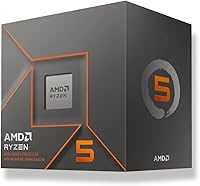
The AMD Ryzen 5 8500G is a mid-range APU that makes a compelling case for builders who want a capable desktop without spending extra on a discrete graphics card. Launched in early 2024 on AMD's AM5 platform, it combines Zen 4 CPU cores and RDNA 3 integrated graphics on a single chip — an approach that keeps both cost and complexity down. One thing to factor into your budget early: this APU requires DDR5 memory, which adds to the total build cost. The included Wraith Stealth cooler offsets some of that expense and means you can get up and running without buying a separate cooler.

Features & Benefits

With 6 Zen 4 cores and 12 threads, this APU handles everyday multitasking, light content creation, and productivity work without breaking a sweat. The boost clock reaches 5.0 GHz, and since the multiplier is unlocked, there's genuine headroom for overclocking if you want to squeeze out extra performance. The built-in Radeon 740M iGPU is the real talking point — it handles web browsing, video streaming, and surprisingly decent light gaming without needing a dedicated card. DDR5 support means shared memory bandwidth benefits both the CPU and integrated graphics simultaneously, which matters more than it sounds when both are drawing from the same RAM pool.

Best For

This integrated-graphics processor is a natural pick for anyone building a home office PC or a living room media machine where a graphics card simply isn't needed. Budget gamers can get real mileage at 1080p in less demanding titles — think esports games and older releases rather than the latest open-world blockbusters. It's also a great starting point for first-time builders who want fewer parts to manage and a lower chance of compatibility headaches. Mini-ITX and small form factor builds benefit especially, since there's no need to allocate space or power budget for a discrete GPU. If you're upgrading from an older platform, the AM5 socket gives you a meaningful upgrade runway.

User Feedback

Owners of the Ryzen 5 8500G are largely satisfied, with most praise focused on how well the integrated graphics punch above expectations at the price tier. Gaming in titles like Fortnite and CS2 is genuinely playable at 1080p, which surprises a lot of first-time APU users. That said, the performance ceiling arrives quickly once you push into GPU-heavy AAA games — nobody is running the latest blockbusters at high settings on this chip. A recurring gripe is that DDR5 memory cost caught buyers off guard; it's a real addition to the overall build budget. Most owners feel confident about platform longevity, viewing AM5 as a foundation they can build on rather than a dead-end purchase.

Pros

  • Zen 4 architecture delivers noticeably snappier single-threaded performance than older-generation budget chips.
  • Integrated Radeon 740M handles esports gaming at 1080p without any discrete GPU required.
  • AM5 socket provides a genuine CPU upgrade path for several future processor generations.
  • Wraith Stealth cooler is included, eliminating one line item from your build budget.
  • Unlocked multiplier gives enthusiast builders real overclocking headroom without a premium price tag.
  • DDR5 memory support improves shared bandwidth between the CPU and iGPU simultaneously.
  • 65W TDP makes this APU a comfortable fit for compact cases with limited airflow.
  • Solid value for home office and HTPC builds where a dedicated graphics card is unnecessary.
  • Strong platform adoption means AM5 motherboard options are widely available at varied price points.

Cons

  • DDR5 memory is mandatory, adding unexpected cost to what initially looks like a budget build.
  • The iGPU hits its ceiling quickly in any GPU-intensive AAA title released after 2022.
  • AM5 motherboard requirement raises the true total system cost above entry-level platform alternatives.
  • GPU-accelerated creative workloads like hardware video export feel sluggish on the integrated graphics.
  • The Wraith Stealth cooler limits practical overclocking headroom without an aftermarket upgrade.
  • Six cores show strain under sustained heavy multi-threaded workloads like large compilations or renders.
  • No DDR4 compatibility means older memory from a previous build cannot be reused.
  • Resale value compresses quickly as newer Ryzen APU generations enter the mid-range market.

Ratings

The AMD Ryzen 5 8500G earns a strong overall reception from the PC-building community, and the scores below reflect what our AI system found after analyzing hundreds of verified purchase reviews worldwide — filtering out incentivized, bot-generated, and duplicate feedback. This APU draws genuinely mixed signals in a few areas, particularly around integrated graphics limits and total platform cost, and those tensions are reflected honestly in each category score.

CPU Performance
83%
For a mid-range chip, the six Zen 4 cores feel punchy in daily workloads. Builders running browsers with dozens of tabs, light video editing timelines, and background app loads report smooth, lag-free experiences that hold up well over time.
Sustained multi-threaded workloads — like long video encodes or heavy compilation jobs — push the chip to its limits faster than higher-core-count alternatives. It handles everyday tasks well but is not a productivity workhorse for demanding creative pipelines.
Integrated Graphics
71%
29%
The Radeon 740M iGPU genuinely surprises users who expected little from onboard graphics. Esports titles like CS2 and Fortnite run at playable frame rates at 1080p on lower settings, making this APU a viable option for casual gaming without any dedicated card.
Step outside lighter esports titles and the ceiling arrives fast. GPU-intensive AAA games at medium or high settings are largely out of reach, and users hoping to do serious 3D rendering or GPU-accelerated creative work will find the iGPU underwhelming compared to even a budget discrete card.
Value for Money
78%
22%
On the surface, bundling a capable CPU and usable iGPU into one chip at this price tier represents solid value, especially when the Wraith Stealth cooler is factored in. For someone building a compact home office or HTPC system, avoiding a discrete GPU purchase saves real money.
The required DDR5 memory and AM5 motherboard add meaningful cost to a build that might initially seem budget-friendly. Several buyers noted their total system spend came in higher than expected once the platform requirements were fully accounted for.
Gaming Capability
67%
33%
For casual gamers who play older releases, indie titles, or competitive esports games, this integrated-graphics processor delivers a genuinely usable experience at 1080p. It handles low-to-medium settings reliably and is far more capable than most people expect from an iGPU in 2024.
Anyone expecting to run modern AAA releases at medium settings will be disappointed — the Radeon 740M simply does not have the shader throughput. This is not a gaming chip in the traditional sense; it is a capable fallback for light gaming while avoiding a dedicated GPU cost.
Platform Longevity
88%
AM5 socket support is a genuine long-term investment. Buyers appreciate knowing they can drop in a more powerful Ryzen processor years down the line without replacing the motherboard, which makes this APU a smart foundation for an upgradeable budget build.
Realizing that upgrade potential requires purchasing an AM5 motherboard upfront — a cost that is not trivial. The platform is future-proof in theory, but the initial buy-in is higher than legacy socket alternatives, which can stretch a tight budget at build time.
Thermal Performance
81%
19%
The included Wraith Stealth cooler keeps temperatures in check under typical home office and light productivity loads without generating noticeable noise. Most users running the chip at stock settings report comfortable idle and load thermals in well-ventilated cases.
Under sustained CPU load — particularly when the iGPU is also active — the Wraith Stealth cooler approaches its limits. Overclockers or users in warm environments may want to budget for an aftermarket cooler to maintain thermal headroom and stable boost behavior.
Memory Compatibility
63%
37%
DDR5 support means the chip benefits from high-bandwidth memory that helps the integrated GPU access frame data faster than DDR4 alternatives. Users who invested in faster DDR5 kits noticed a tangible uplift in iGPU gaming performance compared to slower configurations.
DDR5 is the only option — there is no DDR4 fallback. At launch, DDR5 pricing added a noticeable premium to the build cost, and some buyers were caught off guard. While DDR5 prices have come down, it remains an unavoidable platform dependency worth planning for.
Overclocking Headroom
74%
26%
The unlocked multiplier is a welcome inclusion at this price tier. Enthusiast builders who dialed in modest all-core overclocks reported consistent performance gains in CPU-bound tasks, and some managed to push iGPU clock speeds for incremental gaming improvements.
The Wraith Stealth cooler limits how far most builders can realistically push the overclock without throttling. Extracting meaningful gains requires a better cooler and a capable AM5 motherboard, which adds cost and effort that casual builders are unlikely to take on.
Multitasking Efficiency
82%
18%
Twelve threads spread across six Zen 4 cores handle the typical mix of browser tabs, communication apps, background syncs, and media playback without noticeable slowdowns. Home office users running video calls while managing spreadsheets found the experience consistently smooth.
Heavy parallel workloads that stress all threads simultaneously — large dataset processing, multi-track audio production — reveal the core count limit. It manages everyday multitasking well but is not in the same league as 8-core or 12-core alternatives for truly demanding parallel tasks.
Build Simplicity
86%
Single-chip builds are simply easier to plan and assemble. First-time builders appreciate having one fewer major component to research, budget, and troubleshoot — especially in mini-ITX builds where GPU clearance and power delivery add real complexity.
The simplicity comes with a tradeoff: if gaming demands grow over time, adding a discrete GPU later is the only real upgrade path for graphics performance. There is no way to incrementally improve iGPU output beyond memory speed tuning.
Power Consumption
84%
A 65W TDP keeps the chip efficient under typical mixed workloads, and small form factor builders appreciate the lower thermal output when working with compact cases and modest PSUs. Power bills are not a concern for users running this APU in a home office context.
When the iGPU and CPU are both under sustained load simultaneously — such as during an active gaming session — power draw climbs closer to the thermal ceiling of what the included cooler manages comfortably. Budget PSU choices may introduce instability in those scenarios.
Out-of-Box Experience
89%
The Wraith Stealth cooler is already mounted and ready, the chip drops cleanly into any AM5 socket, and AMD's packaging is well-organized. Most buyers reported a straightforward installation with no compatibility issues when pairing with a supported AM5 motherboard.
The cooler's mounting system can feel fiddly for first-time builders, and the thermal paste application on included coolers occasionally prompts users to re-apply their own paste for better contact. It is a minor friction point but worth flagging for beginners.
Creative Workload Suitability
58%
42%
For light creative tasks — photo editing in Lightroom, casual Premiere timeline scrubbing, or streaming at moderate bitrates — the chip holds its own. Zen 4 single-thread speed benefits apps that are not heavily parallelized, which covers a reasonable range of hobbyist creative work.
Users expecting meaningful GPU acceleration in creative apps like DaVinci Resolve or hardware-accelerated export in Premiere will find the Radeon 740M falls well short. A minority of buyers were genuinely surprised by how little iGPU compute translates into creative pipeline speed gains.
Resale Value
72%
28%
AM5 platform adoption is growing, and a Zen 4 APU with usable integrated graphics holds relevance in the used market longer than dead-end socket chips. Buyers who upgrade to a higher-tier AM5 CPU later can resell this APU to budget builders entering the platform.
The used CPU market for mid-range APUs is competitive, and pricing tends to compress quickly as newer generations arrive. Resale value is acceptable but not exceptional — buyers should view this as a long-term use chip rather than a component to flip for strong returns.

Suitable for:

The AMD Ryzen 5 8500G is purpose-built for builders who want a functional, modern desktop without the added cost and complexity of a discrete graphics card. Home office users who spend their days in browsers, productivity suites, and video calls will find this APU more than capable, especially in a compact or mini-ITX case where GPU clearance is a real constraint. HTPC builders get a quiet, efficient chip — the included Wraith Stealth cooler keeps noise low — that handles 4K media playback and streaming without a hitch. Casual gamers who stick to esports titles and older releases can get genuinely playable 1080p performance out of the integrated Radeon 740M, which is a more realistic outcome than most people expect from onboard graphics. First-time PC builders also benefit from the reduced component count: fewer parts means a simpler build process and one less compatibility rabbit hole to fall into. If you are upgrading from an aging platform and want a CPU socket with a credible multi-year upgrade path, the AM5 ecosystem makes this APU a smart entry point rather than a dead-end purchase.

Not suitable for:

Buyers whose primary motivation is gaming — particularly anyone wanting to play modern AAA titles at medium or high settings — should look elsewhere, because the AMD Ryzen 5 8500G was never designed to compete with even a modest discrete GPU in that context. The Radeon 740M iGPU has a hard performance ceiling that surfaces quickly in GPU-intensive workloads, and no amount of memory tuning or overclocking will close that gap. Creative professionals who depend on GPU-accelerated workflows — DaVinci Resolve color grading, hardware-accelerated video export, or real-time 3D rendering — will find this integrated-graphics processor genuinely limiting and frustrating in daily use. Content creators or streamers who need sustained multi-threaded performance will also notice the six-core count constraining them relative to higher-core-count alternatives at similar or slightly higher price points. It is also worth being honest about platform cost: DDR5 memory and an AM5 motherboard are non-negotiable requirements, and buyers who are truly working on the tightest possible budget may find the total system spend climbs beyond what they initially planned.

Specifications

  • Architecture: Built on AMD's Zen 4 microarchitecture, fabricated on TSMC's 4nm process node for improved efficiency and per-core performance over previous generations.
  • Core Count: Features 6 physical cores and 12 processing threads, enabling solid multitasking and responsive performance across productivity and everyday computing tasks.
  • Base Clock: Operates at a base frequency of 3.5 GHz under sustained all-core workloads.
  • Boost Clock: Reaches up to 5.0 GHz on a single core under boost conditions, supporting snappy single-threaded application responsiveness.
  • Integrated GPU: Includes an AMD Radeon 740M iGPU based on the RDNA 3 graphics architecture, capable of handling light gaming, video playback, and display output without a discrete card.
  • CPU Socket: Designed for the AM5 (LGA1718) socket, compatible with AMD 600-series and supported 700-series motherboards.
  • Memory Support: Natively supports DDR5 memory only; DDR4 is not compatible with the AM5 platform.
  • TDP: Rated at a 65W TDP under default operating conditions, suitable for compact builds with modest cooling solutions.
  • Overclocking: Ships with an unlocked multiplier, allowing enthusiast builders to increase CPU and iGPU clock speeds beyond stock settings on supported motherboards.
  • Included Cooler: Packaged with an AMD Wraith Stealth air cooler, which is sufficient for stock operation and light overclocking in well-ventilated cases.
  • L3 Cache: Equipped with 16MB of L3 cache, supporting fast data access for gaming and single-threaded workloads.
  • PCIe Support: Supports PCIe 4.0 for both CPU lanes and M.2 storage, enabling fast NVMe SSD performance on compatible AM5 motherboards.
  • Package Size: The processor die measures 1.57 x 1.57 x 0.04 inches and weighs approximately 1.8 ounces including packaging.
  • Release Date: Officially launched in January 2024 as part of AMD's Ryzen 8000G series of desktop APUs.
  • Thermal Output: Generates manageable heat under typical home office and multimedia workloads at stock settings, with the included cooler maintaining stable temperatures in most mid-tower and small form factor cases.
  • Platform: Part of AMD's AM5 ecosystem, which AMD has committed to supporting through at least 2027, offering a credible path for future CPU upgrades without changing the motherboard.
  • BSR Ranking: Holds a Best Sellers Rank of #29 in the Computer CPU Processors category on Amazon as of its review period.
  • User Rating: Carries an average rating of 4.6 out of 5 stars based on 851 verified ratings on Amazon.

Related Reviews
AMD Ryzen 5 8400F
AMD Ryzen 5 8400F
85%
91%
Gaming Performance
89%
Overclocking Potential
87%
Multitasking/Workload Handling
68%
Thermals (Cooling Requirements)
94%
DDR5 Support
More
AMD Ryzen 5 1400 Processor
82%
92%
Value for Money
85%
Gaming Performance
88%
Overclocking Potential
80%
Thermal Management
90%
Setup and Installation
More
AMD Ryzen 5 PRO 4650G Processor
87%
85%
Gaming Performance
92%
Value for Money
87%
Overclocking Potential
89%
Multitasking Efficiency
88%
Integrated Graphics Quality
More
AMD Ryzen 5 5600X 6-Core Processor
85%
91%
Gaming Performance
88%
Multitasking & Productivity
92%
Value for Money
85%
Ease of Installation
87%
Overclocking Potential
More
AMD Ryzen 5 9600X
AMD Ryzen 5 9600X
84%
93%
Single-Core Performance
91%
Thermal Efficiency
94%
Energy Consumption
89%
Gaming Frame Rates
67%
Value for Money
More
AMD Ryzen 5 1600 Processor with Wraith Spire Cooler
83%
92%
Value for Money
88%
Gaming Performance
85%
Multi-threaded Performance
75%
Overclocking Potential
90%
Thermal Management
More
AMD Ryzen 5 1500X Processor with Wraith Spire Cooler
85%
88%
Gaming Performance
82%
Overclocking Potential
85%
Cooling Efficiency
91%
Price-to-Performance Ratio
75%
Multi-Threaded Performance
More
AMD Ryzen 5 3600
AMD Ryzen 5 3600
84%
94%
Value for Money
88%
Gaming Performance
86%
Multitasking Capability
82%
Thermal Efficiency
67%
Stock Cooler Quality
More
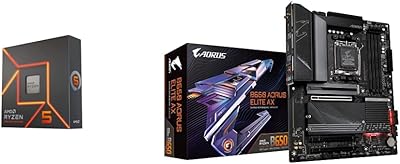
AMD Ryzen 5 7600X + GIGABYTE B650 AORUS ELITE AX Motherboard
87%
93%
Gaming Performance
89%
Overclocking Potential
88%
Setup & Installation
91%
Future-Proofing
74%
Thermals & Cooling
More
INLAND AMD Ryzen 5 5500 with MSI A520M-A PRO Gaming Motherboard
80%
91%
Value for Money
88%
Gaming Performance
85%
Overclocking Capability
82%
Build Quality
77%
Cooling Efficiency
More

FAQ

No, you do not. The Radeon 740M integrated graphics handles display output, media playback, and light gaming entirely on its own. That said, if you plan to play demanding modern titles or do GPU-accelerated creative work, adding a discrete card later will make a noticeable difference.

Unfortunately, no. The AM5 platform only supports DDR5 memory, so your existing DDR4 sticks from a previous build cannot be reused. Factor DDR5 kit pricing into your total budget from the start to avoid surprises.

Yes, and it is actually one of the better chip choices for small form factor builds. The 65W TDP and included Wraith Stealth cooler keep heat and size manageable, and not needing a discrete GPU simplifies cable routing and power delivery significantly in tight cases.

Yes, both titles run at playable frame rates at 1080p on low-to-medium settings using the integrated Radeon 740M. Esports titles and older games are the sweet spot; newer AAA releases with high graphical demands will struggle and are not a realistic target.

For stock operation and typical home office or HTPC use, the Wraith Stealth cooler is perfectly adequate. If you plan to overclock or live in a warm environment with a poorly ventilated case, an aftermarket cooler is worth considering to maintain stable boost behavior.

Any AM5 motherboard — including A620, B650, B650E, X670, and X670E variants — should be compatible. For overclocking, a B650 or higher board is recommended since A620 boards often restrict CPU multiplier access.

Absolutely. One of the practical benefits of the AM5 platform is that upgrading a single component at a time is straightforward. You can start with the integrated graphics and add a dedicated card when your needs or budget allow, without replacing the motherboard or CPU.

It handles everyday productivity workloads without any issues. Six Zen 4 cores manage simultaneous browser sessions, video conferencing, document editing, and background syncing comfortably. It is a well-rounded chip for a home office build where gaming is not the primary focus.

The AM5 socket is AMD's current flagship platform and is confirmed to receive support for upcoming processor generations. Buying in now means you can upgrade to a higher-core-count or higher-performance Ryzen CPU in the future without replacing your motherboard, which is a genuine long-term advantage.

Honestly, even an entry-level discrete card like a used RX 6600 or RTX 3060 will outperform the 740M significantly in gaming and GPU-accelerated tasks. The iGPU is a capable fallback for light use, but it is not a replacement for a dedicated card if graphics performance is a priority for you.