Overview

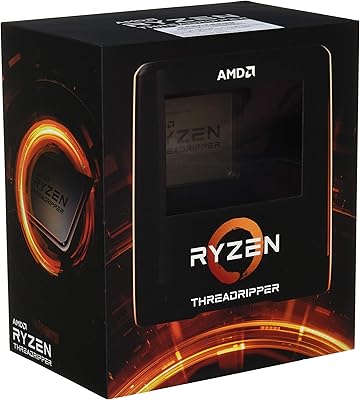
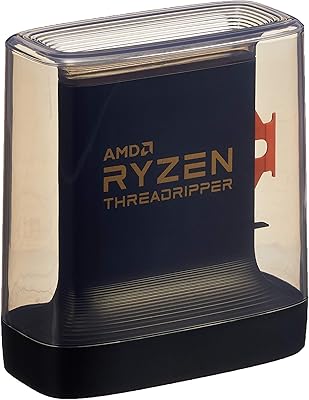
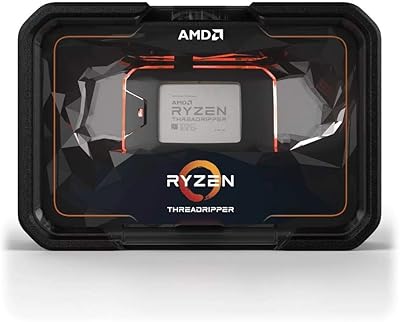
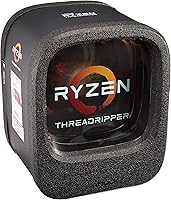
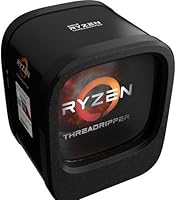
The AMD Ryzen Threadripper 1920X Desktop Processor arrived in mid-2017 as AMD's bold answer to Intel's grip on the high-end desktop market, handing content creators and workstation builders access to serious core counts without enterprise-tier pricing. Built around the Socket TR4 platform, it requires a compatible X399 motherboard, which adds to total build cost but opens up a genuinely capable ecosystem. With a 4.6 out of 5 rating across more than a thousand buyers, the reception has been consistently strong. That said, this chip is purpose-built for demanding parallel workloads — if your day revolves around web browsing or light office tasks, it is simply more processor than the job calls for.
Features & Benefits

The 1920X packs 12 cores and 24 threads, meaning it handles multi-threaded workloads the way a workhorse handles a loaded cart — steadily and without complaint. Precision Boost keeps cores running efficiently up to 4.0 GHz, with XFR nudging favored cores to 4.2 GHz when thermals cooperate. What really distinguishes this chip in its class is the 64 PCIe Gen3 lanes — enough bandwidth to run multiple GPUs, high-speed NVMe drives, and expansion cards at once without bottlenecking any of them. Quad-channel DDR4 with ECC support adds data integrity that professionals handling critical files will appreciate. Thirty-eight megabytes of cache keeps frequently accessed data close, and the 68°C thermal ceiling means cooler selection genuinely matters.

Best For

This 12-core processor is the right tool for people whose workflows genuinely stress a CPU for hours straight. Video editors and 3D artists working in Blender, DaVinci Resolve, or Cinema 4D will notice a real difference — render queues that once took overnight can finish in a fraction of the time. Streamers who want to encode a high-quality broadcast while gaming and monitoring chat without frame drops will find the 1920X handles all of it without flinching. It also suits virtualization enthusiasts and developers compiling large codebases, as well as any professional environment where ECC memory reliability is a hard requirement rather than a nice-to-have.

User Feedback

Buyers consistently highlight the 1920X's multi-threaded value relative to what the chip costs at current market prices, and many note that X399 boards have held up remarkably well through years of heavy use. Platform stability comes up repeatedly — people who built systems around this chip long ago often mention they have found no compelling reason to move on yet. On the other side of the ledger, several buyers stress the importance of investing in a capable TR4 cooler, since many bundled options are barely adequate under sustained loads. A handful of users also flag that memory compatibility can be picky, so cross-referencing your chosen kit against the motherboard's QVL list before purchasing is a step worth taking.

Pros

  • Twelve cores and 24 threads handle demanding parallel workloads without breaking a sweat.
  • 64 PCIe Gen3 lanes give builders room to run multiple GPUs and fast NVMe drives simultaneously.
  • Quad-channel DDR4 with ECC support adds data reliability that professionals genuinely depend on.
  • Precision Boost and XFR deliver responsive clock speeds without requiring manual overclocking effort.
  • Long-term owners consistently report the X399 platform has remained stable and reliable over years of use.
  • 38MB of combined cache keeps latency low on memory-intensive creative and scientific workloads.
  • Strong buyer consensus across more than a thousand ratings signals real-world dependability.
  • Still competitive for production rendering and encoding tasks even compared to more recent mid-range chips.
  • Broad OS support across Windows, Unix, and Linux makes it versatile for mixed development environments.

Cons

  • X399 motherboards carry a significant cost premium that inflates the total build budget considerably.
  • A capable TR4 cooler is essentially mandatory — bundled or budget options struggle under sustained loads.
  • Memory compatibility can be finicky; not all DDR4 kits play nicely without careful QVL cross-referencing.
  • Single-threaded performance trails behind newer mainstream CPUs, which matters for gaming and lightly-threaded apps.
  • The platform is effectively end-of-life, meaning no upgrade path exists within the TR4 socket ecosystem.
  • Power consumption under full load is substantial, which increases long-term electricity costs and cooling demands.
  • Large physical footprint of the TR4 socket limits compatible case and cooler options compared to mainstream builds.
  • Finding new X399 motherboards at reasonable prices has become increasingly difficult as the platform ages.

Ratings

The AMD Ryzen Threadripper 1920X Desktop Processor earns its strong reputation across more than a thousand verified global buyers, and these scores were generated by AI after rigorously analyzing that real-world feedback — filtering out incentivized reviews, bot activity, and outlier noise. The result is an honest, balanced picture of where this 12-core workstation chip genuinely excels and where it asks buyers to make real trade-offs. Both the highs and the friction points are reflected transparently so you can make a confident, informed decision.
Multi-Threaded Performance
93%
Users running Blender renders, Handbrake encodes, and parallel compilation jobs consistently describe the throughput as transformative compared to mainstream desktop chips they replaced. The ability to sustain heavy loads across all 24 threads for hours without degradation is a recurring theme in long-term owner feedback.
A small but vocal group notes that the performance gap versus newer architectures has narrowed meaningfully, meaning buyers paying a premium for a new-old-stock unit may not be getting the same relative value they would have a few years ago.
Single-Threaded Speed
67%
33%
For a chip of its era and core count, clock speeds are reasonable, and Precision Boost with XFR does a solid job of pushing individual cores when the workload demands it. Users doing lightly threaded tasks alongside heavy background jobs report it handles context-switching well.
Gamers and users running applications that rely primarily on one or two fast cores consistently flag this as the chip's most noticeable weakness. Compared to modern mainstream CPUs, single-core performance lags in a way that shows up in frame rates and UI responsiveness.
Platform Expandability
91%
The 64 PCIe Gen3 lanes are a standout advantage that professionals building multi-GPU render nodes or NVMe-heavy storage arrays actively depend on. Buyers setting up dual-GPU workstations report that bandwidth never becomes the bottleneck the way it does on consumer platforms.
The flip side is that fully exploiting those lanes demands expensive X399 boards and additional hardware investment, so budget-conscious builders rarely unlock the platform's full potential without significant upfront spending.
Memory Support
88%
Quad-channel DDR4 with ECC compatibility is genuinely valued by users in scientific computing, financial modeling, and video production environments where data integrity matters. The aggregate memory bandwidth available in quad-channel mode is a real-world advantage for large dataset workloads.
Memory compatibility is the most frequently cited frustration — several buyers report instability or failure to POST with certain DDR4 kits until they sourced modules from the board's QVL list, adding friction to the initial build process.
Thermal Management
71%
29%
Users who invested in quality TR4-compatible coolers — large tower air coolers or 280mm-plus liquid coolers — report stable temperatures even during extended all-core rendering sessions. The 68°C thermal limit is generous enough that well-cooled systems rarely hit the ceiling.
The 180W TDP is demanding, and buyers who underestimated cooling requirements report throttling and instability under sustained loads. The chip's large IHS surface makes adequate thermal contact more dependent on cooler design than most mainstream processors.
Platform Longevity
74%
26%
Long-term owners are among this chip's most vocal advocates, regularly citing years of trouble-free daily use on X399 boards that have never needed replacing. The stability of the platform once properly set up earns consistent praise from professional workstation users.
TR4 is effectively a closed ecosystem with no further upgrade path, which means committing to this platform locks buyers into the current hardware ceiling. Finding new X399 motherboards at reasonable prices has become progressively harder as inventory shrinks.
Value for Money
82%
18%
At current used and refurbished market prices, buyers consistently describe the cost-per-core ratio as difficult to beat for production workloads. Long-term owners who bought years ago overwhelmingly feel the chip has delivered strong value across its working life.
Buyers who factor in the full platform cost — X399 board, TR4 cooler, and registered ECC memory if needed — sometimes find the total outlay less compelling than it initially appears when evaluating the processor price alone.
Gaming Suitability
54%
46%
Users who game alongside production work report that the chip handles titles adequately, and the thread count helps when running recording or streaming software simultaneously without dropping frames in less demanding titles.
For pure gaming, the single-threaded performance deficit versus modern mainstream CPUs is noticeable, and several buyers who hoped to use the 1920X as a gaming chip were disappointed by frame rates in CPU-sensitive titles like strategy games and open-world RPGs.
Build & Installation
86%
The physical installation process on TR4 boards is well-documented, and users with prior enthusiast build experience find it straightforward. AMD's torque-based installation guide for the large IHS is clear, and the socket mechanism is robust.
First-time builders occasionally find the size and weight of compatible coolers intimidating, and improper mounting pressure on the large TR4 socket has caused isolated thermal and contact issues that required reseating to resolve.
Software & OS Compatibility
89%
Compatibility across Windows, Linux, and Unix environments is consistently praised by developers and system administrators who run mixed workloads or virtualized environments. Linux users in particular report excellent driver support and stable performance under heavy virtualization loads.
A small number of users encountered BIOS-level quirks early in the platform's life that caused intermittent instability, though most of these issues were resolved through firmware updates that required some technical confidence to apply correctly.
Workstation Stability
87%
Professionals running the 1920X in production environments describe it as rock-solid once the system is properly configured, with many reporting months of uninterrupted uptime under continuous rendering and data processing workloads.
Initial stability can depend heavily on memory configuration and BIOS settings, and buyers who rush the setup process without carefully tuning XMP profiles and memory speeds sometimes experience intermittent crashes that take time to diagnose.
Streaming & Encoding
91%
Content creators who live-stream while simultaneously gaming report that the thread count makes dedicated software encoding in OBS genuinely effortless, with no perceptible impact on game performance even at high encoding quality settings.
The performance advantage in streaming scenarios is significant but only relevant to users doing multi-task heavy workloads — buyers who stream casually at modest quality settings will not notice a meaningful difference versus a capable mainstream chip.
Virtualization Performance
88%
IT professionals and developers running multiple virtual machines simultaneously report that the 1920X handles VM stacking impressively, with 24 threads providing enough overhead to keep several concurrent instances responsive under moderate individual loads.
Users pushing large numbers of VMs with memory-intensive workloads note that ECC memory support, while present, depends on board-level implementation, and not all X399 boards handle ECC equally well in practice.

Suitable for:

The AMD Ryzen Threadripper 1920X Desktop Processor is built for people who push their machines hard every single day. Video editors cutting 4K or 8K footage, 3D artists running overnight Blender renders, and VFX professionals juggling massive scene files will all find that 12 cores and 24 threads dramatically cut down their waiting time. Streamers who want to run a game, encode a broadcast, and keep a dozen background processes alive simultaneously will appreciate how this chip distributes the load without choking any single task. Developers compiling large codebases or running parallel build jobs will notice the difference in wall-clock time almost immediately. It also makes a strong case for small studios or home workstation builders who need ECC memory support for data integrity without paying for a full server-class platform. If your workload is genuinely multi-threaded and you are building a system meant to last several years under heavy use, this chip remains a compelling foundation.
Not suitable for:

Buyers who primarily game, browse the web, or run everyday productivity software should think carefully before committing to this platform. Most popular games still rely heavily on single-threaded performance and fast clock speeds rather than raw core count, so the 1920X will not necessarily outperform a well-chosen mainstream CPU in those scenarios. The Socket TR4 platform also carries a real cost premium — X399 motherboards are expensive, and the chip requires a large-socket TR4 cooler, which adds further to the total build budget. Anyone working with a tight overall system budget may find that the platform costs eat into money better spent elsewhere. Home users doing light photo editing, document work, or casual media consumption are buying far more processor than they will ever use. If your workloads are primarily single-threaded or your budget does not comfortably accommodate the full TR4 ecosystem, a mainstream platform will serve you better and cost considerably less.

Specifications

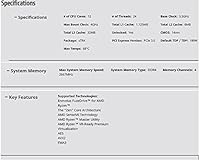
  • Core Count: The processor features 12 physical cores and 24 logical threads, enabling true simultaneous multi-threaded processing across demanding workloads.
  • Base Clock: The base operating frequency is 3.5 GHz, providing a consistent performance floor across all cores under sustained load.
  • Boost Clock: Precision Boost raises active core speeds up to 4.0 GHz, with XFR extending select cores to 4.2 GHz when thermal headroom permits.
  • CPU Socket: This processor requires a Socket TR4 motherboard, which is exclusive to the AMD X399 chipset platform.
  • PCIe Lanes: 64 PCIe Gen3 lanes are available directly from the processor, supporting multiple discrete GPUs, NVMe drives, and expansion cards simultaneously.
  • Memory Type: The chip supports quad-channel DDR4 SDRAM with a rated memory speed starting at 1200 MHz (effective 2400 MHz).
  • ECC Support: ECC (Error-Correcting Code) memory is supported, providing hardware-level data integrity protection for reliability-critical workloads.
  • Cache: Total combined cache is 38MB, including L2 and L3 layers, reducing latency for memory-intensive tasks.
  • Max Temp: The maximum rated operating temperature (Tmax) is 68°C, above which thermal throttling and protection mechanisms activate.
  • TDP: The processor carries a thermal design power rating of 180W, requiring a capable TR4-compatible cooler with sufficient TDP headroom.
  • Architecture: Built on AMD's Zen microarchitecture using a 14nm GlobalFoundries process node, providing a balance of efficiency and multi-threaded throughput.
  • Platform: Compatible operating systems include Windows, Unix, and Linux, making it suitable for a broad range of professional and development environments.
  • Dimensions: The physical die measures 3.1 x 2.2 x 0.3 inches and weighs 3.2 oz, consistent with the large TR4 socket form factor.
  • Model Number: The official AMD part number is YD192XA8AEWOF, which should be used to verify compatibility and authenticity at purchase.
  • Memory Channels: Four independent memory channels allow significantly higher aggregate memory bandwidth compared to dual-channel mainstream desktop platforms.
  • Overclocking: The 1920X is an unlocked processor, supporting manual overclocking via compatible X399 motherboards with appropriate BIOS support.
  • Integrated Graphics: No integrated graphics are included; a discrete GPU is required to output video in any build using this processor.
  • Release Date: The processor was first made available in July 2017, establishing AMD's initial entry into the modern high-end desktop (HEDT) market segment.

Related Reviews

AMD Ryzen Threadripper 3970X Desktop Processor
75%
97%
Multi-Threaded Performance
74%
Single-Threaded Responsiveness
58%
Platform Value & Total Cost
62%
Thermal Management
94%
PCIe Lane Density & Expandability
More
AMD Ryzen Threadripper 3960X 24-Core Processor
83%
94%
Overall Performance
98%
Multi-Threaded Performance
89%
Overclocking Potential
93%
Core & Thread Count
61%
Thermal Management
More
AMD Ryzen Threadripper 2970WX Desktop Processor
74%
93%
Multi-Threaded Performance
61%
Single-Threaded Speed
58%
Thermal Management
52%
Platform & Ecosystem Cost
89%
Memory Bandwidth
More
AMD Ryzen Threadripper 3990X Desktop Processor
73%
97%
Multi-Threaded Rendering Performance
96%
Core Count and Thread Scalability
41%
Platform and Total Build Cost
53%
Thermal Management
93%
I/O and Bandwidth
More
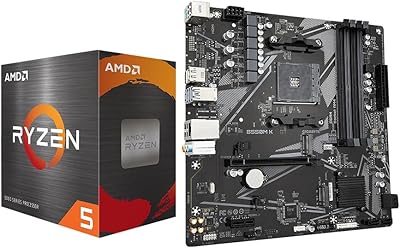
AMD Ryzen 5 5500 B550M K Bundle
78%
88%
Value for Money
79%
Gaming Performance at 1080p
91%
Ease of Installation
83%
Motherboard Feature Set
74%
CPU Thermal Performance
More
AMD Ryzen 5 1400 Processor
82%
92%
Value for Money
85%
Gaming Performance
88%
Overclocking Potential
80%
Thermal Management
90%
Setup and Installation
More
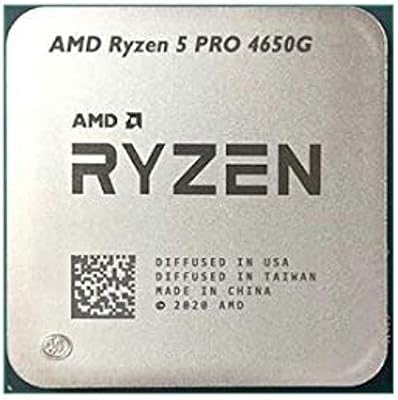
AMD Ryzen 5 PRO 4650G Desktop Processor
72%
74%
Integrated Graphics Performance
81%
CPU Multitasking
62%
Value for Money
88%
Platform Compatibility
58%
RAM Speed Sensitivity
More
AMD Ryzen 5 5600X Desktop Processor
82%
94%
Gaming Performance
88%
Multitasking & Everyday Use
91%
Value for Money
74%
Thermal Performance
78%
Overclocking Headroom
More
AMD Ryzen 9 3950X Desktop Processor
84%
97%
Multithreaded Performance
83%
Single-Core Speed
74%
Gaming Performance
61%
Thermal Management
78%
Value for Money
More
AMD Ryzen 9 7900X3D Desktop Processor
79%
93%
Gaming Performance
81%
Multi-Core Productivity
67%
Thermal Management
72%
Value for Money
88%
Platform Longevity
More

FAQ

No, it does not include a bundled cooler. You will need to purchase a TR4-compatible cooling solution separately. Given the 180W TDP, a high-performance air cooler or a 240mm-plus all-in-one liquid cooler is strongly recommended to maintain stable temperatures under sustained load.

You need an AMD X399 chipset motherboard with a Socket TR4 slot. There are no other compatible chipsets or sockets — TR4 is a large-format socket used exclusively for first and second-generation Threadripper processors. Always verify the board's CPU support list before purchasing.

Yes, the AMD Ryzen Threadripper 1920X Desktop Processor officially supports ECC (Error-Correcting Code) DDR4 memory. However, ECC functionality also depends on your motherboard supporting it, so check your specific board's specs before assuming full ECC operation.
For multi-threaded editing workloads in applications like DaVinci Resolve or Premiere Pro, the 1920X still performs respectably, especially if you find it at a strong used-market price. That said, newer platforms offer better single-core performance and more modern feature sets, so weigh the total platform cost — including a TR4 board and cooler — against current alternatives before committing.

With 64 PCIe Gen3 lanes available directly from the CPU, you have enough bandwidth to run two or even three discrete GPUs in x16, x16, and x8 configurations simultaneously — something mainstream desktop platforms cannot match. This makes it popular for multi-GPU rendering rigs.

The official memory specification starts at DDR4-2400 in quad-channel configuration (listed as 1200 MHz base clock, effective 2400 MHz). Many users successfully run faster kits, but higher speeds depend on motherboard support and may require XMP profile enabling in the BIOS.

Absolutely — this is actually one of its stronger everyday use cases. With 24 threads available, you can dedicate cores to game rendering, live encoding via software like OBS, and background system processes without any of them starving for resources. It handles simultaneous workloads far more comfortably than most mainstream desktop CPUs.

Memory compatibility is the most commonly reported friction point. Not all DDR4 kits behave reliably on TR4 boards, so it is worth cross-checking your chosen RAM against your motherboard manufacturer's QVL (Qualified Vendor List) before buying. Some early BIOS versions on X399 boards also had stability quirks that were later resolved through firmware updates, so keeping your board's BIOS current is important.

Yes, the chip is fully unlocked and supports manual overclocking through compatible X399 motherboard BIOS settings. That said, the thermal demands increase significantly when pushing all 12 cores beyond stock speeds, so an investment in premium cooling is a practical prerequisite before attempting aggressive overclocks.

Realistically, TR4 is a mature platform with no further CPU upgrade path — AMD moved on to TRX40 and beyond with subsequent Threadripper generations. If longevity and future upgradability within the same socket matter to you, that is a genuine limitation to factor in. However, if you are buying this chip for a fixed workstation build you plan to run hard for several years without upgrading the CPU, the platform is stable and proven, and the chip itself has plenty of useful life left in it.