AMD Ryzen Threadripper 3990X Desktop Processor

Overview
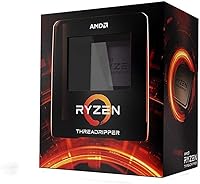
The AMD Ryzen Threadripper 3990X Desktop Processor sits at a level most desktop hardware never reaches — 64 cores aimed squarely at professionals who treat their workstation as a production tool, not a hobby rig. Compared to mainstream Ryzen or Intel desktop chips, the difference in raw parallelism and I/O capacity is not incremental; it belongs in a completely different category. That said, the TRX40 platform requirement means a compatible motherboard and proper cooling solution are mandatory additions that push the total build cost considerably higher. Go in with clear expectations: this 64-core processor was built for heavy professional workloads, and it delivers exactly that — nothing more, nothing less.
Features & Benefits
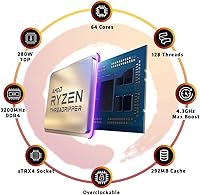
Sixty-four physical cores and 128 threads mean the Threadripper 3990X does not take turns with your workload — it processes everything at once. A max boost of 4.3 GHz through AMD Precision Boost 2 keeps single-threaded tasks snappy, so you are not sacrificing responsiveness for core count. The 288MB combined cache significantly reduces the time the processor spends waiting on memory, which matters enormously during large scene renders or data-heavy jobs. Quad-channel DDR4 support feeds that appetite for bandwidth, while 88 PCIe 4.0 lanes let you run multiple NVMe drives and graphics cards without bottlenecking any of them. The unlocked multiplier rounds things out for those who want to push further.
Best For
This HEDT chip was purpose-built for professionals whose software can actually exploit dozens of cores simultaneously. Blender artists, V-Ray users, and Cinema 4D animators will notice render time reductions immediately — scenes that once took hours can shrink to minutes. Professional video editors handling 8K timelines or multi-stream color grading will find the headroom genuinely useful rather than theoretical. Scientific computing and simulation workflows also benefit directly, since core count translates straight to throughput here. Freelancers or small studios looking to consolidate production onto a single machine — avoiding a dedicated render farm — will find this 64-core processor a compelling centerpiece that handles multiple simultaneous workloads without hesitation.
User Feedback
Owners who bought this 64-core processor for the right reasons are largely satisfied — real production times confirm the gains over previous-gen HEDT hardware, and the praise centers on measurable workflow improvements that show up daily, not just in benchmarks. On the critical side, thermal management comes up repeatedly: a 280W TDP demands a capable cooler, and nothing is included in the box, so budget accordingly. The platform cost — TRX40 board, high-capacity DDR4 kits — adds up quickly and surprises some buyers. A handful also note that gaming performance trails what a mainstream Ryzen chip delivers for far less money, which is a fair and entirely expected trade-off for this class of workstation hardware.
Pros
- Render times in Blender, V-Ray, and Cinema 4D drop dramatically compared to any mainstream desktop CPU.
- All 64 cores handle simultaneous workloads — rendering, exporting, and previewing at the same time without slowdown.
- 88 PCIe 4.0 lanes let you run multiple NVMe drives and a high-end GPU without any bandwidth competition.
- Quad-channel DDR4 support keeps memory-hungry workflows fed consistently, even with large dataset loads.
- The 4.3 GHz max boost keeps software navigation and live previews feeling responsive during long production sessions.
- Unlocked multiplier gives enthusiasts a straightforward path to additional performance without complex manual tuning.
- For billable professionals, the time savings on production work can offset the hardware cost over months of real use.
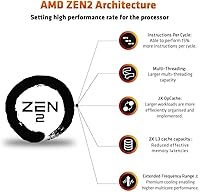
- The Zen 2 architecture holds up well across industry-standard creative and scientific applications without compatibility headaches.
Cons
- No cooler is included, and finding a compatible TRX40-socket solution rated for 280W narrows your options considerably.
- The mandatory TRX40 platform — board, memory, cooler — adds a substantial cost on top of the processor price alone.
- The TRX40 socket has no upgrade path, so this purchase is a long-term commitment with no future CPU options.
- Software that does not scale beyond 16 threads leaves the majority of available cores completely unused.
- Sustained all-core loads push cooling systems hard enough that workstation noise becomes a real issue in quiet environments.
- Single-threaded performance trails modern mainstream desktop processors, which matters in latency-sensitive or lightly threaded tasks.
- The total system cost can surprise buyers who only budget for the processor itself without researching platform requirements first.
- Older or niche production tools may require BIOS or driver updates before running stably on the TRX40 platform.
Ratings
The AMD Ryzen Threadripper 3990X Desktop Processor earned its scores through AI-assisted analysis of verified global buyer reviews, with spam, bot activity, and incentivized feedback actively filtered out before scoring. Across thousands of real workstation builders and creative professionals, both the standout strengths and the genuine frustrations surfaced clearly — and every score below reflects that full picture, not a curated highlight reel.
Multi-Threaded Rendering Performance
Core Count and Thread Scalability
Platform and Total Build Cost
Thermal Management
I/O and Bandwidth
Single-Threaded Responsiveness
Memory Support
Overclocking Headroom
Software Ecosystem Compatibility
Gaming Performance
Value for Professional Workflows
Build and Installation Experience
Longevity and Platform Relevance
Noise Under Load
Suitable for:
The AMD Ryzen Threadripper 3990X Desktop Processor was built for professionals whose daily work genuinely demands parallel processing at scale — and for those users, it is a legitimate workstation centerpiece. If you are a 3D artist running complex V-Ray or Blender renders that currently tie up your machine for hours, this 64-core processor can cut that time down in ways that meaningfully change how you work and how quickly you can deliver to clients. Video editors handling 8K RAW timelines or managing multiple simultaneous color grades will find real headroom here, not just benchmark bragging rights. Scientific researchers, simulation engineers, and data processing teams whose workflows are designed around high thread counts will also extract consistent, measurable throughput from it. Freelancers and small studios looking to consolidate production onto a single powerful machine — eliminating the overhead of a dedicated render farm — will find the investment justifiable when the workload math adds up.
Not suitable for:
The AMD Ryzen Threadripper 3990X Desktop Processor is a poor fit for anyone whose primary use case does not involve heavily parallelized professional workloads. Gamers, in particular, should look elsewhere — this HEDT chip trails mainstream Ryzen and Intel desktop processors in the frame-rate-sensitive scenarios that gaming demands, and at a fraction of the cost those alternatives will simply perform better for that purpose. Casual content creators, home office users, or anyone running standard productivity software will find that most of those 64 cores sit idle the vast majority of the time, making the investment difficult to justify. The TRX40 platform requirement also means there is no cheap entry point — a compatible motherboard, a serious aftermarket cooler rated for 280W TDP, and adequate DDR4 memory kits are all mandatory additions that compound the total cost significantly. Finally, buyers who anticipate upgrading the processor down the road should know that the TRX40 socket has no forward upgrade path, making this a one-generation commitment with no flexibility built in.
Specifications
- Core Count: The processor features 64 physical cores and 128 threads built on AMD's Zen 2 architecture for true parallel workload processing.
- Max Boost Clock: AMD Precision Boost 2 dynamically drives individual cores up to 4.3 GHz to maintain responsive performance on lightly threaded tasks.
- Base Clock: The base operating frequency is 2.9 GHz across all 64 cores under sustained full-load conditions.
- Total Cache: A combined 288MB of L2 and L3 cache significantly reduces latency when working with large datasets or complex scene files.
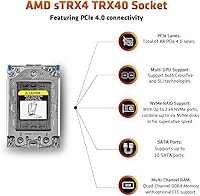
- Memory Support: The processor supports quad-channel DDR4 memory, enabling the high sustained bandwidth that memory-intensive professional workflows require.
- PCIe Lanes: Eighty-eight PCIe 4.0 lanes are available, allowing simultaneous connection of multiple NVMe storage drives and discrete graphics cards without bandwidth contention.
- Socket: The processor uses AMD's Socket TRX4, which requires a compatible TRX40 platform motherboard — it is not compatible with any other AMD socket.
- TDP: Rated thermal design power is 280W, which mandates a purpose-built aftermarket cooling solution; no cooler is included in the box.
- Process Node: Manufactured on TSMC's 7nm FinFET process, which contributes to the chip's efficiency relative to its core count at this performance tier.
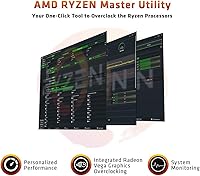
- Overclocking: The multiplier is fully unlocked and AMD's automatic overclocking feature is supported, giving experienced builders a straightforward path to additional performance headroom.
- Architecture: Built on the Zen 2 microarchitecture, internally codenamed Castle Peak, which underpins this generation of AMD's high-end desktop processor lineup.
- Memory Type: Compatible with DDR4 SDRAM; ECC memory support is also available depending on the paired motherboard's specific implementation.
- Launch Date: The processor was first made available in February 2020 as AMD's flagship HEDT offering for professional workstation builders.
- Item Weight: The processor package weighs 1.95 pounds, reflecting the substantial integrated heat spreader and mounting hardware required for the TRX4 socket.
- Cooler Included: No cooling solution is included in the retail package; buyers must source a TRX4-compatible cooler separately before the system can operate.
- Platform Required: A TRX40 chipset motherboard is mandatory for this processor; no other chipset or socket generation supports this chip.
- Voltage: The processor operates at a nominal voltage of 1V under standard conditions, though actual VCore varies dynamically under Precision Boost behavior.
- Unlocked Multiplier: The CPU multiplier is unlocked out of the box, allowing manual frequency adjustments without requiring specialized motherboard features beyond standard TRX40 BIOS support.
Related Reviews
AMD Ryzen Threadripper 3970X Desktop Processor
AMD Ryzen Threadripper 1920X Desktop Processor
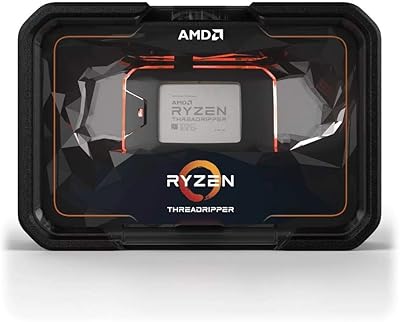
AMD Ryzen Threadripper 2970WX Desktop Processor
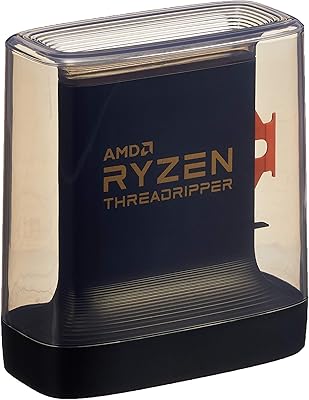
AMD Ryzen Threadripper 3960X 24-Core Processor
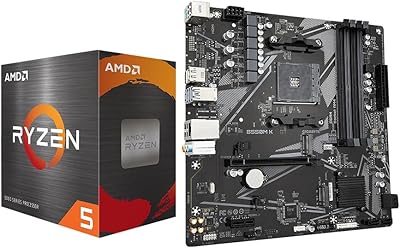
AMD Ryzen 5 5500 B550M K Bundle
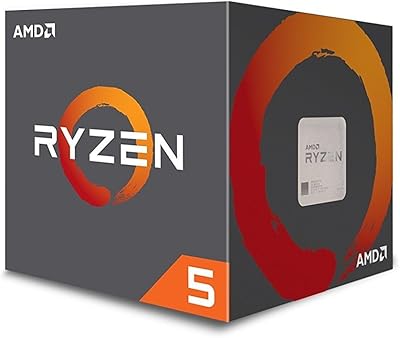
AMD Ryzen 5 1400 Processor
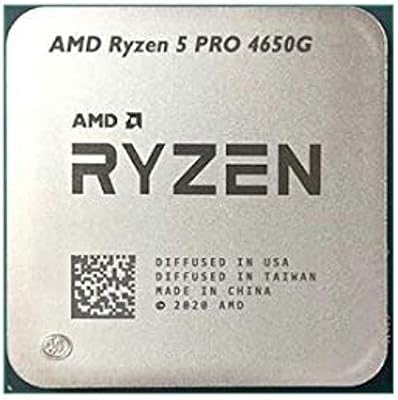
AMD Ryzen 5 PRO 4650G Desktop Processor
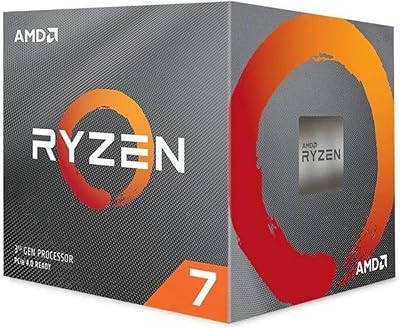
AMD Ryzen 7 3800X Desktop Processor
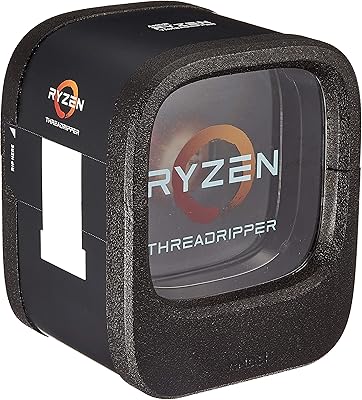
AMD Ryzen Threadripper 1950X Desktop Processor