Overview

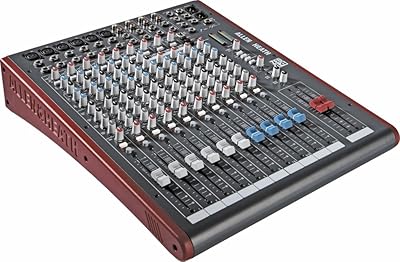
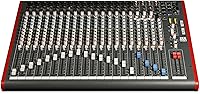
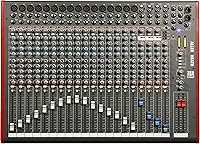
The Allen & Heath ZED-24 Analog Mixer sits firmly in professional territory — this is not a board you buy to learn on. Allen & Heath has been building mixing consoles for decades, and the ZED series reflects that deep institutional knowledge: solid preamps, thoughtful routing, and a layout working engineers can navigate without hunting for controls. The 24-channel format gives you enough inputs to handle a full band, a choir, or a multi-source broadcast setup without immediately running out of room. With its built-in power supply, the desk is self-contained and stage-ready, though at over 23 pounds you will want a proper cart or road case for transport.

Features & Benefits

The DuoPre preamps are the real centerpiece here. Rather than a single gain stage, Allen & Heath runs signal through two cascaded stages — the result is consistent, accurate sound whether you are barely touching the gain knob or pushing it hard for a passive dynamic mic. The MusiQ EQ with a sweepable mid feels like it was designed by someone who actually mixes, not someone who read a textbook. A 100Hz high-pass filter on every mono channel is a small thing that saves time constantly on stage. Four aux outputs — two pre-fade for monitors, two post-fade for effects or streaming — give genuine routing flexibility. Per-channel insert points let you drop in outboard gear without disrupting anything else. The USB connection is stereo only, so treat it as a convenient mix-capture tool, not a full multitrack interface.

Best For

The ZED-24 is squarely aimed at engineers who need a lot of inputs and a flexible monitor mix in one box. Think medium-sized venues, houses of worship with a live band and choir, or club stages where you are managing multiple instrument and vocal feeds simultaneously. Project studio owners who prefer working with faders and knobs over a DAW controller will appreciate the tactile workflow. Touring acts and production companies that want reliability without the complexity of a digital desk will find the analog signal path refreshingly direct. Podcasters or broadcast producers running multiple mics will also get real value out of the per-channel EQ and insert flexibility — provided they do not need multitrack USB recording.

User Feedback

With 125 reviews and a 3.9-star average, this analog console lands in honest, mixed territory — respected but not universally loved. Buyers consistently praise the preamp transparency and build quality, noting the desk feels substantial and well-constructed rather than plasticky. The EQ gets positive mentions for being usable straight out of the box. On the other side, some users find the aux routing logic takes real time to internalize, and a handful flag that the desk feels heavy and unwieldy for a solo operator at a smaller gig. A few reviewers compare it unfavorably to digital alternatives at a similar price point, citing the lack of onboard effects or scene recall as a real trade-off. The product has been on the market since 2007, which speaks to durability, but buyers should confirm compatibility with current operating systems before committing.

Pros

  • DuoPre preamps handle everything from ribbon mics to passive dynamics without noise or strain.
  • The MusiQ swept-mid EQ is genuinely musical — you can dial in cuts and boosts that actually sound right.
  • A 100Hz high-pass filter on every mono channel saves real time during setup at noisy or reverberant venues.
  • Four aux outputs give you proper pre-fade monitor mixes and post-fade effect sends simultaneously.
  • Per-channel insert points let you patch in outboard gear without touching the rest of the signal chain.
  • The class-compliant USB output works with Mac, Windows, and most tablets right out of the box — no driver hunting.
  • Build quality is notably solid; the desk feels like it was made to survive regular transport and heavy use.
  • Having been on the market since 2007, the ZED-24 has a long track record that budget alternatives simply cannot match.
  • 48V phantom power is available across all mic inputs, so condenser mics are never a routing compromise.

Cons

  • The aux routing system has a real learning curve; new users often need time and a manual to get monitor mixes right.
  • At over 23 pounds, the ZED-24 is heavy enough that solo operators will want dedicated transport gear.
  • USB recording is stereo mix-only — there is no multitrack capture without adding a separate audio interface.
  • No onboard effects or digital processing means you are paying a premium for pure analog with no extras.
  • No scene recall or channel memory makes repeatable setups slower compared to digital desks at a similar price.
  • The physical footprint is substantial; smaller venues or home studios with limited desk space may struggle to accommodate it.
  • At this price tier, competing digital consoles offer considerably more features for buyers who are not committed to analog.
  • Long-term buyers should verify that current operating systems and mobile devices still play well with the USB implementation, given the product’s age.

Ratings

The Allen & Heath ZED-24 Analog Mixer earned an overall score built from AI analysis of verified buyer reviews collected globally, with spam, bot-submitted, and incentivized feedback actively filtered out before scoring. Across categories ranging from preamp performance to long-term reliability, both the genuine strengths and the real frustrations users have reported are reflected transparently in the numbers below. This is not a marketing summary — it is an honest picture of what working engineers and studio owners actually experience with this console day to day.

Preamp Quality
88%
Users consistently single out the DuoPre preamps as one of the ZED-24's clearest strengths. The dual-stage gain design handles passive dynamic mics and ribbon mics without the noise floor creeping in, and engineers running full live bands report that the signal stays clean even when pushing gain harder than usual.
A small number of users comparing the ZED-24 directly against higher-end boutique preamps found the character slightly clinical at moderate gain settings. Those chasing warmth or color from the preamp stage alone may want to factor in outboard processing.
EQ Usability
84%
The MusiQ EQ with its sweepable mid gets specific praise from live engineers who appreciate being able to hunt down problem frequencies rather than guessing at a fixed point. Vocalists and guitar-heavy mixes particularly benefit from this flexibility, and the frequency choices feel considered rather than arbitrary.
The EQ range, while musical, is not surgical — users needing very narrow parametric cuts for feedback control or detailed studio work find it limiting. A few buyers noted they still reach for a graphic EQ on the insert for finer control even after dialing the onboard EQ.
Aux Send Routing
71%
29%
Having four independent aux outputs — two pre-fader and two post-fader — gives live engineers real flexibility for monitor mixes and effects sends on the same desk without compromise. Users running in-ear monitors alongside wedge fills found the two independent pre-fade sends genuinely useful for managing separate mixes.
The aux routing system draws more criticism than almost any other aspect of this console. Engineers coming from simpler boards frequently describe a confusing first experience with pre- and post-fade assignments, and a few reported sending the wrong mix to stage monitors during early gigs while still learning the layout.
Build Quality
86%
Long-term owners who have had the ZED-24 in service since the late 2000s report that the faders, knobs, and chassis have held up to regular venue work without significant degradation. The desk feels dense and purposefully built, and users describe the controls as firm and consistent rather than wobbly or cheap.
At this weight and size, the chassis does show cosmetic wear over time, and a handful of users mentioned that the fader caps and knob markings can fade with heavy use. The desk is not designed for rough handling without a proper road case.
USB Recording
58%
42%
The class-compliant USB connection is genuinely convenient for quick stereo mix captures or running audio to and from a laptop without installing drivers. Engineers who just need to record a mix-down or feed a stream found it worked reliably across Mac and Windows systems.
The limitation here is hard and real: it is stereo only, with no multitrack capability whatsoever. Buyers who assumed they could record individual channels were disappointed, and the 2-in/2-out constraint makes this USB implementation feel thin relative to what the rest of the desk offers at this price point.
Value for Money
67%
33%
For buyers whose priority is a clean analog signal path with deep routing flexibility and solid preamps, the ZED-24 delivers a professional-grade experience that justifies the investment. Users who have owned the desk for years point to its longevity as evidence that the cost amortizes well over time.
At this price tier, competing digital consoles offer onboard effects, scene recall, and multitrack USB recording — features this analog desk simply does not have. Buyers who weigh feature count against cost often feel the ZED-24 asks a lot without giving much back in terms of modern convenience.
Insert Points
82%
18%
Per-channel and main mix inserts give users the ability to patch in outboard compressors, gates, and EQs precisely where they are needed without disrupting the rest of the signal chain. Studio-oriented buyers in particular appreciate being able to print channels through hardware processing during tracking.
Using inserts effectively requires TRS insert cables and a solid understanding of send/return patching, which adds setup complexity. A few users who did not account for this reported confusion when their outboard gear did not behave as expected without proper cable configuration.
Channel Count & Layout
79%
21%
Sixteen mono mic inputs alongside two stereo pairs gives live engineers enough room to handle a full band, a keyboard rig, and a few additional sources without immediately running out of channels. The layout across the desk is logical enough that experienced engineers can navigate it quickly during a show.
For very large productions or festival-scale work, 24 channels can feel tight once you account for effects returns, playback feeds, and DI boxes. Some users noted they had to make compromises on input allocation that a slightly larger desk would have avoided.
Portability & Weight
52%
48%
The built-in power supply keeps the cable count down and eliminates the need for an external power brick, which is a practical advantage when setting up quickly. Users operating from a fixed install position — like a house of worship or a rehearsal studio — rarely mention weight as a concern.
Solo operators transporting this board to smaller venues describe the 23-plus-pound weight as a real physical burden, particularly without a road case with wheels. Several reviewers specifically warned that carrying it by hand for any distance becomes tiresome fast.
High-Pass Filters
83%
Having a 100Hz high-pass filter on every single mono channel is a feature users mention with genuine appreciation. Live engineers working in rooms with noisy HVAC systems or on stages with heavy foot traffic report that switching it in on most channels immediately cleans up the low end without requiring a separate outboard unit.
The filter is fixed at 100Hz with no adjustable frequency, which limits its usefulness when you need to roll off a little lower — say, around 60 to 80Hz — without affecting the body of a kick drum or bass instrument. A sweepable HPF would have been a meaningful upgrade.
Phantom Power Implementation
87%
48V phantom power across all 16 XLR inputs without any switching compromises means you can run a full condenser mic setup — choir, drum overheads, acoustic instruments — without juggling which channels have phantom available. Engineers appreciate not having to think about it.
There is no per-channel phantom power switching, which means the entire mic section runs phantom at once. Users who regularly mix condenser and ribbon mics on the same desk need to be careful, as some older ribbon microphones can be damaged by phantom power if connected carelessly.
Long-Term Reliability
81%
19%
The ZED-24 has been in production and active use since 2007, and long-term owners report remarkably few mechanical failures over years of regular gigging. Allen & Heath's reputation for durable hardware is well-supported by the subset of reviewers who have owned this desk for a decade or more.
A small number of users report channel noise or fader issues emerging after extended heavy use, particularly on boards that have not been serviced. Given the product's age, buyers purchasing used units should inspect faders and pot contacts carefully before committing.
Learning Curve
61%
39%
For engineers who already understand analog mixing fundamentals — gain staging, aux routing, insert patching — the ZED-24 comes together relatively quickly. Experienced users describe the layout as intuitive once the core routing logic clicks into place.
Buyers stepping up from basic mixers for the first time frequently cite a frustrating onboarding experience, particularly around the aux bus assignments and insert point usage. Without hands-on guidance or a thorough read of the manual, the learning curve is steeper than the clean front panel suggests.
Driver-Free Compatibility
76%
24%
The class-compliant USB design means the ZED-24 shows up immediately on Mac and most Windows machines as an audio device without any software installation. Users who need to plug in quickly at a venue or switch between multiple computers during a production day find this genuinely useful.
Mobile device compatibility is inconsistent — while the spec suggests tablet and smartphone support, real-world results depend heavily on the specific device, OS version, and the adapter being used. Buyers planning on regular mobile integration should test their specific setup before relying on it at a show.

Suitable for:

The Allen & Heath ZED-24 Analog Mixer is a strong fit for working audio professionals who need a channel-rich, reliable desk they can count on night after night. Live sound engineers running medium-sized venues, club stages, or houses of worship will appreciate having 16 mono mic inputs, flexible monitor sends, and per-channel EQ without fighting a touchscreen or menu system. Production companies and touring acts that want a no-nonsense analog signal path — where every control does exactly what it says — will feel right at home here. Project studio owners who prefer tactile mixing over in-the-box work will find the preamps clean and the EQ genuinely usable across a wide range of sources. Broadcast or podcast producers juggling many simultaneous mic feeds, who also need individual insert points for outboard compression, will get real practical value out of this console's architecture.

Not suitable for:

The Allen & Heath ZED-24 Analog Mixer is a harder sell for buyers who need modern digital conveniences like onboard effects, scene recall, or true multitrack USB recording. The USB connection captures only a stereo mix, so anyone expecting to record individual channels into a DAW for post-production will need a separate audio interface on top of this desk. Solo operators working smaller gigs may find the size and weight — over 23 pounds — genuinely inconvenient without a dedicated cart or case. Beginners or hobbyists will likely find the aux routing logic and insert patching unnecessarily complex for casual use, and the price point is hard to justify if you are only running a few mics. Buyers comparing this to current digital consoles at a similar price should weigh the trade-offs carefully: you gain analog warmth and simplicity, but you give up onboard processing, wireless control, and recall.

Specifications

  • Total Channels: The mixer provides 24 channels in total, combining 16 mono mic/line inputs and 2 stereo line input pairs.
  • Mic Inputs: All 16 mono channels feature balanced XLR mic inputs with Allen & Heath's DuoPre dual-stage preamp design.
  • Stereo Inputs: Two stereo line input channels are included, each accepting a left and right jack connection for a total of 4 stereo input jacks.
  • Preamp Type: The DuoPre preamps use two cascaded gain stages to maintain consistent signal accuracy and headroom across the full gain range, up to 69dB.
  • Phantom Power: 48V phantom power is available across all XLR mic inputs, supporting condenser microphones on every mono channel simultaneously.
  • Channel EQ: Each mono channel includes a 3-band MusiQ EQ with shelving high and low bands and a fully sweepable mid-frequency band for precise tonal control.
  • High-Pass Filter: A fixed 100Hz high-pass filter is fitted on every mono input channel to reduce low-frequency rumble and unwanted sub-bass content.
  • Aux Outputs: Four auxiliary outputs are provided: two operate pre-fader for independent monitor mixes, and two operate post-fader for effects sends or mix feeds.
  • Insert Points: Each mono channel and the main stereo mix output feature TRS insert points for connecting external processors such as compressors or graphic equalizers.
  • USB Audio: The built-in USB interface operates as a stereo 2-in/2-out connection and is class-compliant, requiring no drivers on Mac, Windows, or most modern mobile devices.
  • Power Supply: The ZED-24 uses a corded electric power supply built into the unit, running at 230V AC with no need for an external power brick or adapter.
  • Weight: The unit weighs 23.1 pounds, making a road case or transport cart strongly advisable for regular gigging use.
  • Dimensions: The mixer measures 18.3 x 25.4 inches in footprint and stands 3.9 inches tall, requiring a full-width workspace or dedicated rack position.
  • Connectivity: External connectivity includes balanced XLR and TRS inputs, TRS insert points, four TRS auxiliary outputs, and a USB Type-B port for audio interfacing.
  • Color: The unit ships in Allen & Heath's signature Grey and Red colorway, consistent across the ZED series product line.
  • Market Availability: The ZED-24 was first made available in November 2007 and remains an active, non-discontinued product in Allen & Heath's lineup.

Related Reviews
Allen & Heath ZED-14
81%
94%
Chassis Durability
92%
Preamplifier Clarity
89%
EQ Musicality
91%
Fader Precision
74%
USB Connectivity
More
Allen & Heath ZED-10FX
80%
91%
Preamp Quality
74%
Build & Durability
61%
Fader Control
88%
USB Interface & Connectivity
77%
Onboard Effects
More
Behringer XENYX 502 Analog Mixer
73%
91%
Value for Money
78%
Mic Preamp Quality
93%
Ease of Setup
11%
Phantom Power
74%
Build & Durability
More
Tascam Model 24 Multi-Track Mixer and Audio Interface
85%
94%
Sound Quality
88%
Ease of Use
90%
Build Quality
92%
Recording Flexibility
81%
Portability
More
ZKEEZM 24×24 Photo Light Box
82%
88%
Lighting Quality
93%
Ease of Setup
82%
Backdrop Variety & Quality
74%
Build & Frame Durability
79%
Brightness Control
More
Datacolor SpyderCHECKR 24 Color Calibration Chart
80%
88%
Color Calibration Accuracy
61%
Software Experience
91%
Build Quality
89%
Portability
86%
Multi-Camera Alignment
More
Dell S2522HG 24.5″
Dell S2522HG 24.5″
90%
98%
Refresh Rate Performance
96%
Response Time
91%
Color Accuracy
89%
Viewing Angles
93%
Build Quality
More
ASUS ZenScreen MB249C 24-inch Portable Monitor
77%
93%
Mounting Versatility
81%
Display Quality
62%
Resolution & Sharpness
67%
Portability
91%
USB-C Connectivity
More
Behringer XENYX X1222USB
78%
93%
Value for Money
88%
Ease of Setup
74%
Preamp Performance
82%
Onboard Compression
68%
Build Quality
More
Behringer XENYX X2442USB
80%
91%
Value & Channel Density
84%
Mic Preamps & Headroom
68%
USB Recording Functionality
76%
Routing & Sub-group Matrix
82%
Build Quality & Durability
More

FAQ

No, and this is an important distinction to understand before buying. The USB connection on the Allen & Heath ZED-24 Analog Mixer captures a stereo mix only — essentially whatever is coming out of the main bus. If you need to record separate tracks for each channel, you will need a dedicated multitrack audio interface in addition to this desk.

In most cases, yes. The USB interface is class-compliant, which means it does not require driver installation on Mac, Windows, or many iOS and Android devices. That said, you may need a compatible USB adapter or camera connection kit depending on your tablet model, so it is worth checking your device's USB audio support before assuming it will work out of the box.

Phantom power is available across all 16 XLR mic inputs simultaneously. You do not need to pick and choose which channels get it, which is convenient when running a full condenser setup.

The ZED-24 is straightforward once you understand its routing logic, but the aux send system can genuinely trip up engineers who have only used basic mixers. The pre-fade and post-fade aux assignments in particular take some time to internalize. Spending an afternoon with the manual before your first gig is strongly recommended.

Yes, that is exactly what the per-channel insert points are designed for. You can loop in a hardware compressor, gate, or any other processor on a single channel using a TRS insert cable, and it will only affect that channel's signal. The main mix insert works the same way but applies to the entire mix output.

At just over 23 pounds, the ZED-24 is manageable but not light. If you are doing regular venue work or touring, a proper road case or pull-along cart is a smart investment. Carrying it by hand across a parking lot a few times gets old quickly.

The key difference is the sweepable mid frequency. On budget mixers, the mid band is fixed at a single frequency, so you just cut or boost whatever is there. With the swept mid on this console, you can actually choose where in the mid range you want to make the adjustment — which is genuinely useful for things like taming a harsh vocal or adding presence to a guitar without affecting everything around it.

Yes. The two pre-fade aux outputs operate independently, so you can send a completely different mix to a guitarist's monitor wedge than what the vocalist is hearing. Each channel has its own aux send knob for each of those outputs, giving you full per-channel control of both monitor mixes.

The core analog design has held up well — preamp quality, EQ behavior, and routing flexibility do not become outdated the way software does. Where age matters more is on the USB implementation; it handles stereo audio reliably on modern systems, but you should confirm compatibility with your specific setup. The long market history also means there is plenty of user experience and community knowledge available if you run into issues.

All three are legitimate professional options, but they have different strengths. The ZED-24 tends to stand out for preamp transparency and the depth of its aux routing, which matters a lot in live monitor situations. The Soundcraft Signature series includes built-in Lexicon effects, which this analog console does not. The Yamaha MG series is generally lighter and more compact. If you prioritize clean gain, flexible sends, and insert points over onboard effects or portability, the ZED-24 makes a strong case for itself.

Where to Buy

B&H Photo Video Audio
In stock $999.99
Guitar Center
In stock $789.99
Musicians Friend
In stock $789.99
B&H Photo-Video-Audio
In stock $999.99
Full Compass Systems
In stock $999.99
gear4music.com
In stock $818.00