Overview

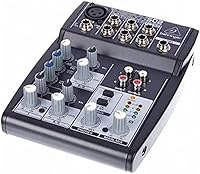
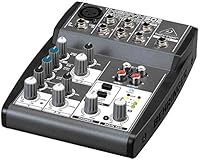
The Behringer XENYX 502 Analog Mixer has been around since 2001 — and that staying power isn't accidental. In a market where budget gear comes and goes, this compact mixer has quietly outlasted dozens of competitors simply by working reliably. It's a 5-channel unit aimed at hobbyists, home podcasters, and anyone needing basic signal routing without the complexity of a full interface. At just over 4 pounds and smaller than a sheet of paper, it disappears onto nearly any desk or table. Think of it as an honest, unpretentious tool that knows exactly what it is and delivers it consistently.

Features & Benefits

The XENYX mic preamp is genuinely the standout here. At this price point, you'd expect muddy or noisy signal pickup — but the preamp keeps things clean enough for vocal recording, podcasting, or instrument routing without fighting the noise floor. Each mono channel also gets a 2-band British EQ, which isn't deep, but it adds enough warmth to make voices sound less flat. The headphone output has its own level control, so you can monitor independently without affecting the main mix. One critical note: this little Behringer unit does not supply phantom power, which rules out condenser microphones from the start.

Best For

The XENYX 502 makes the most sense for beginners and hobbyists who want a physical mixing point without spending much. Podcasters running a dynamic mic alongside a music bed or interview guest feed will find the routing straightforward and intuitive. Streamers who want to blend a microphone with desktop audio without diving into software mixers will also appreciate the tactile simplicity here. It also works well in small rehearsal rooms or meeting spaces that just need a reliable way to feed a PA. If you're trying to understand analog signal flow before stepping up to something more capable, this compact mixer is a practical, low-risk starting point.

User Feedback

With a 4.5-star average from more than 3,600 buyers, the satisfaction rate for the XENYX 502 is hard to argue with. Most positive reviews highlight how easy it is to get running and how clean the preamp sounds relative to what you pay. Durability comes up often too — plenty of owners mention using it for years without issues. That said, the criticisms are worth knowing. The lack of phantom power is the most common dealbreaker, particularly for buyers who later discover their condenser microphone won't work with it. A smaller number of users report that cranking the gain introduces noticeable hiss. The EQ gets mixed reviews — useful for subtle tone shaping, less so for dramatic adjustments.

Pros

  • The XENYX preamp delivers surprisingly clean, low-noise signal pickup for its price tier.
  • Setup takes minutes — plug in, adjust the gain, and you are ready to record or stream.
  • The built-in British EQ adds a subtle but useful warmth to vocals without overcomplicating things.
  • A dedicated headphone output with independent level control makes real-time monitoring straightforward.
  • CD and tape inputs can be routed to either the main mix or headphones, giving you flexible signal options.
  • At just over 4 pounds and smaller than a laptop, this compact mixer fits on almost any desk.
  • Over two decades on the market means the design is well-tested and the build quality is consistent.
  • More than 3,600 buyers have rated it 4.5 stars, reflecting genuine long-term satisfaction.
  • Corded power delivery keeps operation stable without the inconsistency of battery-dependent gear.
  • For beginners, it provides a hands-on introduction to analog signal flow at very low financial risk.

Cons

  • No phantom power means condenser microphones are completely incompatible — a major limitation many buyers miss before purchasing.
  • The gain knob can introduce audible hiss when pushed toward higher settings, which affects recording quality.
  • The 2-band EQ offers only modest tonal control and will feel too limited for anyone wanting real sound shaping.
  • Five channels sounds like enough until you need a third microphone or a second instrument input simultaneously.
  • There is no USB connectivity, so integrating the XENYX 502 directly into a computer-based recording setup requires additional hardware.
  • The composite body feels noticeably lightweight, which can raise durability concerns in frequent transport or gigging scenarios.
  • No onboard effects or send/return loop means your signal chain is entirely dependent on external processing gear.
  • Buyers upgrading from a basic interface may find this unit offers fewer features than software-based mixing tools they already own.

Ratings

Our AI rating engine analyzed thousands of verified global purchases of the Behringer XENYX 502 Analog Mixer, actively filtering out incentivized, bot-generated, and duplicate submissions to surface what real buyers actually experience. The scores below reflect a transparent synthesis of both consistent praise and recurring frustrations across long-term ownership. Where this compact mixer earns its reputation, the data shows it clearly — and where it falls short, we do not gloss over that either.

Value for Money
91%
Buyers consistently describe this little Behringer unit as one of the most cost-effective ways to get a working analog mixing setup. For podcasters and streamers on a tight budget, the combination of a functional preamp, basic EQ, and multiple outputs at this price point is genuinely difficult to match from competing brands.
A small but vocal group of buyers feel the value calculation changes once they realize they also need to purchase a separate audio interface to record into a computer, or a phono preamp to use a turntable — costs that were not anticipated at checkout and can nearly double the total investment.
Mic Preamp Quality
78%
22%
For an entry-level analog mixer, the XENYX preamp handles dynamic microphones with a notably clean signal at moderate gain settings. Podcasters using popular dynamic mics like the Audio-Technica ATR2100 or Shure SM58 report a warm, usable sound without needing external preamplification.
Pushing the gain above roughly two-thirds of its range introduces a consistent background hiss that becomes noticeable in quiet recordings. Users recording spoken word content in treated rooms tend to notice this more than those recording in louder environments where ambient noise masks it.
Ease of Setup
93%
Almost every buyer mentions how quickly this compact mixer gets up and running — many describe it as plug-and-play in the truest sense. There are no drivers to install, no software menus to navigate, and no firmware updates to worry about, which makes it especially approachable for complete beginners.
The lack of any labeling on the RCA input routing switch is a minor but recurring source of confusion for first-time users, who sometimes spend time troubleshooting what turns out to be a simple toggle position. A clearer printed legend on the chassis would eliminate this entirely.
Phantom Power
11%
89%
There is genuinely nothing positive to report here in isolation — the unit provides no phantom power whatsoever. For the specific users who only intend to use dynamic microphones, this omission is a non-issue and they will never miss it in their workflow.
The absence of 48V phantom power is the single most damaging limitation of the XENYX 502 and the most frequently cited reason for returns and negative reviews. Buyers who purchase condenser microphones — including popular options like the Blue Yeti or Audio-Technica AT2020 — discover after the fact that this mixer simply cannot power them, rendering the combination useless without additional hardware.
Build & Durability
74%
26%
The composite body may not feel premium, but it has proven itself over years of real-world use. A meaningful share of reviewers mention owning their unit for five, seven, or even ten or more years without failure, which speaks to a level of structural reliability that is not always guaranteed at this price tier.
The knobs and faders feel plasticky under the fingers, and a few users report that individual potentiometers develop crackle or looseness after extended daily use. The chassis also flexes slightly when pressure is applied, which raises legitimate questions about long-term resilience in any kind of mobile or gigging context.
EQ Functionality
61%
39%
The 2-band British-style EQ is effective for basic tonal correction — boosting the highs to add clarity to a muddy voice, or rolling off some low-end rumble from a mic placed near a desk. For beginners learning how EQ affects sound, it is a reasonable introduction without being overwhelming.
Experienced audio users find the 2-band range far too limited for meaningful sound shaping. There is no mid-frequency band, no sweepable controls, and no way to target specific problem frequencies — so anyone dealing with room resonances or complex tonal issues will hit a hard ceiling very quickly.
Headphone Monitoring
82%
18%
The dedicated headphone output with its own independent volume knob is a feature buyers genuinely appreciate, particularly podcasters and streamers who need to monitor their voice in real time without affecting what is being sent to their speakers or recording device. The output drives most standard headphones to comfortable listening levels without strain.
The headphone output lacks a proper cue mix, so you cannot create a custom blend for monitoring that differs from the main mix signal. This is a noticeable limitation for any musician who wants to hear themselves differently in headphones than what is going to the room speakers or a recording.
Input Flexibility
58%
42%
Having both an XLR mono channel and a TRS line input alongside the stereo RCA inputs covers the basic signal combinations that home podcasters and casual musicians actually use day to day — a mic, an instrument or secondary audio source, and a playback device like a phone or laptop.
Five channels sounds more expansive than it is in practice. With only one true XLR mic input, the mixer quickly becomes a bottleneck for anyone wanting to interview a guest, add a second microphone, or expand their setup in any meaningful way. Growth beyond one-mic scenarios requires purchasing a different mixer entirely.
Output Options
77%
23%
The combination of a main stereo output, RCA outputs, and a headphone jack gives users a reasonable range of destinations for their signal. Content creators who want to send audio simultaneously to a pair of powered monitors and a separate recording device find this routing coverage adequate for a compact unit.
The absence of any digital output — no USB, no S/PDIF, no AES — means users who want to record to a computer must invest in a separate analog-to-digital converter or audio interface. In a market where many competing units at similar prices now include USB connectivity, this is a dated limitation.
Noise Floor
69%
31%
At moderate gain levels in a typical home environment, the noise floor of this compact mixer is low enough for podcasting and streaming use cases where perfect studio silence is not the primary goal. Most buyers recording speech content find the background noise inaudible during normal listening.
In quiet, acoustically treated recording environments — or when recording delicate acoustic instruments — the noise floor becomes more apparent and can require post-processing to clean up. High-gain situations amplify the issue noticeably, making this mixer a weaker choice for anyone prioritizing pristine, broadcast-grade audio hygiene.
Portability
83%
At just over 4 pounds and with a footprint smaller than most laptops, the XENYX 502 is easy to move between a home office, a recording nook, or a small venue. For users who occasionally need to bring a basic mixing setup to a meeting room or rehearsal space, the size and weight make that practical.
The unit ships without a carry case and has no built-in handle, so transporting it regularly requires improvising protection. The corded AC power dependency also means portability is relative — you always need access to a wall outlet, which limits genuinely mobile use scenarios.
Longevity & Reliability
88%
Few products in this price category accumulate the kind of long-term ownership testimonials that the XENYX 502 has gathered over more than two decades. Buyers who set it up on a desk and use it consistently day after day tend to report that it simply keeps working, which is the most honest endorsement any piece of budget gear can receive.
A minority of users encounter channel crosstalk or noisy potentiometers after several years of heavy use, and replacement parts are not readily available at the consumer level. When a component does eventually fail, the low unit cost often makes repair economically impractical compared to simply replacing it.
Beginner Friendliness
89%
The layout is logical, the controls are minimal, and the signal chain is short enough that beginners can understand what each knob is doing within minutes of their first use. For someone picking up an analog mixer for the first time, this is a genuinely accessible introduction to gain staging, EQ, and output routing.
The included documentation is thin, and Behringer's support resources for this aging model are limited online. Beginners who run into the phantom power wall or the computer connectivity limitation without prior research often feel misled, not by the hardware itself, but by a lack of clear guidance at the point of purchase.

Suitable for:

The Behringer XENYX 502 Analog Mixer is a strong fit for anyone who needs a simple, physical mixing point without a steep learning curve or a significant financial commitment. Home podcasters will get the most natural value from it — if you're running a dynamic microphone alongside a music bed or a secondary audio source, the routing is intuitive and the signal stays clean. Streamers who want tactile control over their audio without wrestling with software mixers will also feel right at home here. Beginner musicians recording casual demos, or small groups needing a basic live sound solution for a rehearsal room or meeting space, will find this compact mixer more than capable for the task. It's also a genuinely useful teaching tool: if you've never worked with analog signal flow before and want to understand gain staging, EQ, and output routing hands-on, this little unit gives you all of that in a low-stakes environment.

Not suitable for:

The Behringer XENYX 502 Analog Mixer is not the right choice for anyone planning to use a condenser microphone — the unit provides no phantom power, and discovering that limitation after purchase is a frustratingly common experience among buyers. Producers or podcasters who need more than two or three simultaneous input sources will also hit a wall quickly, as the five-channel layout offers very limited expansion. If you're chasing professional-grade recordings or need precise tonal control, the 2-band EQ won't give you enough range to work with, and the gain circuit can introduce audible hiss when pushed toward its upper limits. Anyone who already owns or plans to invest in a USB audio interface for computer-based recording will likely find this compact mixer redundant, since most interfaces handle similar routing tasks within software. In short, this is an entry-level analog tool — it was never designed to compete with mid-range or pro-level gear, and expecting it to do so will lead to disappointment.

Specifications

  • Brand: Manufactured by Behringer, a Germany-founded audio equipment company known for producing affordable analog and digital gear.
  • Model Number: The unit's official model designation is 502, part of Behringer's long-running XENYX mixer lineup.
  • Channels: Provides 5 channels total, including mono XLR and TRS inputs alongside stereo RCA inputs for secondary sources.
  • Mic Preamp: Equipped with Behringer's XENYX ultra-low-noise mic preamp, designed to minimize signal hiss and maintain clean gain at moderate levels.
  • EQ Type: Each mono channel features a 2-band neo-classic British-style EQ for basic high and low frequency adjustment.
  • Connector Types: Accepts input via 3-pin XLR and 1/4″ TRS phone connectors on the mono channels, plus RCA for CD or tape sources.
  • Outputs: Offers a main stereo mix output, stereo RCA outputs, and a dedicated headphone output with independent level control.
  • Phantom Power: This unit does not supply phantom power, making it incompatible with condenser microphones that require it to operate.
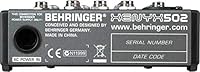
  • Power Source: Powered via a corded AC adapter, providing consistent electrical supply without reliance on batteries.
  • Dimensions: The unit measures 6.97 x 5.28 x 1.85 inches, making it compact enough to sit comfortably on a small desk or tabletop.
  • Weight: Weighs 4.06 pounds, light enough to move between locations but solid enough to stay stable during use.
  • Body Material: The chassis is constructed from composite material, keeping the overall weight low while providing basic structural rigidity.
  • Connectivity: Operates entirely in the analog domain using RCA and TRS connections, with no USB, Bluetooth, or digital output options.
  • Headphone Output: Features a dedicated headphone jack with its own volume knob, allowing independent monitoring without affecting the main mix level.
  • CD/Tape Routing: The stereo RCA inputs can be assigned to either the main mix output or the headphone output, offering flexible source monitoring.
  • Availability: Listed as not discontinued by the manufacturer, meaning the unit remains in active production as of the latest available information.
  • Market Debut: First made available in October 2001, giving this mixer more than two decades of real-world use and iterative market validation.
  • User Rating: Holds a 4.5-star average rating based on over 3,600 verified customer ratings on Amazon.

Related Reviews
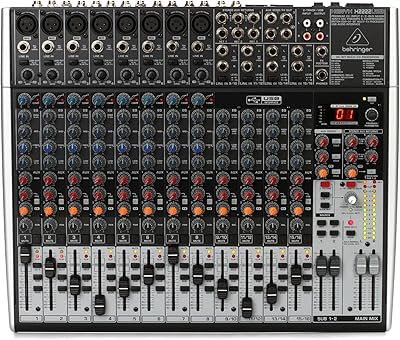
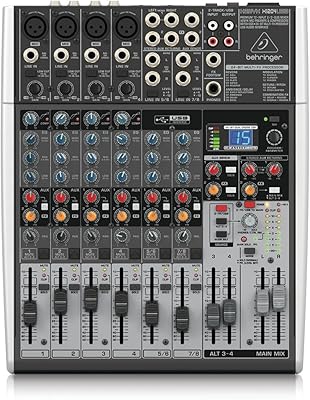
Behringer XENYX X1204USB 12-Channel USB Mixer
74%
83%
Value for Money
78%
Preamp Quality
62%
Build Quality
86%
Ease of Use
58%
USB Connectivity
More
Behringer Xenyx X2222USB
83%
87%
Mic Preamp Performance
91%
One-Knob Compression
93%
Input Flexibility
84%
EQ Musicality
79%
FX Processor Utility
More
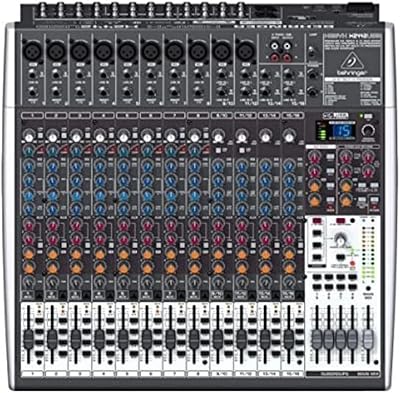
Behringer XENYX X2442USB
80%
91%
Value & Channel Density
84%
Mic Preamps & Headroom
68%
USB Recording Functionality
76%
Routing & Sub-group Matrix
82%
Build Quality & Durability
More
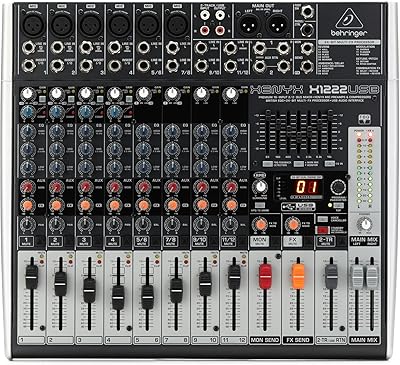
Behringer XENYX X1222USB
78%
93%
Value for Money
88%
Ease of Setup
74%
Preamp Performance
82%
Onboard Compression
68%
Build Quality
More
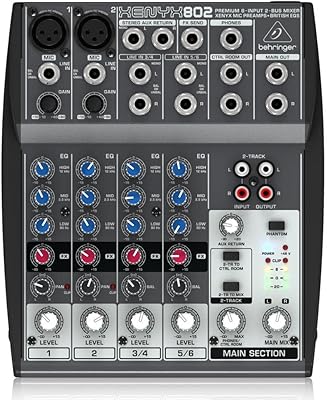
Behringer Xenyx 802 Analog Mixer
75%
86%
Mic Preamp Quality
91%
Value for Money
58%
Build Quality
93%
Ease of Use
54%
Headphone Output
More
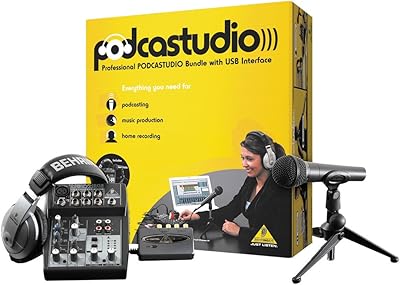
Behringer PodcastStudio USB Podcasting Bundle
66%
74%
Value for Money
83%
Ease of Setup
67%
Microphone Quality
58%
Build Quality
72%
Audio Interface
More
Yamaha AG03 3-Channel USB Mixer
82%
91%
Audio Quality
94%
Ease of Setup
72%
Build Quality
88%
Value for Money
89%
Phantom Power
More
Behringer XM8500 Dynamic Cardioid Microphone
77%
94%
Value for Money
82%
Build Quality
78%
Vocal Clarity
83%
Feedback Rejection
77%
Handling Noise
More
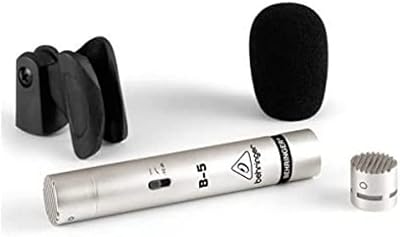
Behringer B-5 Microphone
81%
87%
Sound Quality
90%
Build Quality
92%
Value for Money
80%
Ease of Setup
85%
Versatility
More
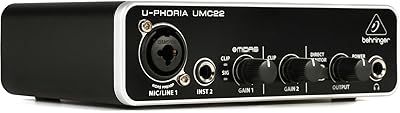
Behringer UMC22 USB Audio Interface
76%
83%
Audio Quality
91%
Ease of Setup
57%
Build Quality
88%
Value for Money
92%
DAW Compatibility
More

FAQ

Unfortunately, no. The Behringer XENYX 502 Analog Mixer does not supply phantom power, which most condenser microphones need to function. If you own or plan to buy a condenser mic, you will need a mixer or interface that provides 48V phantom power. Dynamic microphones, however, work perfectly fine with it.

Yes, it is actually one of the more popular choices for exactly that setup. You can plug a dynamic mic into the XLR input, connect a music or sound bed source through the RCA inputs, and blend the two with straightforward level controls. It is not fancy, but it handles that core podcasting workflow reliably.

Not directly — the XENYX 502 has no USB output, so your computer won't recognize it as an audio device on its own. To record into a DAW, you would need to run the main mix output into a separate USB audio interface. Some users do exactly this, though it does add cost and a bit of complexity to the chain.

The unit has one XLR mic input on the primary mono channel, and the second mono channel accepts a 1/4″ TRS line-level source. So realistically, you can only connect one microphone directly. If you need to mix multiple microphones simultaneously, you will want a larger unit with more XLR inputs.

For a desktop or home studio environment, yes. The composite body feels lightweight but holds up well with everyday use. It is not built for heavy touring or rough handling, but plenty of users report years of trouble-free operation when it is used on a desk or in a fixed setup.

This compact mixer requires an external AC adapter to operate. In most retail configurations it includes a compatible adapter, but it is worth confirming with the seller before purchasing since third-party listings can vary. The unit does not run on batteries.

At moderate gain levels, the preamp performs well for the price. But yes, pushing the gain knob toward its higher end can introduce audible hiss, which is a known limitation reported by a portion of users. The fix is to keep gain conservative and make up volume at the output stage or on your speakers or interface instead.

Not directly. Turntables output a phono-level signal that requires a dedicated phono preamp to boost and equalize it to line level. The XENYX 502 accepts line-level RCA inputs, not phono-level, so you would need a separate phono preamp between the turntable and this mixer.

It genuinely is one of the better entry points for that purpose. The controls are minimal enough not to overwhelm a beginner, but they cover the fundamentals — gain, EQ, channel levels, and output routing — so you actually learn something useful. Many audio professionals mention owning one of these early in their journey before moving to more capable gear.

Partly. The headphone output has its own level knob, so you can adjust monitoring volume without touching the main mix. You can also route the RCA inputs exclusively to the headphone output, which is handy for auditioning a backing track without sending it to your speakers. Full independent monitoring with a separate cue mix is not available at this level.

Where to Buy