Overview

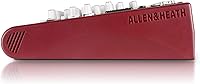
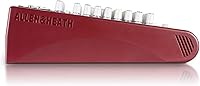
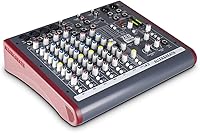
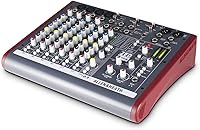
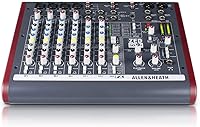
The Allen & Heath ZED-10FX is a compact 10-channel analog mixer that punches well above its $350 price tag, borrowing design principles straight from A&H's large-format touring consoles. This isn't a mixer that merely looks the part — Neutrik connectors, chassis-mounted pots, and separate internal channel boards signal that real engineering went into keeping it small without cutting corners on build integrity. The ZED-10FX sits in an interesting middle ground: not quite a bedroom toy, not a full stage rig, but a genuinely capable desk for both. The built-in USB interface rounds things out, making this compact mixer a two-in-one solution for anyone wanting to record directly to a computer without extra gear.
Features & Benefits

What sets this A&H desk apart at this price is the preamp quality. Four XLR/TRS combo inputs deliver 60dB of clean gain with 48V phantom power, and the noise floor is low enough that condenser microphone users will notice the difference versus cheaper boards immediately. Two of those mono channels double as HiZ instrument inputs, so guitarists and bass players can plug in directly without a separate DI box. The 16 onboard effects types — reverbs, delays, modulation — were developed in-house rather than pulled from an off-the-shelf chip, and the tap tempo actually makes them useful live. USB routing is flexible too, with a dedicated record bus and per-channel send switches for selective recording.

Best For

This compact mixer hits a sweet spot for a specific kind of buyer. Singer-songwriters doing small gigs or rehearsals will appreciate having clean preamps and onboard effects without hauling a large board. Podcasters and streamers benefit from the class-compliant USB — just plug into a Mac, Windows machine, or even an iPad, and it shows up as an audio interface with no drivers required. Home studio owners who track guitars or bass live will value those built-in HiZ inputs. Small churches and community spaces running modest front-of-house setups also fit the target zone well. It is not the right tool for a live-sound engineer needing long faders and deep routing, but for everyone else on that list, it covers the bases.

User Feedback

Across roughly 99 ratings, the ZED-10FX holds a 4.4 out of 5, and the pattern in reviews is fairly consistent. The preamps earn the most praise — buyers stepping up from budget mixers tend to notice right away how much quieter and cleaner these are. The onboard effects also get more credit than expected; they are workable in a live context, not just filler. The main complaint centers on fader length — the shorter throw makes precise volume adjustments harder than on mixers with 60mm faders, a real consideration for live mixing. A smaller number of users flag knob durability concerns over time with heavy use. Overall satisfaction is high among buyers who knew what they were purchasing.

Pros

  • Preamps are genuinely clean and low-noise, noticeably better than similarly priced competitors.
  • Built-in HiZ inputs let guitarists and bassists plug in directly, no DI box required.
  • Class-compliant USB connects to Mac, Windows, and iPads instantly with zero driver installation.
  • Onboard effects include tap tempo and are actually usable in live situations, not just decorative.
  • Neutrik connectors and chassis-mounted pots add durability rarely seen at this price point.
  • Flexible USB record bus lets you choose exactly which channels to capture, a thoughtful routing feature.
  • At around $350, it combines a mixer, audio interface, DI inputs, and effects into one compact unit.
  • Lightweight at 7.3 pounds, easy to carry to gigs or move between home and studio setups.
  • Optional rack mount kit makes it simple to integrate into a fixed installation or flight case.
  • 3-band sweepable EQ per channel gives enough control for practical shaping without overcomplicating the workflow.

Cons

  • Short fader throw makes precise live level adjustments harder than on mixers with 60mm faders.
  • Global phantom power cannot be applied per channel, creating risk when mixing condensers and ribbon mics.
  • Only two aux sends limits independent monitor mix options for bands with multiple performers.
  • Knob wear and pot crackling have been reported by a minority of users after extended regular use.
  • 2x2 USB interface does not support simultaneous multi-track recording for post-production workflows.
  • Closely spaced controls can be awkward for users with larger hands, especially under stage lighting.
  • No dedicated high-pass filter per channel makes managing low-end rumble more reliant on the EQ bands.
  • Android device compatibility is inconsistent — not all phones and tablets are reliably recognized.

Ratings

The Allen & Heath ZED-10FX scores were generated by AI after analyzing verified buyer reviews from multiple global markets, with spam, incentivized, and bot-flagged submissions actively filtered out. This compact mixer earned strong marks in several areas, but the analysis also surfaces real frustrations that matter depending on how you plan to use it — nothing has been smoothed over.
Preamp Quality
91%
Users coming from budget boards consistently describe the preamps as a noticeable step up — quieter, cleaner, with enough headroom to handle condenser mics without fuss. In home recording and small live setups, the low noise floor makes a practical difference on quiet vocal takes or acoustic instruments.
A small number of users feel the preamps, while clean, lack some of the warmth audiophiles might want for serious studio tracking sessions. At this price point it is not a fair criticism, but buyers expecting boutique character may find them slightly clinical.
Build & Durability
74%
26%
The chassis-mounted pots and Neutrik connectors are a genuine differentiator in this price range — most competing mixers use board-mounted controls that loosen after heavy use. Players who gig regularly appreciate not having to worry about wobbly knobs mid-set.
A recurring thread in longer-term reviews points to knob degradation and occasional crackling after extended use, suggesting the internal components may not fully match the solid external feel. For occasional home use this is rarely an issue, but touring musicians should be aware.
Fader Control
61%
39%
The faders are functional and smooth enough for basic level management, which works fine when you are mixing a podcast, a simple stream, or a low-key rehearsal where broad adjustments are all that is needed.
The shortened fader throw is the most consistently cited frustration from live sound users. Fine-tuning levels during an active mix — say, bringing up a vocalist gradually under a loud band — is noticeably harder than on mixers with 60mm or longer faders, and this is a real ergonomic trade-off at this form factor.
USB Interface & Connectivity
88%
The class-compliant USB implementation means no driver installation on Mac, Windows, or even an iPad, which in practice removes a whole category of setup headaches. Podcasters and streamers in particular mention how refreshingly simple the first-time connection is compared to dedicated audio interfaces that require software installs.
The 2x2 USB interface is adequate for most use cases but limits users who want to record multiple isolated tracks simultaneously. Those hoping to capture individual channels separately for post-production mixing will need to look at more advanced solutions.
Onboard Effects
77%
23%
Unlike the throwaway reverb units found on many compact mixers, the 16 onboard effects types here were developed in-house, and it shows. The tap tempo feature makes the delays actually usable in a live context, and several reviewers mention reaching for the built-in reverb on small gigs rather than lugging a separate effects unit.
It is not a substitute for a dedicated outboard processor, and users mixing bands with complex effects needs will hit its limits quickly. Some presets feel better suited to light reinforcement than expressive studio-style processing.
Value for Money
83%
At around $350, this A&H desk offers a combination of preamp quality, built-in DI inputs, effects, and USB recording capability that would cost significantly more if assembled from separate components. Buyers who do the math tend to feel it is fairly priced for what it delivers.
Competitors like the Mackie ProFX10v3 undercut it on price while offering longer faders, which makes the value equation less clear-cut for live sound buyers specifically. The pricing is justified for studio and podcast use, less so if live mixing is the primary task.
HiZ Instrument Inputs
86%
Having two dedicated high-impedance inputs built in is a practical win for guitarists and bassists who want to plug in directly without carrying a DI box. In small venue or rehearsal scenarios, this simplifies setup considerably and the signal quality is solid.
Only two channels have HiZ capability, which can be a bottleneck for bands with multiple direct-input sources. Users expecting to run a full acoustic act with several direct instruments may find themselves one or two DI inputs short.
Portability & Form Factor
82%
18%
At 7.3 pounds and roughly the footprint of a large laptop, this compact mixer fits easily into a gig bag or backpack. Singer-songwriters doing regular venue rotations appreciate not needing a dedicated case or a second person to carry the board.
The compact footprint means controls are closely spaced, which can make quick adjustments tricky for users with larger hands, especially in low-light live environments where muscle memory matters more than visual confirmation.
Ease of Setup
89%
Most users report being up and running within minutes, whether connecting to a PA for a live gig or plugging into a laptop for a recording session. The layout is logical enough that even buyers new to analog mixing find it approachable without reading the manual cover to cover.
The USB routing options — while flexible — can confuse first-time users who are not familiar with aux-fed recording or the dedicated record bus concept. A clearer quick-start guide would help beginners unlock those features faster.
EQ Performance
78%
22%
The 3-band sweepable EQ per channel gives enough control to tame problem frequencies in a live mix or carve out space for vocals in a recording. Users mixing small acoustic ensembles or podcast panels find it more than adequate for practical shaping tasks.
Three bands is on the lean side for users dealing with acoustically challenging rooms or complex multi-instrument mixes. Without a dedicated high-pass filter per channel, managing low-end rumble requires more reliance on the mid and low controls.
Phantom Power Implementation
87%
The 48V phantom power is described as stable and clean across reviewer accounts — condenser microphone users report no noise artifacts or voltage inconsistencies during sessions, which is not always the case on budget mixers where phantom power can introduce audible hiss.
Phantom power is applied globally rather than per channel on this board, meaning you cannot selectively power only certain mics. Users mixing ribbon microphones alongside condensers need to be careful, as applying phantom to a ribbon can cause damage.
Aux Send Flexibility
72%
28%
Two aux sends give enough routing flexibility for a simple monitor mix alongside an effects send, which covers the most common small-venue or home-studio scenarios without needing to compromise one for the other.
Two aux sends hits a ceiling fast for users trying to run independent monitor mixes for multiple performers. Bands with more than two performers each needing a personal monitor mix will find the routing options genuinely limiting.
Long-Term Reliability
67%
33%
Many users who have owned the ZED-10FX for several years report it still performing solidly as long as it has not been subjected to rough handling or heavy road use. For home studio and light-duty live use, longevity complaints are relatively rare.
A visible minority of longer-term reviews describe pot crackling and channel inconsistencies emerging after a year or two of regular use. The build feels premium initially, but the internal component quality may not fully support heavy touring demands over multiple years.
Mobile Device Compatibility
84%
The class-compliant USB design means it connects reliably to iPads and Android tablets without adapters or apps, which is a genuine advantage for users running backing tracks or recording on mobile setups at small gigs or content shoots.
Not all mobile devices are supported equally, and a handful of users report inconsistent recognition on certain Android phones. iOS compatibility is generally more reliable, but Android users should verify compatibility with their specific device before relying on it live.

Suitable for:

The Allen & Heath ZED-10FX is a strong fit for anyone who needs more than a basic USB interface but does not want to manage a full-size console. Singer-songwriters playing small venues or rehearsal spaces will appreciate having clean preamps, built-in instrument inputs, and usable onboard effects without needing a separate DI box or effects rack. Podcasters and streamers benefit from the no-fuss USB connection — plug into a Mac, Windows laptop, or iPad and it just works, which matters when your energy should go toward content rather than troubleshooting drivers. Home studio owners who track guitars, bass, and vocals in the same session will find the routing flexibility genuinely practical. Small churches, community halls, and event spaces running simple front-of-house setups also land squarely in the sweet spot, getting a durable, well-built board at a price that does not require budget committee approval.
Not suitable for:

The Allen & Heath ZED-10FX is not the right tool for every situation, and being clear about that saves a frustrating return. Live sound engineers mixing active bands in mid-size venues will quickly feel the constraint of the shortened faders — fine level adjustments during a dynamic set require more precision than the throw length comfortably allows. Anyone hoping to record separate, isolated tracks for full post-production mixing will also hit a ceiling, since the 2x2 USB interface does not support multi-track simultaneous capture. Bands with more than two performers needing individual monitor mixes will run out of aux sends faster than expected. Users who rely on ribbon microphones need to be careful, since the phantom power applies globally rather than per channel. And if heavy road use is the plan — touring consistently, loading in and out multiple times a week — some longer-term reliability reports around knob wear suggest this compact mixer may not hold up as robustly as its initial build quality implies.
Specifications

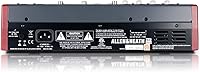
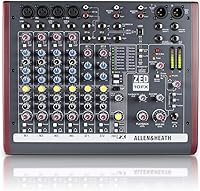
  • Total Channels: The mixer provides 10 channels in total, combining mono mic/line, mono mic/line/HiZ, and stereo line inputs.
  • Mic Preamp Inputs: Four XLR/TRS combo inputs accept both balanced microphone signals and line-level sources on the same connector.
  • HiZ Inputs: Two mono channels include a high-impedance instrument input for direct connection of guitars, basses, and other passive pickups without a DI box.
  • Stereo Line Inputs: Three stereo line input channels accept left and right signals independently, suitable for keyboards, playback devices, and other stereo sources.
  • Phantom Power: 48V phantom power is available for condenser microphones and is applied globally across the mic preamp channels.
  • Preamp Gain Range: Each mic preamp provides up to 60dB of gain, covering everything from low-output dynamic microphones to high-output active sources.
  • Onboard Effects: A built-in multi-effects unit offers 16 effect types including reverbs, delays, and modulation, developed in-house with tap tempo control.
  • USB Interface: The integrated USB audio interface operates as a 2-in/2-out class-compliant device requiring no drivers on Mac, Windows, or compatible mobile devices.
  • AUX Sends: Two auxiliary sends are available per channel for routing to stage monitors, effects units, or the onboard FX processor.
  • Channel EQ: Each channel features a 3-band EQ with a sweepable mid frequency, allowing targeted adjustment of problematic frequency ranges.
  • Channel Inserts: Insert points are available on the main outputs only, allowing external processing such as compression to be patched into the master bus.
  • Connectors: All XLR connections use Neutrik connectors, and every potentiometer is fixed directly to the chassis rather than mounted to the circuit board.
  • Dimensions: The unit measures 10.8 × 3.7 × 13.2 inches, making it compact enough to fit in a standard backpack or small carry bag.
  • Weight: The mixer weighs 7.3 pounds, light enough for one-person transport to rehearsals or small venues without dedicated case hardware.
  • Power Source: The unit runs on corded AC power and does not include a battery option or rechargeable power source.
  • Rack Mount Option: An optional rack ear kit (model ZED10-RK19) is available separately and fits the mixer into a standard 19-inch rack or flight case.
  • USB Record Bus: A dedicated record bus with per-channel selector switches allows users to choose exactly which channels are sent to the USB recording output.
  • Fader Length: The channel faders are shorter than the 60mm standard found on larger-format compact mixers, a trade-off made to reduce the overall footprint.

Related Reviews
Allen & Heath ZED-14
81%
94%
Chassis Durability
92%
Preamplifier Clarity
89%
EQ Musicality
91%
Fader Precision
74%
USB Connectivity
More
Allen & Heath AH-ZED24 Mixer
87%
94%
Sound Quality
91%
Build Quality & Durability
85%
Ease of Use
88%
USB Connectivity
92%
Performance for Live Shows
More

FAQ

No, you do not. The ZED-10FX is class-compliant, which means your Mac, Windows PC, or compatible iPad will recognize it as an audio device the moment you plug it in. There is nothing to download or configure before you start recording.

Yes, two of the mono channels have dedicated HiZ inputs specifically for high-impedance sources like electric guitars and basses. You just connect your instrument cable directly to the HiZ socket on those channels and you are ready to go.

It applies globally, meaning all mic preamp channels receive phantom power at the same time when you engage it. This is worth keeping in mind if you use ribbon microphones alongside condenser mics, since phantom power can damage some ribbon designs.

The USB interface sends a stereo mix to your recording software rather than individual isolated tracks. That said, the dedicated record bus with per-channel switches lets you select which channels feed that stereo recording, giving you some flexibility in what gets captured without full multi-track capability.

The aux sends are line-level outputs, so you would typically need a powered monitor or a separate amp stage to drive passive speakers from them. For active monitors with their own amplification, the aux sends connect directly without any issue.

There are 16 effect types available, covering reverbs of different sizes, delay and echo effects, chorus, flange, and other modulation-based sounds. Each type has adjustable parameters and the delay effects respond to tap tempo, which is genuinely useful if you are running a live set and need the delay to lock to the song tempo.

Yes, in most cases it will connect to an iPad using a compatible USB adapter such as Apple's Camera Connection Kit or a USB-C to USB-A adapter depending on your iPad model. The class-compliant design handles the rest without any app installation required.

The main practical difference most users notice is the fader length — the Mackie offers 60mm faders which give more physical travel for fine level adjustments during an active mix. The A&H desk tends to win on preamp quality and build feel, but if live front-of-house mixing is your primary use, the longer faders on the Mackie may matter more than the audio quality difference.

Absolutely, that is one of the most natural use cases for this board. Two microphones connect to the XLR inputs, you set your levels and mix, and the USB output sends the combined stereo mix straight to your recording software. No additional interface is needed.

It holds up well for regular light gigging — the chassis-mounted pots and Neutrik connectors are a step above what you get on most mixers in this price range. However, a minority of users who have put it through heavier road use over a year or more report some pot crackling developing over time, so if you are loading in and out every week it may show wear sooner than a purpose-built touring board would.